In the forgotten corners of the city, a young homeless addict named JD drifts through nights haunted by silence, addiction, and disconnection. Alongside Max, a hardened street survivor, and Luna, a mentally ill woman caught in a cycle of delusion and innocence, JD stumbles through a grim urban purgatory. When tragedy strikes under the glow of streetlights and stars, JD is forced to confront the cost of invisibility — and the fragile spark of hope that may still exist.
“Under the Stars” is a haunting, poetic portrait of those society ignores, where even in the darkest moments, humanity flickers like a lighter in the night.
Conversation with filmmaker Jason G. Mercado, with his assistant Nadine Emrich.
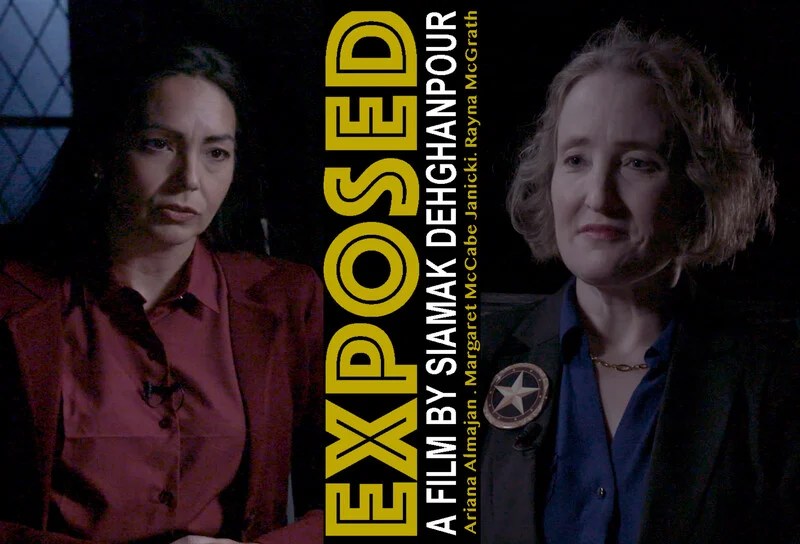
A young, ambitious journalist will have her first high-profile live interview with the President. The country is on the verge of a significant war, externally and internally. After a series of questions, the interview takes a dangerous course.
Though fictional, the short film Exposed is an apt parallel with what is going on in the world today, as so many conscientious journalists courageously seek to reveal the truth. The talented performer playing the central character convincingly depicts a journalist who is in the right profession, given her desperate need to expose corruption, even at the risk of losing her job. Another skillful performer plays the president, a driven woman who, unlike the journalist, seeks to hide the truth from the general population, as so many politicians are known to do. The structure of the short is airtight, moving from a strong set up of the journalist fighting to expose the president’s lies at the potential cost of bringing the network down, to the interview that pits the two together in a parry of wits.
In advance of the interview, the staging of a flurry of production staff working on a time crunch is quite believable, as is the flashy TV promo announcing the upcoming event. Once the interview begins, the brilliant screenplay reveals a strong undertone of mistrust and competitiveness between the two female leads, who have both fought hard for their positions. What begins as a civil interchange, the situation quickly moves to justified anger of the journalist and attempts of political manoeuvring and denial by the president.
The resulting tension in the production booth, combined with the pride of the journalist for doing her job, moves the situation rapidly into dangerous territory. Despite the undertones of danger, it can be quite satisfying for the viewer to see that justice is served in this fictional account when, in our world today, there are so many untold secrets that journalists of integrity are constantly having to fight tooth and nail to expose.
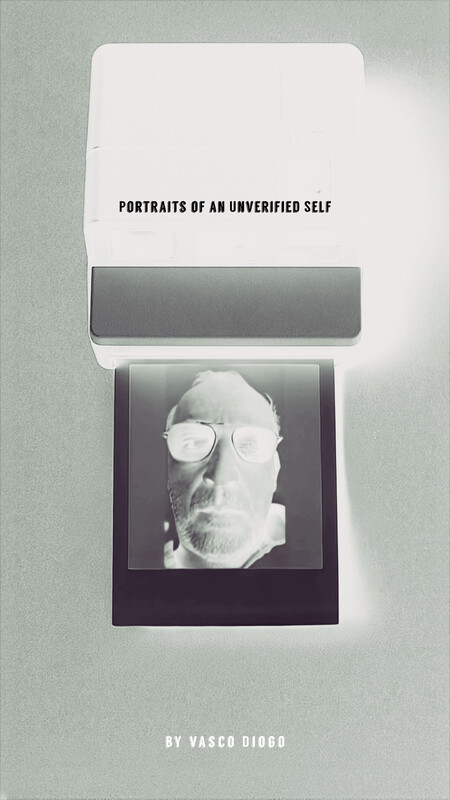
Portraits of an Unverified Self operates in the unstable interval between identity, play, and technology. The vertical film/installation proposes a succession of figures that do not fix a subject, but rehearse multiple possibilities of presence, recognition, and failure. From the author’s own image, mutant figures emerge—visual heteronyms—that oscillate between recognition and estrangement, maintaining a fragile connection to the original body.
Portraits of an Unverified Self by Vasco Diogo, feels like a fever dream exposed to the internet. The film lives in the space between identity, play, and tech, where the self is never fixed and never safe. What we see is one body, one face, endlessly shifting. Not improving. Not resolving. Just mutating. The artist’s own image becomes raw material. From it come doubles, distortions, and visual stand-ins that almost resemble him, then slip away. Recognition keeps failing. That failure is the point.
Shot vertically, the film borrows the language of phones, selfies, apps, filters. It looks familiar at first, like portrait tests or casual snaps. Then it breaks. Faces inflate like balloons. An older man turns into a baby. Construction workers dig into a human face. The same figure becomes packaged meat, a stress toy, on display at a gallery. He shifts eras, genders, roles, and symbols without warning.
AI is clearly in play here, but not as a tool for polish or control. It acts more like a prankster or a glitch. It mutates rather than explains. The images refuse to settle into one story or one truth. They feel closer to a fever dream than a tech demo. Like a stack of Snap filters pushed too far, edited together until the self collapses under the weight of its own versions.
There’s humor, but it’s uneasy. There’s beauty, but it never lasts. The body keeps getting squished, stretched, erased, praised, consumed. Strong, toy-like sound effects make the transformations feel physical, almost cartoonistic with their violence. The gallery on the wall turns the human in the portrait into skin and bone. The viewer shifts with it. Watching starts to feel like participation.
Power, fame, desire, and worship all brush past the same face. None of it sticks. Some images repeat. Others return with small changes, like the system is testing variations and failing each time.
Near the end, the only clear text appears: “What do you see?” It lands like a challenge, not a prompt. By then, the question is less about the figure on screen and more about the viewer. About how badly we want coherence. About how quickly we accept distortion when it wears a familiar face.
Portraits of an Unverified Self does not offer answers or closure. It shows a self treated as data, toy, myth, and mistake all at once. A human experience pushed into forms that should not be possible, yet feel uncomfortably close to daily life online. The film understands that in a world of constant self-display, identity is no longer proven by clarity, but by how much instability it can survive.
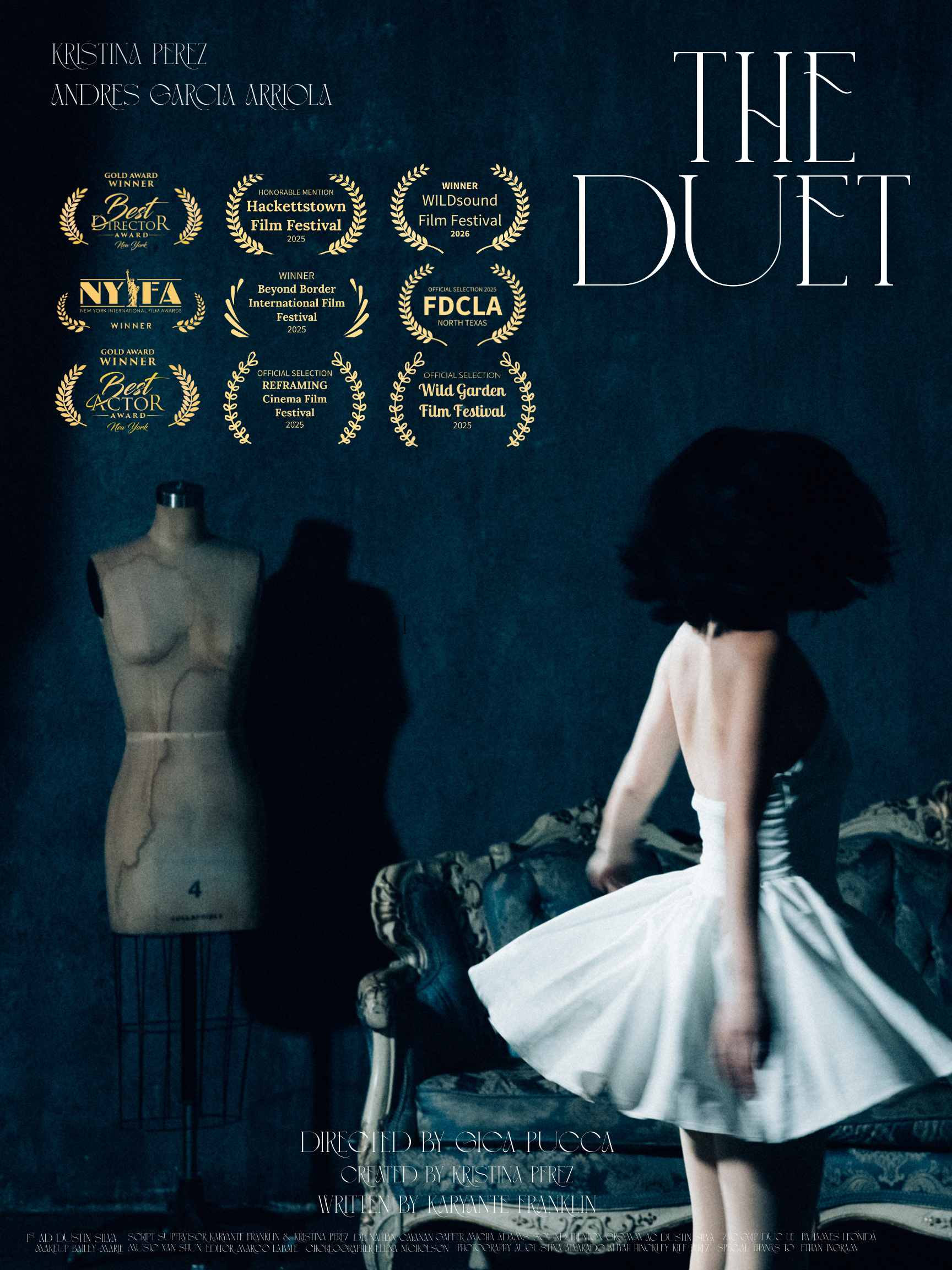
Kristina Perez is the creator, actress and co-writer of The Duet with her writing partner being Karyante Franklin. This short film is about connection through music and was directed by Gica Pucca.
One of the things I adored was the attention to detail within the film. The way the light played on the dancer and how the colors within the room matched the music box she held. Shadows played a huge role for the violinist, as well as a warm, more masculine color palette. Micha J. Adams handled all the lighting and it was gorgeous. The cinematography within the film was equally exceptional and we have Nathan Cayanan to thank for it. I truly appreciated the artistry with the camera and capturing Kristina’s reflection in the mirror of the music box.
There is this mysterious back and forth between the violin and the dancer as they explore their unspoken connection and it proves that music is a universal language.
A young, ambitious journalist will have her first high-profile live interview with the President. The country is on the verge of a significant war, externally and internally. After a series of questions, the interview takes a dangerous course.
Review by Julie C. Sheppard
Though fictional, the short film Exposed is an apt parallel with what is going on in the world today, as so many conscientious journalists courageously seek to reveal the truth. The talented performer playing the central character convincingly depicts a journalist who is in the right profession, given her desperate need to expose corruption, even at the risk of losing her job. Another skillful performer plays the president, a driven woman who, unlike the journalist, seeks to hide the truth from the general population, as so many politicians are known to do. The structure of the short is airtight, moving from a strong set up of the journalist fighting to expose the president’s lies at the potential cost of bringing the network down, to the interview that pits the two together in a parry of wits.
In advance of the interview, the staging of a flurry of production staff working on a time crunch is quite believable, as is the flashy TV promo announcing the upcoming event. Once the interview begins, the brilliant screenplay reveals a strong undertone of mistrust and competitiveness between the two female leads, who have both fought hard for their positions. What begins as a civil interchange, the situation quickly moves to justified anger of the journalist and attempts of political manoeuvring and denial by the president.
The resulting tension in the production booth, combined with the pride of the journalist for doing her job, moves the situation rapidly into dangerous territory. Despite the undertones of danger, it can be quite satisfying for the viewer to see that justice is served in this fictional account when, in our world today, there are so many untold secrets that journalists of integrity are constantly having to fight tooth and nail to expose.
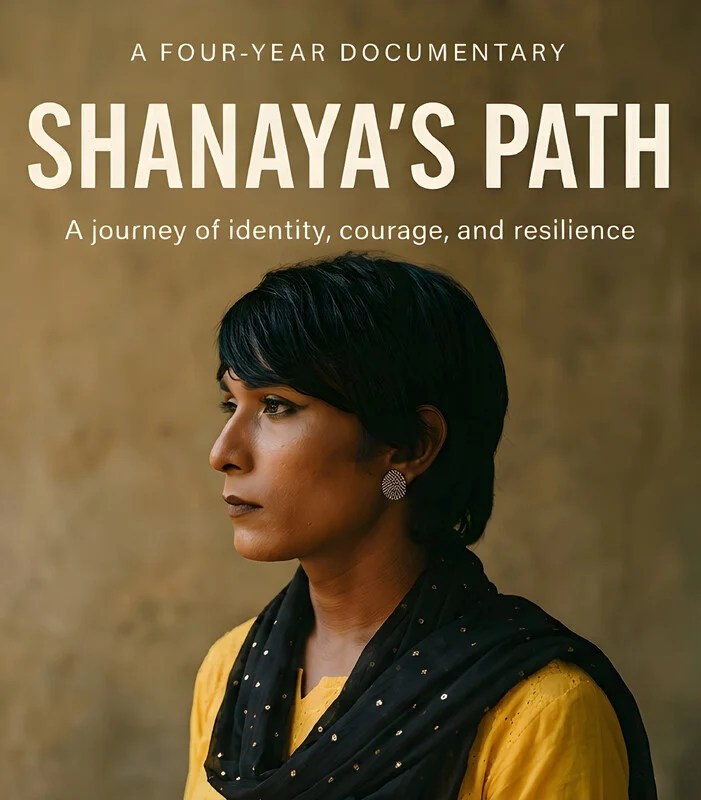
Shanaya’s Path follows the intimate journey of Shanaya, a young person from Darjeeling who identifies as a woman and dreams of transitioning despite immense social and familial resistance. Since gender norms are rigid and visibility for trans people is scarce in her home town, Shanaya leaves for New Delhi, but her desire to become her true self is met with hostility, shame, and fear.
Review by Julie C. Sheppard:
Shanaya’s Path is a film that highlights how important it is to have self love, in a world that so often can be harsh and judgmental. We are introduced to Shanaya, a transgender woman in India, who is confident and self-assured despite the reluctance of many of her family members to accept and understand her. This documentary also does remarkable job of showing her transitioning journey from 2019 to 2025, as she goes through tangible steps such as growing her hair longer, working on removing facial hair, taking hormones and the necessary steps to surgery.
The film reveals also her beauty, inside and out. We are treated to intimate footage of her warm, gentle manner, and her skillful eye for fashion items and colour, and her talent for make up and hair design. In addition to showing Shanaya’s beauty, the camera also captures the vibrancy of many parts of India – – from gorgeous misty trees and valleys to populated streets, to modern corporate thoroughfares.
While Shanaya is shown going through her transitioning with hope and optimism, the interviews of the various people who do not understand nor accept her were challenging to watch. However, Shanaya’s inner spirit and determination show through repeatedly in this film. In addition to showing her resilience, there is a real sense of her relief and joy during special events that she attends, such as transgender fashion shows and festivals. You sense her inner peace that comes from being around other people who do not shame, but the exact opposite – – who celebrate, love and accept her.
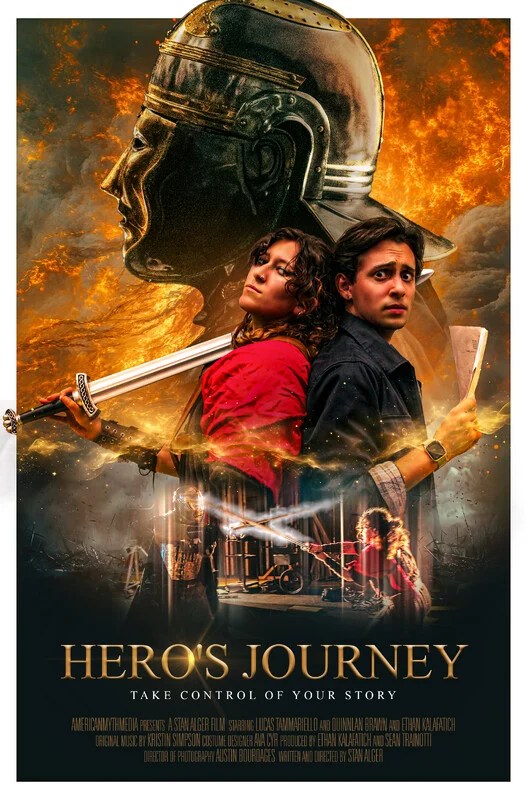
When the fourth wall breaks, a young filmmaker must find his inner creative confidence and take control of his story before it takes control of the world around him.
Review by Victoria Angelique
The path filmmakers take isn’t an easy one, particularly when strong personalities enter the picture, which is depicted in HERO’S JOURNEY. Artists are typically quiet and just want to get their vision completed in the least continuous way possible. The majority of creative people are like the protagonist, Cal, as he bites his tongue to let Tommy override his vision.
Cal is the epitome of most independent filmmakers. He wants to complete his film, but Tommy is calling the shots and no one wants to call out his ego. Tommy is the egoistical actor that projects his own insecurities onto Cal and the Stuntman to dominate the set. When Tommy is finally called out for his behavior, he tries to silence Cal by reversing the script to accuse the filmmaker of doing everything that Tommy has done since the beginning of the shoot.
Once everything goes quiet, Cal is able to focus as he attempts to rewrite the story to appease Tommy’s massive ego. This is the moment in the short film when the mind of an artist literally comes to life. If anyone doesn’t understand the way filmmaking or artistry works, this would be the film to watch. Cal’s characters literally come out to meet him as they play out the story in front of him. This is how most stories come to life for writers, they can see and hear their characters as if they are standing directly in front of them, just like Cal’s characters.
It is this moment that gives Cal the ability to fight for his story and fire Tommy. He knows his characters better than the egotistical actor that claims to have connections, when really Tommy simply doesn’t not want to be called out for his atrocious behavior. Cal is able to fight for the story he envisioned because his characters are people that he knows and loves. He created them and the only way his film will be a product he’s happy with will be if the vision reflects his story.
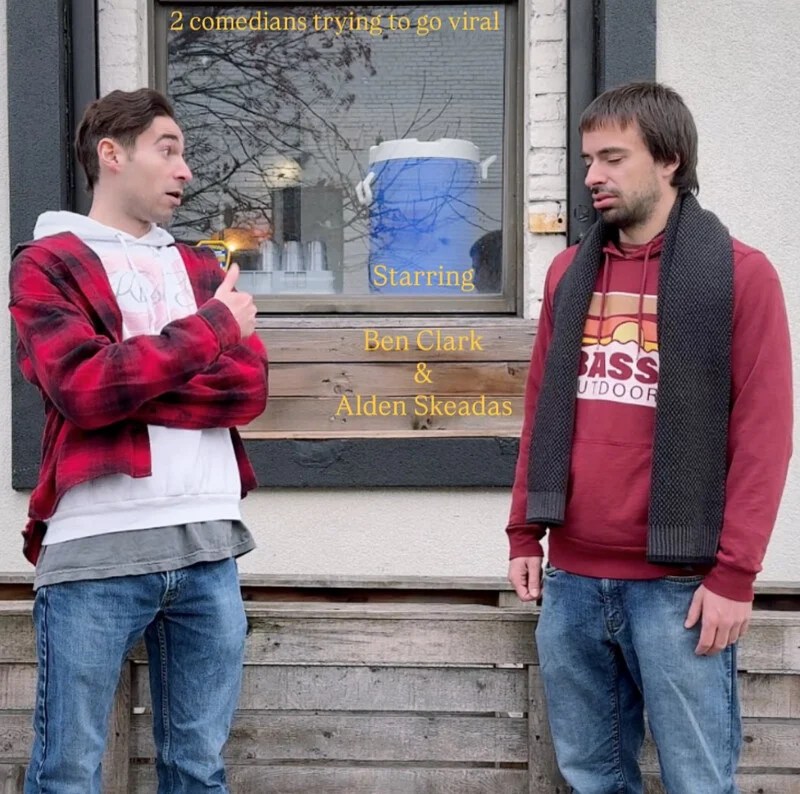
This short film is about a comedian getting super frustrated because his comedy career stinks! So he decides to do some crazy violent stuff. It is a scripted fictional comedy, but it is based on the anger, depression, and anxiety I’ve seen first hand from my unsuccessful comedian friends. (Don’t try what you see in this film at home)
Review by Andie Kay:
Comedians have it rough. Endless open mic nights, workshopping material, writing then re-writing and there’s always someone in an audience who makes it their personal mission to destroy your set by heckling you. Being a stand up comic is difficult on so many levels.
Everyone has a different idea of what is funny and as a comic you have to find your niche.
2 Comedians Trying to Go Viral was written, directed, edited and starred Alden Skeadas. This character driven story shines a light on the anger, frustration and depression that so many comics go through trying to create a break and how far they are willing to go to get one. The film’s soundtrack was provided by a midi library from 1983 with some really nice cinematography from Nathan Paul Szoch. The story is dealing with some wonderfully honest issues and pursuing them in an over the top way.
This is a film that can’t be pigeon-holed into a single category, it’s not strictly a comedy, it’s more of a thoughtful dramedy.
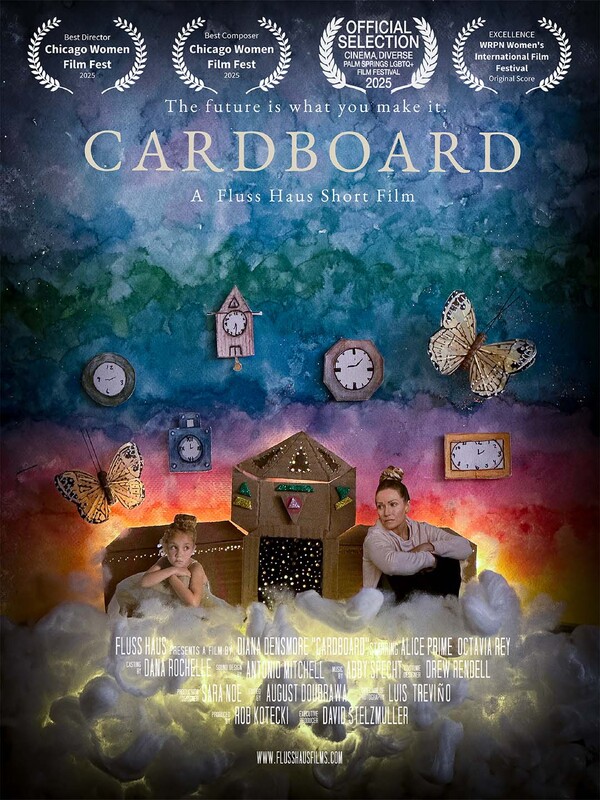
CARDBOARD, 23min., USA Directed by Diana Densmore A neglected young girl builds a cardboard time machine and runs away to the future only to find her adult self in the throes of depression, as the two connect they remind each other of the joy of loving oneself.
1. What motivated you to make this film? Alice Prime, the lead actress, had been bugging me to make something with her and my daughter in it for years. So I was trying to write something that would allow them to play opposite each other. The subject matter comes from my own struggles with mental health.
2. From the idea to the finished product, how long did it take for you to make this film? four or five years… I guess Alice Prime (the lead actress) and I started talking about it, and then a year later, I wrote the first draft. Probably, a year after that, we had a shooting script, and we went into pre-production and production in earnest. By the time we were through the whole post-process, it was another year.
3. How would you describe your film in two words!? The process of making it? Chathartic chaos. The final project? sweet sci-fi.
4. What was the biggest obstacle you faced in completing this film? The rest of life is happening at the same time.
5. What were your initial reactions when watching the audience talking about your film in the feedback video? It’s nice to hear that people connected with the themes and appreciated the film.
6. When did you realize that you wanted to make films? As a kid, my siblings and I would put on plays and make videos. I’m a child of the 80s, so camcorders were just taking off. But I don’t think I really thought about it as a ‘real job’ until I was in college and had to pick a major. Although at that time I thought I wanted to “Be” a screenwriter. Now, I’ve just sort of accepted that I’m a person who does a lot of creative things.
7. What film have you seen the most in your life? Goonies, Shawshank Redemption, and Run Lola Run are all tied.
8. What other elements of the festival experience can we and other festivals implement to satisfy you and help you further your filmmaking career? I really enjoy seeing the film with the audience, so I like in person screenings where I can attend and engage with the viewer.
9. You submitted to the festival via FilmFreeway. How has your experiences been working on the festival platform site? Great
10. What is your favorite meal? In the winter? I like a big pot roast. In the summer? a large salad with a light dressing.
11. What is next for you? A new film? I’m always working on the next film. I also enjoy painting, poetry, and other forms of writing and art. Keep your eye on www.flusshausfilms.com to follow our work.
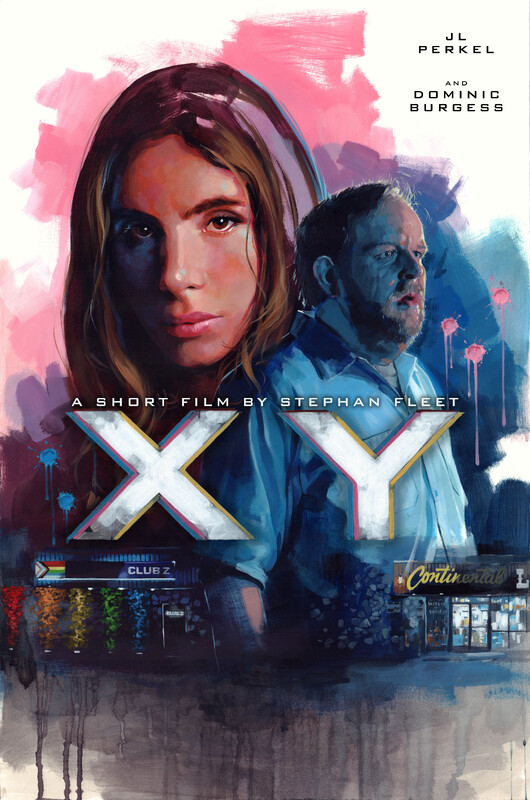
XY, 12min., USA Directed by Stephen Fleet A repressed convenience store clerk named Y and a trans cam girl named X have their lives tragically intersect at a bleak strip mall in today’s America. A country where identity is regulated and guns are not.
Get to know filmmaker Stephen Fleet & Actor/Co-writer JL Perkel
1. What motivated you to make this film?
I (Stephan Fleet) had just come out as queer at the Age of 43. My life was taking a huge turn and I was doing some research into queer culture when I came across the Club Q shooting in Colorado. I started thinking about the juxtapositions of my old life as a closeted “Cis-het” white male who grew up in the 90s. All my oppression and anger. At the same time, I had made some wonderful friends in the trans community and all I saw was truth and joy. People who just wanted to live their lives. XY became a study contrasting the two. Really trying to examine just how we get to such horrific violence and what it means to the innocent.
2. From the idea to the finished product, how long did it take for you to make this film?
I started developing the film in late 2023. The script came together in the first half of 2024. The missing ingredient was the great JL Perkel, who came in not just as the lead actress, but as a co-writer who helped me really dive into the trans perspective authentically. We filmed in July of 2024 and finished in January of 2025.
3. How would you describe your film in two words!?
Thought Provoking.
4. What was the biggest obstacle you faced in completing this film?
Filming in Los Angeles! It’s hard and very expensive!
5. What were your initial reactions when watching the audience talking about your film in the feedback video?
Pleasantly surprised at everyone spot on analysis and understanding of the nuances. Their genuine appreciation for our hard work was humbling.
6. When did you realize that you wanted to make films?
JL and I both agree – when we were both we tots!
7. What film have you seen the most in your life?
For me: The Adventures of Baron Munchausen by Terry Gilliam. For JL – The Little Mermaid.
8. What other elements of the festival experience can we and other festivals implement to satisfy you and help you further your filmmaking career?
Networking is always top of the list!
9. You submitted to the festival via FilmFreeway. How has your experiences been working on the festival platform site?
Filmfreeway is great and easy!
10. What is your favorite meal?
Sushi for both of us!
11. What is next for you? A new film?
Definitely a new film. Right now I (Stephan) am the lead VFX Supervisor on a TV show for Amazon and we are finishing up to air in April. After that I plan on developing, drumming up the financing for, and making an indie feature. JL and I also film a lot of micro shorts!
 Festival Reviews