Turmoil – Chapter One, 6min., Lebanon Directed by Sary Andre El Asmar A young woman lives between two worlds: Europe, where she’s built a life, and Lebanon, the home she can’t stop longing for. Torn between memory and desire, she drifts back and forth, riding the emotional rollercoaster of exile, identity, and belonging.
Get to know the filmmaker:
1. What motivated you to make this film?
What motivated me to make this film was the complex feeling of belonging and displacement that many Lebanese expats carry. I started filming randomly with no clear plan. When my friend, who lives in Germany, came back to Lebanon we spent many days together, and after that i began to sense the constant push and pull, the urge to return to her home but at the same time the desire to leave again. For me home is where your roots are, but it’s also where safety feels uncertain. The film became a reflection of living between two places, two lives, and two versions of what “home” means.
2. From the idea to the finished product, how long did it take for you to make this film?
Well actually, I have been shooting randomly for about 1 year and a half. I am a sea lover and mountain lover. So I used to shoot randomly every time I went out. But the idea of putting those shots into the final product took me like 3 months.
3. How would you describe your film in two words!? Wandering Roots
4. What was the biggest obstacle you faced in completing this film? Emotional breakdowns
5. There are 5 Stages of Filmmaking: 1) Development. 2) Pre-Production. 3) Production. 4) Post-Production. 5) Distribution. What is your favorite stage of the process and why? 4) Post-Production because this process is where the real story telling happens , where I can put all my emotions and meanings to start to take shape.
6. When did you realize that you wanted to make films? Well, I have graduated as a filmmaker and passion for filmmaking and films has been there all my life
7. What film have you seen the most in your life? I have watched so many old films from Tarkovsky, Alfred Hitchcock, Martin Scorcese, etc….
8. What other elements of the festival experience can we and other festivals implement to satisfy you and help you further your filmmaking career? Well if i was present at the festival a debate with the audience about the film would be nice.
9. You submitted to the festival via FilmFreeway. How has your experiences been working on the festival platform site? Experience was great and professional
10. What is your favorite meal? We have a very well know meal in Lebanon called “Riz A Djej” in english it is rice with chicken with specific spices and a side salade
11. What is next for you? A new film? My next film is the second part of this film but it will be filmed from Germany or France.
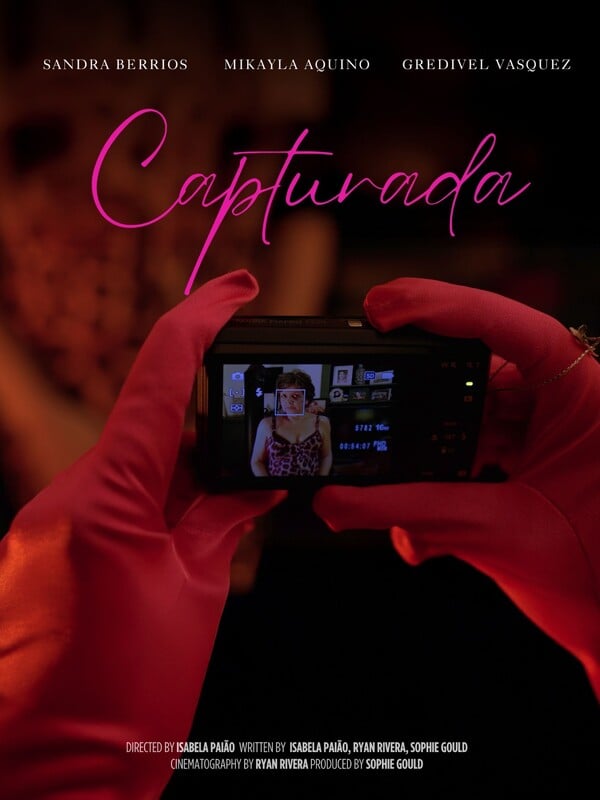
CAPTURADA, 10min., USA A Film By Sophie Gould, Bela Paião, and Ryan Rivera
A grandmother, Alma, secretly explores a new relationship online, rediscovering her identity beyond the roles of mother and grandmother. When her hidden life collides with her family, Alma faces a transformative journey of self-love, desire, and liberation.
Get to know filmmakers Bela Paião, and Ryan Rivera:
1. What motivated you to make this film?
Bela: This film was inspired by my grandmother’s story. After my grandfather passed away, she fell into a really dark place. She stopped talking, eating, and even walking. We all thought she wouldn’t make it much longer. But then something unexpected happened: she discovered Facebook. Through connecting with people online and even falling in love again, she found a new sense of life. She started learning English and going to the gym, and she had a reason to wake up every day.
It really moved me to see how love, desire, and human connection can literally bring someone back to life. That’s what inspired me to tell this story. When I shared it with Sophie and Ryan, they immediately connected with it, and we decided to create something that was both fictional and deeply personal, a film about the power of love and desire to keep us alive.
2. From the idea to the finished product, how long did it take for you to make this film?
Ryan: It roughly took 5 months to create the finished product. We first talked about this idea in December and then throughout the first half of the year we worked to bring the story to life!
3. How would you describe your film in two words!?
Ryan: Unexpectedly heartfelt
Bela: Homely and Dynamic
4. What was the biggest obstacle you faced in completing this film?
Ryan: The biggest obstacle was finding the cast as this was our first time recruiting a lead actor that was not a student. Throughout my time making films, I usually would call up a friend I knew and ask if they wanted to be in my project. This time it was different because our lead had to be a hispanic grandmother. It was a role we couldn’t fill from our immediate circle, and I was initially unsure how to approach it since we had no prior experience casting outside our community.
I spent time researching casting platforms and reaching out beyond our typical channels. Thankfully, the effort paid off! I found a group of actors who not only fit the roles but genuinely looked and felt like a real family. I’m incredibly grateful they believed in the project and dedicated their time to help bring the story to life.
Bela: It was definitely casting. We lost our main actress just two days before the shoot. It was a really stressful moment, but with a mix of miracle and hard work, Ryan found Sandra and honestly, she was meant to play that role the whole time.
5. What were your initial reactions when watching the audience talking about your film in the feedback video?
Bela: I felt so honored. Time is so valuable, and seeing that people took time out of their lives not only to watch the film but also to share their thoughts about it was the greatest honor.
Ryan: Watching the video showed me just how genuinely people are responding to the project. When I submit to festivals, the most I usually receive is a congratulatory email, so actually seeing audience members’ feedback was a complete game changer for me.
6. When did you realize that you wanted to make films?
Bela: Growing up, I always made movies for my friends to act in. I never saw it as a hobby or a passion; it was just something I did without thinking much about it. When it was time to choose a major, the same thing happened again. I imagined myself in all kinds of professions: a doctor, a lawyer, an architect, a cook, a teacher… and in every one of those highly detailed fictional scenarios, I was miserable. When I tried picturing myself working with film, nothing came to mind. At the time, that mystery was enough to make me want to pursue it. Now, thinking about it, I realize it might have been because, just like when I was little, filmmaking wasn’t something separate for me to picture. It was already part of who I was.
Ryan: As a kid, I always loved creating stories, and taking filmmaking classes in high school gave me a glimpse into a world I wanted to keep exploring. I enjoy piecing together a story through a series of shots and bringing them to life through editing.
7. What film have you seen the most in your life?
Ryan: The film I have seen the most is Inside Out. The story in that film is such an important coming of age story that most people can relate to.
Bela: The Hangover. The day that movie stops being funny to me is the day I’ll start to worry about my future.
8. What other elements of the festival experience can we and other festivals implement to satisfy you and help you further your filmmaking career?
Ryan: I think more festivals should provide more feedback on the films. I really love how this festival provided feedback and constant communication with the filmmakers. I loved hearing from the audience what resonated with them.
9. You submitted to the festival via FilmFreeway. How has your experiences been working on the festival platform site?
Ryan: This platform site is crucial in promoting independent filmmakers who don’t have a lot of access to big name distributors. I really appreciate the student discount the site offers as many of us do not have enough money to submit to festivals that charge a lot for their submissions.
10. What is your favorite meal?
Ryan: My favorite meal is pizza!
Bela: Anything cooked by Sophie
11. What is next for you? A new film?
Ryan: Lately, I’ve been focusing on creating more short-form social media videos. As I transition into a post-grad environment, I’m shifting toward visually-driven concepts rather than in-depth narrative pieces. I am trying to grow my portfolio as much as possible!
Bela: I’m currently working as a director at a production company in Brazil called Chucky Jason. Hopefully, during this time, I’ll be able to create work that I’m truly proud of and continue growing as a filmmaker.
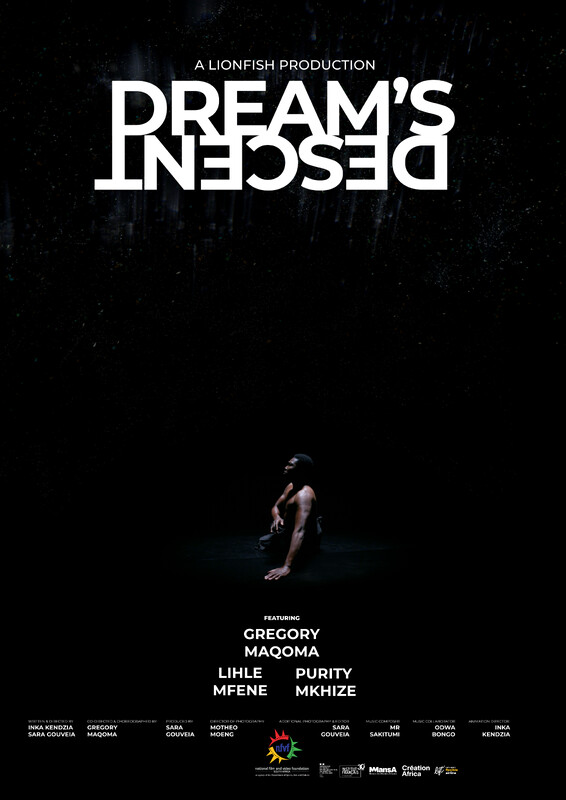
DREAM’S DESCENT, 10min., South Africa Directed by Sara Gouveia, Inka Kendzia, Gregory Maqoma “Dream’s Descent” is a hauntingly surreal dance film that traces the journey of a solitary dancer as he navigates a dreamlike landscape fractured by memory, identity and desire. Drawn into a shifting world where time dissolves and space contracts, he encounters fragmented versions of himself, each embodying a suppressed emotion, forgotten trauma or repressed aspiration. Through ritualistic choreography and symbolic confrontations, these encounters blur the line between self and shadow. As the dancer spirals deeper into the labyrinth of his subconscious, the movement becomes a language of reckoning.
Get to know the filmmakers:
1. What motivated you to make this film?
At the heart of this film lies a fascination with the invisible barriers we build within ourselves: the fears, doubts and insecurities that often keep us from realizing our full potential. We were drawn to the idea that the greatest obstacles to our dreams are not external forces, but rather the internal landscapes of fear and self-limitation. This became our central question: “What do our fears look like, and how do we overcome them?”
The film became a journey to visualize and physicalize that inner struggle. By creating a surreal, nightmarish world, we sought to externalize the psychological space of fear: a realm where the subconscious takes shape and where the dancer must face the shadows of his own making. Dance, as a form of storytelling, allowed us to embody these emotions through movement rather than words, while the integration of animation and NeRF models gave us the freedom to bend reality and craft a language that lives between the real and the imagined.
The three-part collaboration emerged from our desire to experiment with form and medium, in an attempt to find a new visual language that could express the complexity of human emotion. The combination of powerful, dramatically lit choreography and digitally manipulated environments creates a world that feels both tangible and dreamlike, reflecting the tension between fear and liberation.
Our tone and visual approach reflect the intensity of this inner confrontation. Though deeply rooted in a South African context, the film speaks to a universal truth: the journey of facing one’s fears and discovering strength within. By blending the local and the global, the real and the surreal, we aimed to create a piece that resonates across boundaries and invites audiences to see their own fears mirrored in the dancer’s journey.
2. From the idea to the finished product, how long did it take for you to make this film?
It took about 12 months.
3. How would you describe your film in two words!?
Surreal dreamception 😉
4. What was the biggest obstacle you faced in completing this film?
We were all juggling different projects at the time, which made coordinating schedules a bit challenging. Balancing everyone’s availability and creative energy required some flexibility and patience, but it was all part of the collaborative process. Despite the logistical hurdles, the experience itself unfolded beautifully. Once we were together, the creative flow was effortless. The team brought such an incredible mix of talent, vision and openness to experimentation that every session felt inspiring. It was one of those collaborations where everyone contributed something unique, and that collective energy really elevated the final piece.
5. There are 5 Stages of Filmmaking: 1) Development. 2) Pre-Production. 3) Production. 4) Post-Production. 5) Distribution.
What is your favorite stage of the process and why?
All stages of filmmaking have their moments of absolute magic: from the first spark of an idea to seeing the final image come to life on screen. But perhaps the most freeing and creatively expansive stage is the development and writing phase. This is where the heart of the project begins to take shape, when the story is still fluid and full of infinite potential.
In this stage, there are no limits yet: no practical constraints, no production logistics, no compromises. It’s a space where imagination can roam freely, where every image, emotion and idea feels possible. The writing process allows you to dream boldly, to follow instinct and curiosity wherever they lead. It’s where the themes and emotional core of the film are discovered and refined, and where the unique tone and visual language begin to emerge.
Of course, later stages bring their own magic: the collaborative energy of production and the transformation that happens in post, but writing remains that rare moment when you can explore without boundaries. It’s the stage that reminds you why you wanted to tell the story in the first place, before the realities of budget, logistics and time step in. It’s pure creation; the moment where everything begins.
6. When did you realize that you wanted to make films?
Sara: I’ve always been fascinated by film, particularly independent cinema and experimental video art. From a young age, I was drawn to the way moving images could express emotion, atmosphere and ideas beyond the limits of spoken language. I remember being captivated by films that dared to challenge form and convention, pieces that felt more like visual poetry than traditional storytelling. That sense of creative freedom really spoke to me and shaped how I think about visual expression.
My journey began with a background rooted in the visual arts. This foundation gave me a strong appreciation for the image as a standalone form of storytelling. Over time, that curiosity naturally evolved into filmmaking, first through documentary, which felt like the perfect bridge between observation and artistic expression. Working in documentaries taught me how to listen, to find narrative within real life and to connect deeply with human experience. That intersection continues to inspire me: the idea that film can be both deeply personal and visually daring, a medium where truth and imagination coexist.
Inka: I am grateful to have grown up in an artistic family with generations of painters.
From an early age drawing and painting was my refuge from the world, creating dreamworlds and expressing hidden emotions in symbolism within artworks. During my early art directing career I was amazed at how film editing can truly transform any filmed material by giving shape to a story. I began teaching myself animation and motion design as I was also deeply inspired by the freedom of expressing in moving images.
I feel transformed when watching meaningful stories in which I can find myself in and I wish to be able to create films and artistic experiences that can do the same for others, thereby connecting humans to each other and themselves.
Greg: Point 6: My medium is in dance and telling stories through the body – I’ve always been fascinated by the ability of the body to express a variety of emotions. Many of my audiences have always expressed how my choreography feels like a film and I became more and more curious about making films. It was during Covid 19 that I seriously found the spark to create dance films.
7. What film have you seen the most in your life?
Impossible to answer, but here go a few
Sara: Adaptation, Being John Malkovich, Mirror, Paris Texas
Inka: The Fall, Spirited Away, Pina, The Science of Sleep
8. What other elements of the festival experience can we and other festivals implement to satisfy you and help you further your filmmaking career?
It’s always a real pleasure to connect with people in the industry, not just to exchange ideas, but to build genuine relationships that often lead to unexpected opportunities. Meeting other filmmakers and creatives is incredibly inspiring; hearing about their processes, challenges and unique perspectives always sparks new ways of thinking about our own work.
Collaboration is such a vital part of filmmaking and these conversations often become the starting point for future projects or partnerships.
If we’re able to set up some online meetings, that would be wonderful. It’s a great way to bridge distances, especially in a global creative community and to continue building those connections even when we’re not in the same place physically. We’re always open to sharing ideas, discussing projects in development, or simply exchanging experiences about the craft and industry; it’s those interactions that keep the creative energy alive.
9. You submitted to the festival via FilmFreeway. How has your experiences been working on the festival platform site?
The platform has been very easy to handle.
10. What is your favorite meal?
Inka: Ramen Noodles
11. What is next for you? A new film?
Sara: I am currently finishing another short film called “The Nights Were Velvet”.
Inka: Together with Sara, I am currently developing an immersive VR experience.
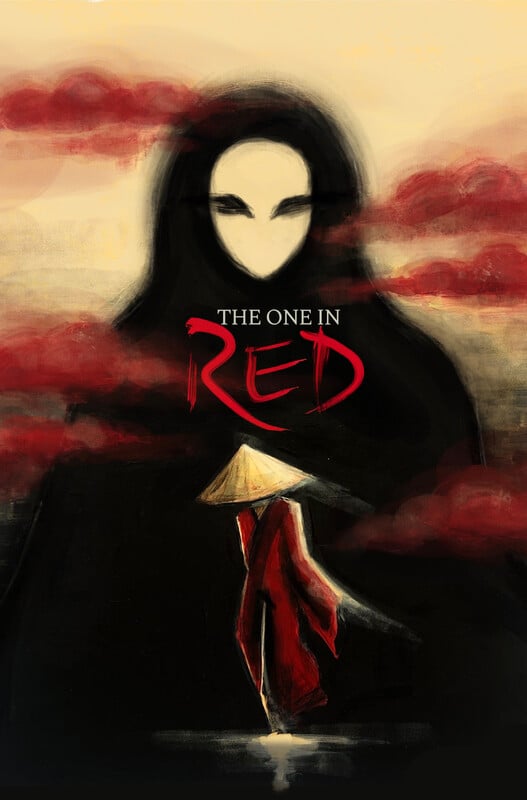
The One in Red, 17min., USA Directed by Nicholas Muzzillo A Red Ronin, guided by his past to a place of great significance, is hunted by a Gray Ronin, but not for the reasons we think.
My love for the art of the Jidaigeki genre and the need to put myself out there. Samurai Jack really shaped my love for Samurai media and is the reason I pursued the arts. Kurosawa and Kobayashi’s filmography also really resonated with me, and how every composition and image tells its own story beyond the beautiful writing and character work. Then there is Vagabond by Takehiko Inoue. Reading this story really pushed me to explore stories of the human condition and the idea of what it means to live. Every panel explores an idea of emotion or philosophy, and the compositions really inspired a lot of the framing of this film.
There’s also my own life. My life has always been chaotic and at times, lonely. There are people I feel I failed, and in those moments, I tried to understand what it meant to live and if it was worth it to keep going. I had many discussions with myself, and in those moments, there were the darker thoughts which resembled The Cloaked Figure, but then, as I grew and found myself, I started to understand that there is no paradise without suffering, which resembled The Gray Ronin. This script was nothing but a collection of internal discussions I’ve had with myself, which made this process both so meditative and scary. To be able to dissect my own mind, but to also become so vulnerable.
I felt it was right for my thesis film at Ringling to make not only a piece about myself but also the art that I was very passionate about.
2. From the idea to the finished product, how long did it take for you to make this film?
It took around 1.5 years to make. I wrote a completely different version of the film in my junior year class, and it went through so many stages that I did on my own time in the summer with little help from the film department, so I could really hone in on it without interference. Later, my department head helped me shape it very well and fine-tune it without taking out any of the secret sauce that made it my film.
We shot it in March of 2025 and finished the final cut in May.
3. How would you describe your film in two words!?
“Live on.” – Gray Ronin
4. What was the biggest obstacle you faced in completing this film?
The Clouds. It was a big hurdle working with my Production Designer, Juan, to figure out what was right for them. By the end, we decided to go with a stronger red/pink aesthetic, matching the theme of red, along with painting glitter, giving them a much stronger presence.
5. What were your initial reactions when watching the audience talking about your film in the feedback video?
It was cool. I actually got some really high praise on Letterboxd from people I don’t know, and to see this trend of people liking it continue really made me feel good about what I did. Some of my department didn’t seem as supportive of its very unique and ominous nature, and that it “made no sense,” but it’s great to see that audiences both get and love the film. I’m also really appreciative of the amount of attention that the people in the video put into the technicalities and how it uplifted the story. I spent so much time honing in on making sure every shot was both gorgeous and purposeful. Especially seeing that this is a student film and that I’ve made people cry really showed me how much more there is to explore.
6. When did you realize that you wanted to make films?
Well, I wrote it in the writing class for my thesis, but it was a version that didn’t resonate with me. During the next semester, after that class was over, I just saw this image in my head of just a Red Ronin being followed by a Silhouetted Cloaked Figure, and I just realized that the possibilities were endless for how I could approach it.
7. What film have you seen the most in your life?
Recently, I’ve rewatched Hundreds of Beavers A LOT. I’ve shown it to so many people, and sadly, not everyone gets it, but I genuinely believe it’s a movie the industry needs right now.
8. What other elements of the festival experience can we and other festivals implement to satisfy you and help you further your filmmaking career?
Honestly, I want to be accepted by as many festivals as possible and put into a screening for people to experience my work on the big screen, and then whatever happens happens. Because the right person might see it…
9. You submitted to the festival via FilmFreeway. How has your experiences been working on the festival platform site?
Good. It’s a good platform that I learn more about everyday to improve my chances of being selected.
10. What is your favorite meal?
Right now, I’m on a calorie deficit, so I LOVE the grilled chicken sandwich from Chick-fil-A with a small mac and cheese and extra grilled filets. The macros are incredible. When I started, I was 198 lbs, now I’m 165.
11. What is next for you? A new film?
I’m in L.A. right now and am planning to move here in December. What I’m doing is getting gigs done for the next couple of years, adding to my experience, and then going to the AFI directing program. My mom has been incredibly supportive of the process, and I thank her so much for it. I recently got to tour the campus, and the curriculum and creative atmosphere really appealed to me. The amount of creative energy I’ll be saving for that will be astronomical. I can’t wait!
After AFI, I’m planning to have a 10-episode One in Red anime mini series ready to pitch. I’ve been planning it ever since finishing the script to delve more into the lore and extended history, and the resolution of everything that happens before and after the events of this film. I think once it’s done, people are going to be absolutely shocked by the answers that are going to come. I’m even making it far more personal and stylized than the short.
From there, I have other ideas in mind for either one-off movies or mini series. I never want to franchise or stick to something for too long because at some point, the steam will run out. Our creative potential is endless, and I love creatives like Kentaro Miura (Berserk), but I don’t want one story to define me.
CONNECTION, 21min., USA Directed by Tom White A government agent is tasked with interrogating a silent prisoner—but the true danger lies in whether the voice in his head is his own… or something else entirely.
Depression and a growing understanding of mental health. After becoming homebound due to a rare disease, I was becoming more and more isolated and honestly longing for human connection.
2. From the idea to the finished product, how long did it take for you to make this film?
I believe I first had the idea to do a sci-fi film, back in 22 after completing my fan film Lex: The Unauthorized Documentary. But the actual story for connection did not hit me until October of last year and we did not complete it until June ’25 so approx 8 months.
3. How would you describe your film in two words!?
Truly tragic.
4. What was the biggest obstacle you faced in completing this film?
The way that we had to shoot it. Being homebound, I wasn’t able to physically be on set so the way that I made my film was through a combination of live twitch stream, FaceTime, and a Bluetooth speaker I used to speak to my crew and actors on set like Charlie’s Angels. So it was different because none of us from myself all the way down to my PAs and any of my actors— no one had ever made a film this way before… but now we have and I’m damn proud of it.
5. What were your initial reactions when watching the audience talking about your film in the feedback video?
it warmed my soul to hear people who do not know me, be able to watch my film that I wrote myself and for them to really get it. Where a spill makers on an Indie level that we get to hear people dissecting our work after really watching it. And honestly, hearing the one reviewer call my film “Nolan-esque” was the highlight of my week.
6. When did you realize that you wanted to make films?
First year in college when I realized as an actor, I wanted more control over how the “story was told” to the audience
7. What film have you seen the most in your life?
The Prestige
8. What other elements of the festival experience can we and other festivals implement to satisfy you and help you further your filmmaking career?
I actually thing the full experience of WildSound is great. The audience feedback is great
9. You submitted to the festival via FilmFreeway. How has your experiences been working on the festival platform site?
Very positive. I strictly only submit through FilmFreeway.
10. What is your favorite meal?
Pancakes and breakfast sausage.
11. What is next for you? A new film?
Well, Connection is actually the middle story of a 3 part anthology feature. I’m in the middle of production on Breakthrough, the story that will proceed it and we will shoot the final piece in first quarter of the new year.
FIRE IN MY BELLY, 5min. USA Directed by Steven Speliotis Richard was in his recording studio playing his guitar when he suddenly found himself in a cold sweat lying on the floor.
Get to know the filmmaker;
1. What motivated you to make this film?
When my friend Richard told me his heart stopped for 19 seconds
it took a minute to realize what that experience really meant.
My first question was: How did this experience change your life?
I really wanted to know his answer.
2. From the idea to the finished product, how long did it take for you to make this film?
It took an evening to talk and do a pre-interview and a day to film. and it took a couple weeks of editing and re-editing to get it to where I was happy with the story..
3. How would you describe your film in two words!?
second chance
4. What was the biggest obstacle you faced in completing this film?
Richard has lived a very colorful life and there was so much information to go through in our interview…
The Biggest Obstacle was to keep the story simple and on point with his heart stopping for 19 seconds and why he is recording his songs.
5. What were your initial reactions when watching the audience talking about your film in the feedback video?
I listened very closely to what each person felt and what was their biggest take-away.
And was pleased to know Richard’s story had a positive impact. People who don’t know Richard were impressed with his determination and positive attitude to keep on living after experiencing a near death experience.
6. When did you realize that you wanted to make films?
My “Documentary Filmmaker Antenna” is always up for a good story – So, as soon as Richard told me his heart stopped for 19 seconds I knew this was a story that needed to be told.
7. What film have you seen the most in your life?
“A Wonderful LIFE” – on repeat at Christmas Time… lol
8. What other elements of the festival experience can we and other festivals implement to satisfy you and help you further your filmmaking career?
Getting our films seen by others is great. feedback is wonderful and much appreciated.
Getting the right eyes on our films is even more important. Most filmmakers have a passion to work in the film industry, so learning how to produce and raise money for our next BIG project would be helpful knowledge to have.
9. You submitted to the festival via FilmFreeway. How has your experiences been working on the festival platform site?
FilmFreeway is like striking gold… The website is very organized, easy to navigate and with a little research filmmakers can find the festivals that fit a specific niche …
10. What is next for you? A new film?
My next film is to expand on “Fire In My Belly”.
To capture Richard and his band-mates making the album…
Making his dream come true.
My approach will be part Verite with minimal sit down interviews.
I want to be the fly on the walland capture the recording session as it happens and to get some of the BTS stories that might not otherwise be told.
Heal avec Delphine, 30min., USA Directed by Delphine Breyne Heal avec Delphine is a deeply personal docuseries that follows individuals navigating life after cancer, trauma, alopecia, and other challenges. Each episode invites viewers into a powerful journey of reconnection and renewal—beginning with an intimate look at the person’s world, followed by a transformative beauty restoration at Delphine’s atelier, and ending with a meaningful surprise to mark their new beginning. Through heartfelt storytelling, emotional connection, and light-touch artistry, the series introduces a new era of beauty and healing, where feeling truly seen becomes the start of renewed self-confidence, emotional healing, and personal transformation.
Heal avec Delphine was born from my daily journey with my clients who suffering from missing self confidence and hair loss.
A deep desire to show that beauty is more than appearance — it’s emotional restoration. As a beauty expert, I can tell you each scar, each loss, each mark are telling you a story .
The healing starts when they are seen, listen and restored.
I wanted to give them — and all of us — a voice, a space to heal, and to remind the world that transformation begins within.
2. From the idea to the finished product, how long did it take for you to make this film?
It took about two years from the first idea to the final cut. I receive thousands people from all over the world. I was the only witness of these amazing story. This project brings untold story to the light. I did the casting, auto finance and produce this docuseries.
3. How would you describe your film in two words!?
Emotional Restoration.
4. What was the biggest obstacle you faced in completing this film?
Finding balance — emotionally and logistically. Because the stories are real and deeply personal, I often carried the emotions home. At the same time, producing, directing, and running my beauty business required immense discipline and heart. But I learned that healing others heals you too.
5. What were your initial reactions when watching the audience talking about your film in the feedback video?
It moved me to tears. Hearing people describe how Heal avec Delphine touched their hearts validated every sleepless night. When strangers feel seen, it means the mission worked — that connection through honesty is universal.
6. When did you realize that you wanted to make films?
When I realized beauty and storytelling could merge. I’ve always seen faces as canvases, but film allowed me to capture the emotion behind them — the silent stories behind each pair of eyes. That realization changed everything.
7. What film have you seen the most in your life?
Probably Eat Pray Love — it mirrors the journey of rediscovery, resilience, and the courage to follow intuition. It reminds me that self-love is the starting point of all transformation.
8. What other elements of the festival experience can we and other festivals implement to satisfy you and help you further your filmmaking career?
Creating more mentorship and distribution connections for independent creators would be invaluable — especially spaces where filmmakers can meet producers, streamers, or impact-driven brands that align with their message. That bridge between art and opportunity makes all the difference.
9. You submitted to the festival via FilmFreeway. How has your experience been working on the festival platform site?
FilmFreeway has been smooth and accessible. It’s an amazing platform for independent filmmakers to reach audiences and festivals worldwide. I love how transparent it is and how easy it is to track submissions.
10. What is your favorite meal?
Pasta bolognese
11. What is next for you? A new film?
Yes — Heal avec Delphine is only the beginning. I’m currently developing the next episode and expanding the conversation around emotional healing and beauty worldwide. I’m also looking for a producer and distribution.
REPLICA, 6min., USA Directed by Marta Renzi A house, a replica and its inhabitants, both somewhat removed from reality. Tenderness, delight and quiet companionship. How much is imagined? What does the future hold?
The first inspiration was in choosing the dancers who are decades apart in age, live on different continents, and didn’t know each other! But I knew their verve, their humor, their sensuality, their physicality makes them cousins / twins / anything but lovers!
The last quieter section – to Sylvan Esso music, was a gift to Arthur who had experienced a hard summer, and could use some tenderness. The balloons were a lucky break – a beloved elder in the neighborhood had celebrated her 98th birthday in the performance space the night before.
BAAD! in the Bronx is a wonderful place, Arthur’s home away from home, and completely affordable. https://www.baadbronx.org/
When I decided we should shoot there, I knew the blank back wall would feel too theatrical or empty. So I went poking around for on the Internet Archive for some footage to enliven that wall. And then, since it was near Halloween
2. From the idea to the finished product, how long did it take for you to make this film?
A few months. Selina was arriving from Berlin to NYC for a brief stay. So we had 2 days of rehearsal and 2 days of shooting which ran from about Halloween till Election Day 2025 (that dark day.) Then a few weeks of editing by myself, at home on my computer. For once, music permission was a breeze! Come to think of it, a few months later, I went back in and laid in some more sound effects. Next time a real designer!
3. How would you describe your film in two words!?
Goofy. Sexy.
4. What was the biggest obstacle you faced in completing this film?
Doubt is almost always the biggest obstacle. I guess a nagging doubt that it wasn’t good enough. One friend – who I love, but who is wrong – suggested it wasn’t worth completing!
5. What were your initial reactions when watching the audience talking about your film in the feedback video?
Delight.
6. When did you realize that you wanted to make films?
When the equipment – computer, camera, software – was cheap enough that it was feasible – around 2006?
7. What film have you seen the most in your life?
By now it’s probably Summer 1993, by Spanish director Carla Simon.
8. What other elements of the festival experience can we and other festivals implement to satisfy you and help you further your filmmaking career?
The feedback videos are a gift. For me, trophies are completely beside the point. I’ll let you know if I think of something. Would I be interested in a feedback video that also suggested what DIDN’t work??
9. You submitted to the festival via FilmFreeway. How has your experiences been working on the festival platform site?
Excellent.
10. What is your favorite meal?
The better question is with whom?
11. What is next for you? A new film?
I have a few in mind:
a portrait of a R&B singer in my town who absolutely deserves his own movie
a dance film with two very different Taiwanese dancers who I don’t know personally but who I would “commission” to work together, ideally shot in the parking lot above Port Authority NY with tall buildings all around.
time spent in a run-down horse stable in rural Pennsylvania with an extraordinary woman who is disabled by long chronic illness and is fiercely, poetically determined not to be pitiable.
The initial motivation was the fact that the music producer had a marketing budget around his album.
The next inspiration was learning he was invested in the album’s success, and had already hired a team to create content in promotion.
The next inspiration was a jolt of a realization that I have made music videos before, and I could feasibly make one for one of our songs in support of his album and my artistry.
Then the inspiration changed into making sure I was telling the truth.
Then the inspiration was to follow through with this project in the timeline I had, to help prove to myself that in any circumstance, I can create art that aligns with my voice and vision.
From the idea to the finished product, how long did it take for you to make this film?
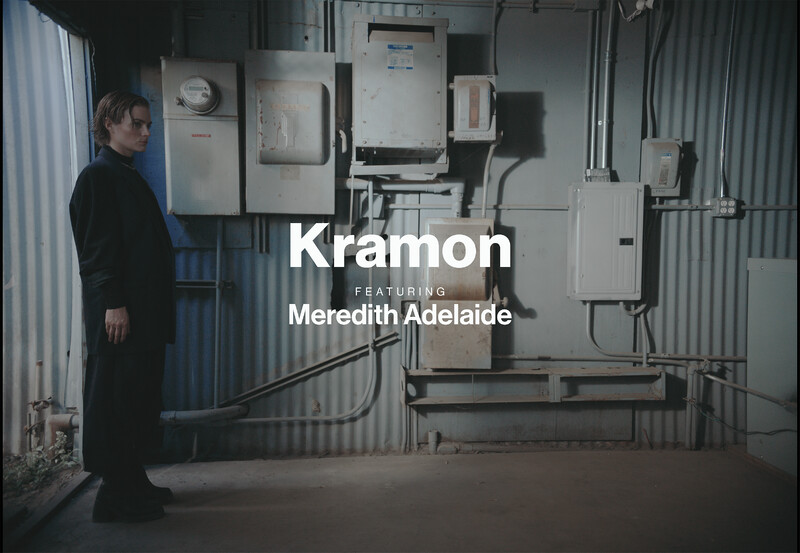
June 5th I had the initial phone call with Josh Kramon (music producer and exec producer)
June 18th was when I first reached out to my DP Tamara Santos
July 26th was when the video was shot
Gave myself a week to step away for a break, and to go emcee at the Pickathon music festival in Portland, Oregon
August 11th was when the video was finished
How would you describe your film in two words!?
Fractured Unity
Divided Oneness
Unconscious Conscious
Endless Revision
Why Change
What was the biggest obstacle you faced in completing this film?
My emotional experience was the biggest mountain I had to climb about whether I was “worthy” of creating this, asking for money, asking for help, making decisions and feeling like I could trust myself.
The music video’s narrative is a direct reflection of this tumult.
I made a whole collection of blog posts as I was in it that I shared on my Patreon, which can be found here:
There are 5 Stages of Filmmaking: 1) Development. 2) Pre-Production. 3) Production. 4) Post-Production. 5) Distribution.
What is your favorite stage of the process and why?
Hahaha, like the five stages of grief for a terminal illness.
Development / Denial Pre-Production / Anger Production / Bargaining Post-Production / Depression Distribution / Acceptance
My favorite is the process as a whole and how I change from the entire experience, but the most fun I have is during Production, absolutely.
A film set is one of my favorite places to be. The teamwork needed is only paralleled to my 100-person high school choir.
The choices I have to make and not make and the constant shift in responsibility (speaking when I’m both Director AND talent) keeps my brain so occupied and excited that trusting myself and those I’ve brought around me is the only thing I can lean on, and when I do that, I feel invincible.
When did you realize that you wanted to make films?
I used to want to make Pixar films when I was a teenager— I would envision characters and stories flowing along stormwater runoffs. I was obsessed with the shorts they had at the beginning of every film and how they could put me directly in joy and delight.
But it really took shape when I was cast as the lead in a music video for Ash back in 2012, and it was my first ever professional film set. $25,000 budget, 100 crew members. Some water had spilled on set and I tried to grab a napkin to clean it up, but the director interjected and told me there is someone on the crew whose job it is to do that— and I was transported back to my choir days in high school where we each had to work as a team, and sing our parts and listen in order for it to work. So when I saw this set in operation, and everyone had a role, I was like…how can I become part of this?
Then two years of being a Production Assistant while I auditioned for and landed some TV shows and films (Portlandia, Grimm, Leverage), all while creating music…
Now the continued goal is to align my films with my music!
What film have you seen the most in your life?
Oh gosh. Anchorman. HAHAHA.
More niche, but also my favorite film, The American Astronaut.
What other elements of the festival experience can we and other festivals implement to satisfy you and help you further your filmmaking career?
Wanted to first say thank you for giving me the opportunity to show my film… AND this written interview… AND the podcast interview.
Having a platform to share my voice/visions is an incredible feeling.
As for what else could be beneficial… if inspired, sharing my name in rooms I’m not in!
You submitted to the festival via FilmFreeway. How has your experiences been working on the festival platform site?
It has been so easy!
For a first timer doing all this, it has been simple, direct, and expectations are laid out nicely.
What is your favorite meal?
Mashed potatoes with butter, and steak. Plus dessert.
Also any meal anyone cooks me (: I love being fed.
What is next for you? A new film?
I’m currently releasing my debut album, “To Believe I’m the Sun,” and in talks of creating my next video for that (:
If you’d like to support or learn more, you may do so here:
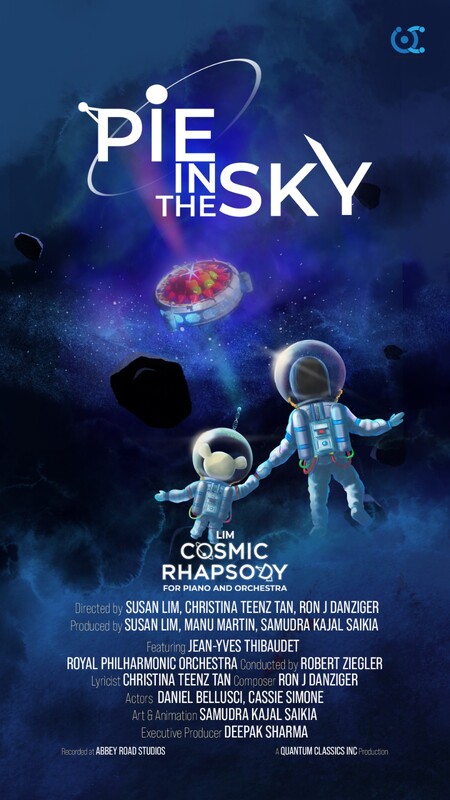
“Pie in the Sky” is an enchanting music video that marries playful animation with the raw power of original recordings at Abbey Road Studio One, and a resplendent orchestral performance at the Barbican Concert Hall, London. The video opens with world-acclaimed pianist Jean-Yves Thibaudet leading the Royal Philharmonic Orchestra conducted by Robert Ziegler, in a captivating orchestral performance, his artistry setting the stage. From this vibrant live spectacle, we’re ushered into a whimsical animated adventure that playfully asks: “What is the ‘pie in the sky’?”
The title of this spirited short Pie in the Sky, which means big dreams that are likely unattainable, contradicts what the fabulous creative team is able to create – – this presentation is not a dream, but a tangible success, professionally, artistically and even romantically.
Frames often offer a bird’s eye view of talented musicians in action, delivering a gorgeous melodic piece. Alternately, we see adorable, animated characters flying through breathtakingly beautiful outer space vistas, and discovering a high-tech utopia. It is a clever filmic decision to intermittently combine this animation with small onscreen boxes of the orchestral musicians playing refrains of the score.
The film does a seamless job juggling shots of the orchestra in fine attire at a formal concert, with them in more relaxed dress at rehearsal in a large, brightly lit studio. Also worthy of mention is the skill of the articulate voice over artists during the animation segments – – so crystal clear and emotive. The absolute highlight of the piece is the culmination of all the hard work of the creators, with a joyful engagement scene – – an actual life experience resulting in an eventual wedding that is not at all “pie in the sky”, but tangible and real.

 Festival Reviews