Omar & a group of boys manage to escape the Sudan Civil War & make it to America after experiencing the most horrific fight for their lives.
1. What is your screenplay about?
It’s about the Sudanese civil war. The lost boys of Sudan and highlights the terror the orphans went through. Based on true events.
2. What genres does your screenplay fall under?
action/adventure also war if those count as one.
3. Why should this screenplay be made into a movie?
a story that is not often told from a country where stories are not often highlighted. Tells the story of how to overcome loss and the power of community in that process. Something people can relate to on a global scale via current events.
4. How would you describe this script in two words?
survivors guilt. Two brothers going on parallel journeys and struggling through a catastrophe
5. What movie have you seen the most times in your life?
the dark knight, Incredibles and portrait of a lady on fire
6. How long have you been working on this screenplay?
my first one. Started it in ’21 and took a half year break to learn structure. Finished it in a year.
7. How many stories have you written?
4? Maybe 5?
8. What motivated you to write this screenplay?
the Sudanese civil war is something I’ve known about for a while now. It amazes me there weren’t many film adaptations to highlight it. I saw the emotional potential and decided to write it myself.
9. What obstacles did you face to finish this screenplay?
my skill set. It was the first script I wrote and I needed to develop more before I could finish it. It is why I stopped to read educational material on screenwriting and Peter Pan since the Lost Boys of Sudan got their name from that novel.
10. Apart from writing, what else are you passionate about?
food. I love to travel and try different foods… and video games.
11. What influenced you to enter the festival? What were your feelings on the initial feedback you received?
it’s an action/adventure competition. The feedback from previous contestants were favorable and the entry price was also favorable.
A young man navigates the weeds of dating apps while tending to his makeshift compost pile.
Get to know the writer:
1. What is your screenplay about? My goal was to parellel new age dating with, kind of, urban farming or composting. With dating apps, intentions are often vague and can result in so many failed attempts. Often times you can find what you’re looking for without even lookingm in a more natural way. I tried to equate that to something that actually happened to me, when tomatoes started growing out of my own compost pile. Seemed like a fun little juxtaposition.
2. What genres does your screenplay fall under? I guess romance and a little bit of comedy? I’d like to expand on this at some point and include more drama.
3. Why should this screenplay be made into a movie? I think a lot of people would be able to relate given the oversaturation of dating apps and the dissociation that can accompany that, when the next person is just a swipe away.
4. How would you describe this script in two words? Light, relatable.
5. What movie have you seen the most times in your life? The Nightmare Before Christmas
6. How long have you been working on this screenplay? About 3 months-ish? A few rewrites and edits.
7. How many stories have you written? I’ve managed to finish two stories, this is only the second screenplay I’ve written. I know I’m still raw and would love to dive deeper and improve further.
8. What motivated you to write this screenplay? I’d say personal experience with dating apps as well as discovering accidental tomatoes. It was fun taking Lester on a little journey of self-discovery and actualization.
9. What obstacles did you face to finish this screenplay? Trying to obtain good imagery with the characters and natural interactions between the characters was a little difficult. I still feel some dialogue could be fixed.
10. Apart from writing, what else are you passionate about? I’m a pretty avid Detroit sports fan, though it’s been a little rough lately. I still play hockey myself and very much enjoy discovering new music.
11. What influenced you to enter the festival? What were your feelings on the initial feedback you received? I found this festival on FilmFreeway and was drawn to the smaller size while still having a good reach. I liked that feedback was provided, including the option for additional consultation. Jessica was fantastic, I found the feedback and our discussion to be quite beneficial. She had some great ideas and helpful comments to strengthen the script overall, and spurred my interest to expand on it, possibly into a feature length.
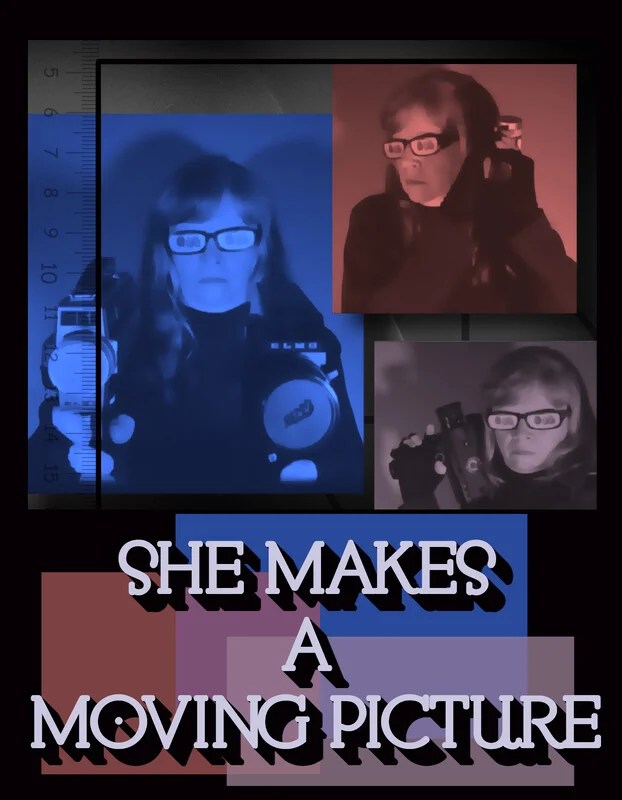
How is a film made? Probably not in this off-kilter, wacky and surreal way! The Architect of the Liminal decides it’s time to put her dreams on film, but she interprets the “usual” steps of the filmmaking process with her own inimitable results.
What motivated you to make this film?
I’ve been playing with integrating Super8 footage with animation, and had a lot of spools of exposed film stock. Originally, I had the amusing idea of doing a “cooking show” type of thing using the stock…this became part of the “edit” section of the film which then expanded to be a quirky “how to” based on using a boardgame, etc.
From the idea to the finished product, how long did it take for you to make this film?
The whole thing came together incredibly quickly; once I get going on an idea, I’m pretty much obsessed until it’s finished. All of the hand-built props (like the “Carousel Camera”) took longer than the actual filming and edit. So, start to finished it probably only took about 2 months of long working days.
How would you describe your film in two words!?
Fun and quirky
What was the biggest obstacle you faced in completing this film?
The biggest obstacle for me was being patient enough to wait for processing and digitization of the new footage! I’m too much of an “instant gratification” digital filmmaker, I guess. I’ve got a top secret workaround now, though(!).
There are 5 stages of the filmmaking process: Development. Pre-Production. Production. Post-Production. Distribution.
What is your favorite stage of the filmmaking process?
I love all aspects of the filmmaking process except Distribution; I’m terrible at that.
In a perfect world: Who would you like to work with/collaborate with on a film?
I would love to collaborate with the composer Jessica Curry. Her work really speaks to me.
What is next for you? A new film?
I’m in the middle of my latest project right now; darker than this one. I’ve really pushed the integration of Super8 footage so that S8 footage of me is actually IN an animated environment, interacting with it. It’s a challenge, but I love figuring out how to get the effect I want.
1. What motivated you to make this film? I’ve always been interested in the fantasy/ heroic journey genre of film and I feel like we don’t get enough of them today. The muse also seemed to dump a bunch of stories into my head without me requesting them and feel compelled to start creating all of the stories I have written so far.
2. From the idea to the finished product, how long did it take for you to make this film? Demon took about 18 months to create mostly due to a big injury on my end and crew setbacks. Nothing ever goes according to plan haha. I also had to learn and play with Unreal Engine for the temple shots which took a great amount of time as I had no prior experience with these types of programs.
3. How would you describe your film in two words!? Selfish Hero
4. What was the biggest obstacle you faced in completing this film? Like I mentioned earlier, it was definitely the injury (I fell off a horse but it happened after shooting) and learning Unreal. If not for those 2 things I think we could have done it within 9 months.
5. What were your initial reactions when watching the audience talking about your film in the feedback video? I was actually pleasantly surprised that they took a liking to it and talked about what it meant for them personally. I am very grateful for their feedback. I screened it at the River Oaks theater in Houston and invited the cast, crew, and friends to watch it premiere. My friends (mostly business/white collar/tech types) did not get it at all. They couldn’t follow the plot, so I was worried that other viewers would think the same but I guess it just wasn’t their genre.
6. When did you realize that you wanted to make films?
About 8 years ago I started writing scripts with the intention of making them into films one day.
7. What film have you seen the most in your life? Man I have to say there is a tie between a few films. Ad Astra, The Revenant, and The Matrix I have seen at least 20+ times each.
8. What other elements of the festival experience can we and other festivals implement to satisfy you and help you further your filmmaking career? In regards to your festival, I think you guys have done a wonderful job. Everything you do makes sense and I can tell you guys are business savvy about it too. As a film maker you guys have offered me a lot to work with and consider using so hats off to you.
9. You submitted to the festival via FilmFreeway. How has your experiences been working on the festival platform site? FilmFreeway is so convenient and easy to use. I can’t imagine the film festival game any other way in terms of efficiency for both parties.
10. What is your favorite meal? A bit random but this may be the hardest question so far. I am torn between hamburgers or pizza, but I will have to choose, with hesitancy, hamburgers. May pizza forgive me.
11. What is next for you? A new film?
A new feature film! Demon was more a proof of concept and will be made into a feature film. It will be darker, grittier, and more epic. It will also be more expensive and stressful haha.
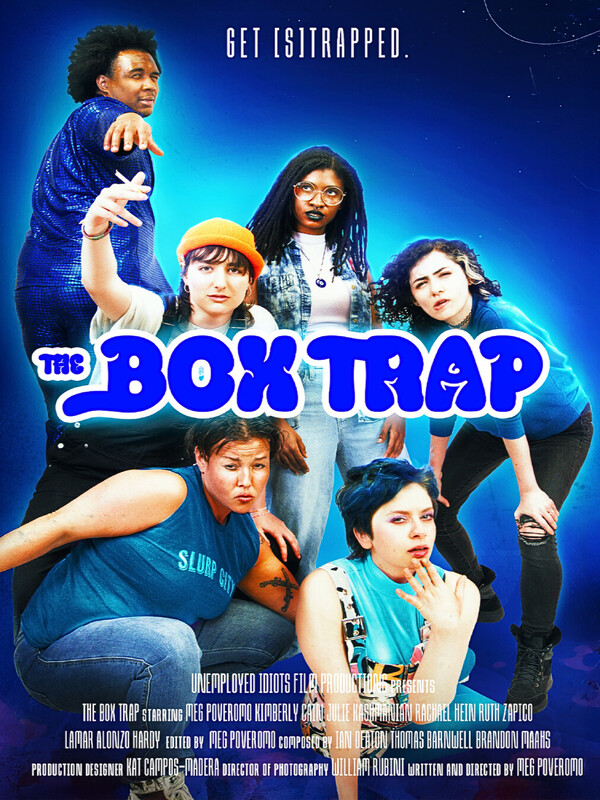
The world of a blissfully detached woman turns upside down when she’s forced to adjust to the ordinary life that exists beyond working at an off-the-wall lesbian bar, and its rivalry with the gay club across the street.
1. What motivated you to make this film? Inside jokes between me and my friend Gabby, unfortunate life experiences and the uncontrollable urge I felt to make a feature-length film.
2. From the idea to the finished product, how long did it take for you to make this film? The idea was developed in 2023 and I started writing it as a dramedy, which I don’t know why I did because I hate dramedies, and I ended up rewriting it a bunch of times throughout that whole year until it became what it did. We shot it in 2024 and it took me around 10 months to edit the whole thing. So, roughly 2 and a half to three years.
3. How would you describe your film in two words!? Chicken wings.
4. What was the biggest obstacle you faced in completing this film? I think I had many obstacles that felt like the end of the world at the time but seem so small when I look back at them now. The main obstacles are typically the same in every set: actors or crew calling out last minute, technical difficulties, unlucky weather and having to stay on schedule through all of it. We were doing an overnight shoot on one of the Box Trap set days, and it was like 5am. The goddamn birds would not shut up outside. It took us way longer to film a super short outside scene that I had dedicated two hours to on the schedule. Among that, almost everything that could’ve went wrong that day went wrong and we ended up having to plan a reshoot day, which was an extra $5,000 or so over budget. Looking back now, I am thankful that everything went the way it did because it gave us extra time to really focus on the smaller scenes. But at the time, I almost gave myself a stroke and did not sleep the rest of that filming week.
5. There are 5 stages of the filmmaking process: Development. Pre-Production. Production. Post-Production. Distribution. What is your favorite stage of the filmmaking process? I really enjoy the brief time right after post-production that comes before distribution. Like, when you have a whole project in the can but only some people have seen it. It feels so secretive, you know? At that point, all the weight of the work is lifted as well, and the only thing left to do is share it- which is the most exciting part! I love the anticipation of having a whole audience judge you and not knowing what the outcome will be. That’s why I love taking the festival route, too. Meeting/seeing other people’s work that not everyone else has seen. It feels like such an exclusive experience. But, if I had to pick a stage specifically on this list, I’d say production. It’s stressful for sure but seeing a bunch of people help bring an idea you had to life is really cool to experience, and there’s a lot of core memories in that stage that are made in itself. To be fair, I also think all parts are exciting in their own ways. Except post production. Editing an entire feature-length film, especially by yourself, will make you lose your mind. Anyways, I’m rambling now.
6. When did you realize that you wanted to make films? Since I was little. I went to musical theater camp and started writing my own little skits with friends and then got a flip video camera and went crazy with it.
7. What film have you seen the most times in your life? Dude Where’s My Car for sure. Second is probably a tie with Napoleon Dynamite or Talladega Nights: The Ballad of Ricky Bobby. I was also obsessed with Josie and The Pussycats as a child before I realized I was gay and watched it over and over until I had the whole film memorized, so that’s up there, too.
8. In a perfect world: Who would you like to work with/collaborate with on a film? Amy Poehler. Or Natasha Lyonne.
9. You submitted to the festival via FilmFreeway. How has your experiences been working on the festival platform site?
I’m a fan.
10. What is your favorite meal? Poppyseed bagel with lox. Pickle on the side. Also a cup of fruit. Preferably pineapple and melon combo. Latte with maple syrup and cayenne pepper. And a large glass of water.
11. What is next for you? A new film? Hell yeah! Writing the new script as we speak!
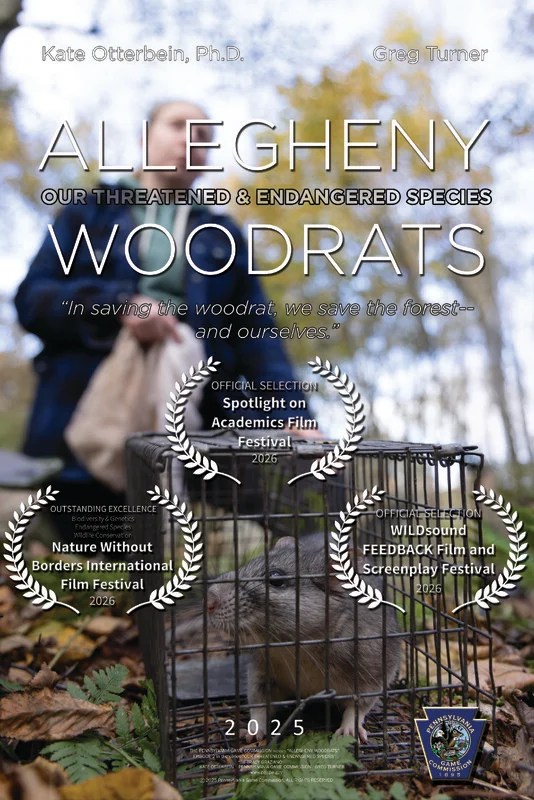
Our Threatened & Endangered Species: Allegheny Woodrat follows the Pennsylvania Game Commission and partners as they fight to save one of the state’s most elusive mammals. Once common across the Appalachian Mountains, the Allegheny woodrat has declined for decades due to habitat loss, disease, and the disappearance of its ancient ally—the American chestnut tree.
1. What motivated you to make this film?
Allegheny Woodrats is Episode II in a series on Threatened & Endangered Species. These films aim to educate folks on the challenges surrounding species conservation, and what people can do to get involved and actions they can take at home to help all wildlife. Wildlife conservation and management is complex, involving hard work, creativity, tenacity and human politics. If we tell the story well, we can ensure all of our native species persist into the future—because people will not protect what they don’t understand and they certainly won’t protect what they don’t know.
The efforts surrounding saving the Allegheny woodrat are complex and involve partnerships across state lines, with varying agencies, non-profits, institutions and universities. There are over 15 groups involved in seeing that this species persists into the future. But the challenges the species’ face is multi-faceted: from the effective extinction of the American chestnut, to habitat fragmentation that cascades into genetic isolation, inbreeding and population loss, and finally the increasing raccoon population as a result of habitat fragmentation. To save a species, we must address all of the challenges. The effort, creative thinking and dedication to our wildlife fills me with hope. Despite all the things going wrong with conservation on a bigger scale, these stories are so impactful and clearly state that we can and will affect change if we just act even in small ways.
I am driven to make a difference with the films I produce. Documentary film is a powerful tool that helps change hearts and minds—even for species or issues for which are foreign to many people. This species is a particular challenge because of the stigma in its name: it isn’t ‘just a rat’ and I hope this piece sheds some light on the importance of all wildlife, despite the name we have assigned them.
2. From the idea to the finished product, how long did it take for you to make this film?
I started documenting field work with woodrats—actually translocations—in August of 2020. So, shooting took place over five years with the bulk of it taking place in 2024. I began editing full time in late summer 2024, and tried to do re-shoots and all the interviews in early 2025. Altogether the editing process took 18 solid months.
I am one person and do all of the things: from research to writing, shooting and editing, it’s a monumental task of dedication.
3. How would you describe your film in two words!?
Woodrat quest.
4. What was the biggest obstacle you faced in completing this film?
The biggest obstacle in completing the film took place during each phase of production: the landscape itself is challenging to haul film equipment into. Bouldering and cameras don’t mix very well. Luckily, our biologists typically have an entourage of folks who eagerly tag along to help with trapping efforts—who doesn’t want to see a threatened species? I was so grateful to have lots of helping hands—but usually this just means taking in *all* of the equipment I could ever need in a day rather than being selective and leaving pieces behind. I am a one-woman band otherwise: shooting with multiple cameras, as well as taking still photographs all at the same time.
Pre-production and post-production are often smashed together with these projects because we simply aren’t given enough time to write a full-blown script in advance. I request scientific papers and pertinent background literature from the biologist and create a ‘wish list’ from that—much of which is unlikely to capture. So much of what I shoot is literally trying to document what is in front of me in every way that I can imagine in order to gather enough coverage for the editing process. And as with all documentary, there are whole events that take place that are not part of any plan and I’m just along for the ride scrambling to understand what I am witnessing and to record it all. It’s very exciting yet scary at the same time. It’s a lot of pressure to shoot in such a way as to tell a story, bring the audience along on the adventure, and also have the viewer become invested in the subject to the level where they actually care about the species in the end.
5. There are 5 stages of the filmmaking process: Development. Pre-Production. Production. Post-Production. Distribution. What is your favorite stage of the filmmaking process?
I love shooting. One of my undergrad degrees is cinematography—I just love it. My younger self wanted to only shoot and be in the field 100% of the time. However, if all you do is shoot, the footage sits there and accomplishes nothing. I’ve really started to appreciate the post-production process more and more the further I’ve gotten into my career. When I was younger, I would dread sitting in the editing bay and it would take a force of nature to be disciplined enough to sit day after day. But I enjoy organizing the mountain of footage that results from all the time in the field, and coming up with creative ways to fill the holes in the story as well as imagining the best ways to communicate the science in each of these projects. On more than one occasion, epiphanies happen in the editing room—the juxtaposition of certain shots or events spark creative ways of problem solving and of having new eyes on the subject. I’m always learning and this film was no exception; I just generally love learning natural history information, science, and then everything that surrounds the tech in the documentary film industry.
Getting footage of a nocturnal threatened species certainly posed its own challenges, and there are behaviors I felt were critical to getting the audience to care about the species. Things like caching odd items, and pruning acorns and seeds from trees are behaviors that would be impossible to get in the wild. Having a ‘pet woodrat’ to act these things out is out of the question, so I turned to animation to illustrate these behaviors. During the literature review process, I read that the species itself has an interesting tie to our state. The very first Allegheny woodrat specimen –what’s called the holotype– was collected in a cave not far from Harrisburg. Our budget is basically my pay, so fancy historical reenactments are just out of the question—but animation brought that moment to life and helps define the species for the viewer. From there it was a natural extension to also animate a couple of key behaviors for the sake of the story and so that the audience can empathize with the subject.
6. When did you realize that you wanted to make films?
I was a little late to the party with filmmaking. As an undergrad, I started out as a painting major. I had a very strong background in art as a young person, but once I got to university I was bored, frustrated, and concerned about even being able to make a living off of my art. So, I switched to biology—one of my other life passions. I found it extremely challenging, but began to miss the outlet that only art could provide. So, I muddled around a bit and started taking some photography courses. I vividly remember doing critique in photo class and the professor asking me in front of everyone if I had ever considered filmmaking—because my series of photos up on the board always seemed to tell a story. That’s what finally made it click for me: I could put my passion for wildlife and ecology together with telling stories on film. So, there I was, a senior in undergrad, declaring a dual major in biology and cinematography. From there, I entered my undergrad film in the International Wildlife Film Festival in Missoula, Montana. I was invited to take a one-week course on Wildlife Filmmaking with Jeffery Boswall from the BBC, and during that week I learned about a graduate program in development at Montana State University. A year later, I was part of the very first class in Science & Natural History Filmmaking. It was a dream.
In looking back as a kid, I grew up in a place that was developed into housing over the course of my youth. The forests and fields that were my playground were completely paved over by the time I was in high school. This really affected me deeply and I suppose played a big part in what would eventually become my career.
7. What film have you seen the most times in your life?
Probably Watership Down. I watched that over and over again as a kid. Every time we went to the grocery store I would look to see if the VHS tape was on the shelf and available for rental. If it was there, we would take it home. I would watch it, rewind it, and watch it again. It probably wasn’t healthy. Haha.
8. In a perfect world: Who would you like to work with/collaborate with on a film?
I would love to collaborate with National Geographic, the BBC, or PBS Nature or Nova on some science wildlife documentary films. I know that my science literacy and filmmaking skill set combine to tell unique stories. I do hope that even this film could be considered for broadcast. More people need to see the hard working folks behind species conservation, the passion they exude, and the persistence that it takes to save our native wildlife.
9. You submitted to the festival via FilmFreeway. How has your experiences been working on the festival platform site?
The submission process is simple and straightforward. Having everything organized and easily searchable is a huge benefit for my limited time in promoting my work. Also, the standard project page to fill out is immensely helpful and ensures that festivals get what they need to understand the film, and to hopefully promote it.
10. What is your favorite meal?
Breakfast. If I eat nothing else in a day it has to be breakfast.
11. What is next for you? A new film?
The next episode in the series “Our Threatened & Endangered Species” is on the return of the piping plover as a nesting species in the state of Pennsylvania. After more than 50 years of absence, this iconic shorebird has returned to the only suitable habitat in the state and successfully nested. This series is designed to have educational curricula to go with them to schools, universities, and sister agencies. Those accompanying materials are being written now by our very talented and dedicated staff. I am so grateful for the life that these films will have in shaping change.
I like to have the reader tell me what it’s about when they read or hear a piece of my writing as I think we all have different things we take away from writing.
For me, I’m interested in the moments when people change, when what they’ve been doing for a very long time suddenly shifts,
it’s no longer satisfying or no longer works, and they take a turn. In this flash fiction piece, Della literally takes a turn from driving to work, to driving to a new life for herself. Think of those moments for yourself, when did you take a detour and shift something in your life? Della’s life hasn’t worked out as she intended. She wanted children, didn’t have them, and has had to be self-sufficient, working the same job dutifully for years.
2. What genres would you say this story is in?
Flash fiction.
If you want to see skilled flash fiction writers, watch for the work of Kathy Fish or Charmaine Wilkerson.
They are truly adept flash fiction writers and Kathy teaches flash fiction workshops.
3. How would you describe this story in two words?
life change
4. What movie have you seen the most in your life?
Planes, Trains and Automobiles
The scene outside the motel as the John Candy and Steve Martin are headed to “the people train” was filmed in Braidwood, Illinois, a motel you pass often on I-55 if you’re traveling through Illinois.
5. What is your favorite song? (Or, what song have you listened to the most times in your life?)
Anggun’s “Snow on the Sahara”
I first heard Anggun during her performance on David Byrne’s “Sessions at West 54th”
6. Do you have an all-time favorite novel?
So many. Kate Chopin’s The Awakening
7. What motivated you to write this story?
I love tipping points, when enough is enough. Tipping points are salient, liminal spaces: the person moves from one room of their life, into a hallway of sorts, where the options are limitless for them. They could go to another room, they could go out the door, they could get in a car, they could run away, etc. What prompts a person to get to this tipping point?
Is it a sudden trauma, a swift shift, or an accumulation which eventually prompts a change of direction for the person? What prompts a change for you?
8. If you could have dinner with one person (dead or alive), who would that be?
Um, I’d expand the table.
A fuller table would include Dave Grohl, Hugh Grant, my great great grandmother Hattie Hays, my dear friends Nora Ross Ward and Dirk Ficca, the Rev Dr. Martin Luther King Jr, my maternal grandparents, Rainer Maria Rilke, Rumi, Walt Whitman, Emily Dickinson, Jane Kenyon, Julian of Norwich.
If just one person, I’m eating dinner with Jesus.
9. Apart from writing, what else are you passionate about?
I love to dig in the dirt and plant flowers and prairie plants.
I care deeply about the environment and working to restore it. I read and write poetry.
I love my spin class crew.
I am ten years into being a dog person, after being a cat person all my life, and I get it now. I’m a wife and mom, a daughter, a sister, an aunt, a friend, all of these fill me up every day.
10. What influenced you to enter your story to get performed?
I love to hear people speak, tell stories.
I’m a Presbyterian minister and I believe in the power of the spoken word. When I was a college instructor< I was very aware some of us prefer to hear something rather than read it.
Either way, I think a story can come to us in a new way when spoken. It’s hardwired in us to sift out meaning in stories, to appreciate when someone can tell a good one, one that’s memorable for us.
11. Any advice or tips you’d like to pass on to other writers?
Write for the love of it. Rejection and acceptances are part of the turf, but the connections you make when writing, the “aha moments” for yourself or your characters, those are gifts, hidden until you happen upon them.
Remember to shift gears if a writing project isn’t working.
If you’re writing a novel and you get stuck, shift to poetry, an essay, or a flash fiction piece.
Cross train in your writing like you do at the gym, use all the muscles. Your writing voice matters. Maybe we haven’t heard your story yet?
Brew a strong pot of coffee, I’m going with Folger’s Black Silk coffee, and hit the keyboard or journal or cell phone notes, and begin again.
Della One Morning
Word Count: 695
Della’s spine eeked pain all up and down it as she walked to her car under Bonita Spring’s morning starlight. Della realized she no longer carried keys in her hands with keys pointing out between her knuckles, to prevent an attack. She was sixty-three, didn’t think anyone would bother now. No fear of pregnancy if they did.
Della looked back at her apartment building and saw Luna’s light on. Luna and her husband Jeremiah and their kids would be up, going to work and daycare early, so they could make their shifts.
Humidity in the air was hanging like regret, like the dress on the door that should never have been shed with the wrong man, a guy who wouldn’t remember thanks to Jack down his gullet, and here it was, water in the air that would make her car gummy and grumpy and coughy, like COPD or worse. Had Della had children, she’d have been able to call one, if they lived close, for a ride, if they were early risers, if they’d taken after their mama, but she had no kids, and an Uber felt like defeat, a sign you didn’t have anybody to call in an emergency.
Della’s Corolla coughed and caught, the sound she’d prayed for, and she reached for the wooden Mary from Fatima, standing in her car cupholder to protect her. She told herself it was like a doll, yet Della put Mary the doll in every car she ever borrowed or owned. Mary had been Aunt Glenda’s, and Mary protected Aunt Glenda from all sorts of harm.
The handsy customer got transferred out of Florida, thanks to Della’s prayers to Mary, and a season in which Mary the doll even went into the diner with her, in her apron, such were the advances of the man with the thick hands and halitosis for days.
Della scooped hair out of her eyesight while the motor warmed. Maybe a breeze blowing in, maybe rain.
She’d worked this shift at O’Briens diner for seventeen years. When Mark needed her on her day off, in she came. In seasonal surges, Della was in place, clean, ready, serving with a smile.
But hurricane Milton— when she’d had to evacuate to a Motel 6 near Ocala— when storm surge threatened to flood the whole area, up to eight feet, Milton was something else.
Della had a wad of cash on the lower level of the armrest storage spot, down in the false bottom, cash that regulars slipped her around holidays. Della’s new boss Steve was a jackass, with beach volleyball dreams. Della could feel it in her back how his talking made her tense, her shoulders up to her ears with him around.
At the stoplight, Della could see she was the only car among contractor trucks, going to paint, restore storm damage, replant gardens, make things right again after.
Instead of getting into the left turn lane off Tamiami, Della didn’t indicate.
She got all the way over and headed right, onto Bonita Beach Boulevard. She had ten minutes to go look at the Gulf. It was dark, but enough moon to see water. Her engine was making no coughs or sputters, warm and ready, it could go all day, which prompted Della, instead, to go straight, north.
Della could leave the dream of the child she thought she was carrying when she was thirty-eight, the one she thought was making her abdomen bigger only to find out it was a fibroid and nothing more. She could let go of Steve’s hovering. She could put miles between herself and her aching knees, both needing replacement. Mary felt warm in her hand from her perch above the wad of cash hidden below. Luna could send her what she needed from her apartment, Della’s lease had only two months left.
Mary the doll, like a dousing rod, could point the way up and out of these flood zones. Maybe the water she needed was the Mississippi? Maybe she could head west to New Orleans and go north there, have some oysters, heck, the world was her oyster. The heat from Mary seemed to be agreement.
Loqua: Blade of the King is a medieval war novel that explores the life and experiences of Loqua, a warrior facing loyalty, power, and the cost of leadership in a world on the brink of war. He has crushed every foe in the name of peace as the empire’s bravest general and the king’s right hand. The empire rules the world, except for one last land. In the south, the Revolution stands strong, their warriors fierce and their defiance unbroken. To conquer them is to unite the globe under a single banner. To fail is to see the empire’s dream collapse. As Loqua leads the empire’s greatest war yet, he will forge unexpected friendships, face bitter enemies, and be forced to decide how far he is willing to go to finish what he began. Victory will bring lasting peace, while defeat will end everything he has fought for.
2. What genres would you say this story is in?
The story is a fantasy medieval war and adventure novel, with strong emotional conflict and a focus on the bonds between friends and those you care for. While it features large-scale battles and political stakes, at its heart it explores how loyalty, friendship, and personal choices shape Loqua’s journey.
3. How would you describe this story in two words?
I would describe the story in two words: Honor and Sacrifice. These words reflect the choices Loqua faces, the bonds he forms, and the cost of duty and loyalty throughout his journey.
4. What movie have you seen the most in your life?
The movie I’ve seen the most in my life is The Lord of the Rings. I’ve watched it many times because I enjoy the epic story, the world, and the adventure.
5. What is your favorite song? (Or, what song have you listened to the most times in your life?)
One song I’ve listened to the most in my life is “Stan” by Eminem. I’ve always been drawn to the storytelling in the song and the way it conveys intense emotion.
6. Do you have an all-time favorite novel?
My all-time favorite novel is Joan of Arc by Mark Twain. I’ve always been drawn to the way it portrays conviction and courage, especially when a character is standing against overwhelming odds.
7. What motivated you to write this story?
I was motivated by my creativity and my desire to create a story that makes others feel emotion, whether that emotion is anger, sadness, or happiness. I wanted to create something that could make people feel real human emotion from a story I imagined and brought to life.
8. If you could have dinner with one person (dead or alive), who would that be?
I would choose to have dinner with Jesus. As a Catholic, I would love the opportunity to listen to His wisdom and ask questions, learning from His perspective and teachings.
9. Apart from writing, what else are you passionate about?
Apart from writing, I’m very passionate about going to the gym and staying physically disciplined. I also enjoy playing video games in my free time.
10. What influenced you to enter your story to get performed?
I decided to enter my story to be performed because I want to get my book out there and eventually see it published. Having it performed is a great way to share the story, gain publicity, and connect with a wider audience.
11. Any advice or tips you’d like to pass on to other writers?
My advice to other writers is to keep going no matter how long it takes. Even when motivation fades or challenges arise, don’t stop and don’t give up. Finishing your story is what matters most.
Awaken the Medium is a feature-length script that follows the story of Maggie Samson, whose latest near-death experience thrusts her into discovering her gifts and powers. Maggie is a librarian in her forties. Married to Chris, a professor, with whom she has a son, Justus Samson, now eleven years old. Maggie arrives at a crossroads, unaware of the challenges and mysteries that await her.
Narrator: Elizabeth Rose Morriss Female Paramedic: Hannah Ehman Male Paramedic: Geoff Mays
Get to know the writers:
1. What is your screenplay about?
Grief, family, love, fear, supernatural events, spiritual awakening. Stanley Kubrick once said – while filming Stephen King’s The Shining – ‘anything that says there’s something after death is an optimistic story.’
Awaken the Medium is a feature-length script that follows the tale of Maggie Samson, whose latest near-death experience thrusts her into discovering her gifts and powers. Maggie is a librarian in her forties married to Chris, a professor, who is rooted in science-based belief, with whom they have a son, Justus Samson, eleven years old. Maggie arrives at a crossroads, unaware of the challenges and mysteries that await her.
In the aftermath of her parents’ tragic death, Maggie decides to move her family into a beautiful house. However, soon after they move in, things begin to happen, strange things. Noises, shadows, unexplainable visions, mirages – every minutiae like this becomes so overwhelming that Maggie realizes she must stop the evil forces nested in the house before it’s too late and she or her son and husband are harmed.
Maggie meets a medium, Roberta, who helps her acknowledge her gifts. She discovers that she is a medium, a psychic, and a believer, hence the mirages, the telepathic conversations with her son, and the ability to converse with her deceased parents. With this newly found knowledge, Maggie, joined by her skeptical husband, and loyal son, embark on a quest to close the portal to evil she opened, and shut the evil down, once and for all.
This script is loosely based on my near-death experience, and our family’s transformation after my parents died.
Awaken the Medium has been described as ‘an elevated supernatural thriller which includes multicultural and spiritual intersectionality: Indigenous wisdom, Catholic doctrine, and parapsychology converging to shape the thematic framework. The use of the “liminal veil” as a metaphysical threshold is a compelling symbolic anchor, deepening the narrative beyond a haunted house cliche. The inclusion of generational trauma, grief, and psychic-medium inheritance gives the story emotional weight and thematic resonance.’ J.R. Elliott, Script Adviser
2. What genres does your screenplay fall under?
Thriller/Suspense, Supernatural drama, Family values, Spirituality
3. Why should this screenplay be made into a movie?
Our protagonist, Maggie, and her POV has been described as a rare character with a tremendous arc. She is a passive protagonist in the beginning – starting with the hospital scene – to a fighter and saviour in the end at the last hospital scene when Maggie flees the hospital to get home in time to fight. Bookends! Chris and Justus and Maggie are likeable so the audience can connect to them. The family love and support is refreshing to see them pull together in one of the worst times people can experience in their lives, loss of family. There are key elements grounded in realism and at the same time supernatural elements that work in cohesion with one another. Together, they don’t arouse suspension of either set of beliefs because they’re completely believable. It’s also been described as a rich world building that we have created. We set the stage for the supernatural elements to gel together without interrupting the flow and this adds more context. Script readers love the atmosphere and have stated, “There’s something special about it. You have this minutiae and attention to detail that enriches the world of your story … the world we’re going to spend our time in for the next couple of hours. Your foundation you created is really beautiful! It’s dramatic. It’s unique and complex. The ending is perfect.”
4. How would you describe this script in two words?
Grief, Transformation
5. What movie have you seen the most times in your life?
Constantine starring the ever talented Canadian actor – Keanu Reeves, Bless the Child starring Kim Basinger, Stephen King’s It, Carrie, The Shining, Matt Damon stars in Hereafter, Jurassic Park, Poltergeist, Amityville Horror, Hitchcock’s The Birds, to name a few. We LOVE watching movies and learning from the talented screenwriters.
6. How long have you been working on this screenplay?
We wrote our first draft six years ago, during COVID. We’ve revised it with help from quality feedback through International Screenwriting Competitions, and, David Trottier, author of The Screenwriter’s Bible. He’s been one of the script advisers and a mentor. It’s been a lot of blood, sweat, and tears, and some belly laughs. Most of all, it’s been very rewarding for us as husband and wife to write a screenplay together. Growth… transformation.
7. How many stories have you written?
I wrote 3 novels: Wake Me Up Inside, Book 1, Paige Maddison Series; coauthored Destiny’s Gate, Book 2; and Shine Your Light, Book 3 with our loving son, J.R. Matheson. Numerous short stories and biographical articles, two of which are included in John Robert Columbo’s, The Big Book of Canadian Hauntings. He stopped the presses to include my two articles for the ending of his anthology. My loving husband and cowriter, Kevin, writes more health and wellness articles. He was featured in several monthly newspapers for many years. Together, we are storytellers from the moment our son, Justin, was born in 1992. We made up bed-time stories to help him fall asleep. Then, we created stories as we hiked along many trails winding through bear country. Kevin and I are currently working on a comedy script.
8. What motivated you to write this screenplay?
I lost my parents in 2004 & 2005, nine months apart. The grief overwhelmed my family as my dad was my husband, Kevin’s, best friend. I was close to both of my parents and helped them through some very tough times. And, our son, Justin, was the apple of their eyes. The love for family drove us to write this spec script. Everyone can relate to losing someone they dearly love. We suffered from the loss of three parents, aunts & uncles, and a close friend within 3 years. Grief is a topic everyone can relate to. And, then, we had some interesting events occur from the other side. My grief was a catalyst for change for my family on how to interact with the world at large and on being a ‘sensitive’. We wanted to share how people can harness their innate abilities to sense things and use their gifts for positive change. There’s a movement, worldwide, of people curious about mediumship, and the afterlife. What happens to our loved ones when they die, when we die? It’s still an ongoing controversy to this day. It’s a burning passion for my husband, Kevin, and I, to get this story to the screen with a post-pandemic audience that is more spiritually curious, open to narratives about unseen worlds, grief processing, and the possibility of life beyond death.
9. What obstacles did you face to finish this screenplay?
We work full-time in our chiropractic clinic. We love helping patients. So, we wrote after work at night, lunch hours, and on the weekends during COVID. Everything was shut down so it was hard to connect with others. We wrote our script every day no matter what the weather! Winter, spring, summer, or fall.
10. Apart from writing, what else are you passionate about?
We love to watch movies and critique them! Also, we love to inspire others, listen to music and dance. We are avid readers. Most of all we love to help people. And, we’re both committed to a healthy lifestyle, wellness, and fitness.
11. What influenced you to enter the festival? What were your feelings on the initial feedback you received?
We were invited to enter the festival and are so very honoured to be included. We’re thrilled with the festival so far and more is yet to come such as this guest blog post, to a podcast, and many more opportunities. We love the best scene screenplay performance reading of our first scene in the script! We’ve had overwhelming feedback from friends, peers, and family that love it, and want more! Our hats are off to the actors that performed it! Thank you so much. And, we’ve commissioned a live performance of one of our fav scenes with our protagonist, Maggie. We really appreciate all of the positive feedback and encouragement the reader included which was truthful, inspiring, and priceless. Thank you so much to the WILDsound Thriller/Suspense Festival organizers, staff, readers, narrator, and actors. Your attention to detail is exemplary.
While enjoying an overnight celebration at a regional theme park, a group of graduating high school students are targeted by a vicious killer wearing a dragon mask.
Get to know the writer:
1. What is your screenplay about?
Grad Nite centers around a group of high school seniors on an overnight field trip to a theme park where mutilated bodies begin to pile up.
2. What genres does your screenplay fall under?
This is a slasher, a horror slasher, with a dash of coming-of-age for depth.
3. Why should this screenplay be made into a movie?
Slashers as a horror subgenre are unique in that nostalgia and familiar beats are expected and celebrated just as much as originality. It’s the originality in Grad Nite that is unlike any other slasher you’ve ever read or seen. These are characters that are sidelined in other stories, taking center stage here, with a unique tone and energy that is patented me (Sion-Raize).
4. How would you describe this script in two words?
Recentered horror.
5. What movie have you seen the most times in your life?
Probably Addams Family Values or White Christmas.
6. How long have you been working on this screenplay?
Just over a year. I began writing it in early January 2025.
7. How many stories have you written?
Countless. This is my third feature script in addition to several short films, three published books, several more manuscripts on my hard drive, and three seasons of my series Pretty Dudes.
8. What motivated you to write this screenplay?
The original plan was to write a script in a week as a challenge to myself. Eventually, I fell in love with the world of the script and used the story to explore the nature of horror—what is horrifying, who finds it horrifying, and why?
9. What obstacles did you face to finish this screenplay?
No real obstacles. This one just took work and focus.
10. Apart from writing, what else are you passionate about?
I’m passionate about uplifting, supporting, and platforming people from marginalized communities and minoritized backgrounds.
11. What influenced you to enter the festival? What were your feelings on the initial feedback you received?
I wanted to jump into the deep end with connoisseurs of horror. I’m grateful for the initial feedback, most of which reflected similar notes I’ve gotten on the draft.

 Festival Reviews