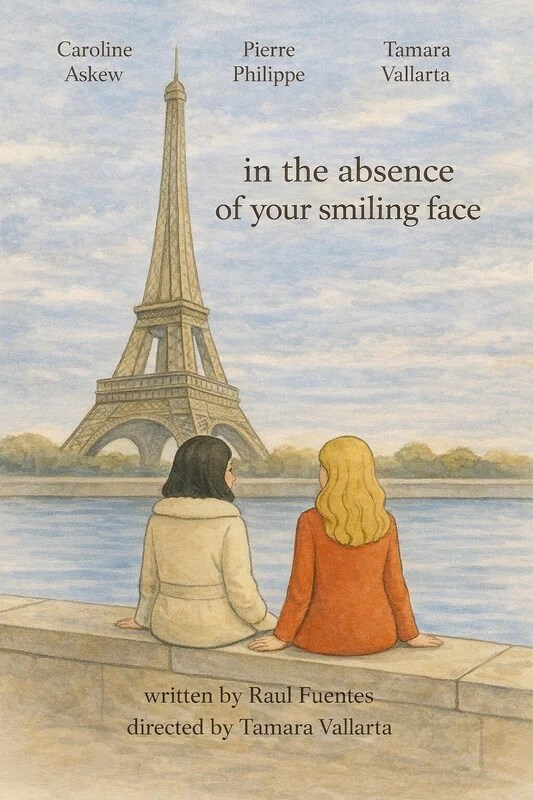
Waking in a future with floating cities topping thousands of stories, run by radioactive intelligence, where imagination blends with machine, an amnesiac finds her destiny.
Get to know the writer:
1. What is your screenplay about?
The futures Navy man Al Bielek remembers.
2. What genres does your screenplay fall under?
Propaganda, Fantasy, Sci-Fi, Romance, Comedy.
3. Why should this screenplay be produced
White people would love to see a future so bright. White pride is on the rise and whites feel their world is being taken from them. Eternal Life gives the world especially the white commonwealth hope.
4. How would you describe this script in two words?
“Propagandist bliss.”
5. What movie have you seen the most times in your life?
Maybe Hannibal? Ridley Scott’s.
6. How long have you been working on this screenplay?
Since 2023.
7. How many stories have you written?
3.
8. What motivated you to write this screenplay?
Al Bielek’s story of the future seemed like a great blockbuster film premise.
9. What obstacles did you face to finish this screenplay?
Had to quit drinking.
10. Apart from writing, what else are you passionate about?
Don’t forget to smile, 8min., North Macedonia Teacher that’s teaching kids to smile in a post a dystopic school.
Get to know filmmaker David Dulev:
1. What motivated you to make this film?
The initial motivation for this movie was the fact that i needed to graduate college and a short film was part of the final exam, that aside i felt like i wanted to give my thoughts on the pandemic and human emotions in general and i got lucky that my friend Onur had a script with that idea already built.
2. From the idea to the finished product, how long did it take for you to make this film?
Technically 3 and a half years since the first time i heard the idea, although a solid one and a half year was idle spent just thinking about it because of both me and Onur being busy with work, after that we discussed possible ideas for the final script for a couple of months and finally brought up the idea with the rest of the crew. After a few more months in pre production we were finally ready to shoot.
3. How would you describe your film in two words!?
Absolute Cinema! =)
4. What was the biggest obstacle you faced in completing this film?
The biggest obstacle i faced with this movie was being a first time director, although i have worked on movies in the past, It was as an editor or assistant editor. I was rather nervous the whole time until I got the footage in front of me on the PC. Only then i thought “Ok maybe there is something here”.
5. What were your initial reactions when watching the audience talking about your film in the feedback video?
My initial reaction was: “Hey people actually like it, that’s so cool” and i was impressed by the different takes they had about the film, made me realise that the same movie can be interpreted differently by different people which was interesting to say the least.
6. When did you realize that you wanted to make films?
That is a good question, i think i wanted to be a part of making films since a very young age mostly because i grew up alongside my father which has a production company and i was surrounded by people working in the industry. I watched a lot of films growing up so I thought maybe one day I can make my own.
7. What film have you seen the most in your life?
Probably either Star Wars or Fight Club.
8. What other elements of the festival experience can we and other festivals implement to satisfy you and help you further your filmmaking career?
More live theater screenings for short films, that is my one and only suggestion. I think that every film is slightly better when shown in a film theatre on the big screen.
9. You submitted to the festival via FilmFreeway. How has your experience been working on the festival platform site?
All in all it has been a good experience, no real complaints. It gives access to film festivals all around the globe with a click of a button and a discount or 2 to sweeten the deal. What more can you want ? 🙂
10. What is your favorite meal?
Probably sarma but only if it’s made by my grandmother. It’s like minced meat mixed with rice and wrapped in sour cabbage. A popular dish in the balkans.
11. What is next for you? A new film?
I am currently working or more accurately developing a story for another short that i plan to shoot sometime next year, but as it’s still in development i can’t quite say when for sure.
NORTH NODE, 12min., Canada Directed by Tatjana Green, Nicole VanStone
Get to know filmmaker Tatjana Green:
1. What motivated you to make this film? North Node was born from a deep respect for the resilience and wisdom of Indigenous women in Northern Ontario. I was motivated by a desire to witness and share the quiet power of Anishinaabe Elders who are reclaiming land, spirit, and community through healing. The film became a way to honour their stories — not as subjects, but as teachers — and to reflect on how healing, renewal and belonging are written into the landscape itself.
2. From the idea to the finished product, how long did it take for you to make this film?
The project evolved over a year. It began as a series of community visits and informal conversations, slowly taking shape through trust and collaboration. Filming unfolded in one season as a starting point, we want to film all seasons allowing the story to emerge naturally rather than be imposed.
3. How would you describe your film in two words!? Ancestral Healing, Northern Light, or Land Remembered
4. What was the biggest obstacle you faced in completing this film?
The greatest challenge was time — not only in a logistical sense, but in learning to move at the pace of the land and the people. Building genuine relationships requires patience and humility. It meant letting go of control and allowing the story to reveal itself on its own terms.
5. What were your initial reactions when watching the audience talking about your film in the feedback video?
It was deeply moving. Hearing that people connected emotionally — that they felt the stillness, the presence, the hope — affirmed that the film’s quiet rhythm spoke louder than words. It reminded me that healing can be felt collectively, even through a screen.
6. When did you realize that you wanted to make films?
I realized it when I understood that film could hold both truth and mystery at once. I’ve always been drawn to storytelling that doesn’t explain, but evokes — where image, sound, and silence come together to express what can’t always be said out loud.
7. What film have you seen the most in your life? Besides The original 1942 Disney’s Bambi 20x over as a kid, Take this Waltz by Sarah Polley for it’s truth and raw feeling or The Tree of Life by Terrence Malick. Its blend of cosmic awe and intimate humanity feels close to how I see filmmaking — something ethereal, nostalgic with a memory, and cinema intertwined.
8. What other elements of the festival experience can we and other festivals implement to satisfy you and help you further your filmmaking career?
I value festivals that foster dialogue and mentorship between filmmakers and communities — especially around regional and Indigenous storytelling. Opportunities for connection beyond the screening, such as filmmaker circles or in-person gatherings, make the experience truly meaningful.
9. You submitted to the festival via FilmFreeway. How has your experience been working on the festival platform site?
FilmFreeway has made it easier to connect with festivals aligned with the film’s spirit. It’s user-friendly and I appreciate how it helps smaller, community-driven festivals gain visibility alongside major ones.
10. What is your favorite meal?
Mac & Cheese, Caviar and any form of potatoes
11. What is next for you? A new film?
Yes. North Node is expanding into a feature-length documentary exploring all 4 seasons in Blind River – focusing on the Indigenous-led land healing and intergenerational restoration in Northern Ontario. It continues the same spirit — but goes deeper into the relationships between Elders, elements, and the next generation of women leading the way.
A government agent is tasked with interrogating a silent prisoner—but the true danger lies in whether the voice in his head is his own… or something else entirely.
Connection, a brilliant and engaging short, is actually more like a study of disconnection. The central figure initially seems to be a consummate professional, doing his best to interrogate a subject. However, this professionalism is quickly put into question as the film uses mesmerizing tools to muddy the water regarding the lead’s sanity – – extreme close ups are often interspersed with glitchy moments and there is a rapid change of subjects, from human to a frightening masked monster in a straitjacket.
Another element used to reveal the lead’s descent is the eerie muffling of his wife’s voice and other harsh internal whispers that attempt to encourage his feelings of betrayal and hopelessness. This drastic shift in perception is also brought on by a spine-chilling soundtrack and heavy, deafening tones.
The garish lighting in the interrogation scenes purposely transitions to soft lighting in the marital bedroom and back again. A highly charged screenplay, it moves from routine cross examination to heartbreaking relationship failure, and then to a study by an outside sci-fi governance – – one that seems to revel in the lead’s abject disconnect from reality.
A happily married father of four sons confronts his attraction to another man and must navigate between his devotion to family and his recognition that his life imitates art.
Get to know the writer:
1. What is your screenplay about?
«”Anybody Seen My Baby? » is about a happily married father of four boys who falls in love with another man, a colleague of his wife’s, and finds he must navigate both his attraction to another man, his devotion to family and his belated discovery that his life imitates art.
2. What genres does your screenplay fall under?
« Anybody Seen My Baby? » is a mix of screwball comedy, family drama and magic realism. It was inspired by Jean-Luc Godard’s « Contempt » (the conflicts of a married man and his wife;) “The Odyssey, » by Homer ( and other Greek mythologies) and the antics of « What’s Up, Doc? » by Peter Bogdanovich.
3. Why should this screenplay be made into a movie?
« Anybody Seen My Baby? » is unlike any gay-themed movie of which I am aware in that the character’s homosexual desire (or bisexuality) though an important element of the story is not the subject of the film. The theme of the film is sexual freedom, not homosexuality. Though conventional in many respects, the screenplay is also experimental and beaks new ground in using dialogue from old movies to comment on the action.
4. How would you describe this script in two words?
Great fun.
5. What movie have you seen the most times in your life?
« Nashville. »
6. How long have you been working on this screenplay?
Continuously since the COVID-19 pandemic, five years. During that period I wrote two screenplays back to back. The other is a mordant satire of the legal profession called « Failure to State a Claim. »
7. How many stories have you written?
Four. I wrote my first screenplay, called « Dissembler » while a student at New York University School of Film and Television. I thought at the time, « Wow, I know how do do this! Alas I didn’t write another for twenty years. It was called « Another Day at the Salt Mines, » which is now lost. However, I might be able to retrieve it from the U.S. Copyright Office where it was registered in 1994.
8. What motivated you to write this story?
Many people who write books, screenplays or even music stress that they are the stewards of inspiration and not the owners. That has been my experience. It comes from somewhere beyond the reach of conscious thought even though it may have autobiographical elements.
9. What obstacles did you face to finish the screenplay?
Every time I complete a draft I think the screenplay is finished. The truth is the screenplay is never finished, not only because I have new ideas for it all the time, but because it will be amended by the director and the actors. It is a blueprint.
10. Apart from writing, what else are you passionate about?
Music. Fleetwood Mac, The Rolling Stones, Puccini’s and Philip Glasses’ operas, the film scores of Georges Delarue, Ennio Morricone, Russell Garcia and John Barry.
11. What influenced you to enter the festival? What were your feelings on the initial feedback you received?
Having entered some general interest screenplay competitions and not even ranking among the top 100 quarterfinalists it suddenly dawned on me that no gay themed script was going anywhere in a heterosexual contest like Coppola’s Zoetrope or the Atlanta Film Society’s. This is not necessarily a result of overt LGBTQ Discrimination so much as the failure of the heterosexual imagination. They can’t suspend their imaginative life long enough to take an intestinal in gay and bisexual themes. After all, how many gay films are produced each year even for the independent market? Very few. And those that are focus almost exclusively on « the homosexual lifestyle,” which means promiscuity, dancing, female friendships, and going to the gym. I recently typed in « gay » in the Amazon Prime search bar and didn’t find a single entry that promised anything more than these worn-out cliches. The kinds of gay movies I’d like to see more of are a film like « Fellow Travelers, « which starred Jonathan Bailey, an out gay actor whom I’d love as the lead in « Anybody Seen My Baby? »
I always find notes helpful. Notes have taught me correct script format as well as character development or lack there of. The notes from your Marco Amato identified a key weakness and improved my script dramatically (I should say comedically too.) Since the tone is largely light or comedic it helped with consistency, too.
Invincibles, 25min., France Directed by Shane Rosilio This film is a dinner party behind closed doors. Hannah is hosting a dinner party at her house with her grandmother, her old school teacher, one of her classmates, and her brother, who lives with her. The classmate seems unaware of what he’s doing there, the school teacher tries to be as discreet as possible, and the brother keeps coughing. The atmosphere at dinner is heavy, as if everyone is superfluous, and the room is increasingly filled with unease…
Get to know the filmmaker:
1. What motivated you to make this film?
I was absolutely determined to create a movie in one-room; I was very interested in it, and to be honest, I was sad and I couldn’t accept the loss of certain loved ones, whether they were dead or alive. So, I made “Invincibles,” and it actually helped me come to terms with that loss.
2. From the idea to the finished product, how long did it take for you to make this film?
It took me a year and a half, maybe two years. I had the idea for this film in August 2023 and finished it in June 2025, but I actually started writing it in December 2023, so I’m counting a year and a half. And just for your information, I filmed it at the end of May 2024.
3. How would you describe your film in two words!?
Loss, Fear.
4. What was the biggest obstacle you faced in completing this film?
The shooting was very complicated; it was my first short film with such a budget, and I really lacked experience and knowledge of the codes. Additionally, we shot this 25-minute film in 4 days, so to manage to capture all the shots we wanted, there were 1 to 3 takes per shot; it was complicated. Also, the editing, which I did alone, was very complicated because, as I mentioned, I had very few takes, so I had to cheat a lot. Furthermore, it was my first experience in editing, and I spent an enormous amount of time putting this film together; I’m also very perfectionistic, so it wasn’t easy.
5. What were your initial reactions when watching the audience talking about your film in the feedback video?
I was thrilled with the positive feedback and very grateful and touched that people who don’t even speak my language watched my film and took the time to give me their feedback.
6. When did you realize that you wanted to make films?
I couldn’t tell you exactly when because it feels like it has always been obvious; it feels like I was always meant to make films, that it was meant to be this way and not otherwise. But one day, I remember, I watched “Goodfellas” by Martin Scorsese for the first time in my life, and I fell in love with that film, which confirmed my desire to make cinema.
7. What film have you seen the most in your life?
I would say La La Land, Call Me by Your Name, It’s Only the End of the World, Goodfellas, or The Joker.
8. What other elements of the festival experience can we and other festivals implement to satisfy you and help you further your filmmaking career?
It would be nice to have more meetings and events; there are too many online festivals or festivals where we are selected but not invited.
9. You submitted to the festival via FilmFreeway. How has your experiences been working on the festival platform site?
My experience was very good. I really like your festival because you are one of the most responsive festivals I’ve applied to, and you are among those who share the most information, which is great.
10. What is your favorite meal?
Lemon or pesto pasta, it depends on the day.
11. What is next for you? A new film?
Yes, I am working on the script for my next short film, which will be about friendship !
JUMPING AT SHADOWS: ARMAGEDDON, 51min., Australia Directed by Locky Boaretto In a world secretly at war with an ancient alien race, a teenage girl discovers a crash landed alien, and uncovers shocking truths about her estranged father… After teaming up with a pair of rebel brothers, she uncovers a galaxy-wide conspiracy and an impending alien invasion. When one of the brothers is captured, the team must risk everything to rescue him from the alien mothership before it can begin its invasion of Earth. Amidst explosive battles and impossible odds, she must face her family’s dark past and rewrite their legacy in order to save the future.
I have always wanted to make an escapist Sci-Fi movie based on the hero’s journey, because I grew up watching movies like Star War: A New Hope, Transformers (2007), and also alien invasion movies like Independence day.
2. From the idea to the finished product, how long did it take for you to make this film?
3 years.
3. How would you describe your film in two words!?
Sci-Fi Escapism.
4. What was the biggest obstacle you faced in completing this film?
The lack of budget.
5. What were your initial reactions when watching the audience talking about your film in the feedback video?
I was very honoured and appreciative of their positive words about how they liked the artstyle and the fact that they found it easy to get immersed into the world of the story.
6. When did you realize that you wanted to make films?
When I first saw Star Wars: The Force Awakens in theaters back in December 2015.
7. What film have you seen the most in your life?
Star War: A New Hope
8. What other elements of the festival experience can we and other festivals implement to satisfy you and help you further your filmmaking career?
Networking & Creator meetups.
9. You submitted to the festival via FilmFreeway. How has your experiences been working on the festival platform site?
Very good, it makes it easier for creators to connect directly with festivals, without the need of any other intermediary influences.
10. What is your favorite meal?
Sushi.
11. What is next for you? A new film?
Continue working on more films in the “THE JUMPING AT SHADOWS SAGA”.
THIRTY SEVEN DOLLARS, 10min,. Singapore Directed by Ashish Sharma “Thirty Seven Dollars” is a powerful 10-minute thriller that explores the devastating cycle of urban violence through an unlikely conversation between predator and prey. When Jessica, a dignified woman, encounters Donnie, a volatile street criminal, their exchange becomes a haunting meditation on choice, consequence, and the true cost of violence. Set in the gritty underbelly of an unnamed city, this film delivers a shocking twist that reframes everything we thought we knew about victim and perpetrator.
Get to know the filmmaker:
1. What motivated you to make this film?
I’ve always been passionate about storytelling, especially in the suspense and thriller genres. I love exploring the complexities of human emotions and relationships through those kinds of stories. When I came across Rob’s wonderful script about redemption, I was instantly drawn to it. It felt like the perfect opportunity to turn it into a cinematic short thriller with a strong emotional core and a great plot twist.
2. From the idea to the finished product, how long did it take for you to make this film?
It took around three months from pre-production to post-production. It was a pretty intense schedule, but everything came together nicely in that time.
3. How would you describe your film in two words?
Cinematic and suspenseful.
4. What was the biggest obstacle you faced in completing this film? Balancing filmmaking with a full-time job in Information Technology was definitely the toughest part. I could only shoot on weekends and often late into the nights, so scheduling actors and dealing with weather conditions was tricky — especially since the film was shot entirely outdoors. Still, we managed to complete the entire project over eight weekends. I really wanted it to look cinematic, and even though it took time, I’m proud of how it turned out — particularly because it’s been recognized at several festivals and has even won a few awards, including Best Cinematography.
5. What were your initial reactions when watching the audience talking about your film in the feedback video?
It was really satisfying and kind of surreal. Hearing people talk about how they experienced the film — what moments stood out or how they interpreted certain scenes — was amazing. Feedback like that helps you grow as a filmmaker and gives you ideas for what to focus on next time.
6. When did you realize that you wanted to make films?
Honestly, the moment I read this script. It just clicked. I knew I had to make it. It reminded me how much I love visual storytelling and how powerful film can be.
7. What film have you seen the most in your life?
Definitely thriller and suspenseful films. I’m drawn to stories that keep you guessing and make you think about human nature.
8. What other elements of the festival experience can we and other festivals implement to satisfy you and help you further your filmmaking career?
I think more networking opportunities would be amazing — like filmmaker meetups or virtual roundtables where we can connect with other directors, producers, and even distributors. Workshops or discussions around indie filmmaking and storytelling would also be really valuable.
9. You submitted to the festival via FilmFreeway. How has your experience been working on the festival platform site?
It’s been great, honestly. FilmFreeway is really easy to use — the submission process is smooth, and I like how transparent everything is. It’s also a great place to discover festivals that fit your film’s style and genre.
10. What is your favorite meal?
Italian food — I love pasta! It’s my comfort food.
11. What is next for you? A new film?
Yes, I’ve been working on a few scripts, and I’ve picked one to move forward with. It’s another short film — a suspenseful story with a really interesting plot twist. I’m excited to start that project soon.
7eventh 7irkle, 16min., USA Directed by Ty Brueilly The 11th installment of Ty Brueilly’s ‘Shucks’ cinematic world, audiences should prepare to be transported into the seventh circle of the inferno with a new interpretation on CANTO XIII with symbolic images that will engage your innermost imaginations while unlocking new fears that you will face and conquer on the way to enlightenment or confinement, you choose.
My wife, my friends, fans and family. They all had heard me talking about creating this installment in my cinematic world for years and they finally all started to hold me accountable for making this a reality. I went from overthinking, to not thinking enough, until I got to the point of just filming and creating. And when the universe would bring me unique opportunities, I listened and I executed. For instance, I searched many wooded areas in our state of North Carolina to find the specific vision I had in my mind, and was about to give up due to the search being dry from 2020-2023. It was one of the last scenes to be shot, and if I couldn’t find one I wasn’t going to finish, low and behold a large tree was struck by lightning in one of my family’s properties and it was beyond perfect for what I wanted in 2024. So yeah the universe and the powers that be also motivated me greatly when I finally just shut up and listened. When it comes to what source material motivated me though, that was the Inferno segment of Dante’s Divine Comedy and the illustrations from Gustav Dore mixed with the real life tragedies of family members and friends who fell victims to the pangs of various addictions.
2. From the idea to the finished product, how long did it take for you to make this film?
The idea came during the production of my debut film, ‘Shucks’ which was 2016. I was always hoping for more funding, international locations and the like, but I never had the stamina to chase that for very long. So I’m not saying I settled by any means, but the 9 years it took from inception to completion really helped me come into being more confident and content with how ‘7eventh 7irkle’ was always intended to be presented.
3. How would you describe your film in two words!?
Symbolic. Numbing.
4. What was the biggest obstacle you faced in completing this film?
Time management. That was hard. There were some shoots and scenes we had unlimited time, then some we only had 15 minutes to capture one of the most integral and intimate transitions in the film. For something on this level of independent filmmaking, often times, we are forced to take what we can get and make it work within those time constraints, which can really lead to a detrimental impact. Then having to set my own deadlines, which is another level of time managment, I went from being super strict to super procrastinator. Thankfully it all worked out on our end, but time management was the hardest.
5. There are 5 Stages of Filmmaking: 1) Development. 2) Pre-Production. 3) Production. 4) Post-Production. 5) Distribution. What is your favorite stage of the process and why?
Production on this particular film was my favorite, this was my first film where I reached out and tapped into a very large percentage of my network. Some days on set we had a few dozen people and each time teamwork and dedication was so stellar. Seeing everyone work together for this very strange, unique vision that I had in my mind, and they were helping me get it into film form was breathtaking for me as a director and filmmaker to see, it certainly touched my heart and was emotional.
6. When did you realize that you wanted to make films?
When I moved back home from China in 2015. It was always a playful idea or dream of mine but I never thought I could actually do it. I invested in camera for my photography career, but never really used it for filming until I met Odell Payne, who I hired to film one of my music videos, he lifted a tremendous burden on me when he said “you have all you need right here” and proceeded to teach me how to film and edit. Now, ten years later, I have been involved in the production of over 80 films of various genres and lengths and have established this ‘Shucks cinematic world’ which is now in it’s eleventh title.
7. What film have you seen the most in your life?
Dark Crystal, it’s hold on me is eternal.
8. What other elements of the festival experience can we and other festivals implement to satisfy you and help you further your filmmaking career?
You are doing a great job so far, with the extras you provide to make it much more of a complete experience for the filmmakers. However I did notice that these are the same questions as from when ‘Shucks’ was in an earlier edition of your film festival, which makes it a little less tailor-made but that’s not a bad thing.
9. You submitted to the festival via FilmFreeway. How has your experiences been working on the festival platform site?
As I dip further into it, there are a ton of scams that are out there and I feel like FilmFreeway does a really good job on not letting them stay on the platform for long, but I know it can be discouraging and overwhelming for new filmmakers to get on there and know which is which.
10. What is your favorite meal?
Rainbow Trout from the streams of the New River in North Carolina. With a close second being Roasted Duck from the Shanghai Streets.
11. What is next for you? A new film?
I have a script in the works for a follow up to ‘7eventh 7irkle’ that helps to continue my ‘Shucks cinematic world’ as the 12th installment, however, I’ve already had to rework it since post-production ended for ‘7eventh 7irkle’ because a really close childhood friend of mine died from self inflicted wounds and it changed the entire ending of ‘7eventh 7irkle’ for me, so I felt that I really needed to dive more into suicide awareness in the next film, especially due to the fact that ‘7eventh 7irkle’ has high tones of addiction awareness in it and I’d like to continue to create visuals that will hopefully ignite conversations on topics that are taboo and often tossed to the side.
Before that though, my company, that began as a record label, MTTS (Mightier Than The Sword Records) has been celebrating it’s 20th year anniversary, so on December 11, 2025 at the historic SUNSET THEATRE in my hometown of Asheboro, NC we will have a MIGHTY GRAND FINALE arts, culture and entertainment event, which will include a sculpture showing, art exhibitions, standup comedy hour, a fashion show, the hometown premiere of ‘7eventh 7irkle’, and a MTTS reunion concert. Putting all that together has been a really awesome experience. It will also be the first time the rest of the cast and crew of ‘7eventh 7irkle’ has seen the completed film, so we will have a q&a panel following the film.
Turmoil – Chapter One, 6min., Lebanon Directed by Sary Andre El Asmar A young woman lives between two worlds: Europe, where she’s built a life, and Lebanon, the home she can’t stop longing for. Torn between memory and desire, she drifts back and forth, riding the emotional rollercoaster of exile, identity, and belonging.
Get to know the filmmaker:
1. What motivated you to make this film?
What motivated me to make this film was the complex feeling of belonging and displacement that many Lebanese expats carry. I started filming randomly with no clear plan. When my friend, who lives in Germany, came back to Lebanon we spent many days together, and after that i began to sense the constant push and pull, the urge to return to her home but at the same time the desire to leave again. For me home is where your roots are, but it’s also where safety feels uncertain. The film became a reflection of living between two places, two lives, and two versions of what “home” means.
2. From the idea to the finished product, how long did it take for you to make this film?
Well actually, I have been shooting randomly for about 1 year and a half. I am a sea lover and mountain lover. So I used to shoot randomly every time I went out. But the idea of putting those shots into the final product took me like 3 months.
3. How would you describe your film in two words!? Wandering Roots
4. What was the biggest obstacle you faced in completing this film? Emotional breakdowns
5. There are 5 Stages of Filmmaking: 1) Development. 2) Pre-Production. 3) Production. 4) Post-Production. 5) Distribution. What is your favorite stage of the process and why? 4) Post-Production because this process is where the real story telling happens , where I can put all my emotions and meanings to start to take shape.
6. When did you realize that you wanted to make films? Well, I have graduated as a filmmaker and passion for filmmaking and films has been there all my life
7. What film have you seen the most in your life? I have watched so many old films from Tarkovsky, Alfred Hitchcock, Martin Scorcese, etc….
8. What other elements of the festival experience can we and other festivals implement to satisfy you and help you further your filmmaking career? Well if i was present at the festival a debate with the audience about the film would be nice.
9. You submitted to the festival via FilmFreeway. How has your experiences been working on the festival platform site? Experience was great and professional
10. What is your favorite meal? We have a very well know meal in Lebanon called “Riz A Djej” in english it is rice with chicken with specific spices and a side salade
11. What is next for you? A new film? My next film is the second part of this film but it will be filmed from Germany or France.