Performed by Val Cole
Submit to the Festival via FilmFreeway:

Performed by Val Cole
Submit to the Festival via FilmFreeway:
July 2025 FilmFreeway Discount Codes – 50% off codes!
FEEDBACK Film Festivals Animation Festival
https://filmfreeway.com/FeedbackFestivals
50% off code: nature50
Toronto DOCUMENTARY Feature & Short Festival
https://filmfreeway.com/TorontoDocumentaryFilmFestival
50% off code: torontodoc50off
HORROR Underground Film Festival
https://filmfreeway.com/horrorunderground
50% off code: underground50
EXPERIMENTAL, DANCE, & MUSIC FESTIVAL
https://filmfreeway.com/ExperimentalFilmMusicVideoFestival
50% off code – 50offexperimental
Toronto COMEDY Film & Screenplay Festival
https://filmfreeway.com/TorontoComedyFilmandScreenplayFestival
50% off code: torcom
FANTASY/SCI-FI Film & Screenplay Festival
https://filmfreeway.com/FantasySciFiFilmScreenplayFestival
50% off code: scififantasy50
THRILLER/SUSPENSE Film Festival
https://filmfreeway.com/ThrillerSuspenseFestival
50% off code: 50thriller
CRIME/MYSTERY Film Festival
https://filmfreeway.com/crimemystery
50% off code: crime50
CHICAGO Feedback Film Festival
https://filmfreeway.com/ChicagoFilmFestival
50% off code: chicagofestival
ROMANCE & RELATIONSHIPS FESTIVAL
https://filmfreeway.com/RomanceFestival
50% off code – romance
ACTION/ADVENTURE Film Festival
https://filmfreeway.com/ActionAdventure
50% off code: actions50
FEMALE Feedback Film Festival
https://filmfreeway.com/FEEDBACKFemaleFilmFestivalFFFF
50% off code: female50
UNDER 5 MINUTE Film Festival
https://filmfreeway.com/Under5minFilmFestival
50% off code: under50
ENVIRONMENTAL Film & Screenplay Festival
https://filmfreeway.com/EnvironmentalFestival
50% off code: environment50
Toronto LGBTQ+ Film Festival
https://filmfreeway.com/LGBTTorontoFilmFestival
50% off code: lgbt50
WILDsound Film & Screenplay Festival
1st Scene & Short Screenplay Festival
TV Screenplay & Web Series Festival
FAN FICTION Film Festival
https://filmfreeway.com/WILDsoundFilmandWritingFestival
50% off code: wild50

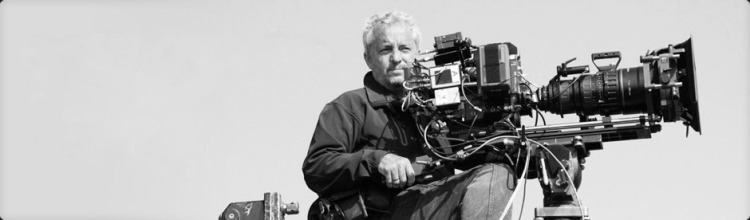
Chatting with Cinematographer Checco Varese on the phone for almost an hour inspired me. He brought so much passion to the way he talked about cinematography and creativity in general. He’s a man that obviously loves what he does.

To learn more about Checco, go to his website: www.checcovarese.com
Interview with Checco Varese:
Matthew Toffolo: Tell us about “Miracles in Heaven”? How were your experiences working on the film?
Checco Varese: It’s a very beautiful movie. It’s more than a faith based movie. It’s really a spirituaul film. It was shot in Atlanta, Georgia – a fantastic experience.
MT: This is your 2nd film in a row that’s based on a true story. You want to tell a cinematic story of course, but I’m assuming you also want to keep the real experiences as accurate as possible. What is the process of making this type of movie?
CV: With true life experience movies, you’re always walking on this imaginary line that you never want to cross. You want to make it entertaining but also make sure it’s real. You have to pick your battles and make the most insightful film possible, but you also have to support what really happened and translate the real story. These are real people and you have respect that. That said, you still have to engage the audience and make it a movie experience. These are tough films but also very rewarding to do.
MT: “The 33” is a stunning film based on the true story of the miners trapped underground for 69 days. How did you come up with the cinematic design of showing the effects of the entrapment underground and making if feel real? How was your working relationship with director Patricia Riggen?
CV: This is my favorite movie. It’s a work of love. When someone asks me what my favorite film I’ve worked on was, I always say my last film. But I can’t say this anymore – “The 33” was the best experience. It was a physically, emotionally, and mentally hard movie to do.
We shot it in a real mine. The whole crew had to drive two and half miles to the set everyday. We were there 12 to 15 hours a day. It was brutal. The rules for a miner is that they can’t work in the mines for longer than 8 hours a day. We were practicially doubling that daily. Every single scene in that film was shot in a real mine.
The look is very specific. When I first read the script, Patricia (the director) told me that you have to find the language that reflects the movie. When preparing for a movie I always ask what painter or photographer best reflects this story.
PHOTO: Behind the Scenes on the film “The 33”:

I looked at the Italian painter “Caravaggio” for inspiration. If you look at his work they are paintings of men suffering, and there is always a bay of light coming in from the distance. He makes things look beautiful, but also dramatic and spiritual.
We used the lights on the miners helmets to light the scenes and the actors. One Sunday before filming I went by myself and brought a few lights and did some measuring. I had 4 lights: a little light, a bigger light, a flashlight, and a miner light helmet. I did my work: testing, measuring distance etc… and decided to do one last thing.
I’ve never been in a mine before and I needed to understand the setting. So I turned off all of the lights and decided to sit alone in the dark for 45 minutes. After 10 minutes, I got very scared and ran out. But that’s when I realized what the minors were going through when they were trapped. Alone, underground, in the dark. It’s a frightening thing to experience and that’s when I found the language of the film.
MT: Your wife is director Patricia Riggen, the same director of “The 33”, and “Miracles from Heaven”. You have also worked with her on “Girl in Progress”, “Lemonade Mouth”, and “Under the Same Moon”. When does the husband/wife relationship start and stop, and when does the DP/Director relationship begin and end?
CV: We met working on set. The respect and then love started there. We do separate our relationship. That said, we do talk about work at home. I have to say, our personal relationship really helps our working relationship.
There are very few, almost none actually, director and cinematographer married couples, so we had nothing to compare it to. But we really make it work.
It works for me as a cinematographer because I’m aware of the film long before most DPs are. Most cinematographers join the film 6 weeks before filming begins. I am fortunate enough to know about the film months, and sometimes years beforehand. So I’m already preparing mentally for the film. That’s a big advantage I have.
That is gwhat happens in many famous creative relationships. You are working on a project for a long time. It’s a marriage of convenience on a creative level. It’s very rare, but amazing.
You do have to separate things at home and not talk about the work. It’s broken sometimes, usually by me, but when one of us doesn’t want to talk about it anymore, we just say stop and move on.
PHOTO: Checco and Patricia work together on set on “The 33”:

MT: What is a Cinematographer looking for in their Director?
CV: The main thing you like to have is a director with a strong opinion on their vision for the film. We are the painters and they are the storytellers.
If they have a vision, then there is a good collaboration. They also need to let the DP do their job. If they don’t, then it becomes a difficult shoot.
MT: You were the Director of Photographer: b camera on Pacific Rim? What does that mean being the “b camera” DP?
CV: I was the 2nd Unit DP, but the director Guillermo del Toro also was the 2nd Unit director. Union rules don’t allow the main director to also be the 2nd Unit director, so I was called the b camera DP. Guillermo has a strong vision so he wanted to direct even the 2nd Unit sequences.
He was working on both units simultaneously. His energy is unparalleled. I don’t know anybody who’s like him. A bundle of emotion. We would have two sets going on the same day and he would jump from set to set and direct the scenes. He would work through lunch and 15-18 hour days.
MT: You’ve started as a camera assistant as for a news program, what brought you to working on films?
CV: I began as a camera war correspondant. We would shoot in some very dangerous situations. I never really wanted this world and was lucky to get out of it. I took a steadicam course and that became my profession. I got lucky landing a job after someone else backed out. The rest is history.
MT: What makes a great steadicam operator? When was the last time you performed the steadicam?
CV: The camera should not move, unless it’s necessary for the story. One of the most difficult things about being a steadicam operator is that it’s the beginning of a shot or scene. It’s difficult to start a shot and end a shot, anyone can start in the middle of a scene.
It’s like riding a bike. I haven’t done it in years. I surround myself with great steadicam operators, so I don’t have to do it anymore.
When it comes to hand-held shots, I always take those shots. I was a camera operator for the news, so I’ve done these shots thousands of times.
MT: Where do you see the future of cinematography in film heading from an artistic and practical standpoint?
CV: This is a two part question. We’re still trying to define the movie language of the 21st century. We don’t know what it is yet. It will probably take about 10-15 years to figure that out. And then another 10-15 to define it.
In our craft, yes, things have developed….a lot. None of this change has been the choice of the painter. The change is based on what the movie industry wants. So you have to go with it.
The worst thing a cinematographer can do is get caught up in the technology. It’s not about the tools – it’s about what story you’re trying to tell.
Initially pianos were only made for specific people, then eventually pianos became accessible to everybody. Just like cameras etc.. were only used by a specific amount of people, and now everyone has one. In today’s world, eventually a Mozart will emerge, and that is amazing. A 12-13 year old kid who makes a masterpiece of a movie. 3% of YouTube videos are fascinating. 97% is unwatchable. That’s the process.
People have a tendancy to talk about technology too much. They try to overwhelm you with tech-gargle. You can’t get caught up in this. It’s all about the result.
It’s easier to worry about the tools. It’s hard to really talk about your skills and talent. What you are capable of. The tools will only take you so far. Technology will always have its limits.
MT: What film, besides the ones you’ve worked on, have you seen the most times in your life?
CV: Lawrence of Arabia. Raiders of the Lost Ark. The Battle of Algiers. Die Hard. I like to watch those 1980s action flicks.
MT: So, if I’m reading between the lines, it seems like you want to DP an action movie some day?
CV: Of course. Action movies are armies. 17 cameras and 17 camera crews on a single day on set. DPing an action movie is broad strokes. Large canvasses. It’s like being a foreman on a construction site. All kinds of tools and machines to make a great building. And a lot of skilled people who are good at performing those tools and machines.
____
Interviewer Matthew Toffolo is currently the CEO of the WILDsound FEEDBACK Film & Writing Festival. The festival that showcases 10-20 screenplay and story readings performed by professional actors every month. And the FEEDBACK DAILY Festival held online and in downtown Toronto on the last Thursday of every single month. Go to www.wildsound.ca for more information and to submit your work to the festival.
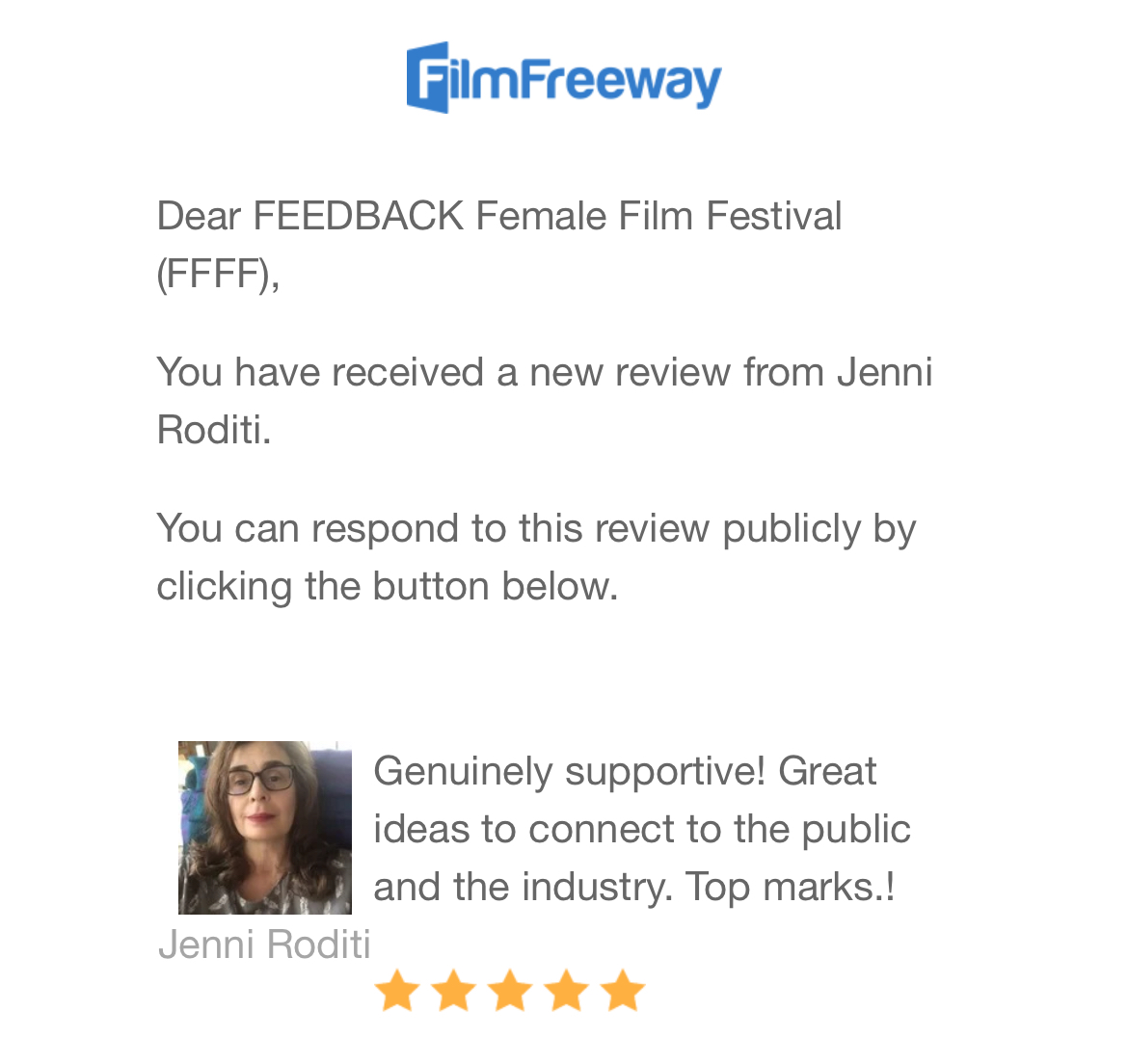
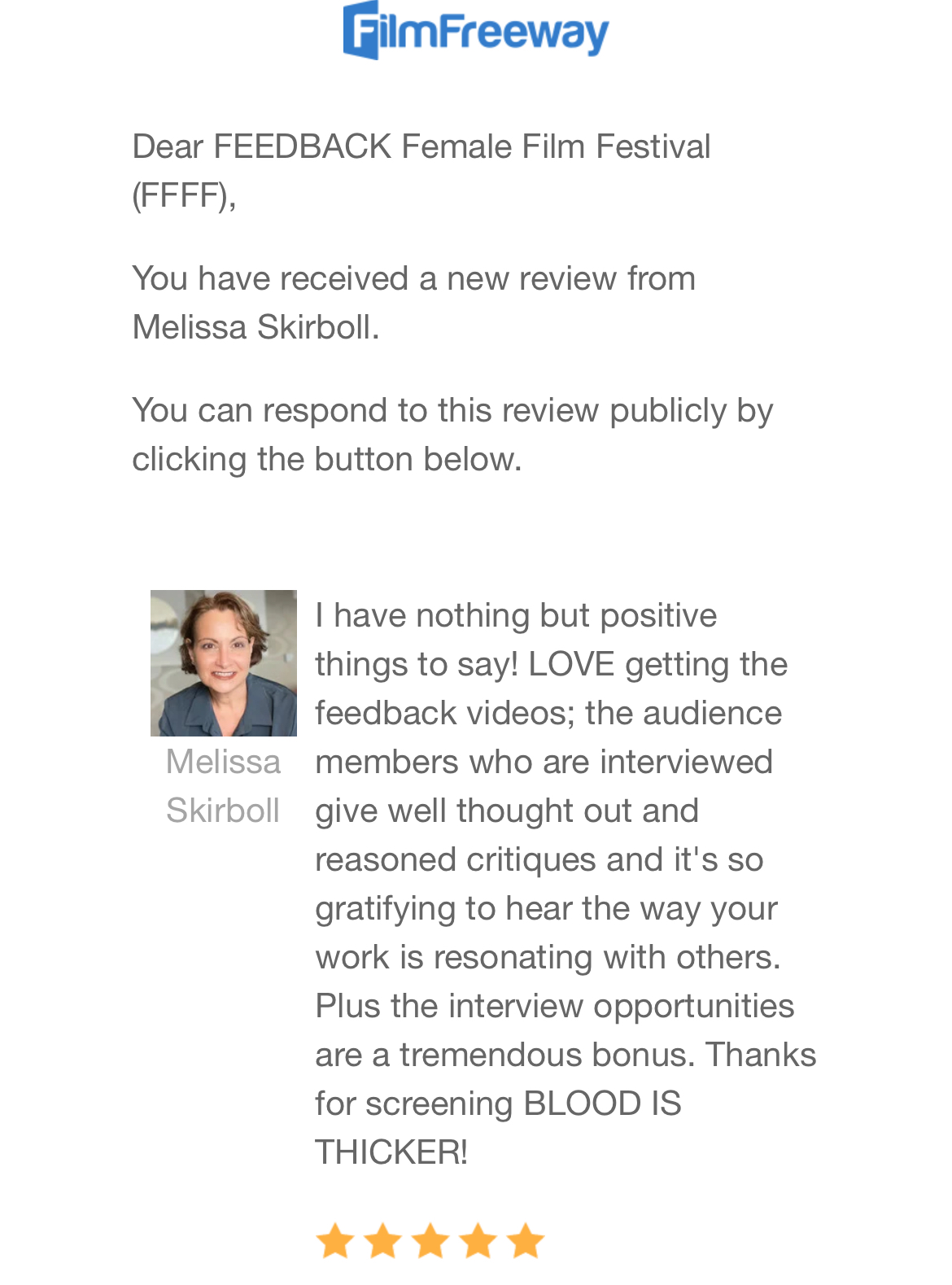
Deadline Today to submit via FilmFreeway. 86 FIVE Star Reviews!

The FEEDBACK Female Film Festival (FFFF) was created for women filmmakers and screenwriters. The goal is to showcase the best of female talent in film & TV from around the world.
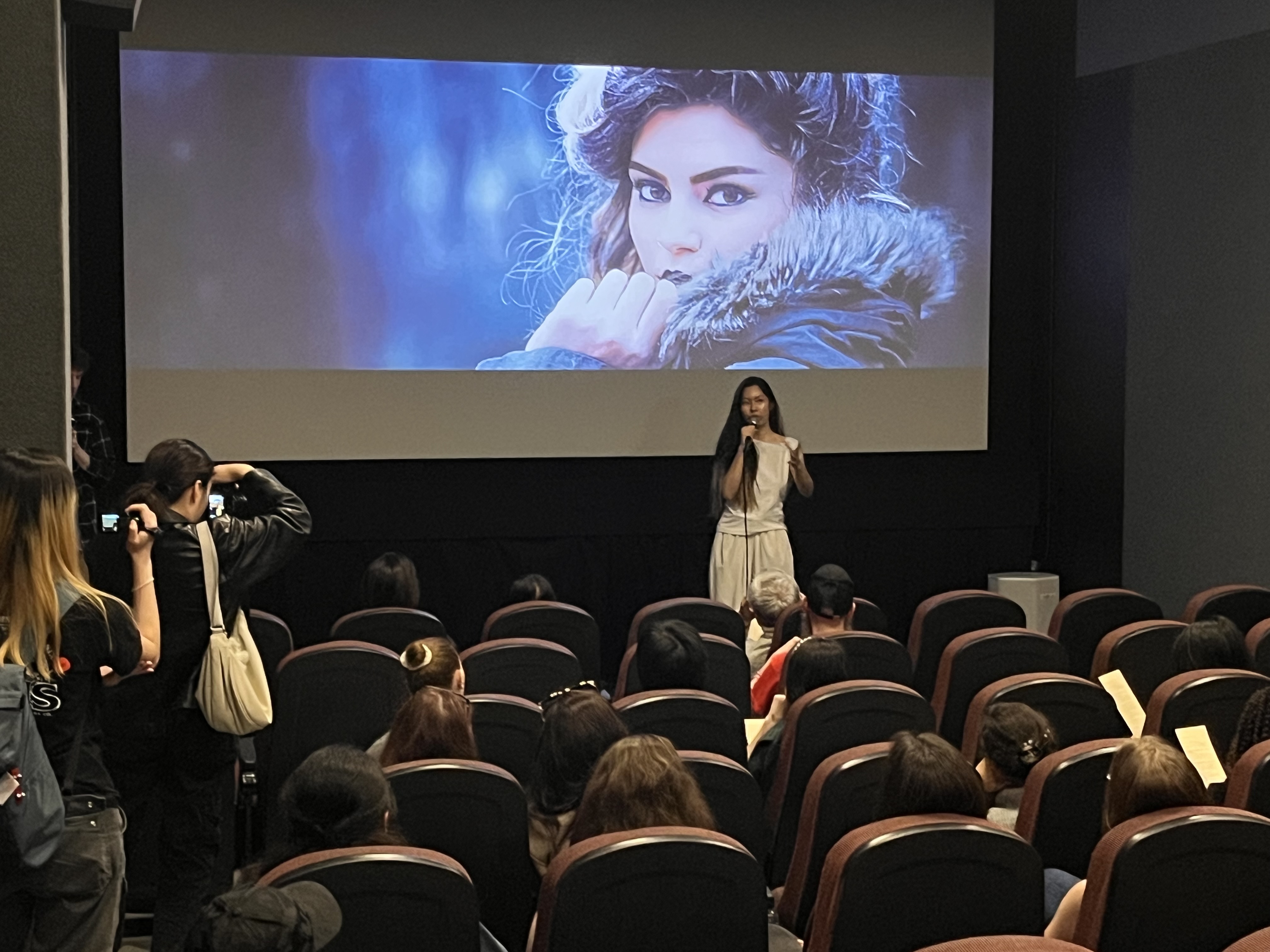
In-person and hybrid screenings geared to enhance the exposure of the artists and their work.
—–
Film Festival (short & feature) occurs 12 times a year (every month) in Los Angeles and Toronto.
Accepted films get their films screened at 2 festivals. The Audience Feedback Festival, where you will receive a video of people’s reactions to your film. (Great asset to promote your movie.) Plus, the Film Festival Streaming Service Festival, where it will be seen by people in the industry and film fans.
We give each film and filmmaker their audience feedback video. An example is this year’s Oscar winner for Best Short Film, which played at our festival, I’m Not a Robot: https://www.youtube.com/watch?v=vApv7P3j3yM
With that, it’s a great promotion for your film and it helps you get into other festivals.
Plus, each filmmaker gets the opportunity to do two interviews to further promote them and their work. A blog interview and a podcast interview on the Film Festival iTunes show.
——-
Screenplay readings also take place EVERY SINGLE MONTH.
Every submission received full feedback on their script from an industry professional. Winning scripts get their script performed by professional actors and made into a video for you.
*****


A grieving oceanographer and his fearless research partner discover a rogue North Korean general has built a hidden nuclear missile base beneath the Pacific’s Great Garbage Patch and must outwit his deadly forces and sabotage the launch before millions die in an undetectable first strike.
CAST LIST:
Narrator: Elizabeth Rose Morris
The Crowd/Man: Geoff Mays
Yoon: Steve Rizzo
In post-Civil War America, a tormented young woman marked by ancestral abuse becomes the unwilling vessel for a curse born of ancient blood—but as the darkness awakens within her, so too does a scream powerful enough to end it.
CAST LIST:
Narrator: Steve Rizzo
Whispers/Teen Girl: Val Cole
Eliza: Elizabeth Rose Morris
Mark Tyler gets out of prison after twelve years for a robbery gone awry. The loot is still out there. A corrupt cop, a local grifter, a femme fatale and the partner he left for dead all come marching out of his past to come for it.
CAST LIST:
Narrator: Steve Rizzo
Counselor: Geoff Mays
Mark: Shawn Devlin
Dr. Frank vows to climb Machu Picchu after his son is killed in Afghanistan and he suffers a major myocardial infarction. A feel-good story.
https://www.machopicchu.movie/
CAST LIST:
Narrator: Elizabeth Rose Morriss
Frank: Geoff Mays
Mack: Sean Ballantyne
Larry: Shawn Devlin
After being embedded with the U.S. military in Afghanistan, which ends in tragedy, a journalist heads to rural Maine to fully recover and finds herself on the frontlines of another battle, between a family of wolves and the ruthless land developer who wants them hunted down.
After a comrade dies in a horrific incident on the frontlines in Afghanistan, a war correspondent, forced to take time off, travels to Maine, only to stumble upon a exotic-animal hunting resort that threatens the local wolf population. When two wolf pups come under her care, she risks everything to stop the corruption and return the wolves to their pack.
CAST LIST:
Narrator: Shawn Devlin
Joey: Val Cole
Mrs. Petrona/Wren: Hannah Ehman
David: Sean Ballantyne
After a wrongful execution sends rock star, John Santo to the morgue, he rises from the dead, thinking he has a second chance to clear his name, but when he’s thrust into a life-and-death struggle to rescue his kidnapped daughter, Angela from renegade pastor, Sonny Romeo — Satan stands in John’s way, demanding his soul as recompense.
CAST LIST:
Narrator: Elizabeth Rose Morriss
John: Geoff Mays
Vicente: Shawn Devlin
Newscaster: Hannah Ehman
 Festival Reviews