Screenwriter Duncan B. Putney (THE PIT)

https://youtu.be/4ptPfx7eLks

When disgraced TV journalist Matthew Coleman is sent to South America for a “where-are-they-now” piece on thirty-three miners rescued from a cave-in a decade ago, he expects an easy fluff assignment. But what begins as a redemption story turns into a chilling investigation, as Matt uncovers a dark secret—the miners never actually returned. With a potent mix of eerie folklore, native mysticism, and psychological unraveling, The Pit blends investigative thriller with supernatural horror as Matt races to expose a truth no one wants revealed.

https://instagram.com/duncanputney

Get to know writer Duncan Putney:

1. What is your screenplay about?

Redemption: For Matt Coleman, for Father Dominic, for Dr Fuentes and even the villagers of Los Santos.
Is a miracle always a miracle?

2. Why should this screenplay be made into a movie?

I (and my co-writer Greg) believe that the premise is not rehashed commercial plot lines and that the story works well across cultures. The screenplay sits in the sweet spot of being commercial and unique.

3. How would you describe this script in two words?

Disturbing and Unexpected

4. What movie have you seen the most times in your life?

I watched “Drums Along the Mohawk” and “Northwest Passage” as a kid as I’m a bit of a 18th century American history nerd. So, those two films skew the average. I’m not a binge watcher. It’s great treat to revisit a film that you haven’t seen in a decade or so. You get a different experience that way.

5. How long have you been working on this screenplay?

I had the idea some years ago when actual mining rescue happened in Chile. I wanted to write a smart script with broad appeal. I made some notes and every so often would revisit the project. I finally sat down to write a first draft during Covid. I got to the point where had a pretty good script, but not a great one, so I brought in my friend Greg Chopoorian to get feedback and to brainstorm with. Working with Greg really helped move the script forward.

6. How many stories have you written?

I have written dozens of screenplays, both short and feature length. I’m always jumping from script to script. If I’m stuck on one project, I jump to another so that I’m making progress and not staring at an empty page.

7. What motivated you to write this screenplay?

I thought of putting an unexpected twist on a real life event and couldn’t get that out of my head until it was written as a screenplay.

8. What obstacles did you face to finish this screenplay?

I would get stuck assembling all the pieces of the puzzle. I wanted every piece of information to pay off and every sub plot to tie into the main plot. Nothing extra and nothing missing.

9. Apart from writing, what else are you passionate about?

Most recently, I’m passionate bout my fiance, Chelsea, and her two amazing kids. I’ve have produced some award winning short films with my friend Andre Stark, and we’ve created some non-profit projects for the Rhode Island International Film Festival like the Flickers 7DayPSA filmmaker competition in Boston with WCVB-TV5 and the Children’s Hospitals International Film Festival that started with Boston Children’s Hospital that has grown to include more than a dozen children’s hospitals in the US and Canada.

10. What influenced you to enter the festival? What were your feelings on the initial feedback you received?

Feedback was critical. We were looking for festivals that had judges that really knew the genres and what horror audiences were critical about. We wanted to see if the story would resonate with judges. I actually made a few adjustments to the script based on the initial feedback

11. What genres does your screenplay fall under?

Supernatural horror mystery

Interview FOUR PAWS film team (BE THEIR VOICE)

Be Their Voice, 2min,. Austria
Directed by FOUR PAWS
Jesse, a curious Australian student, invents an AI sheep translator and befriends Sunny, an adorable merino lamb. Their light-hearted connection turns somber when Sunny reveals fears about “live lamb cutting,” a common wool industry practice. The film sheds light on this distressing reality and advocates for change.

https://www.instagram.com/four_paws_international/

What was the motivation behind this film?

At FOUR PAWS we’ve been working on the issue of live lamb cutting (also known as mulesing) for several years now. We have realised that we need a new, relatable way to capture people’s attention and make this cruel practice more accessible and understandable.

Although live lamb cutting is only practiced in Australia, the country is the world’s largest wool producer for the global fashion market. Hence, live lamb cut (mulesed) wool is a global issue—found in countless wardrobes and stores around the world, often without shoppers realising they’re contributing to this cruelty.

Until now, our efforts have focused on exposing the cruelty and mobilising support within animal welfare communities as well as working with fashion brands and their supply chains to reliably exclude live lamb cut wool. But to go beyond the animal welfare or specialised industry bubble—and truly touch hearts—we’re trying something different.

We’re introducing Sunny the lamb, who stands for millions of lambs who suffer each year for clothing. With Sunny’s story, told through beautiful 3D stop-motion animation and heartfelt storytelling, we hope to create a real emotional connection—one that helps people see this issue not as distant or abstract, but as something that affects us all, and something we can all help change.

What is live lamb cutting and why did you choose this style of animation to talk about it?

Live lamb cutting (mulesing), is a painful and outdated practice where palm-sized pieces of skin are cut from only 2–10 week-old lambs—without adequate pain relief. These young lambs experience intense fear, stress, and excruciating pain and some even die.

Live lamb cutting is not the same as tail docking or castration. It’s considered the most severe routine mutilation in sheep farming and can be completely avoided with viable solutions available.

And although it happens far away in Australia, it affects us all. Australia supplies around 70% of the world’s wool and 80% of fine Merino wool—most of it (80%) from sheep that have undergone this procedure.

We often rely on graphic footage and hard-hitting facts to show the harsh reality behind a widespread yet avoidable issue in the global fashion industry. But this time, we wanted to go further—not only to inform minds, but also to move hearts.

That’s why we chose to tell this story through Sunny, using heartfelt storytelling and beautifully crafted 3D stop-motion animation. This approach allows us to connect with people on a deeper emotional level, raise awareness of the cruelty, and emphasise the urgent need for change.

Ending live lamb cutting is possible—and it starts with awareness. We all have a role to play.

From the idea to the finished product, how long did it take for you to make this film?

It took us more than half a year of dedicated work, collaborating with two creative agencies, to bring this project to life—from storytelling and animation to voice casting in multiple languages.

We started with the storyline and a script, which created a lot of back and forth. Our goal was to find the right balance: emotionally engaging, accessible to a broad audience, and factually accurate. At the centre of the story is Sunny, our protagonist—an Australian lamb who slowly discovers the harsh reality behind merino wool and what it means to be live-cut as a lamb.

We spent most of our time developing Sunny and her mother, ensuring their portrayal was both emotionally compelling and biologically accurate. As animal welfare experts, it was important for us to get every detail right. It was equally important to us that the farmer character was portrayed neutrally and not as a villain, because we believe that farmers can and should be part of the solution, and that collaboration is key to moving the industry away from live lamb cutting.

The animation agency designed and crafted the set by hand—from the farmhouse to the coffee cup of Jesse, the PhD student who invents an AI “sheep-to-human” translator. Once the visual world was built, everything came together quickly.

We were fortunate to bring on board some incredible talents who care deeply about this issue:
• Danielle Macdonald voices Sunny the lamb. She is an Australian actress known for her breakout lead role in “Patti Cake$” as well as starring as the title character opposite Jennifer Aniston in “Dumplin” and opposite Sandra Bullock in Netflix’s hit “Bird Box”.
• Scott Evans voices Jesse the PhD student. He is an American actor and producer known for his roles in Netflix hit show “Frace and Frankie” and Greta Gerwig’s record-breaking blockbuster “Barbie”.
• And the legendary Sir Stephen Fry, English-Austrian actor, broadcaster, comedian, director, and writer lends his voice as the narrator.

We have also produced German and French versions with professional voice actors to ensure the message comes across in all languages and cultures.

What was the biggest obstacle you faced in completing this film?

Balancing our own expectations—and those of the many people who care deeply about the topic involved—was a real challenge. Staying true to the creative concept while upholding our commitment at FOUR PAWS to accuracy and scientific integrity made it especially difficult to find the right balance between factual precision and the fictional narrative that we believed had the strongest emotional reach. Navigating that tension—between narrative and truth—was one of the most complex aspects of the project. But looking at the final result, it was all worth it.

How did people react to the video?

The video triggered a wide range of reactions. Our core supporters and those in the animal welfare space appreciated the message. We also reached new audiences—young men and even farmers—who, as expected, responded critically due to the emotional and simplified portrayal of live lamb cutting.

Many shared lengthy comments, and we responded just as thoroughly. That opened the door fo fact-based conversations—and in some cases, even led to people acknowledging the need to move away from live lamb cutting. This kind of shift in perspective was one of the most rewarding outcomes.

Reaching people outside our usual circle—even if they don’t agree with it at first —gives us a valuable opportunity to share our message.

Moreover, the film has won so far three awards, helping us reach wider audiences and further spotlight the issue.

What were your initial reactions when watching the audience talking about your film in the feedback video?

I was thrilled to hear detailed feedback on the film and how external viewers experienced it. It was incredibly rewarding to realise that so many of the ideas we had envisioned truly came to life and were effectively conveyed through Sunny’s story—which is just fantastic.

What other elements of the festival experience can we and other festivals implement to satisfy you and help you further your filmmaking career?

Providing more opportunities for exchange between participants—such as networking sessions or workshops—would be incredibly valuable. I’d also love to see more focus on understanding and amplifying the impact of films: learning how others have measured their film’s influence, what strategies have worked, and how to accelerate that impact would be especially helpful when looking to create meaningful change.

You submitted to the festival via FilmFreeway. How has your experiences been working on the festival platform site?

Submitting “Be Their Voice” through FilmFreeway has been a smooth and straightforward experience. The platform makes it convenient to discover festivals that align with our film’s message and values. It also streamlines the submission process, keeping everything organised in one place: from uploading materials to tracking deadlines and receiving updates. It was great to be able to find the Toronto/Los Angeles Documentary Feature and Short Film Festival through the platform and to be awarded for “Best Micro-short” with Sunny’s heart-wrenching story.

What is next for you? A new film?

We’re planning to continue promoting the short film through additional film festivals and independent screenings to reach wider audiences. Beyond that, we’re actually considering developing a documentary that would explore the issue in greater depth—bringing in more context, diverse voices, and shedding light on the barriers to change as well as the available solutions.
Filmmaker Yanjia Yang (New York Times Co. v Sullivan)

New York Times Co. v Sullivan, 10min,. Canada
Directed by Yanjia Yang
In the heat of the Civil Rights Movement, a full-page ad in The New York Times sparked a legal battle that would redefine freedom of the press in America. Through archival footage, this short film explores how the case reinforced First Amendment protections and shaped journalism as we know it today. A must-watch for anyone interested in media, law, and the enduring power of free speech.

Get to know the filmmaker:

1. What motivated you to make this film?
I was driven by a desire to revisit the New York Times Co. v. Sullivan case not just as a historical legal milestone, but as a powerful reminder of how fragile our freedoms truly are. In an era where misinformation, polarization, and censorship continue to challenge democratic ideals, I felt a strong responsibility to explore the balance between rights and responsibilities. I wanted my generation to understand that free speech is not abstract; it is something we must actively reflect upon.

2. From the idea to the finished product, how long did it take for you to make this film?
This was my very first documentary, and as an 11th-grade student, it was a steep learning curve. From research to editing, the process took about three months. There were moments of doubt, technical setbacks, and challenges in simplifying complex legal ideas. Though it required a lot of effort and time commitment, I pushed through and was able to find the true meaning of creating this film.

3. How would you describe your film in two words!?
Conviction. Awareness.

4. What was the biggest obstacle you faced in completing this film?
The hardest part was staying focused on the “why” while navigating the overwhelming “how.” Legal cases are not always emotionally engaging, especially for a student audience, but I needed to find a way to make the case feel urgent. Balancing that emotional weight with historical and legal accuracy was my biggest challenge.

5. What were your initial reactions when watching the audience talking about your film in the feedback video?
It was humbling. Hearing others respond thoughtfully to a film I poured so much effort into reminded me that storytelling can create ripples. It made me realize that even as a student, I can start conversations that matter.

6. When did you realize that you wanted to make films?
Working on this project showed me how film can become a form of activism, a voice for issues that deserve attention. I don’t just want to tell stories. I want to shape dialogue, inspire curiosity, and advocate for the overlooked. That realization changed how I see my future.

7. What film have you seen the most in your life?
Probably The Post. It’s a film that reminds me how courage and journalism can intersect in transformative ways, especially when truth is at risk.

8. What other elements of the festival experience can we and other festivals implement to satisfy you and help you further your filmmaking career?
I think festivals that showcase youth work should also create space for dialogue; panel discussions, mentorships, or even virtual filmmaker circles. Hearing from others, especially more experienced filmmakers, would help young voices like mine grow stronger and more informed.

9. You submitted to the festival via FilmFreeway. How has your experience been working on the festival platform site?
It’s been very smooth and accessible. As a student, I found the platform intuitive and empowering, it made something that felt “out of reach” become possible.

10. What is your favorite meal?
A warm bowl of chicken noodle soup: simple, comforting, and always reminds me of home.

11. What is next for you? A new film?
Yes. I want to continue exploring intersections between justice, identity, and memory. I’m working on a short piece that reflects on generational silence and the stories we inherit, as well as researching a larger project on education equity. I believe film can be a tool not just for seeing the world, but for changing it.

Filmmaker Greg Simmons (Staunch Moderates Experience Live, Virtual Concert)

Staunch Moderates Experience Live, Virtual Concert, 65min,. USA
Directed by Greg Simmons
Welcome to the Staunch Moderates Experience Live, Virtual concert. An entertaining live performance which takes us through the philosophy & history of the Staunch Moderates movement through music. This film presents a unique experience with its multi-genre compilation of music videos from the three albums & more released by the movement. Performed by Rapper Greg Simmons AKA “DJ Staunch”, Rappers Kyle Knight & Casanova Ace, with Staunchette dancer Pearrie Hammie.

https://www.instagram.com/staunch_moderates/

Get to know the filmmaker:

1.What motivated you to make this film? – I will first note what we are and that is an Intellectual Movement for peace and a multi-genre hip-hop band, “DJ Staunch® & the Bigfoots.”. From January of 2024 we were being booked for a college concert tour being scheduled to play at five major campuses: CU, ASU, USC, Missouri & Florida. We rehearsed for the concert series every day for six months or so. Anyways, due to the Israel/Palestine protests taking place at campuses cross the nation and the promoter and campuses of our concert series being terrified of exacerbating said situation, our concert series was canceled! Being that our Staunch Moderates® Entertainment Studio doesn’t only produce music but also movies, with the know how to do so, we thought it wise to go ahead and produce our live concert virtually into this film and we were tickled pink about all the creative elements going into it and excited in thinking this is our best most engaging & entertaining film yet.

2. From the idea to the finished product, how long did it take for you to make this film? – If we count from when our concert series got canceled, and we started production on our Live Concert Virtual Movie, mid-July 2024 to when we submitted it to Cannes in mid-April 2025, this is nine months.

3. How would you describe your film in two words!? – Live Concert

4. What was the biggest obstacle you faced in completing this film? – Effectively performing as DJ Staunch in the Bigfoot costume.

5. What were your initial reactions when watching the audience talking about your film in the feedback video? Relief and pleasure. You see, it’s a very ambivalent or anxious time for me from when we complete a film until we have audience feedback. Even if I think the film is a great film and that it’s our most engaging and entertaining film to date, it doesn’t matter what I think. It matters what audiences think. We gather that information by how we do in film festivals and from reviews. Thanks in part to the award you gave us from your film festival, positive feedback from some other film festivals and the reviews that you and your audience provided from feedback (thank you), we have now gotten the essential positive feedback that endorses our film as a quality product. It is so meaningful to us!

6. When did you realize that you wanted to make films? I started out wanting to make scripted comedy TV about 25 years ago, and through that process, we made our first documentary about trying to get that show off the ground, say 15 years ago. Then we started the Staunch Moderates Intellectual Movement 5 years ago. From the experience in the business and the know-how, it made sense to make a documentary film about the journey of starting and administering this movement, so it happened slowly over the years from a series of projects and experiences that came from those projects to where we were just doing it.

7. What film have you seen the most in your life? “Point Break” & “The Aviator.”

8. What other elements of the festival experience can we and other festivals implement to satisfy you and help you further your filmmaking career? What you guys & gals at Toronto/LA Documentary, Features & Shorts are already doing: 1) running your festival, 2) screening our films, 3) providing audience video reviews, 4) providing written reviews, and then even providing a podcast audio or video review, I can’t imagine what else you can do. Oh, I just figured it out, and that is to directly contact the major’s: Cannes, Sundance, SXSW, TIFF, Berlinale, & Venice and then the next tier of festivals: Mill Valley, Newport Beach, Tribecca, Telluride, Aspen etc … and directly recommend our film to those festivals. I plan not only on answering these interview questions but also on doing the podcast interview with you and sending you the money you charge for said services. I also thank you greatly for all that you do and commend you for the best festival experience that we’ve had in our two years and now over 30 awards that we’ve won. Thank you for your support!

9. You submitted to the festival via FilmFreeway. How has your experiences been working on the festival platform site?

It has been efficient & seamless for us with the exception saome festivals understandably give notices late. We do find it interesting how Notification seems to come in traunches. Do you know why that is?

10. What is your favorite meal? Wild duck. Do you know how to get any?

11. What is next for you? A new film?

Yes, we are already deep into producing & editing “Mission Peace II,” a continuation of our Docuseries from Mission Peace 1, covering the progress of our movement and how we went intro music & film after the 2020 Election to spread our message of Peace through Moderation.

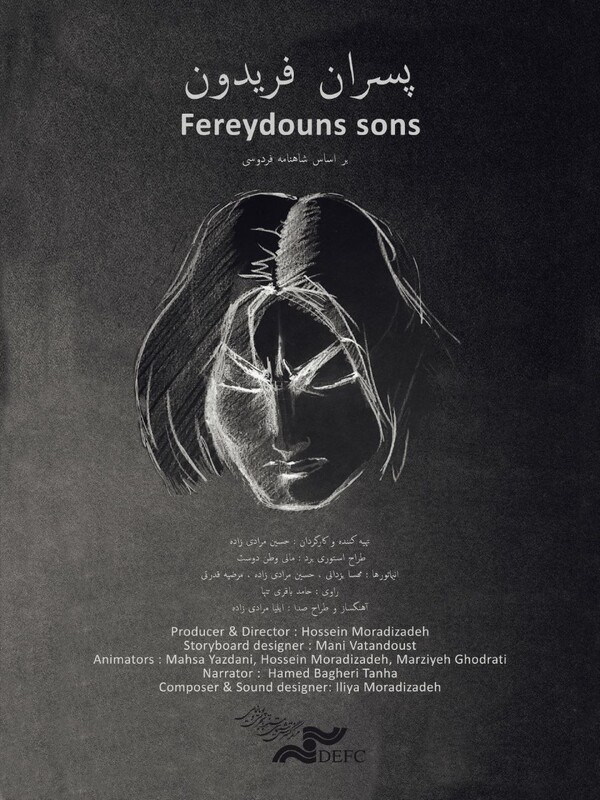
MOVIE TRAILER: Fereydouns Sons, 7min, Iran

The film goes LIVE for FREE at 8pm EST (New York time): Monday, June 2nd, 2025!

Part of the best of the ANIMATION Feedback Film Festival lineup. Watch on the site page: http://www.wildsound.ca/browse

——-

Fereydouns Sons, 7min, Iran
Directed by Hossein Moradizadeh
Fereydoun divides his lands into three parts and gives each one to one of his sons. Salm is the land of Arabs and Romans, Tur is the land of Turks and China, and Iraj is the land of Iran.

http://www.moradizadeh.com/https://www.instagram.com/mora.films/

Watch Today’s FREE Festival: Best of ANIMATION Shorts Fest

Festival goes LIVE at 8pm EST today (Monday June 2nd)

Watch the Festival: https://www.wildsound.ca/events/watch-today-s-free-festival-best-of-animation-shorts-fest

See the full lineup of films:

Fereydouns Sons, 7min, Iran
Directed by Hossein Moradizadeh
Fereydoun divides his lands into three parts and gives each one to one of his sons. Salm is the land of Arabs and Romans, Tur is the land of Turks and China, and Iraj is the land of Iran.

http://www.moradizadeh.com/

https://www.instagram.com/mora.films/

The execution of memory, 10min,. UK
Directed by Gabi Bania
The film is a screen adaptation of Jerzy Ficowski’s poem under the same title from the poetry volume “A Reading of Ashes”, that is devoted to the subject of the Holocaust and World War II. The poetry volume was published on the occasion of the fiftieth anniversary of the Warsaw Ghetto Uprising.

https://www.instagram.com/gabibania/

https://www.gabibania.com/

Phantom, 5min., UK
Directed by Gabi Bania
“Phantom” is an adaptation of the Polish poem by Adam Mickiewicz under the same title.

https://www.instagram.com/gabibania/

https://www.gabibania.com/

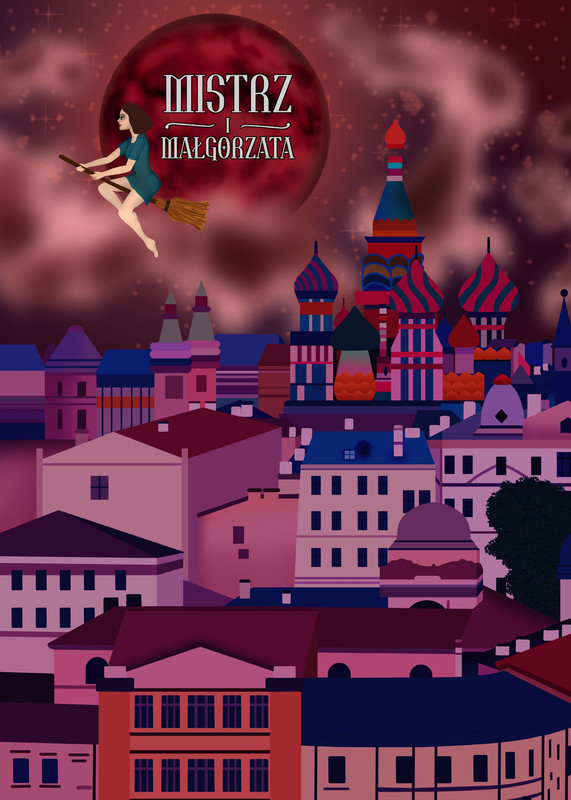
The Master and Margarita, 2min., Poland
Directed by Gabi Bania
Satan and his demonic retinue come to 1930s Moscow. His visit makes a significant impact on the citizens of the city, including the entitled Master – the author of the novel about Pontius Pilate and his beloved Margarita Nikolajewna, who, in order to regain her lost love, agrees to act as the host of the Satan’s ball, called the Spring Full Moon Ball.

Johns, 9min,. USA
Directed by Geoff Grogan
Reflections on art, and the impact of one artist(Jasper Johns) on another’s life.

Watch the Feature Film: WHEN THE WORLD CAME TO SAN FRANCISCO (in case you missed the free screening)

Watch the festival: https://www.wildsound.ca/events/when-the-world-came-to-san-francisco-doc-feature-winner

Watch the festival NOW for the next 48 hours by signing up for the FREE 3-DAY trial using the link, or go to http://www.wildsound.ca

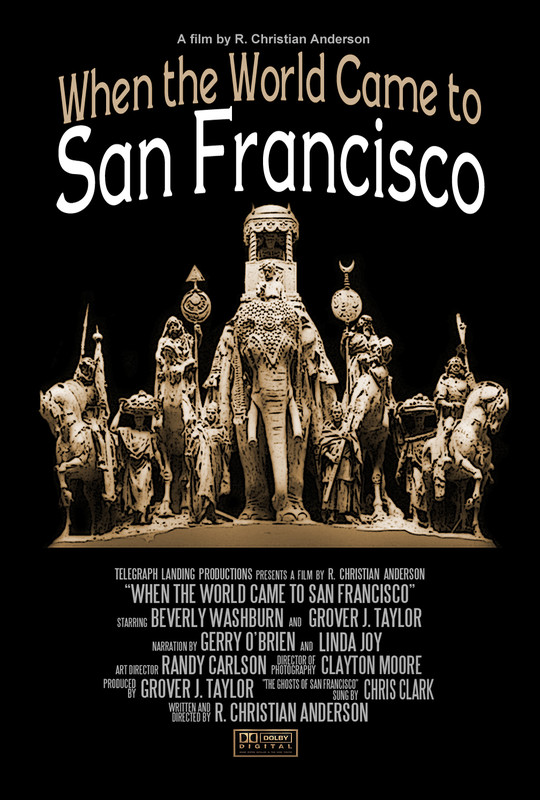
When the World Came to San Francisco, 70min., USA
Directed by R. Christian Anderson
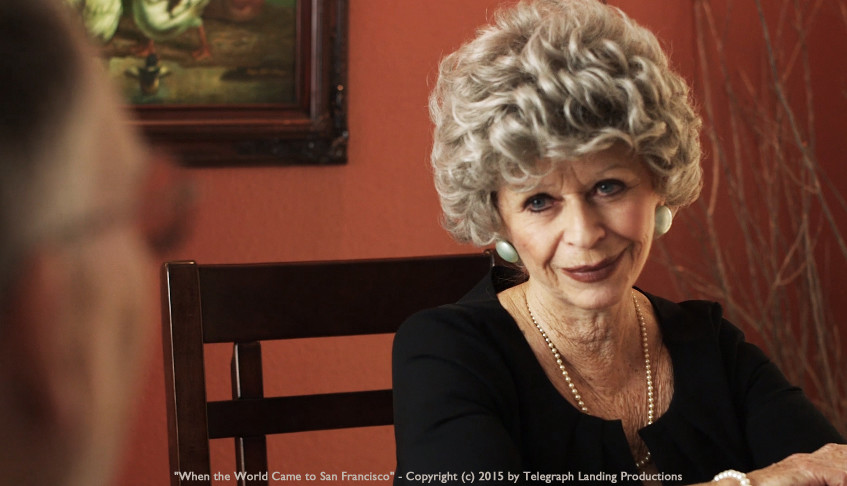
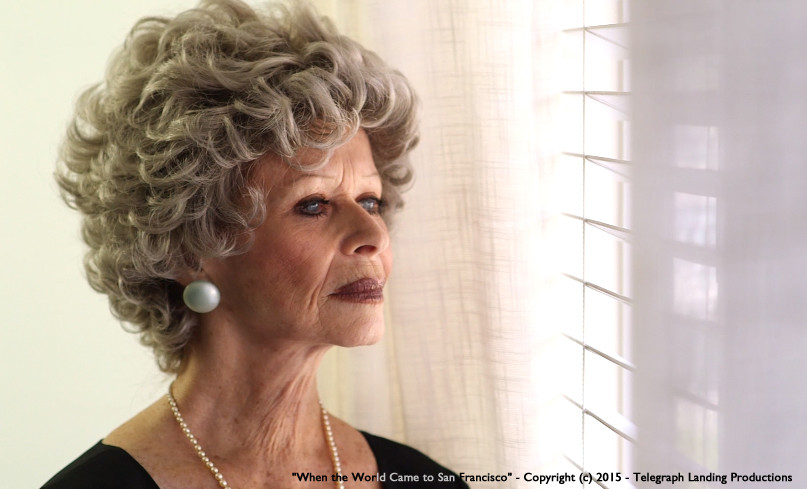
A documentary-drama about a woman’s visit to the 1915 Panama-Pacific International Exposition in San Francisco. The film tells the story of the exposition through actual images and vintage film clips. Over 2 years in the making, this film was a labor of love for filmmaker R. Christian Anderson.

http://www.rchristiananderson.org/

https://www.instagram.com/rchristianander/

Watch Today’s FREE Film Festival: WHEN THE WORLD CAME TO SAN FRANCISCO (doc feature winner)

Festival goes LIVE at 8pm EST today (Sunday June 1st)

Watch the festival: https://www.wildsound.ca/events/when-the-world-came-to-san-francisco-doc-feature-winner

When the World Came to San Francisco, 70min., USA
Directed by R. Christian Anderson
A documentary-drama about a woman’s visit to the 1915 Panama-Pacific International Exposition in San Francisco. The film tells the story of the exposition through actual images and vintage film clips. Over 2 years in the making, this film was a labor of love for filmmaker R. Christian Anderson.

http://www.rchristiananderson.org/

https://www.instagram.com/rchristianander/

Interview with Supervising Sound Editor Donald Sylvester (Logan, Walk the Line, 3:10 to Yuma)

Donald Sylvester has worked on over 100 films in the last 25 years and is considered one of the top people working in the craft of Post-Production Sound today. I asked him a few simple questions via email and he countered with some really insightful and meaningful answers. Enjoy it:

Where were you born and raised? When was working in the film industry start to become a career pursuit for you?

I grew up in the Garden State of New Jersey, where all my core principles were established. My father moved us to Atlanta when I was 11, and it was a wonderful experience during that period – both for Atlanta and for me. It was an unprecedented period of great growth for the city and the awakening of a progressive South – and growth for me personally as well. I dabbled in a lot of stuff, but always gravitated toward music. Frankly the film business didn’t come calling for me until a long, long time later after I moved to California. I reached some level of success before I realized that the music business was a bad idea. My wife, who was a film editor, suggested that motion pictures and I would be a good fit. My skills and instincts fit right in. She was right.

What has been your most proudest work of your career? Or, what has been your favorite project?

For a lot of my years I worked on other people’s films as a sound editor. I learned a lot and loved the people and the work, but I never really thought of those projects as “mine.” I didn’t start supervising in earnest until 2001. I could write a book about each one of those shows (and maybe one day I will!). I did two “Garfields” which were not great movies but working with Bill Murray was really unforgettable. And I supervised and mixed “The Fault In Our Stars,” and that was a wonderful and meaningful experience.

But the film I like the best is “310 to Yuma,” and I like it for so many reasons. I like it primarily because it’s a Western and it’s got guns and horses and spurs and all that good stuff that Westerns must have, but also because it is the kind of movie where every single sound is totally plot- or character driven. As simple as that may sound, it resulted in a very satisfying experience. Plus, it’s a good movie.

In your words, what exactly does a Supervising Sound Editor do?

A director once told me that he really wanted to do everything on his film himself, but now, as a director, he was only allowed to tell everybody else what to do. I’m very sympathetic to that and I try to help the director achieve his goals. I try to get to know him and what he needs and understand the vision of his film. Simply put, I see myself as the sound extension of the director. I make sure he hears what he wants to hear, communicates the story he wants to tell, as well as faithfully executing the sonic challenges he wants to express.

I often like to imagine I’m the creative force behind the soundtrack of these films, but honestly I am only a trussed-up worker-bee, taking directions and challenging myself to deliver something I think is perhaps better than what was requested, as well as hitting the target set forth by the director precisely on the head. There’s also a lot of management duties and schedule-making, but I seldom write about that.

Advertisement

Give us a breakdown of a big budget film like LOGAN. How many people are
working in the sound department in post-production? How long do you and your team have to complete your end of the film? Do you generally work with the same
team?

I am fortunate to work a lot at Fox, where we’ve established an enlightened work flow for me. Our method seems to get results and head off post sound problems as well. I start early on the show during principle photography and as the scenes are cut together by the picture editors, I fancy them up with sound effects and cleaned-up dialogue. Later, when the post editorial is in full swing, I’ll expand my crew to include dialogue editors and sound effects editors. A film like Logan had a healthy budget but didn’t have a long post schedule, so we were asked to work weekends and long hours. In the end, I had two sound designers, two sound effects editors, two foley editors, and four dialogue and ADR editors, not to mention two assistants. This is actually a small crew to bring this kind of film to the mix stage. Much of the work gets finessed at the mix, which is the battlefield trenches for getting all the ideas to gel and finished in time. There’s always a big chunk of the budget for looping, which can be extensive, as well as temp mixing and audience previews. Yes, I like to work with the same people whenever I can, but schedules often don’t permit that luxury.

Is there a type of project that you like to work on that you haven’t worked on yet?

As I’ve worked on more and more films over the years, my goals have changed. There was a time I thought I’d like to do a big science fiction thriller, but I’ve actually learned that genres alone don’t make the most satisfying films. What tickles my fancy are films rich on character development with some insight into the human condition. Now, no one goes out and says, “I’m gonna make the greatest human condition film this town’s ever seen!” But if they’re relying on car chases or space battles and they’ve neglected depth of character, then I’m not gonna get too excited about it no matter how “special” the special effects are.

To be honest, I wouldn’t mind doing a war movie (mostly WWII for my taste) or even a musical. But musicals don’t spend any time on sound effects, so let’s scratch that one off the list and just say WWII. With characters!

What is your passion in life besides sound?

Sound is my passion, but if you take sound away there’s my great interest in music – but that’s sound too. I’ve often imagined going back into radio (I ran the college radio station WUOG in Athens, Georgia during my college years) but I would only do that if I could DJ a radio show that would blend music and sounds into a cohesive story – but that’s what I do now. So, what I probably like after all that is to travel, because over the years I’ve really enjoyed travelling and recording sounds and sound effects in interesting and distant locations. But … that’s sound again.

What movie have you watched the most times in your life?

I assume you mean what movie have I voluntarily watched most often that I haven’t worked on? Because when you work on a film you actually watch it hundreds of times until you memorize every frame of it. And that concept prevents me from watching most movies more than once or twice. However, my favorite movie would have to be “Withnail and I,” which isn’t everyone’s cup of tea but ticks all the boxes for me.

What advice do you have for people who would like to do what you do for a living one day?

I would suggest that if you want to get into theatrical movie sound then you should make sure you’re ready for the long hours and hard work, and then you should find people who are currently making films (or shorts or TV shows or documentaries) and offer to work for them for FREE. Just get your foot in the door and do anything and everything you can to get familiar with the process and begin to focus on the area where you want to work. And one day (if you still like it and it likes you back), somebody will say, “Hey, you should be getting paid for this stuff.” Then you’re on your way.

donald sylvester
_____