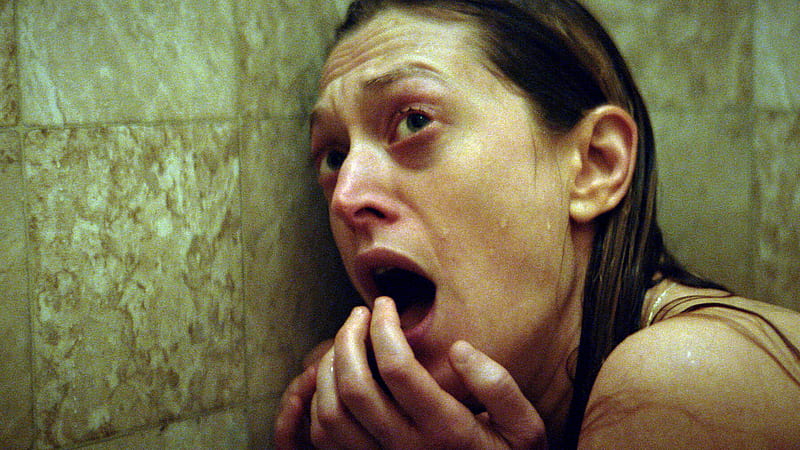
Sequoia, 15min., Switzerland Directed by Michelle Künzler Sequoia, a diligent AI maid, works for the captivating yet mysterious Mrs. Terrance. Although not designed to harbor any emotions, Sequoia starts developing sentience, when a certain sound triggers a feeling inside her that feels oddly familiar – and human. Forced to conceal her newfound emotions to evade shutdown, Sequoia embarks on a dangerous quest for truth, tearing at the seams of her own identity and re-evaluating the intricate power dynamics that govern her place within the household.
FLÜGGE, 25min., Germany Directed by Leopold Schraudolph, Dani Rose Cortés In an Austrian mountain village in 1914, the determined Amelie (20) must defy her father’s wishes of running the family sewing business to pursue her own dreams of flight and seize her only chance at finding true freedom.
My updated version of Shakespeare’s classic has the “cool” factor; it is 2023 and Tony, the Merch King of the Kappa House, will do anything for his favourite Frat Bro Baz, even if it means a sketchy business loan with someone he loathes, the brilliant, scholarship student, Shai. The much needed funds will finance Baz’s elaborate journey to Belmont, Italy, where he will attempt a Casket Challenge, a bizarre game designed by Sorority Sister Pia’s late father to ensure his control, beyond the grave, over his wealthy and attractive daughter. Pia, who is an exchange student at the university, finds herself back in Belmont after her Father’s passing and becomes a pawn in his strange Game, which will dictate her entire future. Equally strange are the specifics of the business loan between Tony and Shai. Inspired by Shakespeare’s The Merchant of Venice, this troubling narrative, set in present day on an American university campus and off the coast of Italy, takes the reader on a wild ride and conveys that things aren’t always as simple as they appear on the surface and that hate is a divisive and toxic force that threatens to destroy us all. The overarching concept of the book is to convey that human beings are flawed and that we all need to be and do better, irrespective of race, religion and social class.
2. What genres would you say this story is in?
YA
Shakespeare Adaptation
3. How would you describe this story in two words?
Shakespeare Reimagined
4. What movie have you seen the most in your life?
The Shawshank Redemption
5. What is your favorite song? (Or, what song have you listened to the most times in your life?)
Probably “Hotel California” by the Eagles
6. Do you have an all-time favorite novel?
Too many to count, but I’m pretty obsessed with The Great Gatsby by F. Scott Fitzgerald.
7. What motivated you to write this story?
Sadly, antisemitism has been on the rise and an update of the Bard’s controversial text about a Jewish moneylender, set up in opposition to his community, seems long overdue. As an experienced High School English Teacher, I have always felt like the students need more Young Adult book options, rich in depth, but not too long or difficult, to get them hooked on reading. Every time I teach The Merchant of Venice to grade 9 students, I am struck by its modern and relatable vibe; the friend groups and social hierarchies, the nuanced romances, the morally ambiguous characters, the divisive nature of hate, the objectification of women, and of course, the prejudice, exclusion and bullying, really resonate with young people.
8. If you could have dinner with one person (dead or alive), who would that be?
That’s an easy one. William Shakespeare.
9. Apart from writing, what else are you passionate about?
I love teaching English Literature to High School Students and I love travelling with my family.
10. What influenced you to enter your story to get performed?
Audio book readings are a great way to bring literature to life and to take the words off the page.
This recording is only a sample of the full novella, but I figured why not have the opening chapters performed?
11. Any advice or tips you’d like to pass on to other writers?
Write when inspiration strikes. Don’t worry if the writing is “good enough”. Just put the words on the page and see what happens. Take risks.
– The theme of my poem is how the environment around us changes over time, and so does society. They correspond and intertwine with each other.
2) What motivated you to write this poem?
– This poem was spanned from listening to a song called *Nameless Station*, and writing lyrics that came to mind while listening to this song. Hence the name of my poem, “Accolade to Nameless Station.’
3) How long have you been writing poetry?
– Officially, I’ve been writing poetry since 3rd grade when I was introduced to Haikus in school. Thank you Amy J.!
4) If you could have dinner with one person (dead or alive), who would that be?
– I have no idea! There are so many interesting people to choose from – William Wordsworth, Elizabeth Barrett, Edgar Allan Poe, Louis Armstrong, those are just a few examples.
5) What influenced you to submit to have your poetry performed by a professional actor?
– I like to submit my poetry to as many publications and opportunities as possible. “Accolade to Nameless Station” is one of those poems that seemingly has a different effect on people based on the voice they use while reading it. It’s intriguing to listen to my poem performed by a voice entirely different from my own.
6) Do you write other works? scripts? Short Stories? Etc..?
– I do write short stories as well. I have some long books in mind too.
7) What is your passion in life?
– Creative writing is my main passion. Writing poems, sharing them, and finding people who also enjoy poetry is one of the greatest joys in my life.
Using his tech capabilities, Matt puts a team together to help build a virtual reality world that is a mirror if the real world, however, lack of funding needs they need to find some way get the project off the ground. Matt decides to impress the Dean of Engineering by telling him about a special chip and code he has written that has affects in the virtual reality and in the real world.
Get to know the writer:
1. What is your screenplay about?
An outsider graduate student attempts to create a digital mirror of his brain by building a custom VR world. He soon discovers that in order to achieve success, he must believe his VR creation is real life. Which, of course, is ridiculous . . .
2. Why should this screenplay be made into a movie?
The Fold offers a story about a human/digital melding and the birth of generalized artificial intelligence without resulting in catastrophe for humans or machines. It can be produced as either a stand alone feature or the opening salvo of a limited series exploring stories and conflicts in and between both VR and IRL. I feel this is minimally explored narrative territory.
3. How would you describe this script in two words?
Nerd Action
4. What movie have you seen the most times in your life?
I rarely which films more than once, but I asked my wife and she said four: Cassavetes’ “Faces”, Wender’s “Paris, Texas”, Kubrick’s “2001”, and Fellini’s “81/2”. Sounds pretentious, but as usual, she’s probably right.
5. How long have you been working on this screenplay?
Short answer: about 30 years More specifically: In the early 1990’s my unfinished PhD dissertation concerned the necessity of error in creating artificial intelligence and VR worlds. I suggested algorithms based on Rene Thom’s catastrophe theory, ideas about desire from French philosopher Gilles Deleuze, and Star Trek’s Commander Data’s wish to be human could be used to support my argument for the necessity of error in programming. In 2000 I move to LA and worked as the Software Manager for special effects house Digital Domain and had many conversations with programmers about how film “grain” is a beautiful “error” in the image that they referred to as “noise”. I began developing the original story ideas for The Fold during this time. In 2008 I enrolled in the Pepperdine University MFA Screenwriting program and began my first real drafts. Eventually, The Fold was one of my thesis submissions. In the early 2010’s I continued development on the script with professional script analysts. In 2022 I moved away from LA and the movie biz, choosing to quit writing and focus on other pursuits. I even deleted Final Draft from my laptop. On a lark, in 2024 I entered a previous version of The Fold (a 2014 pdf because I couldn’t open the Final Draft file!) into the Sci-Fi Screenwriting Contest, received a positive result and with one more round of consultation, ended up with The Fold’s current version.
6. How many stories have you written?
My guess is around 20 screenplays—only 2 or 3 of which are actually any good.
7. What motivated you to write this screenplay?
Originally as a script to direct. However, I no longer have dreams or any interest in feature directing. Truthfully, I think kept me interested was the challenge of translating abstract ideas into narrative. And a desire for a larger audience. Nerdy dissertation vs compelling Sci-fi action. Which would you rather experience? The story is very influenced by Phillip K Dick narratives in which reality and VR are fluid resulting in conflict for the main character.
8. What obstacles did you face to finish this screenplay?
Mostly, life. But also, first, wrestling with translating complex intellectual ideas into compelling narrative conflict. Then, what has taken the most time and work—revisions—refining the storytelling so it communicates clearly to others the narrative in my head. I have relied on the input of many people over many years.
9. Apart from writing, what else are you passionate about?
I am an image maker. Began as a photojournalist in high school. I’m also a musician. The last few years I’ve been collaborating with LA artist, Winostrut. We’ve released three albums, so far, as Winostrut & Friends, available on all digital platforms via American Standard Time Records label. I play guitar, lap steel, keys and synths with some great guys resulting in our loosely defined West Coast Psych Country vibe. Links to some of my recent films (shot, directed, edited by) featuring Winostrut & Friends music tracks:
10. What influenced you to enter the festival? What were your feelings on the initial feedback you received?
To be truthful, last year I got annoyed when I received an email offering analysis for hire of The Fold, by title. It irked me because I’d been trying to sell my story about VR and the birth of GAI for many years with no takers, even after many paid revision notes. A few days later I received an email to enter the Sci-Fi Screenwriting contest. I thought, well, if I think the script’s that good, let’s enter it and find out. This was not the script’s first rodeo, and frankly, I expected the usual politely encouraging rejection notice. That turned out not to be the case. The festival directed me to an excellent script analyst and she was very insightful about areas that needed work. I addressed those issues and now have a solid narrative.
Five actors are summoned to an empty theater at a late hour to audition for an eccentric director’s production of “Macbeth.” As the night goes on, they realize this is no ordinary audition — and there’s more at stake than just getting a part.
Get to know the writer:
1. What is your screenplay about? POOR PLAYERS is a stage play that unabashedly revels in all things eerie about “Macbeth” – especially the themes of illusion and delusion.
2. What genres does your screenplay fall under? Supernatural horror
3. Why should this screenplay be made into a movie? Not sure, frankly, if it can be made into a movie since it is so specifically a theatrical piece that embraces and exploits the limitations of the stage and the “real time” unfolding of events. That said, it is inspired by my years of watching and loving horror films. In particular, it riffs on the portmanteau horror films that began way back when with “Dead of Night” and continues to this day (‘Tales from the Crypt” et al.), so maybe there is way to transfer it to cinema.
4. How would you describe this script in two words? Dark comedy
5. How long have you been working on this screenplay? On and off for five years
6. How many stories have you written? I’ve written a lot of stuff for children’s TV, some that actually made it to the TV screen, as well as many works for the stage.
7. What motivated you to write this screenplay? Love of the genre and the challenge of making tropes work within the confines and restrictions of a stage work.
8. What obstacles did you face to finish this screenplay?
Logistic problems and keeping the supernatural and the mundane coexisting in the dialogue.
9. Apart from writing, what else are you passionate about? Music
10. What influenced you to enter the festival? What were your feelings on the initial feedback you received? POOR PLAYERS wasn’t getting much traction in the theater, so I pivoted to screenwriting festivals to get some feedback. Your feedback was smart and good and I applied it in my next pass on the script.
11. What movie have you seen the most times in your life? Probably “Night of the Demon” (1957)
Something has happenned in Mady’s life. As an immigrant woman in America, she has achieved the American dream; A successful career as a doctor of psychology, a lavish home, nice car, and, most importantly a husband and two wonderful children, yet something is missing. Not knowing what it is, she goes looking for it in strange places and in ethically-questionable ways.
Get to know the writer:
1. What is your screenplay about? It’s about an immigrant woman, who has embodied the American dream by becoming a successful psychologist, a wife, and a mother, yet has started living an increasingly destructive double life to escape her existential despair.
2. What genres does your screenplay fall under?
Thriller. Dark Comedy, maybe. Always find this question hard to answer.
3. How would you describe this script in two words?
Control and abandon.
4. What movie have you seen the most times in your life?
It’s a tie between Eraserhead, and The Invasion of the Body Snatchers.(1978)
5. How long have you been working on this screenplay?
2 years, on and off.
6. How many stories have you written?
I’ve written many short films and Take Care is my 4th feature length screenplay, but it is the first I believe deserves to be into a film.
7. What motivated you to write this screenplay?
My observations on the impact mental health care work has on the people who do it and their reasons for doing it in the first place.
8. What obstacles did you face to finish this screenplay?
My own ego getting in the way.
9. Apart from writing, what else are you passionate about?
I graduated theatre school back in 2016 and have been working as an actor ever since. Every year I fall deeper in love not only with the craft of acting but of filmmaking as a whole. I also love martial arts and work as a stunt performer on occasion.
10. What influenced you to enter the festival? What were your feelings on the initial feedback you received?
The overwhelmingly positive reviews.
11. Why should this screenplay be made into a movie?
Being a cinephile, I wrote a story I want to watch. Take Care is going to be a film that will move you, just like it will disturb you. A film that could make you laugh, just like it could make you cry, push you to introspection, or simply leave you stunned by the Chaos of it all. I think, as a society, we are all collectively becoming more aware of our mental health and how to take care of it, which is a wonderful thing. Something that isn’t talked about enough though is; Who helps the ones who help? This film is about how a person can still slip through the cracks and weaponize their understanding of psychology. How our pride and our ego stop us from healing no matter how smart and educated we can be.
Kathy, a failed writer, barely gets by selling “haunted” dolls online to gullible marks, writing elaborate backstories to up the selling price. Her quiet life is upended when she encounters the real deal: Clara Jane, a vintage doll possessed by a foul-mouthed spirit. Clara Jane makes Kathy question everything she thought she knew, and forces her to make a bold choice to change the course of her life.
Get to know the writer:
1. What is your screenplay about?
Kathy, a failed writer, barely gets by selling “haunted” dolls online to gullible marks, writing elaborate backstories to up the selling price. Her quiet life is upended when she encounters the real deal: Clara Jane, a vintage doll possessed by a foul-mouthed spirit. Clara Jane makes Kathy question everything she thought she knew, and forces her to make a bold choice to change the course of her life.
2. How would you describe this script in two words?
Creepy, salty.
3. Why should this screenplay be made into a movie?
I think the premise is unique, though there’s definitely a niche fanbase for haunted dolls—both those who truly believe and those who just enjoy that weird little world. And who couldn’t use a little encouragement to follow their creative dreams… from beyond the grave?
From a production standpoint, this could be made on a very low budget and shot over 2–3 days. There are only three human characters and two locations. The doll is the most important character and would ideally be robotic—but as a backup, I know some talented puppet makers from a previous short I produced.
4. What movie have you seen the most times in your life?
Ngl: The Princess Bride. I forced my friends to watch it nearly every day ine summer in middle school.
In the horror genre: Coppola’s Bram Stoker’s Dracula. A perfect film. No notes. Much better than the book.
5. How long have you been working on this screenplay?
I finished the first draft in early 2020, and planned to produce and direct it as my second short film with the Bay Area Indies film group. Then—well, you know—the pandemic.
Also—I had a baby.
I recently returned to it and did a few revisions over the past year.
6. How many stories have you written?
This is my second short script. I’m currently working on a feature.
7. What motivated you to write this screenplay?
I was really inspired by the film Can You Ever Forgive Me? The idea that a very talented writer getting caught up in something creative but morally questionable. I learned about the haunted doll economy through a few podcasts (shoutout to My Brother, My Brother and Me and Ghosted! with Roz Hernandez) and thought it would be a really fun combination.
8. What obstacles did you face to finish this screenplay?
Keeping the length down (always a struggle when you’re writing short films), and trying to wrap up the ending in a neat and satisfying way.
9. Apart from writing, what else are you passionate about?
Human rights. Equality for womxn, BIPOC, and the LGBT+ community.
10. What influenced you to enter the festival? What were your feelings on the initial feedback you received?
I was searching for festivals that had a screenplay category and was really excited by how The Horror Underground festival supports genre writers. The feedback on my script was incredibly positive, which I appreciated—and the recorded reading was excellent!
Phantom Quartz, 12min., France Directed by Marc DAVID Nolan Le, a former DGSE agent, aspires to lead an ordinary life with his daughter after several years of service, but fate intervened differently.
Get to know writer/actor Kahina Benyahia:
1. What motivated you to make this film? – The dream of playing a Ethan Hunt character – The will to mix physical, mechanical stunt and camera work into one process. – The desire to reunite old friends on a project where everyone can give his favourite and best part.
2. From the idea to the finished product, how long did it take for you to make this film? – 2 years
3. How would you describe your film in two words!? – MISSION POSSIBLE
4. What was the biggest obstacle you faced in completing this film? – The hardest part was to be able to reunite all our talented friends together at the same time for 6 days. – The post production was not an easy thing for me, just because it was my first time being part of the whole process : Colorimetry, sound design, editing…
5. What were your initial reactions when watching the audience talking about your film in the feedback video? – Surprised to realise that the message went through, the words they used were exactly our purpose while we were creating it. – Happy by the fact that they notice the camera and action performance relevant to a storyline. – Proud when they were talking about the performance of the little girl.
6. When did you realize that you wanted to make films? – 2015, MISCELLANEOUS shortcut We wrote it with Marc and 2 other friends, we were stunt performers at the time and had the same positions that in Phantom Quartz : Marc was directing and I was performing.
7. What film have you seen the most in your life? – Back to the future
8. What other elements of the festival experience can we and other festivals implement to satisfy you and help you further your filmmaking career? – By proposing more Action awards like Best Stunt, best fight choreography, best stunt coordinator. – By inviting us to the festival screening
9. You submitted to the festival via FilmFreeway. How has your experiences been working on the festival platform site? – Kahina, our producer deal perfectly with film freeway and told me that it was very easy and intuitive.
10. What is your favorite meal? – PHO soup
11. What is next for you? A new film? – Grow as a stunt supervising company (Stunt Workshop International) – Phantom Quartz movie
The Trait is a window into a family, so consumed by their place in society that they are willing to make an unbelievable sacrifice to maintain their status and secure their longevity, during one of the darkest times in American history.
2. What genres does your screenplay fall under?
Psychological Thriller, True Crime
3. How would you describe this script in two words?
Family Values
4. What movie have you seen the most times in your life?
Not including traditional Christmas flicks, probably My Life, with Michael Keaton and Nicole Kidman.
5. How long have you been working on this screenplay?
I wrote the first draft about 3 years ago. It has had a couple subtle changes, but otherwise just as it was first conceived.
6. How many stories have you written?
I have 12 completed scripts, three short have been produced, two proof-of-concept shorts filming this year, plus another 18 scripts in various stages
7. What motivated you to write this screenplay?
A desire to explore the human condition, good and not so good.
8. What obstacles did you face to finish this screenplay?
Striking a balance between the real events and the creative licence as the writer.
9. Apart from writing, what else are you passionate about?
Filmmaking in general, editing video for other filmmakers and helping them develop stories. I also work in the Art Department in film and tv in Calgary and being part of building worlds is inspiring.
10. What influenced you to enter the festival? What were your feelings on the initial feedback you received?
With the festival growing in popularity, it seemed like a good move.
11. Why should this screenplay be made into a movie?
Genre films are always in demand. Added to that, the growing interest in true crime, the timing has never been better. It is also a slice of American history that is rarely explored.
A quietly-queer young Jewish-American woman gains a new appreciation for life when she is caught up in the 2022 Russian invasion of Ukraine.
2. What genres does your screenplay fall under?
Drama-Lesbian Romance-Suspense & Thriller.
3. How would you describe this script in two words?
Two words: “History Shaper.”
4. What movie have you seen the most times in your life?
“Casablanca,” the inspiration for “Ticket to Kyiv.”
5. How long have you been working on this screenplay?
Writing began: The day after Election Day 2024.
6. How many stories have you written?
Number of stories written: 1-2 dozen.
7. What motivated you to write this screenplay?
Economic opportunity: With the election of Trump, “Ticket to Kyiv” has high international potential and serves the interests of European leaders.
8. What obstacles did you face to finish this screenplay?
I had to wait until winter break.
9. Apart from writing, what else are you passionate about?
Social justice, especially anti-racism, feminism, LGBTQ+ equality.
10. What influenced you to enter the festival? What were your feelings on the initial feedback you received?
I entered the Female Feedback screenplay contest because “Ticket to Kyiv” is an unusual screenplay, even among stories in which the main characters are female. I am pleased with the feedback I have received because the reader understands what I am trying to do, they found things in the story that I didn’t intentionally place, and most importantly, they reviewed the script from the perspective of my target market, women under 30.
11. What movie have you watched the most times in your life?
“Casablanca,” the inspiration for “Ticket to Kyiv.”
12. Why should this screenplay be made into a movie?
To persuade the American people to support Ukraine and maintain the NATO alliance.