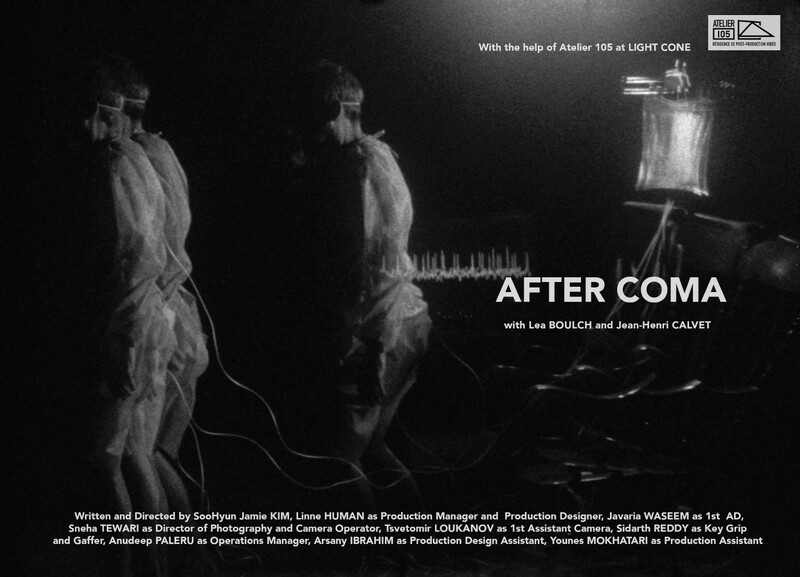
After Coma is the 2nd film of the trilogy that express about grief. This film is composed of 7 poems that take the viewers into the journey of spending the last moment with the loved one as a views of both people who leave and who is left. Each poems are represented with symbolic image and sound.
Review by Parker Jesse Chase:
The poetic film After Coma, directed by Soohyun Kim, encapsulates the raw and visceral emotions of grief, memory, and rebirth in a matter of a two minute time span. Through seven hauntingly poignant poems, it explores the final moments shared between a loved one departing and the one left behind. This dual perspective creates a deeply intimate and universal reflection on loss, memory, and the fragile boundaries of existence.
Visually, After Coma evokes a sense of nostalgia, deviating from the modern digital aesthetic to one that feels tactile, almost like flipping through weathered prints. This choice enhances the emotional weight of the poetry, making each moment linger. The film masterfully intertwines symbolic imagery with evocative sound design—a broken mirror not only shatters visually but resonates audibly, allowing the audience to feel the crunch of shards beneath a step. This meticulous attention to detail immerses the viewer in an almost sensory experience.
The words are delivered in an alluring voice, their impact amplified as the screen cuts to black, presenting the poetry in written form. This interplay between auditory and visual interpretations deepens the connection to the material. The imagery of counting scars and hearing wind chimes intertwines with poetic metaphors of despair and rebirth—drowning in water and tasting the salty ocean as symbols of grief. The poet’s words remind us that the act of swallowing tears can choke, a powerful metaphor for unprocessed emotions.
The narrative also delves into the profound transformation trauma brings. The daughter, played by Lea Boulch, confronts the reality that her father, portrayed by Jean-Henri Calvet, is no longer the man she once knew after his coma. He exists as a mere shadow of his former self, a concept many can resonate with when facing the altered state of loved ones post-trauma. The film poignantly captures the gut wrenching realization that even as breaths continue, the essence of a person can fade, leaving behind an aching void.
Flowers bloom as a recurring motif, symbolizing mourning and the human tendency to romanticize death. This juxtaposition of beauty and sorrow underscores the film’s thematic exploration of life’s impermanence.
With Sneha Tewari’s evocative cinematography bringing the poetic visuals to life, After Coma delivers an emotional gut punch in its brief runtime. It’s a testament to the power of poetry, sound, and image in storytelling. Beautifully crafted and profoundly moving, the film leaves an indelible impression—a reflection on love, loss, and the enduring scars they leave behind.
 Festival Reviews