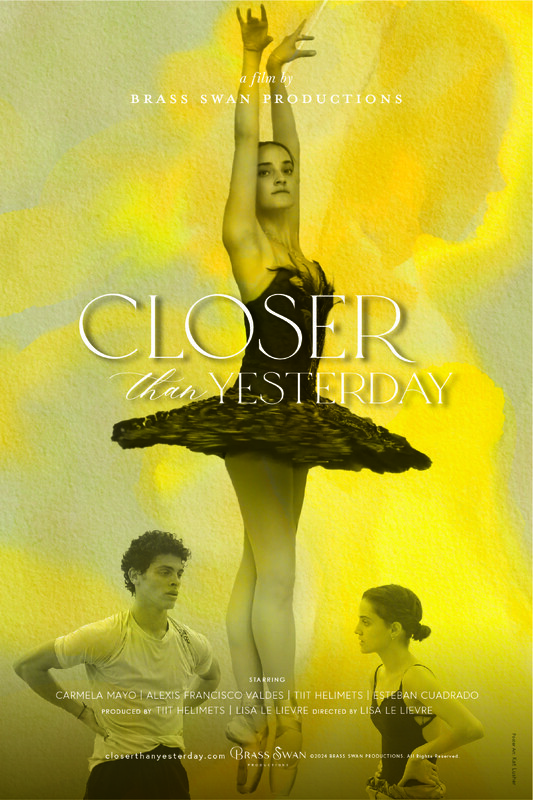
Feature Film Review: CLOSER THAN YESTERDAY. Directed by Lisa Le Lievre

Two young San Francisco Ballet dancers compete on the world stage at the Helsinki International Ballet Competition.

http://closerthanyesterday.com/

Review by Victoria Angelique

CLOSER THAN YESTERDAY is a story of resilience and courage that follows Carmela as she trains for the Helsinki International Ballet Competition with her dance partner. This documentary takes an intimate look at what goes on behind the performance of a ballet performance and how it takes to rehearse in order to compete in a prestigious competition. 

The rollercoaster ride to Helsinki isn’t easy. First Carmela has surgery to fix an injury, then once she’s healed, her dancing partner has to be replaced the week of the competition because he gets Covid. Esteban’s replacement, Alexis, then has to travel six hours to get a travel visa at the last minute in order to travel to Finland. The tension could be felt through the screen, as the dreams of going to the competition felt like they could be dashed in a moment for all the dancers. 

The film is shot in a traditional documentary style, yet it still feels raw. This allows for the viewer to be immersed in the journey with the performers. We are rooting for them throughout the rehearsals and the competition. The pace slows down between the rehearsals and the competition to give the audience time to feel the butterflies that the dancers must have been feeling leading up to the performances. The depiction of ballet shows how grueling of an art form it is, yet beautiful at the same time with the graceful movements of Carmela and Alexis as they move on stage during the competition. The general theme is to keep on dancing and living one’s passion no matter what the outcome of a competition is, because Carmela’s positive attitude stays consistent throughout the entire film no matter what gets in her way so long as she can continue to dance. 

Watch the Audience Feedback Video:

Filmmaker Podcast EP. 1406: Vivian Sorenson (SERPENTINE PINK)

SERPENTINE PINK, 78min., USA
Directed by Vivian Sorenson
A dark surreal experience. A first of its kind, vortex of a lesbian?? John Waters film meets Yellow Rose meets early Almodóvar on a Lynchian induced trip??in the Mojave desert.??Serious Lost Highway vibes!

https://hardknockprod.com/serpentine-pink/
https://www.facebook.com/serpentinepinkfilm
https://twitter.com/HardKnockProdCo
https://www.instagram.com/serpentinepinkfilm

Get to know the filmmaker:

What motivated you to make this film?
What motivated me to make this movie was the beauty and raw emotion embedded in Megan Breen’s words (Screenplay writer and playwright). The pain these characters endure is both devastating and strangely beautiful, and I felt compelled to bring their experiences to life. I love the desert and the visuals you can capture there. I wanted dance to be a part of the film and the strangeness, hostility of the desert to be a character as well. I knew it would require a unique approach—boxing gloves to tackle the challenging, brutal scenes, and soft mittens to smooth, coax, and nurture the words, scenes, guiding them into a compelling narrative flow. I also always love a good driving scene!

I’m drawn to horror, the starkness of wilderness and desert landscapes, and the emotional complexity they evoke. I also love working with actors as sensitive and talented as this cast. This project offered the unique challenge of transforming a piece that began as a play and evolved into a film script into a cohesive and captivating narrative that offered a perspective not usually seen in cinema.

Subscribe to the podcast:

https://www.instagram.com/wildsoundpod/

https://www.facebook.com/wildsoundpod

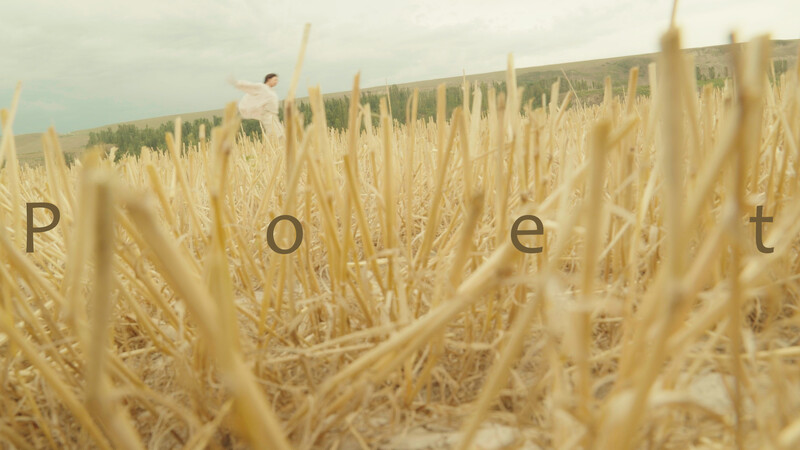
Short Film Review: POET. Directed by Mofei Wei, Yang Sun

“Poet” is a dance film inspired by Chinese poet Yu Xiuhua, a rural woman with cerebral palsy, who recently became famous in China. Many started to know her works from her audacious Poem “Crossing Half of China to Sleep with You”. Living in a conservative rural village in southern China where prejudice against women, disability, and divorce are high, she managed to break free from an unwanted marriage and live her life as a writer despite the satirical voices around.

Review by Parker Jesse Chase

“Poet,” is a visual exploration inspired by the life and work of Chinese poet Yu Xiuhua. Known
for her bold and audacious poem “Crossing Half of China to Sleep with You,” Yu Xiuhua’s story
is one of resilience and triumph over societal prejudice. Living in a conservative rural village, our
leading lady breaks free from an unwanted marriage and pursues her passion for writing despite
the challenges posed by her disability and societal expectations.


The film begins with a striking black-and-white series of special insert b-roll shots. These close-ups—feet moving, a bundle of sticks, serene landscapes, wheat fields, and trains—set an intimate and contemplative tone. The inclusion of mundane objects like a mop across the floor juxtaposed with nature and movement creates imagery immediately drawing the viewer in.

As the scene shifts amidst the atmosphere of the company inside the train, we see the dancer amidst a group of passengers. In the confined space between two train carts, the dancer’s movements mimic the accelerating pace of the train, a metaphor for the poet’s journey and the momentum of her life. The choreography is tight, the movements deliberate, capturing the intensity and urgency of breaking free from societal constraints.


The transition to an open field is a pivotal moment in the film. Here, the pace slows, reflecting a shift to a more serene and introspective state. The night sounds—whistles and rustling—underscore the dancer’s movements, which now emulate the gentleness of the wind.

This segment beautifully contrasts the previous scenes, offering a sense of calm and freedom. The introduction of color marks a significant transformation in the narrative. A close-up of an insect and the accompanying rattling buzz symbolize the vibrancy and complexity of life. The dancer, now in a wheat field, moves with a sense of liberation, fluttering arms like a bird in flight. The sight of an actual bird passing overhead reinforces the theme of freedom and connection with nature.


The scene where the dancer cradles a haystack exudes joy and peace, capturing a moment of pure, carefree interaction with the natural world. The transition from the frenetic energy of the train to the tranquil beauty of the open field mirrors the journey from struggle to emancipation. The actor’s performance is exceptional, maintaining a dynamic pace through the dance transitions. The choreography effectively narrates the arc from the mechanical movements of the train, through the darkness of night, to the brightness of a new day. The dancer’s white attire likely symbolizes a new beginning, emphasizing themes of rebirth and renewal as color infuses the film in its latter part.


“Poet” is a moving homage to Yu Xiuhua’s work. Through its evocative imagery and dance sequences, the film not only celebrates her life and work, but also offers a universal message of hope and resilience.

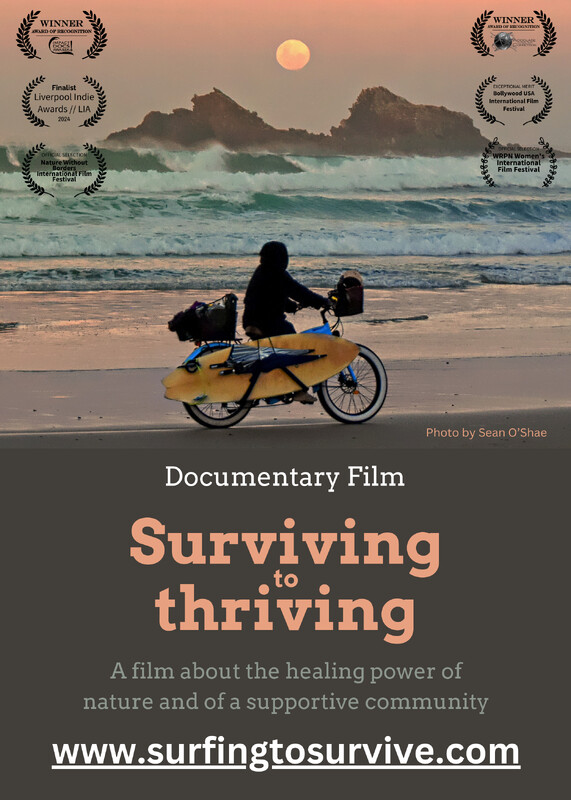
Feature Film Review: SURVIVING TO THRIVING. Directed by Karin Isabelle Ochsner

As a fearless explorer with a disability, surfer and surf coach Karin Ochsner immerses herself in the raw beauty of nature. Her remarkable healing journey unfolds in the face of adversity.

http://www.surfingtosurvive.com/film2

https://www.instagram.com/surfingtosurvive/

Review by Andie Karvelis:

Have you ever caught yourself in the middle of a pity party? I know I have. Most humans can get bogged down feeling sorry for themselves, especially in this technological age. Life is hard.

We struggle, we whine ( I’m so guilty here ), sometimes we even say “Forget it” and throw the towel in on something that’s just too difficult. There are times we just need inspiration and times we need a good swift kick in the…

Karin Ochsner is both inspiring and a refreshing kick in the pants. This documentary is an incredible tale of endurance, bravery and the unyielding spirit of a woman who wasn’t going to give up. You see Karin has a very rare immune system illness that makes her allergic to, well, everything. Imagine being allergic to almost everything in your house that you have to sleep outside. Salt water is the only water you can tolerate, and even when you think you have it under control, your allergies change.


I cannot imagine what Karin has gone through but I do know she never once threw herself a pity party. She adapted constantly. The interviews with Karin, her friends, co-workers, and doctors were all a testament to this wonderful woman’s spirit.

The cinematography alone in this film is absolutely stunning. That is thanks to Andy Bowles and several other talented Directors of Photography. Andy Bowles and Karin Ochsner produced this inspiring film together and they make a fantastic team.

Next time I start to whinge about my paltry issues, I am going to think about Karin and find the motivation to overcome my obstacles.

Filmmaker Podcast: EP. 1191 – Filmmaker Yiou Wang (WATER ALWAYS GOES WHERE IT WANTS TO GO)

WATER ALWAYS GOES WHERE IT WANTS TO GO, 5min., Romania
Media Artist Yiou Wang
“Water Always Goes Where It Wants to Go” is an ecoperformance CG art video of the body in synergy with the storied landscape of water. How can we go back to something we already have? We are born out of water, and water constitutes our body, our territories, and our myths. Mapping water through the body, in between transitory space for waters, the short film investigates the relationship between the self, its embodied and somatic dialogues, and these physical and symbolic waters, questioning how we can return to our first water, the common body.

Works

https://www.instagram.com/yiou_wang_/

Get to know the filmmaker:
This short film is the natural product of a very rich and interesting conversation Alina and I have. Many of our ideas clicked and crosspollinated. Alina is an actress and performance artist, who expresses through her body; I am a visual artist who expresses through image and form. We are both empaths who share an intuitive, embodied connection to a larger, more-than-human world. Alina has been introducing to the world the method of ecoperformance for many years, where she embodies a forest, a river, a crow, or an ancient mythic being and shapeshifts in synergy with the consciousness of the embodied. We began to focus on water, as water is our first body – the amniotic fluid is where we come from, and our common body. In many precolonial cultures and epistemologies, the land is often also corporeal. In Tuva, the mountain peak is the heart of mountain ranges, where rivers are the aortas, the soil’s blood vessels.

Alina and I wanted to create a branch of artworks embodying water combining her ecoperformance and my virtual filmmaking. She performs embodying water from our animistic perspective, and I do the motion capture, transferring her movement to the avatars of water. The scenography is designed with a root in theatre arts, where I put my 3D scanned natural environment pieces in the scene reminiscent of stage.

From the idea to the finished product, how long did it take for you to make this film?
It is hard to pinpoint the start of this project, since Alina and I have been communicating for a year and our minds grew into this rich constellation. Since the beginning, we agreed to draft some proposals to apply for certain live performance art grants. After that, we thought why not make a film to further illustrate our proposal? And the actual production and editing of this film was about three weeks. But it’s hard to say it’s only three weeks, because a lot of the models I put into the environment were from my longtime habit of 3D scanning in my forest hikes.

You can sign up for the 7 day free trial at http://www.wildsound.ca (available on your streaming services and APPS). There is a DAILY film festival to watch, plus a selection of award winning films on the platform. Then it’s only $3.99 per month.

Subscribe to the podcast:

https://www.instagram.com/wildsoundpod/
https://www.facebook.com/wildsoundpod

Filmmaker Yiou Wang (WATER ALWAYS GOES WHERE IT WANTS TO GO)

WATER ALWAYS GOES WHERE IT WANTS TO GO, 5min., Romania
Directed by Yiou Wang
“Water Always Goes Where It Wants to Go” is an ecoperformance CG art video of the body in synergy with the storied landscape of water. How can we go back to something we already have? We are born out of water, and water constitutes our body, our territories, and our myths. Mapping water through the body, in between transitory space for waters, the short film investigates the relationship between the self, its embodied and somatic dialogues, and these physical and symbolic waters, questioning how we can return to our first water, the common body.

http://yiouwang.org/
https://twitter.com/YiouWang1
https://www.instagram.com/yiou_wang_/

Get to know the filmmaker:

What motivated you to make this film?
This short film is the natural product of a very rich and interesting conversation Alina and I have. Many of our ideas clicked and crosspollinated. Alina is an actress and performance artist, who expresses through her body; I am a visual artist who expresses through image and form. We are both empaths who share an intuitive, embodied connection to a larger, more-than-human world. Alina has been introducing to the world the method of ecoperformance for many years, where she embodies a forest, a river, a crow, or an ancient mythic being and shapeshifts in synergy with the consciousness of the embodied. We began to focus on water, as water is our first body – the amniotic fluid is where we come from, and our common body. In many precolonial cultures and epistemologies, the land is often also corporeal. In Tuva, the mountain peak is the heart of mountain ranges, where rivers are the aortas, the soil’s blood vessels.

Alina and I wanted to create a branch of artworks embodying water combining her ecoperformance and my virtual filmmaking. She performs embodying water from our animistic perspective, and I do the motion capture, transferring her movement to the avatars of water. The scenography is designed with a root in theatre arts, where I put my 3D scanned natural environment pieces in the scene reminiscent of stage.

From the idea to the finished product, how long did it take for you to make this film?
It is hard to pinpoint the start of this project, since Alina and I have been communicating for a year and our minds grew into this rich constellation. Since the beginning, we agreed to draft some proposals to apply for certain live performance art grants. After that, we thought why not make a film to further illustrate our proposal? And the actual production and editing of this film was about three weeks. But it’s hard to say it’s only three weeks, because a lot of the models I put into the environment were from my longtime habit of 3D scanning in my forest hikes.

How would you describe your film in two words!?
Breathing, alive

What was the biggest obstacle you faced in completing this film?
I can’t recall. I’m sure there were wtf moments but my trait is that I hardly remember the hardships already dealt with, since my ecstasy during creative work is so great that it floods all.

What were your initial reactions when watching the audience talking about your film in the feedback video?
I’m really glad, fascinated, grateful to the chance to see audience reactions because I’m always interested in communicating with audience. I express certain message and affect, but I always strive to create works that are open-ended, and I’m really happy that different people gave different interpretation, sometimes not entirely our intention but eye-opening.

When did you realize that you wanted to make films?
I grew up drawing and painting surreal visions of alternate worlds, so I lean constructive. From a painting background, I construct every element of the full picture out of my imagination. I have long been fascinated by films and visual effects as mediums of surreal storytelling, and I would spend hours obsessed with mentally dissecting the scene, avatars, lighting, camera motion, in the joint space between art and tech.

I want to make painterly films, in techno-artistic craft and in sensoriality, to express humans’ connection to nonhumans and to a larger world, which is not all “I love nature” kind of romantic, but awake, sensitive, primordial, beautiful, yet sometimes dangerous. The space we inhabit is full of life, and in film, nothing is empty; every space of every frame is full. There is a world out there. Characters and stories happen naturally in this world.

What film have you seen the most in your life?
My favorite films lean ethnosurrealist fantasy drama, a merging between ethnography and surrealism, with roots in mythology and folklore. You Won’t Be Alone (2022) by Goran Stolevski and Stone Turtle (2022) by Ming Jin Woo touched me so deeply and are in line with what I create.

The Pig, the Snake and the Pigeon (2023) by Wong Ching-po. Life of Pi (2012) by Ang Lee. The Great Buddha+ (2017) by Huang Hsin-yao. Almost all films by Apichatpong. Spring, Summer, Fall, Winter and Spring (2003) by Kim Ki-duk. All these are deep wells of inspiration and artistry that I can watch a million times and can still gain something every time.

My favorite short is Birdsong (2022) by Omi Zola Gupta.

Recently, I also see a huge lot of Asian, Indigenous and African horror films.

What other elements of the festival experience can we and other festivals implement to satisfy you and help you further your filmmaking career?
Adding IRL screening followed by creative mingling events would be awesome.

What is your favorite meal?
I don’t have a particular favorite, anything warm would be a nice meal to me.

What is next for you? A new film?
Great question. Alina and I will further make our water-related work into a mocap live performance with real-time projection and a VR film. In both, she will be the choreographer and performer, and I will be the VR director, and the art director and live projection animation controller. We will push the boundary of performance arts to merge with digital technology and surreal imaging.
Short Film Review: SAUDADE. Horror / Thriller / Surrealist / Drama.

Synopsis: A dancer faces a ghost of her past and has to come out victorious to find her true self once again.

Directed by: Josie Hull

Written by: Gica Pucca and Constantin Augustinus Sieve

Produced by: Diana Cody

Executive Produced by: Gica Pucca and Constantin Augustinus Sieve

Review by Victoria Angelique

The short dance film, SAUDADE, captures the attention of the audience immediately with the gorgeous cinematography that begins within the first frame. Director of Photographer, Christian Olsen, is incredibly gifted as he captures the smoke dancing across the screen and wrapping it’s way around the Female Dancer’s body. The director, Josie Hull, has the Dancer move into her memory as the smoke envelopes her body. 

The tattoos on the Dancer’s body, whether intentional or real, works with the film as a way of symbolizing the ribbon that weaves her to the Male Dancer. She is fighting to escape him, but the happy memories bring her back to him. She is fighting to cut the tie so that she live happily once again now that the relationship has ended. 

The score is this film is magnificent. It truly brings the film to life through going from intense notes to melancholy ones to bring the audience into the memory of the Female Dancer’s past. The music and the movements couple together to show the toxicity of the relationship, depicting how an abusive partner can keep hold of a person’s memory as she fights with herself to move on and learn to be happy once again in life.  The Male Dancer has limited movements, showing his power over the Female Dancer early on in their relationship. He still haunts her mind as she struggles to reclaim her own happiness long after the relationship has ended. The Female Dancer shows her own power as she forces him from her memory.

Dance films are rarely able to capture such powerful themes in such a short timeframe. SAUDADE is successful as it captures the mental anguish that an abusive relationship can have on a victim as the Female Dancer tries to escape her memory before she figures out how to overcome it and move on with her life. It takes time, but the feeling of relief when she is able to put her memories in the past and remember what makes her happy is something that will last with viewers.

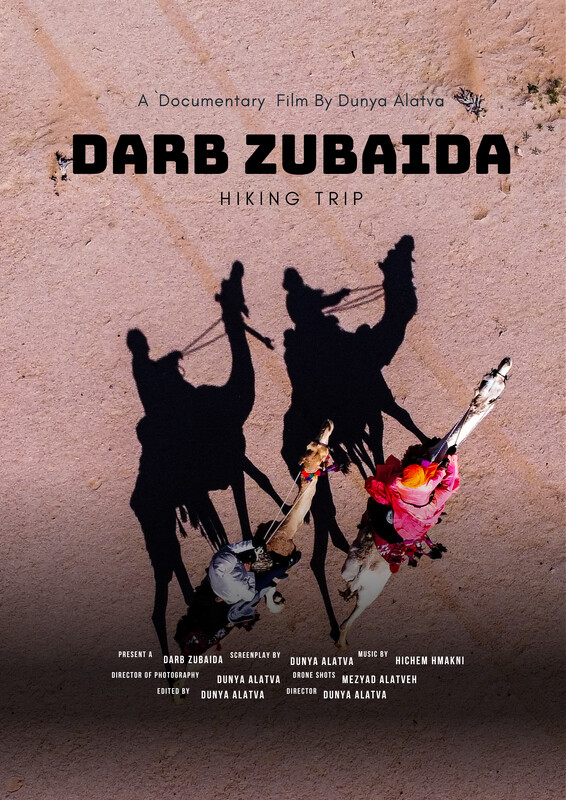
Short Film Review: DARB ZUBAIDA – A HIKING TRIP. Directed by Dunya Alatva

“Darb Zubaydah” is an inspiring documentary film that chronicles the epic hiking trip of 150 individuals, led by retired Major General Abdul Aziz Al-Obaida, along the ancient pilgrims’ trail known as “Darb Zubaydah.” The adventure begins in the historic city of Faid and spans a distance of 96 kilometers. This captivating film not only captures the physical challenges and triumphs of the journey but delves into the rich history of the renowned Darb Zubaydah trail.

Review by Andie Karvelis:

Darb Zubaydah is an inspiring documentary film that chronicles the epic hiking trip of 150 individuals along the ancient pilgrims’ trail known as “Darb Zubaydah”. The director of photography and director Dunya Alatva did an amazing job bringing this vision to life. The cinematography alone is just spectacular and that is in part due to drone operator Mezyad Alatveh as well as camera operators Mohammad Ikinci and Mohannad Alshamari,


The 96 kilometer (that’s 59.6516 miles for those who are curious) journey was led by retired Major General Abdul Aziz Al-Obaida and the interviews conducted with him as well as various hikers was interesting and very moving. The film’s score was provided by Hichem Makni and it complimented every step of this adventure beautifully.

Watch the Audience Feedback Video: https://www.wildsound.ca/videos/darb-zubaida-a-hiking-trip-review

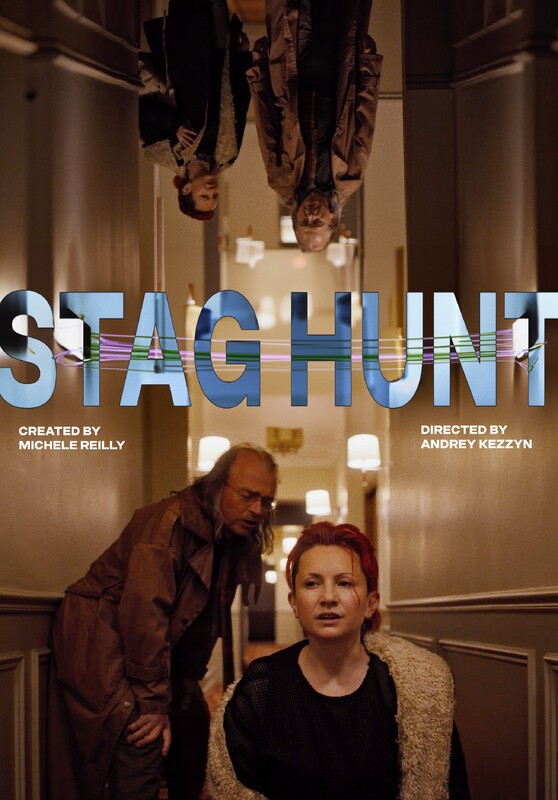
Short Film Review: STAG HUNT, 12min., Sci-Fi Experimental

Synopsis:

Trapped in a closed time-like curve, our duo is learning to cooperate by running through a paradox inside of an infinite hotel. By doing so, they seek an escape from the loop and meaning in a quantum multiverse.

Review by Parker Jesse Chase:

Created by Michele Reilly -  Directed by Audrey Kezzyn

Stag Hunt, a sci-fi fantasy short film, takes its audience on a mind-bending journey through the intricacies of time travel and the mysteries that lie behind the quantum multiverse. At its core, Stag Hunt explores the dynamics of friendship and collaboration as the duo, reminiscent of an iconic pair such as Marty and Doc from Back to the Future, embarks on a quest to explore a closed time-like curve within an infinite hotel. The film presents the butterfly effect of their time-traveling endeavors, showcasing the myriad outcomes stemming from a single choice or action.


The narrative begins with an eclectic yet memorable opening shot, focusing on our lead character putting gum behind her ear, offering subtle insights into their daily lives. However, the film occasionally struggles with maintaining a balance between scripted dialogue and natural human expression, creating a sense of detachment from the immersive world it aims to build.

The tone, at times monotone, adds to this feeling of disbelief and disconnect.


The universe of Stag Hunt is intricately crafted through elements like rotary phones, a metal soldering gun, electrical cords across a desk, and vintage costumes, complemented by wire-framed glasses on our leading man. The characters, while distinctly created, delve into scientific jargon that might be overwhelming, yet intriguing, for viewers. The inclusion of the Netflix symbol and commentary on sirens adds a contemporary twist to the otherwise scientific narrative.


The film artfully navigates through the complexities of time travel, exploring hypotheses and theories within the realm of science. The montage of trial and error as the characters work on their time-traveling device is a beautifully executed build-up, leading to a captivating scene of silence where the rules of science and the universe take center stage.


Stag Hunt culminates in a visually stunning credit sequence, leaving a lasting impact as it pans out to reveal thousands of different outcomes. Michele Reilly and Seth Lloyd deliver commendable performances, despite occasional struggles with dialogue delivery. Vasili Ivanov’s cinematography captures the essence of the film’s unique universe.

Stag Hunt is a thought-provoking exploration of friendship, science, and the consequences of our choices, wrapped in the captivating cloak of time travel and the quantum multiverse. While the film faces challenges in maintaining a seamless blend of script and humanization, its visual appeal and thematic depth make it a compelling watch for fans of the sci-fi genre

Project Links

MOVIE REVIEW: WE WERE SWIMMING, (Art/Surreal)

Played at the August 2017 FEMALE FEEDBACK Film Festival to rave reviews.

by Kierston Drier

We Were Swimming is a metaphorical, musical, poetic short, laced with symbolism and poignance. The story, while abstract, follows two teenage girls who share (or have shared) an intense emotional bond. Directed by May Fisher and hailing from the UK, this short film has an exceptionally beautiful in its impenetrable mystery.


The piece is largely visual set against a dramatic spoken word piece, detailing a the heavy history and powerful bond shared by the two women. There is an emphasis on the symbology of water in the piece, but the meaning behind it is left for the viewer to contemplate.

Excellent performances and beautiful cinematography are found in We Were Swimming. What exalts this short above the standard are the bravely intimate non-dialogue moments shared between the heroines. It captures the closeness clearly shared between them, although the extent of their relationship is left up to the interpretation of the audience. Impactful and often profound, We Were Swimming has the tone of a love poem spoken in whispers, that nevertheless can resonate with any heart.


WE WERE SWIMMING, 3min, UK, Art/Surreal
Directed by Jesse May Fisher

We Were Swimming explores intimacies and tensions between two teenage girls. As the protagonist’s dreams and memories interweave with one another certain intricacies of girlhood and female friendship come to light.

CLICK HERE – and see full info and more pics of the film!