Short Film Review: POET. Directed by Mofei Wei, Yang Sun

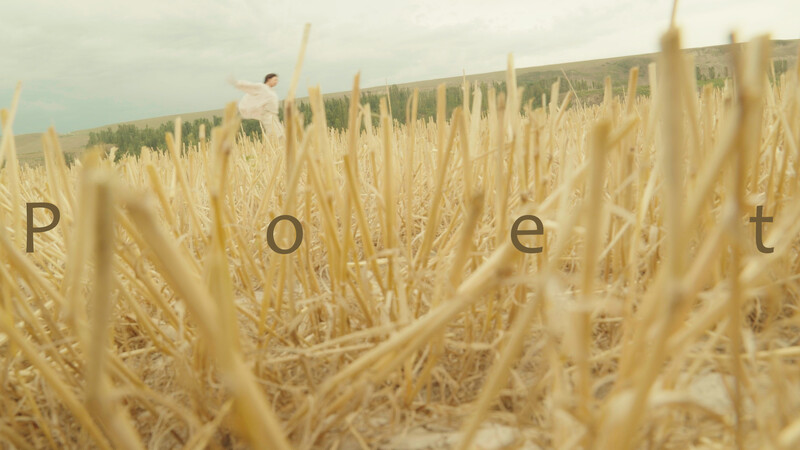
“Poet” is a dance film inspired by Chinese poet Yu Xiuhua, a rural woman with cerebral palsy, who recently became famous in China. Many started to know her works from her audacious Poem “Crossing Half of China to Sleep with You”. Living in a conservative rural village in southern China where prejudice against women, disability, and divorce are high, she managed to break free from an unwanted marriage and live her life as a writer despite the satirical voices around.
Review by Parker Jesse Chase

“Poet,” is a visual exploration inspired by the life and work of Chinese poet Yu Xiuhua. Known
for her bold and audacious poem “Crossing Half of China to Sleep with You,” Yu Xiuhua’s story
is one of resilience and triumph over societal prejudice. Living in a conservative rural village, our
leading lady breaks free from an unwanted marriage and pursues her passion for writing despite
the challenges posed by her disability and societal expectations.


The film begins with a striking black-and-white series of special insert b-roll shots. These close-ups—feet moving, a bundle of sticks, serene landscapes, wheat fields, and trains—set an intimate and contemplative tone. The inclusion of mundane objects like a mop across the floor juxtaposed with nature and movement creates imagery immediately drawing the viewer in.

As the scene shifts amidst the atmosphere of the company inside the train, we see the dancer amidst a group of passengers. In the confined space between two train carts, the dancer’s movements mimic the accelerating pace of the train, a metaphor for the poet’s journey and the momentum of her life. The choreography is tight, the movements deliberate, capturing the intensity and urgency of breaking free from societal constraints.


The transition to an open field is a pivotal moment in the film. Here, the pace slows, reflecting a shift to a more serene and introspective state. The night sounds—whistles and rustling—underscore the dancer’s movements, which now emulate the gentleness of the wind.

This segment beautifully contrasts the previous scenes, offering a sense of calm and freedom. The introduction of color marks a significant transformation in the narrative. A close-up of an insect and the accompanying rattling buzz symbolize the vibrancy and complexity of life. The dancer, now in a wheat field, moves with a sense of liberation, fluttering arms like a bird in flight. The sight of an actual bird passing overhead reinforces the theme of freedom and connection with nature.


The scene where the dancer cradles a haystack exudes joy and peace, capturing a moment of pure, carefree interaction with the natural world. The transition from the frenetic energy of the train to the tranquil beauty of the open field mirrors the journey from struggle to emancipation. The actor’s performance is exceptional, maintaining a dynamic pace through the dance transitions. The choreography effectively narrates the arc from the mechanical movements of the train, through the darkness of night, to the brightness of a new day. The dancer’s white attire likely symbolizes a new beginning, emphasizing themes of rebirth and renewal as color infuses the film in its latter part.


“Poet” is a moving homage to Yu Xiuhua’s work. Through its evocative imagery and dance sequences, the film not only celebrates her life and work, but also offers a universal message of hope and resilience.

Short Film Review: SAUDADE. Horror / Thriller / Surrealist / Drama.

Synopsis: A dancer faces a ghost of her past and has to come out victorious to find her true self once again.

Directed by: Josie Hull

Written by: Gica Pucca and Constantin Augustinus Sieve

Produced by: Diana Cody

Executive Produced by: Gica Pucca and Constantin Augustinus Sieve

Review by Victoria Angelique

The short dance film, SAUDADE, captures the attention of the audience immediately with the gorgeous cinematography that begins within the first frame. Director of Photographer, Christian Olsen, is incredibly gifted as he captures the smoke dancing across the screen and wrapping it’s way around the Female Dancer’s body. The director, Josie Hull, has the Dancer move into her memory as the smoke envelopes her body. 

The tattoos on the Dancer’s body, whether intentional or real, works with the film as a way of symbolizing the ribbon that weaves her to the Male Dancer. She is fighting to escape him, but the happy memories bring her back to him. She is fighting to cut the tie so that she live happily once again now that the relationship has ended. 

The score is this film is magnificent. It truly brings the film to life through going from intense notes to melancholy ones to bring the audience into the memory of the Female Dancer’s past. The music and the movements couple together to show the toxicity of the relationship, depicting how an abusive partner can keep hold of a person’s memory as she fights with herself to move on and learn to be happy once again in life.  The Male Dancer has limited movements, showing his power over the Female Dancer early on in their relationship. He still haunts her mind as she struggles to reclaim her own happiness long after the relationship has ended. The Female Dancer shows her own power as she forces him from her memory.

Dance films are rarely able to capture such powerful themes in such a short timeframe. SAUDADE is successful as it captures the mental anguish that an abusive relationship can have on a victim as the Female Dancer tries to escape her memory before she figures out how to overcome it and move on with her life. It takes time, but the feeling of relief when she is able to put her memories in the past and remember what makes her happy is something that will last with viewers.

Movie Review: SHAPING SCARS (UK) LGBT, Dance

Played at the June 2017 LGBT Toronto Film Festival

Directed by Zsolti Szabo

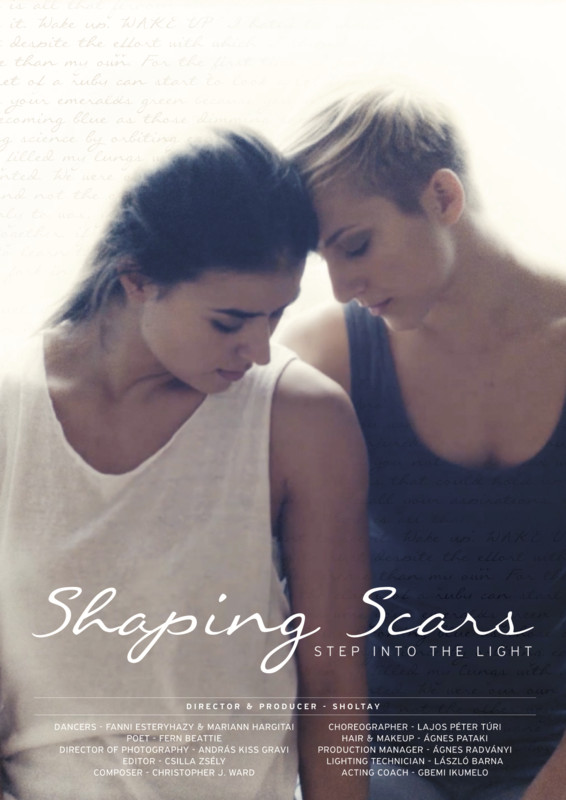
A dance journey about two girls who once loved each other, but while one is able to embrace herself openly (and therefore their relationship), the other is struggling to step into the light and shake off her demons.

CLICK HERE – and see full info and more pics of the film!

Review by Kierston Drier

This 7 minute UK experimental Dance piece is a gorgeous intimate dance piece set to a riveting and sparkling slam poem. Director Zsolti Szabo must be commended on the vision behind the work, for not only is a stunning visual dance performance, but film captures its intricacies and puts the performers talents under a microscope.

Two dancer go through the motions (both symbolically and literally) of a relationship gone wrong. Beautifully choreographed and light, a special nod must be given to the performers who engage in the incredibly intricate dance and the spoken word artist who performs the piece.

What sets this piece apart from the usual, is the camera work! The shots in this piece give the feeling that you are standing right beside the dancers. Turely, as much choreography was needed for the camera person as for the dancers themselves. If the film is the eye through which we see this art, then SHAPING SCARS invites you to join the dance.

The film itself has a deeper symbolic meaning as well. Our dancers are partners, but their love is not meant to be. Perhaps what is so touching about this piece is that underneath the vibrant poetics and stunning visuals is a message: that it is better to have loved and lost, than never to have loved at all. A film worth seeing, if for nothing else than that.

shaping_scars_movie_poster.jpg