Cinematography Adam Stone (Bikeriders, Take Shelter, Midnight Special)

In his brief career, Adam Stone  has already established himself as one of the top DPs in the industry today. It was an honor to sit down with him to talk about his craft.


Matthew Toffolo: You have worked with director Jeff Nichols on many films. Where did you first meet? Why does your working relationship work so well? 

Adam Stone: Jeff and I worked on a total of 5 films (Shotgun Stories, Take Shelter, Mud, Midnight Special, and Loving). We met in film school at the UNC School of the Arts in the late nineties. I shot 2nd unit for a few of David Green’s early films (George Washington and All The Real Girls) and I guess Jeff liked what he saw. He asked me to come out to Arkansas to shoot Shotgun Stories in the summer of 2005. The project had absolutely no money but we convinced a core group of friends and family to crew-up and Joe Dunton Camera essentially gave us a Moviecam and some anamorphic lenses for free. We were fortunate to have talented people that believed in us. Without them the film would have never seen the light of day.

PHOTO: Cinematography for the film “Midnight Special”

midnightspecial-pic.jpg

While working on Shotgun Stories, Jeff and I found we had quite a bit in common. Aesthetically we liked to shoot in the South against a backdrop of kudzu, rusted out cars and interesting characters. We also shared a love of widescreen cinema with simple, yet stately, camera work. We combined those ingredients into a form of southern cinema people seem to enjoy. We have definitely come along way since the days of Shotgun Stories. It has been a great evolution with a true friend and mentor.

MT: Tell us about working on the landmark film Midnight Special?

AS: Midnight Special is a unique movie that’s kind of hard to categorize. It’s a genre bending mash-up of a road movie and sci-fi flick that pays homage to Perfect World, Starman, and Close Encounters. The movie starts without much explanation or backstory, all we know a man is on the run with his son. As the movie progresses we learn the boy has special powers and is dying. His father must keep him alive while the government and a religious sect are in pursuit. Despite all of the characters, themes, VFX events, and unanswered plot points the film is very simple. At the core, it’s a story about a father’s love for his son and how he will do anything to save his boy.

MT: Another film with Jeff, “Loving”, hit theaters in 2016. It’s set in the 1950s. When DPing period pieces, what type of research do you do? Was there another film(s) that was the inspiration to the cinematic design of the film?

AS: To be honest, Loving is the first period piece I’ve had the pleasure to shoot. Jeff’s script was based on a true story about a Supreme Court case so there was plenty of material to unearth. One of the greatest treasure troves was the work of Grey Villet. He was a super talented photographer that documented the story of Richard and Mildred Loving for Time Magazine in 1965. The pictures he took influenced the script, production design, costumes, and the cinematography.

I really fell in love with the objectiveness of Villet’s work. He always employed a wide lens so he really had to campout and wait for candid shots. Jeff and I adopted this technique and let a number of scenes play out in wide observational shots. We also recreated several of Villet’s photos in the movie. It was really cool to see his black and white work come to life in vibrant moving color. To be honest, Jeff and I had to get acclimated to dailies since we had been referencing Villet’s work for so long.

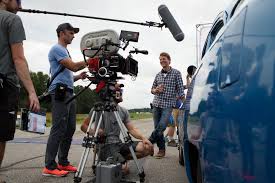
PHOTO: On set for film “Loving”:
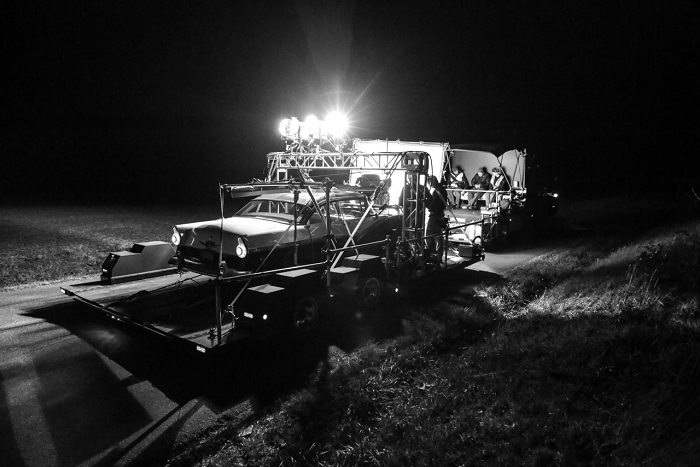
loveless.jpg

MT: Do you have a favorite experience in your work as a Director of Photography? What film are you most proud of?

AS: Most of the projects I shoot, whether features or commercials, don’t ‘really’ contribute to the greater good of society.  They might be artful or compelling but they do not teach or enlighten. That’s why I’m proud to have worked on Loving.  Loving sheds light on an important part of history while telling a meaningful story.

I’m also proud how Loving looks. The camerawork is very simple and the lighting is very organic. My main goal was to let the cinematography be an afterthought.  I wanted the audience to pay full attention to the story, characters, and locations – not the camera.

MT: You have Dp’d a few documentary films. What is the general difference between the working on a documentary in comparison to regular narrative film?

AS: I have always had a deep fascination and love of documentary films. The cinematography of Ron Fricke and the still photography of Dan Eldon compelled me to get behind a camera in film school. At that point in life, I wanted nothing more than to travel the world and shoot amazing people and locations at golden hour (to be honest I still have that desire and wanderlust).

Production-wise documentary work and features are not too different. Both utilize similar equipment, call sheets, tons of planning, long hours, and figuring out a creative way to shoot the story. The biggest difference between the two is the time it takes to complete a documentary. Many docs enlist several shooters because of the length and sporadic nature of the schedule.

Advertisement

MT: What type of film would you love to work on that you haven’t worked on yet?

AS: That’s a great question. I’d love to work on a film where the camera is constantly on the move and has the ability to effortlessly traverse every spatial plane. That approach totally goes against how I usually shoot a film where the camera is moored, grounded, and is always someone’s point of view. Seldom do I move a camera for the sake of moving a camera – I guess that’s why I have a fascination with moving it.

I believe my lust for camera movement is directly attributable to the amount of the Red Bull Channel I consume. I really love to veg-out and watch how they fly the camera. Fortunately, I might shoot a film this summer that begs for some fun full-throttle camera movement and I’d love to incorporate more techno crane and steadicam into the equation.

MT: What does a DP look for in a director?

AS: Before I take on a project I have to be intrigued by the script and most importantly believe in the director. The director is the captain of the ship and must have a clear vision and game plan to lead the film from its inception to the very end. Besides being a strong leader the director should be compassionate, open-minded, and have a sense of humor. If all these qualities align, I’m more than enthusiastic about taking on the project and working with the director.

MT: Do you have a Director of Photography mentor?

AS: I had a dear friend that was my cinematography teacher and mentor in film school. His name was Robert Collins and he really taught me to be a compassionate filmmaker. One of the biggest lessons I learned from him was to surround myself with good people on set. He always said the friends you make in film are more important than anything you shoot. I totally agree with his sage advice. Unfortunately, Robert passed away several years ago and he is deeply missed.

MT: What do you look for when hiring your main team? Gaffer. Key Grip. Camera Operator. Etc…

AS: I’ve been very fortunate in my career to work over and over with same core group of individuals.  The crew I work with are my best friends and co-creators. On occasion, when I hire a new member he/she must share the same attributes as the rest of the crew. He/she should be kind, artistic, hard working, honest, and most importantly soulful. It can also be noted, I rather hire someone that is green and enthusiastic over someone more experienced and jaded.

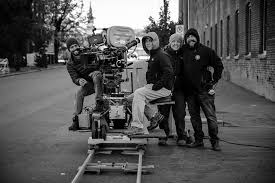
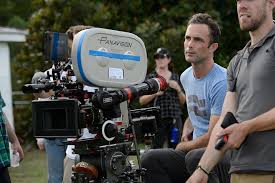
PHOTO: Adam and the camera department from the film “Midnight Special”

midnightspecial_cameradept.jpg

MT: Where do you see the future of camera/lighting technology in film?

AS: Though I’m a proponent of celluloid I love where digital filmmaking is headed. Digital filmmaking has come a long way over the past decade. Camera sensors have gotten better and the lenses look more filmmatic and less clinical. I really admire films such as Revenant that use digital cinema in a smart way. Lubezki made a beautiful movie harnessing the best attributes of digital. He used great equipment (Alexa 65 and Panavision Master Primes), shot in amazing light that accentuates a digital sensor, and flew lightweight digital cameras. That coupled with jaw dropping landscapes, a simple story, and seamless VFX work made for a movie that really resonated with me. I truly love when movies use technology to advance a story instead of letting technology overtake the story.

Lighting has also come a long way in the past 10 years. LED, plasma lights, and iPad enabled dimmer boards have evolved and become onset staples. The ability to control all of the lights on set, whether on a stage or location, from a tablet is amazing. With just a few finger swipes you can audition lights (even dim and recalibrate the color temperature). This is a great timesaver when lighting a big exterior night scene.

MT: What film, besides the ones you’ve worked on, have you seen the most times in your life?

AS: I really don’t watch the films I shoot once they are released – since I see them so many times in post. I guess the two films I’ve seen the most is Some Like It Hot and Baraka. I have a weird ‘thing’ for old screwball comedies and I have always been obsessed with Baraka. I guess if I was stuck on a deserted island those would be my go to films.

PHOTO: Adam Stone at work: 

adamstone4

_____

Interviewer Matthew Toffolo is currently the CEO of the WILDsound FEEDBACK Film & Writing Festival. The festival that showcases 10-20 screenplay and story readings performed by professional actors every month. And the FEEDBACK DAILY Film Fesival held online and in downtown Toronto on the last Thursday of every single month. Go to www.wildsound.ca for more information and to submit your work to the festival.
Interview with Cinematographer Julio Macat (HOME ALONE, PITCH PERFECT, WEDDING CRASHERS)

What an honor it was to sit down with Director of Photography Julio Macat. Julio has DP’d most of the top comedy films in the last 25+ years. His list of credits include: Home Alone 1, 2 & 3, Ace Ventura: Pet Detective,  The Nutty Professor, The Wedding Planner, Wedding Crashers, Winnie the Pooh, Pitch Perfect, and the upcoming comedy The Boss, starring Melissa McCarthy.

juliomacat.jpg

Matthew Toffolo: You have worked in the Hollywood Film Industry scene for the last 36 years. What has been the biggest change in the filmmaking process from 1980 to present?

Julio Macat: The biggest change in our industry has been the choice of material that studios and most independent financing companies green light, as what films are made. It used to be that a film like ORDINARY PEOPLE would have no problem going forward, especially with a good director attached. Now, great films like that rarely get made anymore. I miss that.

MT: Of all the productions you’ve worked on, what film are you most proud of?

JM: Without hesitation it’s HOME ALONE, it was a rare combination of all the elements of film making coming together harmoniously with a result better than expected.

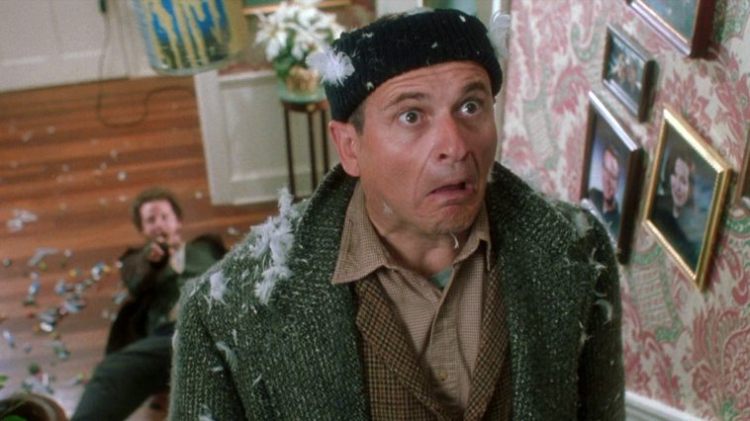
PHOTO: Cinematography in the film Home Alone:

homealone.jpg

MT: Home Alone is one of the most successful films in movie history, and it’s a film that really stands the test of time. During filming, did you ever imagine that this film would be as iconic as it was?

Advertisement

JM: No I didn’t. My hope was that it would be liked as much as I liked A CHRISTMAS STORY and that kids could relate to and be empowered by it. But It’s unusual to sense that you are doing something that special because you are in a vacuum, trying to do the best you can in your department (the visuals) and just hope that everyone else had their act together as well…Fortunately our young director Chris Columbus, had a great vision of what “it could be” and he guided us all in a great direction. The film was that unique circumstance where every layer that was added made the film even better…and John Williams’ score was truly icing on the cake.

MT: You’ve definitely been a part of some of the most successful films in the last 25 years (Home Alone, Wedding Crashers, Pitch Perfect to name a few). Is there a film that you worked on that didn’t do well at the box office that you consider a terrific film that people should see?

JM: Yes In comedy, I loved MY FELLOW AMERICANS which came out at an odd time and no one saw and the drama CRAZY IN ALABAMA which was a bit too long and did not connect with American audiences.

PHOTO: Crazy in Alabama. Starring Melanie Griffith:

crazyinalabama.jpg

MT: You just wrapped “The Boss” starring Melissa McCarthy, Peter Dinklage, and Kristen Bell. Can you give us a sneak peak as to what to expect?

JM: I have not been this excited about a comedy coming out since I photographed WEDDING CRASHERS!

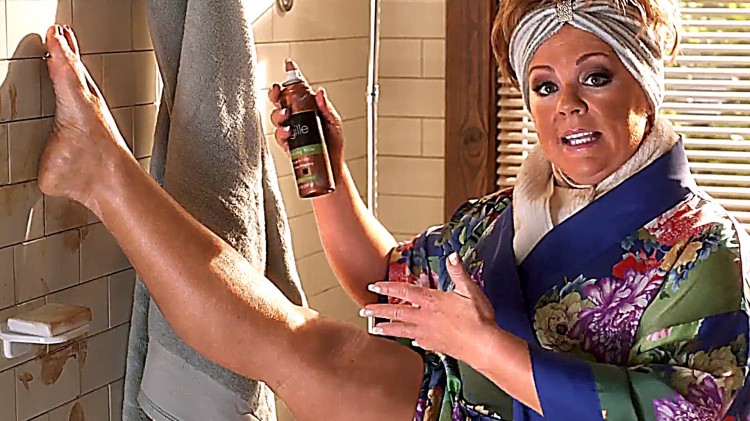
JM: THE BOSS is the perfect vehicle to show Melissa McCarthy’s incredible talent. I think she is the present day Lucille Ball, someone who can and will do ANYTHING for a laugh and unlike other comedians, it’s ALWAYS really funny. She has the uncanny ability to step outside herself and correct situations to make them hilarious without being self conscious! There is a scene in which she puts on a teeth whitener to have Kristen Bell clean her teeth and holds a conversation while they are being cleaned. I assure you that this will have the people in theatres roaring with laughter! We had to start the scene again repeatedly, because the other actors and the crew could not stop laughing during the takes.

PHOTO: Melissa McCarthy in THE BOSS: 

theboss

MT: Some of the comedies you work on the director demands the actors stick to the script, whereas other films, like Wedding Crashers, there is a lot of improvising occuring. Do you have a preference when shooting? How does the scene lighting setup change when you know the actors are going to go off script?

JM: It’s been my experience that comedy is an imperfect and individual science. The best results come when you leave an opening for great accidents to happen. So I try to not lock in actors with blocking that is too precise, and for example, if the scene develops into being filmed in an area that we had not anticipated, well, that then turns into a fun challenge!. Hopefully this adds to the piece. Ben Falcone and Melissa were eager to want overlaps in dialogue and action in some of our scenes, to be a part of the looseness of the jokes, so they asked that I cover these scenes with three angles simultaneously. It was challenging photographically, but the results were worth the effort and we got many “improvised “ moments with the proper intercut coverage.

Advertisement

MT: Since you started in the camera department, do you prefer operating the camera yourself? Or does this all depend on what type of film (budget/Union guidelines) you’re working on?

JM: I love operating the camera myself, and on some productions I prefer it.

But since I’ve now done 17 films with first time directors, lately, I find that all can go faster when I spend more time by the director’s side and away from the camera. I do love stunts, however, and I love operating on the tough shot …so that we get it in one.

MT: What’s the main thing you look for from your main crew members? Gaffer, Key Grip, Camera Operators etc…

JM: My most important criteria in choosing crew is PERSONALITY. After this many years in the film industry, I found that many people are qualified for the job description, not as many have the agreeable, kind and respectful personality that I require to be in my crew.

I like to be the example of being respectful to actors, directors, producers and other crew members. I expect my crew to do the same.

It’s amazing how much you can achieve with a hand picked crew that has a positive attitude and general kindness toward each other, I am always amazed at this, especially when we work under such tough circumstances that we often encounter. With this approach, when the pressure mounts with things like weather challenges, not enough time, locations changing, etc. etc. which by the way, are actually the daily obstacles of filming, one can rely on the crew to process it, deal with it professionally and find a solution with kindness achieving much better results.

MT: What do you look for in your working relationship with your director?

JM: A collaboration, Hopefully I look for this person to be someone who will do their homework, roll their sleeves up along with me and work as hard as I do.

I look for the director to be considerate of my craft and the elements I may need in order to help them realize their vision for the film And finally, maybe most importantly, a sense of humor.

MT: What movie, besides the ones you worked on, have you seen the most in your
life?

JM: It’s a three way tie: In this order though…

IT’S A WONDERFUL LIFE
LOST IN AMERICA
JERRY MAGUIRE

Cheers
JULIO MACAT, ASC

_____

Interviewer Matthew Toffolo is currently the CEO of the WILDsound FEEDBACK Film & Writing Festival. The festival that showcases 10-20 screenplay and story readings performed by professional actors every month. And the FEEDBACK DAILY Festival held online and in downtown Toronto every Thursday. Go to www.wildsound.ca for more information and to submit your work to the festival.
Cinematographer Trent Opaloch (Avengers: Infinity War & Endgame)

rent Opaloch is easily the most talented and sought after cinematographers in the world today. He has DP’d for director Neil Blomkamp  on “District 9”, “Elysium”, and “Chappie”,  and director’s Anthony & Joe Russo on “Captain America: Winter Soldier”, and the upcoming “Captain America: Civil War”. It was an honor to sit down with him to chat about his career and the art of cinematography.

Mathew Toffolo: You first worked with director Neil Blomkamp on the short films “Tempbot” and “Yellow”. How did you two meet? What makes your director/DP relationship so successful?

Trent Opaloch: I met Neill shooting low budget music videos. We shot a handful of videos & short films while I was working at Clairmont (camera rental house) & he had just left a vfx house here in Vancouver.

He used to do all his own vfx work back then so it was really interesting to see the the whole process. That was all happening at a very exciting time for vfx where some pretty sophisticated tracking software was coming out and it really freed up the camera & made it possible to use that hand held energy with extremely realistic visual effects. It was great because it was the first time your imagination wasn’t limited by what you were able to build in reality. It opened up the possibilities for story telling and those shorts and small projects were a great training ground for the big vfx movies that we’re doing now. You can apply those same basic principals on a much larger canvas at bigger budget levels.

MT: You both leaped into the feature film world in the highly successful film “District 9”. How was the initial experience moving from shorts to features? Do you remember the initial cinematic design conversations you had with Neil about the film?

TO: It was a pretty easy transition for Neill & I to go shoot District 9. We had developed a good short hand over the years on the shorts and music videos so it was just a matter of doing our thing with a much larger crew. The challenge is to communicate with the crew so everyone is on the same page. That’s a different dynamic to how we would have worked on the smaller things with just a few people.

The way Neill described the film to me, and to this day this is the best pitch I’ve ever heard. He said imagine there was a documentary made by the NFB (National Film Board here in Canada) that was about these aliens landing in Johanessburg in the 80’s. And someone taped that documentary when it played on tv in the 80’s on a vhs tape and then threw that tape in a drawer for 20 years. And you come along and blow the dust off it & pop it into your retro vhs machine & press play. That was his pitch for District 9 and it instantly communicated everything you needed to get the film. Brilliant.

Now things changed in the process of course so it wasn’t as degraded an image as that. I actually wanted to shoot on 16mm with the NFB doccie esthetic in mind but Peter Jackson bought a boatload of RED ONE cameras so that was nipped in the bud.

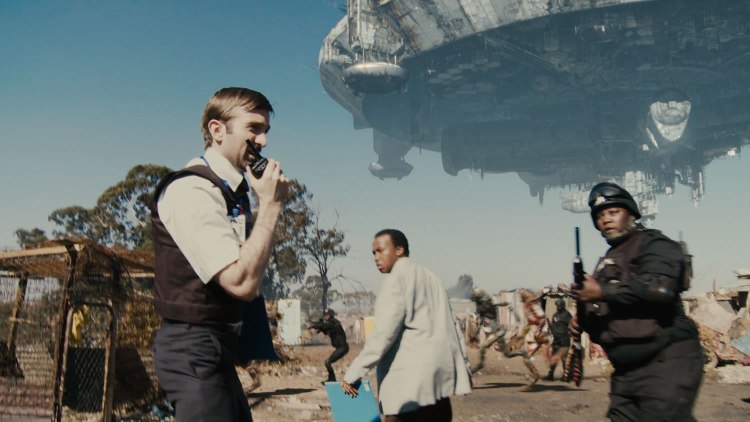
PHOTO: Cinematography of the film DISTRICT 9:

district-ufo

MT: What were your reactions to the success of “District 9”? It must have really changed your life and career path?

TO: Well it was pretty amazing to work on something that was so well received around the world. It was a difficult film to make in some pretty harsh environments but we had a great group of people on it. It sort of felt like there weren’t any ‘grown ups’ around to tell us what to do really. Neill had set things up so that were on our own to make the movie our own way which was pretty amazing when you think it was his first feature.

MT: What brought you to the Captain America movies? How is it to DP a film that has two directors?

TO: I’ve actually worked with directing duos quite a bit in commercials so it wasn’t that strange for me to step into that sort of thing for Winter Soldier. I got the call for the first meeting with Joe & Anthony Russo and I was really impressed with them and their approach and how they wanted the film to feel.

I actually don’t mind the director duo thing as long as they have their dynamic figured out between them. Different directing teams work in their own way that is specific to their combined personalities so you get different approaches. The fact that Joe & Anthony are brothers is great because they have this great bond between them that goes back decades and they’ve worked together on so many things in films & tv shows that they have a good system down.

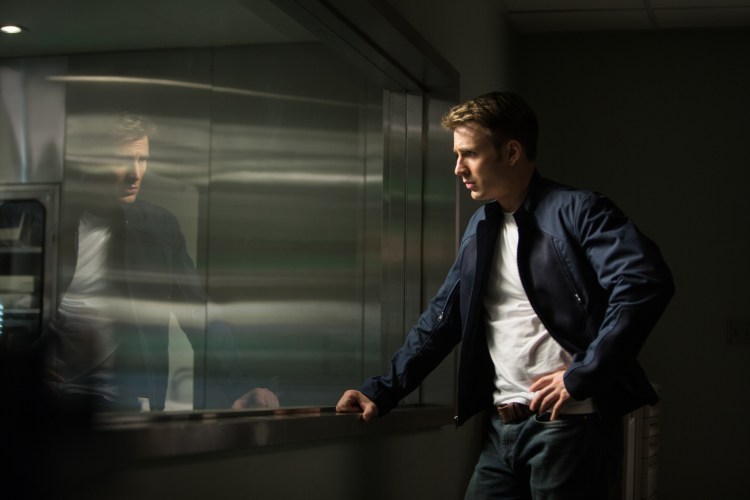
MT: “The Winter Soldier” was an amazing comic book/action film. Even the Fanboys couldn’t help but give it ultimate praise. What were the broad strokes ideas you had with the Russo’s in terms of the cinematic life you gave the film? It was a different feel to the other Marvel films, but it still was a Marvel film. A fine line to balance one would assume!

TO: It’s funny because I never really planned on ever shooting anything like that but I loved the creative approach that the Russo’s had for the film. Our whole thing was to take the edge off the genre of it all by basing it in reality as much as we could. I really liked the idea of shooting the film like a 70’s conspiracy thriller to ground the whole thing a bit. We referenced films like “Marathon Man” & “The Three Days of The Condor” early in prep.

PHOTO: Chris Evans in Captain America: Winter Soldier:

wintersoldier.jpg

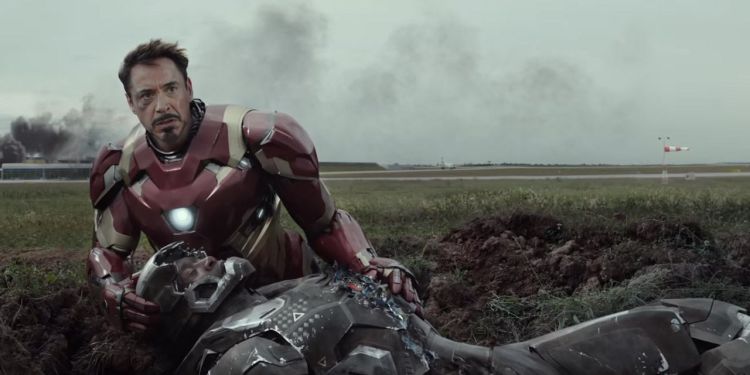
MT: You have a big film coming up in “Captain America: Civil War”. How were you experiences working on that film? Can you give us a sneak peak as to what to expect? It seems like all of the stars of the Marvel Universe are in this film!

TO: It was great to get back with the Russo’s and the team again for Civil War. We had just an amazing crew so that makes the whole experience so much better. The people around you are very important when you’re up against challenging situations. We shot quite a bit of our exteriors on the Pinewood backlot in Atlanta & the heat & humidity can be quite brutal.

On a movie of this size it’s assumed that everybody knows their jobs at this point so it really comes down to having a great attitude under pressure and being there together for the film.

We were also very fortunate to work with a great German crew in Berlin that made our transition over there very smooth.

There were a ton of actors on this film and that was actually quite challenging to shoot them all with their crazy schedules. The tough thing is that you can end up shooting someones close up in another country and weeks after you’ve shot the other side of the conversation so it’s always a challenge dealing with changing weather conditions etc. to maintain some cohesiveness to the scene.

I’m starting up prep on the new Infinity Wars films that we’re shooting back to back with the Russo’s later this year & the scale of those two films combined is a bit mind blowing so it’s good that these last two films have ramped up in terms of scale and complexity because each one prepares you for the next.

PHOTO: Robert Downey Jr. in Captain America: Civil War:

civilwar.jpg

MT: How much of the Captain America films are storyboarded? Are you a part of that process in pre-production?

TO: These films are heavily boarded & pre-vised, far more than anything else I’ve ever done. The pre-vis process starts very early in the film’s development so that’s when you have to get in there to help start guiding the process along with the directors so that it fits in with what everyone is aiming for and what the production team is going to do on set.

The Marvel films are incredibly collaborative and that’s a huge part of their success I think. We have worked with the vfx supervisor Dan Deleeuw on these last two films and he is in charge of building the pre-vis sequences so that is an invaluable resource to start the discussion with the whole team before you get out there on the real-time clock burning production money.

MT: You have obviously mastered the cinematic artform of the intense action/thriller film. Is there another genre that you like to work in?

TO: I don’t have any specific genre goals as far as the types of films I’d like to work on really. I’m always just looking for scripts that I enjoy and that hopefully have something to add to what’s out there already. I shoot a lot of commercials in between film projects so I don’t mind turning down things & waiting until something interesting comes along. Feature films have such a long development period & then you’re away from home for most of the year prepping & shooting so you have to choose your projects carefully.

MT: What advantages/disadvantages do you think you have had starting in the short film/indy world in comparison to other DPs who worked through the Unions to become a cinematographer?

TO: The biggest thing I feel was missing from the early days was the opportunity to see how other cinematographers worked. That’s the nice thing about working your way up through the ranks. You’re in the front row watching how the big boys do it. I used to do set visits when I worked at the rental house & it was always cool to see the different lighting approaches or specific rigging that someone had done.

Also my step dad had a subscription to American Cinematographer so I had read every single page of every issue since I was 16 years old. That was invaluable, of course this was years before the internet and the behind the scenes special features on dvd’s & blu rays that we have now so that was the best way of seeing how things were done at the time.

I think the advantage of starting the way I did is that you’re doing what you want to do from the beginning so you start developing right away. The trap in working your way up through the different crew positions is that you can get trapped there. All of a sudden you’re 15 years into working sets and paying off a mortgage so it’s tough to make the leap & reimagine your career as a DP. I think if you want to do something than you should just start doing it at whatever level you can.

MT: Do you have a Director of Photography mentor?

TO: I don’t have one individual really but there are countless people that I learned from when I first started shooting. I started working at Clairmont Camera in Vancouver after film school so I was around professional camera crews full time & just tried to learn everything I could, just hoover up as much information as you can. Why that lens over this one, when to use a fluid head vs. wheels etc. Just tons of little details that you absorb over time. I think that was a great introduction to how things worked on set but at the same time I wasn’t that interested in working on tv shows or MOV’s at the time so I shot my own stuff or with friends on the weekends & was able to develop over time and make mistakes in a safe environment where there wasn’t a ton of money on the line.

MT: Where do you see the future of camera/lighting technology in film?

TO: Well it’s an exciting time as far as what’s out there already & what’s coming out. The camera technology just keep getting better every year and LED lighting is really coming into it’s own so it’s great to have options available to you to choose from the toolbox for different scenarios. I’ve really been enjoying running our lighting setups through DMX lighting consoles and media servers for the last couple of years. You just have almost infinite control over the quality and the dynamics of the light as far as movement and colour.

MT: What film, besides the ones you’ve worked on, have you seen the most times in your life?

TO: That’s a tough question. Probably “Blade Runner”, “Heat”, “Close Encounters of the Third Kind”, “Jaws”, “Godfather 1&2”, “Stalker”, “The Conversation” “Apocalypse Now” all the classic iconic movies. There’s a ton more for sure. There are just some films that you come across on tv and it’s impossible to stop watching even if you’ve seen it a hundred times. My parents had “Das Boat” and “Fitzcarraldo” basically on infinite repeat in my house when I was young too which drove my sister and I crazy at the time.

MT: Where did you grow up? Did you always want to be a cinematographer?

TO: I was born and raised in a place called Thunder Bay in Ontario Canada. It’s quite a small town and I moved away for high school but went back to film school at Confederation College so it was great to be back in my home town, starting a new chapter of my life. I was more into music as a kid and played in different bands growing up so I never really thought of film as a career until my early 20’s when I went to film school.

My step dad was a nature cameraman when I was a kid so he took me out on his shoots and taught me how to load film and thread the camera etc. Of course it was more documentary work so there was no lighting at all but it was a good introduction to camera and sound equipment. I used to go into the post production offices where they cut his films and would see shots that we had taken cut into the edit so it was almost like pre-film school for me as a kid.

_____

Interviewer Matthew Toffolo is currently the CEO of the WILDsound FEEDBACK Film & Writing Festival. The festival that showcases 10-20 screenplay and story readings performed by professional actors every month. And the FEEDBACK DAILY Festival held online & in downtown Toronto on the last Thursday of every single month. Go to www.wildsound.ca for more information and to submit your work to the festival.