Film Review: FIFTY SHADES FREED (UK 2018)

Submit your Screenplay to the Festival TODAY
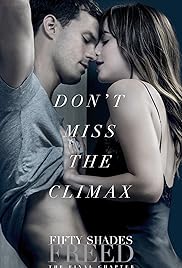
Fifty Shades Freed Poster
Trailer

Anastasia and Christian get married, but Jack Hyde continues to threaten their relationship.

Director:

James Foley

Writers:

Niall Leonard (screenplay by), E.L. James (based on the novel by)


FIFTY SHADES FREED is the third film of the FIFTY SHADES franchise with the first two FIFTY SHADES OF GREY and FIFTY SHADES DARKER winning raspberry awards for worst film and worst acting for its actors.  FIFTY SHADES is likely the worst reviewed film franchise ever though the films have been Universal tons of cash.

The film clearly aims at a female audience.  Imagine the fantasy – Marriage to a wealthy husband with the perfect body, romantic wedding vows, a glamorous lifestyle and most of all, great sexy with S&M thrown in for good measure.

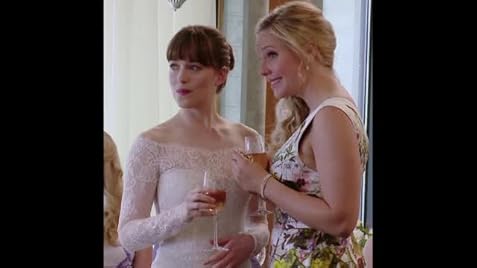
FIFTY SHADES FREED opens with what looks like the perfect wedding.  It is the marriage of Ana (Dakota Fanning) and billionaire Christian Grey (Jamie Dornan).  But the matrimonial noon is tested when Ana insists on ‘not being Mrs. Grey’.  She insists on keeping her maiden name, her job and dispenses with a wife’s household duties.  All this results in sexual punishment dished out by her husband.  Ana loves it and keeps going on till she eventually gets pregnant because she missed her shots.  The marriage is on the rocks.  The plot also invokes Ana’s ex-boss, Jack Hyde (Eric Johnson) stalking her and wanting to punish her for what she has done to him, which is explained later on in the film.  That is pretty much the film.  Sex, sex, sex, get Ana’s stalker and would-be killer then the end.

FREED can stand on its own with audiences unfamiliar with the stories of the other two films.  Ana met Grey in the first film engaging in S&M sex.  The second film shows her being promised marriage by Grey while having trouble at work with her boss who turns up as the villain in FREED.

The sexual scenes are interesting but goes boring really quickly despite the two perfect bodies of the actors.  For what the script provides, Dakota Fanning does quite a good job at her performance, making the audience care for her despite her gong against all the hubby’s wishes.  Marcia Gay Harden has a small role as Christian’s adoptive mother, but her role is simply awful, involving her to hug the gorgeous Christian at one point in the film.  She looks as if she got a sexual turn on in the film when she holds on to him.

A few things that Universal Pictures got right with this sequel.  The budget is kept the same as the second film at $55 million with a shorter running length.  It is clear that the movie should still make money though expectedly less that the $580 million for the first and $300 million for the second.  At the film’s promo screening, one self touted critic remarked loudly that the film is shit and the editing is shit.  It is easy to condemn a film without giving clear examples.  The editing is actually half decent, especially the S&M scenes, keeping it fairly decent considering the film’s content.  Th car chases are also well cut with ok continuity.  

Having not seen the first two films, I actually enjoyed the tackiness of the film’s first 20 minutes, to see how much rubbish the audience can take in.  But tackiness or not, the film keeps repeating itself (example: the story’s silly excuses for Ana’s behaviour to keep getting sexually punished.)  The S&M are not really imaginative.  I am are everyone has seen a vibrating, dildos or handcuffs.  The film then resorts to ice-cream being slid on the naked bodies.  In Mike Leigh’s LIFE IS SWEET for example, he had a sexual bathroom scene with his two actors covered in chocolate. The film is noticeably drug free.  I am not advocating drug use, but this really stretches the film’s credibility.

James Foley takes over the director’s reins.  Foley has directed decent films in the past, the most notable being Mamet’s GLENGARRY GLEN ROSS.  FIFTY SHADES FREED is obviously not one of them. Foley goes for empty glossiness.  Though the film has a slick look, there is no substance and the polished exterior fades fast.

Trailer: https://www.youtube.com/watch?v=nJCc5HRPxYA

Submit your Screenplay to the Festival TODAY

Film Review: POOP TALK (USA 2017)

Submit your Screenplay to the Festival TODAY

Poop Talk Poster


POOP TALK or in other words, SHIT TALK is a comedy doc that premiered at the Toronto International Film Festival last year that luckily got picked up for distribution.  It is an hour and a quarter documentary about shit, if one can take it.  At least the doc takes a humorous look at it, as seen primarily from the point of view from a wide selection of stand-up comedians. “If I had one wish only from a genie, it would be that I would never have to shit,” jokes one comic at the film’s introduction.   A few shit experts (Dr. Joel Brown and Dr. John Vainder as themselves) also have their say, if that means anything.  The film aims  at giving an inside look at all things poop — from uncensored, embarrassing moments to scientific explanations recounted by 50 experts and comedians

Most of the comedians are not too famous, that majority of them unheard of, though that does not mean that they are not funny.  The one appearing most might be familiar with would be Kumail Nanjiani who also starred in his recent hit romantic comedy THE BIG SICK.

If the film is about to run short of material and begins to drag, director Feldman is quick enough to insert segments from the comics about poop that will guarantee at least a laugh or two.

Among the film’s funnier stand-up comic moments are the ones in which a female describes how she flooded the toilet and her friend’s bathroom ending up with her poop splashing on her mother’s face and the other where a dwarf comedian describes his experience pooping in a public toilet with the lights shut off.

Ironically, I am writing this review in Cuba when my partner is having traveller’s diarrhoea.  He has had the runs at least 5 times in the last half hour last evening, and has to be taken to the hospital.  But this is another story.  Another poop story.

Do not expect major insights, even on poop from this doc.  Feldman offers doses about poop in Africa, Russia and a few other foreign countries.  Mildly funny, at best!

The film also talk about different types of toilets like the squat toilets, especially in India.   All Pakistani bathrooms for example, there are washers for washing poop.  There a lot of funny stories about shit in other countries, but India has the funniest ones.

The most public place one has pooped in?  there is a segment in the film about this.  At the beach?  In the sea?

The psychology of shit?  The film has comedians talk about not shitting in public.  And the best is shitting on cocaine. Those in the know, know how much smellier poop can smell after snorting a line.

The most disgusting (or funny) is King kong Bundy the wrestler , 6 foot foot five 400 pounds tang a shit.

For all that is worth, POOP TALK does its best on the topic, despite the subject’s limitations.  Sadly though, this is not enough of a full length documentary.  The film also lacks a solid climax.  POOP TALK is an ok small movie, maybe to watch on the small screen, unless one want to spend extra bucks for shit.

Trailer: https://www.youtube.com/watch?v=3pBWbjxVEoI


Submit your Screenplay to the Festival TODAY

Film Review: AVA (Iran/Canada/Qatar 2017)

Submit your Screenplay to the Festival TODAY

Ava Poster
The life of a high school girl in Iran becomes more complicated after her mother catches her in an act of rebellion.

Director:

Sadaf Foroughi


AVA is not to be confused with the other film AVA, the French film directed Lea Mysius that won a prestigious Cannes prize about a 13-year old discovering sex before going blind.  Both films coincidentally have young female protagonists.

What is a Persian high school female teen to do?  Everything she does is criticized and looked own upon.  Her mother (Bahar Noohian) is constantly on her case as are her teachers at school and even her friends when she goes on about dating boys.  Ava (Mahour Jabbari) would be considered a normal girl in the western world with her behaviour that would not be tolerated in the Persian world.

AVA is a critically acclaimed Canadian co-production shot in Iran that screened in the Discovery section at the 42nd Toronto International Film Festival, where it won the FIPRESCI Discovery Prize and received an Honourable Mention for Best Canadian First Feature Film. 

Writer/director Sadaf Foroughi ups the angst when Ava discovers that her parents were not so innocent either.  When Ava learns that her parents were once flagrant rule breakers themselves, she begins to rebel against the very foundations of her society. 

Surprisingly, Ava’s father (Vahid Aghapoor) is more tolerant and director Forough shows that Ava’s problems comes mainly from the females and not the males.  It is a cycle in society that has been so established that change is almost impossible.

The film slags a bit in the middle with what seems to be a shortage of material.  The film’s segments are the ones where mother and daughter argue it out, no holds barred.  They use every means possible to win their arguments including personal hidden secrets.  Director Foroughi clearly wishes the audience take the daughter’s side but actress Baba Noohian is so good as the mother, that her argumentative points gets the audience’s sympathy.  Father is always only in the background until the film’s climax.

AVA also reveals what an all girls school system is like (assuming what is shown is authentic).  As expected the headmistress is an anal retentive authoritarian (or bitch to be more direct) who has no sympathy for Ava and no clue on the restlessness of the youth under her care.

AVA masterfully demonstrates how a culture of authority can force denial and detachment, particularly among young women during their formative yet vulnerable high school years.  A small but important yet impressive first feature!  The film builds to an exciting and effective climax.

AVA is the film that sparked a bit of controversy at the 2017 Toronto International Film Festival when its Iranian actors were denied entry to Canada for the purpose of promoting the film.  Immigration Canada responded to say that the would-be visitors failed to meet the requirement standards.

AVA is currently playing at the TIFF Bell Lightbox for a week, limited engagement as part of Canada’s Top 10 Films of the year.  Worth a visit for sure!

https://www.youtube.com/watch?v=rF9pDPmF3is

Submit your Screenplay to the Festival TODAY

Film Review: BLACK HOLLOW CAGE (Spain 2017)

Submit your Screenplay to the Festival TODAY

Black Hollow Cage Poster
A girl who lives secluded in a house in the woods with the only company of her father and a wolfhound finds among the trees a mysterious cubic device with the ability to change the past.

Director:

Sadrac González-Perellón (as Sadrac González)

Writers:

Sadrac González-Perellón (story) (as Sadrac González),Sadrac González-Perellón (as Sadrac González)

It is strange enough that this low budget stylish Spanish horror suspense thriller that cost 1.5 million euros to make got distribution here while many Canadian features do not.  The plot is even stranger.

The story unfolds in Chapters that last approximately 20 – 25 minutes each.  The first Chapter is called the Cube.  A girl, 13-year old Alice (Lowena McDonell) lives secluded in a house in the woods with the only company of her father (Julian Nicholson) and a wolfhound finds among the trees a mysterious cubic device with the ability to change the past.  She can also lie inside the cube that can open and close.  The wolfhound can speak using a device tied around her neck.  Alice converses to her as if the dog was her mother, which her father denies it to be.  Whether or not the fact is true, the wolfhound offers advice to Alice throughout the film.

Writer/director González-Perellón’s film opens at a snail’s pace.   It requires of the audience a lot of patience, also because not much sense can be made of the plot.  Many questions are posed at the start:  Why does Alice despise her father?  Why does she have a prosthetic (bionic) arm?  Why are they living in a modern accommodation right in the middle of the woods?  What is their past?

Just before any of these puzzles can be solved, Chapter 2 appears entitled The Strangers.  Two strangers arrive, a teen girl, Erika (Haydee Lysander) beaten up and her mute brother, Paul (Marc Puiggener).  Again, more questions are posed with their arrival:  Who are they?  Where do they come from?  Why is Erika all bruised?  To complicate matters, father has a crush on Erika and invokes Alice’s anger when he strokes her hair in from of the dog, that Alice still insists is her mother.

González-Perellón ups the angst with the third chapter called The Listening.  The cube (that opens) instructs Alice to listen to her headphones in front of a black clock at 4 o’clock.  Which she does.  She is told to let her father out of the house, to kill Paul, and then her sister.  She refuses to succumb to the instructions but later, as the cube can change the past, decides to kill Paul… with disastrous results that lead the film to its climax.  There is another chapter.

To González-Perellón’s credit, the film does keep the audience guessing as to what is it that all the events are about.  When the explanations are revealed, the result is disappointing as the explanations make no sense. except for some excuse to create an adventure around a modern house in the woods. 

Going back to the first paragraph of the review, the strangest of it all is after watching the entire film is the realization that BLACK HOLLOW CAGE is one nasty, pointless violent little film that is a waste of time.

Trailer: https://www.youtube.com/watch?v=yebYCgFzvG8


Submit your Screenplay to the Festival TODAY

Film Review: UNA MUJER FANTASTICO (A FANTASTIC WOMAN ) (Chile 2017) ***1/2

Submit your Screenplay to the Festival TODAY

A Fantastic Woman Poster
Trailer

Marina, a waitress who moonlights as a nightclub singer, is bowled over by the death of her older boyfriend.

Director:

Sebastián Lelio

Writers:

Sebastián Lelio (screenplay), Gonzalo Maza (screenplay)


Chilean director Sebastián Lelio broke into the international film scene with his Best Foreign Film Oscar nominee GLORIA back in 2013.  His latest hit, already critically acclaimed since its debut at Cannes also deals with a female protagonist, actually a transgender heroine, played astonishingly by Daniela Vega.  If she had been nominated for a Best Actress Oscar she will make headlines as the first transgender to get nominated in the Best Actress Oscar category.  Lelio’s camera loves her.  And she is very good in the role too.  And very beautiful!

A FANTASTIC WOMAN is the portrait of a woman adrift.  Marina (Vega), the FANTASTIC WOMAN of the title is beautiful, enigmatic, and plunged into a precarious situation after her older boyfriend dies unexpectedly in her company.  Her world is turned upside down.  She has to come to terms not only of her loss but with the horrid prejudice of his family.

Fifty-seven-year-old divorcé Orlando (Francisco Reyes) wakes in the middle of the night, suffers an aneurism, and falls down some stairs.  He sustains injuries that will come to haunt Marina after she takes him to the hospital and attempts to slip away before authorities and family members begin prying. 

Marina knows she’s regarded with suspicion for her youth, class, and, above all, gender status.   She experiences the viciousness of Orlando’s son, the cold-heartedness of Orlando’s ex-wife, and the intrusiveness of a detective from the Sexual Offences Investigation Unit force Marina to not only clear her name, but also to demand the very thing no one seems willing to give her: respect.  The saddest segment is when she is denied the human right to say goodbye to the dead Orlando.  She is chased out of the funeral church service by her family.

The events are also put into a different perspective from Marina’s sister and her husband, who reluctantly but finally offer to help.  At least they realize that it is the right thing to do.

The film is shot in Santiago, though the tourist sights are not seen.  The film is accompanied by sombre music when it needs to and uplifting music at other times.

Lelio’s film contains both disturbing scenes and scenes of elation.  The ones most difficult to watch are understandably those involving abuse to Marina.  Marina is picked up and forced into a car by Orlando’s brother and family, beaten, taped up and then tossed out of the car.  Marina at one point, goes dancing to forget her troubles.  In a fantasy sequence, she dances wearing a sparkling top together with those dancing around her.  Marina finally sums up her courage to do what is right – to see her lover, Orlando one last time before he is cremated.

A FANTASTIC WOMAN is both a sad and uplifting film that illustrates the old adage that something that will not kill you will make you stronger.

Trailer: https://www.youtube.com/watch?v=SgDhpy9Z-NM

Submit your Screenplay to the Festival TODAY

Film Review: FAKE BLOOD (Canada 2017)

Submit your Screenplay to the Festival TODAY

Fake Blood Poster
Rob Grant and Mike Kovac receive a disturbing fan video inspired by their previous horror movie Mon Ami, motivating them to investigate the responsibility of filmmakers in portraying …See full summary »

Director:

Rob Grant

Writers:

Rob GrantMike Kovac 


If a filmmaker made a few films no one really wanted to see then made a documentary about those films no one wanted to see?  This is exactly the case of Rob Grant’s FAKE BLOOD.  After making the little seen low budget horror flicks, YESTERDAY and MON AMI, writer/director Rob Grant and his actor buddy, Mike Kovac receive a disturbing fan video inspired by their previous horror movie Mon Ami, motivating them to make a documentary investigating the responsibility of filmmakers in portraying violence in movies.  In their so-called pursuit of the truth they are unwittingly introduced to the real world of violent criminals and their victims.

The question is whether the duo provides any insight on the portrayal of violence in movies.  The answer is a clear no.  This can be observed by the unchallenging and made-up-interview-questions-as-they-go-along during the interviews.  Grant and Kovac spend half the time explaining the pathetic reason for making the doc to the interviewees who end up in all cases milking the duo for some money to speak on camera.  

The question on the filmmakers responsibility on violence is already answered by Grant early into the movie.  His answer is that the filmmakers job is to entertain.  No one really bothers, or cares, whether the violence or a killing is accurate.  In many cases, they go an extreme lengths to seek out individuals who have seen violence or real fights.  I do not see the difficulty here, as I have seen real fights and violence (though not a killing) first hand.  And the interviewed do not provide any fresh information either.

A point to note is that the film makes no disclaimer that it is bot based on any true or real characters.  This, implies of course, that what is seen on the screen is real, but there is no real proof, just supposition.  There is no film governing board that checks this.

Another glaring problem of FAKE BLOOD is whether what is documented is true or false.  The killer interviewed on film is played by an actor and what he says could have been real or made up, no one knows.  The film plays with a bit of comedy, but the apparent seriousness of the matter excludes it from being classified a mockumentary, which means that the film could be entire fiction, but just made documentary style for it to classify a documentary.  An example is the 2005 British film BROTHERS OF THE HEAD by directors Keith Fulton, Louis Pepe that plays like a real serious documentary only that the Siamese twins never existed in real life.

But ultimately, what transpired on screen in uninteresting and boring.  Grant tackles a minor subject that really dos not impact anybody.  Does anyone really imitate the violence on screen?  Even if they do, it is hard to prove (interviewing a few killers will never prove anything conclusive) and violence in real life will always be there, regardless.

Trailer: https://www.youtube.com/watch?v=aTit5tJ5XYM

Submit your Screenplay to the Festival TODAY

Film Review: ALTERNATIVE MATH (USA, Comedy)

Perhaps one of the smartest and most compelling shorts around, ALTERNATIVE MATH, a nine minute American piece directed by David Maddox, is a deeply layered and remarkably sophisticated pieces of intelligent comedy.

Our heroine is a veteran grade school teacher trying to explain to her student that 2+2=4. The child however, believes the answer is 22. So do his parents. How dare this teacher censor their child and restrict his learning. What kind of professional does this? The child’s parents are out for blood and soon our heroine is trapped in a vicious media onslaught and a school board demanding her resignation.

What makes this film so special is that it functions on so many layers. It works comically due to it’s wonderfully executed reducto-absurdum, but just a little bit deeper we find an allegory for our modern world carrying a concerning warning. What happens when beliefs are taken too such a degree that basic knowledge is questioned? What happens to a population when the right to free speech becomes more important than the recognition of fact? There is a frightening undertone in ALTERNATIVE MATH that speaks to a greater and more terrible world lurking in a reality not too far away from our own.

Of course, this allegory is one that comes gift-wrapped clearly and politely in the bow comedy for an audience can unwrap it with glee, not fear. Perhaps this is one of the best reasons to see ALTERNATIVE MATH, a film with heart, humanity and humor, as well as deeper philosophical undertones. A family film to be enjoyed by teacher and student alike.

PLAYED at the January 2018 Comedy/Drama Festival. 

Review by Kierston Drier

WATCH the Audience FEEDBACK Video:

ALTERNATIVE MATH, 9min, USA, Comedy
Directed by David MaddoxA well meaning math teacher finds herself trumped by a post-fact America.

CLICK HERE – and see full info and more pics of the film!

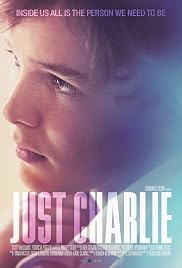
Film Review: JUST CHARLIE (UK 2017

Just Charlie Poster
Football star Charlie is a girl trapped in the body of a boy. Rejected by her Father and teammates will she ever play football again?

Director:

Rebekah Fortune

Writer:

Peter Machen

Film Review: LA PETITE FILLE QUI AIMAIT TROP LES ALLUMETTES (CANADA 2017) ****

Submit your Screenplay to the Festival TODAY

La petite fille qui aimait trop les allumettes Poster


Chosen as this year’s Canada’s Top 10 films of the Year, the Quebecois film LA PETITE FILLE QUI AIMAIT TROP LES ALLUMETTES receives a deserved run this weekend at the TIFF Bell Lightbox.  It is a strangest of all the 10 films and rightly so because the novel (by Gaétan Soucy) it is based on is indeed a strange one. This novel was chosen for inclusion in the French version of Canada Reads, broadcast on Radio-Canada in 2004, where it was championed by actor, film director, screenwriter, and musician Micheline Lanctôt.

The story is about two siblings who live in complete isolation with their father. They are both his “sons”.  One day the father kills himself by hanging and his sons decide one of them needs to go to the nearby village to get a coffin.  While in the village it is unveiled that the one son is actually a female although she has no idea of that (she has no idea of sexuality and thinks she was castrated when she was very young and that is why she doesn’t have testicles). It also become apparent she has been being used for sex by her brother and eventually becomes pregnant with child.

The film takes certain liberties with the novel and director Lavoie changes a few things to make it more believable.  Lavoie lets the audience know from the beginning that one of the siblings is a girl and not a boy.  This is a wise decision as the actress playing the part looks more feminine than masculine despite the male clothes and short hair.  The father only hangs himself at the 30 minute mark of the film.  The evil things that go on are revealed while the father is alive while he has a part to play in them.  In the book the girl thinks she was castrated while in the film, she is told by her father that her pee-pee dropped off when she was a child.  Her Prince Charming in the film is a land surveyor for the government and not a mine inspector.

The story is a dark one.  Twists in the plot show up every 15 minutes or so, and they are not for the better.  But the girl is strong willed and able to resist her brother, the villagers and her unknown fears.

The film is even creepier with the existence of the unknown monster kept in the shack outside the main house.  Who or what is this creature?  Director Lavoie teases the audience, led to believe at first that it would be the siblings’ mother. 

The film is a worthy and well plotted adaptation of the novel.  Wisely shot in black and white with choral music in the soundtrack to give the film a Gothic look, the film captures both the creepiness and innocence of the girl in the story.  A  disturbing film undoubtedly due to its theme, but indeed a Top 10 Canadian film of the year! 

Trailer: https://www.youtube.com/watch?v=4rcH8cJ-PGo

Submit your Screenplay to the Festival TODAY

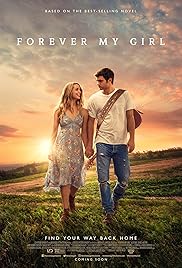
Film Review: FOREVER MY GIRL (USA 2018)

Submit your Screenplay to the Festival TODAY

Forever My Girl Poster
Trailer

After being gone for a decade a country star returns home to the love he left behind.

Writers:

Bethany Ashton Wolf (screenplay), Heidi McLaughlin (novel)


Submit your Screenplay to the Festival TODAY