OUR KIND OF TRAITOR (UK/France 2016) ***

Deadlines to Submit your Screenplay, Novel, Story, or Poem to the festival:http://www.wildsound.ca

our_kind_of_traitor.jpgOUR KIND OF TRAITOR (UK/France 2016) ***

Directed by Susanna White

Starring: Carlos Acosta, Radivoje Bukvic, Stellan Skarsgård, Naomie Harris, Ewan McGregor

Review by Gilbert Seah

The new John Le Carre film scripted by Hossein Amini is a spy thriller quite different from what audiences have seen in the past. The main character is now an academic, Perry Makepeace, played by Ewan McGregor. McGregor appears in more relaxed Mode compared to Richard Burton, Alec Guinness or Gary Oldman in THE SPY WHO CAME IN FROM THE COLD and SOLDIER, TAILOR, TINKER, SPY respectively. This is not necessarily a bad thing as White’s treatment of Le Carre’s material has a more feminine – more human touch. This is a huge contrast to the last major Le Carre film adaptation by Tomas Alfredson, the chilling and excellent SOLDIER, TAILOR, TINKER SPY.

The story here is simple and much more straight forward compared to the extremely hard to follow SOLDIER, TAILER, TINKER, SPY. After Perry is offered a tennis game by Russian mafioso, Dima (Stellan Skarsgard), he is ‘recruited’ by him to help him and his family defect. A sort of mixed STRANGERS ON A TRAIN and TORN CURTAIN Hitchcockian story, White’s film plays well blending the cold blooded spy game with a more human aspect. With this main plot, the story weaves in some choice bits of political debate.

Director White is quick to point out that it is not only the Russian mob that are the bad guys in the movie. There is also something very nasty within the British Intelligence as there is in every character in the story. Even Perry is a philandering husband and not one to make his long suffering wife, Gail (Naomie Harris) happy as she is one to point out the faults of her partner. But surprisingly, both Perry and Gail have a change of heart to protect Dima at all costs. In the process their marriage is saved.
As in a Le Carre story, fans will not be disappointed with the plot twists, swift cold blooded killings, car chases and exotic locations, in this case Marrakech, the Alps and the cities of London and Moscow. The film has the look of the spy thrillers of the 60’s and 70’s. But the Carre story is updated with modern technology such as the downloading of key information (bank account numbers) into a usb memory stick.

The humour is also slick. When asked by Perry the reason he was picked, Dima’s reply was that he was the only one left in the restaurant. But a good pick Perry is. A lot of the humour is also derived from Dima’s behaviour – how he changes from kindness shown to his family to cold brutality.

The film contains a few outstanding performances that make the movie. Among them are Stellan Skarsgard’s flamboyant and hyper ex-Russian mafioso Dima and Damian Lewis’ Hector who starts off following British red tape and ends up fighting against it. Jeremy Northam (PRIEST, THE WINSLOW BOY) has a cameo as Aubrey Longriegg, a treacherous British politician.

OUR KIND OF TRAITOR is a milder but still entertaining Le Carre thriller.


Also, Free logline submissions. The Writing Festival network averages over 95,000 unique visitors a day.
Great way to get your story out: http://www.wildsound.ca/logline.html

Deadlines to Submit your Screenplay, Novel, Story, or Poem to the festival:http://www.wildsound.ca

Watch recent Writing Festival Videos. At least 15 winning videos a month:http://www.wildsoundfestival.com

Movie Review: THE WITNESS (USA 2016) ***1/2

Deadlines to Submit your Screenplay, Novel, Story, or Poem to the festival:http://www.wildsound.ca

the_witness.jpg
THE WITNESS (USA 2016) ***1/2
Directed by James Solomon

Starring: William Genovese, Shannon Beeby, Kitty Genovese

Review by Gilbert Seah

THE WITNESS, is a documentary about the 38 witnesses of the 1964 stabbing of Kitty Genovese. But it turns out that they all did nothing. Or so it seems. Could it be true that Americans are that soulless? The film goes on to probe how it is impossible for that many people to see everything and do nothing. As the film progresses, THE WITNESS covers many other stories. Though the stories are quite different, they are all linked to the stabbing. But the real story that stands out is the one of Bill Genovese, Kitty’s brother who is in almost every frame of the film.

The details of the case: Kitty was a bar waitress in Kew Gardens, Queens who was randomly stabbed by a stranger named Winston Moseley—who later told police he was just looking for a woman to kill—then raped and robbed by him after he returned to finish the job. The New York Times later reported that 38 witnesses heard and even saw some part of the attack but didn’t call police and failed to intervene or even call attention to it.

Solomon’s film is absorbing for many reasons. The most important of these is Bill’s fixation on finding the truth about his sister’s murder. Bill will not stop. He investigates the New York Times reporter, ironically nicknamed Honest Abe who twisted the story to make it one that made news around the whole country. The fact of 38 witnesses doing nothing became a sociology study in many colleges. Bill also goes through a checklist of all the witnesses and questions each of those who are still alive. He goes so far as to ask to speak with Winston Mosley, his sitter’s killer, now serving sentence. When Mosley declined to meet Bill, Bill met his son. This meeting (which does no appear to be a re-enactment) is the film’s tensest segment. Initially, Mosley’s son, who is a reverend appears detached and unhelpful. When he finally confesses how he also suffered, especially at school with kids calling him the murderer’s son, Bill and the audience begin to feel for him.

But he film finally looks at Bill. When will Bill give up and accept the facts and move on? The investigation also reveals Kitty’s character. It is also revealed that she is gay. Bill interviews some of her lesbian friends as well.

Solomon’s film is intriguing in that it goes many different directions just as Bill’s life has taken him. Bill has also lost two legs while serving in the marines during the Vietnam war.

In the end, it is up to the audience to determine what Bill has gained from his intensive search. And in the process, learn from the film a few valuable lessons in life.


Also, Free logline submissions. The Writing Festival network averages over 95,000 unique visitors a day.
Great way to get your story out: http://www.wildsound.ca/logline.html

Deadlines to Submit your Screenplay, Novel, Story, or Poem to the festival:http://www.wildsound.ca

Watch recent Writing Festival Videos. At least 15 winning videos a month:http://www.wildsoundfestival.com

Movie Review: THE NEON DEMON (Denmark/France/USA 2016) ***

Deadlines to Submit your Screenplay, Novel, Story, or Poem to the festival:http://www.wildsound.ca

the_neon_demon.jpgTHE NEON DEMON (Denmark/France/USA 2016) ***
Directed by Nicolas Winding Refn

Starring: Elle Fanning, Christina Hendricks, Keanu Reeves

Review by Gilbert Seah

The much anticipated film at Cannes that caused quite the sensation, Nicolas Winding Refn’s THE NEON DEMON will not disappoint in terms of gore and surrealism. Refn has already proven himself a director to watch, with remarkable features like his PUSHER trilogy, DRIVE and ONLY GOD FORGIVES.

While his earlier 5 films displayed speed and ultra-violence, THE NEON DEMON reveals a different side of Refn. THE NEON DEMON is an extremely slower paced film, full of pauses that allow the audience to sit back and figure what is actually going on. And most of the time, it is still hard to figure out what is going on.

But one must hand it to Refn that as slow paced as this film is – it is far from boring. The film for one, is meticulously shot with glittery lighting that mesmerizes as much as confuses. His images of the characters often blend one into another, like the corpse that looks like the heroine in the film, for the purpose of the lady making love to it imagining the corpse to be the girl she did not succeed in sleeping with.
The film shows Refn’s interpretation of the pretentious L.A. fashion industry. A young and aspiring model called Jesse (Elle Fanning) has just moved to Los Angeles. She is an orphan, very beautiful and impresses everyone she meets with her beauty. She meets make up artist Ruby and two of her rather nasty model friends Sarah and Gigi at a surrealistic dimly lit party. The rest of the plot is immaterial except to show that models will do everything to stay ahead.

Refn’s films seldom contain pleasant characters. There are none in THE NEON DEMON. Who initially appears a kindly soul, Ruby turns out to be another mean person with the ulterior motive of using Jesse for sexual satisfaction. And when Ruby cannot get what she wants, she turns incredibly vicious. Refn does to shy away from gore and violence. Where there is insufficient of these in the story, he more than makes it up in the dream sequences. Jesse has a nightmare of her motel manager (Keanu Reeves in nasty mode) inserting a knife down her throat only to be awakened by him banging at her door wanting to rape her. This unpleasant character is not crucial to the story of Jesse, but is there just for added unpleasantness. But the prized unpleasant segment is the one with necrophilia on full display.

Ref does not seem to care what audiences think of his work. With that attitude, Refn can come up with a few mighty fine films – the best of these being his PUSHER trilogy, which are all cutting edge, exciting and relevant. THE NEON DEMON is his most surreal film, reality turning into a nightmare with models morphing into flesh eating vampires in a world lit by neon and fluorescent lights where the sun seldom shines. Needless to say, THE NEON DEMON is not a film for everyone, but it is not without its merits, strange as they may come.


Also, Free logline submissions. The Writing Festival network averages over 95,000 unique visitors a day.
Great way to get your story out: http://www.wildsound.ca/logline.html

Deadlines to Submit your Screenplay, Novel, Story, or Poem to the festival:http://www.wildsound.ca

Watch recent Writing Festival Videos. At least 15 winning videos a month:http://www.wildsoundfestival.com

FINDING DORY (USA 2016) ***1/2 – Movie Review

Deadlines to Submit your Screenplay, Novel, Story, or Poem to the festival:http://www.wildsound.ca

finding_dory.jpg FINDING DORY (USA 2016) ***1/2
Directed by Andrew Stanton

Starring: Ellen DeGeneres, Albert Brooks, Ed O’Neill, Ty Burrell, Kaitlin Olson, Eugene Levy, Dominic West, Kate McKinnon, Bill Hader

Review by Gilbert Seah

FINDING DORY is the sequel to the highly successful 2003 animated FINDING NEMO. Though director Andrew Stanton swore at that time: “no sequels”, FINDING DORY arrives more than 13 years after. Though several identical characters from the first film appear in the sequel, the story is quite different and can stand alone on itself, despite the fact that the story takes place 6 months after the first film ended.

The film opens with water flowing from the sea, demonstrating how advanced animation technology has become. Water and fire were almost impossible to animate a decade ago.

Dory (spritely voiced by Ellen DeGeneres) is a little Pacific regal blue tang who suffers from short term memory loss. She tries, comically to remember events the best she can, but she is most afraid of losing her parents (Diane Keaton and Eugene Levy). This she does. With the help of new friends Nemo (now voiced by Hayden Rolence) and his father Marlin (Albert Brooks), she sets out to find her parents. The adventures take them to the Marine Life Institute where she meets other characters like a white beluga whale called Bailey (Ty Burrell) and Hank (Ed O’Neill), the octopus.

FINDING DORA would definitely not be recommended for smaller children. For one, I do remember as a child my biggest fear being the death of my parents or even just my father. Where would I be without money or someone to look after me? The film’s story of little Dory losing her parents, fearing at one point the death of both her parents and also the loss of her two good friends would be enough to scare children into having nightmares for months.

The film is annoying, especially in the first third with lots of noise made by the aquatic characters. When a few speak, some do too fast that quite a lot of dialogue ends up too gibberish for the children to make out.

A film about sea creatures allows the screen to be filled with gorgeous colour. Stanton clearly realizes this potential as he fills the screen with countless colourful images.

The switch from a male protagonist in FINDING NEMO to a female one in Dory is also a welcome change. The balance of male and female characters add to the political correctness tied in to other issues like animal rights, which thankfully is subtly brought across in the film. The film also contains the much talked-about brief LGBT scene in which 2 women find their stroller occupied by an octopus. Full credit to Disney for being so progressive.

The film’s change of ending that caused a delay in the film’s release is well worth it. It is great to see all the fish freed from the truck back into the ocean, thus re-enforcing the fact that amusement sea-worlds like Marineland should not keep fish and sea-mammals in captivity,

As an animated feature FINDING Dory does not disappoint. But from Disney, one always expects more, but the film unfortunately provides only more of the same. Stay for the song “Unforgettable” by Australian singer Sia Furler, performed during the end credits.


Also, Free logline submissions. The Writing Festival network averages over 95,000 unique visitors a day.
Great way to get your story out: http://www.wildsound.ca/logline.html

Deadlines to Submit your Screenplay, Novel, Story, or Poem to the festival:http://www.wildsound.ca

Watch recent Writing Festival Videos. At least 15 winning videos a month:http://www.wildsoundfestival.com

GENIUS (UK/USA 2015) **** Movie Review:

Deadlines to Submit your Screenplay, Novel, Story, or Poem to the festival:http://www.wildsound.ca

genius.jpgGENIUS (UK/USA 2015) ****
Directed by Michael Grandage

Starring: Colin Firth, Jude Law, Nicole Kidman, Laura Linney, Vanessa Kirby, Dominic West, Guy Pearce

Review by Gilbert Seah

GENIUS is a British-American drama based on the 1978 National Book Award-winner “Max Perkins: Editor of Genius” by A. Scott Berg.

The film opens in New York City 1929 at the height of the American Depression, which is depicted only in a few of the film’s selected scenes. The film traces the life of the rich and talented. They leave out the poor, those who never get a chance to ever read of book or go to school. The genius in the film is Thomas Wolfe (Jude Law) who every literary enthusiast knows wrote “Look Homeward, Angel” and “Of Time and the River”. It is the mentoring of Wolfe under his editor, Maxwell Perkins (Colin Firth) that is under study in the film. Genus comes with a price. Perkins took on the new writer and taught him to trim down his overlong but talented writing. Perkins ran foul of Mrs. Bernstein (Nicole Kidman) who Wolfe was having an affair with. Mrs. Bernstein accuses Perkins of stealing Wolfe from her. This he does. The film also shows the relationship between Perkins and his other writers like Ernst Hemingway (Dominic West) and F. Scott Fitzgerald (Guy Pearce).

It is a beautifully crafted film and well acted – full of the drama of life while displaying the love of English prose. The film is shot in subdued colours by cinematographer Ben Davis, which is a constant reminder of the film being a period piece.

The script by John Logan contains lots of dramatic dialogue which leads director Grandage to indulge in theatrics. One also wonders, for example in a scene in which Wolfe first collapses from his illness on a beautiful beach whether this was made up.

The film contains different pleasures. One and foremost is the beauty of writing. Grandage spends a fair amount of time forcing the audience to listen to the poetry of Wolfe’s written works. The film also expresses Wolfe’s joie de Vive in the form of his infidelity and drunkenness.

Firth’s controlled performance contrasts brilliantly with Law’s wild card portrayal of Wolfe. Their climatic confrontation on the street where Perkins tells off a drunken Wolfe will be one to be remembered. Kidman makes a memorable comeback as Wolfe’s bitchy mistress who survives from suicidal mess to strong personality. She has the film’s most memorable line tas she confronts Wolfe: “You don’t know how much I had to go through so I can look at you and feel nothing!”

The Brits are fond of complaining of American actors portraying British characters, as evident in an article in the June issue of Sight and Sound. Now Americans can complain of the same. Brits Colin Firth, Dominic West and Jude Law play Americans while Aussies Nicole Kidman and Guy Pearce do the same. But to the actors’ credit, they do an excellent job, American accents and all.

The relationship between Wolfe and Perkins is kept totally straight with no hint of homosexuality or even an hint of male eroticism. At one point in the film, it is even hinted that Perkins is a genius of friendship. But no doubt this relationship is a powerful one. The genius also reflects Wolfe’s heat prose as expressed in the many readings of his cited works.

GENIUS, director Michael’s Grandage’s directorial debut show promise, talent and well crafted filmmaking, making him a name to be reckoned with.


Also, Free logline submissions. The Writing Festival network averages over 95,000 unique visitors a day.
Great way to get your story out: http://www.wildsound.ca/logline.html

Deadlines to Submit your Screenplay, Novel, Story, or Poem to the festival:http://www.wildsound.ca

Watch recent Writing Festival Videos. At least 15 winning videos a month:http://www.wildsoundfestival.com

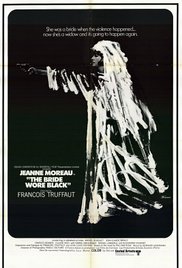
Movie Review: LA MARIEE ETAIT EN NOIR (THE BRIDE WORE BLACK) (France 1967) *****

Deadlines to Submit your Screenplay, Novel, Story, or Poem to the festival:http://www.wildsound.ca

the_bridge_wore_black.jpgLA MARIEE ETAIT EN NOIR (THE BRIDE WORE BLACK) (France 1967) *****
Directed by Francois Truffaut

Starring: Jeanne Moreau, Jean-Claude Brialy, Michel Bouquet

Review by Gilbert Seah

My personal favourite Truffaut movie and French film of all time sees sultry siren Jeanne Moreau do away with the 5 killers who accidentally shot her bridegroom on her wedding day. The Bride has 5 men to hunt, to lure and to kill. Julie Kohler (Moreau) methodically tracks them down one by one and does away with them without remorse. Truffaut gives her femme fatale more human feelings than necessary as she almost falls in love with one of them.

Five of France’s most popular actors of the time (Claude Rich, Charles Denner, Michel Bouquet, Daniel Bouloanger and Michel Lonsdale) play 4 of Julie’s victims, with Jean-Claude Brialy the common friend to two of them. It is a great delight to watch all of them on the screen again.
This film is Truffaut’s tribute to Hitchcock after he interviewed and the Master of Suspense wrote the book Hitchcock. Using Hitchcock’s frequent composer Bernard Herrmann, the film has the complete Hitchcock feel.

Truffaut includes the element of guilt, a key element in a Hitchcock film in the scene where Julie confesses her crimes to a priest in the confessional box. in the scene, she claims that she is dead after her groom, David was shot.

The most emotional scene is the one in which Julie realizes that she has fallen in love with one of her groom’s killer, Fergus (Denner). It is something she had not expected but she cooly brushes it away determined to complete her lifeline quest.

Truffaut has been described as the kindest of film directors and this film illustrates why. He does not let the innocent characters die. The cleaner who steals and drink from the bottle that holds the poisoned liquor is emptied by Julie. When the school teacher (Alexandra Stewart) Julie impersonates to do away with a victim is arrested, she calls the police to prove her innocence. The film’s best and most touching scene has the teacher enter the school gate after release only to be swarmed by all the children of the school offering their hugs and love.
The only thing missing in the story is how Julie managed to find the identity and whereabouts of the killers. Perhaps this is bet left out as it might damage the credibility of the story if too much is explained.

THE BRIDE WORE BLACK is unfortunately Truffaut’s least favourite film as he had a big argument with his cinematographer on the look of this movie, but to this critic the film is still perfection! I have not hailed more than 5 films in my lifetime as masterpieces but THE BRIDE WORE BLACK is surely a Masterpiece!

The film will open the Truffaut/Hitchcock tribute at the Bell Lightbox in July 2016.

Also, Free logline submissions. The Writing Festival network averages over 95,000 unique visitors a day.
Great way to get your story out: http://www.wildsound.ca/logline.html

Deadlines to Submit your Screenplay, Novel, Story, or Poem to the festival:http://www.wildsound.ca

Watch recent Writing Festival Videos. At least 15 winning videos a month:http://www.wildsoundfestival.com

A GENTLEMAN’S GUIDE TO LOVE AND MURDER (Play Review)

a_gentlemans_guide_to_love_and_murder.jpgby Gilbert Seah

A GENTLEMAN’S GUIDE TO LOVE AND MURDER is a musical comedy, with the book and lyrics by Robert L. Freedman and the music and lyrics by Steven Lutvak. The musical is enjoying both rave reviews and a successful run at Toronto’s Princess of Wales Theatre riding on its grand win of four Tony Awards in June 2014 including Best Musical.

The musical is based on the 1907 novel Israel Rank: The Autobiography of a Criminal by Roy Horniman, with some changes like the names its characters. It should be noted that the book was also made into an Ealing Studios film – the famous KIND HEARTS AND CORONETS starring Alec Guinness. While the film stood out as a black comedy, the musical version opts for outlandish comedy.

The story concerns a penniless young man named Monty Navarro (Kevin Massey) who discovers that he is 9th in line to become the Earl of Highhurst. The aristocrat D’Ysquiths (the name selected because its first syllable is ‘die’; another name was used in the film) disinherited Monty’s mother and denies his existence. Monty decides to knock off the eight so that he can become Earl. In the meantime, his girlfriend Sibella (Kristen Beth Williams) ditches him while he fall for Phoebe (Adrienne Eller).

The story has potential for bedroom farce, Sondheim type musical numbers and murder, a favourite theatre staple.

Kevin Massey has an excellent voice which is likely the reason he was chosen to play the main lead. He also makes a good straight man for all the comedy going around him. But it is John Rapson who steals the show, playing all the eight D’Ysquith family members as Alec Guinness did in the film. Both actors Massey and Rapson got a standing ovation during the performance I attended. But my prize for performance goes to Mary VanArsdel, playing Miss Shingle who shines in both comedy and song.

The best segment of the musical is its take on British bedroom farce with Monty hiding his two women in different rooms while being proposed by one . (See photo inset.) The shutting and opening of doors are perfect in timing with antics well choreographed while the song “I’ve Decide to Marry You” is performed.

The musical’s outlandishness is highlighted by Linda Cho’s costume design which won her a Tony. Her overdone pink costumes for Sibella and for the other females in the story are unforgettable. The scenic (Alexander Dodge) and projection design (Aaron Rhyne) also deserve mention. The moving trees in the skating sequence and the chasing bees demand mention.

Despite warnings in song at the start (“A Warning to the Audience) and middle (“Final Warning”), A GENTLEMAN’S GUIDE TO LOVE AND MURDER is a harmless entertaining evening at the theatre that should delight everyone without offending any. The only times the musical almost offends are the segments with Lady Hyacinth abroad in Africa, India and Egypt. But those are forgivable as they are done for the purpose of harmless enjoyment.

Movie Review: KHOYA (Canada/India 2016) ***

Deadlines to Submit your Screenplay, Novel, Story, or Poem to the festival:http://www.wildsound.ca

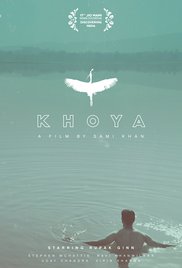
khoya.jpgKHOYA (Canada/India 2016) ***
Directed by Sami Khan

Stars: Rupak Ginn, Ravi Khanvilkar, Stephen McHattie

Read Interview with the Director

Review by Gilbert Seah

Sami Khan’s first feature is an occasionally impressive piece about a man in search of his identity.

The man is Roger Moreau (Rupak Ginn), a Canadian from a small town in Ontario, who when the film opens is on his way to the airport (as seen in the Airport Road sign on Toronto’s 401 Highway). This is how intimate Khan’s film gets, as evident in other scenes as well. Roger is travelling to India in search for his adoptive parents.

The event is initiated when Roger’s adopted mother unexpectedly dies. Roger loses his last tie to his Canadian upbringing and identity. But his arrival in India is not what he expected. The crowded and hot streets of Mumbai compared to what he is used in Canada are more than he bargained for.

Director Khan’s film works when he shows what Mumbai and Madha Pradesh in the rural heartland of India are like. Just as Roger is struck down with culture shock, the audiences is however, able to enjoy the vast differences in culture from the comfort of their theatre seats. India is poor, hot, dirty and poor. But the natural beauty is unmistakably stunning. Khan’s segment where Roger soaks his feet in the huge river (see photo inset) is extremely striking.

The film contains a few scenes set in Canada. One is in the garage where Roger works where Canadian actor Stephen McHattie has a cameo. Another is his meeting with a Chinese lady with whom Roger confides his secrets. These segments are uncomfortably told in flashbacks at awkward points in the film.

Roger Moreau is played by American actor Rupak Ginn who is in almost very frame of the film. Ginn, who has appeared in Hollywood films like FRIENDS WITH BENEFITS and Mira Nair’s THE NAMESAKE is barely able to carry the film on his own. Fortunately, Khan uses India as the main actor in KHOYA.

Khan’s film is actually two films in one. The first is the story of India and her poetic beauty. The other is the mystery of Roger’s family. Though given the run around at the start, Roger’s persistence eventually pays off. He learns the truth and he unexpectedly finds something more than he expected (what this is will not be revealed in the review).

KOHOYA is more a lyrical film than a mystery of a family identity. Though not perfect in it execution, KHOYA is still a worthy tribute of a young director who deserves more works in the future. Khan is currently working on a documentary on four Cuban baseball players.

Also, Free logline submissions. The Writing Festival network averages over 95,000 unique visitors a day.
Great way to get your story out: http://www.wildsound.ca/logline.html

Deadlines to Submit your Screenplay, Novel, Story, or Poem to the festival:http://www.wildsound.ca

Watch recent Writing Festival Videos. At least 15 winning videos a month:http://www.wildsoundfestival.com

The Italian Contemporary Film Festival 2016 – NOW PLAYING

ICFF 2016 (The Italian Contemporary Film Festival)

The Italian Contemporary Film Festival has become among the most important Italian film festivals in the world.  The ICFF takes place every June during Ontario’s “Italian Heritage Month.” and includes 9 Days and Nights of cutting edge Italian film & culture.

The ICFF named one of the Top 10 Film Festivals in North America Industry Events with internationally acclaimed filmmakers and producers North American premieres and Italian‐Canadian independent films, Q&A sessions with filmmakers, actors and academics and

Glamorous Opening and Closing Galas at Roy Thomson Hall and The Ritz-Carlton Hotel.

Your film reviewer will be present at both opening and closing night parties.  He is also on the jury to pick the BEST FILM of the festival.  This is his 3rd year on the jury.

The festival is presented in a variety of Canadian cities including: Toronto, Vaughan, Niagara, Hamilton, Montreal and Quebec City.

Nine days to celebrate the brilliance of Italian contemporary cinema and filmmakers from all over the world.  Nine days to explore Italian contemporary cinema and discover the cultural richness of Italian heritage.  Nine days to experience the influence of Italian film, culture, fashion and design.

Using the power of the moving image to both entertain and educate, ICFF defies conventional perspectives on complex and challenging issues facing both the Italian and the global communities. All films are in Italian or other foreign languages subtitled in English (and French in the Province of Quebec)

CAPSULE REVIEWS OF SELECTED FILMS:

ALASKA (Italy/France 2014) ***1/2

Directed by Claudio Cupellini

ALASKA begins in the halls of a grand hotel in Paris, where Fausto and Nadine (Elio Germano and Àstrid Bergès-Frisbey) meet for the first time. Fausto , an Italian is a waiter while Nadine is a beautiful young French girl, there to appear in modelling auditions, against her will. When the two meet they fall in love but their love is strung with obstacles.  Basically a romantic comedy/drama with more drama, Fautso is jailed at the start.  When he is let out, two get back together in what could also be called a toxic relationship.  They are also both crazy and very lonely people deep inside.  This is not the first romantic film about a dysfunctional couple.  The recent Hollywood film MR. RIGHT dealt with a similar crazy couple, a girl who falls for a hit-man.  MR. RIGHT was dead awful.  Fortunately ALASKA gets things totally right.  Must be the romantic blood in the Italians.  Director Cupellini creates two characters that audiences care for, crazy though they may be.  It is hard not to root for underdogs whose only dream in life is to find love and to do better. Fausto finally achieves his dream and attains money with the opening of the nightclub called ALASKA.

Trailer: https://www.youtube.com/watch?v=a7bA-KltnBI 

THE COMPLEXITY OF HAPPINESS (La felicità è un sistema complesso) (Italy 2015)  **

Directed by Gianni Zanasi

This is a film about the strangest profession in the business world.  Enrico Giusti (Valerio Mastrandrea) works the task of befriending incompetent individuals who happen to own companies and then convincing them to sell out thus preventing the failure of the businesses and the loss of thousands of jobs.  But his latest venture involving Filippo and Camilla, two siblings aged 18 and 13, who become orphans when their entrepreneur parents lose their lives turns out too much.  Things are made worse with the arrival of his brother’s foreign girlfriend.  The film is too predictable in where it is heading.  Director Zanasi cannot decide whether to go of comedy or drama with the result of a quite boring film with incidents (like Enrico jumping into a pool) making little sense.  Making a film is obviously a complex business for Zanasi.

Trailer: https://vimeo.com/146098448

DON’T BE BAD (Non essere cattivo) (Italy 2015) *****

Directed by Claudio Caligari

The film is set in 1995 in the seaside town of Ostia, where Pasolini gave life to his characters in his movies.  The protagonists in this story are Cesare (Luca Marinelli) and Vittorio (Silvia D’Amico) two small time drug pushers trying to earn some some money for various purposes.  This is the drug scene, prior to crystal meth and GHB, accurately portrayed in the film with the use of music (and songs like Be My Lover) and drugs like coke and ecstasy (so true when the characters scrutinize the different stamps on the pills).  Cesare is completely crazy.  Vittorio falls in love with a girl who convinces him to go straight.  So he gets a job brick laying (what else do Italians do?) and tries to get Cesare to do the same.  Trouble is that it is impossible to break bad habits.  Through all this, director Caligari gets his audience to root for his characters.  Crazy as Cesare is, he has a niece dying of aids that he needs money to pay for her medication.   This film is deeply emotional in the way the characters try their best to escape a drug crazed lifestyle.  Marinelli who is also in MY NAME IS JEEP plays another crazed character, (also in the Oscar Italian winner Best Foreign Film THE GREAT BEAUTY) and is a star to watch!  My pick as the Best Film of the Festival.

Trailer: https://www.youtube.com/watch?v=K1p-ulARNHc

MIA MADRE (MY MOTHER) (Italy/France 2015) ****
Directed by Nanni Moretti

Nanni Moretti is a well-known Italian film director who has won prizes before at Cannes.  Known for his apparently simple looking but nevertheless complex films, Moretti has seldom failed to impress.  His latest film , MY MOTHER inspired  by the recent death of his mother is one of his best works.  He plays Giovanni, the brother of the protagonist, a female film director Margherita (Margherita Buy) whose socially relevant film is as disturbing to her as her personal problems which include her separation, daughter and dying mother in hospital.  Margherita’s problems likely express the director’s own difficulties in life.  If all these sound too serious, humour is provided by the entrance of Margherita’s new actor John Turturro playing a loud obnoxious character whose name, Barry Huggins is as absurd as his behaviour.  But the best parts of the film are the segments where Moretti captures life’s finest moments despite the distractions.  “Why are you being so capricious?” Margherita asks her mother at one point in the hospital.  “Because it is fun,” is the reply.  Margherita Buy, excellent in the lead role delivers a Best Actress performance.   She does not have to resort to shouting or overacting to make a point – her face is good enough to reflect all the despair and worry of her character.  A beautiful film that succeeds in manny levels!  While other films teach one how to enjoy life, MIA MADRE teaches one on life itself.

Trailer: https://www.youtube.com/watch?v=aOa_A48vPLs

QUO VADO? (ITALY 2016) ****

Directed by Gennaro Nunziante

QUO VADO?  begins with the hero of the story, Checco (Checco Valdone) as a child asked what he wants to be when he grows up.  While his classmates mention respectable positions such as a surgeon or scientist, Checco picks ‘permanent position’.  A permanent position or posto fisso is a public servant job, like one in Canada in which pay, benefits, pension and lifetime employment are practically guaranteed.  Checco eventually earns one and is pleased as hell.  But things are too good to be true.  A reformist government changes this and Checco is offered a cheque as severance to be laid off.  As a result of refusing, he is sent off to far off postings so that he will eventually give in.  One of these is in Norway where he falls in love with Valeria.   QUO VADO? works so well because it makes fun of Italian mores while finally respecting them for all it is worth at the end.  Italy is looked upon as a rude and uncultured country compared to Norway.  But Checco like all Italians love their shouting, queues, flight delays and other inconveniences.  Director Nunnziante blends all these into a zany comedy aided by a superb comedic performance by Checco Zaldone.  Zaldone is sort of a clown, but a more level headed sexier Roberto Beligni who gets his girl.   Though QUO VADO? is politically incorrect at times, especially in the scenes with African natives, it is still quite funny.

Trailer: https://www.youtube.com/watch?v=PvzgHb2rrrA (in Italian)

THEY CALL ME JEEG (LO CHIAMAVANO JEEG ROBOT) (ITALY 2015) ***1/2
Directed by Gabriele Mainetti

The film plays like a more realistic Italian version o the action super anti-hero movie DEADPOOL.  The pornography-watching hero is a friendless thug who after falling into the toxic Tiber River develops self-healing and super strength powers.  The only person who believes in him is a young crazy lady who believes his is the video game hero Jeeg.  That video game is very popular in Italy so non-Italians might miss the film’s inside jokes.  The girl wants to be the video game’s princess and Jeeg promises to buy her the princess dress.  All this is made crazier with a not the crazy character by the name of Gypsy played by Luca Marinelli who also appears in DON’T BE BAD, ICFF’s best film of the series.  If all these antics sound crazy, director Mainetti actually pulls all this off in a rather heart-felt entertaining little action drama.

Trailer: https://vimeo.com/153906155

USTICA (THE MISSING PAPER) (Italy 2015) ***

Directed by Renzo Martinelli

“People that don’t mind their own business are looking for trouble.” That is the warning given to private helicopter pilot Valja (Lubna Azabal) when she searches for the truth of the downing of a commercial plane.   On June 27th 1980 a DC9 belonging to the private Italian airline ITAVIA disappears from the radar screens, crashing between the islands of Ponza and Ustica.  81 persons died.  The hypotheses on the disappearance of the DC9 are three: structural failure, a bomb in the rear toilet of the plane, or an air-to-air missile which struck the civil aircraft by mistake during a battle between unidentified military fighters.  Roberta Bellodi, a Sicilian journalist who lost her daughter on that night and Corrado di Acquaformosa, a Deputy in the Italian Parliament, member of the Commission set up to throw light on the crash of DC 9 entangling themselves in a labyrinth of cover-ups, disappearance of proofs and key witnesses. The film has the message that one has to go about doing the right thing, no matter the consequences.  The film uses over-sentiment to get the message through.  Bring Kleenex!  The film is also very, very funny, the best part being the confrontation between the Deputy and his mentor.  Unfortunately, the humour is unintentionally funny.

Trailer: https://www.youtube.com/watch?v=d7J3P_zQezo

by Gilbert Seah

Movie Review: CHEVALIER (Greece 2015) ***

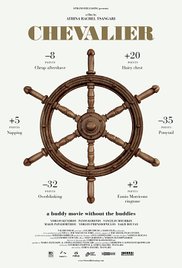
chevalier.jpgCHEVALIER (Greece 2015) ***
Directed by Athina Rachel Tsangari

Starring: Efthymis Filippou, Athina Rachel Tsangari

Review by Gilbert Seah

Greek director Athina Rachel Tsangari broke into the art-house cinema circuit in 2010 with her feminine study in ATTENBERG. Like ATTENBERG, CHEVALIER is a deadpan comedy of manners, so deadpan that much of the humour may be missed. However, the females in her previous films are now replaced by six males – all stuck on a yacht in the Aegean Sea, playing an absurd game in which the winner gets to wear the CHEVALIER ring as a reward. What the game requires is each member to grade every other on personal mental and physical challenges, that are determined by the grader himself. So, hilariously, each go about with a notebook taking notes on every other. The winner is the ‘Best in General’.

CHEVALIER has a good premise judging from the popularity of reality shows like BIG BROTHER these days. The difference is that CHEVALIER is a fictionalized reality show but one in which the director allows her assemble cast to react with each other. The fact that all the participants are constantly being scrutinized on what they don’t know makes it all the more hilarious. The difference between this and Big Brother is that no one gets voted out, they cannot form alliances and the prize is one of ego.

Tsangari’s last two features were about women. Her decision to make a film on men instead of women as well as to include a gay couple makes her film even more relevant. The chevalier game is proposed by the men out of boredom. One immediately wonders what would come to mind if the participants were female. Men have been known always to be competitive and the film shows males in their extreme. When watching the film, it should be borne in mind that the film is a look at men from a feminine perspective.

The Aegean sea and the rocky landscape of the surrounding islands make stunning cinematography. The modern yacht with all the amenities is also gorgeous to be on.

Tsangari’s ATTENBERG was really slow, artsy and about women. I could not get into that feature and was not looking forward to CHEVALIER. CHEVALIER took me my surprise. Absurd, hilarious, relevant and absorbing, Tsangari has proven herself apt at films dealing with the nature of human beings.

A contest among males would inevitably lead to a segment with a contest of cock size. This truth occurs in one funny segment ins which a contender argues that his non-erection that morning could be a result of a bad dream in which his accuser was murdered, and that accuser could have vouched for his big dick in another instance when he had screwed someone in front of him.

All the characters are equally interesting. It takes a while for the audience to be able to identify each character as being different from another. As far as who will win the contest or which character is the most interesting, viewers will likely not pick the same person. The film does not give any real reason for the six assembling in the yacht except for a few like one older bullying brother, Yannis (Yorgos Pirpassopoulos) allowing his younger brother Dimitris (Makis Papadimitriou) out of feeling sorry for him.

Like the other Greek film auteur Yorgos Lanthimos’ THE LOBSTER, Tsangari offers audiences another society within our living one. Perhaps this is a reflection of what is desired as a result of what’s happening with the Greeks current economic crisis. CHEVALIER won Best Film at the London Film Festival.