Film Review: PRIVATE LIFE (USA 2018) ***

An author (Hahn) is undergoing multiple fertility therapies to get pregnant, putting her relationship with her husband (Giamatti) on edge.

Director:

Tamara Jenkins

PRIVATE LIFE is a Netflix original movie which normally means that the main studios will not touch the film.  The likely reason is the ‘difficult’ theme of the film, about the trauma a couple goes through in order to have a child of their own.  So desperate they are, that they try two options simultaneously – adoption and getting an egg donor.

Written and directed by Tamara Jenkins, her film begins as a comedy and a very sly and deadpan one at that.  As the film progresses and fertilization attempts fail, drama sets in and the comedy slowly gives way to a more serious film.

Richard (Paul Giamatti) and Rachel (Kathryn Hahn) are a childless middle-aged couple desperately trying to have a child.  After multiple failed attempts at artificial insemination they attempt in vitro fertilization where they learn that Richard has a blockage that is not letting him produce sperm forcing him to choose a quick surgery and go $10,000 dollars in debt to his brother Charlie (John Carroll Lynch) and Charlie’s wife Cynthia (Molly Shannon).  At the same time they are also attempting to adopt a child after having previously being matched with a pregnant teenager from Little Rock who was looking to give up her child and then stopped contacting them.

The drama continues as the plot thickens.  While still  maintaining a it of humour, the funny bits slowly fade away.  The IVF fails.  Their doctor, Dr. Dordick (Denis O’Hare who can be quite hilarious as well)  floats the idea of using a donor egg to inseminate Rachel which would raise their chances of success from 4 to 65 percent.  Rachel is initially vehemently against the idea, but slowly begins to contemplate it with Richard’s encouragement.

Into the picture arrives Cynthia’s 25 year old daughter, Sadie (beautifully played by Kayli Carter), who meanwhile decides to leave her college writing program to finish in absentia.  Sadie goes to live with Richard and Rachel, with whom she is already very close.  Rachel, who struggled with the idea of an unknown egg donor, decides that she wants to ask Sadie for her eggs. To their surprise Sadie quickly agrees, both because she loves Richard and Rachel and because she thinks the egg donation will bring meaning to her life.

Giamatti and Hahn are two actors that are comfortable with both comedy and drama.  Their transition to drama is therefore credible.  Comedienne Molly Shannon ditches her funny personality playing a dislikable opinionated mother,  Teen actress Kayli Carter who seems to be doing Saoirse Ronan is not half bad either.

Jenkins’ film at the end, the film clocking a full 120 minutes, is quite different from what is expected at the start.  In the same way, her characters change as well, i.e. there is quite a bit of character development.  Many of the characters develop for the better, which makes for one of the film’s greater pleasures.

Jenkins loves to poke fun at males.  Richard has one testicle.  Richard has a sperm blockage.  Still PRIVATE LIFE is an intelligent though more female oriented drama.

Trailer: https://www.youtube.com/watch?v=yLuaXTPZdt8

Full Review: CAPERNAUM (Lebanon 2018) Top 10 *****

Capernaum Poster
Trailer

While serving a five-year sentence for a violent crime, a 12-year-old boy sues his parents for neglect.

Director:

Nadine Labaki

Writers:

Nadine Labaki (screenplay), Jihad Hojeily (screenwriter) | 3 more credits »

CAPERNAUM is the place around the Sea of Galilee where Jesus of Nazareth preached during Biblical times.  According to the film title appearing on screen, it also means chaos – a word that accurately describes director Nadine Labaki’s gut-wrenching story of poverty as seen from the eyes of a young boy in Lebanon.  CAPERNAUM is guerrilla filmmaking at its best winning at Cannes 2018, both the Jury Prize and Prize of the Ecumenical Jury.  Filmed in Arabic.

The film opens with a young handcuffed boy brought to court where he is being tried for murder.  He has stabbed a man several times.  His parents are there and the boy wishes to sue his parents for giving birth to him.  The camera shifts to the face of the boy’s attorney, who is splayed by director Labaki herself.  He claims his parents have no right to bring children into the world when they are unable to feed or care for them.  The film then rolls back in flashbacks to reveal the incidents leading to this awkward yet sad state of affairs.

Zain (Zain al Rafeea) is 12 years, or thereabouts, given that he has no papers or birth certificate.  He is mounting his case from jail, where he is serving five years. The story then flashes back – to tell why he ran away from home and ended up caring for a toddler (Boluwatife Treasure Bankole) after meeting an Ethiopian illegal (Yordanos Shiferaw) who, like Zain, is without documents.  It turns out that Zain is in jail as he stabbed a man who married his 14-year old daughter, impregnating her and then causing her death.  Zain had loved his sister and tried his best at preventing her from being sold by her parents.  The scene with Zain and his sister sleeping arm in arm is the perfect image the audience needs to see for director Labaki to make her point.

The performances from the non-actors, who according to the press notes live lives similar to that depicted on screen are terrific.  Zain al Rafael as Zain the boy is nothing short of terrific.  The film has two best scenes, one where he discards his mother’s affections when visited in juvenile detention and the other in court where the mother tells the judge off, that no one should be judging her as they do not know how desperate her situation is.

The situation in Lebanon is no better either.  Labaki’s camera reveals the overcrowded prison conditions, where cells are packed with people, women and children.  The streets are filthy and goods are bartered in the makeshift marketplace.  Taps in Zain’s abode flush rust coloured water.  Lebanon would likely be the last place on your tourist list after seeing this film.

CAPERNAUM is a 2019 Golden Globe nominee and Lebanon’s 2019 Oscar submission in the best foreign language film category.  It is also on my Top 10 list for Best films in 2019, as it opens in January 2019.  CAPERNAUM is a film that demands to be seen to appreciate the poverty in the world.

Trailer: https://www.youtube.com/watch?v=UrgWHfGEsbE

Film Review: THE WORLD BEFORE YOUR FEET (USA 2018) ***

The World Before Your Feet Poster
Trailer

For over six years, and for reasons he can’t explain, Matt Green, 37, has been walking every block of every street in New York City – a journey of more than 8,000 miles. THE WORLD BEFORE … See full summary »

Director:

Jeremy Workman

Star:

Matt Green

A very simple film likely with no budget about a man who walks around all the time.  Apparently there is more that goes under ones feet i.e. more than what meets the eye.

There are 8,000 miles of sidewalks, paths and roads in the 5 boroughs in New York City, and for the past six years Matt Green has been walking them all–every street, every block, every pedestrian overpass, park lane and hiking trail.  A journey that stretches from the heart of Harlem to the marshes of Staten Island, Matt’s walk is a pursuit of anything that catches his eye, be it a national landmark or a humble manhole cover.  Director Jeremy Workman in the doc executively produced by actor Jesse Eisenberg, accompanies Matt as he walks towards completing his goal through neighbourhoods rarely seen onscreen, chronicling the unusual daily routine of an exceptionally curious young man.

This is a very intriguing documentary that could be used as a textbook example of documentary filmmaking.  Find an interesting subject, not necessarily famous or one that would change the world – just one that might let audiences look at life differently.  Explain the background.  Describe his task and the reason behind his choice of this task.  Interview people that the subject knows or has encountered.  Keep the film lively with music, keen observations  or cinematography while putting a few lines of wisdom on the voiceover.

Matt’s background is civil engineering.  Matt is fed up working a desk job in a cubicle and decides to walk the world or rather NYC.  He had already walked across the U.S. from east to west at this time.  Matt sustains his endeavour through couch-surfing, cat-sitting and a $15 per day budget. He’s not sure exactly why he’s doing it, only knowing that there’s no other way he’d rather spend his days.

The reason?  Matt confesses he likes being in a place while being able to move on at the same time.  Walking allows him to enjoy pleasures that one will miss if travelling in a car – like being in a field of flowers.  Director Workman interviews strangers Matt meets on the way.  These strangers, including kids pose questions like: “Why walk?”, “What is the purpose?”  “How far have you walked?”  “How far do you have to go?”  “How long have you being doing this walk?’

Among the more interesting parts of the walk include the part on lower Manhattan where Mark encounters a graveyard in the midst of skyscrapers or curved narrower streets.  Also intriguing are the numerous 9/11 memorials he encounters during the walk near the ex-Twin Towers neighbourhood.

Director Workman has surprises up his sleeve, around every corner walked byMatt.  He reveals Matt to be an intriguing person.  Matt is smart- after all he is a qualified engineer.  Over time Matt has amasses an encyclopedia of surprising New York trivia and underground history, informed by his own research and conversations with the amused but supportive New Yorkers he encounters along the way.   He has a blog with visitors daily (though not that many) on his site.  Besides the sites, monuments and simple streets visible on screen that Matt has visited, it is also the people he crosses that makes the journey.  

The one lesson that can be taken from this doc are the surprises life offers daily in the ordinary.  One can find life’s beauty in ones own city as well as travelling thousands of miles away.  A simple tale simply but wonderfully told.

Trailer: https://www.youtube.com/watch?v=j8O-u8SiOwc

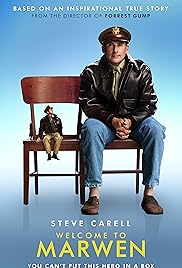
Film Review: WELCOME TO MARWEN (USA 2018) ***

Welcome to Marwen Poster
Trailer

A victim of a brutal attack finds a unique and beautiful therapeutic outlet to help him through his recovery process.

Director:

Robert Zemeckis

Writers:

Robert Zemeckis (screenplay by), Caroline Thompson (screenplay by)

WELCOME TO MARWEN is based on the 2010 widely acclaimed documentary, Jeff Malmberg’s  MARWENCOL.  The doc follows the crucial event of April 8, 2000, when Mark Hogancamp was attacked outside of a bar by five men who beat him nearly to death after he told them he was a cross-dresser.  After nine days in a coma and 40 days in the hospital, Hogancamp was discharged with brain damage that left him little memory of his previous life.  Unable to afford therapy, he created his own by building a 1/6-scale World War II–era Belgian town in his yard and populating it with dolls representing himself, his friends, and even his attackers.  He calls that town Marwencol, blending the names Mark, Wendy, and Colleen.

Robert Zemeckis’ film is however treats the material quite differently.  WELCOME TO MARWEN is a fantasy drama.  The film begins with a doll figure looking like Steve Carell flying an aircraft during WWII, shot down from the skies in Belgium where he is saved from Germans by a troop of beautiful girls.  This fantasy world of dolls eventually dissolves into the

true story of Mark Hogancamp (Carell), a man struggling with PTSD.  After having his memory erased from being physically assaulted, by five men beat him up and left him for dead, all because he told them that he liked wearing ladies’ shoes.   Following the attack, Mark was left with little to no memory of his previous life due to brain damage inflicted by his attackers. In a desperate attempt to regain his memory, Mark constructs a miniature World War II village, called Marwen in his yard to help in his recovery.  Unfortunately, Mark’s demons come back to haunt him when he’s asked to testify against the five men responsible for ruining his life.  Mark’s PTSD is shown in the ilm to be caused by an overdose in taking his medication raster that the trauma itself.

One might argue that director Zemeckis is trivializing Mark’s personal tragedy.  There are reasons many would think this way.  In the script by Caroline Thompson, Mark falls in love with his new neighbour, Nicol (Leslie Mann in a dead serious role).  It is this love for her that helps him recover and for him the strength to attend court and to pursue his doll show.   The chance encounter with photographer, David Naugle, which afforded Hogancamp the opportunity to show his works is totally omitted in the movie.  Nothing is shown of the hard work that went into the creation of the village of Marwen.  When Nicol does not return Mark’s love, there is another, Roberta (Merritt Wever), who works in the toy store, in the waiting line.

The fantasy animation has the look of one of Zemeckis’ previous films POLAR EXPRESS.  The sequences, though well-done is not shown convincingly to serve any purpose but to fuel Mark’s obsessions which in the film, is not shown to be a good thing.  The dolls, a few topless are disturbing, especially when used as play things for a man who is not all there.  

It is assumed that Mark finally gets it all together when he attends his court hearing.  But by showing the culprits looking sorry of themselves, Zemeckis seems to have brought down what he has been building up throughout the film, that the guilty should pay for their bad deeds.

What ends up is a well-intentioned film that has lost its way from its storytelling.  What could be a gut-wrenching real life recovery drama ends up as Hollywood feel-good fluff.

Trailer: https://www.youtube.com/watch?v=W6dy7xQ8NeE

Film Review: SECOND ACT (USA 2018) ***

Second Act Poster
Trailer

A big box store worker reinvents her life and her life-story and shows Madison Avenue what street smarts can do.

Director:

Peter Segal

Though advertised as a romantic comedy, SECOND ACT has the romantic element only as a subplot, which is a good thing as romantic comedy have been such a well-worn genre, audiences can hardly be surprised any more.  SECOND ACT, like the title implies, gives the romantic comedy a second angle and a successful one at that, in timing and delivery of the comedy.

Jennifer Lopez begins as a happily settled woman in a relationship.  As far as modern America goes, one assumes that she is not married to her man, as he stands up and leaves her before the first third of the film is up.  Trey (Milo Ventimiglia) wants children while she wants to pursue her career.  Her career is what the film is all about.  Maya Vargas (Lopez) is a bright woman who has no limits to her ambition and inventiveness.  (Would Lopez ever play a stupid person?)  She is unappreciated at work, and quits a Walmart like chain after they bring in someone (Dave Foley) to take the position she was supposed to be given, only because she does not have a degree.  So, her best friend’s son makes up a false curriculum vitae giving her gleaming degrees and work experience and lands her a job at a prestigious company under Treat Williams whee she is supposed to come up with a winning ‘green’ product.  She encounters lots of obstacles which makes for some of the film’s hilarity.

The film proves that a solid story is key to a good comedy.  The story also involves a sentimental element with another worker, Zoe (Vanessa Hudgens) that is played well and not too be too obvious as to choke the audience by tightening the heart strings.  In fact the story is absorbing enough to keep the audience so glued to the film that one hardly notices that the film does not contain that many funny parts.  That is a good thing as romantic comedies often try too hard.  

The film’s best segment has Maya dirty dancing at a party with her obnoxious villainous competitor in the company.  But the film also contains missed moments.  The romantic fallout of Maya and her partner is predictable and less interesting or funny.  It does not help that the actor playing him tries too hard and fails miserably.  He seems to be there only for his looks.  Treat Williams as Maya’s new boss, Anderson Clarke is a nice treat (pardon the pun!), Williams a good actor in the 70’s but hardly seen on the screen lately.

Lopez also performs the song “Limitless’ composed by Sia.

What do director Peter Segel and Jennifer Lopez have in common?  A series of flops.  Segel made THE NUTTY PROFESSOR II: THE KLUMPS and 50 FIRST DATES?  Lopez made thriller misses like THE CELL, THE BOY NEXT DOOR and at best the rom-com MAID IN MANHATTAN.  Surprisingly, together like two negatives making a positive, SECOND ACT is endearing while entertaining, not going into excesses, but dealing out quite often the right mix of funniness and drama.  SECOND ACT is one of Lopez and Segel’s better films.

Trailer: https://www.youtube.com/watch?v=YsVo5necW6Q

Full Review: SHOPLIFTERS (Japan 2018) ****

Shoplifters Poster
Trailer

A family of small-time crooks take in a child they find outside in the cold.

Director:

Hirokazu Koreeda

Writers:

Hirokazu Koreeda (original story), Hirokazu Koreeda (screenplay)

Hirokazu Kore-ed’s (his masterpiece AFTER LIFE and last year’s THE THIRD MURDER) latest film, SHOPLIFTERS won him the Palme D’Or at Cannes this year and is a real gem of a movie.  It tells the story of a poor family barely etching out a decent living in the outskirts of Tokyo.  The family is comprised of a couple, a grandmother and children.  The beauty of the movie is the twist in the story, that if revealed would definitely destroy the movie’s purpose.

The film’s Japanese title MANBIKI KAZOKU literally translates to ‘shoplifting family’.  Indeed so.  This is not Kore-da’s first family themed film, after making AFTER THE STORM,    LIKE FATHER LIKE SON and NOBODY KNOWS.   The patriarch, Osamu Shibata (Lily Franky) and his young boy, Shota (Jyo Kairi) complete a shoplifting spree at the residential grocery store before treating him to delicious croquettes.  They hear the cries of a hungry 4-year old who they bring back home (or kidnap) to feed her and later not return her to her family after discovering scars all over her body.  Shota and the young girl, Yuri bond.  Kore-eda’s film is kept interesting from the various characters of the family that also includes the grandmother (Kiki Kilin), Shota’s wife, Nobuyo (Ando Sakura) and her sister who works in a strip club.

The message that this make-shift dishonest family has more love than the typical Japanese family is obvious and drummed into the audience at the end of the film, in case the audience did not get it.  But thankfully, Kore’eda’s message is all not all black and white.  He also looks at the limitations of homeschooling as Shota is taught shoplifting and does not attend school.  “I thought kids who cannot study go to school,” Shota questions a detective at one point in the film.  The detective’s answer is: “Some things you cannot teach at home – meeting people.”

One of the film’s most interesting segments has the family go to the beach together.  How they interact with each other makes good observation.

The audience might wonder why did it took so long for Yuri’s mother to search and claim her back.  The audience overhears an argument between mother and father that they did not want her and that she was a nuisance.  

The film contains two twists that occur after the son, Shota is injured while jumping off a highway overpass in order to escape being caught from shoplifting.  This he does to save his little sister from getting caught.  What is revealed is both unexpected that teaches the audience both of that family and what an ideal family should be.  

Kore-ed’s actors need not act – his camera does.  From, close-ups, long hots, a character’s glance, the turn of a face, Kore-ed knows exactly how to capture a moment or create an effect.  The result is a superior movie from a clear Master of a medium who is not only a great story-teller (telling a story with a clear timely message) but a superb filmmaker.

Trailer: https://www.youtube.com/watch?v=Rwcb5ki1f-4

Full Review: IF BEALE STREET COULD TALK (USA 2018) **

If Beale Street Could Talk Poster
Trailer

Director:

Barry Jenkins

Writers:

Barry Jenkins (written for the screen by), James Baldwin (based on the book by)

Beale Street is a street in New Orleans, the audience is told at the start of the film, where the story of the film is set and the place where Louis Armstrong was born.

The follow-up to his first Oscar Winner for Best Picture MOONLIGHT, IF BEALE STREET COULD TALK sees one again the victimized black in a prejudiced light.  

Based on the book by James Baldwin, the film follows a 19-year old  woman fighting to free her falsely accused husband from prison before the birth of their child. If Beale Street could talk, the truth would have been revealed in the events that occurred and the husband set as a free man.

 Tish (KiKi Layne) is only 19 but she is been forced to grow up fast. She is left pregnant by Fonny (Stephan James), the man she loves. But Fonny is going to prison for a crime he did not commit, due to, as clearly emphasized in the film by a racist white redneck cop.  As the film begins, Tish must break the news to her family, and his. Tish’s mother, (Regina King), soon must decide how far she will go to secure her daughter’s future.  The announcement makes the film’s best segment, the target of attack being overzealous Christianity.  Fonny’s religious mother curses Tish’s baby hoping it to be born withered only to be slapped hard by her husband, in one of the film’s more energetic moments.  But nothing more is heard from Fonny’s mother, who is undoubtedly the story’s most interesting character – the one one loves to hate, and an easy target.

For a film with such a fiery plot, Jenkins’ film is extremely slow-paced, sometimes unintentionally funny with many segments plain dragging along.  One example is a 3-minute sequence where Tish’s mother tries on a wig, looking in the mirror for a while only to finally take it off when meeting the rape victims, the purpose of which is never made clear.  One could probably fault the source material for there is hardly any surprise in the story, quite unlike Jenkins’ last film, but Jenkins does not allow his actors or his camerawork to perform as freely as in MOONLIGHT.  The film also shifts uncomfortably among three subjects, Tish, her mother and Fonny.  Anoher sequence shows prison visit where Fonny is visited by Tish.  He has clearly been beaten up (red eyes, swollen lip and cut), but Tish never questions him about it or the incident raised.

Tish and her mother display characters, too perfect to be believable.  Toronto’s own James at least displays a more credible Fonny with human flaws, angry at society and also angry at times at his wife.

It is odd that Jenkin’s style in BEALE STREET and MOONLIGHT is totally different.  MOONLIGHT was original and looked improvised while BEALE STREET looks extremely and staged.

An interesting subplot involves the family’s young Jewish lawyer.  His sincerity in the case is questionable but not dealt with in depth.

Flawed, but IF BEALE STREET COULD TALK is still steps better than the awful THE HATE U GIVE!

Trailer: https://www.youtube.com/watch?v=RMlRasKEu84

Film Review: LIFECHANGER (Canada 2018) ***

Lifechanger Poster
Trailer

A murderous shapeshifter sets out on a blood-soaked mission to make things right with the woman he loves.

Director:

Justin McConnell

The only film opening on the 28th of December makes one wonder the reason.  For one LIFECHANGER is a Christmas movie, the setting being the yuletide season.  But it is also a killing slasher movie, but quite an original one that Santa has brought in.

The film opens with a woman later known to by Emily Roberts (Elitsa Blko) in bed with a deformed corpse next to her.  The woman is not in a panic or anything.  It seems that she knows what is happening, perhaps maybe even being the one who committed this crime.  Writer/director plays with the audience curiosity by having a voiceover in first person, explaining what is going on.  But the voiceover is a male voice.  The woman, as cool as a cucumber, saws the body in the bathtub, stuffs the pieces in trash bags, and drives the trash bags to a place to burn them.  She visits a diner before returning to her own home, opening the door.  She smokes some pot she evidently knew where was hidden before her boyfriend James (Adam Buller) enters saying that he has called the police after she had not come home for 3 days.

She is next seen setting fire to the house and leaving when a cop enters to see to the matter of the missing person.  It becomes apparent that she has killed the boyfriend now the cop, taking over the cop’s body, thoughts, memories and all.

Director McConnell dishes out little doses of the mystery and story at a time .  It is clear that the voice belongs to the original person.  It turns to from the voice that there is love involved.  The voice confesses falling in love with a woman called Julia (Lora Burke).  The shapeshifter (wonder why the film is not just called that instead of lifechanger) visits Julia at the same bar many occasions in the various personalities he has inhabited.  The shapeshifter in one final desperate move decides to tell Julia the truth, hoping that she will understand.  But this is clearly not unrequited love.  This is what drives the film towards its climax and plot twist (not to be revealed in this review).

LIFECHANGER contains quite the original idea and McConnell plays with it to his benefit.  McConnell does not offer any raison d’être of the shapeshifter’s being and how he got to inherit the sad state of affairs.

The cast is made up of a variety of different actors since the shapeshifter inhabits many characters.  The main one is Julia, played credibly by Burke.  All the actors do well, basically portraying two different people, one before and one after the killing with the same body.  This keeps the performances interesting.

McConnell keeps the ending relatively simple and ‘happy’ while being credible at the same time.  Thus the story is brought to an effective conclusion.  LIFECHANGER is a well thought-of low budget horror mystery set in Toronto that is worth  a look.

Trailer: https://www.youtube.com/watch?v=KCqeJLvSqSI

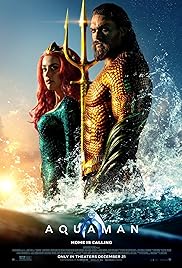
Film Review: AQUAMAN (USA 2018) ***

Aquaman Poster
Trailer

Arthur Curry learns that he is the heir to the underwater kingdom of Atlantis, and must step forward to lead his people and be a hero to the world.

Director:

James Wan

Writers:

David Leslie Johnson-McGoldrick (screenplay by), Will Beall (screenplay by) |5 more credits »

As much as I have complaints about the new Superhero DC comic AQUAMAN film adaptation, I have the highest regards for the film’s director James Wan.  Born In East Malaysia, (a neighbour of Singapore where I was born), Wan is the only Hollywood successful director from that region.  Wan was a skinny teen like myself, and his early photos reminds me of myself.  He has gained fame and fortune through his talent and horror films like he SAW franchise, INSIDIOUS and the CONJURING films.  He also brings on board Patrick Wilson from the latter two movies to play the villain in AQUAMAN.

Wan is known for his excesses.  Excesses abound in the 2 and a half hour action blockbuster aquarian fantasy AQUAMAN, played with aplomb by Jason Momoa.  There are plenty of images and CGI effects to gawk at.  The film looks amazing.  See it in IMAX and one will feel that one is in a gigantic fish tank as in one of those big aquariums found in big cities.  As far as super-action hero movies go, there is plenty to satisfy the fan base.   Superhero action fans will no doubt leave the theatre cheering, as in the case  of the promo screening I attended.   Surprise guest Patrick Wilson was present .  Who can ask for anything more? 

But one can.  The film lacks any good plot development, character intelligence and spicy dialogue.  When Aquaman is told that he has to save the underwater and land worlds by claiming the throne, all he can say is  ‘duh!’.  The script does not offer him any good one-liners either.  Lazy writing leaves a lot of unexplained and choppy facts in the story.  The effect of the evil that the villains do is brought down several notches by making them misunderstood beings.  One scene shows AQUAMAN as a boy at a city aquarium bullied by other kids, when a shark in the tank comes to the rescue.  Where did the boy, who is supposedly born and bred by the lighthouse keeper father find residence in the city and who where his foster parents?  That one scene appears from nowhere and conveniently disappears.  The key that only unlocks the trident with droplets of water is far-fetched bulls**t.   The climatic fight underwater by the edge of the cliffs makes no sense.  No one can fall off a cliff underwater.

The story begins in the year 1985, though Aquaman existed in comics way before then.   In Maine, lighthouse keeper Thomas Curry (Temuera Morrison ) rescues Atlanna (Nicole Kidman), the princess of the underwater nation of Atlantis, during a storm.  They eventually fall in love and have a son, Arthur, who is born with the power to communicate with marine lifeforms.  Atlanna is forced to abandon her family and return to Atlantis, entrusting to her loyal advisor Nuidis Vulko  (Willem Dafoe) the mission of training Arthur.  Under Vulko’s guidance, Arthur becomes a skilled warrior but is rejected by the Atlanteans for being a half-breed and ultimately leaves Atlantis behind.

There is a subplot that really looks out of place with an invasion in which Arthur confronts a group of pirates attempting to hijack a nuclear submarine.  Their leader, Jesse Kane, dies during the confrontation while his son, David (Yahya Abdul-Mateen II), vows revenge against Arthur.   David later targets Atlantis at the behest of Orm (Patrick Wilson), Arthur’s younger half-brother and Atlantis’ king who uses the attack as a pretext to declare war on the surface.  All thistles to Aquaman having to retrieve a trident (like the Sword in the Stone) and battle Orm to ave the world.  Yes, all action here films involve saving the world.  The inter-racial subplot looks too obvious a political correct move.  We have seen all this before time and again.

Still, as far as Warner Bros. DC super hero film adaptations go, (example the awful BATMAN v. SUPERMAN, SUICIDE SQUAD), AQUAMAN, as in WONDER WOMAN is one of the better films.

Trailer: https://www.youtube.com/watch?v=WDkg3h8PCVU

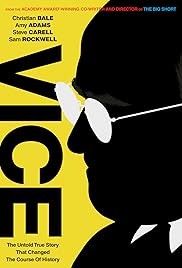
Film Review: VICE (USA 2018) ****

Vice Poster
Trailer

The story of Dick Cheney (Christian Bale), an unassuming bureaucratic Washington insider, who quietly wielded immense power as Vice President to George W. Bush, reshaping the country and the globe in ways that we still feel today.

Director:

Adam McKay

Writer:

Adam McKay

Expect the unexpected from Writer/director Adam McKay.  VICE could stand for the evil that men do or the word before President, the office which Dick Cheney attained.  He was Vice-President of the U.S., and arguably the most powerful one in history while having quite a few vices in his character like drinking uncontrollably.

McKay wraps up plenty of surprises in his anything-may-happen bio on Dick Cheney.  Credits come on around the hour 15 minute mark.  The film has not ended then but if one leaves, then the story could have ended there.  But it goes on with full credits given at the end.  There is narration too, from Jesse Plemons, who speaks to the camera.  One wonders what he has todo with the story.  To tell you more would spoil the surprise, but he has quite a bit to do with Cheney’s life.

McKay’s cast is fantastic.  Christian Bale gained 40 pounds froth Cheney role and the make-up to allow him to age in an unhealthy manner is convincing.  A Best Actor Nomination is definitely in the works here.  Steve Carrell plays the unliked Donald Rumsfeld with all the sinister relish he was muster.   It is surprising to see Tyler Perry inhabit the role of conscience bearing Colin Powell who finally resigned from the Administration.  Oscar Winner Sam Rockwell (from THREE BILLBOARDS OUTSIE EBBING MISSOURI) is almost unrecognizable as President George W. Bush, portraying him as a conniving no-good human being (which he is).

Everything unpleasant one has heard in the news on Dick Cheney is in the film – including the so-called hunting accident when he shot his hunting friend – from his university drunken days to the vice-presidency.  His university drop out is recorded and so is the impetus for his ambition in politics.  This is a very meticulously crafted scene, which the audience hopes actually took place.  His wife, Lynne (Amy Adams) gave him an ultimatum calling him a ‘fat drunk’ in the process.  Cheney succeeds in the change.  McKay also documents the couple’s loyalty to the Democratic Party, and for former President Richard Nixon.  For this unfamiliar or who dispel politics, there is still much to appreciate in McKay’s VICE,  For one McKay is a very resourceful and talented director and if not surprising the audience is updating the story to his skewed lenses.

The film includes a segment on the gay sexual orientation of Cheney’s younger daughter Mary (Alison Pill).  Cheney was shown willing to give up his career for her.  This segment gives me some respect for the man I never liked.  This is thus an important part in the life of the Cheney family which McKay is wise enough to include.

McKay is clearly against the evils executed by the Bush Administration primarily the War  on Iraq.  He inserts lots of images of innocent victims from Asia and Iraq.  He also mocks the Unitary Executive Power that the Administration had and used to approve any proposals.

VICE is the second film made on the Bush Administration after Oliver Stone’s W.  McKay has made a powerful bio on Dick Cheney but one not without his biting humour.

Trailer: https://www.youtube.com/watch?v=NCmeqkZUXBk