LA DANSEUSE (THE DANCER) (France/Belgium/Czech 2016)

Submit your Screenplay to the Festival TODAY

The Dancer Poster
Loïe Fuller was the toast of the Folies Bergères at the turn of the 20th century and an inspiration for Toulouse-Lautrec and the Lumière Brothers. The film revolves around her complicated relationship with protégé and rival Isadora Duncan.

Writers:

Thomas Bidegain (collaboration), Giovanni Lista (novel)| 6 more credits »


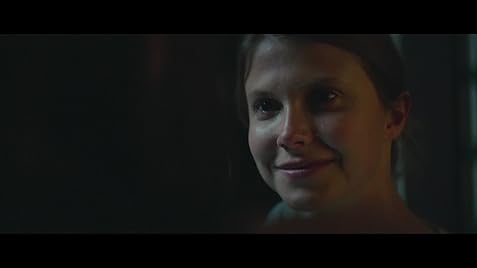
A 2016 French biographical musical drama film based on the true story, directed and written by Stéphanie Di Giusto and co-written by Thomas Bidegain and Sarah Thiebaud, based on the novel by Giovanni Lista, LA DANSEUSE opens with the film’s subject and protagonist carried away after what looks like an injury during a dance.  This scene is returned to at the film’s halfway mark after she collapses from her first performance.

Director Di Giusto then takes her audience back to the dancer’s early days before she began her dance career, which is assumed must be a famous one.  Loie Fuller (Soko) is revealed as a rebellious teen taken in by her stern mother after her alcoholic father dies.  Loie promises to be obedient and not cause trouble which translates in movie terms that she will be disobedient and cause trouble.  Besides posing nude and starring on stage, she finds her calling as a dancer, though what occurs on screen does not seem credible.  One assumes what occurs must be true as the film is based on a true story.  Di Giusto uses that as carte blanche to bring in whatever she likes and portray the incidents however she deems suitable.  The result is a rather rough film, with too many incidents inserted inappropriately leaving the narrative disjointed.

Isadora Duncan (Lily-Rose Depp) is Loie’s dance peer.  Her appearance might eclipse Loie’s story, but Di Guisto keeps that in check.  Still it is hard to like Loie’s character.  Di Giusto shows her as strong willed, stubborn to perform at risk of her personal health, self destructive  and one who never accepts authority.  Loie comes off as an unlikeable character no matter how dedicated she is to her art.  As for the choreography with flowing dresses, it is quite different from ballet or modern dance and is a style in itself, taking a while to get used to.

The film is oddly shot in French and quite a bit in English.  The mother is English while the father is French, which is assumed the reason.  LA DANSEUESE is a period piece set in France and the period atmosphere and costumes show it.  The film won the Cesar for Best costume Design (by Anais Romand).

The most famous of the cast is Gaspard Ulliel who always looks dashing in this case playing Loie’s romantic interest.

The film is an ok biography which is keen to reveal the (anti-feminist) prejudice of the times and travails the main subject went through.  Di Giusto makes no attempt to make any of her characters likeable from Loie, to Isadora Duncan and to lover Louis and her other lesbian lover, Gabrielle (Mélanie Thierry). The result is a difficult film to like.

LA DANSEUSE was screened in the Un Certain Regard section at the 2016 Cannes Film Festival.  It took a year before finally released here, and might be worth a look if one likes period drama with some dancing added in for good measure.  The film was nominated for several Cesar and Lumiere Awards, including nods for Best First Feature and acing (main and supporting) roles.

Trailer: https://www.youtube.com/watch?v=1hqdhfZ7UFA

Submit your Screenplay to the Festival TODAY

THE MAN WHO INVENTED CHRISTMAS (Ireland/Canada 2017)

Submit your Screenplay to the Festival TODAY

The Man Who Invented Christmas Poster
Trailer

The journey that led to Charles Dickens’ creation of “A Christmas Carol,” a timeless tale that would redefine the holiday.

Director:

Bharat Nalluri

Writers:

Susan Coyne (screenplay), Les Standiford (book)


The last Christmas Ireland and Canada collaborated on a film that had a setting in NYC was the film BROOKLYN that was an immense success, critically, commercially and financially.  THE MAN WHO INVENTED CHRISTMAS appears on paper as another perfect adaptation, that begins in NYC at Yuletide.  This is the story of how Charles Dickens came to write about A CHRISTMAS CAROL, the arguably most popular of all his novels  – yes the one where Ebenezer Scrooge turned over a new leaf after meeting the ghosts of Christmas, past present and future.

The film opens in 1943 in NYC, right after Dickens (played cheerfully by DOWNTON ABBEY’s Dan Stevens) achieved fame an success from his latest book “Oliver Twist”.  He is the toast of the town.  An appearance at a theatre shows him over celebrated amidst dancing fanfare and fireworks that shock him, literally to the ground.

The idea of making a film about the writing process of A CHRISTMAS CAROL instead of another remake make seems more logical given the uncountable number of film or TV films made already.  Unfortunately, THE MAN WHO INVENTED CHRISTMAS based on the reported well-researched book of the same name by Les Standiford  on the inspirations behind Charles Dickens’ beloved ‘A Christmas Carol,’ is a travesty.

For one, though the biopic reveals lesser-known details of the author’s life, these details are not so favourable, thus changing the beloved view the public has on the man – not a good idea at Christmas, the time of good cheer.  Dickens is portrayed as a man who loves fame, who is often out of touch with his family and book ideas.  He thinks he can come up with a hit at any time and the fact that he has had several flops after “Oliver Twist” never bothers him.  He does not have any financial sense.  But worse of all, director Nalluri makes the fatal mistake to reveal that Dickens steals ideas and names, and does not possess original ideas for his stories.

To make matters worse, Christmas is depicted here as dying commercially.  It is deemed to be an excuse for workers to take a day off.  Dickens is shown the awkwardness of a tall Christmas tree, and told that the Germans use it.

The film does look good with sufficiently  cheery Christmas period atmosphere with horse drawn carriages and some snow.  

The films highlights Oscar Winner Christopher Plummer in the role of Scrooge.  Plummer only briefly appears and does the customary performance that is nothing special.

THE MAN WHO INVENTED CHRISTMAS offers nothing more than the disgusting artificial cheer of the season.  Everyone is supposed to be in good spirits with all the problems of the world hidden away.  A predictable story, bland direction and unconvincing acting among other things result in this very bland and boring Christmas film.

There is only one word to describe THE MAN WHO INVENTED CHRISTMAS.  In the words of Ebenezer Scrooge: “Humbug!”

Trailer: https://www.youtube.com/watch?v=UxcnYR3mcPU

Submit your Screenplay to the Festival TODAY

THE BREADWINNER (USA 2017) ***1/2

Submit your Screenplay to the Festival TODAY

The Breadwinner Poster
Trailer

A headstrong young girl in Afghanistan disguises herself as a boy in order to provide for her family.

Director:

Nora Twomey


As cute as the animation of THE BREADWINNER is, the film’s charm lies more in the delicious tale set in a foreign county where surprises can occur around every corner.  Surprises can be good or bad, but the good ones are elating.

THE BREADWINNER is animated feature created from an innovative mix of 2-D animation with acrylic and digitally painted environments, as well as digital paper cut–out segments.  It is Nora Twomey’s first solo directorial debut after making two other animated features SONG OF THE SEA (2014) and THE STORY OF KELLS (2009).  The story is a current one centred on woman’s rights in a male dominated country.  Angelina Jolie, known for her humanitarian efforts executively produced this film.

Based on Deborah Ellis’ award-winning novel, the story centres on an 11-year-old Afghan girl Parvana, born into an ever-changing world of conflict and oppression in Kabul, who finds strength in the love of her family and the power of storytelling.  Kabul is Taliban controlled and Parvana sees her father suddenly whisked to prison for no reason.  Her family – mother, older sister and baby brother are unable to fend for themselves.  Parvana dresses up as a boy in order to go around town to buy food and to work as the family breadwinner.

It’s just the way it is.  That is the reason things are the way they are in Afghanistan.  Those are the words uttered to her when she is told that she is unable to visit her father in prison.

Still, if there is a will there is a way, especially if money involved.

“Don’t do anything that stupid.” “I will find him.  Nothing you can do will stop me.”  That is her determination to see her imprisoned father. Her spirit is enough to inspire as the film does occasionally. 

As in most animation, magic plays a big part in the film’s enchantment.  In THE BREADWINNER, the magic comes from the story she tells her little brother.  The story is so original and magical that it almost eclipses the main one at hand.  The story involves a village that had the village’s seeds for the next year stolen by the jaguars of the evil Elephant King.  The boy’s quest is to get the seeds back and thus save the worried villagers from starvation.  To overcome the elephant king, the boy has to find things, that shine and ensnare.  It is a good story which intercuts to the main one at the climax of Twomey’s film.  One wonders though as this is a strong female movie, the reason the hero in the story of the Elephant King was not a female in the first place.  The score by Jeff Danna and Mychael Danna features traditional musicians and young voices partly recorded in Kabul.

THE BREADWINNER is a story of oppression that stresses the message that one can accomplish wonders from pure determination.  It is also one that best be told animated as the story might have turned out too harsh as a full live action film.  The animation is beautifully done as the film’s story is one that matters that needs be told.

Trailer: https://www.youtube.com/watch?v=yQBQw-Bh1pg

Submit your Screenplay to the Festival TODAY

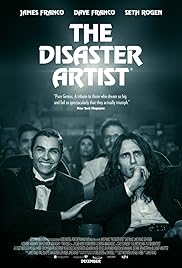
THE DISASTER ARTIST (USA 2017)

Submit your Screenplay to the Festival TODAY

The Disaster Artist Poster
Trailer

When Greg Sestero, an aspiring film actor, meets the weird and mysterious Tommy Wiseau in an acting class, they form a unique friendship and travel to Hollywood to make their dreams come true.

Director:

James Franco

Writers:

Scott Neustadter (screenplay by), Michael H. Weber (screenplay by) |2 more credits »


James Franco has had dozens of credits as both director and actor.  His directorial debuts have never been too stellar unlike his acting (debuts).  He has proven his acting mettle in both comedy (THIS IS THE END, PINEAPPLE EXPRESS) and drama (SPRING BREAKERS).  In his latest outing, he does both directing and acting in a comedic/dramatic portrayal of Hollywood filmmaker Tommy Wiseau.  The odd film premiered at the Toronto International Film Festival Midnight Madness section to a full house, the reason being that Franco and his gang showed up during the screening.

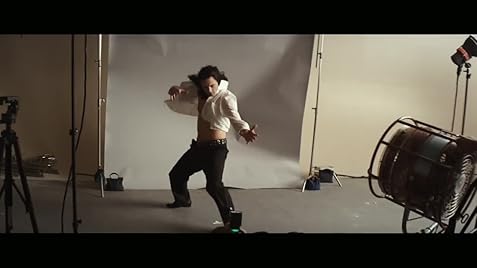
James Franco and friends appear in this uneven tribute to eccentric filmmaker Tommy Wiseau (played by James) and his friend, actor Greg Sestero (played by brother Dave), whose notoriously awful film The Room has become one of the most beloved cult classics of all time.  (I have never heard of it though.)  Since its release in 2003, The Room has captivated cult audiences on the midnight movie circuit with its discombobulated plot, discordant performances, and inexplicable dialogue.  Drawing on the memoir of the same name, Franco chronicles the making of The Room as recalled by Greg.  The incredulous script supervisor is played by friend Seth Roger.  Other celebrity friends of the Franco’s like Christopher Mintz-Plasse and Zac Ephron also appear.  Franco’s portrayal of Wiseau is over-the-top, which is likely the character of the man himself.  Franco as Wiseau goes about the majority of the film speaking with an accent, shouting and speaking in broken English sentences. 

Films about directors of Hollywood bombs have been done before, most notable being Tim Burton’s ED WOOD.  But Franco’s DISASTER ARTIST bears more similarity to the 1970’s British/Italian comedy starring Peter Sellers as a mastermind Italian crook in Vittorio De Sica’s AFTER THE FOX.  In both movies, there are separate scenes of the film shot, that bear no sense, but when put together during a screening at the end of the film, bring on major laughs.  This is how best to describe Franco’s THE DISASTER ARTIST.  It is a shallow biography of Tommy Wiseau providing no new insight of the man, but it does provide some solid laughs.  The best scene is clearly the one where Wiseau does multiple takes on a segment, never getting it right until finally after uttering the line, “Oh, hi  Mike” generate spontaneous applause from the director and those watching on set (and loud laughs from the audience).

The Franco/ Rogen/Goldberg troupe has an uncanny sense of humour, and the humour and timing works magnificently at times.  The film ends with a split screen of the shots of the actual ROOM side-by-side of this movie.  

A so-so movie but one can always forgive a mediocre movie if it delivers a few good laugh-out loud laughs!

Trailer: https://www.youtube.com/watch?v=4qab3TMg42k

Submit your Screenplay to the Festival TODAY

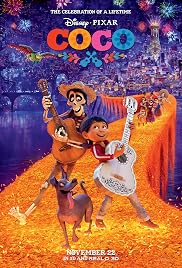
COCO (USA 2017) ***** TOP 10

Submit your Screenplay to the Festival TODAY

Coco Poster
Aspiring musician Miguel, confronted with his family’s ancestral ban on music, enters the Land of the Dead to work out the mystery.

Directors:

Lee UnkrichAdrian Molina (co-director)

Writers:

Lee Unkrich (original story by), Jason Katz (original story by) | 4 more credits »


Submit your Screenplay to the Festival TODAY

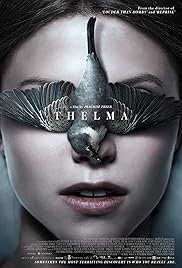
THELMA (Norway/Sweden/France/Denmark 2017) ****

Submit your Screenplay to the Festival TODAY

Thelma Poster
Trailer
A woman begins to fall in love, only to discover that she has fantastic powers.

Director:

Joachim Trier

Writers:

Joachim Trier (co-writer), Eskil Vogt (co-writer)


Director Joachim Trier’s (OSLO, AUGUST 31st and LOUDER THAN BOMBS) latest film combines the austerity of his previous films with a spin-off of the CARRIE the Stephen King story/Brian de Palma film where Sissy Spacek moves objects to avenge herself from the people who have wronged her.

THELMA inevitably draws comparisons from CARRIE but these are two very different films despite the similar subject matter.

The film follows a timid young woman, THELMA (Eili Harboe) who leaves her rural home to study in Oslo.  There, she finds love for the first time.  This love happens to be for a classmate of the same sex, which makes her extremely guilty because of her religion.  But her relationship is complicated by her family’s oppressive meddling, their seemingly fundamentalist religious beliefs, and, possibly, her unique ability to shape and affect her environment.  When Thelma is upset or agitated, strange things seem to happen.  She also goes into epileptic fits which cannot be explained by the hospital doctors.

Trier’s film works for two reasons.  Trier keeps the story one step ahead of his audience, making it always interesting.  The other, related to this reason, is that he is thus able to use the tool of audience anticipation.  The first time Thelma is shown in the film exhibiting her powers is in the school library.  Birds crash onto the library window while she goes into convulsions.  Then nothing till later in the film.  Trier uses the first third of the film to introduce Thelma, her family and surroundings to the audience without much happening.  And what will Thelma do next? What is she really capable of?  How will the film end?  One at least knows from the history of movies in this genre that the bad guys will get what is coming to them.  In THELMA, Trier keeps the ambiguity on who is bad or who is good.

The most intriguing fact in THELMA which is never explained is Thelma’s mother’s accident.   Unni (Ellen Dorrit Petersen) is seen in the latter part of the film in a wheelchair.  Is this a result of Thelma’s doing or an accident or due to her father Trond’s (Henrik Rafaelsen) meddling.

Trier also ups the mystery element by introducing the character of Thelma’s grandmother.  She is bedridden in a home.  Thelma thinks her grandmother is dead and visits her, unbeknown to her parents, thinking that her grandmother possesses the same power she has and that her father had given her medication to cause her to be in that sorry state of affairs.  When Trond gives her daughter pills to calm her down, Thelma grows suspicious that he might be poisoning her. 

Trier never explains the origin or cause of Thelma’s powers.  But neither did the film CARRIE.  It does not matter the reason, but what Trier wants to do with the power that matters.

THELMA succeeds as a psychological horror drama that keep the audience intrigued from start to end.  THELMA is shot in Norwegian.

Trailer: https://www.youtube.com/watch?v=HF36DsRFnXU

Submit your Screenplay to the Festival TODAY

WONDER (USA 2017) ***1/2

Submit your Screenplay to the Festival TODAY

Wonder Poster
Trailer

Based on the New York Times bestseller, WONDER tells the incredibly inspiring and heartwarming story of August Pullman, a boy with facial differences who enters fifth grade, attending a mainstream elementary school for the first time.

Director:

Stephen Chbosky

Writers:

Stephen Chbosky (screenplay by), Steve Conrad (screenplay by)

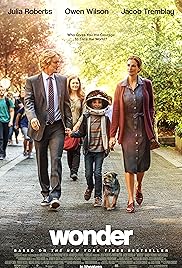
WONDER is a family friendly film with just the correct mix of comedy and drama about a boy with a facial deformity, Auggie ( Jacob Tremblay).  The film follows his adjustment to public school, Beecham Preparatory School after being home schooled by his mother, Isabel (Julia Roberts).  His father, Nate (Owen Wilson) is supportive as well as his sister, Via (Izabela Vidovic) though she resents not being given as much attention by her parents.  WONDER is written by Steve Conrad based on the book of the same name by R.J. Palacio.

Despite the obvious message as announced via voiceover at the end of the movie: “Be Kind: You just have to look at people to see…”, there is another more important message found in the movie, as uttered by Via, Auggie’s sister when she angrily quips at her brother: “It’s not always about you.” This message is also echoed in the way the film’s story is brilliantly told – in 4 parts from 3 other points of view besides Auggie’s, showing that other people count.  The other views are from Auggie’s sister, Via, and from two of his friends, Jack Will (Noah Jupe) and Miranda (Danielle Rose Russell).  The other three are revealed in the script as individuals, just as important as individuals as being a character in Auggie’s world.

The film’s contains one mixed message in the way Auggie finds his first friend, Jack Will – by allowing him to cheat, copying from him, during a test.  He could have helped him or offered to help him study instead.

The big minus in WONDER is the filmmakers insistence on going for sentiment.  They should be more confident on the material and stop tugging at the heartstrings.  So be forewarned!  Bring plenty of Kleenex as director Chbosky chooses to milk every opportunity he can for tears.  This can be observed by the choice of music; Julia Robert’s perpetual sad look; the script’s dialogue (You cannot blend in if you are meant to stand out in the world); the fondness of close-ups of the actors’ faces.

The script could be trimmed to do away with the teen budding romance between Via and her new theatre boyfriend, Justin that does not do much with the main story.

The performances from the young kids are to be praised.  The best of these belong to Noah Jupe as Jack Will, Auggie’s best friend.  Jupe is a natural, the camera loving his every facial expression – a possible future star in the making.  Two screen veterans Mandy Patinkin and Sonia Braga lend their hands playing Mr. Tushman and Via’s grandmother respectively.

Chbosky’s film tries at making every set-up perfect.  It is therefore not surprising that the film’s best moment is a quiet and simple one – a close-up of Jack Will’s face at being happy once again at being Auggie’s friend.

The film ends with Auggie’s mom saying to Auggie: “You are really a WONDER, Auggie”.  Perhaps the film itself could have turned out a wonder if everyone did not try so hard.

But for all its flaws, WONDER is a film made about a subject that matters.  It is also good to see stars like Julia Roberts  and Owen Wilson putting their efforts in a earnest little movie for a change.

Trailer: https://www.youtube.com/watch?v=cFxsRbqN8jA


Submit your Screenplay to the Festival TODAY

STEGMAN IS DEAD (Canada 2017) ***

Submit your Screenplay to the Festival TODAY

Stegman Is Dead Poster
Meet Stegman. He’s dead. In this crime comedy, bizarre assassins must come together to unravel the puzzle of Stegman’s blackmail secret, and why he’s already dead on the set of his own porn film.

Director:

David Hyde


Raven Banner Entertainment distributes low budget films – usually horror flicks or flicks with an edge.  STEGMAN IS DEAD falls into the latter category, with violence and  some foul language thrown in for good measure despite the film’s protagonist being a family man.

A family man with a past crime background, to be more accurate.  He has ‘successfully’ completed a heist in which he had accidentally killed two security guards.  His boss, Don (Michael Ironside) has cleaned up everything but unfortunately all the cleanup was recorded on tape which has been stole by Stegman who is now blackmailing him.

The film attracted attention well before its release, with two nominations at the Golden Trailer Awards in LA, an Award Of Excellence at the IndieFest 2017 Film Awards in the US and a surprising “market premiere” at the Cannes Film Festival programmed by Telefilm Canada as one of their six favourite films of 2017.

Director Hyde focuses the film on a single location (Stegman’s home/studio) and created a colourful array of criminals, each with their own distinct “style.” There are twenty-one speaking roles include a bumbler named Lars (Arne MacPherson), a sadistic Russian named Sergei (David Lawrence Brown), a psycho “terminator” named Kruger (Stephen Eric McIntyre) and a mystery-woman named Evy (Bernice Liu).

This follows Diane’s family, a deceptively pleasant, aging lot of retired criminals who want to give her struggling husband Gus, a leg up.  The father and daughter – the leads of the story – are members of a clan that goes back generations. They revere the fact that they are thieves. They live in an offbeat culture that exists outside normal society. ‘My dad taught me how to steal wallets, I’m teaching my daughter how to steal wall

When the film opens, Mike is in front of his house. The voiceover informs that he is about to rob his own house.  But the police have been to the house first.  He is to recover the tapes that will save his hide and his marriage.

STEGMAN IS DEAD is confidently put together by director, writer and cast who clearly exhibits confidence.  The trouble with confidence is that the film comes out as too smug for tis own good.  A bit more humility will result in flaws being identified and perhaps corrected.  

The film’s dialogue ranges from funny to fair.  His wife warns him:”If you don’t bring back the bacon, you do not get the sausage.”  Or an old guys saying: “No ore tension, now with pension.”  But the film occasionally hits the laughter jackpot as in one scene where everyone at gathering is forced to lie on the ground.  The wife of an elderly tells him, “Keep your arms together”, as he has difficulty going down to the floor.

The film’s setting is Middle America with its low income residences, old cars and dirty roads.  It sold remembered though that this is a Canadian movie.

STEGMAN IS DEAD is not a bad film, efficiently put together with a confident cast and crew.  It contains occasional surprises but one has to watch out for them.  There is one good thing to say about this film – it has spirit!  The film has a limited engagement at the Carlton Cinemas, again a small venue for small budget films and gems.

Trailer: https://vimeo.com/223366304

Submit your Screenplay to the Festival TODAY

PARADISE (Russia 2016) ****

Submit your Screenplay to the Festival TODAY

Paradise Poster
Trailer

Follows three people whose paths cross during a terrible time of war: Olga, a Russian aristocratic emigrant and member of the French Resistance; Jules, a French collaborator; and Helmut, a high-ranking German SS officer.

Writers:

Andrey Konchalovskiy (screenplay), Elena Kiseleva (screenplay)

Shot in black and white in part documentary style with interviews, PARADISE is a harrowing if not compelling study of human behaviour and strife for a better lifestyle (or as the film unfolds, the goal is to achieve a kind of PARADISE) regardless of circumstances.  The circumstances in the film’s setting are not too good – as the setting is a Nazi concentration camp.

When the film opens, the audience sees three different individuals interviewed, whose paths cross because of the devastation of war.  

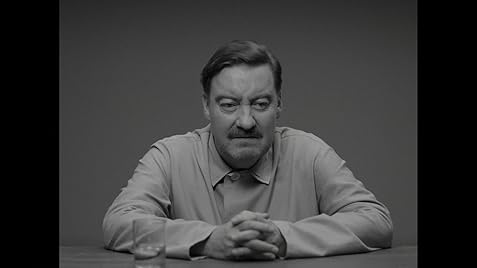
The first person interviewed is a portly middle-class Frenchman named Jules who has a wife and a son called Emile..  He goes on to talk about his son being called Emile for no real reason, except to show that he is a man dedicated to family.  Director Konchalovsky (who has proven himself with 3 well-known films, RUNAWAY TRAIN, THE ODYSSEY, SHY PEOPLE) allows his audience to form their own opinion or judgement on this not entirely unlikeable character as in the other two, despite him being a French-Nazi collaborator. 

Next is handsome high-ranking German SS officer Helmut, who once fell madly in love with Olga and still harbours feelings. They re-kindle their old flame and embark on a twisted and destructive relationship.

The third and most important in the story is Olga.  Olga, a Russian aristocratic immigrant and member of the French Resistance, is arrested by Nazi police for hiding Jewish children during a surprise raid.  As her punishment, she is sent to jail where she meets Jules and later Helmut who offers her a safe haven to South America as an escape both for her from the concentration camp and for him from the defeat of the Nazis in the war.

The best thing about PARADISE is the film’s authentic look in terms of period and atmosphere.  Everything else too from the costumes, wardrobe, sets look directly as if they were derived from old photographs.  The camera moves in and out the seemingly crowded spaces in the concentration camp.

Konchalovsky also shows the rift between the Jewish prisoners.  They fight among themselves for food and for the attire off someone who has just died.  The kapos (the prisoners selected to act as guards) are also looked down upon in the film.  Besides the grim look of the camps, Konchalovsky also shows the splendour enjoyed by the rich.  Servants stand by to serve the rich and fortunate as they play tennis in the latest fashioned attire.  Helmut looks particular sexy in his outfits among the females.

But the film’s main goal is the message that is revealed only at the end of the film – on how humanity and kindness can still exist amidst the futility of war.  The film’s theme can be summarized using the famous words of German philosopher Karl Jaspers: “That which has happened is a warning. It must be continually remembered. It was possible for this to happen, and it remains possible for it to happen again at any minute. Only in knowledge can it be prevented.”

PARADISE arrives though a year late, with all the accolades after winning the Silver Lion Award at the Venice Film Festival.  Definitely a film worth seeing!

Trailer: https://www.youtube.com/watch?v=OzIthDhMjC4


Submit your Screenplay to the Festival TODAY

BLADE OF THE IMMORTAL (Japan 2017) ***

Submit your Screenplay to the Festival TODAY

Blade of the Immortal Poster
Trailer

Manji, a highly skilled samurai, becomes cursed with immortality after a legendary battle. Haunted by the brutal murder of his sister, Manji knows that only fighting evil will regain his soul. He promises to help a young girl named Rin avenge her parents, who were killed by a group of master swordsmen led by ruthless warrior Anotsu.

Director:

Takashi Miike

Writers:

Hiroaki Samura (manga), Tetsuya Oishi (screenplay)

If you have not heard of Takashi Miiki, this is the opportunity to get acquainted with the Japanese writer/director who has made 99 films so far with this one BLADE OFTHE IMMORTAL based on Hiroaki Samura’s ground-breaking and award-winning manga, being his 100th film.  Most of his films, violent as they are never get a commercial release in Canada.

Miiki is famous for action samurai films but he is also well known for his modern horror flicks, especially AUDITION, which is one film guaranteed to make one cringe – imagine steel wire supported by bricks dismembering ones foot.

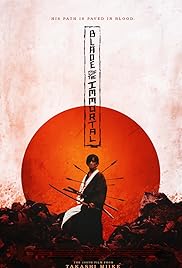
BLADE OF THE IMMORTAL follows the hero of the story, Manji (Takuya Kimura), a highly skilled samurai who becomes cursed with immortality after a legendary battle.  Haunted by the brutal murder of his sister, Manji knows that only fighting evil will regain his soul.  He promises to help a young girl named Rin avenge her parents, who were killed by a group of master swordsmen led by ruthless warrior Anotsu. The mission will change Manji in ways he could never imagine.

In period samurai pieces, interest is often lost without personalizing the story.  This one has Rin who hires Manji to avenge her father –  a story reminiscent of TRUE GRIT.

For amusement, Miiki inserts a debate on what is good and what evil is, only to tear apart the concept a few moments after.

  The straightforward samurai revenge flick is built around the platonic, primal ideal of what a samurai movie can be.  Still, as in Miiki’s films, BLADE OF THE IMMORTAL is a non-stop symphony of murder and steel filled with unbelievable weapons, gruesome amputations, rivers of blood, and charismatic warriors. It is a 2 hour 20 minute saga, though interest never flails.  It features spectacular fight scenes with a whole array of imaginative weapons, and a climactic battle reportedly involving some 300 people that took more than two weeks to film.

Miiki takes his time to establish his villain.  The villain is one Anotsu, not just a villain with no character.  He has his principle of fighting one on one, and not playing with children as he deems it vulgar.  He is a pretty boy with luscious lips, always decked in a gorgeous robe, obviously better looking than the hero, who has a scar right across his face.  That is Miiki’s weird humour that makes his film and his characters stand out against others.

Miiki remembers too that in spite of all, BLADE OF THE IMMORTAL is an action sword fitting flick.  So, the battles and fights are well choreographed and exciting enough to satisfy die hard fans.  There is a little combination of horror and action in the film, but the horror is not as disturbing as in his other films like AUDITION.  Still, there are a lot of chopped off hands, feet and limbs. 

BLADE OF THE IMMORTAL premiered at Cannes and at the Reel Asian International Film Festival in Toronto.  

Trailer: https://www.youtube.com/watch?v=-M2F4-oTNF4


Submit your Screenplay to the Festival TODAY