Interview with Oscar Nominated Editor Jake Roberts (Brooklyn, Hell or High Water, Alien: Romulus)

Matthew Toffolo: Tell us about your experiences working on “Brooklyn”? How many months do you work on editing the film? How does it feel to be the editor of an Oscar Nominated film?

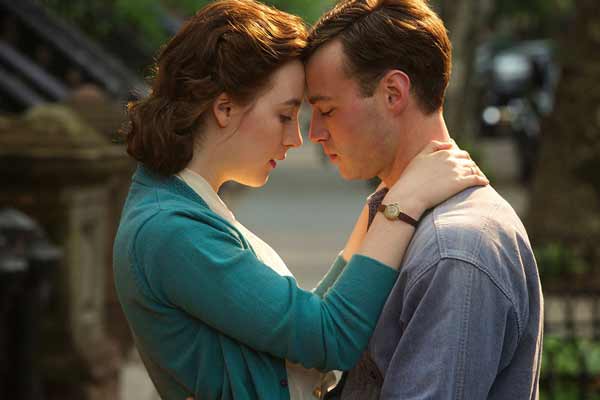
Jake Roberts: ‘Brooklyn’ was a great experience. There was a really positive energy throughout the shoot and it felt like we might be working on something quite special. It was personal to a lot of the people involved and that seemed to come through in the material and that makes you want to raise your game, especially when you’re watching a performance like Saoirse’s unfold you feel a huge pressure to do it justice. Once John and I were back in London we cut for about 3 months and obviously there was plenty of back and forth but at the same time it was quite a calm and controlled process. We had a very strong first assembly and we never deviated too far from it or went down too many experimental cul-de-sacs. This is largely a testament to Nick’s script which only needed the subtlest of refinements so essentially it was about distillation, making it as tight as possible and all the while carefully calibrating the emotional journey through the performances. As for the Oscars it is all a surreal bonus, like I say you hope as you work on something that it is special and obviously a nomination suggests you did something right but the most thrilling thing is that a wide audience gets to see it and thankfully it seems we managed to strike a chord with a lot of them.

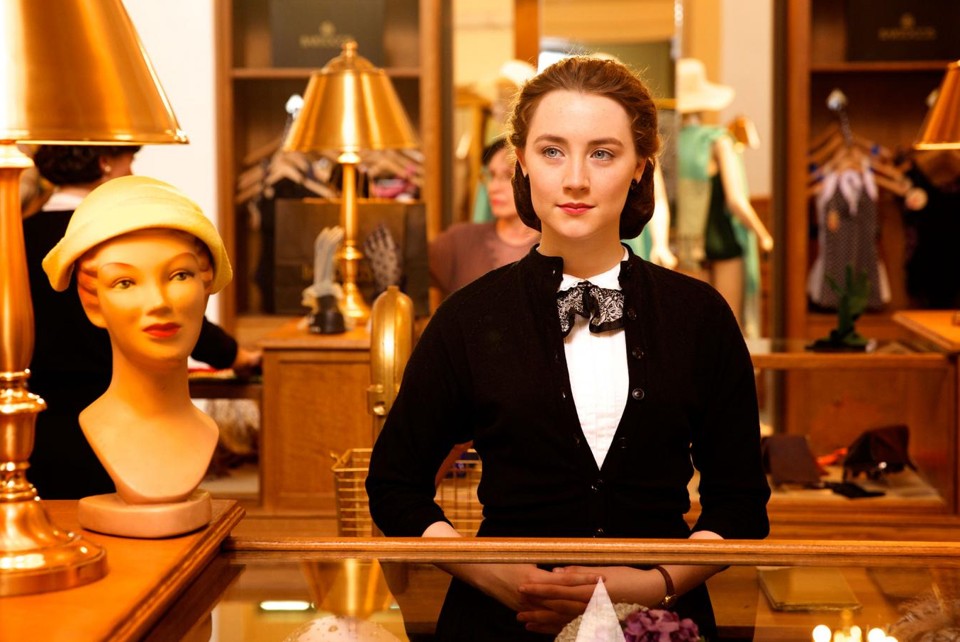
PHOTO: Still shot from BROOKLN:
Brooklyn-RDP.jpg

Matthew: You have worked on many documentaries. Is this something you like to continue to do?

Jake: In theory yes as documentary is so much of an editor’s medium but having fought for so long to get into features it’s difficult to turn your back on them. Certainly as a viewer I’d rather watch a great documentary than a fictional film so if the right one came along it’d be hard to say no.

Matthew: What is the key difference between working on a narrative film in comparison to a documentary?

Jake: In documentary you are creating the narrative as you go, effectively writing the script in the edit, but at the same time you are obviously constrained by your material so you have to know both how to tell the story but also how best to illustrate that within the limitations of the footage you have available. Someone once said that it’s like being given a bag of sentences and being asked to write a novel. The fact that in narrative film you get to follow a script that has been very carefully written and developed means that all that heavy lifting has been done for you and your role is just tell that story as effectively as possible.

Advertisement

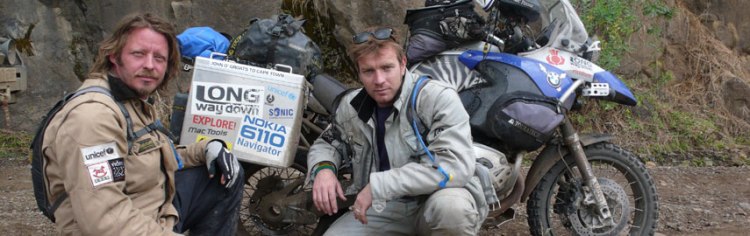
PHOTO: Documentary film LONG WAY AROUND, starring Ewan McGregor:
longwayaround

Matthew: How did you transition from working on short films to features?

Jake: The very first short film I ever cut was for the director David Mackenzie after which we made a low budget feature together, I was 23 at the time, but then David went on to make a bigger film with actual film stars and the producers insisted on a more experienced editor so I lost that relationship. I then spent years cutting every kind of project that came my way, documentaries, commercials, music videos, shorts, television drama, you name it. Basically I honed my craft and just tried to become the best editor I could always hoping I could return to features one day. Many years later David was preparing his sixth feature film and his regular editor was unavailable so we reconnected and fortunately I had gained enough experience to be given a chance by the financiers. We have now made 5 features together.

Matthew: In the last 16 years you’ve worked as an editor on over 20 productions. What film has been your favorite working experience so far?

Jake: Films are like children and like any parent you can’t really pick favourites but each has their own unique qualities. Being involved in ‘Long Way Round’ Ewan McGregor’s round the world motorbike trip was a great communal experience, working out of a garage in Shepherd’s Bush in the months before they set off we were cutting upstairs as they prepped the bikes downstairs. Everyone involved stayed up all night helping pack up the equipment the night before they left and then months later we were flown to New York to be there when they arrived. We shot ‘Tonight You’re Mine’ in 4 days at a music festival working 22 hour days which was a very intense and disorientating but bonding process. ‘Starred Up’ was shot over four weeks in Belfast but was similarly intense as David was insisting that we have all the scenes fully cut within hours of them being filmed. We were shooting completely sequentially and he wanted to have as clear an idea as possible about the shape of the film up to the scene he would be filming the next day so we basically made the film as we went. We eventually screened the entire movie at the wrap party and locked the picture 3 weeks later so it was ultimately very short and sweet. Just recently I was cutting in a log cabin in New Mexico and every Sunday we would have a barbecue and screen assemblies for the entire cast and crew, Jeff Bridges would bring his guitar. That was a lot of fun.

Advertisement

Matthew: What is an editor looking for in their director?

Jake: Work. No seriously I think a coherent vision that hopefully translates into the dailies and then a sense of collaboration in the cutting room. It’s definitely a conversation and I think I would struggle to work with someone who insisted on doing all the talking.

Matthew: What is a director looking for in their editor?

Jake: You’d have to ask them but I would imagine someone who brings ideas and solutions to the table but doesn’t force their agenda, merely offers it. Ultimately someone who makes them look good, which we usually do.

Matthew: What film, besides the ones you’ve worked on, have you seen the most times in your life?

Jake: Probably Jaws or This Is Spinal Tap.
Matthew: What type of film would you love to edit that you haven’t worked on yet?

Jake: I’d love to do a kids film so that my children might be allowed to see what I do for a living.

Matthew: What suggestions would you have for people in high school and university who would like to get into the industry as an editor?

Jake: Start early. I can only speak from my own experience but if you’re clear about what you want to do then I wouldn’t waste time getting a media studies degree, you’re going to have to work for nothing to get started anyway so better to do it at 18 than 22. Get any practical experience you can, firstly to make sure this is really something you want to do, it’s going to take a lot of work and sacrifice so make sure you’re suited to it. Approach established professionals directly and tell them you want to do what they do, most will try and help in some way even if it’s just a cup of coffee and some advice, I always do. Try to edit rather than assist. Personally I think you’d learn more cutting a zero budget music video than you would assisting on a big budget feature. Even if you’re at the bottom of the ladder doing very basic tasks do them as well as humanly possible, listen to any instructions very carefully and never think of anything as beneath you or not worth trying over. Care. I once had to edit 9 hours of obese women discussing their bras in a focus group but I treated it like I was making art. You never know where the contacts who can ultimately give you a break might come from. It might be the guy directing the corporate video you’re working on? He might be making a feature in a few years so do an incredible job and he might remember you. If you are always creative, reliable, conscientious and good company doors will eventually open I promise.

____

Interviewer Matthew Toffolo is currently the CEO of the WILDsound FEEDBACK Film & Writing Festival. The festival that showcases 10-20 screenplay and story readings performed by professional actors every month. And the FEEDBACK DAILY Fesival held online and in downtown Toronto on the last Thursday of every single month. Go to www.wildsound.ca for more information and to submit your work to the festival.

Top 10 Films of 2016

The time has come round again to put together the list of the year’s best films.  2016 has been an exceptionally good year for films, especially in the Foreign language Film category.

Here are my BEST 10 of 2016 in order, with  short description of each.

by Gilbert Seah

1. TONY ERDMANN (Germany 2016) Directed by Maren Ade

Touted too as the BEST FILM of 2016 by the SIGHT & SOUND International Critics Poll, this 160-minute lengthy German comedy (the Germans are not known for comedy) is a satire by director/writer Ade on her German countryfolk.  Winfried (Peter Simonischek) is a retired piano teacher, a divorcee who delights in persistent pranks and impersonations that alienate (and occasionally alarm) everyone in his German suburb.  He pays an unexpected visit to his corporate executive daughter, Ines (Sandra Hüller), playing parks and showing up whenever she least expects.  A brilliant piece of drama and comedy and culminates with Huller singing the full song “The Greatest Love of All” which got a standing ovation midway during the film’s creeping at Cannes.  He teaches Ines again how to laugh and love again while the audience gets a subtle message of what life is all about.   (This film opens January in Toronto.)

2. JULIETA (Spain 2016) Directed by Pedro Almodovar

Almodovar’s talky film based on three short stories from the book Runaway by Alice Munro with homage to Patricia Highsmith.   JULIETA stars Emma Suárez and Adriana Ugarte as older and younger versions of the film’s protagonist, Julieta, alongside Daniel Grao, Inma Cuesta, Darío Grandinetti, Michelle Jenner and his favourite Rossy de Palma playing a nosy maid, who has one eye larger than the other.  The film is marked by Almodovar’s touches like his brilliant use of colour.  JULIETA is a very controlled film, absorbing from start to finish with a very brilliant ending.

3. L’AVENIR (THINGS TO COME) (France/Germany 2016) Directed by Mia Hansen-Løve 

Director Hansen-Løve’s protagonist undergoes a major change in life in the midst of the movie.  Nathalie (another excellent performance by Isabelle Huppert) is a dedicated and demanding teacher, wife, and mother whose life is jolted when her husband of many years leaves her for another woman.  As her life slowly crumbles (she loses her publications as well), Nathalie slowly adapts using her background in philosophy.  Nathalie is not as assured and confident as she is in the past.  Her black, obsess cat, Pandora stands also as a metaphor for her life.  But Nathalie, at least finds an unlikely friend in a former student, the radical young communist Fabien (Roman Kolinka).   The musical score ranging from classical (Schubert) to folk (Woody Guthrie) is marvellous.  As in all of Hansen-Løve’s films, L’AVENIR is an intelligent, handsomely mounted production that is an entertaining and insightful look on life and living.

4. ZOOTOPIA (USA 2016) Directed by Byron Howard, Rich Moore and Jared Bush

ZOOTOPIA follows the dentures of a bunny cop as she save her animal world.  The film works on many levels so that both kids and adults can relate to the movie.  The film also reflects on major issues in America such as racism and the police system.  But most important of all, the filmmakers have a keen sense of humour that is reflected in a very smart and hilarious film.  The animation is also superb.

5. IN ORDER OF DISAPPEARANCE (Kraftidioten) (Norway/Sweden/Denmark 2014)

Directed by Hans Petter Moland

This is my rare pick – a Scandinavian commercial thriller that is a cross between TAKEN and FARGO.  This is a very dark violent comedy thriller that asks the question:  Can an ordinary man kill a drug lord?  The answer is ‘yes’, if (he is) pushed beyond the limit.  Nils (Stellan Skarsgård) is a snow plough driver somewhere in Norway.  He learns that his son, Ingvar has died, supposedly of a heroin overdose.   Nils knows his son was no addict (his wife believes otherwise, though) and starts his own personal private investigation after his beaten up son’s friend confesses to Nils that his son was unknowingly involved in a drug delivery.   Soon Nils finds out the local drug lord, known as ‘The Count’ (Pal Sverre Hagen) is behind the crime.  Director Moland spends screen time on both Nils and the villain.  The segment where the count and his ex-wife argue over their son’s custody and eating of ‘fruit loops’ is priceless.  I have watched the segment five times and still love it.  A very, very dark thriller like the winter of Norway when the film is set.

6. INDIGNATION (USA 2015) Directed by James Schamus

The pleasure of the film is not in the plot but in the writing.   Based on the Philip Roth novel, excellence can only be expected.  A working class Jewish student, Marcus (Logan Lerman), leaves Newark, New Jersey to attend a small college in Ohio. There, he experiences a sexual awakening after meeting the elegant and wealthy Olivia (Sarah Gadon). Later he ends up confronting the school’s dean (Tracy Letts) over the role of religion in academic life.  Logan Lerman displays acting capability and eloquence as in the film’s best scene with Dean Caudwell debating Bertrand Russell’s Christianity.   Shamus has now proven himself as a superb writer and director.  INDIGNATION is a thinking man’s film that is smart, entertaining and funny. 

7. LA TETE HAUTE (STANDING TALL) (France 2015)

Directed by Emmanuelle Bercot

LA TETE HAUTE often has the camera stationed in a set-up in which a confrontation occurs.  The actors have their role plays and they go at it, ensemble-style.  The result is a compelling watch, with a more realistic feel as the scene looks totally unscripted, though it may not be.  The camera focuses primarily on the actors, often with closeups on the reactions of dialogue that take place.   Bercot allows the audience to root for the hot-tempered delinquent called Malony (Rod Paradot).  Bercot shows that the process of rehabilitation is long and difficult but not impossible.  Bercot (who co-wrote the script) attributes more effort by those helping the boy than put in by the boy himself.  As the adage goes: “It takes a village to rear a child.”  Besides the boy, the supporting characters are all equally interesting.  The mother, who is herself a delinquent, loses her two younger boys to social services.  The boy’s councillor was himself a delinquent, younger on and got this job believing in the system.  And there is the judge, magnificently played by Deneuve with all her regality.   The scene in which she stretches out her hand to the boy in both desperation and sympathy is the film’s most touching moment.  But director Bercot takes her film one step further.  She inserts more incidents than are normally found in a family drama.  Included is a car crash, expertly shot and a home abduction.  This is an extremely moving film about life and hardship – and how everyone faces his or her own at one time or another.

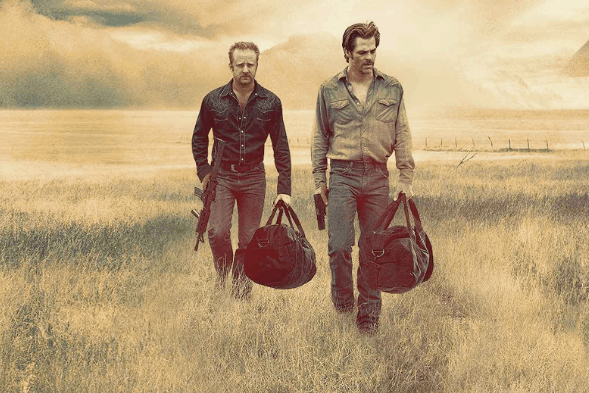
8. HELL OR HIGH WATER (USA 2016) Directed by David MacKenzie

The film begins with an exciting bank robbery.  The bank is robbed by two brothers, Toby (Chris Pine) and the recently out-of-jail Tanner (Ben Foster).  It is a case of Good Crook, Bad Crook variation of Good Cop, Bad Cop.  Toby, the good crook needs the money for payments on the house his children has inherited from his recently deceased mother.   The film does not have one main protagonist but three.  Toby appears to be the main one, but his volatile brother and the retiring ranger after them are also given due attention.  Ranger Marcus (Jeff Bridges) is the most interesting of the three, a wise-cracking, gruff and smart veteran who constantly cracks racist jokes at his indian deputy Alberto (Gil Birmingham).   The film is well performed by everyone especially Bridges who turns out an Oscar Winning performance.  MacKenzie knows how to create excitement.  The camera is placed, for example in the getaway car, all jittery but capturing the desperation of escaping the cops.  The shootout scene at the end of the film is also meticulously staged.  The film also contains a superb climax – a verbal showdown between Toby and Marcus.  The music by Australian actor, singer song-writer Nick Cave is a pleasure, also adding atmosphere and mood to the film.  An excellent film all round.

9. HACKSAW RIDGE (USA/Australia 2016)  Directed by Mel Gibson

HACKSAW RIDGE is a true story, bravely told, inspiring as well, set in World War II featuring the most unlikely of heroes – a pacifist who refuses to carry a rifle.  Not only does the film boast inspired direction by Gibson, but it also contains perhaps the best performance of the year by a young actor, the most recent SPIDER-MAN, Andrew Garfield – if not the best performance of his career.  The true story of medic, Private Desmond T. Doss (Andrew Garfield), who won the Congressional Medal of Honor despite refusing to bear arms during WWII on religious grounds.  Doss was drafted and ostracized by fellow soldiers for his pacifist stance but went on to earn respect and adoration for his bravery, selflessness and compassion after he risked his life — without firing a shot — to save 75 men in the Battle of Okinawa.  The battle scenes – with heads exploding; guts pouring out; dismembered bodies and wounds infested with maggots and rats are not easy ones to watch. 

10. MANCHESTER BY THE SEA (USA 2016) Directed by Kenneth Lonergan

There is an excellent segment at the start of the film that perfectly sums up the character of the protagonist Lee Chandler (Casey Affleck).  A handyman, Lee has just finished fixing the dirty toilet plumbing of one of the apartments in the building he looks after.  The woman asks if it is ok for her to give him a tip.  He thinks the tip is a form of advice she is about to give him for perhaps a mistake he did in his job instead of the monetary reward she intended.  Lee is shown here as a hard-working well meaning person with extremely low self-esteem.  MANCHESTER BY THE SEA is writer/director Kenneth Lonergan’s new film after a long absence since his impressive debut YOU CAN COUNT ON ME followed by MARGARET.  The new film follows Lee, a reclusive handyman who must face his painful past when he returns to his Massachusetts hometown after the sudden death of his beloved older brother, Joe (Kyle Chandler).  The beauty of Lonergan’s film is the way his drama unfolds.  He does not rely on cheap theatrics, melodrama or dramatic monologues to get his points across.  In tandem, Affleck delivers a quiet, disciplined yet forceful performance, undoubtedly the best of his career.  The film’s best segments have the two arguing with each there.  The film alternates between sad and wonderful.   It is one of the best gut wrenching films about how a person deals with death. 

Watch Winning Best Scene Readings:

TV CONTESTSUBMIT your TV PILOT or TV SPEC Script
Voted #1 TV Contest in North America.
FILM CONTESTSUBMIT your SHORT Film
Get it showcased at the FEEDBACK Festival
writing CONTEST1st CHAPTER or FULL NOVEL CONTEST
Get full feedback! Winners get their novel made into a video!
SCREENPLAY CONTESTSUBMIT your FEATURE Script
FULL FEEDBACK on all entries. Get your script

HELL OR HIGH WATER (USA 2016) ****

hell_of_high_water.jpgHELL OR HIGH WATER (USA 2016) ****
Directed by David MacKenzie

Starring: Dale Dickey, Ben Foster, Chris Pine

Review by Gilbert Seah

The term HELL OR HIGH WATER is the phrase used in contracts that demand payment regardless. It is also the title of the new film directed by David MacKenzie (ASYLUM and his last excellent film STARRED UP) and brilliantly written by Taylor Sheridan (SICARIO), the script of which won the 2012 Black List of Screenplays.

The film begins with an exciting bank robbery. The bank is robbed by two brothers, Toby (Chris Pine) and the recently out-of-jail Tanner (Ben Foster). It is a case of Good Crook, Bad Crook variation of Good Cop, Bad Cop. Toby, the good crook needs the money for payments on the house his children has inherited from his recently deceased mother. Toby is separated from his wife and children. The payments must be made HELL OR HIGH WATER or Toby will lose much, much more as the property is spouting oil.

The film does not have one main protagonist but three. Toby appears to be the main one, but his volatile brother and the retiring sheriff after them are also given due attention. Sheriff Marcus (Jeff Bridges) is the most interesting of the three, a wise-cracking, gruff and smart veteran who constantly cracks racist jokes at his indian deputy Alberto (Gil Birmingham). The film could very well be another version of the Lone Ranger and Tonto.

The film is well performed by everyone especially Bridges who turns out an Oscar Winning performance. His mannerisms and drawl fit perfectly his character of an aging, fed-up law enforcer. Chris Pine proves he can do more than Captain Kirk in STAR TREK.

MacKenzie knows how to create excitement. The camera is placed, for example in the getaway car, all jittery but capturing the desperation of escaping the cops. The shootout scene at the end of the film is also meticulously staged. The film also contains a superb climax – a verbal showdown between Toby and Marcus. The music by Australian actor, singer song-writer Nick Cave is a pleasure, also adding atmosphere and mood to the film. The film is interspersed with his songs.

The film was originally titled Comancheria. The reason can be seen in one of the film’s best written and key scene when Tanner confronts a comanche in a casino. Comanche means ‘enemy of everyone’, the comanche tells Tanner. “Then I am one,” he retorts. “An enemy?” asks the comanche angrily. “No, a comanche.” The description of Tanner’s character is spot on, Tanner being a volatile man who cannot get along with anyone, less his brother and has been in prison in and out a couple of times. Another scene, which is so funny that has to be seen to be believed is the age old waitress who serves the sheriff and his deputy in a restaurant asking, “What can’t I get you?” The film and script is full of inventive surprises and smart humour, which adds on to the plot.

The story also bears a truth about human beings. If you ask most people what the main goal or aim in life of a man is, the ultimate answer is to see their children do at least as well or better than them. For Toby, whose only expert advice he can give his son is: “Do not be like me,” the one way he can be a good father and satisfy his goal in life is to provide for his two sons by making final payment on the house before disclosure by the bank.

Director MacKenzie has made an excellent film on a well written script with prized dialogue. It is good to see that he could do the same for a script without dialogue as in the case of his last film, STARRED UP, where the dialogue in heavy accent need not be understood for the film to be appreciated.

HELL OR HIGH WATER premiered at Cannes at Un Certain Regard. It is an excellent entertaining and rewarding film hat comes highly recommended. And the film gets my vote for Best Original Script this year.