Movie Review: ROOM SERVICE, 1938

CLICK and WATCH MOVIES ONLINE!ROOM SERVICE MOVIE POSTER
ROOM SERVICE, 1938
Movie Reviews

Directed by William A. Seiter
Starring: The Marx Brothers, Lucille Ball
Review by Steven Painter

SYNOPSIS:

The Marx Brothers try and put on a play before their landlord finds out that they have run out of money. To confuse the landlord they pretend that the play’s author has contracted some terrible disease and can’t be moved. Originally a stage play, the setting shows it’s origins, but this is vintage Marx Brothers.

REVIEW:

Lucille Ball is considered a comedic genius today. The Marx Brothers are looked at in the same way. So when you put the two together you should get one of the best comedies ever made right? Not exactly. The two combined to create Room Service (1938) for RKO. At this time Ball was just beginning her comedy career. The Marx Brothers were past their prime at this point. Also, Room Service, which was a hit Broadway play, was not written with the Marx Brothers in mind. This is the main reason why the movie just does not work.

As would happen many times more in the future, and happened quite often in the past, Chico was in debt due to his love of gambling. In order to bail him out, the Marx Brothers made a movie for RKO. RKO loved the idea of having the Marx Brothers and they thought Room Service would be a good movie to have them in, since it was a hit on the stage. In order to help make it a more Marx Brothers friendly movie, they brought in writers who had previously worked with the Brothers. They hoped this would get them some of the Marx magic that was present in all of their previous work. It did not happen.

Groucho plays a struggling theater company owner who has holed up in a swanky hotel, along with the rest of his production company. Groucho’s brother-in-law happens to be the hotel manager, so he lets the debt ride for a little. It is not until the hotel is being looked at by Gregory Wagner, played by Donald MacBride, that the screws have to be put to Groucho and his crew. Groucho happens to have a play that he thinks is a hit all ready to debut in the hotel’s auditorium. But some money is needed to pay off the hotel bill otherwise the crew will be lost and Groucho’s play will not go on.

In the midst of this, Chico and Harpo arrive and ask if they can stay with Groucho. Harpo has been kicked out of his own apartment complex because he couldn’t pay the rent. The same happened to Chico. In one of the only funny scenes, Groucho and the hotel manager are discussing what they should do when Chico walks into the room carrying a moose’s head. This is just something that you would expect in a classic Marx Brothers movie, but there is very little of it here.

In order to get some money, Groucho turns to a wealthy businessman who knows nothing about the theater, but wants to get involved in it. His secretary happens to be Lucille Ball. I should also mention that the writer of the play Groucho wants to produce pays him a visit to see why the play has not been produced. He is broke as well and asks Groucho if he can stay with him. Of course Groucho says yes. The writer and Ball have a brief romance in the movie.

Having plenty experience in swindling people, Groucho is able to convince the businessman that his property is a good investment. The man agrees to pay Groucho, the only catch is the money will not be there until 10 a.m. the next morning. Wagner wants all the non-payers out of the hotel as soon as possible. So the Marx Brothers have to devise a way to stay in the hotel until 10.

They do this by having their young writer friend come down sick with the measles. Naturally, Wagner cannot kick a sick man out onto the streets. But the Marx Brothers forgot one thing. They have no food in the room. They send Harpo out to get some food so that they will not starve. He comes back with a turkey, but the bird manages to fly out the window.

They end up ordering room service, which means that the writer must not be as sick as Wagner originally thought. So Wagner decides to have a look at the patient. In order to prepare him, Harpo grabs a funnel and blows ink spots onto the writer’s face.

As Wagner becomes more suspicious, the writer becomes sicker and sicker. Eventually they have him mock killed. The Brothers give stirring renditions of “Swing Low, Sweet Chariot” during this time period. In the end, as Wagner, the hotel manager and the Brothers mourn the loss of their writer friend, Groucho’s play becomes a success on the stage. Things end up well once again for the Marx Brothers.

Room Service is not a good movie. It has some funny bits, but not enough to warrant a watch of the movie. The script is funny and the ideas are good, but this is just not a Marx Brothers comedy. It probably would have worked better if some other comedians had done it, but with the Marx Brothers you expect anarchy, not being stuck in one room for the whole movie.

TV CONTESTSUBMIT your TV PILOT or TV SPEC Script
Voted #1 TV Contest in North America.
FILM CONTESTSUBMIT your SHORT Film
Get it showcased at the FEEDBACK Festival
writing CONTEST1st CHAPTER or FULL NOVEL CONTEST
Get full feedback! Winners get their novel made into a video!
SCREENPLAY CONTESTSUBMIT your FEATURE Script
FULL FEEDBACK on all entries. Get your script performed

Movie Review: A DAY AT THE RACES, 1937

CLICK and WATCH MOVIES ONLINE!A DAY AT THE RACES MOVIE POSTER
A DAY AT THE RACES, 1937
Movie Reviews

Directed by Sam Wood
Starring: The Marx Brothers
Review by Steven Painter

SYNOPSIS:

Doctor Hugo Hackenbush, Tony, and Stuffy try and save Judy’s farm by winning a big race with her horse. There are a few problems. Hackenbush runs a high priced clinic for the wealthy who don’t know he has his degree in Veterinary Medicine.

OSCAR NOMINEE – Best Dance Direction

REVIEW:

In 1933 the Marx Brothers released Duck Soup. The movie was a commercial failure. Today it is considered by film scholars to be the Marx Brothers’ best work, but at the time it caused Groucho, Chico and Harpo to leave Parmount. It also caused Zeppo to leave the group in order to pursue a career as an agent.The three Marx Brothers ended up at MGM where they made A Night at the Opera in 1935 under the watchful eye of film genius Irving Thalberg. The movie was a smash hit and was considered by Groucho to be the best movie the Marx Brothers ever made.In 1937 the Marx Brothers followed up A Night at the Opera with A Day at the Races. This movie took the same basic formula that Thalberg had used to make A Night at the Opera a success. A plot was used to weave together four or five big comedy scenes. Also the antagonists in each movie were beefed up so that they could cause real harm to the Brothers, unlike in the Parmount movies where the bad guys were just straight men to the jokes thrown out by Harpo, Chico and Groucho.

A Day at the Races is a decent movie. It is worlds better than anything the Marx Brothers did after, but it is not as good as the movies that preceded it. One of the reasons might be that it runs for 111 minutes. Compare this to Duck Soup and Horse Feathers (1932), which each lasted for just over an hour. The Marx Brothers comedy is based on speed. Groucho delivers his one-liners quickly. Chico’s brain takes some time to work, but his timing is still quicker than a lot of modern comedies. The comedy suffers when a Marx Brothers movie lasts for almost two hours. The normal lulls that occur during the musical portions of their movies is really drawn out here.

Anyway, the story involves Groucho as veterinarian Hugo Z. Hackenbush. Hackenbush happens to be the only doctor who the wealthy Mrs. Upjohn, played by Margaret Dumont, feels comfortable receiving treatment from. Mrs. Upjohn is staying at the Standish Sanitarium, which is about to be sold to some developers and turned into a casino. It is vital that Mrs. Upjohn get treated and then donate the necessary money to keep the Sanitarium running as a sign of thanks.

That is the basic plotline. Chico is an assistant to Judy Standish, the head of the sanitarium, and one of our two lovebirds. Alan Jones, who took over for Zeppo, plays her love interest. Harpo is a jockey at the racetrack near the Sanitarium. He becomes involved with the plot, loosely, because Jones’ character buys a race horse.

One of the great things about the Marx Brothers is that before they would shoot a movie, they would go on the road with their four or five major comedy routines written and perform those for a live audience. During this tour Groucho’s character was called Quackenbush, but apparently there were numerous Dr. Quackenbush’s who complained about the name. So instead of being a quack, Groucho’s veterinarian parading as a medical doctor is a hack.

Today there are three major comedy scenes that are memorable, although it was probably intended to make the ending a major comedy routine as well. Too bad it tends to drag on.The first great routine occurs when Groucho finds out there is a racetrack near by after being introduced as the new head doctor of the Sanitarium. He goes to check out the track and finds Chico, who offers to sell him some hot racing tips. Groucho eventually agrees and buys the tip. It is written in code however. So Groucho has to buy a book from Chico in order to decipher the code. This book refers him to another book. So Groucho buys another and another. Eventually Chico tells him he has to buy a whole set of books. So Groucho does and finds out what the code means. By this time the race has started and Chico has already placed all the money Groucho gave him on the horse Groucho wanted to bet on. Chico’s horse wins and he’s happy. He leaves Groucho standing with his whole body covered in books.

In the 1930s a new game took the country by storm. It was called charades. Naturally there would be no better player than Harpo. As happens quite frequently in Marx Brothers movies, Harpo finds out the evil plot that will unravel all the happiness in the movie. Since he can’t talk he has to communicate the evil plans somehow. Here he tries to warn Chico of a femme fetale’s plot to be caught while alone in the same room as Groucho, thus making Mrs. Upjohn angry and assuring that the sanitarium becomes a casino. Harpo’s charades work after a while and Chico understands what is about to happen. Harpo does a great imitation of Groucho’s walk and puts his finger under his nose like a mustache, but Chico’s first guess is “Buffalo Bill goes ice skating.”

That night Chico and Harpo do their best to break up Groucho and the femme fetale’s meeting. They bring up room service. They dress like Sherlock Holmes detectives and bring a dog. To which Groucho throws a piece of meat and the dog drags Chico around the room. They end up as wallpaper pasters and drop wallpaper on Groucho and the girl, just as Mrs. Upjohn is brought to the room by the evil developer. She is irate at what has happened to the room, but not at Groucho’s actions.

The final big scene occurs when the casino developers bring in a real doctor. They say that he can assure Mrs. Upjohn that nothing is the matter with her. Groucho and his two assistants, Chico and Harpo, do their best to stall the examination. They finally have to examine Mrs. Upjohn and end up trying to give her a shave, as well as many other things. In classic Marx Brothers fashion a horse comes galloping through the examination room and the three Brothers jump on it and leave the room.A Day at the Races is good up to this point. Then there is a minstrel song and finally the long drawn out ending in which Harpo ride’s Jones’ horse to victory in a race and everything ends happily. The movie can be considered the last good Marx Brothers film. This was also the last good movie they did for MGM. Thalberg, who really enjoyed the Marx Brothers, died suddenly during the filming of the movie. They did not have someone who understood or wanted their brand of comedy around, so they were kicked out on the streets once again, much like they were in their two MGM movies before they came back for the grand finale. Only this time there would be no grand finale for their career.

TV CONTESTSUBMIT your TV PILOT or TV SPEC Script
Voted #1 TV Contest in North America.
FILM CONTESTSUBMIT your SHORT Film
Get it showcased at the FEEDBACK Festival
writing CONTEST1st CHAPTER or FULL NOVEL CONTEST
Get full feedback! Winners get their novel made into a video!
SCREENPLAY CONTESTSUBMIT your FEATURE Script
FULL FEEDBACK on all entries. Get your script performed

Movie Review: A NIGHT AT THE OPERA, 1935

CLICK and WATCH MOVIES ONLINE!A NIGHT AT THE OPERA MOVIE POSTER
A NIGHT AT THE OPERA, 1935
Movie Reviews

Directed by Sam Wood
Starring: The Marx Brothers
Review by Jeremy Richards

SYNOPSIS:

Rosa and Ricardo are two aspiring opera singers and lovers. Rosa is close to fame, while Ricardo is forced into the background. Enter Otis B. Driftwood (Groucho Marx), an opera manager trying to marry the widowed Mrs. Claypool (Margaret Dumont), who is a large contributor to the opera. While spending a night at the opera, Otis runs into old friends Fiorello (Chico Marx) and Tomasso (Harpo Marx), who manage Ricardo’s career. Unwittingly, Groucho signs Ricardo as his client, but can convince no-one of his talent. The four men set off from Italy to New York in search of Rosa and fame; however, found out as stowaways, they become fugitives in America and lose all prestige with the opera companies. Their only chance is to sabotage the stage and prove their talent one night at the opera.

REVIEW:

The Marx Brother’s comedic genius shines through in “A Night at the Opera,” one of their most popular films ever. Including some of the brother’s famous vaudevillian jokes, the film also went on to have two hit songs. The jokes are delivered with such speed and conviction that by the time you get one you may have missed the next. Brothers Chico and Groucho play off each other and the entire cast; all the while Harpo Marx delivers his unique brand of slapstick. The film has gone on to become a classic, so much so that the Library of Congress keeps this film preserved in the U.S. National Film Registry.

Made in 1935, this black and white movie may not hold up to the acting styles we are used to from today’s Hollywood stars. Then again, some Hollywood stars may find it difficult to keep up with the comedic timing the brothers perfected while working in Vaudeville. The jokes are usually a simple set-up and punch line style, with almost the entire cast playing straight roles to the brothers’ comedic fools. Particularly in this film, the brothers were encouraged to practice the jokes while they were performing their live stage show, to see what kind of laughs they could get from the audience.

This film also has a romantic sub-plot between two opera singers. Although uncommon today, a film like this would often have romantic sub-plots, songs, and of course the brothers’ comedy. This was also a common theme in Vaudeville, where there would be many different types of entertainment on one stage in an evening. Subsequently, two of the songs sung in this film later went on to become hits of their day.

Again this is an older style of film, so don’t expect many camera tricks or special effects. There are no rapid close ups and most of the scenes have few cuts if any at all. Despite this, there are still famous action sequences of Harpo Marx doing his own stunts, like hanging off the side of a cruise ship, and swinging on ropes behind the scenes during an opera.

In the early days of film there weren’t the same capabilities as today. Theatre was the only way to see this kind of show, so the films were set up very similarly. The brothers had perfected their characters on the stage, and were very simply transporting them to film. What film allowed the brothers to do was have an hour-and-a-half dedicated to their unique humour, as well as allowing the brothers to showcase their other talents. I don’t think there is a Marx Brother’s film which does not include a scene with Harpo playing the harp.

This film represented a few firsts for the brothers, such as switching to MGM studios from Paramount. Some of the suggestions made by MGM were to make the brothers’ characters more helpful to the two lovers instead of making everyone the butt of their jokes. This is also the first film were brother Zeppo Marx didn’t play the role of the romantic lead. Zeppo had left the group, feeling he didn’t have any more to contribute, as his character wasn’t well-fleshed-out. Zeppo became a talented Hollywood agent. Rumour has it though, that Zeppo could play a better Groucho than Groucho himself.

TV CONTESTSUBMIT your TV PILOT or TV SPEC Script
Voted #1 TV Contest in North America.
FILM CONTESTSUBMIT your SHORT Film
Get it showcased at the FEEDBACK Festival
writing CONTEST1st CHAPTER or FULL NOVEL CONTEST
Get full feedback! Winners get their novel made into a video!
SCREENPLAY CONTESTSUBMIT your FEATURE Script
FULL FEEDBACK on all entries. Get your script performed

Movie Review: DUCK SOUP, 1933

CLICK and WATCH MOVIES ONLINE!DUCK SOUP MOVIE POSTER
DUCK SOUP, 1933
Movie Reviews

Directed by Leo McCarey
Starring: The Marx Brothers
Review by Steven Painter

Synopsis:

The fictional country of Freedonia is in financial ruins until the wealthy widow Mrs. Teasdale bails them out; under one condition, that the crazy Rufus T. Firefly runs the country. With the insane leader and inept spies from a neighboring country trying to steal top-secret information, chaos ensues.

Review:

Today Duck Soup (1933) is regarded as a comedy classic. In all the lists that discuss the top comedy movies of all-time Duck Soup always seems to make it. In fact it always seems to be the only Marx Brothers movie to make lists like this, which is unfortunate because there are better Marx Brothers movies. So what makes this movie so beloved by critics? Making fun of dictators is always a good thing. That is the focus of this movie.

Groucho plays Rufus T. Firefly, who has been given the throne of Freedonia because the government is in need of some money and their only source for money is Margaret Dumont’s character Mrs. Teasdale. Mrs. Teasdale will only loan the money if Firefly is named head of Freedonia. Of course her wish is granted.It is a gala day in Freedonia when Groucho is introduced as leader, which is a good thing because Groucho always remarked that he could only handle a gal a day. Once again, Zeppo plays Groucho’s secretary and basically only appears in the beginning and end of the movie.

After a song and dance at the introduction of Groucho as the leader, he is told that he must go to a cabinet meeting. Here we have a classic Looney Tunes gag. Groucho calls for his car and Harpo pulls up on a motorcycle with passenger car. Groucho gets in the car and Harpo starts the motorcycle. The motorcycle pulls away, but the car remains where it is.

This is the first of several gags that Looney Tunes would take from this movie. We are then introduced to Chico and Harpo’s characters who are spies for Freedonia’s rival nation Sylvania. Ambassador Trentino has hired the two to spy on Groucho. Harpo plays around with the Ambassador as Chico tells him a story of how the two shadowed Groucho. By the end of the story Trentino is disappointed in them, but vows to give them a second chance. To thank him, Harpo cuts off some of Trentino’s hair, spreads glue across his rear end and shakes hands with him using a mouse trap.

Harpo and Chico decide to start their spying by opening a peanut stand right under Groucho’s window. Here we have some good comedy between the peanut vendors and Edgar Kennedy’s character, the lemonade vendor. They have a big discussion about who should be selling under Groucho’s window. They end up exchanging hats and Kennedy’s hat is placed in the fire used to roast peanuts by Harpo.

Groucho finds out that Trentino is making moves on Mrs. Teasdale, so he decides to fight him so he can be kicked out of the country. Trentino ends up getting slapped, and threatens to leave the country, much to Groucho’s delight. Unfortunately for him, Mrs. Teasdale steps in and he remains.

Later, Groucho is called to Mrs. Teasdale’s where Trentino offers an apology for insulting Groucho. But when Trentino calls Groucho an “upstart” again, Groucho slaps him. In the famous words of Bugs Bunny, Trentino proclaims “This means war!” With that threat, battle plans are drawn. It is Trentino’s idea to get those battle plans, so he sends Chico and Harpo to Mrs. Teasdale’s to get them.

In the most famous scene of the movie, Harpo and Chico break into Mrs. Teasdale’s house and have to each dress up like Groucho to get the battle plans. Harpo is able to get the combination to Mrs. Teasdale’s safe, but is unable find the safe with the battle plans. Instead, he finds a radio that blares one of the loudest renditions of “Stars and Stripes Forever.” Scared, and with Groucho chasing him, Harpo runs into a mirror and brakes it. Since this is the Marx Brothers there is no glass lying around. Just Harpo, in Groucho disguise, staring at the real Groucho. Looney Tunes, and actually the Marx Brothers themselves, would steal this routine of one character trying to mimic the other character’s actions in a broken mirror. It was a famous vaudeville routine that was used by such comedians like Charlie Chaplin, and even made it into a few other film comedies, but the routine is now best known as a Marx Bros. bit.

As it ends up, Chico distracts Harpo and Groucho figures out he isn’t looking at a reflection of himself. Chico is brought to trial for treason and is close to being found guilty, but Mrs. Teasdale breaks in to say that Trentino is coming once again to try for peace. Groucho works himself up and ends up slapping Trentino before the man is able to utter a single word. It is now on to war.

After a big song and dance, in which Zeppo appears again, war starts. Harpo gets the word out about the war, Chico is working for the other side but decides to come back because Freedonia has better food and Groucho is managing the war while changing wardrobes after every shot.

The movie ends with the four brothers in Mrs. Teasdale’s place. They are there to defend her honor, “which is more than she ever did,” as Groucho says. They end up finding Trentino trying to invade the place and with his capture the war ends happily for Freedonia.

With all the jokes in this movie that have been taken by Looney Tunes it has been praised today by critics. But at the time, Duck Soup was a critical and commercial failure. It led to Paramount dropping the Brothers. For many years Groucho disliked the movie, but because it does contain routines that have become so well known and it does poke fun at dictators and it also lacks Harpo playing the harp and Chico playing the piano, Duck Soup gained a special place in Groucho’s heart near the end of his lifetime. It should reach a similar place if you are a lover of good comedies.

TV CONTESTSUBMIT your TV PILOT or TV SPEC Script
Voted #1 TV Contest in North America.
FILM CONTESTSUBMIT your SHORT Film
Get it showcased at the FEEDBACK Festival
writing CONTEST1st CHAPTER or FULL NOVEL CONTEST
Get full feedback! Winners get their novel made into a video!
SCREENPLAY CONTESTSUBMIT your FEATURE Script
FULL FEEDBACK on all entries. Get your script performed

Movie Review: HORSE FEATHERS, 1932

CLICK and WATCH MOVIES ONLINE!HORSE FEATHERS MOVIE POSTER
HORSE FEATHERS, 1932
Movie Reviews

Directed by Norman Z. McLeod
Starring: The Marx Brothers
Review by Steve Painter

SYNOPSIS:

Quincy Adams Wagstaff, the new president of Huxley U, hires bumblers Baravelli and Pinky to help his school win the big football game against rival Darwin U.

REVIEW:

Horse Feathers (1932) is my favorite Marx Brothers movie. It has classic scenes, music and off course classic jokes. It is also the first Marx movie to focus around Groucho, actually it is the first movie that has a plot that revolves around the Marx Brothers.

While the Brothers were in vaudeville they had a play called Fun in Hi Skule that featured what they would later claim to be their funniest jokes. Part of the play took part in a high school classroom where Groucho was a teacher and Harpo and Chico were students. The basic idea was lifted from that play and became Horse Feathers.

Instead of being a teacher though, Groucho has just been named head of Huxley College. By some weird quirk Zeppo is Groucho’s son, even though Groucho was only a few years older than the youngest Marx. Zeppo tells his father that the college needs to win a big football game for some reason. This is the plot, which is never too complex or too necessary in Marx Brothers movies. What really matters is Zeppo is involved in a relationship with Connie Bailey, played by Thelma Todd, a college widow. A college widow is someone who would hang around colleges and prey on young boys, which would make one a combination of a cougar and a gold digger today.

Of course when Groucho learns of his son’s relationship he must put a stop to it, not because he’s a good father, but because he wants a piece of the action as well. But before he can do this, there is that football matter. Zeppo tells his dad that two great football players hang out at a speakeasy. Let me write down here that this movie has aged a little bit with college widows and speakeasies, just wait until the end when you see how football was played in 1932.

Anyway, Groucho makes his way down to the speakeasy where we have the most famous scene in the movie. Chico is an ice man and is told to watch the door to the speakeasy for a few moments. To get in, you have to say the password. As has been copied numerous times since, the password is Swordfish. So Groucho comes along, makes three guesses and can’t get in until Chico tells him the password. Then Groucho locks Chico out. Chico tries to use the password, but Groucho tells him that he’s switched it but he can’t remember what he switched it to. So now Groucho ends up outside. The two are locked out of the speak. Along comes Harpo though, who plays a dog catcher, and he gives the password by placing a sword inside a fish he just happens to have in his pocket.

Once inside the speakeasy, Groucho ends up hiring Chico and Harpo as the two football players. Huxley’s main rival on the gridiron is Darwin and the Darwin man, who happens to be the husband of Thelma Todd’s character, gets the two real football players.

This doesn’t matter though as Groucho gets Harpo and Chico to enroll in school. He also makes inroads with Connie Bailey. Actually, all four of the Marx Brothers vie for her heart. They do so by giving separate versions of “Everybody Says I Love You.” Zeppo sings the original version. Chico sings the Italian version. Groucho strums the guitar and sings the cynical version. Harpo whistles the tune to a horse and then plays it on his harp for Connie Bailey. These renditions are another big highlight of the movie.

It is finally time to play football and the Darwin team looks like they’ll destroy Huxley, so Groucho sends Chico and Harpo to kidnap the two speakeasy football players. This doesn’t work and the two of them end up being kidnapped and missing most of the first half of the game. They end up escaping by sawing through the floor, another gag Looney Tunes took from the Marx Brothers.

The two finally make it to the stadium. Harpo does so in a makeshift chariot. The four brothers appeared on the cover of Life Magazine in the chariot as a promotion for the movie. From there it is the standard comedians on a football field routine.This movie might not be mentioned by film historians or scholars as one of the best Marx Brothers movies, but Marx Brothers fans love it. Woody Allen, who was a great admirer of Groucho, thought so much of the comedian and this movie that he titled one of his movies Everyone Says I Love You. Of course the John Travolta movie Swordfish takes its name from the famous scene in this movie.

TV CONTESTSUBMIT your TV PILOT or TV SPEC Script
Voted #1 TV Contest in North America.
FILM CONTESTSUBMIT your SHORT Film
Get it showcased at the FEEDBACK Festival
writing CONTEST1st CHAPTER or FULL NOVEL CONTEST
Get full feedback! Winners get their novel made into a video!
SCREENPLAY CONTESTSUBMIT your FEATURE Script
FULL FEEDBACK on all entries. Get your script performed

Movie Review: MONKEY BUSINESS, 1931

CLICK and WATCH MOVIES ONLINE!MONKEY BUSINESS MOVIE POSTER
MONKEY BUSINESS, 1931
Movie Reviews

Directed by Norman Z. McLeod
Starring: The Marx Brothers
Review by Steve Painter

SYNOPSIS:
On a transatlantic crossing, the Marx brothers get up to their usual antics and manage to annoy just about everyone on board the ship.

REVIEW:

Monkey Business (1931) is sort of a precursor of things to come from the Marx Brothers. It involves the four Brothers as stowaways on a ship. This was exploited to a lesser degree in A Night at the Opera (1935). On its own, Monkey Business is average Marx Brothers. It has some decent laughs, but the ending is terrible and the stowaway scene in A Night at the Opera is a little better.

What this movie has that previous Marx Brothers movies didn’t is Thelma Todd. Todd was a comedienne who worked with Laurel and Hardy for a bit. Her life was cut short in a garage one night in 1935. Groucho makes a crack about locking Todd up in the garage and not letting her out during one of their scenes together. This line was cut out of the movie’s later releases, but is present in the current DVD offering.

The movie also is absent of Margaret Dumont. The Marx Brothers staple did not appear in the movie and has her character replaced by a wealthy man who has a daughter that Zeppo falls in love with.

We open up in bowls of a ship bound for America. The Marx Brothers are in barrels singing “Sweet Adeline.” They jump out of their barrels for the audience to see and Groucho makes some quips. They return to their barrels when they hear movement on the stairs coming down to where they are. The captain has sent the crew to find the stowaways.

The crew does just that, but they cannot catch the Marx Brothers. They race up the stairs onto the deck and from there unleash their mayhem on the passengers, crew and captain. Groucho and Chico hit up the captain first and end up eating his lunch and storing him in his closet.

In an interesting scene, Harpo runs away from one of the crew members and ends up in the children’s nursery. The kids are watching a puppet play. Harpo joins in as one of the puppet heads. This confuses the crew member and astounds the children. Harpo is the Marx Brother most associated with children and this scene is a perfect illustration of that.

Looney Tunes is famous for taking routines used by silent comedians and the Marx Brothers. One routine that was used in the cartoon involves a character shaving someone with a mustache. Of course the character who is giving the shave ends up shaving the mustache off completely. That happens here as one of the crew members wants a shave and in order to hide from him, Chico and Harpo pose as barbers. They give him a close shave and he leaves with no mustache.

The real plot of the movie comes in almost a third of the way through. This is when Groucho, who is on the run, ends up walking into the room occupied by gangster Alky Briggs and his wife Lucille, played by Todd. Briggs likes Groucho’s speaking ability and tells him he is part of the gang. Zeppo also walks into the room and becomes part of the gang as well. The idea is the two will provide protection for Briggs while he tries to get Big Joe Helton to give him a piece of New York. Helton has said he is retired from the gang turf war and just wants to live life alone in luxury with his daughter, who has the hots for Zeppo.

As it ends up, Chico and Harpo walk in on Helton while they are trying to find some quiet so they can play chess. Helton enlists them as his bodyguards. None of this really matters until the boat docks in New York.

The best part of the movie occurs when the Brothers attempt to get off the boat. They do not have a passport, causing them to have to steal one. They steal crooner Maurice Chevalier’s passport. In order to try and get off the boat each one tries to sing a song of his. Harpo gets the closest, as he has a miniature phonograph play Chevalier’s record. But the phonograph skips and he is kept on the boat with the rest of his brothers.

They finally leave the ship when a man falls ill. Groucho jumps in as he impersonates a doctor, much like what will happen in A Day at the Races (1937). Instead of having the patient removed from the ship, the crew ends up taking the Marx Brothers off on the cot.

This should be where the movie ends, but it doesn’t. Now in New York, Briggs comes up with a plan to take Helton’s daughter. Helton holds a party, where Groucho provides some good comedy and Harpo and Chico get their musical solos, but nothing else really happens. Helton’s daughter is kidnapped and taken to a barn. Chico and Groucho arrive there with a picnic and wait for Zeppo to knock out Briggs, thus giving a happy ending.

Monkey Business is not a bad movie, but it is not a great one either. As far as Marx Brothers movies go, it is not in the elite, but then again it isn’t one of their worst, like their movies from the 1940s. It is somewhere in the middle. As always, the major comedy scenes in the movie are worth watching. But a lot of the rest isn’t.

TV CONTESTSUBMIT your TV PILOT or TV SPEC Script
Voted #1 TV Contest in North America.
FILM CONTESTSUBMIT your SHORT Film
Get it showcased at the FEEDBACK Festival
writing CONTEST1st CHAPTER or FULL NOVEL CONTEST
Get full feedback! Winners get their novel made into a video!
SCREENPLAY CONTESTSUBMIT your FEATURE Script
FULL FEEDBACK on all entries. Get your script performed

Movie Review: ANIMAL CRACKERS, 1930

CLICK and WATCH MOVIES ONLINE!ANIMAL CRACKERS MOVIE POSTER
ANIMAL CRACKERS, 1930
Movie Reviews

Directed by Victor Heerman
Starring: The Marx Brothers
Review by Steve Painter

SYNOPSIS:

Mayhem and zaniness ensue when a valuable painting goes missing during a party in honor of famed African explorer Captain Spaulding.

REVIEW:

After the reasonable success of The Cocoanuts (1929), Paramount decided the Marx Brothers were talented enough comedians to have a second movie made. The second movie filmed would be the last Broadway hit the Brothers had – Animal Crackers (1930).

Animal Crackers is a favorite of Marx Brothers fans. One reason for this might be the music. Unlike in the first Marx Brothers movie where the Brothers do not get the plum musical numbers, in this one they do. The most famous number being “Hello, I Must Be Going/Hooray For Captain Spaulding.” Ironically this number does not feature Harpo or Chico, who are the two most musically gifted brothers. Instead, Groucho and Zeppo and Margaret Dumont and a host of others get the song.

As for the plot, it revolves around a party held by the wealthy Mrs. Rittenhouse, played by Dumont. The party is being held to honor the return of African explorer Jeffery T. Spaulding, played by Groucho. Chico and Harpo appear as musicians who are supposed to help provide entertainment for the guests. They do just that and even entertain the movie audience. As another part of the party, art collector Roscoe Chandler is going to show off the new painting he has acquired. Some jealous society girls get the idea to steal the painting. They do. And once again, Mrs. Rittenhouse has a daughter who has fallen for an artist, which is, again, a profession not good enough for her. So the daughter decides to have Chandler’s painting replaced by a copy her boyfriend made in art school. That makes three copies of the painting floating around.

Certainly Harpo and Chico are going to be involved in some way with all these paintings at the party. They end up stealing one of the copies during a rain storm and replace it with the one done by the boyfriend.

None of this is that important however. It is all about the comedy. Sure there are laughs when Chico and Harpo are stealing the painting. Chico hears a noise and tells Harpo to hide, so Harpo moves to the middle of the room and does a headstand.What makes Animal Crackers one of the special Marx Brothers movies is its beginning. Groucho is carried into the party by a group of Africans as if he is a sultan or something. He then meets Mrs. Rittenhouse and tells her he is glad to be here, but that he must be going. We go into the musical numbers and then Chico and Harpo appear. Chico as an Italian and Harpo as “The Professor.”

Harpo gets a hold of one of Captain Spaulding’s guns and starts shooting at the guests. A nice blonde walks by, ending his gun play, and he gives chase.

From there we are off. Chico and Harpo discover that Chandler is not the high society type, but actually some fish peddler they met in Europe. Chandler gets in a good line during Chico’s questioning of who he is. Chandler asks: “When did you become an Italian?” That is a question the audience would probably like to know as well.

Other highlights include Groucho discussing the merits of art with Chandler. He suggests Chandler should build his next gallery in Central Park. Chico and Harpo play bridge with Mrs. Rittenhouse. Harpo ends up with what seems like 50 aces of spades.

As always, there is time for Groucho to try and woe Margaret Dumont. He ends up suggesting that he marry both Dumont and her friend. This prompts her friend to say, “but that’s bigamy.” To which Groucho replies, “That’s big of me too. That’s big of all of us. Let’s be big for a change.” He ends the scene by walking to the pool with a group of bathing beauties.

Zeppo also has a nice scene here, probably his best in any of the movies he appeared in. As usual he appears at the beginning and end of the movie. At the end he is supposed to write a letter for Groucho to Groucho’s lawyers. Of course Groucho meanders around with the letter. When Groucho is finished with his dictation he asks Zeppo to read it back to him. Zeppo says he didn’t write anything down because he didn’t think it was that important. This irks Groucho and he takes a swipe at his brother.

In the end, Harpo ends up being the culprit. He has stolen two of the paintings, the real painting and the one done by the boyfriend. The movie ends with a cop trying to talk Harpo out of a life of crime, while all the silverware Harpo has stolen from the party runs down his sleeve.

Like all good Marx Brothers movies, Animal Crackers made an impact on future entertainers. Phil Collins named one of his albums “Hello, I Must Be Going.” Animal Crackers starts quickly and continues the pace throughout. Even some of the musical numbers that bog down future Marx movies do not interfere here.

Movie Review: THE COCOANUTS, 1929

CLICK and WATCH MOVIES ONLINE!THE COCOANUTS MOVIE POSTER
THE COCOANUTS, 1929
Movie Reviews

Directed by Robert Florey, Joseph Santley
Starring: The Marx Brothers
Review by Steve Painter

SYNOPSIS:

During the Florida land boom, the Marx brothers run a hotel, auction off some land, thwart a jewel robbery, and generally act like themselves.

REVIEW:

Vaudeville acts are dead now, but at the turn of the last century they were extremely popular. Some of the best performers in vaudeville still remain with us in the form of the movies they made. Actors like Charlie Chaplin and W.C. Fields, along with a lot of other comedy acts, cut their teeth on the vaudeville circuit. When Hollywood came calling for their popular acts, the actors obliged and became silent movie stars.When sound came to movies more popular vaudeville acts could make the jump from stage to screen. One of those acts was the Marx Brothers. The four brothers from New York had been performing in vaudeville since the mid-1910s. Eventually their collection of comedy routines was structured around a plot, although never too structured, and the Brothers took their comedy to Broadway.

Their first Broadway play became a hit. It was called I’ll Say She Is (1924). Unfortunately little of that play remains intact. There is a great YouTube video of a scene in it, but that is all. Instead we are left with the second Broadway musical comedy put on by the Marx Brothers. The Cocoanuts was a huge success in 1926, and once sound came in, it was decided that it could be filmed as a movie. The film version of the play introduced the Marx Brothers to audiences outside of New York.

For those who have seen other Marx Brothers movies The Cocoanuts might be a bit disappointing. First of all, like a lot of other Marx Brothers pictures, parts of the movie are missing. In the years that have passed some of the negative been destroyed, so there are jumps and even where there aren’t jumps the negative has some haze on it. But it is still the Marx Brothers, which is always a good thing.

Irving Berlin wrote the music for the comedy, he of “God Bless America” fame along with other serious songs. The beginning is full of songs, and really drags. But once you get past the first three numbers, things pick up.

Groucho plays the owner of The Cocoanuts Hotel in Florida. Zeppo, always the great straight man, plays Jamison the desk clerk for the hotel. Groucho and Zeppo talk for a bit in the beginning, allowing Groucho to get in some good one liners, but that is about all that is good in the first 10 minutes of the movie.

Margaret Dumont, also a great straight man, plays Mrs. Potter, a wealthy woman on vacation with her daughter. Groucho is after Dumont’s money as always and our story concerns the troubles of Dumont’s daughter, Polly, and her boyfriend Bob. Bob is a wannabe architect, which means that Mrs. Potter feels he is not good enough for her daughter. Instead, she wants her daughter to marry Harvey Yates, a more well-off man.

Of course plot doesn’t matter much in Marx Brothers movies and this one is no different. Things get good in the movie when Chico and Harpo show up for a stay at the hotel. As always, the two partners try their best to steal whatever they can. When their suitcase opens up and Groucho sees that there is nothing in it, Chico tells him “Don’t worry, we’ll fill it up before we leave.”

The tough thing about writing a review of a Marx Brothers movie is that the Marx Brothers are in it. Their brand of comedy movies so fast and is so visual, especially Harpo, that it is hard to recreate through words what is on the screen. I will mention a few of the good scenes here, but you will have to watch the movie to rightly appreciate them.

The first appearance of the popular rotating door comedy routine is in this movie. A woman, who has the room next to Mrs. Potter’s, invites Harpo and Chico to see her. Her idea is to have them be in her room, while she goes into Mrs. Potter’s to steal a necklace. Of course she does not count on Groucho trying to sneak into Mrs. Potter’s room to see Mrs. Potter. So Groucho and the woman are trying to sneak into Mrs. Potter’s room without being seen and Chico and Harpo are trying to get into the woman’s room without anyone noticing. The scene was redone in many other Marx Brothers movies, most notably A Night at the Opera.

In another scene, Groucho tries to auction off some swamp land to raise money. He goes over his plan to boost bids with Chico. The idea is that Chico will start the bidding and then bid up whenever someone joins in, so that Groucho can get as much as he can for the land. Well, this doesn’t go quite as planned since Chico ends up being the only one that bids on the land. Of course he has no money and Groucho’s plan for quick riches is a failure.

Lastly, the ending is memorable. Bob has been thrown in jail for apparently stealing Mrs. Potter’s necklace. But Harvey and his female accomplice did the deed. Only Harpo knows this, and of course, he can’t tell anyone. So at the end a dinner is being hosted in the hotel by Mrs. Potter’s for the engagement of her daughter with Harvey. As part of the celebration, everyone involved with the wedding makes a speech. Speeches are boring and Harpo makes this clear, by walking away from the table each time someone speaks so he can get some punch. He comes back to the table drunker and drunker each time.

The Cocoanuts is not the best Marx Brothers movie, but it is the first. There was enough good comedy here to warrant more movies. There is enough good comedy in it still to warrant viewings today, even if only to understand where some of the later Marx routines came from.

TV CONTESTSUBMIT your TV PILOT or TV SPEC Script
Voted #1 TV Contest in North America.
FILM CONTESTSUBMIT your SHORT Film
Get it showcased at the FEEDBACK Festival
writing CONTEST1st CHAPTER or FULL NOVEL CONTEST
Get full feedback! Winners get their novel made into a video!
SCREENPLAY CONTESTSUBMIT your FEATURE Script
FULL FEEDBACK on all entries. Get your script performed

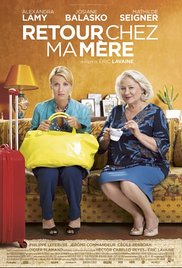
Film Review: RETOUR CHEZ MA MERE (BACK TO MOM’S) (France 2016)****

back_to_moms_poster.jpgRETOUR CHEZ MA MERE (France 2016)****
Directed by Eric Lavaine

Starring: Josiane Balasko, Alexandra Lamy, Mathilde Seigner

Review by Gilbert Seah

There is one good reason to see the new comedy that is a number one hit in France this year. The reason is Josiane Balasko, France’s favourite actress and indeed mine as well. Her most famous films are GAZON MAUDIT (FRENCH TWIST), THE HEDGEHOG, FRENCH FRIED VACATION and TROP BELLE POUR TOI. She won the Cesar for Best Script for her film GAZON MAUDIT. Balasko is a comedy heavyweight and she plays ‘la mere’ in the movie, carrying the movie and making the audience laugh out loud many times when she appears.

The title gives away the plot of this new charming French comedy. Forty-year-old Stéphanie (Alexandra Lamy) is compelled to return home to live with her mother (Balasko), after she loses everything her job, her husband and all her money. She is welcomed with open arms: she can enjoy the over-heated apartment, Francis Cabrel stuck on replay, furious games of Scrabble and precious maternal advice on how to sit at the table and how to live her life. Both women must exercise infinite patience to cope with this new situation. And when the rest of the clan turns up for dinner, settling of scores and family secrets follow on one from the other in a most joyful way.

Besides the comedy that works, the film’s charm comes from the story derived from real life. Everybody has a family of sorts and they all meet, sometimes occasionally for dinner. North Americans have Thanksgiving and Christmas, so they can relate. The film also digs deep in the heart. When the sibling quarrel and fight at the dinner table, mother finally remarks for them to go home repeating that this was the worst night of her life. Lavaine’s (BARBECUE) film is able to evoke drama though occasionally dousing the film with a little sentimentality.
Besides the obvious family dinner gathering, there are other prize comedic set-ups. One is the mother trying to get away from Steph to be with her lover who stays in the upstairs apartment. She tells Steph she is taking the train to Avignon, but Steph insists on accompanying her to la gare, with mother trying to lose her at every move.

This is the kind of French comedy like THE WOMAN IN RED, THE DINNER GAME. TAXI and LA CAGE AUX FOLLES that Hollywood will remake into successful hits. RETURN TO MOM’S is an ideal fit. Like all the other originals, the French version is the best. And no one can replace Balasko as the mother.

RETOUR CHEZ MA MERE takes a bit of time to get on its feet, perhaps a third of its running time. But besides being a comedy, it is foremost a film about family. With this strong grounding, the film can not go wrong. Lavaine’s film turns out to be an extremely entertaining crowd pleaser and it is no surprise it became a hit in its home country.. And in the words of Lavaine during an interview: “This is a story of a woman who has decided that there’s more to life than kids, even if they’re moving back in forty years after making them.”

Clip (en Francais pas sous-titres): http://cineuropa.org/vd.aspx?t=video&l=en&did=306750


TV CONTESTSUBMIT your TV PILOT or TV SPEC Script
Voted #1 TV Contest in North America.
FILM CONTESTSUBMIT your SHORT Film
Get it showcased at the FEEDBACK Festival
writing CONTEST1st CHAPTER or FULL NOVEL CONTEST
Get full feedback! Winners get their novel made into a video!
SCREENPLAY CONTESTSUBMIT your FEATURE Script
FULL FEEDBACK on all entries. Get your script performed

Film Review: AMERICAN HONEY (UK/USA 2015) ****

american_honey_poster.jpgAMERICAN HONEY (UK/USA 2015) ****
Directed by Andrea Arnold

Starring: Sasha Lane, Shia LaBeouf, Riley Keough

Review by Gilbert Seah

The fifth film and fourth feature (I have seen every one of her films) sees British director Andrea Arnold covering similar material in a total different setting. All her films have a disgruntled female as the central character often living a life in the outskirts of a city, one that the protagonist strives to get out of and make something of herself. Her first short, WASP, had a middle-aged woman go to her ex-husband’s home to beat up his woman and take her children out. She ends up leaving her children outside a pub while she goes in for a drink hoping to pick up a man. Her next two films RED ROAD and FISH TANK were hard hitting dramas, both of which were excellent, but her last film, a modern adaptation of WUTHERING HEIGHTS did not work and was plain awful. Her new film AMERICAN HONEY, that premiered at Cannes (that also won her the Jury Prize) is her first film set in America, about a 18-year old teenager, Star (newcomer Sasha Lane who was pick up from a beach by Arnold for a screen test) following a crew of hard-partying teenagers criss-crossing the Midwest while working as travelling magazine salesmen.

Star leaves her mother and her siblings, after being enticed by Jake (Shia Labeouf) who she meets at Walmart to work as a magazine sales crew. The crew is a hilarious gang of misfits: slugging hard liquor in the backs of vans, crashing in rundown motels, and selling fraudulent magazine subscriptions. Star and Jake are ecstatic in each other’s company. They begin dreaming of a house and family to call their own. But their relationship offends the crew’s queen bee, Krystal (Riley Keough).

Arnold knows how to film confrontation – the film’s best scenes are the confrontations between Star and Krystal.

One can see the fascination America has for British director Arnold. She shoots the lead characters first meeting at an American icon – a Walmart. Arnold loves the landscape of Kansas City and the barren landscapes that the van passes during their sale trips. Her verite style can be seen in the film’s loose plot and her frequent use of the hand-held camera.

Arnold is also fascinated by insects as revealed in many of the film’s scenes. Star is seen twice saving insects, a bee from a window and a ladybug from drowning in a lake. A pretty butterfly is also filmed while Sasha falls in a bog in another scene.

But the film has its English roots. The gang is immediately reminiscent of the gang of pickpocket and thieves in Dickens’s OLIVER TWIST. The character Krystal is a cross between Fagin and Bill Sykes. But redemption here, unlike in the Dickens story is up to Star herself, with no one to help. It is a hard life on the American road, even for veteran salesman Jake who Krystal finally gets bored with as a sex object.

` The film’s soundtrack varies from E-40 to Rihanna to Bruce Springsteen with the song AMERICAN HONEY used in the soundtrack at the end of the film. Star and Jake also meet to the dance beats of Calvin Harris and Rihanna’s 2011 smash “We Found Love”.

This is Arnold’s longest film, running at 2 and a half hours, an epic opus to life of American youth living on the outskirts, as seen by a Brit.

Trailer: https://www.youtube.com/watch?v=y1SpWZm1PLc

TV CONTESTSUBMIT your TV PILOT or TV SPEC Script
Voted #1 TV Contest in North America.
FILM CONTESTSUBMIT your SHORT Film
Get it showcased at the FEEDBACK Festival
writing CONTEST1st CHAPTER or FULL NOVEL CONTEST
Get full feedback! Winners get their novel made into a video!
SCREENPLAY CONTESTSUBMIT your FEATURE Script
FULL FEEDBACK on all entries. Get your script performed