Arlo, a 17 year old boy struggles to open up and express himself to his counselor. He is haunted by his past actions due to his inability to control his rage and anger issues.
http://galacticbutterflyfilms.com/
https://www.instagram.com/galacticbutterflyfilms
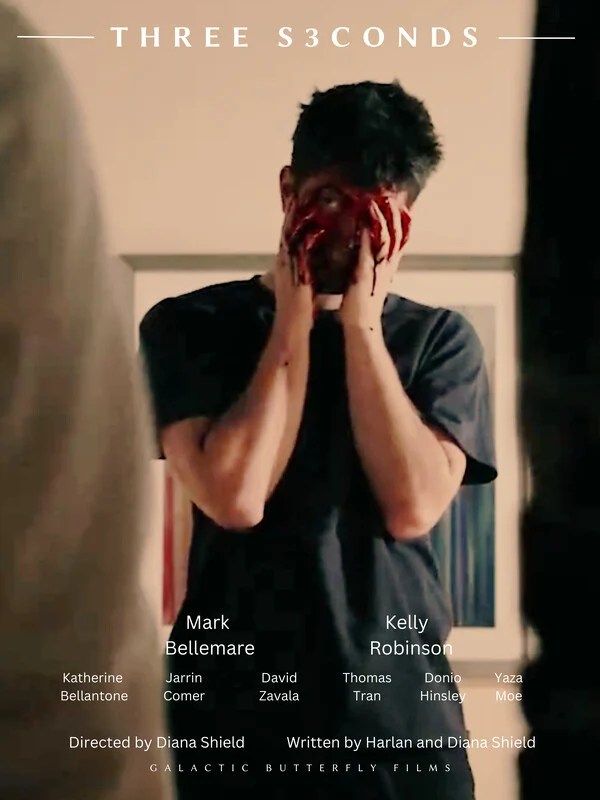
Review by Parker Jesse Chase:
Diana Shield’s THREE S3CONDS opens not with violent spectacle, but with a simple, chilling motif: the relentless tick-tock of a clock. From the outset, time becomes a character as a witness, an accuser, a quiet judge. And in the center of it all sits Arlo (Mark Bellemare), a 17-year-old boy unraveling at the seams in the sterile setting of a therapist’s office. Or so it seems.
This is not your typical therapy session. It’s a descent as we watch a spiraling meditation on rage, violence, and the irrevocable damage that follows it. Shield’s direction wraps us inside Arlo’s mind, where guilt and grief distort time and memory. The atmosphere is claustrophobic. Sofia (played with quiet precision by Kelly Robinson) guides Arlo with guarded empathy, but there’s a palpable tension as though something unseen lurks just beneath the surface.
Antagonism. Threat. Confrontation. Self-security. Domination. These are the words that pulse at the center of Arlo’s confession. As the narrative unfolds, so does the truth of his past: a string of violent acts from the act of bullying, starting bar fights, moments of emotional manipulation, and then… something more. Something irreversible.
The specter of a woman haunts him, but not as a cliché. She’s not a ghost in white. She’s a presence urging Arlo toward getting the help that’s right in front of him. It’s not preachy, but it is intentional: this film is a warning, a plea, and a reckoning.
Alex McDowell’s score heightens the emotional landscape with eerie intensity. In one especially visceral moment, Arlo is yelling, completely consumed by rage, and yet, we can’t hear his words. They’re drowned by the score, but we feel every syllable in our gut. This choice is brilliant. It reminds us that violence, often loud and theatrical, leaves silence in its wake.
The horror of the film doesn’t come from gore or jump scares, it comes from realization. When Arlo stands covered in blood, we’re not shocked by the violence itself, but by how quickly it all happened. Three seconds. That’s all it took for a life to end and for him to fracture beyond repair.
And then we’re met with silence. Arlo speaks. And we realize we’ve been watching not a conversation, but a mental projection. The clock was never broken. The therapist, in reality, was met with nothing but silence. We, the audience, have been trapped in the storm of Arlo’s mind.
In a final twist of poignancy, Sofia reaches for a bottle of scotch hidden in her drawer, pouring it into a coffee mug. She rewatches a video of their session which reveals a record of silence, of weight she silently carries. It’s a subtle nod to the toll this work takes on those who bear witness to trauma, violence, and remorse.
THREE S3CONDS is a short film with long-lasting resonance. It is a chilling character study and a devastating reminder of how quickly anger can calcify into violence. Both Diana and Harlan Shields have crafted something that lingers like the echo of a slammed door, or the ticking of a clock that no longer tells time but reminds you of everything you lost.
A striking, unsettling film that lingers in the bones. Essential viewing for those exploring the intersections of accountability, mental health, and the fragile line between anger and action.
 Festival Reviews