Movie Review: BOY & THE WORLD (2015) Directed by Alê Abreu

Deadlines to Submit your Screenplay, Novel, Story, or Poem to the festival: http://www.wildsound.ca

boy_and_the_worldBOY AND THE WORLD (O Menino e o Mundo) (Brazil 2013) ***1/2
Directed by Alê Abreu

Review by Gilbert Seah

As in last year’s SHAUN THE SHEEP MOVIE, BOY AND THE WORLD is a wordless animated feature though gibberish Portuguese can be heard occasionally in the film’s soundtrack. Thus, this Brazilian import, has a more universal appeal, as it can be understood by people in countries speaking different languages.

The story is also a universal one. Being wordless, one must concentrate a bit more to put together the film’s narrative. The story concerns the boy of the film’s title, one who journeys to the big city, to see what is both fascinating and frightening. All this is captured by the film’s colourful visuals.

The film begins with the boy (animated as a stick figure with huge round Charlie Brown head with black slit eyes and no mouth) looking at a coloured rock. The patterns turn out to be inside other patterns as the camera weaves in and put different colours and patterns. All this is very mesmerizing and captivating. The boy then jumps onto a cloud and after jumps into the waters of a stream and runs into the woods.

The story involves the boy leaving for the city (that looks like Rio de Janeiro) in search of his father. He has various adventures including getting a dog, meeting mechanized workers (looking like THE WALL) and facing police oppression. The film also has abstract moments like the symbolic fight between good and evil as seen by the fight between a black bird and colourful phoenix.

The film contains beautiful moments such as the one emphasizing the importance of family, in which the boy eats bread with a melon dip with his mother and father. But the film has an overall bleak look as director Abreu lays his views on world pollution of lumber and oil, as well as the slow destruction of natural resources.

The visuals are amazing – simple and colourful being the two words best used to describe it – just like the kaleidoscope toy the boy looks and plays with. The segment of the tankers carrying colourful containers, all rectangular in shape filling the screen makes one of the more memorable moments. But just as amazing as the visuals is the film’s soundtrack that is made up of instruments like the flute, and Brazilian music like the samba and hip-hop.

The film has the feel of METROPOLIS and is at times, just as intense. To Abreu’s credit, the film is without dialogue and thus has to be more cinematic. Though the film is animated and about a boy, children might find the film difficult to understand. But the film has a total Brazilian feel about it – from the characters to the background.

BOY AND THE WORLD is welcome, very original adult animation so different from what other studios like Disney, Ghibli and Aardman provide. The film is unique and has won over 40 film festival awards so far.

Also, Free logline submissions. The Writing Festival network averages over 95,000 unique visitors a day.
Great way to get your story out: http://www.wildsound.ca/logline.html

Deadlines to Submit your Screenplay, Novel, Story, or Poem to the festival: www.wildsound.ca

Watch recent Writing Festival Videos. At least 15 winning videos a month: http://www.wildsoundfestival.com

Movie Review: BATMAN RETURNS (1992)

WILDsound Festival's avatarFAN FICTION Film and Writing Festival

Submit your Fan Fiction Screenplay to the Festival: http://fanfictionfestival.com

BATMAN RETURNSBATMAN RETURNS, 1992
Movie Review

Directed by Tim Burton
Starring: Michael Keaton, Michelle Pfieffer, Danny DeVito, Christopher Walken, Michael Gough
Review by Andrew Kosarko

SYNOPSIS:

The Caped Crusador (Michael Keaton) is pitted against the demented, ravenous Penguin (Danny DeVito), a pitiful, orphaned psychopathic freak who once went on a baby-killing spree, and a “power” hungry capitalist villain Max Shreck (Christopher Walken). As the two criminals plot to gain domination over Gotham City, BATMAN must plot to stop them. Cat Woman (fearlessly and fabulously played by Michelle Pfeiffer). She is the slinky, sharp-clawed alter-ego of Shreck’s secretary Selina. Batman must overcome his own dark past, and his present love entanglements, to rid Gotham of it’s evil enemies.

REVIEW:

People who like this movie seem to like it because it screams Tim Burton left and right. Some people who absolutely hate this movie…

View original post 819 more words

Movie Review: BATMAN (1989)

WILDsound Festival's avatarFAN FICTION Film and Writing Festival

Submit your Fan Fiction Screenplay to the Festival: http://fanfictionfestival.com

BATMAN MOVIE POSTERBATMAN, 1989
Movie Reviews

Directed by Tim Burton
Starring: Jack Nicholson, Michael Keaton and Kim Basinger
Review by Mike Peters

SYNOPSIS:

Gotham City is under siege. Criminals and corrupt officials rule and the innocent are left defenseless. Crime boss Carl Grissom (Jack Palance) and his right hand man, Jack Napier (Jack Nicholson) are the true leaders of this city. They rule with an iron fist. However, Jack is eventually set up by Carl and is forced to fend for himself while on a routine mission at Axis Chemicals. This is where Jack, on the verge of escape from the police, first encounters Batman. Batman prevents Jack from escaping by dropping him into a vat of toxic chemicals. Jack reemerges as The Joker and vows to destroy the city of Gotham and Batman. Batman, on the other hand, vows to save the…

View original post 1,155 more words

Movie Review: VERTIGO (1958) Directed by Alfred Hitchcock

Deadlines to Submit your Screenplay, Novel, Story, or Poem to the festival: http://www.wildsound.ca

VERTIGO MOVIE POSTER
VERTIGO, 1958
Classic Movie Review

Directed by Alfred Hitchcock
Starring James Stewart, Kim Novak
Review by Steven Painter

SYNOPSIS:

A San Francisco detective suffering from acrophobia investigates the strange activities of an old friend’s wife, all the while becoming dangerously obsessed with her.

REVIEW:

Vertigo (1958) is the first of Alfred Hitchcock’s four straight masterpieces of the late-50s and early-60s (North by Northwest, Psycho and The Birds being the others). It also might be the best of the four. It is the most complex.

The story revolves around Scotty Ferguson, played by James Stewart, who is a retired detective in San Francisco. Ferguson retires after coming down with arachnophobia. The move opens with a rooftop chase. Scotty and another officer are hot on the trail of a criminal. They jump from roof to roof. The other officer makes the jumps fine, but Scotty has trouble on one. The officer stops his pursuit to help Scotty. Unfortunately for the two, Scotty has a case of vertigo and the officer loses his balance, falling from the roof.

While trying to get over his arachnophobia, Scotty spends a lot of time with Midge, a former fiancée, who is nothing more than an interesting character. In fact, she is basically forgotten in the second half of the movie for some reason. She is basically someone who is inserted for Scotty to talk to. She has some fine qualities, but they are not accented enough in her brief screen time.

Anyway, a former schoolmate of Scotty’s, Gavin, calls him up for a job. At first Scotty refuses — saying he is retired. But Gavin convinces him that the job is good. Scotty is asked to look after Gavin’s wife, Madeline, who seems to believe she is the reincarnation of an ancient relative named Carlota. Carlota had committed suicide and Scotty’s friend feels that Madeline will do the same.

Scotty sees Madeline first in a restaurant and then follows her throughout the next day. He is struck by her. In fact, the audience is captivated by her. Kim Novak, despite her tumultuous relationship with Hitchcock, does a great job in this movie. She is very photogenic and her presence captivates the audience. Hitch also devoted a lot of time to her trivial routines. Or at least what would normally be a trivial routine. Hitch makes sure we pay attention to Novak’s beauty and the beauty of the city.

This is where Vertigo stands out from a lot of Hitchcock movies. The story might be more complex than a lot of his other movies, but the photography is so simple. The city of San Francisco has never looked so good on film. The winding streets, the local shops (Ernie’s was one of Hitch’s favorite restaurants), the Redwood forest, the deep history of the Bay Area, are all brought to life. Of course there is the famous Golden Gate Bridge and the monumental scene where Scotty saves Madeline when she jumps into the bay. Typically movies shot in Technicolor tend to make colors too bright. That is not the case here as all the color saturation seems perfect.

Once Scotty saves Madeline, the two fall in love. Madeline is crazy though. Because of his love for her, Scotty is unable to notice the warning signs of Madeline’s suicide. She and he make a trek down the coast to an old mission. This is where Carlota died — it is where Madeline wants to die. Because of his arachnophobia, Scotty is unable to prevent Madeline from climbing the steps and throwing herself out the bell tower at the mission.

During an inquest, it is found that Madeline died accidentally and Scotty could do nothing to prevent her death. The scenes in the mission bell tower are most famous for Hitchcock’s “Vertigo shot.” The shot that mimics the effect of vertigo was something Hitch had been working on for over 20 years. It was finally perfected here and was done by using miniature models. The camera was moving toward the models while the lens was zooming out. The technique has been used in movies many times since Hitch first pioneered it.

Devastated by another death he feels he could have prevented, Scotty goes into rehab. This is the last time we see Midge, as she and the other doctors are unable to get Scotty back on track. After an unspecified length of time and for some unknown reason, Scotty is taken out of rehab and put back in the real world. Here he drifts along thinking about Madeline. One day, while walking along the street, Scotty notices a girl who looks a lot like Madeline. He stalks his prey to her hotel where he makes his move. The girl’s name is Judy. After some resistance she agrees to go out with Scotty. After their first date, in which Scotty talks a lot about Madeline, it is revealed to the audience that Judy is in fact Madeline. Kim Novak plays both characters and just has dyed her hair. Although there are times when it seems that she has done more than just dye her hair to change from Madeline to Judy.

This would be a good time to mention that Novak was not Hitch’s first choice for the role. He wanted to use Vera Miles. But since it took so long for a script to be written, Miles was unable to be used because she got pregnant. So Novak was used and Hitch didn’t like her. The two didn’t get along. Novak had other ideas on how the play the character. Despite the tension, the performance on the screen is great.

Scotty decides to remake Judy in the model of Madeline. Of course Judy resists this. She had been hired by Gavin to play Madeline once in order to cover up the murder of Gavin’s real wife, the real Madeline. Since Scotty had arachnophobia, something Gavin knew, Scotty would be unable to save Madeline when she “jumped” from the bell tower. In fact, Judy ran up the bell tower where Gavin threw his wife’s body off.

This is not realized by Scotty until the fully remade Judy puts on a necklace that had belonged to Madeline and Carlota before her. Obsessed with the crime, Scotty forces Judy back to the mission and up the steps of the bell tower. In triumph, Scotty makes it to the top. In tragedy, footsteps are heard coming up the stairs and Judy jumps out of the tower in one of the most frightening scenes of the Hitchcock cannon.

Vertigo is a masterpiece plain and simple. It is regarded highly by critics, scholars and audiences. The main reason for this can not be found, at least to me. It has some sort of quality that just makes it enjoyable to watch. Maybe it is the complex story. Maybe it is the luscious scenery. Maybe it is the performance of Jimmy Stewart. Maybe it is the chemistry between Stewart and Kim Novak. Whatever it is, this movie is a must see for anyone who likes movies.


Also, Free logline submissions. The Writing Festival network averages over 95,000 unique visitors a day.
Great way to get your story out: http://www.wildsound.ca/logline.html

Deadlines to Submit your Screenplay, Novel, Story, or Poem to the festival:www.wildsound.ca

Watch recent Writing Festival Videos. At least 15 winning videos a month:http://www.wildsoundfestival.com

Movie Review: THE FOREST (2016) Horror

Deadlines to Submit your Screenplay, Novel, Story, or Poem to the festival: http://www.wildsound.ca

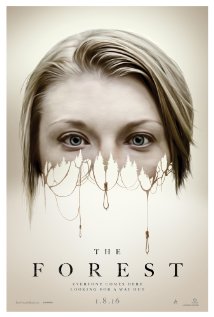
the_forest_posterTHE FOREST (USA 2015) ***
Directed by Jason Zada

Review by Gilbert Seah

The beginning of January usually sees new low budget films make number one at the box-office. Universal’s little horror flick , THE FOREST aims to do just that, and hopefully keep their fantastic 2015 year of box-office hits carried over to 2016.

Twins have always been a favourite pick in the horror genre. Films like Brian De Palma’s SISTERS, David Cronenberg’s DEAD RINGERS and others like THE OTHER and last year’s German GOODNIGHT MOMMY are prime examples. THE FOREST combines the twins story to a haunted forest plot in a relatively scary film about a young woman Sara (Natalie Dormer) who travels to Japan’s forest below Mount Fuji to search for her missing twin, Jesse (also played by Dormer but with black hair).

For a ghost story, there is little gore except a stabbing and a few imagined maggots. Director Zada is fond of false alarms to scare the audience out of the seats. These include a homeless man suddenly banging Sara’s taxi window in Japan, her dream of little Jesse in the tent screeching at her and scares from a Japanese teenager in school uniform among others.

At its best, the film has genuine cinematic scares. The dark of a forest is already creepy in itself. THE BLAIR WITCH PRJECT was scary enough with its camping segment shot mainly in the dark. Zada utilizes the segment in which Sara sits in the tent in the forest to stay the night waiting for her sister to return, to maximum effect. The use of light and shadows from the burning fire adds to the creepiness. Sara’s fall into a huge hole and exploring an underground cave also adds to the film’s best moments.

Story-wise, the plot is simple enough. It is a sister’s search for her twin in a Japanese forest known as a place where people go to die. A few loose ends could be easily explained. One immediate point that is questionable is character Rob (Eoin Macken), who meets Sara. He is supposed to be an Australian journalist in Japan. But he speaks with an American accent. But from the dialogue that specifies Rob as a traveller, it could be assumed that Rob is American with an Australian posting. One scene has the Japanese guide tell Sara that in the forest bad things can happen, but they are not real and are all in the head. This is an excuse for other non-explanations in the plot such as Jesse’s photos on Rob’s cellphone or Rob’s answer to Sara that Jesse has been dead for 5 days. These could be dismissed as imaginations in Sara’s head.
Still, this relatively slow moving horror movie is well scripted by no less than 3 writers. Zada’s direction is apt enough and there are sufficient scares – false alarms or real ones.

Do not expect scenic shots of Mt. Fuji or its forests below. The film was actually shot in a National Park in Serbia with an entire crew of Serbians, as can be seen in the end credits. But the cinematography is excellent for a horror flick and the Serbian National Park looks like quite the place to visit.

THE FOREST will definitely make one think twice when camping at night.

Also, Free logline submissions. The Writing Festival network averages over 95,000 unique visitors a day.
Great way to get your story out: http://www.wildsound.ca/logline.html

Deadlines to Submit your Screenplay, Novel, Story, or Poem to the festival:www.wildsound.ca

Watch recent Writing Festival Videos. At least 15 winning videos a month:http://www.wildsoundfestival.com

Movie Review: THE WRONG MAN (1956) Directed by Alfred Hitchcock

Deadlines to Submit your Screenplay, Novel, Story, or Poem to the festival: http://www.wildsound.ca

THE WRONG MAN MOVIE POSTER
THE WRONG MAN, 1956
Classic Movie Review

Directed by Alfred Hitchock
Starring Henry Fonda, Vera Miles
Review by Steven Painter

7.5/10 fan rating on IMDB

Read more professional reviews

SYNOPSIS:

The police were convinced… The witnesses were positive …Yet he was… THE WRONG MAN

REVIEW:

“The Wrong Man” could have been the title for many movies directed by Alfred Hitchcock. It was bestowed on a movie he directed in 1956. The tone of the movie is different from other Hitchcock ones. It is also out-of-date, a rarity among the works of Hitch before the late-60s. Despite these drawbacks it is wonderfully acted.

The Wrong Man is based on a true story. This is probably one of the reasons why there is a lack of humor in it. Hitch always used humor in his movies to counteract the suspense. He felt the audience needed to be let off the hook at times. There is no humor present here. It is a straightforward, grim look at the breakdown of a family.

The story involves Christopher Emmanuel Balestrero, played by Henry Fonda, known as Manny to his family. He is a musician at New York’s Stork Club, trying to make ends meet like a lot of other people. He has a wife, Rose, played by Vera Miles, and two young sons. Rose has recently gotten some dental work done, so the family is in financial difficulties. Despite these difficulties, Rose and Manny try their best to hide it from their kids.

Manny decides to borrow a little money against Rose’s life insurance policy. When he goes to the insurance office, some workers there claim that Manny is the person who recently committed armed robbery in the office. The man had not been caught yet. So the next evening, Manny is picked up outside his house by the police.

One of the reasons why Hitchcock wanted to make this movie was because it involved a scene where Manny is being driven through his own neighborhood in the back of a police car. He sees the normal, trivial routines of everyone, but is unable to take part in any of it. Instead, he is caged in. This fear of being picked-up by the police for something that he didn’t do, is something present in all of Hitchcock’s works and a great fear the man himself had. Manny is brought into the police station. In this pre-Miranda rights era, he is held with no reason. Of course arguments could be made today that the Miranda rights are being ignored by police officers, but at least at this point in time, there were no such rights. This is one of the biggest drawbacks of the movie. It is outdated in this instance and because a lot of audience sympathy is built up because Manny is held with no rights, it just doesn’t seem believable today.

Anyways, Manny is held and some local business owners are brought in to identify him. They can’t say for certain if Manny is the robber, but he seems close enough to the real criminal in looks and handwriting. This satisfies the police and they continue with their prosecution.

Strapped for money and with a husband facing a trial, Rose begins to lose it. She drifts farther and farther from Manny, the kids, and the world itself. Eventually she has to be put in an asylum. This secondary vein of the movie distracts from the main story of Manny being falsely accused of the crime, but in Hitchcock’s defense, the real wife of Manny did in fact end up in an asylum.

As with all things of this time period in Hollywood, the movie has a happy ending. In a great dissolve shot, we see Henry Fonda’s face become that of the real robber. The real robber is caught while trying to rob another store in the neighborhood. When this robber is brought in to be identified, the storeowners come in and say the same things they did when Manny came in. Of course Hitch put this in to cause some doubt in the audience. He asks “do we really ever know who the right man is?”

The movie ends with a blurb across the screen stating that the Balestrero family lived happily ever after. In real life, Rose was committed to the asylum and never regained her sanity. The ordeal crippled the family, instead of making them stronger – as the movie implies.

The Wrong Man is not a bad movie. It is outdated and it is grimier than most Hitchcock movies. But it is well acted. Vera Miles and Henry Fonda give tremendous performances. For this reason alone the movie should be watched. But if you need another reason, the fear of being a falsely accused person with no rights is something that is inherent in a lot of people. That fear is played out in this story.


Also, Free logline submissions. The Writing Festival network averages over 95,000 unique visitors a day.
Great way to get your story out: http://www.wildsound.ca/logline.html

Deadlines to Submit your Screenplay, Novel, Story, or Poem to the festival:www.wildsound.ca

Watch recent Writing Festival Videos. At least 15 winning videos a month:http://www.wildsoundfestival.com

Movie Review: PSYCHO (1960) Directed by Alfred Hitchcock

Deadlines to Submit your Screenplay, Novel, Story, or Poem to the festival: http://www.wildsound.ca

PSYCHO MOVIE POSTERPSYCHO, 1960
Movie Reviews

8.5/10 Fan Rating on IMDB.com

Read more professional reviews

Directed by Alfred Hitchcock
Starring: Janet Leigh, Anthony Perkins
Review by Steven Painter

SYNOPSIS:

After embezzling $40,000 from her employer, Phoenix office-worker Marion Crane flees the monotony of her mundane existence with dreams of starting a new life in California with her boyfriend, Sam Loomis. As night begins to fall, an exhausted Marion decides to spend the night at a remote motel owned by Norman Bates, a peculiar, reserved young man under the control of his ailing but domineering mother.

REVIEW:

Have you ever walked into a movie theater, sat down and watched the entire movie from start to finish? Of course you have. Did you know that you have Alfred Hitchcock to thank for this way of watching movies? In 1960 a little movie named Psycho was released. It changed the way movie making, censorship and movie watching was done in America. Quite frankly it might be as close to the perfect movie as anything else ever made.

Murder was not a subject that was taboo to Hitchcock by 1960. A murder or killing seems to occur in every one of his movies. Killing was routine on-screen before the 1960s, although the actual shooting of the gun or stab of the knife was rarely seen. But with Psycho Hitchcock did the unthinkable, he killed off a big star and he showed it in the bathroom no less.

This idea of killing off a star like Janet Leigh and showing it caused trepidation in Hollywood. No one would fund Psycho. In order to cut costs the movie was shot in black and white, the famous shower murder blood is actually chocolate sauce, and production was done by Hitchcock’s television crew. If Hollywood studios were mad at Hitchcock, the censors were enraged. They threatened to not approve the film. That did not stop Hitchcock from going ahead with production however. Thanks to the success of Psycho and Some Like It Hot, which was released a year earlier, the production code in Hollywood became less strict.

The movie’s stars were the well-known Leigh and a little known television actor named Anthony Perkins, who would forever be typecast after his portrayal of Norman Bates. Leigh plays Marion Crane, a common secretary who lives in Phoenix. Hitchcock has once again introduced a theme of birds into one of his movies. Crane happens to love Californian Sam Loomis, but she cannot marry him because he is in debt, paying alimony to his ex-wife.

As it happens, Crane’s boss receives $40,000 from a client. The boss is tied up with the client, so Crane volunteers to deposit the money in the bank and then head home as she complains of a headache. Instead, she decides to run off to California with the money so she can get married. As movie watchers we want Crane to make it to California, even though we know stealing the money was the wrong thing to do.

Hitchcock throws in some good suspense on Crane’s road trip to California. A cop asks her why she is stopped on the road at one point. She said she was tired and had to pull over for the night. She then decides to trade in her car, as her boss who saw her as she was leaving town, might call her in to question when he finds out the money is missing. Once again, this time at the car dealership, a police officer poses a threat to Crane’s safety. Throughout the whole thing the audience is concerned with the money and Crane coming out alright.

Then we switch gears. While on the road it becomes dark and stormy. Crane can’t keep driving so she decides to pull over at the Bates Motel. Here she checks in and is greeted by the quirky Norman Bates. Bates seems like a nice fellow, who really is just doing this hotel clerk job because of his sick mother. For some reason Bates enjoys talking about his mother, but as an audience all we care about is Crane making it to California safely.

Unfortunately, she does not. During the night, Crane decides to take a shower. While in the shower she is attacked by the crazed Mrs. Bates in the famous murder scene, with Bernard Herrmann’s violins accompanying. This event was so unbelievable at the time; Hitchcock wanted to make sure that the audience witnessed it, so he told movie theater owners not to let anyone in after the movie had started. Before this people would walk into a movie theater at any time and watch the movie, then stick around and watch the movie again up to the point when they walked in. Then they would leave. But Psycho would not work if people saw the movie like that, so Hitchcock created a trend in movie going that has continued to the present day.

Back to the story, our friend Norman now has to clean up after his mother has made an awful mess in the bathroom. As an audience our affection has changed from Crane to Norman Bates because he seems like a nice kid. Hitchcock ensures that audience sympathy is with Bates when Norman tries to submerge Crane’s car in a swamp. At first the car does not want go down. Like Norman, the audience sits on the edge of their seats, until finally the thing begins to sink.

By this time the $40,000 has been reported missing. Detective Arbogast has been called out to examine it. He follows Crane’s sister from Tucson to California where Loomis is. Everyone knows Crane was going to find Loomis. The only problem is she has not arrived. Arbogast checks around and finds out that she was staying at the Bates Motel. After some inquiry, including going into the Bates House, Arobogast finds himself in the swamp. He has become another victim of Mrs. Bates’ knife.

When Arobogast doesn’t show up Loomis and Crane’s sister, played by Vera Miles, decide to see what happened to him. They find out. The old Mrs. Bates has actually been deceased for quite some time. Her son has kept her body relatively well preserved and for some reasons that will be explained by psychologists, he enjoys dressing up like her and killing people. He attempts to kill Crane’s sister, but Loomis stops him.

The movie ends with a psychiatrist giving an explanation of what we just saw happen on the screen. This is all very important stuff that the psychiatrist says, but what stands out about the ending is when we see Norman Bates again. He is sitting in a room alone, looking at a fly. We hear his mother’s voice speaking. Then Hitchcock superimposes a skull over the smiling Bates face, leaving the audience with one more frightening image before the story ends.

Quite simply, this is a must see movie for anyone that is living. But if you are a moviemaker, horror fan or want to be introduced to Alfred Hitchcock, then Psycho is the perfect movie for you.


Also, Free logline submissions. The Writing Festival network averages over 95,000 unique visitors a day.
Great way to get your story out: http://www.wildsound.ca/logline.html

Deadlines to Submit your Screenplay, Novel, Story, or Poem to the festival:www.wildsound.ca

Watch recent Writing Festival Videos. At least 15 winning videos a month:http://www.wildsoundfestival.com

Anomalisa – How the movie got made

WILDsound Festival's avatarWILDsound Festival

Watch and Share our new featurette on how Charlie Kaufman and Duke Johnson humanized the puppets of Anomalisa in “Peopling Anomalisa”

Deadlines to Submit your Screenplay, Novel, Story, or Poem to the festival: http://www.wildsound.ca

Watch recent Writing Festival Videos. At least 15 winning videos a month: http://www.wildsoundfestival.com

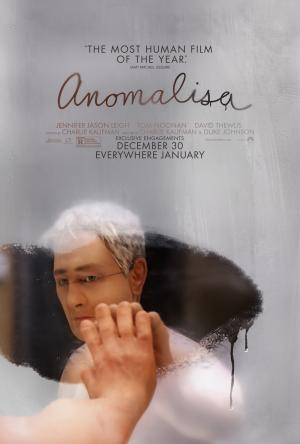
ANOMALISA_posterSynopsis

Michael Stone, husband, father and respected author of “How May I Help You Help Them?” is a man crippled by the mundanity of his life. On a business trip to Cincinnati, where he’s scheduled to speak at a convention of customer service professionals, he checks into the Fregoli Hotel. There, he is amazed to discover a possible escape from his desperation in the form of an unassuming Akron baked goods sales rep, Lisa, who may or may not be the love of his life. A beautifully tender and absurdly humorous dreamscape, from the brilliant minds of Charlie Kaufman (SYNECDOCHE, NEW YORK) and Duke…

View original post 102 more words

Movie Review: THE DARK KNIGHT (2008)

WILDsound Festival's avatarFAN FICTION Film and Writing Festival

Submit your Fan Fiction Screenplay to the Festival: http://fanfictionfestival.com

Reviewed two days before the film premiered in 2008.

THE DARK KNIGHT
Movie Review
Directed by Christopher Nolan
Starring: Christian Bale, Heath Ledger, Aaron Eckhart, Michael Caine, Maggie Gyllenhaal, Gary Oldman, Morgan Freeman
Review by Matthew Toffolo

SYNOPSIS:

In this sequel to The Batman Begins, Batman raises the stakes in his war on crime. With the help of Lieutenant Jim Gordon and District Attorney Harvey Dent, Batman sets out to dismantle the remaining criminal organizations that plague the city streets.

REVIEW:

This is an epic movie. The first of its kind in the action genre (which is how it will be categorized). There’s something for everyone in The Dark Knight. But for those expecting to see your typical comic book hero action film will be a tad disappointed. In its essence, this is really a detective film about a city trying…

View original post 937 more words

Movie Review: NORTH BY NORTHWEST (1959) Directed by Alfred Hitchcock

Deadlines to Submit your Screenplay, Novel, Story, or Poem to the festival: http://www.wildsound.ca

NORTH BY NORTHWEST MOVIE POSTER
NORTH BY NORTHWEST, 1959
Classic Movie Review

Directed by Alfred Hitchcock
Starring Cary Grant, Eva Marie Saint
Review by Steven Painter

IMDB fan rating: 8.4/10

SYNOPSIS:

A hapless New York advertising executive is mistaken for a government agent by a group of foreign spies, and is pursued across the country while he looks for a way to survive.

REVIEW:

In 1935 Alfred Hitchcock made a movie called The 39 Steps about a man who is falsely accused of murder and is chased throughout the Scottish countryside by the police and a group of spies before clearing his name. Nearly 25 years later, Hitchcock made a similar movie, this time based in America, called North by Northwest (1959).

What separates North by Northwest from the majority of Hitchcock’s wrong man accused movies is that there is a lot of humor here. The talented Cary Grant plays the lead role of Roger Thornhill. Grant had been a huge success in screwball comedies like Bringing Up Baby (1938) and His Girl Friday (1940). He had also been one of Hitchcock’s favorite actors to use.

Thornhill is an advertising executive who deals with the hustle and bustle of New York City the best way he can. He always seems to be on the move, but he makes sure he enjoys himself. On the way to lunch one day, he is stopped in a restaurant by some men. The men say they need to talk to him and then they kidnap Thornhill. He is taken out to the countryside where the kidnappers believe he is government agent named George Kaplan, a man who is supposed to be hot on their trail as the kidnappers are doing some spying on the U.S. government.

The spies are never specified as to their country of origin or really what the significance is of what they are after. Microfilm is what drives these spies, we find out. This is the largest McGuffin used in Hitchcock’s movies. It is merely a device to further the story, but matters little as the real story is about the relationships between the people in the movie.

Thornhill denies being Kaplan to no avail. The kidnappers decide to get him drunk and then set him loose on a drive through the countryside. This scene is similar to the one in Notorious (1946) where a drunken Ingrid Bergman takes a wild car ride with Cary Grant. Even the scene in To Catch a Thief (1955) with Grace Kelly and Cary Grant comes to mind. Grant seems to find himself in dangerous automobile situations when working with Hitchcock. He was even in a treacherous car ride in Suspicion (1941), just before Joan Fontaine gave her Oscar winning speech.

Getting back to the story, Grant ends up drunk in a police station and has to call his mother for help. The mother is a frequent character in Hitchcock movies. Thornhill’s mothers might be the most quirky of all Hitchcock ones. Anyway, Thornhill explains that he was kidnapped and the cops go with him to the countryside estate where the kidnappers are. At least that is where they were. No one knows what Thornhill is talking about. They say the house belongs to a man who is a part of the United Nations.

Embarrassed, Grant goes to the United Nations to find the man who owns the estate. This is an important scene in the movie and one that almost didn’t happen. The government would not allow Hitchcock to film on the UN property. So Hitch asked if he could go in to make measurements so they could rebuild some of the building in the studio. Hitch snuck a camera into the building and got some of the great shots used in the movie illegally.

Thornhill goes to the UN where the man he is looking for is killed. Stabbed in the back by someone. Thornhill is the only one around and he pulls the knife out of the man’s back. Being the UN, there are photographers around and Thornhill is captured while holding the knife over the dead man. He is obviously branded as the murderer. Now the situation is set up: Thornhill is on the run from the spy ring because they think he is Kaplan. He is also on the run from the police because they believe he killed the man in the UN.

At this point we cut away from Thornhill’s troubles and listen in to a meeting in Washington. Here it is explained by government officials that there is no man named Kaplan. He was just made-up to keep the spy ring occupied while the real secret agent infiltrates them. Since Thornhill has become the target of the spy ring, the government officials believe all is well. No sense in disrupting their good fortune by telling Thornhill that there is no Kaplan, although it would mean saving his life.

Thornhill makes his way onto a train headed toward Chicago, where Kaplan is supposed to be at this point. On the train he meets the cool blonde Eve Kendall, played by Eva Marie Saint. In a scene similar to that of The 39 Steps, Thornhill is on the run from the police and ends up “accidentally” stepping into the cabin of the cool blonde. Unlike in The 39 Steps, here Eve accepts the advances of Thornhill.

The train makes it to Chicago where Eve makes sure she handles all the details between Thornhill and Kaplan, as it would be a bad idea to have a wanted man picked up in a public phone booth. Eve says Kaplan will meet Thornhill at a bus stop in the middle of nowhere. So Thornhill gets on the bus and heads from the city to farmland.

The famous crop duster scene occurs here. Hitchcock took the typical cliché of being set up from the dark alleys of the major metropolitan area to the warm sunshiny cornfields of the Midwest. Film noir this is not, but it is suspenseful.

Getting chased by a crop duster would make anyone angry and Thornhill is just that as he makes it back to Chicago. He discovers that Eve has been playing him for a sap and vows vengeance on her as he discovers she has been palling around with Philip Vandamm, played by James Mason, the head of the spy ring.

To give a quick recap of what happens, the officials in Washington step in to help Thornhill out as he has almost blown the cover of their secret agent, Eve, while trying to embarrass here at an auction. The officials take Thornhill to Mount Rushmore where he is briefed on the situation. A plan is executed, Thornhill is almost executed, and the movie ends with a harrowing trip around the monuments of Mount Rushmore. Like the UN building, Hitch was unable to film on the monuments — something about defacing them by having people run over the faces. It didn’t matter, as they were recreated in the studio.

North by Northwest is one of Hitchcock’s best movies. It is also one of his most beloved. This is because the movie is filled with plenty of suspense, plus an equal amount of comedy. Cary Grant and Eva Marie Saint are a wonderful team on-screen and James Mason plays a wonderful bad guy. This is simply an enjoyable movie for people of all tastes.

Also, Free logline submissions. The Writing Festival network averages over 95,000 unique visitors a day.
Great way to get your story out: http://www.wildsound.ca/logline.html

Deadlines to Submit your Screenplay, Novel, Story, or Poem to the festival:www.wildsound.ca

Watch recent Writing Festival Videos. At least 15 winning videos a month:http://www.wildsoundfestival.com