Inside The Chaos: When to Walk Away from a job.

When to Walk Away from a job.jpgby Kierston Drier

An adage in my family has long since been, “Some of the best jobs are the ones you don’t take.”

I can’t believe I am writing this, but for this first time since entering the world of film and television, I turned down work.

Not just turned it down, but walked away from a job that was handed to me. Walked out in the interview. And I firmly believe it was the right thing to do. I gathered enough information during the interview to understand that the show I was being offered a job in would be far more difficult than the reciprocation they were offering. I’m going to share with you some of the warning signs for what to look for and how to tell when it might be better to let a job pass you by.

KNOW HOW YOU GOT THE CALL

It’s important to start at the beginning here. There is a difference between getting an interview for a mass applied for job posting online, a call from a head hunter, and a personalized referral from a colleague or known source. Mass applied for jobs are likely to have a large pool of applicants, and head hunters can usually guarantee a certain amount of quality in their offers . Referrals are common and trusted in the film and television industry, but that doesn’t mean you shouldn’t consider the person who referred you, what your professional relationship with them is, and who they chose to send your information to.

KNOW THE COMPANY

Research the production company, the show, and, if possible, the team you’re with. Some shows are secretive and keep their information quiet, but that doesn’t mean that you can’t research the production company or tap your industry resources for reviews and references on working with the company or similar team. Listen to multiple viewpoints, and listen to everyone’s opinion. Don’t make an opinion on your own immediately, but listen to and tuck away what you hear from others and what you glean from your own personal research.

KNOW YOUR JOB

Know what job you’re going in for. Know it inside and out. Know what it takes to do your job correctly and what things you need the job to be able to provide you in order for you to perform your responsibilities. Need access to reliable transportation? Need to be promised a certain type of equipment? A specifically allocated budget? Know what you’d like to have, know what you need to have, and know what the happy medium would be between the two so that you can negotiate comfortably.

KNOW YOUR RATE

This is so so important. Know your rate! Know your personal rate, know the professional rate for that job in general, know what your worth is based on your experience and your craftsmanship. Make sure the people hiring you know what that rate is. Go in with knowing what you’d LIKE to make, what you SHOULD make and what rate is TOO LOW.

There is a strategy to working below rate and working for free. Sometimes it is done for experience, for a special credit, or for a passion project or for a friend. But remember when going in for a JOB, what is your relationship to the employer? If the job is one you have done before, and one you have experience in, then there is little reason you should accept any lower than the standard professional rate. Unless you are doing a favour for a friend or close contact, you should not be willing to negotiate that rate any lower than industry standard.

KNOW WHEN TO WALK

Walk away when:

-The company refuses to answer all your professional questions with clear, informative answers.

-The company or production makes unrealistic promises that they do not put in writing.

-The company  or production uses non-committal language while discussing details that are absolutely necessary for your job to be completed. (Ex. ” We’re pretty sure we’ll have enough money for that [insert absolutely necessary item].”)

-The production or company refuses to pay your kit fee, or supplement you for your own materials without prior discussed and written consent.

-The information you are basing your job around keeps changing.  (Ex. A craft person who constantly gets a different head count number than predicted; a location manager whose location requirements keep changing.)

-The job is physically more hours, labour or requirements than is legal.

Remember,  some jobs aren’t worth the headache!

When to Walk Away from a job2

Movie Review: DEVIL WEARS A SUIT, (Australia) LGBT, Sci-Fi

Played at the June 2017 LGBT Toronto Film Festival

Directed by Eli Mak

A high-concept drama/scifi about a Jewish boy who must decide whether to ‘cure’ his homosexuality with an injection or be ostracised from his community forever.

CLICK HERE – and see full info and more pics of the film!

Review by Kierston Drier

 Some films make you laugh, some make you think. Some punch you in the gut and break your heart. Few do this so well as DEVIL WEARS A SUIT, coming to us from Australia by Director Eli Mak.

In this transcendent science-fiction piece, teenage Adam from an established Jewish household, must submit to a homosexulity test at his school. If he fails and is shown to be gay, he will be kicked out of school and likely disowned by his family and community. But sweeping the world is a new homosexuality “cure”- an injection that can “make your straight.”

Adam considers his options and goes to buy the cure, when he runs into an old friend from high school he hasn’t seen in years, Jarred. It turns out Jarred didn’t move to Israel as his family has said. Jarred didn’t pass the homosexuality test years before, and is now living in near squalor conditions, a social outcast from his community. Seeing what Jarred has, and what he gave up in order to live the life he wanted, Adam must question what his freedom is worth.

Academically speaking, science fiction is a medium of storytelling that addresses a current issues, softened through the lenses of the almost-unbelieveable. When we think of the areas in the world where people must hide and conceal their sexuality for fear of ostracization, it becomes terrifyingly easy to believe a “cure” like the one is this movie might be utilized, even in today’s society. But at what cost to human lives?

Not only is DEVIL WEARS A SUIT beautifully shot, superbly casted and performed and stunningly cinematic, it’s story will leave you breathless. It’s impact will resonate with anyone who has ever questioned what a life without love is worth. It will throw into sharp focus the lengths people can go to in order to conform. DEVIL WEARS A SUIT has an ominous undertone, that foreshadows the outcome of a world that puts conditions of love.

This is science fiction at it’s finest, and it is cinema at it’s most engaging. A special note must be made to the exceptionally well chosen and well executed score, for the music in the piece adds a rich emotional element.

Bravo, Eli Mak. DEVIL WEARS A SUIT is a multifaceted, deeply layered, dramatic, emotional, thought-provoking and fundamentally beautiful film. See it.

devil_wears_a_suit_movie_poster.jpg
 

Movie Review: MASC ONLY (USA) LGBT, Comedy

Played at the June 2017 LGBT Toronto Film Festival

Directed by Drew Droege

Gay best friends, Tommy and Wesley, unwittingly venture to an intimidating party hosted by the gay elite. 

CLICK HERE – and see full info and more pics of the film!

Review by Kierston Drier

This racus American Comic short is a delight to the senses. Tommy is a young gay man living in New York and frustrated with his life. Why? Because he lives in the classic cliche of his community. His friends, even his best friend Wesley, are vain, superficial, sassy and larger-than-life. Acquaintances and potential lovers distill him down to a walking stereotype and it’s getting on his nerves.

Yet when Wesley invites Tommy to a party hosted by upper class gay elite, Wesley goes- looking for love, lust, a good time? He’s not sure, but something fun has to happen, right?

What is brilliant about MASC ONLY is that our character it butting against the bubble he’s been put in, while still having to actively engage in it. And this deeper social commentary is hidden within the piece, covered over by layers and layers of raucous, laugh-a-minute comedy. The piece has no bad lines, no dead air and no dull moments. It escalates higher and higher with physical and visual comedy, while still sparkling with wit. The performances are fantastic! You will laugh at every turn, but you will leave the theatre thinking.

This piece looks like a comedy and acts like a comedy, but within it beats the heart of deep social satire. A worthy watch indeed. To director Drew Droege, well done.


masc_only_movie_poster.jpg

Movie Review: HOW TO BE ALONE (Israel), LGBT, Drama

Played at the June 2017 LGBT Toronto Film Festival

Directed by Erez Eisenstein

Relying on “How To Be Alone” – a self-improvement audio book – a heartbroken woman, struggling with her lonesome existence, decides to embrace solitude and to learn how to survive without love. 

CLICK HERE – and see full info and more pics of the film!

Review by Kierston Drier

 HOW TO BE ALONE is a pensive film. Coming to us from Israel from director Erez Eisentein, this is a piece that makes you question introversion and healing from a broken heart. Our heroine, a newly single woman gets a self-help audio book about solitude, and following its’ advice, beings to live a life alone.

Regardless of the stoic, yet occasionally humorous advice the audio-book gives her, our protagonist can not seem to shake the image of her lover from her mind. Can her life be lead to it’s fullest without love in it? Will this book with it’s lonely advice deliver her to happiness and self-sufficiency, or will it drive her crazy?

This piece is a thinking piece. It takes us in, and engulfs us in our hero’s world so completely, that by the emotionally packed final scenes we are left to wonder if the book is real, or if it is all in her head.

A testament to good filmmaking, by the end of this film, we watch our hero take a plunge to get her lover back, and we are filled with the overwhelming urge to tell her to stop. Only a well crafted film could make a viewer feel so strongly for the hero’s well being.

Eisenstein has done an excellent job on examining love and human relationships through the lenses of solitude, while crafting emotion with a character that rarely speaks in the film. Silence and space are characters as much as our hero and her lover are. An introspective and poignant cinematic short.

how_to_be_alone_movie_poster.jpg


Movie Review: WAJOOD (SELFHOOD) (India) LGBT, Drama/Romance

Played at the June 2017 LGBT Toronto Film Festival

Directed by Vishal Srivastava

Revolves around a young hijra’s (trans-woman) life, who seems to fancy herself with an auto-rickshaw driver. When confronted by the elders of her community about her unrealistic expectations, she goes on a quest to know if somebody will ever fall in love with her or is this thought as naive as told by everyone around her? 

CLICK HERE – and see full info and more pics of the film!

Review by Kierston Drier

WAJOOD, or Selfhood, is a powerful short coming to us from Indian by director Vishal Srivastava. Bright with colors and boasting gorgeous cinematography, this piece sheds light on a little known part of Indian culture. The Hijra, known as the Third Gender, are a community of transwomen who are often misunderstood and shunned in society.

Yet WAJOOD takes a look at this section of society kind, compassionate and sensitive eyes. We follow our heroine through her emotional journey of dissecting her sense of self. She pines for the attractive rickshaw driver near her community, and wakes every morning to watch him. But her community members remind her that there is no future for people like herself. Her fate has been determined- she is not to be understood, and not to find conventional love. Her life, will be a lonely one. Yet a kind stranger will change her mind about what it means to be who she is.

What make WAJOOD special is it’s bravery. It tackles a topic worthy of discussion, about a group deserving of attention. More than that, it stands before adversity and shouts for recognition. But it will charm you as it does so. It will charm you with its stunning images, it’s entrancing music and it’s’ undeniably lovable and sympathetic main character.

If you watch WAJOOD, you may not identify with my main character right away, but you will love her. WAJOOD reminds us that we are far more similar that we are different.

wajood_movie_poster.jpg

Movie Review: SHAPING SCARS (UK) LGBT, Dance

Played at the June 2017 LGBT Toronto Film Festival

Directed by Zsolti Szabo

A dance journey about two girls who once loved each other, but while one is able to embrace herself openly (and therefore their relationship), the other is struggling to step into the light and shake off her demons.

CLICK HERE – and see full info and more pics of the film!

Review by Kierston Drier

This 7 minute UK experimental Dance piece is a gorgeous intimate dance piece set to a riveting and sparkling slam poem. Director Zsolti Szabo must be commended on the vision behind the work, for not only is a stunning visual dance performance, but film captures its intricacies and puts the performers talents under a microscope.

Two dancer go through the motions (both symbolically and literally) of a relationship gone wrong. Beautifully choreographed and light, a special nod must be given to the performers who engage in the incredibly intricate dance and the spoken word artist who performs the piece.

What sets this piece apart from the usual, is the camera work! The shots in this piece give the feeling that you are standing right beside the dancers. Turely, as much choreography was needed for the camera person as for the dancers themselves. If the film is the eye through which we see this art, then SHAPING SCARS invites you to join the dance.

The film itself has a deeper symbolic meaning as well. Our dancers are partners, but their love is not meant to be. Perhaps what is so touching about this piece is that underneath the vibrant poetics and stunning visuals is a message: that it is better to have loved and lost, than never to have loved at all. A film worth seeing, if for nothing else than that.

shaping_scars_movie_poster.jpg

Movie Review: THE 3RD TRY (USA) LGBT, Drama

Played at the June 2017 LGBT Toronto Film Festival

Directed by Alfonso Rodriguez

An emotionally unstable lesbian couple tries to find solace after experiencing a traumatic loss.

CLICK HERE – and see full info and more pics of the film!

Review by Kierston Drier

In 5 short minutes, this USA film directed by Alfonso Rodriguez will pull you in, break your heart and fill you with hope. Efficient, cutting and a packing a home-run in right in the “feels” The 3rd Try is nothing short of breath taking in its simplicity.

We barely know our main characters, except that they are couple desperate to turn their loving union into a bigger family, but for whatever reason they are never able to have a child.

Part of what is excellent about this piece, is that is not weighed down with expositional, and unnecessary dialogue. It doesn’t tell you what is exactly causing the couple’s’ pain- just that, once again, they are not having the baby they were hoping for.

It is a pain not exclusive to the LGTB community, but a pain certainly not foreign to the community either. The hope, joy, anxiety, disappointment and pain associated with expectation and loss of a child is universal. That is one of the strongest parts of this piece- anyone who has ever contemplated the love and loss of anticipated parenthood is included in this couples tragedy.

But what sets this film above others is its unquestioning resilience. Every tragedy must include hope. And this piece does not fail to deliver that either.

If you have a heart, The 3rd Try will move you. Exceptionally well acted and exquisitely cast, beautifully simply and utterly impactful, this is a film not to miss.

the_3rd_try_movie_poster.jpg

Film Review: LOVE AT FIRST CHILD (ANGE ET GABRIELLE) (France 2015) ***

Deadlines to Submit your Screenplay, Novel, Story, or Poem to the festival: http://www.wildsound.ca

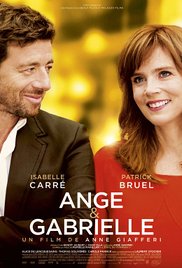
LOVE AT FIRST CHILD.jpgGabriell is a single mother, her 17-year-old daughter Claire is pregnant, however the child’s father Simon has no desire to be involved with his future baby.

Director: Anne Giafferi
Writers: Anne Giafferi (dialogue), Anne Giafferi (screenplay)
Stars: Isabelle Carré, Patrick Bruel, Alice de Lencquesaing

Review by Gilbert Seah
 
The English title tells it all. LOVE AT FIRST CHILD is a French romantic comedy of a couple that falls in love as a result of a baby. But the baby are not theirs but their kids’. This film seems ideal for a Hollywood remake as follows the line of many French comedies. The screenplay by Anne Giafferi and Anne Le Niy is based on a play by Murielle Magellan.

The film begins with a semi-hysterical woman, Gabrielle (Isabelle Carre) barging into the office of Womanizer Ange (singer and actor Patrice Brunel). He is accused of having an uncaring son, Simon (Thomas Soliveres) who has impregnated her daughter, Claire (Alice de Lencquesaing) now studying in school. All this is a lame excuse for Ange and Gabrielle to argue and eventually fall in love.
But writer/director Giaferri’s film is not without its charm. It is difficult to dislike a film that has charm and nice human touches spread throughout the movie, despite the fact that this is a typical Harlequin romance complete with obstacles to the romance and an obvious happy ending. This fact might be the reason the film is going straight to vod in North America after doing only so-so at the box-office.

Director Giafferi takes the play out into the open so that the audience is never aware of the film’s source. There is a neat scene where Angie and Gabrielle kiss in a playground surrounded by children and another showing two loving pigeons on a rooftop. The film also updates the story to include political correctness of a gay marriage of one of Ange’s colleagues.

Like the French comedy THREE MEN AND A BABY, LOVE AT FIRST CHILD contains lots of shots of a cute baby. The baby featured in this film is really cute, impossible to dislike and director Giafferi has captured and exploited (in a good way) all the best baby moments.

Heart throb singer star Patrick Bruno is now 58 and his age shows. But his charm is not lost and his womanizing character and romanced comes across convincingly enough. Cesar winner Isabelle Carrie is also charming enough, looking so much like Diane Keaton with her glasses, But the two young a actors, Thomas Soliveres and Alice de Lencquesaing give he film a fresh look. It is a pity that they only deliver supporting performances. A full movie could have been made on young love, of their characters, perhaps a young adult romantic drama similar to the ones Mia Hansen-love makes.

LOVE AT FIRST CHILD makes its debut on vod (video on demand) Nationwide on Tuesday, July 11 on all major platforms including iTunes, Google Play, Amazon,
Microsoft, Vudu, Comcast, Charter, Cox, Vimeo, and various other cable operators. The film makes a good romantic evening home with a loved one for an alternate night at the movies.

Trailer: https://m.youtube.com/watch?v=SrhGDhu9IzM

Also, Free logline submissions. The Writing Festival network averages over 95,000 unique visitors a day.
Great way to get your story out: http://www.wildsound.ca/logline.html

Deadlines to Submit your Screenplay, Novel, Story, or Poem to the festival:http://www.wildsound.ca

Watch recent Writing Festival Videos. At least 15 winning videos a month:http://www.wildsoundfestival.com

Full Review: INTEGRAL MAN (Canada 2016) ***

Deadlines to Submit your Screenplay, Novel, Story, or Poem to the festival: http://www.wildsound.ca

integral man.jpgHe chose two young architects that would come to change contemporary architecture. Jim Stewart is the most published mathematician since Euclid, a concert level violinist, calculus professor, philanthropist, and gay rights activist. He is a true polymath, a modern day renaissance man. He had a bold vision and the conviction to follow through. It took almost ten years to realize his dream, Integral House, which was completed in 2009.

Director: Joseph Clement

Review by Gilbert Seah

 The human subject of INTEGRAL MAN is Jim Stewart, the most published mathematician since Euclid, a man of unparalleled ambition. The film introduces the man, through voiceover for a full 10 minutes describing his two sides. The first is the classical, exact side where the Mathematics part lies and the second the modern dreamer and dynamic designer.

The film can be divided into 3 segments though the segments are overlapped. One is devoted to Jim Stewart the man. He is shown as a Mathematician, an architect and a music lover. The second shows the design of the house, before, during and after its construction – a magnificent piece of work. The third integrates his love of music (Stewart plays the violin) into the two segments.

Stewart’s books on Calculus (a branch of Mathematics lots of students shudder from) are sold the world over. Stewart goes on books tours around the world including China, signing his books for student and professors alike. Stewart also sets out to create one of the most renowned pieces of residential architecture in North America and succeeded, demonstrating the perfect match between client and architect. Director Clement charts the bond between architect and client with long meetings held between the two. Stewart interviewed many architects before settling with the chosen one. Using time lapse photography, Clement details the landscape of the plot from demolition of the old house, to the barren land to the outer shell to the completion of the house. This residence, overlooking a ravine in Rosedale, Toronto is grand and exhibits decadence beyond comprehension. Clement uses his camera to take the audience on an extended tour of the home, from the top to below. The most fascinating piece of structure is the central staircase, made of metal, and which took a full 3 months on install. The material to be shipped from Europe to Nova Scotia to be moulded in Toronto before installation. The residence is appropriately named Integral House.

An important point in the film, that is mentioned by Stewart himself is that all the wealth is not from luck but from hard, dedicated work. Stewart spent 7 years, working 15 hour full days only taking half a day off at Christmas to write his Calculus books.

Besides Calculus and Architecture, Stewart is a man of music – a true music lover. His house was designed to exhibit concerts, which were conducted time and again for his own benefit and for charity foundations. The film showcases a few of these with music playing while the guests in evening cocktail dress applaud and drink wine.

Clement omits Stewart’s background (it would be good to know where he inherited his artistic and mathematical genes from) but does mention his sexual orientation.

Unbeknownst to Jim however, an unexpected turn of events is set to unfold. The film takes this turn (which will not be revealed in this review) during the last 10 minutes. and brings the film neatly to its conclusion.

(INTEGRAL MAN premiered at Hot Docs and opens this week in Toronto.)

Trailer: https://vimeo.com/209647946


Also, Free logline submissions. The Writing Festival network averages over 95,000 unique visitors a day.
Great way to get your story out: http://www.wildsound.ca/logline.html

Deadlines to Submit your Screenplay, Novel, Story, or Poem to the festival:http://www.wildsound.ca

Watch recent Writing Festival Videos. At least 15 winning videos a month:http://www.wildsoundfestival.com

TIFF CINEMATHEQUE Presents – FRENCH CRIME CLASSICS

Deadlines to Submit your Screenplay, Novel, Story, or Poem to the festival: http://www.wildsound.ca

elevator in the gallows.jpgThis new Cinematheque series showcases post war French Crime classics, may of which are seldom seen. One of the best films in this series is the newly restored PANIQUE, a 1945 black and white film (remade by Patrice Leconte as MONSIEUR HIRE in 1989) which I got to see for the first time, and must say is the BEST film I have seen this year.

PANIQUE was selected for both the Cannes and New York Film Festivals and was received with critical accolades when it opened at New York’s Film Forum. The film is capsule reviewed below. A MUST-SEE! (Panique screens on Thursday, July 20 at 6:30 p.m.)

French Crime Classics running from July 6 to September 3 is curated by James Quandt, Senior Programmer, TIFF Cinematheque. There is a total of 25 classic crime films, several in new or restored prints.

CAPSULE REVIEWS OF SELECTED FILMS:

ASCENSEUR POR L’ECHAFAUD (ELEVATOR TO THE GALLOWS)
(France 1957) ****
Directed by Louis Malle

One of Jeanne Moreau’s early films that director Louis Malle help put on the filmmaking map. Moreau does a lot of sulking and wandering around the city like a crazed lady when her lover (Marurice Ronet) fails to turn up for the rendezvous after being locked and trapped in an elevator after office hours as a result of a murder they both conspired on. The victim is the husband and the target the prize money that the two lovers hope to live happily ever after with. But as stories like these are, nothing goes as planned. A young couple steal the car and murder two German tourists with Ronet being the prime suspect. Director Malle fills his suspense thriller with lots of details that aid the story’s authenticity, especially in the segments in which Ronet is trapped in the lift. The black and white cinematography (by Henri Decae) is superb and aided by an excellent jazz trumpet score by Miles Davis. A beautifully stunning and entertaining suspense thriller!

LES DIABOLIQUES (France 1955) ***** Top 10
Directed b H.G Clouzot

Undoubtedly the best suspense murder thriller of all time! Based on the novel by Pierre Boileau, the film is the typical Hitchcock movie. It was rumoured that Clouzot bought the rights of the novel just before Hitchcock could, thus infuriating the Master of Suspense. But Hitchcock could not have made a better film. Shot in black and white with the word sinister printed on every scene, DIABOLIQUE tells the story of a mistress and wife of a boarding school owner conspiring together to commit the perfect murder. As one school colleague put it – it is really strange to see the wife comforting her husband’s mistress.

Simone Signoret plays the strong mistress while Vera Clouzot plays the weak hearted wife, both abused physically and mentally by the man they plan to murder. Of course in stories like these, things never go as planned. The body goes missing and the plot twists more than once at the end. Clouzot ‘s film contains some wickedly brilliant moments. The one in which the wife begins to warn her husband of the poisoned wine he is about to down only to get slapped by him is a classic. She then quietens to pour him more of the poisoned wine.

Another has her burn the evidence with a match, the light brightening up her face to reveal her reaction. As the two women leave in the car to drive back to the school with corpse in the boot, the neighbour says casually that the cops are around the major intersections theses days. One sentence of dialogue such as this one is sufficient to drum up the audience anticipation for the entire car trip. The atmosphere of the 50’s countryside France, the boarding school and emotional trappings of the two women are all wonderfully created. DIALBOLIQUE was remade with Sharon Stone and Isabelle Adjani in the 90’s, but some films like this one (and all Hitchcock films) should never be remade.

JUDEX (France/Italy 1963) ****
Directed by Georges Franju

JUDEX (original creator Louis Feuillade) is a French mysterious hero who punishes evil men like a judge passes sentences. The plot revolves the evil banker Favraux, receiving a threatening note from Judex (Channing Pollocak) demanding that he pay back people he has swindled. He is later drugged by Judex and locked away. But Favraux is not the only villain in the piece. Meanwhile, the former governess, Diana (Francine Berge) , kidnaps Favraux’s daughter Jacqueline (Edith Scob) to try to get the banker’s money. At the same time, private detective Cocantin (Jacques Jouanneau) bumbles his way (like an Inspector Clouseau) trying to figure out what is going on. The film is rich in period atmosphere especially in the costume ball segment where JUDEX makes a surprise appearance wearing a costume with the head of a hawk. The film wonderfully transports the audience into the style of early French cinema.

PANIQUE (PANIC) (France 1946 ) ***** Top 10
Directed by Julien Duvivier

The first film (before Patrice Leconte’s MONSIEUR HIRE with Michel Blanc) based on the novel Les Fiançailles de M. Hire by Georges Simenon, PANIQUE has all the elements of a film classic. The plot is a beauty and the beast like story with all the villagers at the end of the film lynching who they think is the murderer of a an innocent girl. After an elderly woman is murdered, the murderer realizes that Monsieur Hire (Michel Simon), a solitary Jewish neighbor on the courtyard where the main characters live, knows who is responsible. The murderer and his girlfriend, Alice (Viviane Romance) manipulate local opinion against Hire, who is ostracized by the community. It does not help that M. Hire falls in lvd with Alice. He tells Alice his every move, making him more vulnerable to the murderer. They then plant evidence in Hire’s apartment to confirm popular suspicions. Director Duvivier builds up on the suspicion and mistrust by the villagers on the stranger, criticizing the small French town mentality. The butcher questions the the preference of his pork chops to be bloody hen M. Hire buys the, and another is suspicious of the gifts M. Hire offers to a little girl. The town is interested in cheap gossip, tacky entertainment like lady wrestling and taking matters into their own hands. Beautifully shot in black and white with M. Hire wonderfully performed by Michel Simon, PANIQUE is a thrilling tragedy from start to finish.

TIREZ SUR LE PIANIST (SHOOT THE PIANO PLAYER) (France 1960 ) ****
Directed by Francois Truffaut

One of Truffaut’ more obscure but no less impressive feature, SHOOT THE PIANO PLAYER follows the adventures of a bar’s pianist, Charlie played by French singer Charles Aznavour after his bother runs to him for hiding. The film is part thriller part romance but it is these little details of the film that creates the charm and magic of this sensitive film. One scene has Charlie contemplating whether to ask Lena (Marie Dubois) to have a drink or to be more subtile by asking her if she was thirsty. When he immediately turns to her to utter by mistake, “Let’s go for a drink,” she has already walked off. The execution of musical numbers like the rendering of “Framboise” also does the trick. Aznavour is no great actor, by Truffaut milks the charm that has made this singer so famous. Again, the are lots of shots of women’s sexy long legs here as in Truffaut’s other films especially L’HOMME QUI AIMES LES FEMMES. I saw the film only once 20 years ago and was not really impressed then, but am now.


Also, Free logline submissions. The Writing Festival network averages over 95,000 unique visitors a day.
Great way to get your story out: http://www.wildsound.ca/logline.html

Deadlines to Submit your Screenplay, Novel, Story, or Poem to the festival:http://www.wildsound.ca

Watch recent Writing Festival Videos. At least 15 winning videos a month:http://www.wildsoundfestival.com