Film Review: VALERIAN AND THE CITY OF A THOUSAND PLANETS (France 2017) ****

Deadlines to Submit your Screenplay, Novel, Story, or Poem to the festival: http://www.wildsound.ca
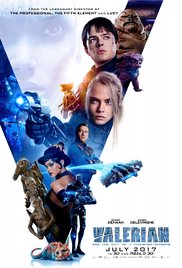
 valerian.jpgA dark force threatens Alpha, a vast metropolis and home to species from a thousand planets. Special operatives Valerian and Laureline must race to identify the marauding menace and safeguard not just Alpha, but the future of the universe.

Director: Luc Besson
Writers: Pierre Christin (comic book), Jean-Claude Mézières (comic book)
Stars: Dane DeHaan, Cara Delevingne, Clive Owen

Review by Gilbert Seah

 
VALERIAN AND THE CITY OF A THOUSAND PLANETS is the new widely anticipated French science fiction action film written and directed by Luc Besson best known for THE FIFTH ELEMENT and LUCY. The film, based on the French science fiction comics series Valérian and Laureline, written by Pierre Christin and illustrated by Jean-Claude Mézières is to date the most expensive French film ever made at a price rage of $197 million euros. To break-even it has to make $350 million worldwide. It is a big a risk as James Cameron’s AVATAR but the film is stunning in its visuals and imagination and comes highly recommended for Besson’s vision and delivery of this space opus to the big screen. It be best seen in 3D and on the biggest screen possible.

The film opens with an alien species on a distant planet. They speak a different language and lead a different lifestyle, in tune with nature giving their planet back what they receive from it. This is reminiscent of the blue AVATAR creatures in the James Cameron’s film. An apocalypse happens and their planet is destroyed. On the other side of the Universe, a dark force threatens Alpha, a vast metropolis and home to species from a thousand planets. Special operatives Valerian and Laureline must race to identify the marauding menace and safeguard not just Alpha, but the future of the universe. Nothing makes much sense in the film’s first half, but writer/director Besson keeps the audience’s curiosity strong. It is during the second half that the story comes together, becoming more of a conventional film with the fight between good and evil, with Valerian and Laureline being the space fighters and peace keepers working for ‘the government’.

But it is not the story that will astonish the audiences. The visionary action sequences consisting of computer generated landscapes and creatures of all shapes and sizes will mesmerize. The best of these are three information selling beaked liked creatures who speak both simultaneously but separately forming sentences that are hilarious and brilliant. The capture of the jellyfish on the mammoth sea creature providing some genuine action and thrills and the butterfly bait fishing are inspirational set pieces. Another memorable scene has Laureine wearing a huge hat with the top of her head exposed only to find her brains about to be eaten by an Alien Emperor, the way Chinese used eat monkey brains as a delicacy before the practice was banned.

Much negative reviews have been posted of the lead actor’s Dane DeHaan’s performance as Major Valerian. DeHaan is a young 31-year old American actor with some Dutch background, hence his Dutch surname, who has proven himself able to carry a lead role in the recent but badly received A CURE FOR WELLNESS. In that film DeHaan demonstrated a different kind of hero, a vulnerable one, as in this one, full of character flaws like impulsive decision making, unlike other space action heroes like hans Solo or Luke Skywalker. His partner, co-fighter for good against evil and love interest, Lareline is played by Cara Delevingne who emits sexiness and charisma. They do exhibit good chemistry on screen, and her speech on love at the film’s end though cliched, works. Supporting performances by Clive Owen as the villain and Ethan Hawke are also impressive.
Rihanna plays an alien dancer who performs a Sally Bowles in CABARET type dance forms one of the film’s best musical dance numbers – amazing and unforgettable combined with special computer effects. Music is by Alexandre Desplat.

For all its flaws, Besson’s brilliantly conceived film still scores top marks as a futuristic space action adventure. Much better than THE FIFTH ELEMENT and the new STAR WARS film series.

Trailer: https://www.youtube.com/watch?v=XawbuBCj-Fo
 

Also, Free logline submissions. The Writing Festival network averages over 95,000 unique visitors a day.
Great way to get your story out: http://www.wildsound.ca/logline.html

Deadlines to Submit your Screenplay, Novel, Story, or Poem to the festival:http://www.wildsound.ca

Watch recent Writing Festival Videos. At least 15 winning videos a month:http://www.wildsoundfestival.com

Inside The Chaos: Gems You May Have Missed – Mary and Max

mam1.jpgby Kierston Drier

If we had time to spare in our busy lives, many of us would never be behind on any good show or film, but sometimes even the best pieces slips through the cracks. While it is highly acclaimed (and with good reason) if you haven’t seen MARY AND MAX, do it.

Mary and Max, a 2009 animation drama coming out of Australia has a pedigree of awards long to make even the shrewdest movie goer seek it out. Director Dam Elliot took home the prize of Best Director in a Feature Film, from the ADG for the work in the same year, and the piece won Best Animation Feature Film at the Asian Pacific Screen Awards, and received numerous honors and nominations besides. Yet that might not be enough to sway you to see a film.

An animation with startling and breathtakingly effective visuals, this piece is a lush feast for your eyes. Detailed and subtle, with a charming yet oddly other-worldly tone to it, it plays out in muted blacks and whites with bright accents of color. It’s music, emotive nature and whimsical touches bring it into a child like world of imagination- yet it’s subject matter and emotional complexity is anything but childish.

Mary is a young Australian girl in the 1970’s, who flees from a life of loneliness, parental neglect and solitude by seeking a pen-pal out of the phone book. She sends a letter to Max Horowitz, in New York. Max is a forty-something jewish atheist who struggles with social issues. The two strike up an unlikely, but enduring friendship.

What follows is the true story of two people at odds with a world they do not conform to. And the result is heartbreaking, breathtaking and maddeningly beautiful. Some films are greater than the sum of their parts. We can analyze each character, deconstruct the plot and the style, and brilliant directing- but there is an inexplicable, unknowable quality in this movie that makes it’s line replay themselves in your head long after the final credits roll.

If you love animations or drama, watch Mary and Max. If you love films that will make you laugh, cry and think, watch Mary and Max. If you love films that break the mould and set the standard bar of cinema a little bit higher than they were before- what Mary and Max. Watch it. It is 80 minutes of a life incredibly well spent.
mam2

Inside the Chaos: Cinema writing 101- 5 Things About Overwriting

festreviews's avatarFestival Reviews

overwriting.jpgEveryone who has ever put fingers to keys on a computer with the attempt to write a cinematic piece has probably had to deal with overwriting. Everyone has overwritten something and it’s nothing to be ashamed about- as long as you know how to correct it.  But in this reviewer’s’ time as a script coverage provider, it is surprising how much, (and how easily) overwriting happens. Below are five things about overwriting you might want to refresh on for your next revision.

  • YOU DON’T DIRECT YOUR STORY


Writing is often considered to be playing God to a very tiny universe. In novels, this is certainly true. Collaboration pieces, where many hands touch the work before it is seen by the eyes of the masses, such as stage plays or screenplays, have a slightly different approach. Specifically for Screen writing, the script provides dialogue, setting and action- the combination of…

View original post 882 more words

Inside the Chaos: Cinema writing 101- 5 Things About Overwriting

overwriting.jpg
Everyone who has ever put fingers to keys on a computer with the attempt to write a cinematic piece has probably had to deal with overwriting. Everyone has overwritten something and it’s nothing to be ashamed about- as long as you know how to correct it.  But in this reviewer’s’ time as a script coverage provider, it is surprising how much, (and how easily) overwriting happens. Below are five things about overwriting you might want to refresh on for your next revision.

  • YOU DON’T DIRECT YOUR STORY


Writing is often considered to be playing God to a very tiny universe. In novels, this is certainly true. Collaboration pieces, where many hands touch the work before it is seen by the eyes of the masses, such as stage plays or screenplays, have a slightly different approach. Specifically for Screen writing, the script provides dialogue, setting and action- the combination of which creates story. But it is important to understand the parameters of that confine: you don’t direct the piece.

BASIC RULE: In cinematic writing, you want to avoid overt descriptions of the way a character moves, delivers or reacts to their lines, their micro expressions or mannerisms, or excessive details of their minute actions.


EXAMPLE: It is established that Character X always rings their hands when they lie. They are lying in this scene and Character Y needs to find out. Then you can write “Character X rings their hands. Character Y sees.”


EXCEPTION: If a scene or line is otherwise ambiguous and clarity can only be reached with a direction, or that direction is crucial to understanding the context of the scene.

 WSB1.jpg

  1.  DON’T TELL US WHAT WE DO NOT NEED TO KNOW

Sixteen years earlier the mother of Character A and the Father of Character B had an affair, but no one knows or will ever find out and it’s all water under the bridge now. Characters 1, 2, 3, 4 and 6 are staying at the Bed and Breakfast once owned by character 3’s great-great-grandmother whose husband fought in the war.  The details that make your characters rich, robust histories might be incredibly satisfying to read about in a novel, where we have hundreds of pages to bring out full deep back stories and elaborate web. But Cinema has time constraints. Constraints on the reader, and constraints on the audience. Stick to the story that is relevant.


BASIC RULE: If it’s not going to show up directly in the story, then we don’t need to know.


EXAMPLE: If it’s important, have a character make reference to it. If it’s not important enough to waste a line of dialogue on, or if the plot is not directly entangled in it, don’t bother putting it in.


EXCEPTION: Historical pieces, where details about characters’ based on real life people may, in fact, be needed. Consider adding them into a director’s’ note at the end of the piece instead of building them into a scene.


  1. BE CONCISE WITH YOUR ACTION

It is absolutely okay to reference that action in your scene, but you must say it plainly and to the point. Elongating the piece by over explaining the work only hurt the piece in the long run.


BASIC RULE: The Best Cinematic writing will create the clearest and most vivid images necessary, with as few words as possible.


EXAMPLE: Character X punches Character A in the face. Character A falls hits the floor. Their nose is broken and bleeds profusely. OR: Character X punches Character A. A crashes to the floor, smashed nose bleeding, instantly plastering in blood.


EXCEPTION: It is not unheard of to see the occasional flowery sentence in the scene description. Use the greatest discretion with these; one per page is often enough. If you use a more flowery or poetic line in your work, make sure it draws together the scene clearly and purposefully.
showdonttell.jpg

  1. SHOW, DON’T TELL, and TRUST YOUR AUDIENCE

Anyone who has ever had to write an essay gets caught up in over explaining ourselves in order to make ourselves perfectly clear…and fill up those huge required word counts. But you want to disregard that training in cinematic writing. Utilize the power of suggestion and trust your audience is smart enough to pick up the clues. Don’t have Character 1 tell his buddies he’s going out on the town to cheat on his wife. SHOW Character 1 ignoring his wife’s calls, removing his wedding band and offering to buy a girl at a bar a drink.


BASIC RULE: Consider how’d you get this information across visually- then describe exactly what you see.


EXAMPLE: (After slug line establishes Character is at the Bar) Character 1 removes his wedding band, puts it in his pocket. Gestures for two drinks from the bar tender. Sees a call from his wife. Ignores it.


EXCEPTION: “On-the-nose” Lines, or lines that are overtly obvious, can be very impactful and incredibly useful WHEN USED SPARINGLY. Like, once an entire piece kind of sparingly. For an example, check out TV shows like BOJACK HORSEMAN. This show employs excellent and tactful use of on-the-nose lines. They are always emotionally compelling because they are done strategically and with exceptional care.

trust.jpg

  1. REMEMBER- OVERWRITING HURTS YOUR PIECE


Overwriting can hurt your work. Excessive or unnecessary details can weigh down the action of your script, making your piece read heavy and slow. The quicker your story starts into the action and more fluidly (and clearly) that action moves, the stronger your piece will read.


BASIC RULE: Be clear, quick and efficient. Show, don’t tell.


EXAMPLE: *Taken from Graeme Manson’s Pilot script of Orphan Black.

Shower running.  Sarah undresses.  Beneath the clothes, bruises hint at a rough exit from her life with Vic.


EXCEPTION:  Historical, fantasy and Science-Fiction may require a slightly full description to establish world building.


Writing is a craft, and art and an on-going process. First drafts will always be rough and ideas will always need polishing. The clearer and quicker you can be, the better your work will read.


TIFF Cinematheque Presents – The Films of Kathryn Bigelow

festreviews's avatarFestival Reviews

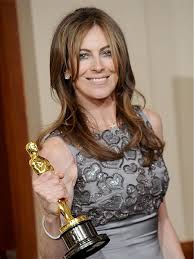
kathryn bigelow.jpgThe TIFF Cinematheque first retrospective on Kathryn Bigelow entitled KATHRYN BIGELOW: ON THE EDGE begins July 21.

Bigelow’s first film was the low-budget debut THE LOVELESS (an arty, hipster spin on ’50s biker movies, co-directed with Monty Montgomery and starring Willem Dafoe)  Following that, she  made her critical (but commercial unsuccessful) breakthrough with NEAR DARK, a grimy yet wickedly stylish tale of a pack of vampires traversing the American Southwest.  This was followed by a slew of films including POINT BREAK, STRANGE DAYS and others culminating with her glorious Oscar winner THE HURT LOCKER.  The retrospective arrives in time with the release of her new film DETROIT.

Bigelow was married to and divorced from director James Cameron.  Their collaboration can be seen in his script of STRANGE DAYS which Bigelow directed.

Bigelow’s best films are NEAR DARK, BLUE STEEL and STRANGE DAYS, all three of…

View original post 695 more words

TIFF Cinematheque Presents – The Films of Kathryn Bigelow

kathryn bigelow.jpgThe TIFF Cinematheque first retrospective on Kathryn Bigelow entitled KATHRYN BIGELOW: ON THE EDGE begins July 21.

Bigelow’s first film was the low-budget debut THE LOVELESS (an arty, hipster spin on ’50s biker movies, co-directed with Monty Montgomery and starring Willem Dafoe)  Following that, she  made her critical (but commercial unsuccessful) breakthrough with NEAR DARK, a grimy yet wickedly stylish tale of a pack of vampires traversing the American Southwest.  This was followed by a slew of films including POINT BREAK, STRANGE DAYS and others culminating with her glorious Oscar winner THE HURT LOCKER.  The retrospective arrives in time with the release of her new film DETROIT.

Bigelow was married to and divorced from director James Cameron.  Their collaboration can be seen in his script of STRANGE DAYS which Bigelow directed.

Bigelow’s best films are NEAR DARK, BLUE STEEL and STRANGE DAYS, all three of which oddly enough, did not do well at the box-office.

In April 2010, Bigelow was named to the Time 100 list of most influential people of the year.

For the complete program of the retrospective with screening dates and times, please check the TIFF website at:

CAPSULE REVIEWS OF SELECTED FILMS:

BLUE STEEL (USA 1990) ****
Directed by Kathryn Boggle

BLUE STEEL is yet a another really awesome Bigelow film that flopped at the box-office.  She wrote this film with Eric Red after their collaboration NEAR DARK and marks another very human emotional script with a female cop character.  Just as Bigelow functions as a female action director BLUE STEEL is set in a man’s world.  Jamie Lee Curtis plays a rookie cop who foils a grocery store hold-hp shooting the robber (Tom Sizemore) who pulls a gun on her.  But she does not notice the robber’s gun stolen by a customer, who turns out to be a psychopath (Ron Silver) who uses the gun on a killing spree around NYC.  Detective Turner (Curtis) engages in a cat-and-mouse game with the killer that consists of a series of actions set-pieces.  The only problem is the sudden appearance of the killer shooting at Turner in a subway station for no reason except to provide the climax for the movie.  Still, this is Bigelow at her exciting best, and BLUE STEEL is an absorbing watch from start to end.  Ron Silver is the creepiest villain I have seen for a long time in a movie.

Trailer: https://www.youtube.com/watch?v=aJTOmShc9E0

NEAR DARK (USA 1987) ***** Top 10
Directed by Kathryn Bigelow

NEAR DARK is Kathryn Bigelow’s second and arguably BEST movie feature that mixes the western and vampire horror genres based on a script written by Bigelow and Eric Red.  The story follows a young man, Caleb Colton (Adrian Pasdar) in a small midwestern town who becomes involved with a family of nomadic American vampires.  It all starts one night, when Caleb meets an attractive young drifter named Mae (Jenny Wright).  Just before sunrise, she bites him on the neck and runs off.  The rising sun causes Caleb’s flesh to smoke and burn.  Mae arrives with a group of roaming vampires in an RV and takes him away.  The film plays like a male victim basically in a female victim role which makes sense since Bigelow is a female action director.  NEAR DARK is one action set piece after another, the top two being the bar segment where the vampires terrorize a local biker bar, killing everyone before burning it down followed by a police takedown at a motel.  The only problem with the film is Bigelow’s Hollywood ending where Mae, the vampire becomes human again with the couple living happily ever after.

Trailer:  https://www.youtube.com/watch?v=FiYSirEHS5E

ZERO DARK THIRTY (USA 2012) ***1/2

Directed by Kathryn Bigelow

ZERO DARK THIRTY (referring to the period of time 30 minutes past midnight) is the story of perhaps the greatest American manhunt in history – the search and capture of Osama Bin Laden.  The story centres on the character of naïve CIA agent who goes by the name of Maya (Jessica Chastain) who supposedly masterminded the discovery of the whereabouts of OBL.  The navy seals were called in to attack the fort with the result of him being killed.  But not after Maya has given out all that she has got.  The script has her undergo the typical coming-of-age growing up to maturity as she accomplishes her goal.  Initially, shocked but accepting the torture by the American military, she gradually grows from soft to hardened in order to get the job done.  Maya finally reaches her angry peak when she confidently says to the Navy Seals, “You go and kill Bin Laden for me,” as if it is her own private vendetta.  The script and director keeps the film moving fast from start to finish keeping the audience’s attention.  The climatic segment of the raid on the fort in the dark of night is brilliantly executed.   

Trailer: https://www.youtube.com/watch?v=YxC_JNz5Vbg

WILDsound Performer Mena Massoud gets lead role in Aladdin live action film (as Aladdin)

WILDsound Festival's avatarWILDsound Festival

Congrats to WILDsound Performer Mena Massoud for grabbing the lead role in the live action film of ALADDIN. The film also stars Will Smith as the Genie.

Mena performed in various scripts for the festival, including the lead role in WEECHO.

Watch the screenplay reading here: 

WEECHO – 1st scene script winning reading
Written by Kevin Gebhard
Rye, New York

CLICK HERE and read the entire winning screenplay

CAST LIST:

NARRATOR – Marta Legrady
WEECHO – Mena Massoud
CROTTY – Dan Goldberg
LYNCH – Rob Stone
WOMAN – Natalie Gallard
COP – Jimmy Makris

SYNOPSIS:

Photographer Weecho Marti’s shots of a fiery crash reveal a conspiracy murder he is haunted to avenge for the beautiful victim. In his quest to track down the murderous antagonist, he crosses paths with a spymaster who becomes his mentor. Together they navigate an espionage and smuggling labyrinth to bring Weecho face to face with…

View original post 352 more words

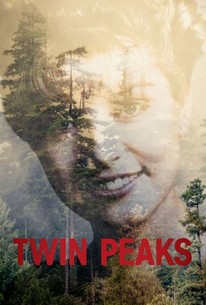
TV REVIEW: TWIN PEAKS – SEASON 3 – EPISODE 10

twin peaksTitled: Part 10: Laura is the One

Director: David Lynch
Writer: Mark Frost

A lot of missing pieces are finally starting to come together on this week’s installment of Twin Peaks. Even though we have a lot more information to work with now, more questions have been raised than those that have been answered. Richard Horne, a certified bad dude who’s somehow involved with Chad and Red in moving drugs across the Canadian border, has now been established as the grandson of Benjamin and Sylvia Horne. After murdering Miriam, and arranging for Chad to intercept the letter she wrote to Sheriff Truman which detailed all of his crimes, Richard violently robs his grandmother and states his intention to flee the country.

Richard bears a striking resemblance to the only member of the Horne family who is currently missing from the series: Audrey. If Richard is Audrey’s son, that begs the question: where is Audrey, and how did her son end up being such an asshole? The last time we saw Audrey was at the end of the previous season, when she was in a coma and was visited by Doppelganger Cooper. Technically, that could mean Bob (through the medium of Doppel Coop) is Richard’s father. Before this episode premiered, some people theorized that Audrey was actually the eccentric billionaire funding the box in New York that leads to the Black Lodge. The reveal that Richard is the grandson of Benjamin makes this slightly less likely in my book, but when it comes to David Lynch, all bets are off until we see something concrete.

Arguably, the best moment of the episode is shirtless Cooper at his doctor’s appointment. Anyone who doubted that Kyle MacLaughlan is still hot after two decades has been thoroughly proven wrong. Cooper also makes a good impression on Janey-E with those pythons he calls arms, and she seduces him in a simultaneously awkward and amazing sex scene. Despite his revitalized love life, Cooper has yet another problem heading his way. Duncan, who we know is working for Bad Coop in Vegas, is orchestrating a conspiracy to convince the casino-owning Mitchum Brothers that Dougie personally sabotaged their plan for insurance fraud.

Meanwhile, Jerry Horne is still high out of his mind in the woods. Is he on a spirit quest to find the entrance to the White Lodge? Or did he just make the rookie mistake of eating too many edibles? Speaking of the White Lodge, Bobby and Truman were noticeably absent from this week’s episode. We do get a moment with Hawk as he speaks on the phone to the Log Lady, who presents a cryptic message, including the episode’s tagline, “Laura is the one.” This premonition, paired with Gordon’s sudden vision of Laura, seems like it’s foreshadowing the return of Laura Palmer.

The construct of time is something that Lynch likes to play with in his work. Even with the established flashbacks that show nuclear testing in the 1940s, I’m not sure that we’re always seeing events in chronological order in this season. The question is presented to us on multiple occasions throughout the series: is it future, or is it past? One thing I’d like to point out is tonight’s performance at the Roadhouse was by Rebekah Del Rio, who previously fulfilled a similar role in Lynch’s masterpiece, Mulholland Drive. In that film, Del Rio’s performance of Llorando, a Spanish version of Roy Orbinson’s Crying, is the dividing point between the fantasy and reality of the film.

Is the Roadhouse a parallel for Club Silencio? It’s absolutely no coincidence that Del Rio is performing in a black and white zigzag dress against a red curtain background, evoking imagery of the Black Lodge itself. Is this episode going to be the line between the illusion and reality of Twin Peaks? We won’t know until next week.

******

“Mary Cox is an entertainment writer from the United States. Her hobbies include making good beer and bad decisions, watching drag queens fight on the internet, and overanalyzing everything. Mary one day hopes to be the person shouting “World Star” in the back of a Waffle House brawl video. She is currently tolerating life in Toronto. You can follow her on Twitter at @M_K_Cox”

Film Review: CHASING CORAL (USA 2017) ***

Deadlines to Submit your Screenplay, Novel, Story, or Poem to the festival: http://www.wildsound.ca

CHASING CORAL.jpgCoral reefs around the world are vanishing at an unprecedented rate. A team of divers, photographers and scientists set out on a thrilling ocean adventure to discover why and to reveal the underwater mystery to the world.
Director: Jeff Orlowski
Writers: Davis Coombe, Vickie Curtis
Stars: Andrew Ackerman, Pim Bongaerts, Neal Cantin
Review by Gilbert Seah

 
Opening Friday July 14th on Netflix and in a few few cinemas (if one can be found in your city), is a Netflix original documentary, and one that is worthwhile to take a look at, in terms of education and importance of the consequences of global warming.

Those familiar with filmmaker Jeff Orlowski will remember his Emmy Award winning documentary CHASING ICE that demonstrated the disappearance of ice on the planet’s surface over time due to climate global warming. This new documentary CHASING CORAL traces the death of corals around the world, again due to global warming. The film is timely arriving at the same time as Al Gore’s sequel to AN INCONVENIENT TRUTH and when President Donald Trump opted out of the G20 climate accord.

CHASING CORAL is both a horror story and a feel good film. Director Orlowski who co-wrote the film follows the standard format for this kind of documentary. The problem is stated, and emphasized throughout the film, then shows the facts on film with the hard and tireless work put in by those involved. He then shows where the problem is headed and what one can do about it. Experts are interviewed to underline the key points in the film.

CHASING CORAL also turns out to be entertaining through the many stunning photographed shots of corals with fish and other creatures that survive on it. Though the complicated cameras are shown, most of the technical details are just lightly touched. All the audience is told is that it is a very tedious and difficult process with turns out very frustrating for the time involved.

Coral reefs around the world are vanishing at an unprecedented rate. A team of divers, photographers and scientists set out on a thrilling ocean adventure to discover why and to reveal the underwater mystery to the world.

The film takes the audiences to various coral reefs around the world. Photographs are shown of dying reefs, bleached white from as far as Thailand, the Florida Keys in the U.S. and the Philippines. The most famous reef of all, The Great Barrier Ref on the east coast of Australia is where the film spends most of the time on. The most horrific fact revealed is that 29% of the corals in the northern part has died in the one year of 2016. The world has also lost 50 % of all the coral life in the past 30 years. A presentation of the fact is shown with spectators wiping tears from their eyes. It is a devastating fact. The reefs feed the ocean life and with that gone, the forests and eventually man will perish through the destruction of the Eco-system.

It i weird that despite all the warnings Orlowski has sounded during his film, he ends it on a positive note saying the emission of carbon fuels are already cut down and that many cities around the world are already doing their part. The U.S. is not on the list of countries doing their part.

Trailer: https://m.youtube.com/watch?v= b6fHA9R2cKI

Also, Free logline submissions. The Writing Festival network averages over 95,000 unique visitors a day.
Great way to get your story out: http://www.wildsound.ca/logline.html

Deadlines to Submit your Screenplay, Novel, Story, or Poem to the festival:http://www.wildsound.ca

Watch recent Writing Festival Videos. At least 15 winning videos a month:http://www.wildsoundfestival.com

Film Review: TO THE BONE ( USA 2017)

Deadlines to Submit your Screenplay, Novel, Story, or Poem to the festival: http://www.wildsound.ca

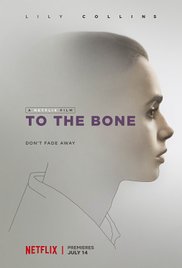
to the boneA young woman is dealing with anorexia. She meets an unconventional doctor who challenges her to face her condition and embrace life.

Director: Marti Noxon
Writer: Marti Noxon
Stars: Lily Collins, Keanu Reeves, Leslie Bibb

Review by Gilbert Seah
 
The credits both opening and closing proudly announces TO THE BONE a film about anorexia, the eating disorder a Netflix original movie. It has been proclaimed that Netflix gets to make films studios are scared to make. This definitely holds true for this depressing, unglamorous project on a subject suffering from anorexia and shunned by her family. But TO THE BONE is so bad that one wonders if the studios could foresee the fact.

One would expect more from director Noxon and lead star Lili Collins who both suffer from the disorder. But the film glamourizes the illness in the way Collins looks so beautiful in every scene and everything she does appears ok and everyone else especially her stepmother is wrong. But unforgivable is the fact that the film is a really boring exercise from start to end. It does not help with the weird ending in which her real mother, Susan (Lili Taylor) feeds her milk from a baby bottle and a fantasy scene in which Ellen she’s herself nude on the ground, presumably dead.

It is hard to judge Collin’s performance when the film is this awful. Taylor does the best she can and Keanu Reeves has the odd role as Ellen’s charismatic doctor who is supposed to a do wonders with his unconventional methods. “I’m not going to treat you if you do not want to live!” He tells Ellen the first time he interviews her.

The story follows teenager Ellen who has dropped out of college. Her stepmother, Judy who lives with her real dad wants her to be cured from her anorexia. But Judy is shown as a very intolerant and bad mother, always criticizing poor Ellen and downright silly, making silly assumptions that Ellen and her stepsister always laugh about. So, Ellen is convinced to go to this medical facility led by Dr. William Beckam (Reeves). There is nothing in the film that shows him to be revolutionary in his treatment. His insistence of telling Ellen’s inner voice to ‘ f*** soft is laughable if not downright unbelievable. The facility consists of an assortment of skinny patients that are there to make Ellen look good. The subplot of Ellen having a romantic fling with the one boy, Luke (Alex Sharp), who wants to be a singer/dancer leads nowhere.

The film at least looks crisp and clear, especially with the desert landscape at the end, courtesy of cinematographer Richard Wong. Music is decent with an original song near the end.

But the film teaches nothing about anorexia nor does it offer any real insight on the people suffering from it. The least the script could have done is provide some medical information on the subject. The film also inserts unnecessary new age material. Ellen’s mother is a lesbian. In one scene, she praises her own breakdown saying people should have them to learn from them. Susan also puts a Ellen in a tent with no electricity with kerosene lamps for light and a bedpan if one need to go do their stuff. Ellen (or Eli, since she changes her name half way through the film for no proper reason) has not come out of life any smarter and neither has the audience.

Trailer: https://m.youtube.com/watch?v=705yRfs6Dbs

Also, Free logline submissions. The Writing Festival network averages over 95,000 unique visitors a day.
Great way to get your story out: http://www.wildsound.ca/logline.html

Deadlines to Submit your Screenplay, Novel, Story, or Poem to the festival:http://www.wildsound.ca

Watch recent Writing Festival Videos. At least 15 winning videos a month:http://www.wildsoundfestival.com