RADIUS (Canada 2017)

Submit your Screenplay to the Festival TODAY

Radius Poster
Clip

A man wakes with amnesia and finds people mysteriously dead.

Writers:

Caroline Labrèche 


The Verge describes RADIUS as a high concept movie from start to finish and that it relies on surprises to keep the story moving.  No argument here with The Verge’s statement but upon closer examination of it, there is nothing to say that what is written makes RADIUS a good movie.

The main problem with RADIUS is its outlandish plot which is totally unbelievable.  True there are surprises and more incidents but getting all the mysteries tied up neatly is something writer/directors Labréche and Léonard (the cult favourite TURBO KID) have failed to achieve.

When the film opens, Liam (Diego Klattenhoff) wakes from a car crash at the bottom of a ditch with no memory of who he is.  As he makes his way into town, he discovers that anyone who comes within a 50-foot radius of him dies instantly.  Out of options, he tries to live in seclusion to protect others.  The film though made in Canada is set in the States complete with shameful references to NASA.

Labréche and Léonard now introduces a new character and another twist to the sci-fi story.   One day, Liam’s murderous power seems to subside with the arrival of a woman (Charlotte Sullivan) who says she was in the crash with him.  She too is suffering from amnesia and looking for answers.  The story allows the characters to remember certain events that suit the story and to forget others also to suit the story.

The amnesia is the third element in the story.  Together they then embark on a journey to uncover who they really are.  Into the picture comes the woman’s husband who she forces to help her and Liam.  Worse still, there is a silly hint of romance between the two despite the presence of the husband, who for all that matters, seems a more decent (as well as better looking) guy than the cussing Liam.

As if credibility has not already been stretched to the limit, the story suddenly reveals cases of missing persons where the bodies have not been recovered.  This must be the most ridiculous angle put into the film.

At this point with the story heading towards so many directions, it is difficult to care about the main characters or the ending.  Fortunately, the film runs no longer than 90 minutes.

The film is a joint Manitoba Quebec production.  The barren landscape not only shows the nothingness of a large part of that province but reflects where the film is heading.

Trailer: https://www.youtube.com/watch?v=NExqMxRRM64

Submit your Screenplay to the Festival TODAY

BIG TIME (Denmark 2017)

Submit your Screenplay to the Festival TODAY

Big Time Poster
Trailer


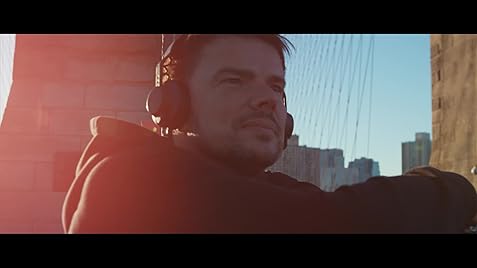
BIG TIME follows Bjarke Ingels during the course of 7 years (2009-2016), while he struggles to finish his biggest project so far. We are let into Bjarke’s creative processes as well as the endless compromises that his work entails.


BIG TIME is look at Danish “starchitect” Bjarke Ingels, (following him for 7 years from 2009 to 2016) named “one of architecture’s biggest innovators” by The Wall Street Journal.  In 2016, Time Magazine named him one of “The 100 Most influential People” on the planet.

The film opens with Bjarke in a cab in NYC.  He is there to take on two high-profile projects that will change the Manhattan skyline, the VIA 57 West, a pyramid apartment complex with a courtyard inspired by Central Park.  The other is Two World Trade Centre.

At one point in the documentary, a character, Mr. Sullivan praises the man to be one where creative juices are flowing and how people working with him are on a high exhilarating level.  That feeling of exhilaration occasionally rubs off the film onto the audience as the audience witnesses the man’s work.

Often, Bjarke (as he is more affectionally called) stands in front of a table, white paper in front of him, holding a felt pen. He outlines his designs while speaking aloud articulating both the design and the philosophy behind it.  These few segments are the best in the doc that show how the creative genius thinks and how the ideas flow.  Bjarke is at the age of 40 with a lot of his successful work done between the age of 31 (when he started) and 40.  Bjarke also says in the film that one should not wait but continually create and build, with the example given of past architects that have suddenly died.  Louis Kahn died of a heart attack in a restroom at Manhattan’s Penn Station.  Le Corbusier drowned while taking a swim in the Mediterranean Sea.  

Antoni Gaudi was hit by a tram on his way to church in Barcelona.

It is within reason that Bjarke speaks this way.  The film begins too with music accompanying weird patterns on the screen.  It becomes apparent only later in the film what these patterns are.  They are the patterns obtained from the MRA and MRI scans of Bjarke’s brain.  Bjarke has what could be a small tumour which is discovered at the mid-point of the film.  It gives him incredibly bad headaches preventing him from working any further.

Bjarke’s triumphs include Copenhagen’s Amager Bakke waste-to-energy plant with a 

ski slope on its roof and a chimney that emits “smoke” rings that are actually steam.  Ingels is also the brain behind Vancouver House, set to open in 2018.  He also talks about Sydney’s Opera House as the world’s greatest architecture design.

Director Schröder (RENT A FAMILY) also reveals Bjarke’s personal life thus making the doc more personal.  Bjarke at 40 is finally finding his partner in life in the form of a Spanish lady who he intends to marry, by buying her a unique engagement ring.

The film ends with Bjarke and fiancee walking through the completed VIA 57 West complex, ending the doc on an appropriate high.

Trailer: https://www.youtube.com/watch?v=VK0mGdMKMW4

Submit your Screenplay to the Festival TODAY

LA DANSEUSE (THE DANCER) (France/Belgium/Czech 2016)

Submit your Screenplay to the Festival TODAY

The Dancer Poster
Loïe Fuller was the toast of the Folies Bergères at the turn of the 20th century and an inspiration for Toulouse-Lautrec and the Lumière Brothers. The film revolves around her complicated relationship with protégé and rival Isadora Duncan.

Writers:

Thomas Bidegain (collaboration), Giovanni Lista (novel)| 6 more credits »


A 2016 French biographical musical drama film based on the true story, directed and written by Stéphanie Di Giusto and co-written by Thomas Bidegain and Sarah Thiebaud, based on the novel by Giovanni Lista, LA DANSEUSE opens with the film’s subject and protagonist carried away after what looks like an injury during a dance.  This scene is returned to at the film’s halfway mark after she collapses from her first performance.

Director Di Giusto then takes her audience back to the dancer’s early days before she began her dance career, which is assumed must be a famous one.  Loie Fuller (Soko) is revealed as a rebellious teen taken in by her stern mother after her alcoholic father dies.  Loie promises to be obedient and not cause trouble which translates in movie terms that she will be disobedient and cause trouble.  Besides posing nude and starring on stage, she finds her calling as a dancer, though what occurs on screen does not seem credible.  One assumes what occurs must be true as the film is based on a true story.  Di Giusto uses that as carte blanche to bring in whatever she likes and portray the incidents however she deems suitable.  The result is a rather rough film, with too many incidents inserted inappropriately leaving the narrative disjointed.

Isadora Duncan (Lily-Rose Depp) is Loie’s dance peer.  Her appearance might eclipse Loie’s story, but Di Guisto keeps that in check.  Still it is hard to like Loie’s character.  Di Giusto shows her as strong willed, stubborn to perform at risk of her personal health, self destructive  and one who never accepts authority.  Loie comes off as an unlikeable character no matter how dedicated she is to her art.  As for the choreography with flowing dresses, it is quite different from ballet or modern dance and is a style in itself, taking a while to get used to.

The film is oddly shot in French and quite a bit in English.  The mother is English while the father is French, which is assumed the reason.  LA DANSEUESE is a period piece set in France and the period atmosphere and costumes show it.  The film won the Cesar for Best costume Design (by Anais Romand).

The most famous of the cast is Gaspard Ulliel who always looks dashing in this case playing Loie’s romantic interest.

The film is an ok biography which is keen to reveal the (anti-feminist) prejudice of the times and travails the main subject went through.  Di Giusto makes no attempt to make any of her characters likeable from Loie, to Isadora Duncan and to lover Louis and her other lesbian lover, Gabrielle (Mélanie Thierry). The result is a difficult film to like.

LA DANSEUSE was screened in the Un Certain Regard section at the 2016 Cannes Film Festival.  It took a year before finally released here, and might be worth a look if one likes period drama with some dancing added in for good measure.  The film was nominated for several Cesar and Lumiere Awards, including nods for Best First Feature and acing (main and supporting) roles.

Trailer: https://www.youtube.com/watch?v=1hqdhfZ7UFA

Submit your Screenplay to the Festival TODAY

PYEWACKET (Canada 2017)

Submit your Screenplay to the Festival TODAY

Pyewacket Poster
A frustrated, angst-ridden teenage girl awakens something in the woods when she naively performs an occult ritual to evoke a witch to kill her mother.

Director:

Adam MacDonald


Writer/director Adam MacDonald’s (the little seen 2014 horror BACKCOUNTRY) new feature is another horror but seen from the point of view of teenager, Leah (Nicole Monoz).

Leah is the typical teenager in high school, as the film reveals at the start.  She is happy, nuanced and has issues with her parents, in this case her mother after her father’s death.  The mother (Laurie Holden) is falling apart, in depression and boozing, as in the words of Leah: “I don’t know what I am coming home to any more,” as the mother literally begs for Leah to offer her support in dealing high her inner demons.  When she decides to uproot the family to a cabin out in the country, Leah gets visibly upset, though as she tries her best to hide it.  But when the mother says she cannot stand seeing her father in her, Leah loses it.  She conjures the demon PYEWACKET to do away with her mother.  Leah tells her school friends who dabble in the occult, but they are shocked that Leah would want to kill her mother.

Things take an awkward turn when mother becomes more tolerable and asks Leah for her forgiveness for things said and done.  Leah want to undo the black magic.  In a slight turn of events, she invites her friend, Janice to stay the night.  Janice ends up freaking out that night, though no reason is given why.

This is a case of paranoia versus actual demonic horror.  Are there really footsteps in the night and monsters or are they all part of Leah’s imagination?  This is where MacDonald’s film works best.  There is nothing supernatural that occurs in the first half of the film.  When a monster is shown in the second half, the audience is still unsure whether the creature is real or Leah’s imagination.

The film contains a few loose ends – the main one being the convenient forgetting of providing the reason Janice got scared away from the house that night of the visit.

Though the film is a full Canadian feature, the film is clear not to include any Canadian town names.  The town and school that Leah attend are not named and neither is the county.  The town whee Leah and the mother escapes from could be any American or Canadian state.  This would mean that the film stands a better chance  at American distribution.  But Leah attends a book signing event and consults with the occult book’s author from the U.S.  So, all things assumed equal, one would assume the film be set the U.S.

The film makes good use of sound (example the crescendo of traffic noise) for scare effects.  The cinematography (the woods with no leaves) by Christian Bielz also adds an eerie creepiness.

The trouble with this film is that is is so believable – that the audience would almost wish that there would be more weird shit in the film, credible or not.  The film also questions whether a curse can be undone, a question never dealt with in other horror films.

PYEWACKET ends up a solid scare flick but it could do with more gore and violence.

Trailer: http://www.tiff.net/tiff/pyewacket/?v=pyewacket

Submit your Screenplay to the Festival TODAY