Film Word of the Week: Nickelodeon

By Kierston Drier

Anyone born after the 1980’s is likely to conjure up the classic warm-and-fuzzy nostalgia at hearing the word “Nickelodeon”. The image likely involves Saturday morning cartoons, flannel feet pajamas, and sugar-crusted cereal. But the history and origin of this family-friendly word trails back long before the TV network used it to brand their franchise. Believe it or not, the word Nickelodeon travels back to the 1880’s, and, diving even deeper, into Ancient Greece. Surprised? Don’t be. Today on Film word of the Week we will break this down.


Nickelodeon can trace its base root word “odeon”  from  “Melodeon” which means ‘Music hall.” The root of that word can be linked to the Greek work “Oideion”  which loosely means “building for musical performances.” This is likely based on the ritual practice of community-wide attendance at theatrical performances. A practice that was viewed by the Greek civilization of as a form of society-wide catharsis. Centuries later, when the jukebox was in its’ infancy, the word “Nickelodeon” would come into existence in relation to it, as the machine would offer a round of songs for a nickel.


When the development of commercial cinema led to the creation of theatre houses, admission prices were low to attract the masses, averaging around five cents. This low admission price, coupled with the long-running variety of short cinema reels and often serialized pieces, led to high popularity among the growing middle class. The word “Nickelodeon” began being associated with the movie theatre, and the jukebox became…well, the jukebox.


In 1979, when Parent Company Warner Cable was an opportunity in creating commercial-free children’ programming under the name, to give them an edge over competitors, they launched the channel, as the first ever all children’s network. Although it struggled at first and failed to gain widespread excitement, after some rebranding the channel would take off. In the mid-1980’s Nickelodeon went from a day-time children’s’ programming channel to a 24-hour channel when it launched “Nick-at-Nite” and later, created an educational preschool programming section called “Nick Jr.” From Pinwheel to Teenage Mutant Ninja Turtles, Nickelodeon has had notable success as the first children’s programming channel.


While Nickelodeon may have shaped many-a-childhood, the origins of this film word stretch out all the way back to Ancient Greece. Who’d have thought? Just one more cocktail fact to throw around at your next film-related party.

nickelodeon


Film Review: GOD’S OWN COUNTRY (UK 2017) ****

Submit your Screenplay to the Festival TODAY

Trailer

Spring. Yorkshire. Young farmer Johnny Saxby numbs his daily frustrations with binge drinking and casual sex, until the arrival of a Romanian migrant worker for lambing season ignites an intense relationship that sets Johnny on a new path.

Director:

Francis Lee

Writer:

Francis Lee

2017 sees the arrival of three critically acclaimed gay films .  BPM from France, this one from the U.K. (at point of writing with a 99% rotten tomatoes rating) about a young Yorkshire sheep farmer and from Italy, CALL ME BY YOUR NAME.  While the latter also deals with first love, unlike that sugar-covered unreal gay love story, GOD’S OWN COUNTRY is a hard look at gay life – acceptance and reality, the way it happens in real life.

The film is set in Yorkshire, around Johnny Saxby (Josh O’Connor) who lives on the family farm with his father, Martin (Ian Hart) and grandmother, Deirdre (Gemma Jones).  Due to his father having suffered from a stroke, and his grandmother’s age, much of the day to day running of the farm falls to Johnny.   As his friends have left for university, there is little time for socializing.  What time there is, he fills drinking excessively on his own at the pub. With the lambing season fast approaching, Johnny’s father tells him that they have advertised for extra help for the farm that arrives in the form of a Romanian worker, Gheorghe (Alec Secareanu).  When the two are sent out into an isolated place to look after the sheep (shades of Ang Lee’s BROKEBACK MOUNTAIN), the two form a relationship after some initial rough sex and hostility.

When the two return to the farm, both Derdre and Martin discover what the two have been unto resulting in Gheorghe leaving the farm.  Whether Johnny will make a stand and go out to get him back takes up the rest of the film.

What makes the film work for both the gay and hetro-sexual audiences is the honesty of the portrayal of the couple’s love.  The film also serves as a coming-of-age rite of passage journey for Johnny who before just engages in casual encounters.  This is aided by the film’s sheep farming setting, which unlike many pictures with a farm setting, just cater to one or token farm scenes.  In GOD’S OWN COUNTRY, the sheep, landscape, Yorkshire scenery and farming are in the forefront.  There are many eye-opening facts that can be learnt about sheep farming from the film like a lamb dying from a breech birth. 

The rough macho life of men are on display – as in the rough sex practised by Johnny.  Sexual gratification can be obtained without the fuss of a second hook-up or a budding relationship.  The land is just as rough, but tenderness is also present, as witnessed by Gheorghe as he takes care of a weak lamb that almost dies.

The film contains one perfect scene somewhere in the middle when Johnny and Ghoerghe sit together overlooking the beautiful yet somewhat barren Yorkshire landscape.  It is a rare moment, a turning point in the life of both, when the two lovers appreciate the beauty of GOD’S OWN COUNTRY and nothing else in the world but that and their love matters.

GOD’S OWN COUNTRY is in many ways just as perfect a gay love story.

Trailer: https://www.youtube.com/watch?v=q1YAhyU6-tA&vl=en

Submit your Screenplay to the Festival TODAY

Film Review: DINA (USA 2017)

Submit your Screenplay to the Festival TODAY

Dina Poster
Trailer

An eccentric suburban woman and a Walmart door greeter navigate their evolving relationship in this unconventional love story.

DINA is a romantic comedy combined with the element of the documentary.  It follows the real life romance (bliss and troubles; warts and all and a lot of warts at that) of a real life couple Dina Buno and Scott Levin.  They are not the flashy Hollywood type romantic comedy couple but everyday normal looking folk.  They are decent looking but not overtly attractive.

Dina is an outspoken and eccentric 49-year-old (she looks younger) living in suburban Philadelphia.  She had a past marriage and a bad accident which has resulted in her living alone and not wanting to settle down again.  But things never go as expected.  Dina falls in love with Scott (as seen wen the film begins) who seems a decent and loving and simple guy working as a Walmart greeter.  She invites her fiancé Scott, to move in with her.  Scott has never lived alone.  Having grown up neurologically diverse in a world blind to the value of their experience, the two are head-over-heels for one another, but shacking up poses a new challenge.

Though they constantly whisper sweet nothings to each other, their awkwardness is also present.  This is observable during their short holiday trip to Ocean City, as Dina has never seen the ocean before. Other events shot in the film include Dina’s racy bachelorette party and on honeymoon in the Poconos.

One wonders at the authenticity of parts of this documentary – when an incident is re-enacted or on-the-spot.  The best example is the one with the couple on the bus arguing as they are lost.  Is the cameraman sitting behind them on the bus filming their predicament as it happens, or is this a set-up?

The film hints of Dina’s previous marriage and the problems associated with it.  That relationship seems more intriguing than the one on display in this film.  To make the film more interesting, the problem of sex is introduced into the relationship.  All romantic comedies have a problem that the couple faces which they will overcome.  Scott is uncomfortable with touching and being affectionate, thus posing a problem as Dina who is very compassionate.  The camera follows them as they often argue and bicker.  The odd thing is that Scott always agrees with Dina but never proves himself.

DINA is brightened up by occasional musical interludes made up of popular tunes like “I am a Lady” and “We are Family” as well as songs written and performed by Michael Cera.

DINA, about a not so perfect couple with a not so perfect romance ends up a not so perfect movie.  The question is whether audiences would want to spend 90 minutes and hard earned money watching something too ordinary.  The film will be a tough sell.  Audiences want to go to the movies to escape from their humdrum lives not watch one on screen.  But the film did win the Grand Jury Prize at the 2017 Sundance Film Festival, which might be the reason the film got distribution.
Trailer: https://www.youtube.com/watch?v=f4BSWA7pWuc


Submit your Screenplay to the Festival TODAY

Film Review: NOVITIATE (USA 2017) ****

Submit your Screenplay to the Festival TODAY

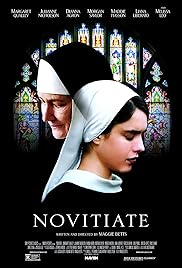
Novitiate Poster
Trailer

Set in the early 1960s and during the era of Vatican II, a young woman in training to become a nun struggles with issues of faith, the changing church and sexuality.

Director:

Margaret Betts

Films with the Catholic Church as its subject have always painted a ghastly picture of the religious institution.   Recent films like the Foreign Film Oscar Winner IDA and the Best Picture Oscar Winner SPOTLIGHT immediately come to mind.  But is the Peter Mullan’s 2002 biting satire THE MAGDALENE SISTERS that bear the closest resemblance to Margaret Bett’s equally scathing drama NOVITIATE.  THE MAGDALENE SISTERS and NOVITIATE take different paths but both make good companion pieces.  

NOVITIATE begins with Cathleen (Margaret Qualley) at a church altar, questioning God on her choice of becoming a nun.  The film flashes back to 1964, 10 years earlier to follow the chain of events that led her to make this decision and how she has come to question that decision.  By immersing the audience into the single character of Cathleen, Betts brings her audience to the first lesson in ‘novitiation’ or “Becoming a nun 101”.  It is an eye-opening and gruelling lesson.

Cathleen enters a convent, convinced she’ll never be more in love with anyone except for God.  Her mother, (Julianne Nicholson) is totally against the idea, chastening her daughter telling her she knows nothing about religion or that love for God.  Betts puts the audience on Cathleen’s side, but later on in the film, turns the audience back to the mother;s side, when the church has gone so wrong that Cathleen’s decision might not have been the right one.

The church gone wrong arrives in the form of the Reverend Mother (Melissa Leo).  When the film opens, the Pope and higher ups in the Vatican decided on reforms (called Vatican II) to modernize the Church so that it be more relevant in current times.  The Reverend Mother must learn to relinquish authority after the news of planned reforms from Vatican II.

Melissa Leo steals the show, aided by three segments containing well written dialogue for her character.  One is her opening speech stressing that there is no love without sacrifice.  Another is her defence against the Archbishop when confronted on her authority and the last is her confrontation scene with Cathleen’s mother.

One glaring problem of the film is Cathleen’s make-up.  It is clear to everyone that nuns or those in training are not allowed any makeup.  Yet, Cathleen is seen with eye shadow, powder and light lipstick.

Betts keeps her film always interesting by the addition of several subplots that back up the main one of Cathleen.  One is the abuse of Sister Sissy who ends up being sent home.  Another is Sister Mary Grace’s service at the convent.  She is sincere, loving and open but finally is forced to confront the Reverend Mother.

NOVITIATE ends with the note that after the Vatican’s reforms (which are signalled as progressive in Betts’ film, 90,000 nuns have since left convents all over the world.  This poses the disturbing implication that these 90,000 nuns must have been against these reforms and have been practising cruelty of the past.

Trailer: https://www.youtube.com/watch?v=8kKexutLfE0


Submit your Screenplay to the Festival TODAY

Film Review: THOR: RAGNAROK (USA 2017) ***

Submit your Screenplay to the Festival TODAY

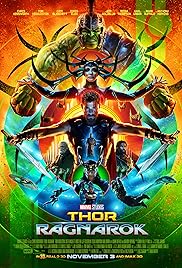
Thor: Ragnarok Poster
Trailer

Imprisoned, the mighty Thor finds himself in a lethal gladiatorial contest against the Hulk, his former ally. Thor must fight for survival and race against time to prevent the all-powerful Hela from destroying his home and the Asgardian civilization.

Director:

Taika Waititi

The third THOR film, the sequel to THOR:THE DARK WORLD and the seventeenth (not that anyone can really keep count) film of the Marvel Cinematic Universe (MCU), the massive $180 million production arrives with all the extravaganza expected.  With a host of top Hollywood and British stars, lots of characters and action super heroes and tons of special and visual effects, THOR: RAGNAROK should please fans of the MCU but for the more serious cineaste, it is quite the chore to watch.

To recap who this Thor (Chris Hemsworth) person is…  Thor is the crown prince of Asgard based on the Norse mythological deity of the same name, who has become a “lone gunslinger” while solving universe-ending perils in his search to learn more about the Infinity Stones.

The filmmakers have decided to make a few changes to the THOR universe.  Immediately recognizable is Thor’s new look which includes his shorter hair and new outfit.  He is more vulnerable in the third film with him plunged to the ground many times including the loss of his hammer.  His enemy and half-brother Loki is now his aide and friend as also seen in the last scene when they ponder on how Earth will accept both of them when they arrive.

When the film opens, it is two years after the Battle of Sokovia,  Thor’s quest for information about the Infinity Stones leads him to the fire demon Surtur, from whom he learns that his brother Loki (Tom Hiddleston) has been impersonating their father Odin (Sir Anthony Hopkins) since the Dark Elf conflict.  Surtur taunts Thor with knowledge of the coming Ragnarok, the foretold end of Asgard that Surtur will bring about when he unites his crown with the Eternal Flame that burns beneath the city, but Thor defeats Surtur and claims his crown, seemingly forestalling the prophecy.  And this is just 5 minutes into the film.  Thor then returns to Asgard and exposes Loki’s treachery, before travelling with him to Earth to recover Odin.  The story goes on and on with Thor’s eventually battle with his sister Hela (Cate Blanchett) and his saving of his people.  What is good about the script by Eric Pearson and the writing team of Craig Kyle and Christopher Yost is that it can be complicated that one can have a fine time dissecting the story, or one can totally ignore it and still enjoy the grandiose battles in the film.  Pearson ties into the picture a multiple of other action heroes that include the Hulk (Mark Ruffalo), Skurge (Karl Urban), Grandmaster (Jeff Goldblum), Valkyrie (Tessa Thompson) and Heimdall (Idris Elba) among others. 

A fair share of the budget must have gone into the CGI and special effects.  It shows!  The film looks amazing and is visually stunning.  The music is by Mark Mothersbaugh and the soundtrack is not too loud to give anyone a headache.

The film is predicted to  take in $100 million plus the opening weekend and to eventually gross domestically a goal of $250 million bringing Disney and Marvel a hefty profit.  So that it is a big win against the serious cineaste who basically can be told to take a hike.

Trailer: https://www.youtube.com/watch?>

Submit your Screenplay to the Festival TODAY

Full Review: THE SQUARE (Sweden 2017) ***** Top 10

Submit your Screenplay to the Festival TODAY

The Square Poster

Trailer

The Square is a poignant satirical drama reflecting our times – about the sense of community, moral courage and the affluent person’s need for egocentricity in an increasingly uncertain world.

Director:

Ruben Östlund

Writer:

Ruben Östlund


What is THE SQUARE?  In director Östlund’s (FORCE MAJEURE) new film THE SQUARE, the square is a place of trust and caring where everyone shares equality and obligations.  It is also the name of the newest project of Museum Director Christian (Claes Bang) which he hopes will bring in money for the cutting edge art museum in Sweden he represents.  Christian hires two young TV publicists to spread the word on social media.

The film is made of a number of cinematic set-pieces.  If this method of filmmaking sounds familiar, it is used by Swedish director Roy Andersson (A PIGEON SAT ON A BRANCH REFLECTING ON EXISTENCE, SONGS FROM THE SECOD FLOOR) who happens to be director Östlund’s mentor.  Though these set-pieces appear unconnected on the surface, they upon close examination all tie into the greater scheme of Östlund’s universe.

These set pieces include:

the film’s most brilliantly executed segment set during the museum charity dinner where a wild man (a very scary Terry Notary) is let loose among the guests.  If the guests show any sign of fear or make any sudden moves, the wild animal will turn on the hunter after sensing his/her fear.  This art act ends up going out of control.

the post sex scene in when Christian and Anne (Elizabeth Moss) argue on who will take hold of the filled condom for disposal

the poor kid that confronts Christian on his act of accusing him of being a thief

the museum display of separating visitors into two sections; one that trust and the other that mistrust people.  In the trust section, the guests are supposed to leave their cell phones and wallets behind.

a TV interview gone terribly and embarrassingly wrong

the confrontational scene between Christian and Anne when Anne accuses Christian of using his position of power to attract women, a segment that seems to serve as a prophecy to the current Weinstein sex scandal.

One observable thing is that what happens to Christian after his downfall from museum director.  He is still questioned to no end, and not allowed to at least go into disgrace in peace.  When he decides to seek forgiveness from the boy he wronged, it turns out that he is unable to do so as the boy and family has moved.

One of the film’s best jokes in the film is the scene of the exhibit with the mounds of gravel that goes terribly wrong when the cleaner on the vacuum machine accidentally sucks up the dirt. 

The film is also not without arresting images, courtesy of cinematographer Fredrik Wenzel.  The two most striking ones include the shot of Christian building with escalators and star is rising above him like a maze (see trailer in link below) and the other with Christian in a heap of garbage as he searches for the piece of paper containing an important telephone number.

As in most successful satires on film (Terry Giliam’s BRAZIL), the story follows the downfall of the protagonist.  In THE SQUARE, Christian almost gets his chance to prove himself worthy of being a good human being by apologizing to the boy he has wronged.  But Östlund removes this opportunity in a twist of fate when he discovers the boy has moved with nor forwarding address.

The film deservedly won this year’s Palme d’or Prize. The film is as wicked a wicked satire can be as well as sexy, brilliant, complex and bitingly hilarious.  It is a cruel, absurd and unforgiving world we live in and Östlund has captured it masterfully in his minor-masterpiece.  Clearly the best film I have seen this year – hands down.

Trailer: https://www.youtube.com/watch?v=u77vsmBya2w


Submit your Screenplay to the Festival TODAY

Film Review: A BAD MOMS CHRISTMAS (USA 2017)

Submit your Screenplay to the Festival TODAY

A Bad Moms Christmas Poster
Trailer

A Bad Moms Christmas follows our three under-appreciated and over-burdened women as they rebel against the challenges and expectations of the Super Bowl for moms: Christmas.

Directors:

Jon LucasScott Moore


Christmas comes early this year with Hollywood’s first Christmas comedy opening on November the 1st.  And it is a nightmare – a nightmare before Christmas.  When Publicity handed out sheets of an embargo to be signed with the embargo lifted at 9 am on opening day, the critics attending knew that something about the film must be amiss.  A BAD MOMS CHRISTMAS is really bad, and a major turn of events considering that BAD MOMS was really funny and that the entire crew responsible for the first successful comedy hit returned for this dud.

Once again, under-appreciated and overburdened moms Amy (Mila Kunis), Kiki (Kristen Bell) and Carla (Kathryn Hahn) rebel against the challenges and expectations of Christmas.  As if creating the perfect holiday for their families is not hard enough, they will have to do it tho time around while hosting and entertaining their own respective mothers (Christine Baranski, Cheryl Hines and Susan Sarandon) when they come to visit.  But in the moms’ own words, they want to reclaim Christmas for themselves, very much the same way they did in the first movie.

When the three moms in the first movie decided to take back their own lives, it was funny and fresh.  Here, the freshness has changed to stale.  All the perkiness and naughtiness, especially with the Kathryn Hahn’s character rubs totally the wrong way – especially in a Christmas movie.  The stripper dance during the Christmas dinner (at the end of the film) with the kids present is the perfect example of humour gone wrong.  Kahn is obviously trying too hard her and the directors Lucas and Moore given her too much to do after her first success.  Waxing too many vaginas in her job at the spa where she works, her foul language, her way with men and her drunkenness and loudness in public have been reduced from funny to annoyance.  The romance element of Carla and her new stripper boyfriend is both unfunny and silly.  Also missing in this sequel is Christina Applegate who played the bitchy head of the PTA who fought with the BAD MOMS.

Also to keep with the spirit of Christmas films, the film has to bring in the expected sentiment of good cheer, with too much material falling into cliched territory.  As expected, each mom is told off by each respective daughter, for whatever reason – not being able to let go of mommy strings; borrowing money and then comes the reconciliation, one of them done in the midst of a church service, as if no one in the congregation minded or noticed.  The worst sentimental crap is Amy’s father (Peter Gallagher) given his daughter the speech on how special her mother is.

Oddly the moms’ moms are funnier.  The only decent scene is the one where Sarandon, Hines and Baranski end up in church as they help each other out with their daughters amidst insulting each other.  But the film ends with the three bad grandmothers  heading for Las Vegas – which makes for a terrible thought – the possibility of two sequels in the making. 

Trailer: https://www.youtube.com/watch?v=7ERrTQJkZoA

Submit your Screenplay to the Festival TODAY

Film Review: THE DIVINE ORDER (Switzerland 2017) ***

Submit your Screenplay to the Festival TODAY

The Divine Order Poster
Trailer

Switzerland, 1971: Nora is a young housewife and mother who lives with her husband and their two sons in a peaceful little village. Here, in the Swiss countryside, little or nothing is felt… See full summary »

Director:

Petra Biondina Volpe (as Petra Volpe)

Writer:

Petra Biondina Volpe (as Petra Volpe)


There have been quite a few films about women fighting for their right to vote, the most notable being the splashy SUFFRAGETTE that had Meryl Streep in a cameo.  DIVINE ORDER from Switzerland examines the same subject but makes it clear from the beginning that it is taking its study from a different point of view.

When the film opens, archive footage of current events in the world (particularly in the U.S.) – the hippie movement, the rock and roll, the political unrest are displayed on screen with the voiceover emphasizing that the small Swiss village the film is set is still behind the times.    

THE DIVINE ORDER thus makes its stance on a different footing, differentiating itself from films like SUFFRAGETTE, and works in a way, as the film not only becomes more personal but one that people around the world can relate to.  It is no surprise then that THE DIVINE ORDER  was selected as the Swiss entry for the Best Foreign Language Film at the 90th Academy Awards.

The film is set in a small Swiss village in the year 1971. Nora (Marie Leuenberger) is a young housewife and mother, living with her husband and their two sons. The Swiss countryside is untouched by the major social upheavals the movement of 1968 has brought about.  Nora’s life is not affected either; she is a quiet person who is liked by everybody.  But when she finds her niece taken away for ‘retraining’ after having a boyfriend and her refused by her husband from taking a job, she sees the need to fight for women’s rights.  She starts to publicly fight for women’s suffrage, which the men are due to vote on in a ballot on February 7, 1971.

Director Volpe plays her film safe.  Unfolding in chronological order, she  shows the audience Nora’s life, and how she eventually discovers the need to stand up.  An excellent moment is her waking up in the morning with her young son asking her about his breakfast, as is expected by a male from a female, without much thought from the son. This follows with the opportunity for her to make a difference, followed then by her acquaintance with others who feel the same way.

There is always something moving to watch an underdog (Nora in this case) give everything to do what is right.  Director Volpe milks this tactic to the fullest thus making her little film work wonders.

Though the subject has been covered in other films, Volpe’s film is incident driven, which breaks the monotony at many points in the film, when one feels that it is just about to occur.

THE DIVINE ORDER is a quiet and small film but effectively done, clearly executed by the cast, crew and director who are convinced of the importance of its subject matter.  The film is shot in German.

Trailer: https://vimeo.com/204361593

Submit your Screenplay to the Festival TODAY

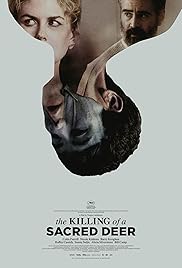
Full Review: THE KILLING OF A SACRED DEER (UK/Ireland 2017) ****

Steven, a charismatic surgeon, is forced to make an unthinkable sacrifice after his life starts to fall apart, when the behavior of a teenage boy he has taken under his wing turns sinister.

Director:

Yorgos Lanthimos


Greek director (DOGTOOTH and THE LOBSTER) Yourgos Lanthimos’ latest feature is a supernatural psychological thriller that is the most difficult to watch despite its bouts of black humour.  The reason the film is titled THE KILLING OF A SACRED DEER becomes apparent at the film’s end and exposing the reason would spoilt the film’s key plot point.

The film follows Dr. Steven Murphy (Farrell), a cardiac surgeon who is first seen at a diner meeting with a 16-year-old named Martin (Barry Keoghan).  The doctor buys the boy an expensive watch as a present.  The relationship between the two is revealed as the film goes on.  Steven introduces Martin to his wife (Nicole Kidman) and two children.  Martin, determined to ingratiate himself into this unfamiliar new family, becomes something like an adopted son.  Strange things begin to happen with the children developing paralysis right out of the blue.  Dr. Murphy and his team of surgeons are unable to put a medical explanation for the illnesses.

Secrets start coming out of the closet.  Director Lanthimos unveils bits at a time, thus keeping the audience in anticipation.  Revealing more of the plot in this review will definitely spoil ones enjoyment of the film, and thus no more of the story will be revealed.

It is safe to say that the film gets more and more serious and ends up becoming quite a disturbing watch.  Lanthimos does not skimp on the violence and language.  The film has a lot of anger and the anger is slowly but surely unleashed by every one in the part concerned.

The humour often comes in the form of inconsequential dialogue, often spoken by the main character, Dr. Steven Murphy (Colin Farrell).  Hunour is also provided in the way drain information, is relayed to the audience.  For example, Steven tells his colleague out of the blue for no reason, that his daughter has begun her menstruation.

The sex scene between husband and wife is as expected a strange one, but sufficiently erotic.  Kidman has an almost perfect body.  Farrell, Kidman and Keoghan all deliver chilling performances.

The film demands the audience sit back and immerse themselves in the environment of horror.  The film is clear a horror film with scary results that resulted in quite a few of the audience at the screening walking out.

The film uses quite a bit of choral music wit a scene of a scene of the daughter singing in the choir.  Sound is also used effectively as when Steven takes off his wife’s panties, like the snapping sound of him taking off his surgical gloves.

The film contains some very scary scenes.  These include the ones with the son and daughter both paralyzed from the waste down, dragging their bodies around the house, up and down the stairs using their arms.  There is also an almost unwatchable scene of Russian Roulette

THE KILLING OF A SACRED DEER is a well executed psychological and emotional horror film.  Not for everyone!

Trailer: https://www.youtube.com/watch?v=eOxiMR6aL74

Film Reviews: The films of Johnnie To

TIFF Cinematheque Presents – The films of Johnnie To

Considered one of the greatest Hong Kong directors still working today, Johnnie To has amassed an impressive list of films that include many different genres. To is best known a an action director with films like PTU and THE HEROIC TRIO, both films spurning sequels.  His films have graced Cannes as well as the film festivals in Venice, Berlin and Toronto.

This is TIFF Cinematheque’s first retrospective of To which will include films that have influenced him. One is King Hu’s DRAGON INN one of the best sword sagas ever made.  The climatic battle at the end is unforgettable.  To will be present to introduce that film as well  as a few other screenings.  A real treat!

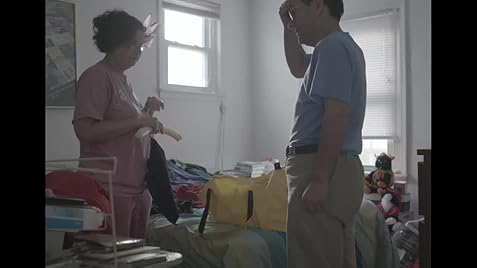
A total of 19 films are in the series.  A full review of OFFICE and capsule review

For complete listing, venue and ticket pricing, please check the TIFF website at:

tiff.net

The program runs from October 26th right through Christmas, a good well spread out of the 19 films. 

THE HEROIC TRIO (Hong Kong 1993) ***
Directed by Johnnie To

THE HEROIC TRIO stars three of the most famous stars in Hong Kong films of the 90’s – Michelle Yeoh, Anita Mui and Maggie Cheung.  They play action super heroes with super powers battling the ’evil one’ who has a scheme to rule the world forever with his emperor who is to be chosen for kidnapped babies.  Meanwhile, back on earth, the police led by Inspector Lau (Damian Lau) are baffled.  They are not the only ones, as the audience often feels the same way for the way the convoluted story unfolds.  Anything can happen in the film and does with no time boundaries.  There is old fashioned martial-arts combined with machine guns and motorbikes, computers mixed with swords and ancient artifacts.  But at least To’s film is full of energy and invention if one can put up with the nonsense.  The ending with the charred skeleton emerging from an explosion is an un-shamed copy from TERMINATOR 2, but who cares as long as the film is uninhibited fun not meant to be taken seriously.  And the three females stars are exciting to watch.

Trailer: https://www.youtube.com/watch?v=pXfNg6NN3C4

ELECTION (Hong Kong 2005) ***
Directed by Johnnie To

The ELECTION in this film refers to the election of the new head of the Triad gangsters in Hong Kong.  The two candidates are Big D (Tony Leung Ka-fai) and Lok (Simon Yam).  Lok is the more stable, even tempered and logicalmone while Big D is flashy, hot-tempered and unpredictable.  When Lok gets elected, Big D threatens to unstable by forming a new group.  The cops want no Wars while Lok agrees to some truce.  There is some fight over the baton, which symbolizes power.  There is more dialogue and story in ELECTION compared to the other To films, credit given to its scriptwriters Yau Nai-hoi and Yip Tin-shing, who seem to somehow know how the underworld operates.  The film premiered at Cannes before opening in Hong Kong and is one of the more successful of the To films spawning a sequel ELECTION 2.

Trailer: https://www.youtube.com/watch?v=zEJfx0z8DUc

OFFICE (Hong Kong 2015) ***
Directed by Johnnie To

The story of OFFICE follows the IPO (Initial Public Offering) of shares by a major  company, Jones & Sunn led by the Chairman (Chow Yun-Fat) and his CEO who also happens to be his mistress (Sylvia Chang).  The film opens as two new interns Lee Xiang (Ziyi Wang) and Kat-Ho (Yueting Lang) start new jobs but learn that there are lots of kissing asses and dirty business that need be done in order to be successful.  Lee Xiang is earnest and naive. Two other characters that play a part in the plot are high flyers Sophie (Wei Tang) and David (Eason Chan) who forge financial figures.  OFFICE is pleasant to the eyes – great set decoration and design.  Each office space is designed artistically and modern, often with crystalline and curved shapes.  Wardrobe, especially those worn by Sylvia Chang are haute couture.  The characters break into song at any time but the songs are often clumsily inserted, and break the flow of the narrative.   OFFICE barely succeeds as a musical and satire and runs a bit long at just under two hours.  The novelty of the sets and songs wears off quite soon. 

Trailer: https://www.youtube.com/watch?v=hFS1sdkSOwQ

Johnnie To