Film Word Of The Week: Archetype

Archetype1.jpgby Kierston Drier

We have an anecdote to start off today’s Word of the Week. In a grade 11 high school english class, this columnist asked what the difference was between an Archetype and a Stereotype- and it stumped the English teacher. Eventually, the teacher explained that an Archetype has a positive connotation and that Stereotype had a negative one- and while that is an arguable point, it isn’t exactly accurate. So today, we aim to clear these definitions up. And yes, through the lense of film and television.


An Archetype, a term coined by Carl Jung, student of the infamous Freud (of the “sometimes a cigar is just a cigar”) describes a figure-type of trope that recurs throughout history in various cultures. The definition becomes increasingly dense when examined through the lense of psychology, philosophy, cultural politics and literature, but suffice to say it relates to the concept that all humans, (regardless of their era, culture or walk of life) share similar collectives fears and aspirations (such as being afraid of the unknown, or needing a singular hero for their community) and that those concepts get revisited as explored again, and again…and again.


And Archetype, as defined by the Merriam-webster dictionary, is described as “…The original pattern or model of which all things of the same type are representations or copies of,” or “A perfect example”


In film and cinema, we will take a look at some classic examples. The 1997 film, Titanic, has an archetypal love story in Jack and Rose- two star-crossed lovers that are unable to be together by some inescapable force of nature (ex. Their social class… or a sinking boat in the middle of an ocean). The concept of these two lovers-that-can-never-be is found over and over again in stories branching across geographic locations, time periods and various media- from books, plays, songs, for time in memorium. (Ex. Romeo and Juliet, Inez and Pedro).


Or the trope of the Trickster, a mischievous character, often with morally ambiguous undertones and some supernatural qualities, that creates conflict within a narrative. Think Bart Simpson (The Simpsons), Stewie Griffin (Family guy), Louise Belcher (Bob’s Burgers), or Jim (The Office).


Why do these Archetypes keep coming up in our collective media? Well, for starters, because they work. They tap into some little-understood level of our social consciousness. In a large sense, Archetypes are free of social judgements. That is not the same with Stereotypes.


A Stereotype, by definition, is “To repeat without variation” or to “give something a fixed form.” To open that definition up a bit more, it means to take elements from the individual and apply it to the general. Ex- This this man loves sports, so ALL men must love sports. Many men may like sports, but certainly not all of them.


There are numerous examples of Stereotypes in film and television and they can quickly become concerning. But let’s talk about when a stereotype can be used effectively.


  1. When you want to convey information very quickly.

Ex. A guy who hates sports walks through a stadium FULL of sports fans. The sports fans here will likely be presented as stereotypical sports fans. This is used to pull focus to our main character. In a day-to-day situation you may not be able to tell if a person is a sports fan, but in the context of a stadium, (a room full of people likely dressed in team-colors and wearing facepaint) will hammer-home that “fish-out-water” focus on the main character not being a sports fan.


From a writing perspective it is astute to tread carefully when working with stereotypes, as they often distil an entire group down to an (often) incorrect essence.  It is prudent to avoid contributing to a cliche or negative stereotype as they can be ineffective, inaccurate and often offensive.


  1. Inversion of the Stereotype, for comedic purposes.This concept plays off the establishment of an expectation and then subverts it, for the sake of comedy.


An example is Cerie on 30 Rock. Her character is set up as a stunningly beautiful and relaxed assistant to Liz Lemon, and who frequently wears revealing clothing at her job. Cerie will occasionally make extremely intelligent comments, often about mathematics or physics, shocking the room. The comedy here comes from the expectation that the beautiful assistant may not be intellectual, but she is. The stereotype is broken, and comedy ensues. Without the additional break, the character would be a flat stereotype, but with the inclusion, she becomes a fuller, more well-rounded character.


Let’s pull back into this writer’s’ grade 11 english class and refocus. What exactly are Archetypes and Stereotypes? How are they different?


Archetype- Is a concept that recurs in human consciousness. In media, often a general character than can inhabit many forms, (the trickster/prankster, the wise elder, the underdog hero) They can be flawed, rich, well-rounded and deep. The essence of the character may be familiar, but as individual characters, they are unique.


Stereotypeis a reduction, or gross over-simplification of reality. It often distills the depth and diversity of a community down into one tired cliche. Humor can be derived from satirizing it, or pointing out its’ flaws in a subverted way.


So for all those going into high school this september, take a note on these two- you may even impress you english teacher.


RESOURCES

Merriam-webster.com (Definiton of Archetype and Stereotype)


Dictionary.com (Definition of Archetype and Stereotype)

Archetype.jpg

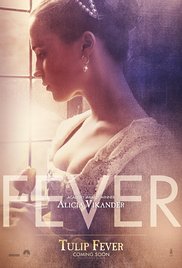
Film Review: TULIP FEVER (UK 2016) **

tulip fever.jpgAn artist falls for a young married woman while he’s commissioned to paint her portrait during the Tulip mania of 17th century Amsterdam.
Director: Justin Chadwick
Writers: Deborah Moggach (screenplay), Tom Stoppard (screenplay)
Stars: Alicia Vikander, Dane DeHaan, Jack O’Connell

Review by Gilbert Seah

The press is having a field day with the news of the new film TULIP FEVER based on a scandalous affair set in 17th Century Amsterdam. When the film critics were asked to sign an embargo for their reviews to appear no earlier that 1 pm of Friday, the film’s opening day, something must be afloat. The film was expiated to be awful. In addition, rumours were going around that TULIP EVER had been siting on the shelves for 3 years.

To be fair to the film, the film was in production in 2014 and the film was scheduled for a 2016 release. So, the film was on the shelf for a year and not 3. As for the embargo, the studios have their reasons. The film is not that bad, though it is not that good either. Despite the film’s flaws, it is quite watchable and pleasant viewing.

For one, the film has an impressive cast that includes Oscar Winner Judi Dench, hardly recognizable in cloister apparel. She is the Abbess who specializes in growing tulips. The film also stars rising start Alicia Vikander, Dane DeHaan, Jack O’Connell and Christoph Waltz. This is Waltz in his strangest role not as an antagonizer but as a victim of various plots. DeHaan, who has become quite the household name now with this third big expensive flop in a row after A CURE FOR WELLNESS (in turn quite a good film despite flopping at the box-office) and the same could be said for VALERIAN.

The film is told from the point of view and voiceover of a maid, Maria (Holly Grainger). She works hard for her mistress Sophia (Vikander) who was bought from the orphanage for a wealthy Cornelis (Waltz) who is desperate to have a son. Maria has an affair with a fishmonger (O’Connell) who delvers fish to the household. Sophia has an affair with a painter, Van Loos (DeHaan) behind Cornelis’ back. When Maria becomes pregnant ,s he blackmails her mistress as she knows of Sophia’s affair with Van Loos. Sophia decides to have Maria’s baby as her own to fool her husband. Complications arise in this complicated tale of deceit, with tulip truing brought into the picture.

It is are to market a film in which those who plot and have various affairs flourish and the poor faithful and believing husband doesn’t. He ends up, forgiving his transgressors and even grating them his residence.

The film is set in Holland, in the 17th century when tulips were the talk of the town. Business people were trading on tulips, very similar to the stock market at present. As expected, while many may make their fortunes, oner less fortunate ones stand to lose everything.

TULIP FEVER benefits from an interesting though hardly credible story. The period setting in Amsterdam helps too, despite the film shot totally in English with largely English and European actors. TULIP FEVER ends up an interesting failure. It costs only $25 million to make, so it might just make a little profit.

Trailer: https://www.youtube.com/watch?v=5RpGTBnf158

TIFF 2017 Movie Review: APOSTASY (UK 2017) ***

Movie Reviews of films that will be playing at TIFF (Toronto International Film Festival) in 2017. Go to TIFF 2017 Movie Reviews and read reviews of films showing at the festival.

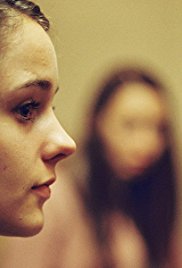
 APOSTASY.jpgA faithful Jehovah’s Witness is forced to shun her own sister because of a religious transgression. As the separation draws out, she starts to question the meaning of God’s love.

Director: Dan Kokotajlo
Writer: Dan Kokotajlo
Stars: Siobhan Finneran, Robert Emms, Sacha Parkinson

Review Gilbert Seah

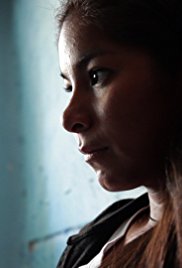
APOSTASY is a term for the formal abandonment of ones faith, regardless of what the faith might be. In this minimalist family drama set in Manchester, England, the faith of a family is put to the test. The family concerned is the mother, Ivanna (Sobhan Finneran) and her two daughters, 20-year old Louisa (Sacha Parkinson) and 18-year-old Alex (Molly Wright).

They are Jehovah Witnesses, who are rigorously devoted to their religion. They also take their religious mission door to door amongst a large Pakistani community in Oldham of Greater Manchester.

Alex has already received a blood transfusion at an early age, dictated by the hospital to save her life but a definite no-no in the belief of the faith. When Louisa gets impregnated by a non-believer, she is dis-fellowshipped by the Elders of the church. Not only that, but her mother and sister are disassociated and not allowed to see her.

All three main actresses are nothing short of superb. Director Kikotajlo is fond of using close ups to show the emotions of his characters’ faces. APOSTASY is a small budget film that dramatically achieves its aim of revealing the truth and hardships of a religious belief.

Trailer: (non available at time of writing)

APOSTASY1.jpg

TIFF 2017 Movie Review: WHAT WILL PEOPLE SAY (Norway/Germany Sweden 2017)

Movie Reviews of films that will be playing at TIFF (Toronto International Film Festival) in 2017. Go to TIFF 2017 Movie Reviews and read reviews of films showing at the festival.

 WHAT WILL PEOPLE SAYSixteen year-old Nisha lives a double life. At home with her family she is the perfect Pakistani daughter, but when out with her friends, she is a normal Norwegian teenager.

Director: Iram Haq
Writer: Iram Haq
Stars: Maria Mozhdah, Adil Hussain, Ekavali Khanna

Review by Gilbert Seah

When Nisha (Maria Mozhdah) is caught with a boy in her bedroom, though nothing really happened between them, her concerned parents kidnap her and send her to Pakistan. The film traces Nisha’s kidnap to her abode in Pakistan where she lives with her cruel aunt and uncle. Things get even worse, after a failed escape attempt and her being caught by the police smooching with her cousin.

They call Nisha’s dad (Adil Hussain) to take her back to Oslo. The father is madder than ever and at one point forces her to commit suicide, which she doesn’t. Director Haq has the audience clearly on Nisha’s side. Firstly, she is largely innocent, only guilty of wanting to have some fun any normal teenager seeks. When she suffers, she is also shown to earnestly want to turn over a new leaf.

The film benefits from superior performances from both Mozhdah as Nisha and Hussain as Nisha’s dad. It also helps that Haq has developed real characters, not just one dimensional cardboard ones. The film is not devoid of humour (like the egg lady on the bus in Pakistan). Haq also shows the different culture and lifestyle in Pakistan compared to Norway.

WHAT WILL PEOPLE SAY is an engaging film that makes its point, while sending a message at the same time.

Trailer: https://www.youtube.com/watch?v=b8_dBOzufWQ

WHAT WILL PEOPLE SAY1.jpg

TIFF 2017 Movie Review: COCAINE PRISON (Bolivia/Australia/France 2017) ***

Movie Reviews of films that will be playing at TIFF (Toronto International Film Festival) in 2017. Go to TIFF 2017 Movie Reviews and read reviews of films showing at the festival.

COCAINE PRISON.jpg
From inside Bolivia’s craziest prison a cocaine worker, a drug mule and his little sister reveal the countries relationship with cocaine.

Director: Violeta Ayala
Writers: Violeta Ayala (story),
Stars: Daisy Torres, Hernan Torres, Mario Bernal

Review by Gilbert Seah

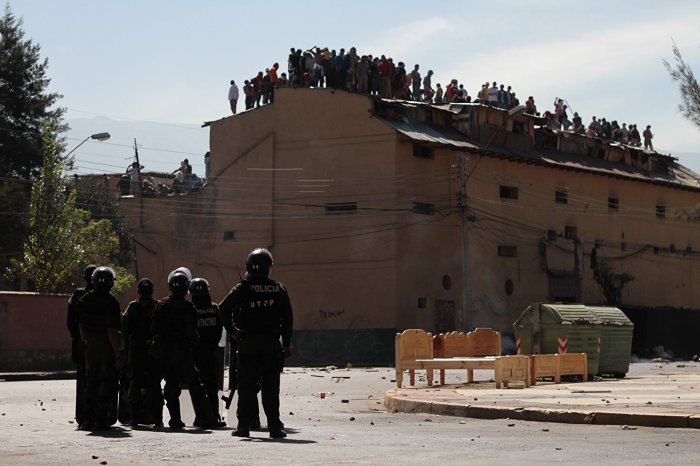
Shot in Bolivia — including inside the notorious San Sebastian prison — over five years, Violeta Ayala’s COCAINE PRISON takes a close look at two subjects – the cocaine trade and the conditions of the prison.

What the audience sees is definitely shocking in this engaging film. The film follows Hernan and his sister Deisy, two Bolivian teenagers going to high school in Cochabamba with dreams of starting a band. Hernan gets caught and put to jail after attempting to carry two kilograms of cocaine across the border to Argentina.

He is sent to San Sebastian prison, a scarcely staffed open-air facility where the prisoners make most of the rules. Prisons in Canada, in comparison look like a summer relax camp. In San Sebastian, inmates have to cough up US$2000 to buy a cell in the prison grounds or sleep outside with the risk off getting mugged.

Director Ayala also follows the drug trade emphasizing the workers harvesting the leaves to the mules like Hernan who get imprisoned while the real drug dealers go free.

There is a sort of happy ending for Hernan as he gets pardoned but things on the whole do not look good for anyone else, including Hernan after he is released. Director Ayala taught English in the prison, which gave her access to filming inside it.

Trailer: https://www.youtube.com/watch?time_continue=14&v=WgZJWuFgMew

COCAINE PRISON1.jpg

TIFF 2017 Movie Review: CALL ME BY YOUR NAME (France/Italy 2017) **1/2

CALL ME BY YOUR NAME.jpgSummer of 1983, Northern Italy. An American-Italian is enamored by an American student who comes to study and live with his family. Together they share an unforgettable summer full of music, food, and romance that will forever change them.

Director: Luca Guadagnino
Writers: James Ivory (screenplay), André Aciman (based on the novel by)
Stars: Armie Hammer, Timothée Chalamet, Michael Stuhlbarg

Review by Gilbert Seah

The gay coming-out story CALL ME BY YOUR NAME arrives at TIFF after rave reviews from its Sundance and Cannes premieres.

It boasts the direction of Italian auteur Luca Guadagnino ( I AM LOVE and A BIGGER SPLASH) and a script by James Ivory. The film explores the tender, tentative relationship that blooms over the course of one summer between a 17-year-old boy on the cusp of adulthood, Elio (Timothée Chalamet) and his father’s research assistant, Oliver (Armie Hammer).

The father is American professor Perlman (Michael Stuhlbarg) and each summer, the professor invites a doctoral student to visit and help with his research. While Elio has a beautiful girlfriend who takes up most of his emotional time, he also finds a growing physical attraction to the visitor.

The film is a major disappointment being all good-looking on the outside and feeling like a fairy tale, neglecting the downers of coming-out gay. Things never turn out this perfect in any gay coming-out story. The film feels even more awkward as Elio looks way under below the age of 18.

Trailer: https://www.youtube.com/watch?v=3AMgliTBFKU

CALL ME BY YOUR NAME1.jpg

TIFF 2017 Movie Review: DON’T TALK TO IRENE (Canada)

Movie Reviews of films that will be playing at TIFF (Toronto International Film Festival) in 2017. Go to TIFF 2017 Movie Reviews and read reviews of films showing at the festival.

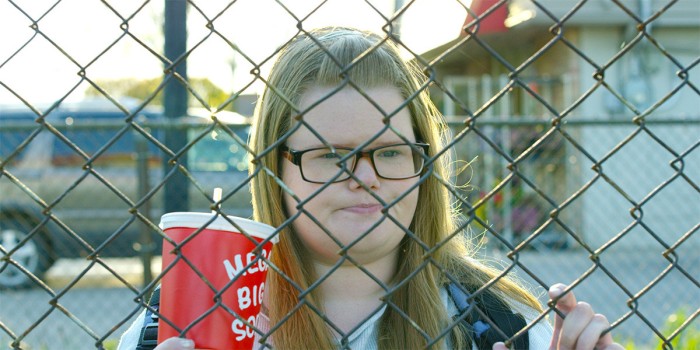
DON’T TALK TO IRENE.jpgWhen Irene – the fattest girl in high school – gets suspended, she must endure two weeks of community service at a retirement home.
Director: Pat Mills
Writers: Pat Mills
Stars: Michelle McLeod, Anastasia Phillips, Scott Thompson

Review by Gilbert Seah

Irene Willis (Michelle McLeod) lives in a town of a small fictional town of Parc supposed to be just north of Toronto. It is described in the film as the worst of small towns, where Irene goes to the worst of high schools.

Her cycle of life is predictable and bland. Fuelled by the dream of becoming a cheerleader, but constantly told by both her overprotective mother (Anastasia Philips) and classmates that she does not fit the role of a cheerleader. But Geena Davis, speaking to Irene via the A League of Their Own poster on her bedroom wall tells her “Never quit!”

She rounds up her new-found circle of elderly friends in a senior home into an unlikely dance troupe. The film has the age old story which audiences have seen time and again.

Despite the story’s limitations, the film benefits for the sly humour of its writer/director Pat Mills. McLeod is a rare find and is able to carry the film well. The film contains a nice surprise with the actual appearance of Geena Davis. Everyone loves a feel-good movie.

Undemanding viewers should lap this tale up, with no problem at all. Critics can only wince at the goings-on of this girl that finally makes good.

DON_T TALK TO IRENE 1

TIFF 2017 Movie Review: LOVELESS (Russia/France/Germany/Belgium 2017) ****

Movie Reviews of films that will be playing at TIFF (Toronto International Film Festival) in 2017. Go to TIFF 2017 Movie Reviews and read reviews of films showing at the festival.

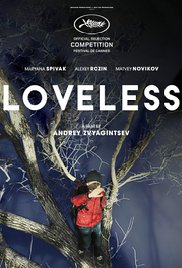
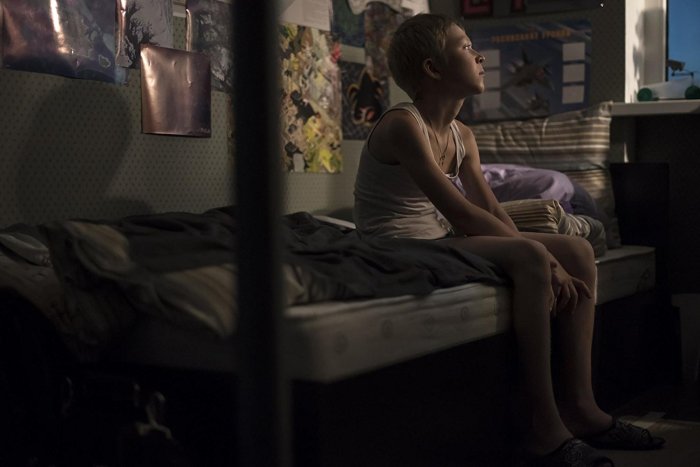
 loveless.jpgA couple going through a divorce must team up to find their son who has disappeared during one of their bitter arguments.
Director: Andrey Zvyagintsev
Writers: Oleg Negin, Andrey Zvyagintsev
Stars: Maryana Spivak, Aleksey Rozin, Yanina Hope

Review by Gilbert Seah

Russian director Andrey Zvyagintsev’s latest film of a boy gone missing, is one that appears simple on the surface but is in reality an extremely powerful film on the tragedy that emerges from the result of a lovelessness. When the film begins, Boris and Zhenya are in the midst of a nasty divorce.

They still live together which makes matters worse. In one of their fights, they argue that their 12-year old boy, Alyosh was a mistake. Neither one wants custody of the boy and the father remarks that he best be sent to boarding school, in preparation for the army afterwards.

She says she never wanted him in the first place. The boy, meanwhile, in the film’s most moving scene is shown crying his eyes out, after hearing what has been said by his parents. He is clearly, in his opinion unloved. He disappears. Boris and Zhenya are forced to come together to search for their missing son.

One can only wonder where their love (if ever they had any) had gone. Zvyagintsev explains in one scene that this love never existed in the first place. Meanwhile Zhenya has another man while Boris another woman. They do not find the boy but life must go on.

LOVELESS is a powerful film that instead of showing the power of love, shows the opposite, how life cannot survive with love.

A terrific movie that won the Jury Prize at Cannes!

Trailer: https://www.youtube.com/watch?v=mLegoO4NdD8

LOVELESS1.jpg

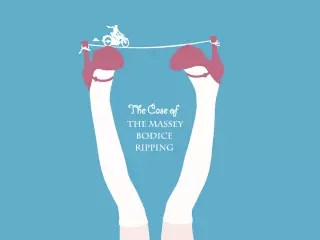
Indigogo Campaign Interview: Dana Fradkin and Karen Knox on their film The Case of the Massey Bodice Ripper

the_case.jpgInterview by Kierston Drier

The Case of the Massey Bodice Ripper Indiegogo Campaign

Are you searching for groundbreaking cinema? The untold stories given voice by trailblazers? Concepts ambitiously challenged by unique craftsmanship? Also comedy? This reporter is.


It is true that excellent stories come in all forms- from the smallest micro-budget indie to the grandest blockbuster- but more times than not, an audience is subtly led towards the tropes and stereotypes that society is unconsciously comfortable with. But not this time.


This time I was connected with two fearless and talented Toronto-based content creators, Dana Fradkin and Karen Knox. Fradkin, a writer/producer/performer has worked all over Canada, the United States and Europe and has teamed up with Knox, writer/director and creator of her own production company Boss & Co to bring startling fresh life to an overused industry trope in their new short film The Case of the Massey Bodice Ripping.


What trope are they aiming to break down? An ambitious and intense one- the issue of Rape, as convention in film. I dive in with these two talented creators to dissect their motives behind making their piece The Case of the Massey Bodice Ripping, a piece that tackles the tropes of violence against women through the lense of satirized murder mystery comedy.


  1. To begin, tell me a bit about the synopsis of the piece.

Dana: The Case of the Massey Bodice Ripping, written in the style of the murder mystery genre, takes a look at our uneven portrayal of murder vs. rape in contemporary media. While we freely satirize murder to the extent of writing Broadway musicals on the subject, the issue of rape has been relegated to stories of broken women, sensational crime drama or hackneyed plot device excused as historical accuracy.


The Case of the Massey Bodice Ripping is a parody/satire on the classic murder mystery genre.  It’s 1932, the Massey family has gathered together at Helen Massey’s estate up north for their annual hunting weekend.  But the whole weekend goes awry, when, on the first night, Lara Massey (Helen’s daughter), is raped.  Female Detective Tracy Halt zooms in to solve the case.  With an array of neurotic characters including Helen’s drunk brother, her French lover, the young polish gardener, the British butler and the flirty maid; Detective Tracy uncovers many family secrets before finding the sexual predator.  The film is both quirky like the movie Clue while also focusing genuinely on Lara’s traumatic event, her experience and the after effects.  


  1. What sparked the genesis of your project? What was the initial inspiration or motivation behind this piece?


Karen:  The idea of creating this film was born of a conversation Dana and I had while discussing society’s treatment of murder vs. rape. How we are able to freely satirize murder and violence, but not rape. Even saying the word full volume in a coffee shop is difficult to do. Why is this? Does our inability to explore the subject matter except from a limited artistic milieu contribute to the perpetuation of rehashed tropes and bad stereotypes furthering ideas propping up rape culture? These are questions we are trying to answer through the making of this film. By working closely with the Toronto Rape Crisis Centre, and speaking with survivors we are attempting to create a film that is insightful, sensitive, and above all else a paradigm shift in our thinking with regards to how we tell stories of sexual assault.


After years of watching primetime drama consistently churn out half baked stories, romanticizing, sexualizing, helping to promote hateful stereotypes, and adding to the perpetuation of rape culture I along with co-writer Dana Fradkin created a script dealing with the rape of a young woman that:


  1. Doesn’t romanticize/sexualize rape


  1. Does not credit rape as a “backstory” for female revenge


  1. Doesn’t use rape to further the development of a male character


  1. Does not use rape to turn a female character into a superhero


  1. Is told from the survivor’s perspective


  1. Does not use rape as an excuse for a woman to be “broken”


  1. Is a comedy. Highlighting the absurdity/ubiquitousness of sexual assault in “Period Pieces” especially in the particularly grim rape factories of primetime dramas.


  The kind of film we are making has never been made before. We want to change the conversation. While acknowledging that one cannot change the world with a short film, we do hope to help the slow reconstruction of how the media deals with the story of sexual assault and violence. We are a team made up almost entirely of women. With more women telling stories, and more female directors translating those stories into images that impact viewers’ emotions and attitudes, we can at least convey one giant truth: That rape culture – founded on the belief that women are less valuable, less deserving, less believable – is based on a lie.


  1. Tell me a little more about the piece itself. It sounds like you are tackling a difficult subject matter with deep sensitivity and also a bit of humor, as you mentioned your short is also a comedy.


Karen: I am a firm believer in the ability of satire to change the world. I can acknowledge the difficult nature of watching media about the subject of rape. It is one of the most horrific acts of human violence and unlike murder, leaves us with survivor, a human being who can speak to the experience, the trauma and its effects. It then seems perhaps counterintuitive to try to create a film on the subject that includes elements of comedy. The satire in Case of the Massey Bodice Ripping is more a commentary on our oft too passive acceptance of rape culture. Truth though satire is piercingly clear in that in allows us to be self critical without turning us off with a too violent or vitriolic reprimand.


4.Tell me about the process of building your film right now?


We have an incredible team behind us, cast, creative, and an amazing team of producers. Everyone who has come onto this project has generously donated their time to the cause. With the philanthropic help of the Kellet foundation we have been able to secure a lot of our filming essentials, including the incredible location, a 1930’s Tudor period mansion, we will be filming at. After about two years of on again off again script development, we are ready to bring this film into the world, but we need the community’s help to make it happen!


  1. You are currently running an Indiegogo Campaign. Can you elaborate on exactly what the funds are being raised for?


– Equipment rentals (some of these have been donated, but there a few vital pieces we still need to cover the cost of).

– A fair wage for essential crew members

– Post production (editing, composition, sound mixing, colouring,)

– Festival submissions and publicity

– Craft services! We will have a team of 30 for three days on set working ten to twelve hour days! In order to keep everyone happy it is so vital to keep them well fed and well caffeinated!


  1. You film aims to do some incredible things, both on a small and large scale in media. Talk to me about how helping you with this Indiegogo Campaign creates meaningful change, on a small and large scale. (For the record, this reporter is already sold!)


On a small scale you’re helping a team of Canadian artists create meaningful content that can contribute to changing the way we deal with the rape trope in TV and Cinema. On a larger scale, we’re taking on nearly a century of cinema and TV that has refused to tell survivors’ stories in a way that offers ownership of perspective.


  1. If you had one message to send out to people are passionate about this industry, what would it be?


We are making something that no one has ever seen before. This story is vital, this message is vital, let’s bury the rape trope ONCE AND FOR ALL!


  1. Anything you’d like to add?


While we do need to raise $6000 in order to cover basic filming costs, there are other ways in which you can easily donate to this project other than with financial support. Do you have experience working in the film industry? Is this a project you can get behind? The donation of your time as a member of our crew is HUGELY valuable. Join us for one day, or join us for all three! Get in touch with us and we can most likely find a position for you on this shoot!


If you have any other ideas/skills you feel might be able to contribute to this project, we would love to hear from you. Maybe you run a catering business and would like to donate catering to our project? Maybe you run a costume rental house and would like to help us out with rentals?


  1. Please link me to your campaign! (and basic campaign details, rewards, etc)


The Case of the Massey Bodice Ripper Indiegogo Campaign


How utterly refreshing? How exceptionally brave and admirable? How badly do you want to see a comedy like this get made?  I do. I want to see this piece succeed because what is film if it does not take on a challenge? What is film if it doesn’t make us ask ourselves (and our society) hard questions? Tired tropes must be retired, and creators must rise to the challenge of retiring them. Knox and Fradkin are two of these creators- challenging the status quo, making a difference and making us laugh. For that alone, I tip my hat and head on over to their amazing Campaign. (And when you do check out their Campaign, watch the video! It’s a comedy in and of itself!)

TIFF 2017 Movie Review: THE RIDER

Movie Reviews of films that will be playing at TIFF (Toronto International Film Festival) in 2017. Go to TIFF 2017 Movie Reviews and read reviews of films showing at the festival.

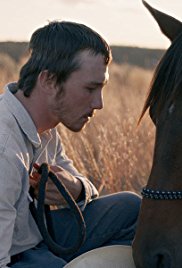
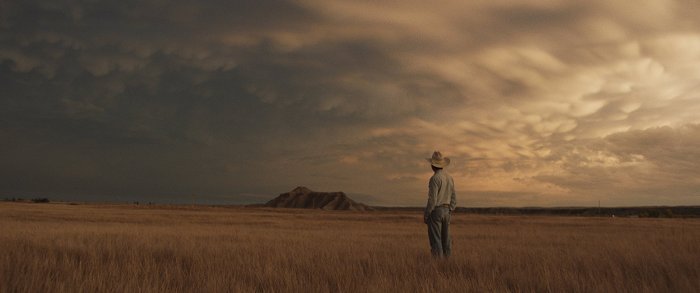
THERIDER.jpgAfter suffering a near fatal head injury, a young cowboy undertakes a search for new identity and what it means to be a man in the heartland of America.
Director: Chloé Zhao
Writer: Chloé Zhao
Stars: Brady Jandreau, Tim Jandreau, Lilly Jandreau

Review by Gilbert Seah

The film centres on a rodeo hopeful’s life after his dreams are dashed following a serious rodeo accident.

The audience sees the pain right at the very start when Brady Blackburn, a South Dakota cowboy (Brady Jandreau) manually takes off the medical staples from his wounds. Zhao emphasizes the claustrophobic life of Brady, despite having the open ranges.

He lives with his often drunk and gambling father and mentally challenged sister, Lilly (Lilly Jandreau). His few friends provide him a drinking outlet but it is the rodeo that makes Brady, the man.

If a cowboy cannot ride, then what good is he? These be Brady’s own words. With his injury his brain is sensitive and riding rodeo might be the end of him. Zhao builds good characterizations. The father is not a one sided cardboard has been.

Despite his constant arguments with his son, it is shown at the end that he understands Brady and his decisions. Brady’s anguish, anger and decisions are also well displayed. The horse training and rodeo segments are effectively shot and exciting enough.

Joshua James Richards captures the landscape of the open areas of the west, where horses run free. Simple storytelling, a good human story and one dealing with nature always make a good film.

Cannes Clip: https://www.youtube.com/watch?v=DbhO6MkO78U

THERIDER1.jpg