Film Review: THE QUEST OF ALAIN DUCASSE ((La quête d’Alain Ducasse)(France 2017) ***

Submit your Screenplay to the Festival TODAY

The Quest of Alain Ducasse Poster
Trailer

With 18 Michelin stars, Alain Ducasse creates restaurants for our times, builds schools and pushes the boundaries of his profession. This public, yet secretive man agreed to be followed for 2 years, thereby revealing his evolving universe.


The Quest of Alain Ducasse is an absorbing documentary about the most renowned 

chef and culinary mentor in the world.  With 23 restaurants across the globe and 18 Michelin stars, Ducasse continues to create restaurants, to build schools, and to push the boundaries of his 

profession with his boundless curiosity.  His quest is the perfect gastronomic restaurant in the Palace of Versailles, creating a modern vision of what the kings would have devised three centuries ago.

The film follows Ducasse on a journey of 2 years as the audience follows him around the world visiting his restaurants in Tokyo, the United States, Athens, China, the Philippines and elsewhere.  In the shadow is the opening of a new restaurant in Versailles with a menu ‘fit for kings’.

Despite the chef’s success, fame and wealth, Ducasse remains a humble man.  When asked about the ambition of being the ‘King of Gastronomy’ he replies that all he wants is to satisfy and leave memories of a good meal.  His idea of a good time is simple – to be alone in a garden with a vegetable.  To him being with a carrot or a courgette is to observe nature’s perfection.  He is an advocate for sustainable foods, with as little meat or sugar or dairy cream in his desserts.  He believes in change, working with a team to share and to come back to the same place.  Ducasse is shown as a wise man, not only excelling in gastronomy but in words and actions.  The film never shows him angry and hardly dissatisfied.  Ducasse is always journeying to observe, his aim to taste something he has never tasted before.

The doc is largely narrated by the director himself, who gives a good perspective on what is going on, on the screen.

There are lots to enjoy in this eye-opening documentary.  The one and foremost is the large assortment of foods on display.  Besides looking delicious, the food looks decorative and imaginative.  There are also lots to learn bout Ducasse the man and those inspired by him.  My personal best food scene is the sturgeon caviar segment.  It is explained that the best caviar in the world is from China waters, with  cultivation techniques imported from Iran.  The audience gets to witness a 10-year old bred sturgeon sliced open for its roe and how the caviar is eventually cooked in a oracular cylinder and brought to the dining table, in all its perfection.  Another superb segment has Ducasse having a meal with past-President Hollande as they plan the meal for the Climate Change Summit in Paris.  Hollande has his say in the film too.

The film contains a few contradictions.  Besides stressing Ducasse’s humility, there is a scene where he proudly walks across a garden in the Philippines with the locals carrying an umbrella for him to protect him from getting wet.  For sustainable food,s the harvesting of roe and destroying the sturgeon after looks like excessive decadence.

The Quest of the film’s title is the Master chef’s is the opening of his new restaurant.  This is where the film leads.  It is clearly not a biography of Ducasse.  Nothing is shown or revealed of his family or background except that he has a wife and 4 daughters, one of whom is shown on the screen as the father visits her on a farm she is in charged of.

The film culminates with the opening of the Versailles restaurant.

Trailer: https://www.youtube.com/watch?v=ax0KtQzn4dc

Submit your Screenplay to the Festival TODAY

Film Review: HOTEL ARTEMIS

Submit your Screenplay to the Festival TODAY

Hotel Artemis Poster
Trailer

Set in riot-torn, near-future Los Angeles, ‘Hotel Artemis’ follows the Nurse, who runs a secret, members-only emergency room for criminals.

Director:

Drew Pearce

Writer:

Drew Pearce


There is a segment in both the JOHN WICK action movies where Keanu Reeves who plays an assassin takes refuge in a special European Hotel.  One has to be a member of this hotel to enter, of which certain rules must absolutely be followed.  There must be no killings.  Everyone must respect each other. 

 In HOTEL ARTEMIS, Jodie Foster plays the head nurse, Jean Thomas of the hotel.  The only thing is that HOTEL ARTEMIS is not really a hotel but a  hospital run by Thomas where the secret members-only can convalesce if they are shot, wounded or need medical attention.   But when a cop is admitted all hell breaks lose and FREE FIRE occurs.  HOTEL ARTEMIS plays like a cross between FREE FIRE and the JOHN WICK hotel segments.  But the film does not work and interest wanes quickly.

The film tries hard to distinguish itself as being original.  For one, it is set in the end future of a war-torn Los Angeles.  The film begins with a rather violent bank heist, as seen from the robbers points of view.  Some are killed and some are wounded.  Two African Americans survive but one is wounded and has to be brought to the HOTEL ARTEMIS for hospital care, no questions asked.  It is there where the audience is introduced to the no-nonsense head nurse who will not let anyone through the high security gates.  She has a really nasty looking security guy, Everest (Dave Baustista), built like the mountain itself.

HOTEL ARTEMIS does to really work because the script and story have nowhere to go.  No one really cares about any of the riff-raffs that enter hospital, who survives or who dies.  The humour is off, neither black, neither camp, neither satirical and neither funny.  Action segments are well executed, lifting the film a little, though this can hardly be classified as a true action film.

This is Jodie Foster’s first film after a long absence.  She does well, though looking her age.  The cast includes other minor actors including Jeff Goldblum, Zachary Pinto and Sofia Boiutella.

HOTEL ARTEMIS lastly suffers from a slip shod ending, which is expected given that the film’s whole story never leads anywhere.  Do not book your stay at HOTEL ARTEMIS.

Trailer: https://www.youtube.com/watch?v=JqfuKsoEEms

Submit your Screenplay to the Festival TODAY

Film Review: ADRIFT (USA 2017)

Submit your Screenplay to the Festival TODAY

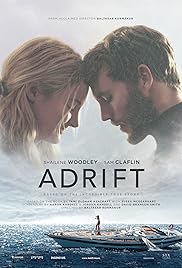
Adrift Poster
Trailer

Based on the true story of survival, a young couple’s chance encounter leads them first to love, and then on the adventure of a lifetime as they face one of the most catastrophic hurricanes in recorded history.


ADRIFT is a sea survival romance drama based on the true story of a couple caught in a devastating storm while sailing.  With minimum food and water and relying on each other’s love to survive, ADRIFT is the story, told from Tami (Shailene Woodley), the girl’s point of view.  Woodley shot to fame playing the daughter in Alexander Payne’s THE DESCENDANTS with George Clooney.  Besides having the female lead role, Woodley also has credit as a producer.

An American and Englishman with his boat sailing around the world meet in Tahiti.  Love at first sight, it appears to be after a date night.  The two take on a task of delivering a yacht to San Diego.  

The next scene is the disaster scene where Tami is below a flooded boat screaming and looking for Richard.  It is evident that they have survived a storm that had devastated their boat and Richard must be somewhere overboard.  She finds him and pulls him on board.  But he has a big gaping leg wound and broken ribs.  They spend 40 odd days ADRIFT.  She learns a bit about sailing and the film stresses that it is her love for Richard that saves the two.

At the start of the movie, it is stressed that the film is based on a true story.  This does not mean that what transpires on screen following is all true.  What really happened is revealed at the end during the closing credits.  As this is the major surprise of the film (though it can not be officially considered a plot twist), the fact will not be revealed in the review.  But stay for the closing credits if you watch the film.

ADRIFT is a romance set in a disaster setting  not a disaster movie in a romantic setting.  This results in an awfully saccharine sweet setting, all too good to be believable less true.  For a couple surviving for more than month with hardly any food and water, they only argue once.  Thy are still lovey-dubbey all the way, she clinging on to him half the time despite his broken ribs.  Cans of food and even alcohol pop up from hidden areas below the deck at regular intervals for the couple to survive.  There is even enough beer for the couple, in Tami’s own words “to party.”  Fortunately, the audience is spared from watching any drunken frolicking.  There are no scenes involving both of them having to urinate or taking a number 2.  At least the audience is spared from Woodley having perfect hair and make-up during the storm, as in the awful recent film KAYAK TO KLEMTU, where the lead always shows up with perfect make-up despite its wilderness setting.

The storm scenes with Tami and Richard scrambling around the boat look authentic enough.  CGI effects are so advanced these days it is hard to tell when CGI effects are used or the real thing with real water and a blowing fan.

The couple’s chemistry helps the film’s story.  Both are young, attractive and share the same goal – wanting independence.

One might hate ADRIFT for the Hollywood style romantic storytelling, but for those romantics who love this kind of thing ADRIFT will not disappoint.

Trailer: https://www.youtube.com/watch?v=HdMP4sWc71M

Submit your Screenplay to the Festival TODAY

Film Review: BLACK COP (Canada 2018) ***

Submit your Screenplay to the Festival TODAY

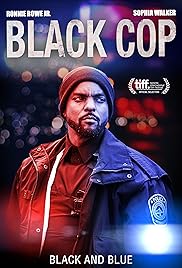
Black Cop Poster
Trailer

A black police officer is pushed to the edge, taking out his frustrations on the privileged community he’s sworn to protect.

Director:

Cory Bowles

Writer:

Cory Bowles


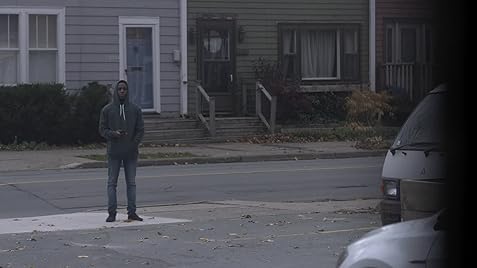
BLACK COP is a satire/drama about a black cop (no name given to him or to any of other characters in the film).

In the film, some people think BLACK COP has lost touch with his blackness, but BLACK COP thinks not.  Most of the time, people tell him how to do his job.  “Assholes think they know too much.” is what the cop’s response is.  The humour is quite black (pardon the pun!) but it works marvellously.  And bitingly funny. 

It is thus not easy being a black cop as the film clearly demonstrates.  The community (including the black portion) does not trust him, his colleagues are wary of him and he is being patronized by the people he is supposed to protect.   And when the world is on edge waiting for a grand jury verdict on a high-profile police case involving unarmed youth, all eyes are on him  

Though the film is set in the U.S., the theme reflects the famous Toronto case in which an officer shot an armed youth on a streetcar.

For this officer already struggling between duty and moral obligation, things take a drastic turn when he is profiled by his colleagues off-duty (10 minutes into the movie), pushing him over the edge.  Armed with the power of his badge, an antagonizing radio show for company, and some good old-fashioned rage, the stage is set for a whirlwind day filled with vendetta and just desserts, as Black Cop targets the community he is sworn to protect. 

The film’s premise is simple.  After the cop experiences abuse, he loses it an takes revenge by abusing the community under his beat.  The abuse takes the form of him arresting, threatening and beating up an assortment of people.  The abuse scenes unfold like watching a Youtube video shot by a camcorder placed at the cop’s eye-level.   The film has an edgy feel from the way other segments are shot, with a combination of jump cuts, slow and fast motion.  But the film does not go anywhere except as to what transpires from that simple premise, which is a bit of a disappointment.

There are lots of anger in BLACK COP.  And this is what makes it compelling to watch!

Actor Ronnie Rowe Jr. (looking a bit like Ice Cube) portrays him almost perfectly, combining drama and humour as he tackles the issues of race, class and power.  The film is directed by Cory Bowles (who did episodes of the Trailer Park Boys).  Bowles comes from a black father and a white mother.

The film unveils in chapters with odd titles.  The first chapter is titled “Brother..Brother…Brother.”  The second is called “Just a Friendly game of Baseball.”  and the third “Zombie no go stop.”  – not that all this makes sense, but it adds to the edginess. BLACK COP opens across Canada in major cities on June 1 as a Cineplex Special Event then June 5 an exclusive iTunes run, with a wide VOD release on June 19.

Trailer: https://www.youtube.com/watch?v=4RiOirLKtQM

Submit your Screenplay to the Festival TODAY

Italian Contemporary Film Festival: CINDERELLA THE CAT (Gatta Cenerentola) (Italy 2017) ***

Submit your Screenplay to the Festival TODAY

Cinderella the Cat Poster
Cenerentola struggles to escape the shadow and evil schemes of her stepmother and six stepsisters who all live aboard the Megaride, a ship stuck in the port of a decaying future Naples.


Gatta Cenerentola is a 2017 Italian partly musical animated film directed by Alessandro Rak (who previously directed The Art of Happiness) and 3 others loosely based on the Giambattista Basile’s fable of the same name and Roberto De Simone’s musical La Gatta Cenerentola. 

 It is yet another musical based in Napoli dealing with the Camorra (the other being LOVE AND BULLETS screened at the ICFF).  The plot is set in a decaying future Naples and concerns a mysterious mute teenager called Mia who struggles to escape from her vicious stepmother Angelica.  Mia’s scientist father loves and marries Angelica who wants money and fame.  Angelica is secretly in love with Camorra crime boss Salvatore Lo Giusto who murders Mia’s father.  Mia is treated badly by Angelia and her 5 daughters and campy cross-dressing gay son. 

 The story resembles the Cinderella fairy tale from the wicked stepmother, ugly stepsisters, glass slipper and Mia’s Prince Charming who eventually saves her.  Despite being a fairy tale, the film contains dialogue with lots of swearing, nudity, fondling of breasts and violence. 

 It is hard to tell what the target audience the film is aimed at.  The animation looks charming and colourful enough like a fairy tale.  Still, CINDERELLA THE CAT is quite an original and entertaining film.

Trailer: https://www.youtube.com/watch?v=85GJEWYyrPw

Submit your Screenplay to the Festival TODAY

Film Review: FIRST REFORMED (USA 2017) ***

Submit your Screenplay to the Festival TODAY

First Reformed Poster
Trailer

A priest of a small congregation in upstate New York grapples with mounting despair brought on by tragedy, worldly concerns and a tormented past.

Director:

Paul Schrader

Writer:

Paul Schrader

FIRST REFORMED is the name of an old church built in 1767 that is still standing in the film of the same name.  The film’s subject is Reverend Toller (Ethan Hawke), a good-hearted God-fearing man but one who questions his faith after the death of his son, that also resulted in his marriage break-up.  Toller is lonely.  Toller is also ill with a cancerous tumour.

The film is directed by Paul Schrader, known for his serious films.  His best movies include BLUE COLLAR, CAT PEOPLE and AFFLICTION, the latter film winning James Coburn the Best Supporting Actor Oscar.  FIRST REFORMED shares a bit of the scarce but biting humour in AFFLICTION, in the form of Cedric the Entertainer playing the supporting role of Pastor Jeffers.  But Schrader is dead set on the subject at hand – the relevance of religion in today’s world.  Jeffers offers advice to Toller in  a sit-down session in his office: “You are always in the garden.  Jesus was never always in the garden.  He was sometimes at the market place or on the mountain.  He was never in the garden on his knees spitting blood.”   This is the film’s laugh-out loud yet serious segment.  Unlike the recent film DISOBEDIENCE with an Orthodox Jews setting, this film is respectful of its religious setting. 

The story unfolds from the appearance of Mary (Amanda Seyfried).  She wants the reverend to speak to her husband, Michael (Philip Ettinger) who wants to destroy the child that Mary is now bearing.  This is when Toller reveals (to the husband and the audience) that he is a man with baggage himself.   His family have all been in the military. By tradition, his son follows by enlisting, against the wishes of his mother.  The son is killed 6 months later in Iraq.  Toller’s wife and him are now separated with Toller now serving in the church.   In mid-film, a tragedy occurs that Toller blames himself for, wondering what he could have done different.

Toller keeps a journal, writing by hand his thoughts and deeds every 24 hours.  The words serve two purposes.  Besides recounting the events that have occurred  stressing the importance of each, they also reflect the intimate thoughts of the writer, how he feels as he goes on, not only with the events but the daily routines.  Toller intends the diary be destroyed after a year of writing, done as an experiment, which makes the exercise all the more curious.

The Reverend Toller (age 46) is revealed to be a meticulous man from the very first scene.  He insists on fixing the leaking faucet in the men’s toilet on his own, without having to spend unnecessary money.  He can be an angry man an a timid one intimidated by those above him. 

Toller is a character waiting to explode, just as the Coburn character exploded in Schrader’s best film since AFFLICTION.  Hawke delivers a dead serious performance, one of the best of his career.  These are just two reasons making FIRST REFORMED a worthwhile film to watch.

Trailer: https://www.youtube.com/watch?v=hCF5Y8dQpR4


Submit your Screenplay to the Festival TODAY

Film Review: BLACK KITE (Canada/Afghanistan 2017)

Submit your Screenplay to the Festival TODAY

Black Kite Poster
Clip

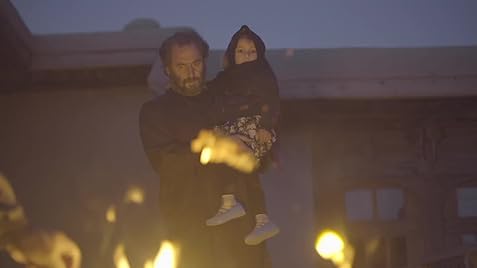
Arian loves kites but a changing Afghanistan stands in his way. When the Taliban take power and ban kite flying, he all but gives up on his passion. However, to give his daughter Seema a … See full summary »

Director:

Tarique Qayumi

When Taique Oayunmi’s film, BLACK KITE opens, the audience witnesses a a political judgment/verdict of the violent chopping off of his hands of Arian (Haji Gul) which is then expanded to an execution the next morning.  In the prison that night, Arian almost dies of thirst but offers to tell his story in exchange for a drink of water from his fellow inmate.

But the story that unfolds is a different one.  The next scene is one with a little boy fascinating with kite flying.  The boy is Arian who learns both how to make and fly kites from his uneducated father.  The vast difference in tone could mean one of two things – a spectacular film that blends terror to innocence or a really mismatched film.  Unfortunately, Qayumi’s film is not only mismatched, but a complete mess, all over the lace despite some good intentions.  Many of the incidents do not make much sense.  He introduces new characters at any point and then removes them (Arian’s wife for example) and his messages on life (example Arian as the boy’s honesty) send mix messages.

The worst thing of all in the film is that it is never clear exactly the reason Arian is to be executed in the morning.  The only hint is that the enemy suspects him of sending messages to the resistance by his kites, but then why offer him pardon at the end of the film instead of execution.

There is a very odd point in the first half of the film when Arian as a boy attends school.  He tells his father a bold faced lie that he obtained a diploma where he had failed his schooling.  He is happy and dandy with no guilt.  His father praises the boy and later tells the boy that honesty is all that counts.  This mix message causes the boy to confess the truth but the father unfortunately dies before the confession during some insurgence.  The point here Qayumi wants to bring across is indeed puzzling, unless he wishes to satirize the point, which even makes less sense given the film’s context.

The one plus of the film is the assembled archival footage detailing the King, Zahir Shah’s attempts to modernize the country, including mandating public education for children.  This is a fact, I am many do not know.  But whatever happened to the king’s good intentions?  The film also touches on woman’s right issues, but again the line is blurred.  Women are not allowed to fly kites, so Arian allows the doughtier to fly kites when there is no moon and darkness so no one finds out.  This is hardly a point made for the good of female rights.

The film incorporates some animation that appear at various points throughout the film for no apparent reason.   As a result the animation appears out of place and totally unnecessary.  It also tends to become a distraction of the events that are taking place.

Instead of a political tale, Qayumi’s film ends up trivializing the events to the story of a man in love of the flying of kites.   For a film that has a running time of 90 minutes, BLACK KITE seems to be flying on forever.

Trailer: https://www.youtube.com/watch?v=A8odaf9TqC8


Submit your Screenplay to the Festival TODAY

Italian Contemporary Film Festival: LOVE AND BULLETS (AMMORE ET MALAVITA) (Italy 2016) ***

Submit your Screenplay to the Festival TODAY

Love and Bullets Poster
In order to avoid the death of the husband (the criminal boss Don Vincenzo, “King of the Fish”), Donna Maria sends her henchmen to kill a lookalike (a shoe-seller) and then she sets up a …See full summary »


LOVE ND BULLETS is the Italian acclaimed crime musical comedy that won Italy’s  David di Donatello Awards Best Film Award this year.  It follows a Naples Camorra crime boss’ wife faking of her husband’s (The Fish King) death in order for them to live their rest of their lives comfortably without fear. 

 When the top henchman, Ciro falls in love with the nurse, Fatimah he is supposed to kill (as the nurse has seen the boss alive) the star-crossed lovers become the next targets.   The film both suffers and benefits from a weak narrative, unmemorable and catchy songs though one won the Italian film award for Best Song and campy performances all the way through.  One has got to love the most shameful plagiarized segment of the film where Fatimah sings the FLASHDANCE song (“What a Feeling”) with the film’s own Italian lyrics.

  Fatimah sings as if it was the best original song in the world.  One has to admit the Manetti Bros. (who wrote and directed the film) have balls, gall and spirit!  New characters pop up into the story every 15 minutes or so.  I hated the first 20 minutes of the film but fortunately did not give up on it as it got much better eventually becoming quite the crowd-pleaser.

Trailer: https://www.youtube.com/watch?v=9HMd5SGOUyE

Submit your Screenplay to the Festival TODAY

LGBT Inside Out Film Festival: A MOMENT IN THE REEDS (Tämä hetki kaislikossa), (Finland 2017) ***

Submit your Screenplay to the Festival TODAY

A Moment in the Reeds Poster
Trailer

Having moved to Paris for university, Leevi returns to his native Finland for the summer to help his estranged father renovate the family lake house so it can be sold. Tareq, a recent …See full summary »

Director:

Mikko Makela

Writer:

Mikko Makela


 MOMENT IN THE REEDS opens with gay undergraduate student Leevi (Janne Puustinen) revisiting his hometown in Finland to help renovate the family’s lake house.   When his father (Mika Melender) drives him to the house, it is revealed that his father does not approve of his son’s sexual orientation but there is nothing he can do about it anyway. 

  Leevi helps in the innovation but is not particularly good at it, storming off at one instant when hitting his finger with the hammer.  (Most gay men are not good in this field of work!)  The dad has hired a helper (Boodi Kabbani), who shows up unable to speak much Finnish.  The father is unable to communicate with him but the help and son speak English.   Dad is suddenly called away.  No surprises then when the helper, who is a Syrian refugee turns out to be gay and he and Leevi have really hot sex before the father returns. 

 If his film was made 20 years ago, the son would not have come up to the father.  Despite the familiar well-worn theme, the film is quite an entertaining watch, primarily for the reason that it does not aim high.  Coming-of-age, father/relationship, refugee problems are just a few issues tackled in this film.

Trailer: https://www.youtube.com/watch?v=5oyJodhVRok

Submit your Screenplay to the Festival TODAY

Film Review: LET THE SUNSHINE IN (Un beau soleil intérieur)(France 2017) ***

Submit your Screenplay to the Festival TODAY

Let the Sunshine In Poster
Trailer

Isabelle, Parisian artist, divorced mother, is looking for love, true love at last.

Director:

Claire Denis

Writers:

Christine Angot (screenplay), Claire Denis (screenplay) | 1 more credit »


LET THE SUNSHINE IN has been touted by critics as Claire Denis in lighter form.  From the film’s opening scene with Juliette Binoche having sex with an older man taking too long to reach orgasm, lighter form might still be very serious to the average moviegoer.  Denis’ films as the director herself, is not always say to take, the director recently giving her interviewer for THE GUARDIAN a hard time at all the questions asked, but her films are often more rewarding and a challenge than the typical Hollywood kitsch.  LET THE SUNSHINE IN is not a comedy but a drama.  It follows its heroine, Isabelle (Juliette Binoche), a middle aged divorced painter living in Paris, as she looks for love.

Isabelle’s love encounters, each lasting some months or so.  The first is the banker (Xavier Beauvois), next, a good-looking actor (Nicolas Duvauchelle), then, a fellow artist (Alex Descas) and lastly her ex (Laurent Grevill).  The film can be divided into 4 separate segments bound by one theme followed by a conclusion.

For each of the segments and lovers, Isabelle exhibits the same personality – that of a head strong, intelligent woman wanting to find true love and a relationship but just meeting the wrong men.  The common trait is her frustration often leading to anger when she is unable to get what she wants.  She ends up ditching the lover and moving on to the next one.  It is interesting to note that she always starts off on a wrong footing.  The first one, she tries is a married man, another she picks up at a club, and another one her ex, whom she had, had before.

Denis allows her audience to see what is wrong with each man and emphasizes their faults.  The banker is seen to be the worst, abusing a waiter at the bar where they have a drink.  “Put the water there,” he insists to the waiter.  “I need hot water.”  He also has the gall to tell Isabelle that his wife is extraordinary but she only charming.  It takes great pleasure later to see Isabelle tell him off and slam the door in his face.

The film has a unexpected ending in the form of a segment involving Isabelle and a fortune teller played by no less than Gerard Depardieu.  Depardieu delivers a speech on Isabelle’s love lives even going down to specifics on whether a particular lover might or might not work out.  This ending looks like a cop-out with a too all written out conclusion dished out to the audience, which goes against the flow of the rest of the film.

Denis’ film is a very intriguing watch as Denis makes very emotional wrenching films often dealing with characters unable to get out of the rut their themselves have gotten themselves in as in CHOCOLAT, her first and one of there best films.  LET THE SUNSHINE IN is aided by an extraordinary and charming performance by her star Juliette Binoche.

Trailer: https://www.youtube.com/watch?v=ps_Sau7xqQY

Submit your Screenplay to the Festival TODAY