Best of November 2018 Film Festival Interviews

These are festivals to look out for. Read interviews with the Festival Directors and learn more about them.

 Interview with Festival Director Katie Bruce (UTAH DANCE FILM FESTIVAL)
READ INTERVIEW

Interview with Festival Director Otessa Ghadar (DC Web Fest)
READ INTERVIEW

Interview with Festival Director Rob Lobosco (MELBOURNE INTERNATIONAL CINEMA EXTRAVAGANZA)
READ INTERVIEW

Interview with Festival Director Brian Hopson (LOST SANITY FILM FESTIVAL)
READ INTERVIEW

Interview with Festival Director Nina Fiore (ASTORIA FILM FESTIVAL)
READ INTERVIEW

Interview with Festival Director Martin Tran (Seattle Asian American Film Festival)
READ INTERVIEW


Interview with Festival Director Katie Bruce (UTAH DANCE FILM FESTIVAL)

The Utah Dance Film Festival is an international dance film festival, an arts education organization and a catalyst for movers and filmmakers to connect, collaborate and create.

Contact

 
Matthew Toffolo: How is the film scene in your city?

Katie Bruce: Utah has several amazing film scenes occurring simultaneously. We are fortunate to have professional productions filming here, like Paramount Network’s “Yellowstone,” Disney’s “Andi Mack,” and HBO’s “Westworld.” BYU also has a network, and their productions include “Dwight in Shining Armor,” “Random Acts of Kindness” and “Studio C.” Plus, we also have quite a few Hallmark features that film here annually. There are a lot of opportunities for film students to make the jump from classes to sets in all departments. Sundance Film Festival is a big part of the film scene, but that also includes their Director’s Lab and Feature Film Program which develop and foster the production of new works. Damien Chazelle is a director who participated in those programs, and they are a big part of the reason that “Whiplash” was made.

Film producers love Utah because the labor force is skilled, dedicated, reliable and hardworking, and the costs of production are low. Utah has 5 National Parks, 4 universities, and the Utah Film Commission which offers tax rebates on projects filmed in the state. There are always rad locations accessible year round, and plenty of places to rent professional gear.

The Utah Dance Film Festival is based in Utah County, where Adobe and The Void have homes, and the CW series “Outpost” built a rad set for their first season of filming. We receive a lot of films from the dance department at BYU, as well as from the film department at Utah Valley University. Dance is HUGE in Utah – Utahns have made quite the impact on dance television, and the coolest crossovers between those cultures are happening at local colleges. UDFF is right in the center of that mix!

What is your Film Festival succeeding at doing for filmmakers?

Dance on camera is SO consumable on social media, but for filmmakers who are putting in the time in pre and post production, recognition can get lost. We see the widest variety of production value in our submissions – some pieces are filmed from a fixed, frontal point, almost the way you would watch a dance performed in a theater, and with one lighting setup. Other pieces are built in such a way that they are ONLY possible as a film, using perspectives and setups that would never be possible in a live performance. Our film festival highlights filmmakers from many cultures, with different skills from across the globe so that audiences can start to see a more complete view of all the ways in which human movement is unique, that the expression of that movement is an important visual communication, and that the makers of these films are worth celebrating. We are getting filmmaker’s names out there so that they can be appreciated.

What motivates you and your team to do this festival?

Global connectivity of artists, for sure. Dance is this ancient art form which disappears the moment after it is created. A dance has almost no artifacts or proof of existence on its own. That is why it is so exciting to observe the ways in which film and digital technologies are changing dance, as well as perfectly preserving an archive. Past generations of choreographers had to create detailed visual languages to write their dances down, and there really wasn’t an ideal way within those writings to capture or communicate the visceral experiences of dancers as they performed. Dance films are the only way in which a dancer can sit with his or her audience and feel what they are feeling at the moment the dance occurs. My mind never ceases to be blown at that power. It’s especially cool to see how kids and teenagers respond to that opportunity.

What will attendees experience when they attend your upcoming festival?

Our fest is so rad. We offer dance classes where anyone can participate, meaning that sometimes we have filmmakers trying dance for the first time, or a dancer holding a camera for the first time. We offer film workshops on topics like location scouting, pre and post production, and editing taught by professionals. Last year we screened 32 films from 12 countries, and then the festival culminates with a live awards show that features the winning films as well as live dance performances from notable Utah dance companies. It’s a totally unique event for the dance film scene in Utah, and our venue, the SCERA Center for the Arts in Orem, is an amazing location for the weekend.

What are the qualifications for the selected films?

Films need to feature movement. The movement doesn’t have to be refined or technical to be considered. It’s that simple. We receive narratives, documentaries, experimental animation films, the whole spectrum of works. Films can be from any time frame, of any length. We accept works by students and professionals.

We have a 24 hour film competition called MOVE which is our specialized lab for all kinds of human motion – for that, we have accepted films featuring speed walking, rock climbing, sports, alien abductions – a wide variety! This year MOVE is February 15th and 16th, 2019. Teams pre-register and can arrange, costume and plan a short film ahead of time. Then on the 15th we release a theme, and teams have 24 hours to film, edit and submit their works in conjunction with that theme. Winners will be screened at the film festival the following week. It’s a really cool way for people to get involved with our festival right when our hype is at a peak!

Do you think that some films really don’t get a fair shake from film festivals? And if so, why?

I do think that is true, yes. In our case, we sometimes have films that just seem a little lost. A filmmaker might have spent tons of valuable time fundraising, planning, shooting and editing only to have submitted to a festival that isn’t quite the right fit. FilmFreeway is the coolest platform because it enables filmmakers to easily shop around and find festivals with a scope that is relevant to their work. I also feel that it’s really important that festivals have fair systems, criteria and categories for judging. In our instance, we have a panel of two filmmakers and two dancers who judge our works. The judges decide on finalists, and scores determine winners. We also don’t allow for ties, which keeps our process competitive and specific at the same time.

How has your FilmFreeway submission process been?

UDFF adores FilmFreeway, and for our 2019 festival we have added a photography category for the first time! There is no way we would have considered adding photography, nor would we have known how to go about doing that, without FilmFreeway. Our directors are also on the platform as filmmakers, and it has been so stunning to see the number of dance film festivals on the rise. We handle all of our tracking, notifying, judging and ticket sales on FilmFreeway, and wouldn’t have it any other way.

Where do you see the festival by 2023?

Definitely giving out grants and scholarships to support more artists at multiple stages of production or studies.

What film have you seen the most times in your life?

Either The Royal Tenenbaums or The Darjeeling Limited, possibly The Princess Bride, (specifically on VHS, recorded from a television broadcast), and perhaps Willy Wonka and the Chocolate Factory.

In one sentence, what makes a great film?

Thoughtful lighting, composed shots, good audio, clean edit and a bravery to explore.



utah dance 1.jpg

Film Review: NOTHING LIKE A DAME (UK 2018) ***1/2

Tea with the Dames Poster
Trailer

Dames Eileen Atkins, Judi Dench, Joan Plowright and Maggie Smith have let the cameras in on a friendship that goes back more than half a century. The four acting greats discuss their …See full summary »

Director:

Roger Michell

NOTHING LIKE A DAME follows four grand British dames of the cinema and theatre as they sit back and have tea.  It is a unique and rare opportunity to enter into their presence and share their esteemed company.  Director Michell captures the intimacy of the situation.  The four dames discuss the highs and lows of heir careers, their romances and as well as their advice on life.

The four dames are Eileen Atkins, Judi Dench, Joan Plowright and Maggie Smith.

Director Roger Michell (NOTTING HILL) takes his audience into the setting of a rural cottage in England that Plowright built with her late husband, Sir Laurence Olivier, the legendary actor.  The four sit outside in the garden or inside in the kitchen or dining room often drinking tea. Or sipping champagne.  

A fair warning that the film is clearly British-bound – which means that unless you have a fair knowledge or at least interest in British fare, NOTHING LIKE A DAME might be a complete bore – like a visitor in uncomfortable company.

For the rest, there are lots to enjoy especially from the presented archive footage of plays performed at the National Theatre, London to old movies that feature the four dames in their younger days.

Director Michell resists the temptation of using the Roger and Hammerstein song “Nothing Like a Dame” from SOUTH PACIFIC.  The soundtrack often heard instead is the haunting and nostalgic theme composed by Nino Rota for Federico Fellini’s AMARCORD.   The score is at once immediately recognizable to cineastes and an appropriate one at that, as AMACORD means I REMEMBER.  The film is wholly made up of the memories of the four women.

Michell poses interview questions to the four, heard quietly, as if under his breath.  One involves the experiences of working with ones husband.  Their funny retort: “Which one?”  The clear one comes to mind is Sir Laurence Olivier married to Joan Plowright.  There is a clip from their movie together THE ENTERTAINER in which Plowright plays oddly enough, Olivier’s daughter.  Maggie Smith also talks about working with Olivier in OTHELLO with a clip of the film shown to illustrate the incident.  Also included is the famous scene of Smith kissing her husband who plays her lover in THE PRIME OF MISS JEAN BRODIE.

It is on a humbling note that none of them consider themselves as great beauties  They each laugh at never been seriously considered beautiful enough to win the role of Cleopatra.  They claim only to be laughed at when they mentioned the fact to their friends.  Dench herself says that she is too short while Atkins claims that she was never considered a great beauty, nit even by her father.

Near the end of the film, each offer wise words on life.  Atkins talks about being more even tempered and never to get angry while the others talk above the importance of love and the coordinated use of the brain with the body.

Trailer: https://www.imdb.com/title/tt7363336/videoplayer/vi1185397529?ref_=tt_pv_vi_aiv_1

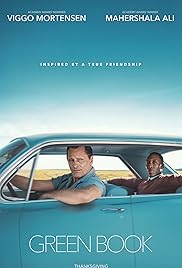
Film Review: GREEN BOOK (USA 2018) ***** Top 10

Green Book Poster
Trailer

GREEN BOOK, the film is named from The Negro Motorist Green Book, a segregation-era road travel guidebook to help African-Americans dealing with racial discrimination issues and Jim Crow laws, such as whites-only garages, restaurants and hotels refusing services.  This book (nicknamed ‘vacation without aggravation’) is used during the tour of the Deep South in the 1960s by Jamaican-American classical pianist Don Shirley (Mahershala Ali) and New York bouncer Tony Lip (Viggo Mortensen), who served as Shirley’s driver and security.

The film follows the protagonist Tony Lip as he takes a difficult new job in order to support his wife, Dolores (Linda Cardellini) and his two kids.  The job is to chauffeur and protect Dr. Shirley as he tours the racial prejudiced deep south.  It is a pretty country but not for the coloured folk there.  It is a simple story but one is both extremely moving and relevant in today’s times.  What makes the film totally winning is that it is a film about discovery, as each of the two main characters Tony and Dr. Shirley learn about each other, the people and ultimately about themselves.

As far as anti-racists films go, GREEN BOOK works because it captures the ugliness of racism without resorting to cheap theatrics and crowd pleasing dramatic setups as in the recent THE HATE U GIVE.  Racism occurs when the guilty racist demonstrates the fact, unaware that the is doing so.  This is demonstrated in the one scene where Tony hits an officer when he calls Tony a half-nigger.

There are many ‘best’ scenes in GREEN BOOK.  My personal favourite is the hotel corridor scene where Dr. Shirley pleads Tony not to give up his job as his chauffeur and driver only to be corrected that he never intended to do so in the first place.

The 60’s period setting is captured by effective yet simple props like the vintage TV, the old telephone, wardrobe and the old vintage cars.  

The film also demonstrates that a film’s climax need not always contain pyrotechnic explosions, super fight sequences or an exciting finish.  GREEN BOOK closes nicely with a well-thought out conclusion.

Besides besides a Top 10 film, GREEN BOOK also contains Top 10 of the year performances by Viggo Mortensen and Mahershala Ali (MOONLIGHT).  Both actors are superb, Ali delivering a more controlled performance only letting all the emotions go in the one scene when his character walks out of the car in the pouring rain.  Mortensen (of Danish origin) perfects Tony’s Italian mannerisms to a ‘T’, putting on physically the weight of the role.  He captures the naivety and street smartness of his character.

GREEN BOOK won the Toronto International Film Festival’s most coveted prize of the People’s Audience Choice Award.  Last year’s winner THREE BILLBOARDS OUTSIDE EBBING, MISSOURI also won the Best Picture Oscar.  GREEN BOOK hopes and deserves the same honours.  GREEN BOOK is not a good film but a great film.

Trailer: https://www.youtube.com/watch?v=QkZxoko_HC0

Interview with Festival Director Otessa Ghadar (DC Web Fest)

The DC Web and Digital Media Festival highlights the best of the web. The festival goes beyond web series to include various forms of digital media, such as Short Films, Screenwriting, and Game/App development. The MISSION of this festival is to Entertain, Educate, and Promote these new and innovative art forms.

Contact

 
Matthew Toffolo: What is your Film Festival succeeding at doing for filmmakers?

Otessa Ghadar: The DC Web Fest is a great platform for independent digital media creators to showcase and promote their work. We have a total of six categories: web series, digital shorts/trailers, games, apps, AR/VR, and blogs/scripts. At the festival, shows have been picked up for distribution. Some of our web series have moved on to television and many of our games have moved on to major consoles like Xbox, PlayStation 4, and Nintendo Switch. The DC Web Fest is also a place where industry players come in search of exceptional content.

2) What would you expect to experience if you attend your upcoming festival?

I would expect to experience a wide range of digital content in addition to educational panels where I can learn from industry professionals, from writers, directors, and producers to digital marketing experts, podcasters, and IP law professionals. I would expect to meet many like minded creatives and form meaningful, productive relationships. Mostly, I would expect be uplifted, entertained, and educated with the best of indie digital content.

3) What are the qualifications for the selected films?

The main elements we look for are strong original story with conflict and character arc, production quality, and strong editing. There are specific criteria that can be found on our FilmFreeway page through https://dcwebfest.org/submit.

4) Do you think that some films really don’t get a fair shake from film festivals? And if so, why?

As a woman and minority owned organization, the DC Web Fest is devoted to inclusion and diversity. There is definitely division and underrepresentation, which need to be addressed. That’s why we are currently working on a side project (Analyzing Diversity in Media) that collects data to highlight the various issues with diversity in media. Please help us make a difference by taking just a few moments to complete our questionnaire! Here is the link: https://docs.google.com/forms/d/e/1FAIpQLSdVdyT5Up16Mm-jed0CZKAiJ52iVQXkn3Z4KMANuAYEbopS8g/viewform

5) What motivates you and your team to do this festival?

Indie creators need to know that there are platforms that freely welcome their ideas that are rejected by Hollywood. The indie community is like a family, and we need to all ban together to keep the indie spirit strong. DC is a vibrant city full of creatives. We want them to know that there is a place to call home. They don’t have to travel to the major markets (i.e. LA and NY) to tell their stories. They can tell their stories right here- in DC where many are hungry for authentic, creative digital content. Each year, our creatives have shown their gratitude and many continue to excel.

6) How has your FilmFreeway submission process been?

Our experience with FilmFreeway has been quite positive. It would be great if we could make the process more personalized. But since our inception (year 1), we’ve seen submissions increase by a multiple of 20.

7) Where do you see the festival by 2023?

By 2023 we will be showing work that our minds haven’t yet conceived of…and that’s just how we like it. The future is in our blood over here.

8) What film have you seen the most times in your life?

We were film majors! Where shall we begin?! The Graduate (just to name one). We can send a spreadsheet of our favorite films if you would like.

9) In one sentence, what makes a great film?

A strong storyline with a clear, concise goal, conflict, and characters who progress throughout make a good film. sometimes the conflict or goal need not be so clearly defined. Sometimes, a strong story, with meaningful characters can hit a nerve and unite a viewership. It’s not so cut and dry. There is a structure, but there is also more than that. It’s all about knowing “the rules”, then knowing how and when to break them.

10) How is the film scene in your city?

DC is full of energetic, passionate filmmakers and storytellers. There are other festivals that also serve as platforms for local filmmakers to showcase and promote their work, such as the DC Black Film Festival. DC Web Fest founder, Otessa Ghadar, serves on the advisory board of the DC Black Film Festival. DC Shorts is another popular local film festival.

dc web fest 1

Film Review: THE PRICE OF EVERYTHING (USA 2018) ***1/2

The Price of Everything Poster
With unprecedented access to pivotal artists and the white-hot market surrounding them, this film dives deep into the contemporary art world, holding a fun-house mirror up to our values and… See full summary »

Director:

Nathaniel Kahn

Basquiat paintings regularly fetch tens of millions of dollars, and the recent sale of a little-known Da Vinci topped $450 million—but what forces are driving the white-hot art market? Who assigns and who pays these astronomical sums? What currency adequately measures art’s value?  The captivating new documentary THE PRICE OF EVERYTHING takes the audience on a thrilling art ride – into a rarefied labyrinth of galleries, studios, and auction houses to wrestle with these questions and explore what society loses and gains when art becomes a rich person’s commodity.

As the film opens, the voiceover announces as an art auction takes place that art and money go hand in hand and that good art should be expensive.  Only if something has great value will it be protected.  The scene ends with a Basquiat painting sold at $8 million.

One of the pleasures derived from the film is the wide assortment of art on display.  This pleasure does not come from paintings alone, but from sculptures and other artifacts. One of the most famous is the Jeff Koons rabbit , a stainless steel bunny that on staring in, reveals a grand display of other art pieces.

The film also contains interviews from two prominent groups – the artists (including art celebrity darlings like Jeff Koons, Gerhard Richter and Larry Poons) and the art collectors.  Gallery owners and art dealers form the other interviewees outside these two groups.  This results in is one of the most insightful documentaries about art.  This is not to mention the dozens of priceless paintings on display on the screen, together with an estimate of their worth.

Director Nathaniel Kahn (Academy Award nominee for his 2 documentaries, MY ARCHITECT and  TWO HANDS) always keeps the film on track – the price and value of art.  The film considers all kinds of justifications for the price rage on paintings (including the economic forces of supply and demand) always reminding the audience the notion that a work can only really be considered important if it has cost a small fortune.  Kahn is also clear to emphasize the fact that a painter is usually very poor with only 99.99% making it rich.  An artist paints because he or she wants to.

A collector wisely compares the price of art like the price of stock in the stock market.  One has to be constantly keeping track on things, with price fluctuations rising as much as the crazy stock market.

Included is a valid debate on the subject of whether a famous painting be kept in a museum or private home.  The gallery owner obviously says that it should not be in a dark place like a museum but then at least all people rich or poor would have equal access to see them.  At the end of the film, a wealthy and successful collector Stefan Edlis donates two rare paintings to a museum, the reason he gives is that he has no grandsons.

THE PRICE OF EVERYTHING is a pleasure for those interested and familiar with the art world.  But it also proves an educational and informative source of information for the others.

Trailer: https://vimeo.com/297964138

Film Review: BORDER (GRANS) (Sweden/Denmark 2018) ****

Border Poster
Trailer

A customs officer who can smell fear develops an unusual attraction to a strange traveler while aiding a police investigation which will call into question her entire existence.

Director:

Ali Abbasi

Writers:

John Ajvide Lindqvist (based on the short story “Gräns” by), Ali Abbasi (screenplay)| 2 more credits »

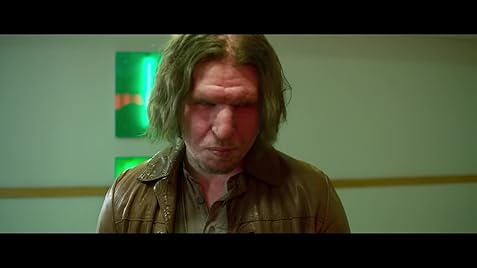
The hit at Cannes, BORDER is likely the weirdest film to emerge in cinemas this year.  And it is totally unpredictable even with a feel-good romantic element despite the ugliest looking characters in a film.

BORDER is a film about changelings.  This is not apparent till the last third of the film, so how the film gets there is a good part of the story’s mystery, which will not be revealed in the film.  A changeling is a creature found in folklore and folk religion.  A changeling child is believed to be a fairy child that had been left in place of a human child stolen by the fairies, and is perceived as an ugly creature.

But the film is entitled BORDER, because the film’s protagonist is a border customs officer, and one very good at her job owing to a unique ability. Tina (Eva Melander) has a bestial-looking face, a scar above her tailbone.  Her ability is sensing how people feel though smell.  She is especially adept at detecting fear or unease (sex, hilt and shame), skills that make her an invaluable border guard.  Nobody likes a border guard, especially when they get caught cheating customs by one, and especially more if the officer is as ugly as Tina.  “Ugly bitch,” is what one caught curses under his breath for attempting to sneak though above the limit alcohol.

Yet Tina’s latest customs stops are more troubling than the usual routine arrests. First, there’s the twitchy businessman carrying child pornography, whose crime so enrages Tina that she begins to take foolish risks when she’s brought in to help with the investigation. 

But her life changes when she meets a suspicious Vore (Eero Milonoff), who shares physical traits with Tina (being ugly and sort of a look-alike),  Vore wears a permanent cocksure smirk that suggests he knows things she does not, which the film reveals later on to be true. 

A sample of the weirdness includes consumption of maggots, uncomfortable sex scenes and very odd mannerisms (facial twitching and grunting) of the characters.

The cinematography by Nadim Carlsen is stunning, especially the scenery around where Tina lives.  The dark water of the pool, waterfalls and forest greenery are something right out of a fairy tale.

Excellent performances by both Milonoff and Melander complete the honours in the acting department.

The film contains some acute observations (not not necessarily a life lesson or message) on life.  One is that like Tina, not matter how weird, she thought herself special as a child.  Beautiful things can also happen to someone as unfortunate as Tina.  Tina chooses good over evil.  The film demonstrates that anyone including any human being or monster is capable of both.  There should be no prejudices.

Though extremely weird, the story is based on a short story by Swedish author John Ajvide Lindqvist,  Border conjures up memories of unsettling folk tales that tie humans to the natural world and its odder anomalies, a world that now seems distant yet creepily familiar.  

BORDER won its director Abbashi the Best Director Prize in the Un Certain Regard section at this year’s Cannes.  The film has also been winning awards in festivals around the world.  The film is a must-see.  I have seen it twice, though the film loses its surprise element the second time viewing.

Trailer: https://www.imdb.com/title/tt5501104/videoplayer/vi3736910361?ref_=tt_ov_vi

Film Review: A PRIVATE WAR (USA 2018)

A Private War Poster
Trailer

One of the most celebrated war correspondents of our time, Marie Colvin is an utterly fearless and rebellious spirit, driven to the frontline of conflicts across the globe to give voice to the voiceless.

Director:

Matthew Heineman

Writers:

Marie Brenner (based on the Vanity Fair article “Marie Colvin’s Private War” by), Arash Amel

A Private War has been described as an American biographical drama film though director Matthew Heineman has made it clear that he did not intend the film to be a run-of-the-mill biography.  This is obvious once the film starts kicking into gear as it becomes clear exactly where the film is heading.  Heineman praises his subject, British journalist, Marie Colvin (an admirable performance by Rosamund Pike despite the film’s flaws) to no end – a martyr for the course of war journalism.  The film is based on the 2012 article “Marie Colvin’s Private War” in Vanity Fair by Marie Brenner and written for the film by Arash Amel.

Heineman’s film begins with Marie Colvin in a war zone doing her job covering the Tamil Tigers in Sri Lanka.  When the film whisks Colman from one war zone to another, ending in HOMS in Syria, it is clear that the film is not really interested in telling the stories of the casualties of war – nor of the sufferings of the people; nor of the lies told by Governments nor of the fact that world needs to be told of what is going on and to be aware (as Colvin, herself says her goal in journalism is).  It is to tell of the heroism of one Marie Colvin – but without the warts at all.

At the film’s worst, Colvin is seen in the battlefield with perfect hair with nicely groomed curls down her sides.  The fact must have been pretty obvious as most of her other war scenes has her hair tied in a bundle.

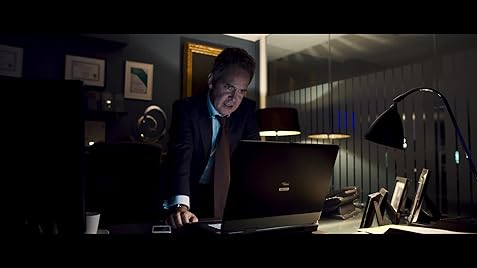
The film contains no shortage of subtleties.  When Colvin receives the Foreign Correspondent of the year Award, the film quickly moves away from the scene and omits her acceptance speech.  Yes, the audience gets the point the she is not in the business for the fame.  A PRIVATE WAR is all abut Colvin’s conviction in telling stories in dangerous scenarios.  The other fact is her Sunday Times boss, Sean Ryan played by Tom Hollander is always seen in a suit and tie, another indication that the director needs to keep reminding the audience that Colvin is doing a dangerous job in the field while he is having it ‘cushy nice’ in the office.  “I want to tell their stories,” Colvin says at one point in the film.  Heineman isn’t interested in telling ‘their’ stories at all but only her story.  So unsure that his audience will not get the film’s point, the point  has to be said out loud to Colvin in the dialogue:  “If you lose your conviction, what hope do we have?”

The best film about journalism, and one that demands to be seen is Phillip Noyce’s NEWSFRONT, also arguably one of the best Australian films ever made.  Bill Hunter plays a newsreel man in the 60’s in a film that exhorts its heroes in the news without resorting to glamorization and overblown set pieces.  The one shot in NEWSFRONT of a drowned cameraman in a flood he was covering is enough to say it all.  A PRIVATE WAR, in contrast drums the fact into the audience to no end.  Even Colvin’s PTSD (Post Trauma Stress Disorder) is downplayed.  With the scene of her having a bath together with her wealthy lover played by Stanley Tucci, the film has reached its ridiculous limit.

But there is a reward in staying for the closing credits.  Annie Lennox delvers a beautiful rendition of the song “Requiem for a PrivateWar”.

Trailer: https://www.youtube.com/watch?v=TTf0Lc5YAcc

Film Review: OUTLAW KING (UK 2018) ***

Outlaw King Poster
Trailer

Director:

David Mackenzie

Writers:

Bathsheba Doran (screenplay by) (as Bash Doran), David Mackenzie (screenplay by)| 3 more credits »

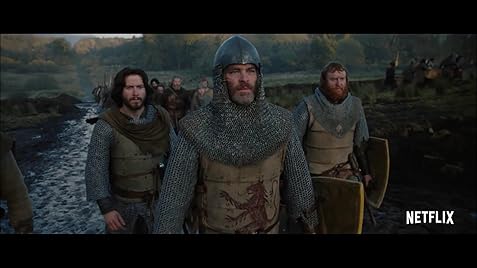
OUTLAW KING, a lighter version of BRAVEHEART chosen to open this year’s Toronto 

International Film Festival is also known to be a Netflix original movie.  Netflix has come a long way at producing movies and can now be known for some good solid cinema.

OUTLAW KING, based historical events takes place after BRAVEHEART, though the story of the war between the English and the Scots never ends.  Few dramatized segments like the reunion of King and kidnapped queen on a deserted Scots beach help spice the movie.

MacKenzie has mounted a handsome production at a cost of $120 million, quite different from his last entry an American heist film that also starred Pine.  Here in OTULAW KING, it is horses, mud and the beautiful but dreary Scots landscape.

There is a lot of history to be told in the film, before the story of Robert the Bruce (Chris Pine) begins.  MacKenzie effectively gets this out of the way in the film’s first segment when King Edward of England forces Robert into allegiance with the English.  The villain of the piece is Robert’s old friend now a sworn enemy, the Prince of Wales (Billy Howle, the handsome lad from ON CHESIL BEACH looking sufficiently ugly and nasty for this role) who seems to be an uncouth loud-mouth that nobody respects, not even his father, King Edward.

Relief from the war is provided by the romance between King Robert and his wife, Elizabeth de Burgh (Florence Pugh) given to him by Edward, King of England (at the start of the movie).  She is a feisty female who stands by the side of her husband and not afraid to say what she feels is right.  Robert has a daughter, Marjorie from his wife who died while giving birth.  They remain chaste on their wedding night and consummate the marriage much later.  Audience will find the wait worthwhile in a steamy sex scene that lasts too short a time.  An additional bonus includes Pine’s full frontal nudity shot when he takes a dip in the river later on in the film.  The romance makes the film more personal as audiences can relate to a family.  When Robert promises to fight a foe, one-on-one the next day, the worry of a wife for her husband rings real.

There is a lot of story that goes with the film – how Robert became King of the Scots through the priests (only briefly shown) , his allegiance to a new ally, James Douglas (Aaron Taylor-Johnson) and how Robert rounds up an army of Scots with the help of Lords still loyal to him, who are willing to go back to war.  Director MacKenzie effectively gets this out of the way to prepare for the main course – the battle between the Scots and the English at Loudoun Hill.

MacKenzie, no stranger to gut violence and gore, having made his mark also in horror films, shocks his audience with a few stomach-turning scenes like the live gutting of a Scots by the English.  The battle scenes are also sufficiently violent with lots of screaming and blood.

The TIFF version ran close to 2 and a half hours, but Netflix cut the film down to a 2 hour version, the one that is being reviewed.  This new edit arrives just the week before the film opens on Netflix.  I have not seen the longer version, but this one is sharp no-nonsense story-telling that is compelling enough for the average moviegoer from start to finish.

Trailer: https://www.youtube.com/watch?v=Q-G1BME8FKw

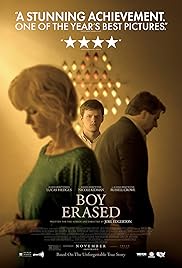
Film Review: BOY ERASED (USA 2018) ***1/2

Boy Erased Poster
Trailer

The son of a Baptist preacher is forced to participate in a church-supported gay conversion program after being forcibly outed to his parents.

Director:

Joel Edgerton

Writers:

Garrard Conley (based on the memoir Boy Erased by), Joel Edgerton (written for the screen by)

This year sees two films based on Christian gay conversion therapy camps.  The recent Desiree Akhavan’s THE MISEDUCATION OF CAMERON POST follows a female survivor while BOY ERASED written and directed by Joel  Edgerton sees a male counterpart.  Both are excellent films.  It is worthwhile to watch both films as the two films treat the material quite differently.  But the aim of discrediting these camps is identical.  And both films are based on true stories written into acclaimed novels.  BOY ERASED is based on Garrard Conley’s memoir.  Conley, who was present during the promo screening I attended mentioned the one incident that was changed in the film that Edgerton inserted for artistic purpose.  Which I agree works.

BOY ERASED has as its subject the teenaged son of a Baptist pastor.  Jared gets good grades, plays basketball, and is in a steady — but chaste — relationship with a girl from school. Everything in his life is going according to plan, until a college friend outs Jared as gay.

Jared (Lucas Hedges) is forced into a gay-conversion program by his parents (Nicole Kidman and Russell Crowe) – shown in the film as a very scary cloistered world of brainwashing.

Overseen by Victor Sykes (Edgerton, in a superbly cagey performance), the program’s bullying and bigotry fosters an environment that is anything but a refuge. Though Jared begins the program desperate to be healed, he begins to wonder about the validity of the program after witnessing a few terrible incidents.

Being based on real live events, what transpires on screen is realistically scary.  One incident includes a suicide that occurs as a result of extreme psychological distress of the patients. What is moving about the story is the sincere love of Jared’s parents.  Pastor Marshall loves his son but cannot accept that his son his gay.  In the film’s most dramatic confrontational scene between father and son, Jared tells his father:”I am gay, deal with it!”   Mother Nancy does what a wife should do but not what a mother should.  She sides with her husband till she finally sees the light and switches to her son’s side.  Kidman delivers an extraordinary performance as the mother.  The parents are not the villains in this piece.  (This issue is sidestepped in THE MISEDUCATION OF CAMERON POST as Cameron is an orphan.)  Sykes is the villain, brainwashing the patients while preventing them from letting outsiders know what really goes on in the place.  Sykes has no real qualifications either.  The irony of all this is at present (according to the closing credits), Sykes is living with his new husband somewhere else in the U.S.

It is not doubt that BOY ERAESD is a dramatic film with a clear message about the survivors of these Christian therapy schools.  In the words of the author Conley present at the promo screening, it is extremely disturbing to learn that many of these centres are still existing, even in New York City.  Many states have already banned these centres.

BOY ERASED is a courageous film that demands to be seen.  Writer/director Edgerton is straight but knows the urgency of the film’s message.

Trailer: https://www.youtube.com/watch?v=-B71eyB_Onw