Short Film Review: MY PROUDEST MOMENT. Directed by Imbi Männik

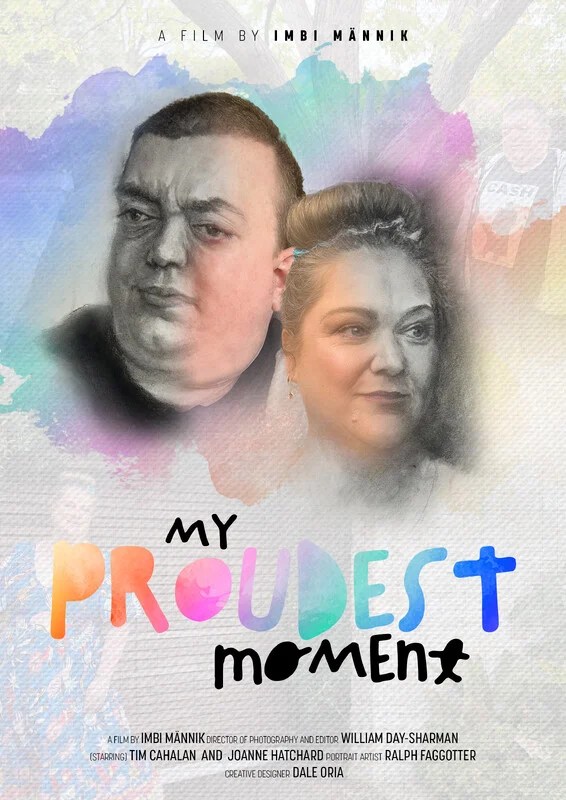
This independent micro-short documentary captures interviews with two trailblazers changing the narrative discourse in the area of disability in Australia, Tim Cahalan and Joanne Hatchard, through the sharing of their ‘proudest moment’. Tim, born with Crouzon syndrome and diagnosed with hydrocephalus at 3 years old requiring a shunt, brought about awareness in 2019 of being a victim to the Government’s robodebt scheme, putting a ‘face to the name’. Joanne, an award-winning neurodivergent therapist with lived experience, parent and founder of Better Being Me, champions the power of seeing neurodivergence as a meaningful, legitimate way of being. During sharing their ‘proudest moment’, an artist drew their portrait capturing a moment in time as their authentic selves.

Review by Parker Jesse Chase:

Pride is rarely categorized as an act of resistance, yet Mannik’s latest micro-short documentary proves it is exactly that. By profiling two Australian disability advocates, Tim Cahalan and Joanne Hatchard, the film moves beyond the familiar narratives of survival to explore a more radical possibility: that showing up as your authentic self is a defiant choice. As the subjects share their “proudest moments,” an artist sketches their portraits in real-time, capturing fleeting, vulnerable slices of time that reveal the human spirit beneath systemic friction.


The film’s most striking asset is its central purpose: a recurring extreme close-up of art supplies. As we listen to the interviewees, a piece of charcoal dynamically sketches their portraits on canvas. Charcoal is a raw, messy medium that requires friction to leave a mark. A perfect mirror for the systemic friction the subjects endure. By intercutting the interviews with the progression of the drawings, Männik treats identity as an active process of becoming. When the charcoal is finally returned to its case at the end, it underscores a profound truth: the subjects haven’t fundamentally changed, but through self-advocacy and bringing that to their community, they have forced the world to finally see them clearly.


Through this artistic framing, we meet Tim Cahalan, a man living with hydrocephalus who has endured numerous brain surgeries. Tim’s narrative rejects Western hyper-individualism in favor of collective care. His fierce advocacy culminates in a triumphant 2019 address to Parliament to defend disabled citizens from unjust government policies, driven by a desire to smooth the road
for the next generation. Tim pairs this heavy political weight with delightful, radical authenticity. Whether fighting systemic persecution or finding unapologetic comfort in a bunny onesie, he refuses to compromise his true self to make others comfortable.


Then we meet Joanne Hatchard, a neurodiverse family therapist whose late dyslexia diagnosis brought clarity to a lifetime of unexpressed thoughts. Joanne directly targets the grueling physics of “masking” and what comes with the exhausting energy required to fake normalcy in a world built for the neurotypical. Her proudest moment is pure cinematic joy: smiling and twirling on screen in a blue floral dress as years of research finally align with her self-understanding. Joanne challenges the audience with a stark ethical baseline for society: if community and accessibility structures don’t exist to support everyone, “in a sense, you are doing it wrong.”


Männik’s film is short, sweet, and remarkably precise. By chipping away at societal noise until the beautiful, authentic core of her subjects is revealed, she reminds us that the disability community is meant to be actively embraced, not merely accommodated. By capturing these peak moments of alignment and joy, this short film forces a profound connection, not just within ourselves, but with the collective world around us.
Short Film Review: Rif: The Snow Dog. Creator Michelle Murray

Short story movie written by Michelle Murray and created by WILDsound Festival.

Review by Julie C. Sheppard:

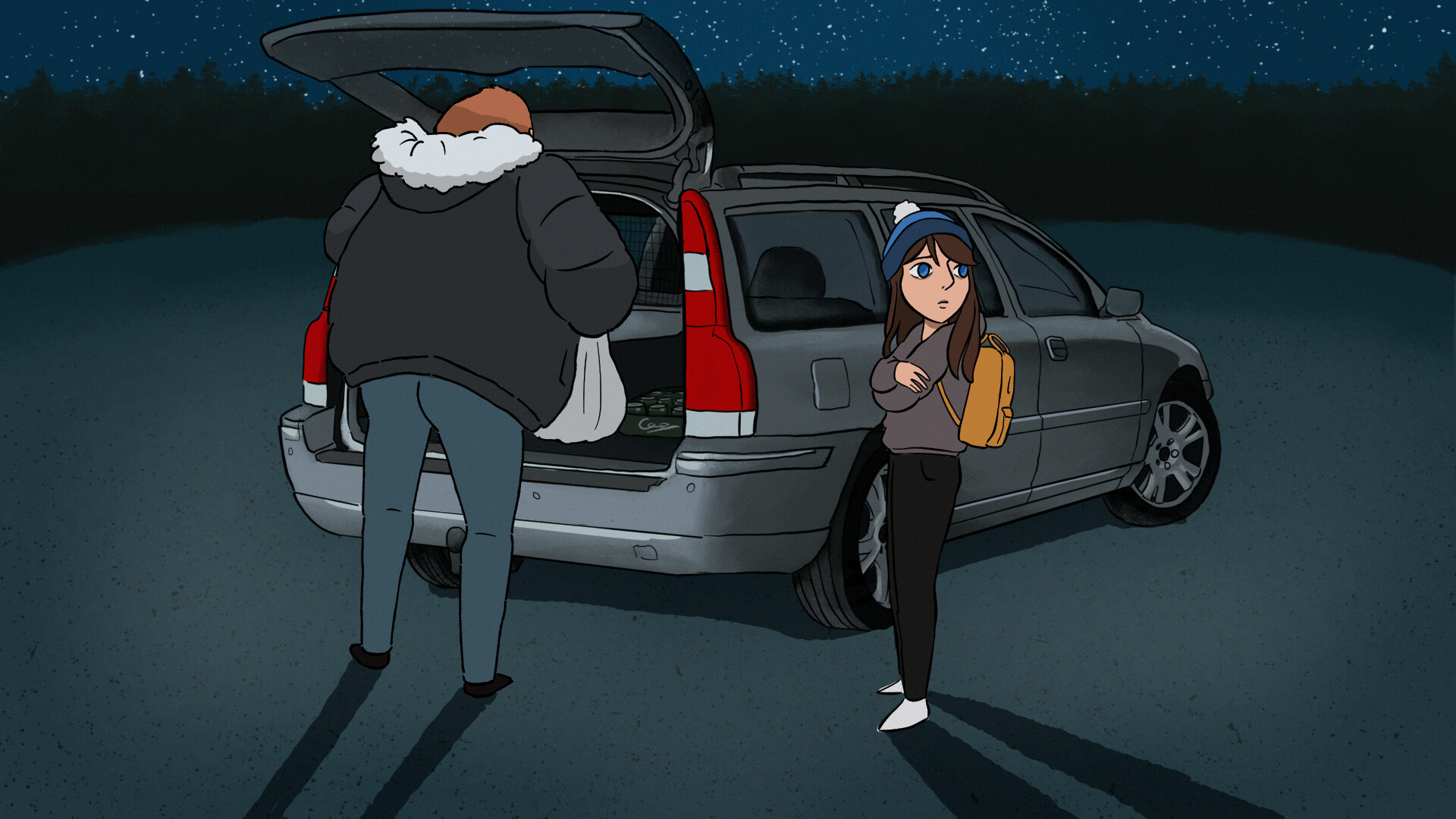
A canine superhero is the name of the game in this entertaining short, Rif: The Snow Dog. This piece is a superb blend of marvellous storytelling, and a stunning slideshow that follows along with the narrative. It is well-recounted by the warm and expressive narrator who uses thoughtful and emphatic inflection throughout.

The tale is cleverly written with a well-formulated linear structure, beginning with a detailed description of Rif’s daily routine as an Alaskan Snow Dog with his team and owner, to a frightening accident, to a heroic commission. The slideshow consists of a breathtaking collection of photos, paintings, and other computer-generated images, all providing the viewer with beautiful vistas of the snowy north, gorgeous dogs, friendly turtles, fierce coyotes and wolves, and warm human faces.

The slideshow is enhanced with the use of clever fades and overlapping images for dramatic effect from time to time. This is a classic film suitable for a wide range of ages – – anyone who has a taste for outdoor adventure, and flashes of magic added in for good measure. Viewers are tantalized by the thought that new adventures will continue for Rif, this heroic canine.

Watch Film:

Interview with Filmmaker Rogan Lovse (THE HARPIES)

The Harpies, 4min., Canada
Directed by Rogan Lovse
The Harpies was written, filmed, and edited in 48 hours as part of the 2024 Run N Gun: Vancouver’s 48 hour Film Competition. Winner of the Run N Gun’s Best Cinematography and Best Art awards, as well as, being nominated for Best Picture, Best Editing, Best Sound, and Best Direction.

https://www.instagram.com/the_harpies_horror_short_film

Get to know the filmmaker:

1. What motivated you to make this film?

We made the film as part of “Run N Gun”, a 48 hour film competition in Vancouver. We wanted to challenge ourself to make a high quality film within the constraints of the competition and further connect with our local indie film community. As far as what motivated this specific film; I love horror because you get to break all the rules of filmmaking in uncomfortable ways. I also really wanted to use a creature we hadn’t seen before in modern horror films.

2. From the idea to the finished product, how long did it take for you to make this film?

Since we made the film as part of a 48 hour film competition; we wrote, shot, and completed post production within a 48 hour period. Going into the film we knew our crew, cast, location, equipment, and the genre we wanted to write within. Everything beyond that was determined within those two days.

3. How would you describe your film in two words!?

Tight horror.

4. What was the biggest obstacle you faced in completing this film?

Lack of sleep. Because of the competition, I probably slept only 5 hours within a 60 hour window. Very challenging to maintain quality and focus when your system is shutting down.

5. What were your initial reactions when watching the audience talking about your film in the feedback video?

Honestly I just loved that people had things to say and discuss. Cinema should provoke discussion. I’m happy that our little four minute film managed to pack enough in to foster conversation.

6. When did you realize that you wanted to make films?

Originally I only saw myself as a writer; although I’ve loved engaging with films from a young age. My earliest memory is my father taking me to the cinema when I was two years old. I didn’t really realize I wanted to direct and make movies until I went to film school to get a better understanding of the process of script to screen. I realized how much storytelling you can do with lighting, camera angles, lenses, etc. So I always wanted to tell stories, but I probably didn’t fully realize I wanted to be a filmmaker until my first cinematography class.

7. What film have you seen the most in your life?

Donnie Darko. Definitely my favourite film.

8. What other elements of the festival experience can we and other festivals implement to satisfy you and help you further your filmmaking career?

Giving opportunities like this to talk about the film is great. The best thing that festivals can do is get people to watch your film and discuss it. There’s no point in making a film if no one sees it. The next best thing is getting the filmmakers recognized for their work. Each film is building a foundation for the next one.

9. You submitted to the festival via FilmFreeway. How has your experiences been working on the festival platform site?

Jordan, one of our producers leads the festival submission process for our projects. The platform has definitely made it a lot easier to find festivals and get our work out there for audience to enjoy.

10. What is your favorite meal?

I love Pho.

11. What is next for you? A new film?

We have a couple digerent short films in development stages. One of which we’re close to proper preproduction on. Hoping to shoot that in the winter. Also working on a feature film collaboration with my co-writer, Hallie, from The Harpies. Hoping to get those two shorts finished and then delve into shooting that first feature.

Interview with Filmmaker Purva Tavri (INDIA’S CIRCULARITY – Not a Trend, But a Tradition from the Margin)

India’s Circularity – Not a Trend, But a Tradition from the Margins, 70min., India
Directed by Purva Tavri
Across India’s overlooked margins, India’s Circularity – Not a Trend, But a Tradition from the Margins reveals how reuse, repair, and regeneration are not innovations—but inherited ways of life rooted in culture, necessity, and care. Featuring voices across sectors—artists, makers, NGO leaders, entrepreneurs, government officials, planners, engineers, institutions, and homemakers—the film journeys through terracotta clusters in Rajasthan, bamboo-timber homes in Sikkim, palm-leaf artisans in Kerala, and community commons in Chhattisgarh. One story is deeply personal: the director’s mother, whose regenerative practices shaped the director’s own circular worldview long before her professional work in sustainability. With poetic narration, immersive visuals, and grounded research, the film reframes circularity as a lived tradition, not a future policy aspiration.

https://www.instagram.com/drpurvatavri

Get to know the filmmaker:

1. What motivated you to make this film?

What motivated me was a deep discomfort with how the circular economy is being talked about globally—as if it’s something new, something to be invented.

I come from India, where I’ve seen people live circularity every single day—not as a concept, but as survival, culture, and wisdom. And yet, these communities are invisible in mainstream narratives.

This film became my way of correcting that. Of saying—we don’t need to reinvent the future, we need to remember what already exists.

2. From the idea to the finished product, how long did it take for you to make this film?

In many ways, this film took a lifetime.

But in its physical form—from the moment the idea crystallised to now—it has taken about 3 years of deeply immersive work. I also published a book, and this is based on it – “India’s Circular Economy in Action – Learnings from Tradition and Margins”.

It wasn’t just filmmaking—it was unlearning, listening, travelling, and building trust with communities whose stories are rarely told with dignity.

3. How would you describe your film in two words!?

Remembered Futures

4. What was the biggest obstacle you faced in completing this film?

The biggest challenge was not technical—it was systemic.

We were telling stories that don’t fit dominant narratives of “progress.” In many cases, what we were documenting is actively being erased in the name of development.

Convincing people that these are not “backward practices” but advanced ecological intelligence—that was the real challenge.

5. What were your initial reactions when watching the audience talking about your film in the feedback video?

Honestly, it was emotional.

Because when audiences start recognising themselves in the film and see how it is essential in current uncertainties, that’s when I know the film has done its job.

It’s no longer my story. It becomes ours.

6. When did you realize that you wanted to make films?

Quite late, actually.

I didn’t grow up wanting to be a filmmaker. I was an environmental researcher and academic.

But there came a point where I realised—data and reports were not enough — and I decided to write the book, which was my husband’s idea. At that moment, I thought: if I want people to feel, to connect, to rethink—I need storytelling.

And cinema became the most powerful medium for that.

7. What film have you seen the most in your life?

Interestingly, not one specific film—but I’ve revisited many documentaries that focus on human stories and lived realities.

I’m drawn to films that are quiet, observational, and honest—where the story unfolds without being forced.

That has deeply influenced how I approached this film.

8. What other elements of the festival experience can we and other festivals implement to satisfy you and help you further your filmmaking career?

Festivals can play a much deeper role beyond showcasing films—by becoming bridges between storytellers and the ecosystems that sustain storytelling.

For filmmakers like myself, working on stories from the margins, the real challenge begins after the screening. What would make a transformative difference is creating stronger, more intentional pathways to broadcasters, streaming platforms, and impact investors.

Not just networking in a general sense, but curated connections—spaces where our work is understood, where conversations can lead to distribution, co-production, or funding opportunities.

Because for many of us, the goal is not just to make one film—but to continue uncovering hidden stories that matter. And that requires reinvestment.

If festivals can help enable those connections, they don’t just support a film—they sustain a movement.

9. You submitted to the festival via FilmFreeway. How has your experiences been working on the festival platform site?

FilmFreeway has been incredibly useful in opening global access.

As an independent filmmaker, especially working across countries, it gives visibility and reach that would otherwise be very difficult.

That said, cost structures can still be a barrier for independent creators—but overall, it’s been an enabling platform.

10. What is your favorite meal?

Simple, home-cooked food.

There’s something deeply grounding about it—it reflects the same philosophy as the film: local, seasonal, minimal waste, and full of care.

11. What is next for you? A new film?

Yes—this is just the beginning.

The next film is “India’s Circularity – The Slum Lens.”

It will explore urban informal settlements—not as places of poverty, but as some of the most advanced circular systems in the world.

Because if we truly want to understand sustainability, we have to look where the world is not looking.

Interview with Filmmaker Selena Alvarez (STAR)

STAR, 13min., USA
Directed by Selena Alvarez
Estrella (Spanish for “Star”) follows the journey of a young woman navigating the weight of adulthood, identity, and self-acceptance. As a child, Estrella is nurtured by her mother’s belief that she is destined for greatness — her pastel pink-colored world is one of safety, hope, and limitless dreams. But as she grows, the color fades into darkness, symbolizing the harsh realities of pressure, depression, and self-doubt.

https://instagram.com/ninamoonlove

Get to know the filmmaker:

1. What motivated you to make this film?

Dance was my first love, I started off as a dancer before becoming a filmmaker. I only started filming dance because I didn’t know anyone who could capture my dancing on camera the way I envisioned it. I’ve been filming dance visuals since 2018, immediately after graduating college (entirely self-taught). I’ve been grateful for the opportunity to create and collaborate with various choreographers, performers, and dance studios/companies to bring their visions to life. I had NO idea that Dance Festivals existed until pretty recently. I was a bit intimidated at first because I’ve been a one-woman production team for all these years, but I knew it was time to challenge myself.

2. From the idea to the finished product, how long did it take for you to make this film?

It took a total of 2 years to create ESTRELLA. From writing the script and creating the concept to filming with a cast of 30 people to editing the final product. As I mentioned before, I am a one-woman production, so I ran most of the creative process, including all the choreography.

3. How would you describe your film in two words!?

“Inner Child”

4. What was the biggest obstacle you faced in completing this film?

At the beginning of making this film, I wasn’t fully aware that I couldn’t use copyrighted music. As a dancer, I fall in love with the music first; the concept comes second. I made the brave decision to film with actual music then assembled a team of musicians to replace the entire soundtrack with original compositions. This also led me to sing the finale song for my own film. Let’s just say I conquered a lot of my fears for this project (I’ve never sung in front of an audience).

5. What were your initial reactions when watching the audience talking about your film in the feedback video?

To be completely honest, When I received the email about the feedback, I was so scared that it sat in my inbox for 9 days. It’s always been just me on my production team, so the thought of receiving any kind of feedback about something I made was very foreign and scary. When I finally opened the email, it was very emotional to hear the amazing compliments and learn that my film was selected for an award. I’m still in complete SHOCK and awe. Beyond grateful to be part of this experience – as my FIRST festival experience ever.

6. When did you realize that you wanted to make films?

I’m obsessed with the idea of feeling like capturing film or videos is the perfect way to freeze time. My biggest fear in life is running out of time and seeing my loved ones grow old, a common concern for many people. Film is my way of making memories and achieving immortality. Another aspect is I love to surround myself with open-minded creatives across the entire spectrum. I’m talking poets, figure skaters, musicians, athletes—all of the above. As a dancer, I wanted to challenge myself to share the beauty of dance through film with people who don’t understand that world.

7. What film have you seen the most in your life?

I LOVE FILMS. And I like a wide range of things. I can be a horror fan for the sake of adrenaline, yet I love indie films for how well they capture the beauty without the pressure of needing to perform in the industry. Most importantly, I need to FEEL something when watching a film. My most seen film has to be “Call Me By Your Name”, not for the storyline or the plot, but for the feeling of being in the same environment with the characters in Northern Italy.

8. What other elements of the festival experience can we and other festivals implement to satisfy you and help you further your filmmaking career?

This is my first film festival experience. Therefore, I am here for the ride and am open to receiving whatever is meant for me.

9. You submitted to the festival via FilmFreeway. How has your experiences been working on the festival platform site?

FilmFreeway has been SO easy to navigate and has truly opened me up to brand new experiences that I never knew I was able to achieve. Beyond grateful for the platform.

10. What is your favorite meal?

I love a good home-cooked meal. I am 100% Puerto Rican, so give me rice and beans with a little chicken drumstick on the side and call it a day. Maybe even throw in a slice of avocado. I’m a simple girl.

11. What is next for you? A new film?

I love to challenge myself by doing things I’ve never done before. I do see myself making another dance film—perhaps adding a horror aspect, something eerie and grungy—completely outside my comfort zone. But I’m allowing inspiration to come to me. I’ve tried forcing it in the past and my brain just doesn’t work that way.

Interview with Filmmaker Hasmik Chakhmakhchyan (THE SILENCE OF MY SOUL)

THE SILENCE OF MY SOUL, 4min., Armenia
Directed by Hasmik Chakhmakhchyan
The Silence of My Soul is an intimate piano-vocal ballad shaped by jazz and R&B sensitivity and approached with cinematic restraint. Minimalist piano textures and a nuanced vocal performance create a quiet emotional tension — reflective, tender, and deeply human.

https://www.instagram.com/araksya_musheghyan_official/

Get to know the filmmaker:

1. What motivated you to make this film?
I was inspired by Araksya’s voice and the emotional depth of the song. *The Silence of My Soul* is a very personal story. I wanted to visualize the “silence” she sings about and transform the inner state of loneliness into a beautiful visual image that could resonate universally with audiences.

2. From the idea to the finished product, how long did it take for you to make this film?
The entire process took around three months. We spent a long time searching for the right visual language and the perfect location so that the minimalism of the frame would not feel empty, but emotionally charged.

3. How would you describe your film in two words!?
Pure aesthetics.

4. What was the biggest obstacle you faced in completing this film?
The most difficult part was maintaining balance in the editing process. In such a minimalist black-and-white visual style, every frame has to be perfect. It was important not to overload the video with effects and to leave space for Araksya’s vocals to breathe.

5. What were your initial reactions when watching the audience talking about your film in the feedback video?
It was deeply emotional. When you create something so personal in the “silence” of a studio, there is always a fear of being misunderstood. Seeing people understand your metaphors and truly feel the atmosphere was the greatest reward.

6. When did you realize that you wanted to make films?
I am an artist, and I realized my calling very early in childhood. After receiving a strong academic art education, I came to understand that there are no boundaries between artistic genres for me. Whether I work with canvas or moving images, I create visual worlds. Cinema became a natural extension of painting — my artworks simply gained movement and sound.

7. What film have you seen the most in your life?
I am a true cinephile, so it is difficult to choose just one film. My visual language has been shaped by very different masters: from the impeccable symmetry of Wes Anderson and the poetic cinematic world of Sergei Parajanov to the dynamic energy of Martin Scorsese and Quentin Tarantino. I am also deeply inspired by the psychological depth and human complexity in the works of Miloš Forman and Roman Polanski. Each of them has taught me, in different ways, how to work with image and storytelling.

8. What other elements of the festival experience can we and other festivals implement to satisfy you and help you further your filmmaking career?
More opportunities for filmmakers in terms of distribution and content promotion would be extremely valuable. It would be wonderful to have more channels that help present films to wider audiences and media platforms, strengthening the connection between art and the industry.

9. You submitted to the festival via FilmFreeway. How has your experience been working with the festival platform site?
It is a very convenient and intuitive platform. It gives independent creators from all over the world the opportunity to be heard and helps erase borders between countries and cultures.

10. What is your favorite meal?
Fresh Armenian peaches.

11. What is next for you? A new film?
Winning at this festival has given me a huge creative boost. Right now, Araksya and I are discussing the concept for our next project. It will definitely continue our visual explorations — perhaps in a different genre, but with the same sincerity and emotional honesty.

Interview with Filmmaker Ying Lei Zhang (WISHFEATHER)

WISHFEATHER, 3min., Australia
Directed by Ying Lei Zhang
A dancer wishes to soar beyond her eternal cage. But the key can only be found from deep within herself.

https://www.instagram.com/kila_ima/

Get to know the filmmaker:

1. What motivated you to make this film?

My drive to create this kind of story came from a time when I felt really trapped mentally with no way out. So that became the driving force behind Wishfeather. To create a story with a problem that can’t be solved. But of course, I wanted the story to be a hopeful message at the same time. Because after all, I’m still here and I’ve managed to experience a lot of awesome things since. It eventually hit me that while I don’t have the power to solve the issue, I can always choose how I react to it. So I started to believe that my dreams are possible and that led me to actively work towards them. Even though I sink back to dark places sometimes, I’m still able to find a lot of joy around me.

2. From the idea to the finished product, how long did it take for you to make this film?

If I don’t include the initial 6 months I spent brainstorming and meandering around with a sci-fi surreal idea I had prior, then making Wishfeather took 6 months from its solid idea to finish.

3. How would you describe your film in two words!?

Metaphorically beautiful!

4. What was the biggest obstacle you faced in completing this film?

It was definitely the ideation phase. When I embarked to create a film in the new year, I spent a long 6 months meandering around with a sci-fi surreal story. I still wanted a dance in that story which is what you see in Wishfeather at the start. But when reality hit me that I had spent half a year(!) still not feeling satisfied with my story,

I had to make the tough choice to put all that work aside and ask myself honestly, ‘If I could create anything right now, what would it be?’ And from there, Wishfeather really began to take shape. All the sci-fi stuff was removed. And to make up for lost time, I relied on a few shortcuts I know in animation, reducing the background to only sky, only having a single human character, and making sure the birds never have to tuck their wings (as that requires a bit more work to make!)

5. What were your initial reactions when watching the audience talking about your film in the feedback video?

I was smiling the whole time! It’s my first time to hear an audience outside of peers respond to my film. I loved hearing their interpretations and it gives me more motivation to pursue this direction of storytelling.

6. When did you realize that you wanted to make films?

Sometime back in high school. I got obsessed with imagining my own
characters and I would write a super long cringey story of them going
on crazy fantasy adventures! It didn’t immediately hit me that I wanted to make films. I think the way I was imagining things were already in a ‘film/animation’ format. Like a sequence of events. Because film/animation was pretty much the perfect medium to show these events, I naturally wanted to dive into it just to bring those worlds to life.

7. What film have you seen the most in your life?

I assume this means films I’ve rewatched a couple times. In film, it would be Matilda (1996) and Harry Potter and the Philosopher’s Stone (2001). In animation, it would be Princess Mononoke (1997) and Coraline (2009).

8. What other elements of the festival experience can we and other festivals implement to satisfy you and help you further your filmmaking career?

Honestly, this festival is incredibly jam-packed and it’s been wonderful to read all the options. I think for me personally, 1-1 consultation with a professional director about career would be lovely. It’d give online festival participants like myself a chance to network a bit by having that brief live chat with someone.

9. You submitted to the festival via FilmFreeway. How has your experiences been working on the festival platform site?

Smooth sailing!

10. What is your favorite meal?

Sweet stuff! I love red velvet cake.

11. What is next for you? A new film?

Yup! I’m brainstorming another shortfilm as well as writing a script
for an animated feature idea.

Interview with Filmmaker Terry Ulick (Dance from the Angel and Faerie Operettas by Terry Ulick)

Dance from the Angel and Faerie Operettas by Terry Ulick, 27min., USA
Directed by Terry Ulick
Ballet and modern dance numbers from the Operettas “An Angel’s Love” and “Shameless Faeries” by Terry Ulick from Wherever Music and Wherever Movies. All rights reserved and not for use without express written permission.

Get to know the filmmaker:

1. What motivated you to make this film?

Creating a ballet that was timeless and contemporary had me thinking of new ways of stage dance — and tell a story where all dancers sing and play instruments along with LED screen backgrounds and even an LED dance floor to create the Angelic world. I wanted to “show” how effective an operetta can be done today using LED backscreen and lighting/blocking. I decided to create an AI prototype to help others visualize such a production — then I put all the AI prototypes together for a pitch and the reaction was that it worked well as a film.

2. From the idea to the finished product, how long did it take for you two make this film?

I think about a project — all of it — for a while to have a clear vision in my head for the entire production. Because it’s already “done” in mind, writing the libretto and music then the diagramming, staging, and dance was less than a month. The AI visuals took about a week simply as I’m a experienced filmmaker and have a precise vision for any finished work.

3. How would you describe your film in two words!?

Philosophical fantasy.

4. What was the biggest obstacle you faced in completing this film?

Knowing how hard it is to get anyone to view it or look at a pitch for a stage production. It can be discouraging — even if I finance it myself.

5. What were your initial reactions when watching the audience talking about your film in the feedback video?

Wow! They “got” it. They understood it was 1) AI, 2) Real Dance 3) It used color to define the storyline, and 4) They accepted that as a pitch it’s a new way of getting a production started. All great comments.

6. When did you realize that you wanted to make films?

All my life. I began making for-real films when I was 13 (16mm and then 35mm) and it’s always been “what I do.” I never wanted to do anything other than write literature and music — then put them out as a film. I moved to digital and now AI engines are good enough to allow what looks to be realistic dancing and acting and I make it very clear when I’m using AI. All my words, lyrics, dance choreography are not AI and I only use AI as simulation or a new art form as it is evolving to allow new types of art.

7. What film have you seen the most in your life?

Room With a View.

8. What other elements of the festival experience can we and other festivals implement to satisfy you and help you further your filmmaking career?

Live screenings and audience comments/videos are the most important — and you do that!

9. You submitted to the festival via FilmFreeway. How has your experiences been working on the festival platform site?

I think FilmFreeway is fantastic and much needed.

10. What is your favorite meal?

Any my wife and I make together.

11. What is next for you? A new film?

A full start-to-finish, live-performance real-people production of “An Angel’s Love” if I can find funding or a producer for a Broadway show or traveling company. Also, and quite different, a live-action film version of my “Not Taken” best-selling novels which are action-thrillers.

Interview with Filmmaker Catriona Trina Baker (BALL LIGHTNING)

BALL LIGHTNIING, 12min., USA
Directed by Catriona Trina Baker
Ball Lightning is the true story of a refugee who fled the personal and social effects of Soviet run East Germany after the end of WWII and immigrated to the United States in the 1960s. The story is told through the eyes of the surrogate daughter that she raised after she was forced to give away her own infant daughter as the iron curtain rose. Gusta serves as an example of survival, kindness and the fortitude of human resilience. The film is dedicated to her lost daughter, Esther, a reminder that the children separated from families because of war are never forgotten by those who love them.

https://www.instagram.com/ball.lightning_film

Get to know the filmmaker:

1. What motivated you to make this film?
During Covid I was bedbound, a colleague asked me how I was keeping my spirits up. I told him that the most compassionate woman I had ever met survived COVID and much more, if she could survive all that and still have her love and compassion, I can survive this. He said, “That sounds like a film. I look forward to seeing your concept art when you’re better”. As the film took focus, the driving force became the thought that I might reach Gusta’s daughter somehow and let her know how much her mother loved her. I also realized that this was the right time to tell this story because so many children around the world are separated from their parents because of war, and they too should know that they are loved.

2. From the idea to the finished product, how long did it take for you to make this film?
five years

3. How would you describe your film in two words!?
Intergenerational love

4. What was the biggest obstacle you faced in completing this film?
I had to carve out time to create, and I lost the studio where I was making paintings because the artists’ studio building became condemned.

5. There are 5 stages of the filmmaking process: Development. Pre-Production. Production. Post-Production. Distribution.
What is your favorite stage of the filmmaking process?
I enjoy the collaboration at any stage the most. I worked with colleagues and students from Lesley University College of Art and Design. Each person brought a fresh lens and perspective to the film. This was integral in coming up with creative solutions to solve difficult shots.

6. When did you realize that you wanted to make films?
I started graduate school as a painter struggling to create narrative in the static image, then my mentor, Joshua Mosley, taught me how to animate my paintings. That opened a door to new possibilities and started my filmmaking journey.

7. What film have you seen the most times in your life?
Madagascar, a journey diary

8. In a perfect world: Who would you like to work with/collaborate with on a film?
Michele Noble, because we both believe that film can influence the world for social change and social justice.

9. You submitted to the festival via FilmFreeway. How has your experiences been working on the festival platform site?
FilmFreeway makes finding films and applying organized and easy. I has allowed me the opportunity to globally search for film festivals appropriate for my film.

10. What is your favorite meal?
Junket and oatmeal lace cookies.

11. What is next for you? A new film?
I am in the research and development stage of a few personal narrative scripts, hopefully, with funding I can get them rolling.

Interview with Filmmaker Maurice Cormier (THEY ARE KILLING US….)

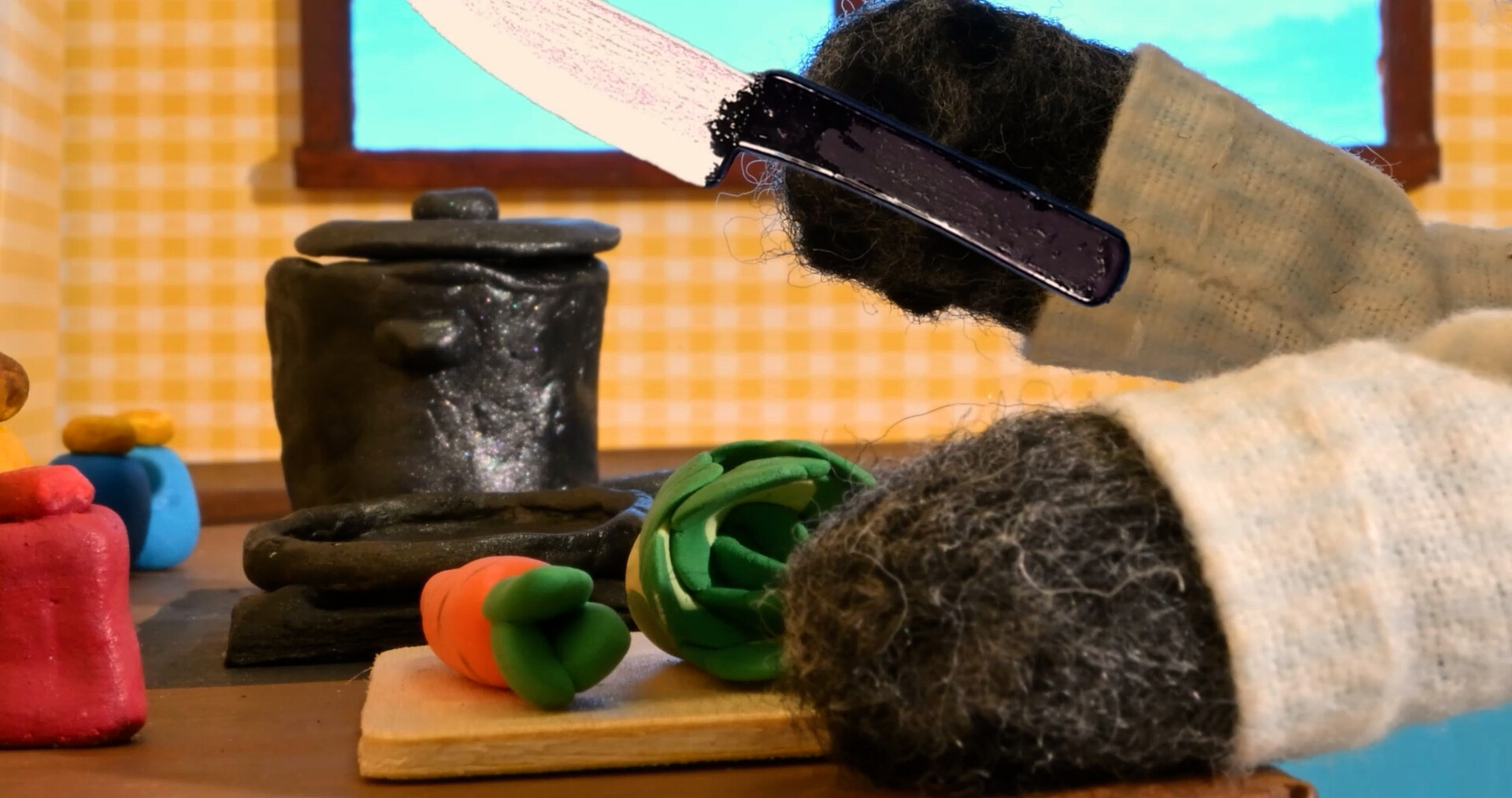
THEY ARE KILLING US…, 5min., Canada
Directed by Maurice Cormier
From A Nightmare Of A Possible Not Too Distant Future….

https://www.instagram.com/maurice_cormier92

Get to know the filmmaker:

1. What motivated you to make this film?

The idea started to come through during the first two years of covid. At that point I made two other experimental films, and worked on documentaries as writer/producer and video editor. My plan before 2020 hit was to make three 15-60 second short films in the horror genre, followed by a 15-minute short surrealist horror film. When covid hit, everything froze. I had no actor, crew, or budget. My mind began racing with ideas on making another experimental/underground film, but an idea didn’t come quickly, it took a while for it to be fully formed. As things in the news were getting from bad to worse, I felt the world was burning, and my fears of the future were beginning to intensify. The idea for this film was slowly growing, going through the works of surrealist painters like Salvador Dali, and watching the films Shin Godzilla, Eraserhead, and the TV series Attack on Titan, when the idea for They Are Killing Us… was being formed. in 2024, the idea was complete, followed by a script. To me, this was free therapy. It’s the vibes of what I felt could happen, yet play with it in a surrealist non-narrative stop-motion short film lens with elements of Science Fantasy and Body/Eco Horror sub-genre. Special thanks to White Drawf Picture for letting me use their small studio to shoot my short after working for them very briefly, without them, the film would not have been made.

2. From the idea to the finished product, how long did it take for you to make this film?

4 years, it took me a bit to figure out the entire structure of the film during the development/writing phase of the film. I had school & work so I couldn’t commit to shooting and editing the film full time, so I had to shoot on weekends for 6 days, one day filming one shot before the script was finished, 4 during actual production on weekends, and a one-day pick-up shoot during post-production. When I got a two-week vacation from work last year, rather than going somewhere far, I used those two weeks to finish the film.

3. How would you describe your film in two words!?

Nightmare. Flesh.

4. What was the biggest obstacle you faced in completing this film?

Time. I had other commitments, so trying to juggle making the film on my schedule was a challenge.

5. There are 5 stages of the filmmaking process: Development. Pre-Production. Production. Post-Production. Distribution.

What is your favorite stage of the filmmaking process?

A tie between Production & Post-Production. Production because the art is finally being created. You have the chance to experiment and try new things while filming. Editing allows you to further experiment, change, and manipulate the final film to your liking. Hide all the mistakes during shooting, the one job where you are allowed the “cheat” if you will. Both Production & Post-Production share something beautiful: discovery. The discovery of what the film is really about is me experimenting and trying things off-script, or using your limitations (budget, time, resources, etc) to your advantage.

6. When did you realize that you wanted to make films?

Four years old and saw the Original Star Wars Trilogy, blew my mind as a kid, followed by years later Peter Jackson’s Lord of the Rings Trilogy. When the DVDs came out in the 2000s, I devoured the special feature docs like no tomorrow. The behind-the-scenes making of films fascinated me, but I was unsure I could make the jump of that as a career. It was when I came across filmmakers like David Lynch, Herk Harvey, Alejandro Jodorowsky, David Cronenberg, and George A. Romero who made their first features outside the studio system that I began to take filmmaking as a serious option. When I came across Robert Rodriguez’s El Mariachi, his 10-minute film school videos, and his book Rebel Without a Crew. I realize you can make a film dirt cheap in your backyard with digital cameras. Plus, with the rise of DSLR cameras and crowdfunding sites in the early 2010s, making a film without major connections/funding was now possible.

7. What film have you seen the most times in your life?

I’ve revisited so many of my favorite films over the years that I’ve lost count. I’m going to pass on that question.

8. In a perfect world: Who would you like to work with/collaborate with on a film?

There are two versions of a perfect world. The fantasy version and the realistic version.

The fantasy version of a perfect world would be me working on my first feature film with Guillermo del Toro as a producer on the project, and/or actor/filmmaker Jim Cummings as an actor/producer on a film project. Hell, if I ever made a comedy, I’m so casting John Waters &/or Nicolas Cage in a role.

A realistic version of a perfect world would be working with actor/filmmaker/psychotherapist Adam Goldhammer on a film, either as writer/producer, actor in a role, or as a consultant should the film be psychological fiction/thriller/drama, considering he’s a psychotherapist. Seriously, you should check out his short films Jesse, Easy Girl, and Linda’s Last Trip.

9. You submitted to the festival via FilmFreeway. How has your experiences been working on the festival platform site?

Easy and Accessible. Filmfreeway has further democratized film festival submissions, filmmaking, and the film community in general.

10. What is your favorite meal?

An Indian and/or Middle Eastern cuisine.

11. What is next for you? A new film?

A few different projects ranging from Photography and Film including:

Four 15-60 second short horror films (Prototypes, if you will)

A non-narrative experimental short that is a spiritual successor of two of my short films, Three Shots Each, and They Are Killing Us…

15-20 Min Untitled Surrealist Horror Film

A Six or Seven Part Docu-Series on a subject matter that is incredibly personal to me (six episodes if a network or streamer balks on the 7th episode due to the subject matter being taboo for television, hence I would turn that 7th episode into a short or feature-length documentary film)
If I ever get the chance to do it, I would make a full-length documentary on Muslim youth who have come out as LGBTQ yet are still trying to practice their faith/culture despite hostile opposition from their religion.

A gallery show of my photography that consists of surrealist, abstract, and nature photography