Filmmaker Erin M. Aler (NAVIGATING THE NIGHT)

NAVIGATING THE NIGHT, 10min., USA
Directed by Erin M. Aler
A young Soldier participates in a routine training mission, where her failures lead to a predicament for her morals to come to question

https://www.instagram.com/navigating_the_night

Get to know the filmmaker:

1. What motivated you to make this film?

The major motivation was wanting the experience of directing. I really enjoy the creative process of developing an idea into a full fledged concept. As I dedicated more time and energy to the project, the more I was determined to see it finished. At one point I found myself saying “if I can’t do this live action, I’ll just animate it myself.”

2. From the idea to the finished product, how long did it take for you to make this film?

Three years over all, bordering on four years. There were many drafts throughout the years, and the fund raising took some time as well. Luckily when we filmed everyone was available due to the writers strike.

3. How would you describe your film in two words!?

Real-world Horror

4. What was the biggest obstacle you faced in completing this film?

Funds. Funds were a major obstacle. We had to overcome a lot. It delayed our original shoot dates. Everyone was out of work because of the strikes. I ended up having to turn to starting a Kickstarter campaign. A lot of work went into just promoting, creating content, and raising awareness for the Kickstarter. Luckily we were able to reach our campaign goals and were able to pay for the equipment, cast, crew, and provide food and lodging for them.

There are always obstacles when it comes to filming itself. We found a few ourselves during and post shoot. I think our team worked so well together that when there was an issue we worked through it and found a solution.

5. What were your initial reactions when watching the audience talking about your film in the feedback video?

Building up to watching the audience feedback I was really nervous. It’s really vulnerable putting yourself out there like this. I wasn’t sure if the message I wanted to get across would be picked up or received well. When watching the audience feedback, I was pleasantly surprised, almost over joyed, to hear how they really resonated with the film and its message. It made me feel confident in the product we produced.

6. When did you realize that you wanted to make films?

Around middle school. Growing up, because my family is so big, going to the movies together was a treat. For Christmas my family would go see a movie. It really bonded us. I realized that film is something that brings people together, and later on that it is one of the best art platforms for collaborating. As I got older and older, I’ve found a passion for telling stories and expanding my imagination.

7. What film have you seen the most in your life?

The Lord of the Rings Trilogy, specifically the extended edition. When I go home for the holidays it is now tradition that we watch the whole thing. We even debate if we should add The Hobbit into the mix.

I feel like it’s that or A Christmas Carol from 1984 with George C. Scott. Just because that’s our Christmas tradition to watch since as long as I can remember.

8. What other elements of the festival experience can we and other festivals implement to satisfy you and help you further your filmmaking career?

I really enjoyed the audience feedback portion of this festival. It was really enlightening hearing what they thought about the film, and their critique. If there were to be any other elements added, possibly the judges critique about why they chose the films. Overall I had a wonderful experience with Horror Film & Screenplay Fest.

9. You submitted to the festival via FilmFreeway. How has your experiences been working on the festival platform site?

FilmFreeway has made it so easy to submit to all different types of festivals. Which has been so helpful. Especially with this being the first film festival run I’ve ever done. I highly recommend anyone trying to get their film out there to use the platform.

10. What is your favorite meal?

As of right now, yellow Thai curry with mango sticky rice for dessert.

11. What is next for you? A new film?

As of right now I do have a few projects in the queue that I want to develop and produce. I have another completed short film script that’ll soon be in the works, and I am currently working on my first full length feature script. If you’re interested to see how they develop, stay tuned because more to come.
Filmmaker Derek Bensonhaver (THE HIGHWAYMAN)

THE HIGHWAYMAN, 11min., USA
Directed by Derek Bensonhaver
As a killer indiscriminately stalks the highways of America, he could be any face, any look, anybody, anywhere and you wont know him until it is too late.

Get to know the filmmaker:

1. What motivated you to make this film?
– In the USA, a consistent problem here is gun violence, and road rage, and often times those intersect. I’ve witnessed road rage before, that and unfortunately gun violence are both prevalent where I live in New Mexico. I wanted to tell a story about those issues, but encase it in a serial killer thriller/horror setting. Filmmaking is my passion and I am particularly drawn to darker subject matter, typically making various genres of horror films. This time I wanted to steer the direction of the story more into a thriller category, as that is more realistic in a very real subject matter.

2. From the idea to the finished product, how long did it take for you to make this film?
– This was a large undertaking and done by an amazing team throughout, even though it was all volunteer, so that puts the project on all of our back burners for swiftly finishing. I wrote the idea about two years ago, then during the strikes revitalized it for myself and started the motions forward finally to make it come to life. Took us five filming days which included a day of just myself and my DP getting plate shots for the killers montage, and then reshooting one single shot to make it just perfect for the final cut. All in all from actually shooting through final product, about six months.

3. How would you describe your film in two words!?
– Actually Possible.

4. What was the biggest obstacle you faced in completing this film?
– As I mentioned every one of us did this for free, every cent spent where needed was out of my own pocked with no further funding. So the time it took to complete was a little slow, but so worth it. We’re all very proud of it. Money always makes things go faster, and I wish I had the funds to pay everyone for their time, and hopefully will be able to make that leap in the next project.

5. What were your initial reactions when watching the audience talking about your film in the feedback video?
– I was very excited to see it, and quite grateful for the positive feedback! Understandably, I was expecting a little confusion about the ending and why. The film is extremely ciclical, from start to finish. everything is replicated visually or verbally from the first half into the last segment, even down to the victim and the killers final resting positions. I don’t want to spoonfeed the audiences, but it does move quickly once the pickup of aggression happens, and thats the actual point; despite there being a serial killer out there, i’m making the point that people lose their cool over nothing, and are quick to react with anger, violence, and even the concept of anothers life means nothing out there on the road. So even our loving happy family can fall apart at nothing, and any other driver out there is just as dangerous as a supposed serial killer right now.

6. When did you realize that you wanted to make films?
– In high school a friend found an old vhs camera and some blank tapes. we started messing around making ‘short films’ or whatever you’d like to call those attempts, but man it was fun. Eventually that led us to a local monthly film competition and meeting other people who took it more seriously and that we could learn from working with them. At that point, being involved with the festival and these other filmmakers, I knew that this was what I wanted to do. I’ve always been a movie fan growing up, but having the chance to actually craft and tell my own stories was, and still is, everything.

7. What film have you seen the most in your life?
– Tough question, and I dont think I can narrow it down to one specifically, but off the top of my head i’d say…. Airheads, Waynes World, Scream, Nightmare on Elm Street, Friday the 13th pt. 3 and Evil Alien Conquerors are probably all equal.

8. What other elements of the festival experience can we and other festivals implement to satisfy you and help you further your filmmaking career?
– You all run an interesting thing by offering more than most do, including with the feedback videos. I think if its possible to run a nightvision camera during screenings to capture peoples actual reactions/screams/gasps/cheers etc would be truly amazing and inspiring for every filmmaker, especially as we arent able to attend every screening we have.

9. You submitted to the festival via FilmFreeway. How has your experiences been working on the festival platform site?
– I actually really like the way filmfreeway is laid out, it makes it all pretty simple and easy to find festivals you may not know about to submit, as is I stumbled across your festival initially, but now have it saved for future projects to submit.

10. What is your favorite meal?
– Pizza, i’m always in the mood, especially if its thin and has meatballs on top.

11. What is next for you? A new film?
– The Highwayman is submitted to many festivals, so promoting this is current priority, but i’ve got one script that is a horror/drama in competition at Monkey Paw to try to secure funding for it to be made, as its just not feasible solely out of my pocket this time. And I’ve got two other scripts in the early stages right now, one straight horror, and another that is a dramedy. Seeing the Highwayman do well at the festivals currently is definitely motivating to keep plucking away at more ideas and more stories and pre planning, and keeping me excited even more to make them and show them to the world.

August 2024 – MOVIE Trailers GENRE Festival

AUDIENCE Awards:

Best Movie Trailer: THE PRIESTHOOD
Best Crime Film: JIM RICKS
Best Documentary: THE CHASERS OF TORNADO ALLEY
Best Edited Trailer: THE FOREST THROUGH THE TREES
Best Environmental Film: ELIJAH RICHARDSON: TRUST YOUR WILD SIDE
Best Experimental Film: I AM LIFE
Best Horror Film: CRY ME AN OCEAN
Best Human Interest Film: WHAT ABOUT THE CHILDREN
Best Sci-Fi Film: CHASING ZOMBIES

Watch the Movie Trailers Festival: https://www.wildsound.ca/videos/movie-trailers-festival-august

See the Full lineup of Trailers:

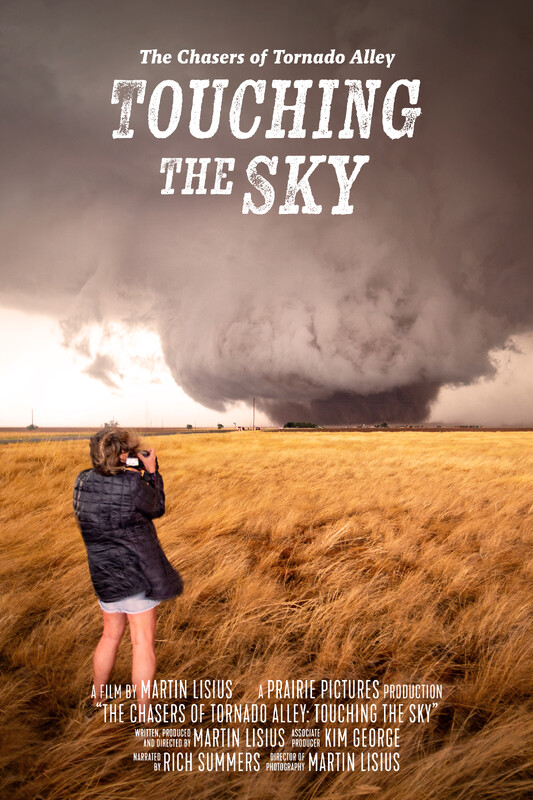
THE CHASERS OF TORNADO ALLEY, 1min., USA
Directed by Martin Lisius
The official trailer for the documentary film “The Chasers of Tornado Alley: Touching the Sky” (2024) written and directed by Martin Lisius.

https://facebook.com/Chasers2

I AM LIFE, 2min,. USA
Directed by Julie Castro
Celebrating the first 40-weeks of life through the arts – dance, music, and dialogue.

http://www.thirstnomore.tv/
https://www.facebook.com/thirstnomoreproductions
https://www.instagram.com/thirstnomoreproductions

CRY ME AN OCEAN, 1min., Netherlands
Directed by Bob Yothers
Answering a distress call from a missing cruise ship, First Nations warrior, Shaunta Bear Heart, and the crew of the Ocean Warrior run aground on the Great Pacific Garbage Patch only to discover it teeming with new life. But it isn’t friendly…

http://www.studio-b-ams.com/

THE FOREST THROUGH THE TREES, 3min., USA
Directed by Jason Pitts
This is the first trailer for the demon cult horror movie, The Forest Through The Trees

http://www.lucidlakepictures.com/
https://facebook.com/theforestthroughthetrees

CHASING ZOMBIES, 3min., USA
Directed by Mike Ancas
This documentary was shot at the George A. Romero Filmmaking Program, with special effects by Tom Savini’s Special Make-up Effects Program. The story involves iconic zombie extras from the original Dawn and Day of the Dead who, decades later, find themselves in demand at Pop Culture Comicons. We chase down these zombies to see why these early Romero films resonate so much with fans. Meanwhile, the crew shooting this film set out on a horrifying adventure of their own

https://www.imdb.com/title/tt26920161/

THE PRIESTHOOD, 3min., UK
Directed by Graeme Thomas Campbell
A dark, dystopian thriller set in Scotland. Two opposing forces, right wing Christianity and left wing atheism, fight for the soul of an island nation.

https://www.glassbulletpictures.co.uk/
https://www.facebook.com/glassbulletpictures
https://twitter.com/glassbulletpics
https://www.instagram.com/glassbulletpictures

ECHO RHYME, 2min., USA
Directed by Caleb Johnson, Jeff Johnson
Trailer: for the feature film Echo Rhyme

JIM RICKS, 3min,. USA
Directed by Devin Hylton
A former police detective investigates mysterious paranormal events in his town and the dubious criminal activities of a local crime family.

WHAT ABOUT THE CHILDREN, 1min., USA
Directed by Cortez Mack
An inspirational youth film about the neglect our children face from their parents in the areas of love, affection, attention and security.

ELIJAH RICHARDSON: TRUST YOUR WILD SIDE, 1min., USA
Directed by Brian Gregory
Trailer for the documentary on Elijah Richardson, the first youth ambassador for CoralWatch.

https://www.primitiveplanet.com/trust-your-wild-side
https://www.instagram.com/primitiveplanet

Short Film Review: THE NEW BEGINNING. Directed by Alexandre Diennet

In a world in decline, Gareth questions his own survival. Along the way, he meets Jim, perhaps the last ray of hope capable of persuading him to remain among the living.

Directed by Alexandre Diennet

Review by Parker Jesse Chase:

In this compelling two minute short, “The New Beginning,” takes us into a world on the brink of collapse. Gareth, the protagonist, grapples with his will to live within this desolate landscape he’s been suddenly forced to know until he meets Jim, a symbol of hope who might just persuade him to continue the fight for survival.


The film’s opening is particularly noteworthy. In a mere eight seconds, the filmmakers establish a sense of urgency and intrigue, pulling the audience into Gareth’s harrowing reality. Alarming sounds and sudden flashes bridge the gap between fiction and reality, immediately engaging viewers and making them question the nature of the imminent threat.


The cinematography, paired with a haunting musical score, ensures the story resonates on an emotional level, transcending language barriers. The editing heightens the tension, creating a sense of thrill and urgency. As Gareth flees from an unknown evil, the audience is thrust into a mystery, captivated by the character’s desperate bid for survival.


The film’s cinematography is nothing short of breathtaking. The desolate, yet stunning apocalyptic scenery is captured with a keen eye, creating an almost ethereal beauty amidst the ruin. The lighting design complements the natural surroundings perfectly, enhancing the film’s visual appeal and drawing the audience deeper into this decaying world.


The production design is exceptional, transporting viewers into an immersive and convincing apocalyptic setting. The attention to detail gives the impression of a high-budget production rather than an indie short film. The world is convincingly portrayed as both devastated and beautiful, with nature reclaiming the remnants of human civilization. Snow-covered buildings and a stark white landscape suggest a sterile, unforgiving environment where survival is often a solitary endeavor. Reinforcing the film’s themes of isolation and the enduring power of nature. The visuals are meticulously well-thought out down to the building blocks to the characters themselves. Gareth’s disheveled appearance, complete with dirt-streaked cheeks, starkly contrasts with Jim’s clean-cut and composed demeanor. This visual dichotomy underscores their differing psychological states and adds depth to their interactions.


As the film reaches its conclusion, viewers are left with more questions than answers. The introduction of a community of survivors hints at new possibilities and challenges, leaving the audience eager for more.


“The New Beginning” is a masterful blend of stunning cinematography, meticulous production design, and emotionally resonant storytelling. It offers a poignant exploration of hope and survival in a world on the edge, leaving a lasting impression on its audience of wanting more.

Short Film Review: SAFER STUFF: GREEN CHEMISTRY GETS DOWN TO BUSINESS. Environmental Documentary

An upbeat exploration of solutions to the problem of toxic chemicals in everyday products and the part green chemistry plays, highlighted by a passionate group of green chemists who, along with young entrepreneurs and popular brands that are adopting green chemistry solutions, intentionally design chemicals and products with safety in mind.

Directed by William Hemminger

Review by Victoria Angelique:

The pilot episode of the documentary series, SAFER STUFF, is engaging and exciting for anyone wanting to learn about green chemistry. It doesn’t linger on the history of climate change. It’s wanting to excite the audience about the innovative technologies that make up the thrilling world of clean solutions that would make our world a better place.

The experts do a fantastic job at explaining the scientific terms so that anyone that might struggle when it comes to understanding climate change, how nature works and how green chemistry will help improve the way we live will become excited over this technology. The importance of mimicking nature is explained through showing how it is explained to children through the example of sharks and how it is mimicked to help hospitals through a technology that won’t harm landfills. The transition to show how green chemistry is improving food through a clean technology by using pheromones instead of pesticides, with the explanation that pesticides might be harming the human body, is a great way to engage the viewer and keep them invested in this film’s call to action. 

Learning from nature is what many native cultures from around the world have done for generations, this series shows that there are scientists that have also been stating that and are doing something about it as they implement green chemistry in everyday items. Nature is the best to learn from and they prove it throughout this short film with how a shark or even a spider, can teach scientists on how to improve our world. 

SAFER STUFF makes it clear that green chemistry is necessary for the health of people and the environment. It’s a rare film that makes a call to action in a way that makes the viewer actually want to help and learn more about this new technology. The audience will want to get involved and watch future episodes. Anyone who watches SAFER STUFF will be excited about the future. 

Feature Film Review: WATER. Environmental Documentary directed by Gary Beeber

Water, we take it for granted and probably don’t give it much thought, but it is essential to sustain life everywhere.

“WATER” is a feature documentary film by Gary Beeber that focuses on Ohio’s source of water and what’s being done to protect it for future generations.

Project Links

Review by Julie Sheppard:

This documentary, “Water”, is a fascinating exploration of Ohio’s water system, largely originating from the flow of a significant glacier-fed aquifer.

The film is structured with a catchy Q & A format. The answers are often highly informative. Scientists, water managers, educators and environmentalists provide eye-opening details about such things as Ohio’s flood history, waste water management, and concerns and solutions to keep state rivers and the aquifer from human-led contamination. Other answers are revealed in well-edited snippets of regular Ohioans explaining how they would survive without water, their answers often witty and entertaining.

The film’s soundtrack is quite variable, from inspiring to upbeat depending upon the clearly-titled sections of the doc. Its use of diagrams and CGI drawings makes geological concepts easy to visualize and understand.

This well-researched investigation underscores the richness of the water supply in Ohio and how important it is to conserve the precious resource. Ohio’s state-wide commitment by devoted environmentalists can well be an example to the rest of the world: protecting water means sustaining life itself. This doc really does go with the flow!

Filmmaker Joseph Vitug Lingad (DON’T LOOK AWAY)

DON’T LOOK AWAY, 36min., USA
Directed by Joseph Vitug Lingad
In the span of six years, the film follows Corey to show how his facial difference has impacted his life, friendships, family relations, romantic relationships, and careers, and how these experiences have shaped his personality and perspective. By capturing the daily life of Corey, the film shows the audience the challenges of living with a facial difference: being stared at, bullied, constantly having to explain your facial difference, the struggles of online dating, and the psychological and emotional impact of all of these experiences.

http://josephvlingad.com/
https://www.facebook.com/adultswithfacialdifference/?ref=bookmarks

Get to know the filmmaker:

1. What motivated you to make this film?

I was motivated to make this film due to my experience living with a facial difference. I was born with a cleft lip and cleft palate. I wanted to make a film that shows how members of the facial differences community’s looks impact their daily lives and demystify stigmas of living with a facial difference that mainstream media has created and continues to perpetuate.

2. From the idea to the finished product, how long did it take for you to make this film?

The short film took me a little over six years.

3. How would you describe your film in two words!?

Unabashedly honest

4. What was the biggest obstacle you faced in completing this film?

The biggest obstacle in completing this film was to tell Corey’s story without sensationalizing his experiences.

5. What were your initial reactions when watching the audience talking about your film in the feedback video?

I was very happy that Corey’s story touched viewers.

6. When did you realize that you wanted to make films?

I wanted to make this film back in 2017.

7. What film have you seen the most in your life?

Either the “Le fils” (The Son) by the Dardenne brothers or “Minding the Gap” by Bing Liu

8. What other elements of the festival experience can we and other festivals implement to satisfy you and help you further your filmmaking career?

I wish this was also an in-person festival as well.

9. You submitted to the festival via FilmFreeway. How has your experiences been working on the festival platform site?

My experience with FilmFreeway has been great and easy to navigate.

10. What is your favorite meal?

Kare Kare – a Filipino stew

11. What is next for you? A new film?

I plan to make a feature film on the same topic. In fact, I’ve been following three other characters with various facial differences as long as Corey (six years plus). Depending on how successful “Don’t Look Away” is in the film circuit, I plan to use it as a “calling card” to collaborate with partners to help me make a feature film.

Filmmaker Nekia Wright (AFROLISTIC: BLACK HEALING FROM ZIMBABWE TO THE BAY)

AFROLISTIC: BLACK HEALING FROM ZIMBABWE TO THE BAY, 22min., USA
Directed by Nekia Wright, Shylet Ndarambwa
Black American healer shares about her practice and explores traditional healing, music, and dance in Zimbabwe.

Get to know filmmaker Nekia Wright:

1. What motivated you to make this film?

I traveled to Zimbabwe in 2021 to study traditional healing and prepare for the Liberated Learning Teacher Fellowship. The trip had a profound impact on me and I wanted to share this experience with other Black folx. Especially those who haven’t had an opportunity to travel. I recorded entirely on my phone during that trip and began sharing clips during my community performances and sound baths. One audience member was so touched by this one clip from the Binga region that she began weeping. This was the final affirmation for me.

2. From the idea to the finished product, how long did it take for you to make this film?

I drafted the idea for a grant on April 16th 2023 and completed the production by October 1st.

3. How would you describe your film in two words!?

Black Holistic

4. What was the biggest obstacle you faced in completing this film?

This was my first film and I hadn’t taken any film or production classes. I was back in the US when I realized I needed to get releases signed by all the participants. It was a little complicated organizing this from here and took a few months but we all worked together to make it happen.

5. What were your initial reactions when watching the audience talking about your film in the feedback video?

I wanted to make a film that engaged people’s heart, mind, and spirit as we explore African cultural healing and wellness practices. I felt like I achieved success. Watching audience members share how much they learned and one even expressed a desire to see more. This really affirms my vision of this becoming a series.

6. When did you realize that you wanted to make films?

I began recording interviews with folx using my phone in 2021 during my first trip. This was my first time in Zimbabwe as well as Africa. I’m the first person in my family to travel internationally outside of the military and the first in this generation to travel to Africa. Many of my clients and workshop participants had never been either. I really wanted to be able to share with family and friends. I began to realize that my experience in international education, project management, and communication studies had honed the skills and discipline needed to make a film on a small budget in a short period of time in Zimbabwe. I applied for The Ubuntu grant through the African American Arts & Culture Complex to make the film on April 16, 2023 which was funded by the SF Office of Workforce Development. This was the day I decided to become a filmmaker.

7. What film have you seen the most in your life?

My film, Afrolistic.

8. What other elements of the festival experience can we and other festivals implement to satisfy you and help you further your filmmaking career?

I really enjoyed the process and love the audience feedback videos. I’m a brand new film maker and would love some technical and legal training

9. You submitted to the festival via FilmFreeway. How has your experiences been working on the festival platform site?

It’s been good so far. Can you please update my project to reflect the Best Direction award?

10. What is your favorite meal?

Soul food: Smoked turkey and brisket, macaroni and cheese, collard greens, black eyed peas, cornbread and peach cobbler with ice cream on top

11. What is next for you? A new film?

I would like to turn this project into a series. There are several other magical regions in Zimbabwe including Great Zimbabwe in Masvingo. It would be great to explore a different country each season. I’d like to start with other countries where I have ancestral lineage.

Filmmaker Francheska Dyne Hong (TALKING TO THE MOON AN BAEK)

TALKING TO MOON AND BAEK, 36min., South Korea
Directed by Francheska Dyne Hong
“Only four calls,” He says. “Starts at 11:11 ending exactly at midnight. Just 49 minutes. No more, no less.” And they say, be very careful what you wish for.

http://ceoh.creatorlink.net/

Get to know the filmmaker:

1. What motivated you to make this film?
+ One of the greatest film directors, Peter Chan, once spoke to me that “our greatest revolutions are begotten from our most intimate deprivations”.
And I have learned and experienced this to be the greatest standing truth – I think the magnitude of pain can sometimes determine the magnitude of one’s greatness.
There was a lot that inspired me to write, create, direct, and act “for” this film and I think pain was the greatest motivation. I knew what solitude, loneliness, and being hurt from the people you love the most felt like – and felt compelled to write a love letter to the past me, present me, and future me – which actually is the audience who are going through their darkest times (or have been). Most importantly, there were nights – even still today – I would just walk or bike endlessly staring at the moon in the middle of the night. It was the only place and moment I would find some form of solace and warmth, so that was another big inspiration.

2. From the idea to the finished product, how long did it take for you to make this film?
+ The pre-production and the filming surprisingly didn’t take as long – but also because I am very impatient and driven. It took about 5-6 months but the editing took a lot longer than expected. As a first time, well, for EVERYTHING, I struggled a lot to not only give directions but really find directions in the editing process. My editor did wonders but it was one of the most emotionally-draining parts of the whole process. There were days I had to literally force myself into the editing room because I was dreading the thought of staring at the project file not knowing what to do. So I would say a little less than a year but almost – but I really thought I would be done in six months 🙂

3. How would you describe your film in two words!?
+ Love. Letter
I’ve said this in a few interviews but I really cried a lot during the writing process. It was a love letter to myself and all the audience out there.

4. What was the biggest obstacle you faced in completing this film?
+ Myself – and funding. I ended up funding the entire venture by myself because I could not wait but I think it’s the obstacle for all filmmakers.
But probably the biggest really is myself – as in my own doubt, fear, and uncertainties. I wanted the film to touch people and mean something to them and I was afraid it would not because I wasn’t doing a great job. I did endless journaling, praying, meditation, crying to finally come to terms with the fact that at the end of the day, you have to let your art stand on its own to live and breathe with the audience.

5. What were your initial reactions when watching the audience talking about your film in the feedback video?
+ so much gratitude, joy, and heartache… just.. everything. Thank you so much!!!

6. When did you realize that you wanted to make films?
+ Good question – I am not so sure. Not trying to sound all “destiny-wise” but I really never thought I would make films. I am an actress and a writer, and never saw myself as “ALL OF THE ABOVE”. But to quote some of the great players, one said “good players know how to play the game. the great players write the game themselves”. I think there was a part of me that wanted to create the entire playing field and see what it would be like – of course, once I started to realize how much of my bravery came from my naivety, it was a bit too late and I just had to keep pushing forward, with literal blood, sweat, and tears. Had I known it all, I am really not sure if I would have done it.

7. What film have you seen the most in your life?
+ Hrm, a lot of Richard Curtis films. I’ve “seen” different films but I study them more than watch them but if I am watching something to enjoy, I am a big Disney, Pixar fan 🙂

8. What other elements of the festival experience can we and other festivals implement to satisfy you and help you further your filmmaking career?
+ Podcast, interviews, and audience feedback are ALL so amazing, so thank you!
I think maybe a live-zoom call with the audience for a QNA? As a filmmaker, actor, the greatest reward and joy come from being able to hear directly from the audience so I think that would be something amazing 🙂

9. You submitted to the festival via FilmFreeway. How has your experiences been working on the festival platform site?
+ Really great – smooth. The only downside is I wanted to withdraw from a few festivals so I could apply to others.
The refund process has been completely non-responsive.

10. What is your favorite meal?
+ Korean food all the way – just the way they are prepared and served really feels like so much love was put into the whole process. And incredibly healthy is a pure bonus

11. What is next for you? A new film?
+ Yes and yes! Already finished about four different scripts. But now I think it’s time to secure funding since it was too difficult to fund the venture all by myself.
So whenever I can get the right investors, would love to start as soon as possible!

Director Dan Herz & Star Elizabeth Dunne (LAST STAND: SAVING THE ELWHA RIVER’S LEGACY FORESTS)

LAST STAND: SAVING THE ELWHA RIVER’S LEGACY FORESTS, 23min., USA
Directed by Dan Herz
When a large, ecologically sensitive legacy forest in the heart of the Elwha River Watershed was identified for harvest, the Earth Law Center, Keystone Species Alliance, and Center for Whale Research began using all legal means possible against the Washington State Department of Natural Resources in an attempt to halt the impending clear-cut. Through breathtaking cinematography and intimate interviews, witness the profound beauty and ecological significance of the watershed, as well as the dire consequences of unchecked deforestation.

Get to know director Dan Herz & Star Elizabeth Dunne

1. What motivated you to make this film?

Dan: I met a woman named, Missy Lahren, at an event in San Francisco and she told me about the legacy forests up in Washington state and how she and the law firm where she worked – Earth Law Center, were trying to prevent the state from auctioning off legacy forests for timber harvest. After she explained about the Elwha River, the undamming, the healing of the watershed, the salmon coming back, etc., and how logging could damage the watershed, after spending hundreds of millions of dollars to remove the dams, I felt that it was a story that needed to be told.

Elizabeth: I want people to understand the imminent risk to our last remaining older legacy forests in the Elwha Watershed and Washington state, and really throughout the Cascadia Bioregion. My hope is that through watching the film people will understand what is happening to our forests and why it is important; that they will take action – including by voting for Dave Upthegrove, who was featured in the film, to be the next WA Public Lands Commissioner; and will feel empowered to bring people together in their own communities to protect the places they love.

2. From the idea to the finished product, how long did it take for you to make this film?

Dan: About 3 months

3. How would you describe your film in two words!?

Dan: Powerful and Inspiring

Elizabeth: Heartfelt and Motivating

4. What was the biggest obstacle you faced in completing this film?

Dan:I went up to Washington in the middle of Winter, when days were very short and the weather was mostly rainy and overcast. It was challenging to get all the filming done in the week that I was there. Thanks to cinematographer John Gussman allowing us to use b-roll from his decades of shooting in and around the Elwha Watershed, we were able to complete the film. Also, the accelerated timeframe in which we wanted to get the film completed was challenging, as I had other productions I was committed to.

Elizabeth: It was on a very expedited schedule. I coordinated all the people to be interviewed in less than a week and did 4 days of filming straight while taking my son to and from preschool – the shoots during the weekday were in between drop off and pickup! I felt a sense of urgency since when we started filming, the “Power Plant” plant timber sale had not been canceled and logging was set to begin any day. So we didn’t know if we were potentially going to be filming the start of logging. The timing of filming turned out to be serendipitous as we didn’t know that the announcement to cancel the sale would be coming when it did. I had literally just finished filming with Dan and was headed over to the Dave Upthegrove fundraiser when I got a call with the news about the sale being canceled. I was ready for a break over the holidays, but we kept on moving forward with edits to the film as there is still urgency for the rest of the forests!

5. What were your initial reactions when watching the audience talking about your film in the feedback video?

Dan: Very pleased and proud to have been a part of this film

Elizabeth: The feedback made me feel uplifted, supported, motivated, and grateful.

6. When did you realize that you wanted to make films?

Dan: I have been working as a visual storyteller for over 30 years, mostly in TV. I have always wanted to make longer films, but never could figure out how to do it AND make a living. I knew from my first days as an intern at a TV station that I wanted to do this type of work.

7. What film have you seen the most in your life?

Dan: Goodfellas

Elizabeth: The Snowman (1982). It’s a little under 30 min, with beautiful drawings and music and no words and my son loves it.

8. What other elements of the festival experience can we and other festivals implement to satisfy you and help you further your filmmaking career?

Dan: I love the opportunity to be interactive with an audience…answering questions after a viewing and hearing first hand what people thought of my work. It is rare in this business to get direct and immediate feedback, and it is such a valuable thing.

9. You submitted to the festival via FilmFreeway. How has your experience been working on the festival platform site?

Karie – the FilmFreeway platform provided a seamless application process which made it a breeze from start to finish. I rate it 5 stars.

10. What is your favorite meal?

Dan: Grilled salmon, rice and sauteed veggies

Elizabeth: Any meal with fresh, homegrown veggies

11. What is next for you? A new film?

Dan: No current plans for a next film currently, but we have talked about some other environmental films that I would love to develop and produce.

Elizabeth: I’ll continue to work for the forest and would like to do other films that help people reconnect or form a deeper connection with Nature and that counter some of the misrepresentations by the timber industry.