Film Review: WAR FOR THE PLANET OF THE APES (USA 2017)

Deadlines to Submit your Screenplay, Novel, Story, or Poem to the festival: http://www.wildsound.ca

WAR FOR THE PLANET OF THE APESAfter the apes suffer unimaginable losses, Caesar wrestles with his darker instincts and begins his own mythic quest to avenge his kind.

Director: Matt Reeves
Writers: Mark Bomback, Matt Reeves
Stars: Andy Serkis, Woody Harrelson, Steve Zahn

Review by Gilbert Seah
 
The original PLANET OF THE APES films were camp and occasionally goofy. They were never taken that seriously. The first featured Charlton Heston stripped naked so that the audience could see his bare buttocks and ended with him cursing God after discovering the Stature of Liberty half buried in the sand.

This followed with BENEATH THE PLANT OF THE APES where subterranean creatures were battling the apes that ending with Earth blowing up. What next? ESCAPE FROM, CONQUEST and the most ridiculous BATTLE FOR which ended the series.

The series reboot began similarly with PLANET OF THE APES flowed by RISE and DAWN OF and now WAR FOR. The primary difference is that the reboot series is serious fodder. The camp and fun is gone. What is left is a serious man vs. ape and the fight for what is right, things that also can get quite ridiculous. When things get ridiculous, the series will end.

The plot takes place two years after the events of DAWN OF THE PLANET OF THE APES. Caesar (Andy Serkis) and his apes have been embroiled in a war against humans. As the ape population decreases, Caesar wrestles with his darker instincts (isn’t the film serious enough?) in order to avenge his fallen companions. The encounter with the apes and humans puts them into the ultimate confrontation, to determine the fate of the Earth. But the plot is not as simple as it sounds. It also involves a mad colonel (Woody Harrelson) a kind of Marlon Brando character from APOCALYPSE NOW. (There is a poster with the words APEPOCALYPSE NOW, as if the similarity is not already evident.)

The actual war involves two factions of human beings – one led by the colonel who believes that sick human begin should be totally destroyed and the other the rest of the world who believe that the sick can be cured. The apes are caught in between. The problem with all this is the oversimplified plot. What about the other nations of the world like he Chinese, Indians etc. Also, the number of apes can never outnumber the number of humans, though the excuse given is the virus that eliminated most of the human population.

Caesar leads the apes out of the jungle to the new land like Moses in the Bible’s old Testament. The analogy is so obvious and makes the film even more serious for the fact. To the filmmakers’ credit, the film has excellent production values and looks absolutely stunning on film.

So what is the attraction of the PLANET OF THE APES films? Someone once told me he wanted to go see it because he was so obsessed with seeing apes riding horses with rifles slung round their backs. The question is whether the fascination will hold after 4 or 5 similar films. WAR FOR THE PLANET OF THE APES is the 4th of the reboot series and cost a whopping a amount of money with a running time of 140 minutes. Perhaps enough is enough!

Trailer: https://www.youtube.com/watch? v=UEP1Mk6Un98

Also, Free logline submissions. The Writing Festival network averages over 95,000 unique visitors a day.
Great way to get your story out: http://www.wildsound.ca/logline.html

Deadlines to Submit your Screenplay, Novel, Story, or Poem to the festival:http://www.wildsound.ca

Watch recent Writing Festival Videos. At least 15 winning videos a month:http://www.wildsoundfestival.com

Film Review: THE LITTLE HOURS (USA 2017)

Deadlines to Submit your Screenplay, Novel, Story, or Poem to the festival: http://www.wildsound.ca

the little hoursA young servant fleeing from his master takes refuge at a convent full of emotionally unstable nuns in the Middle Ages. Introduced as a deaf blind man, he must fight to hold his cover as the nuns try to resist temptation.
Director: Jeff Baena
Writer: Jeff Baena
Stars: Alison Brie, Dave Franco, Kate Micucci

Review by Gilbert Seah

THE LITTLE HOURS is a naughty sex comedy based on The Decameron
by Giovanni Boccaccio, written and directed by Jeff Baena who reportedly did some studies in Medieval History.

The story involves a young servant, Massetto (Dave Franco) fleeing from his master (Nick Offerman) after been discovered frolicking with his wife. He takes refuge at a convent full of nuns by pretending to be a deaf mute at the advice of Father Tommasso (John C. Reilly). The nuns led by Sister Marea (Molly Shannon) are no innocent creatures of God and prayer. The film concentrates on three of these ‘mean nuns’ Sister Alessandra (Alison Brie, Dave Franco’s real-life wife), Sister Fernanda (Aubrey Plaza) and the most naive of all, Sister Ginerva (Kate Micucci) who eventually turns out to be the worst of the lot.
The humour is lame at best. It seems as if the script is grabbing at last straws at being funny. Take the dialogue of a nun at confession out of a scene from nowhere: Father, I have sinned. Yesterday, I took out a whole turnip and ate it without sharing with the sisters…” to which she is told to stop being greedy.

It does not help the narrative that there is no strong lead character but multiple characters including three nuns, the Father and the supposedly deaf-mute. The film appears to aimlessly move along with any goal, message or purpose.

The film is clearly not a harmless sex comedy for it contains some nasty parts. One is a graphic description of torture methods that thankfully are not shown on screen. The sex scenes are too erotic (including a lesbian and threesome segment) for comfort with too much nudity for a commercial film. It is not surprising that the film was chosen and premiered at Sundance in the Midnight Madness Section, implying that all is possible and that audiences can be shocked.

For a film that puts in so much effort into location, look and period atmosphere all the characters speak in modern American accent. Dialogue like “Get the f*** out of here, don’t f***ing tap to me,” are common, even though the ‘f’ word was clearly never used in those times.

The film occasionally has the feel of a Monty Python film. The most identical scene is the one in the castle where two soldiers stand guard of Massetto’s cell.

Aubrey Plaza, most memorable as the bikini clad girl Robert De Niro drops his ice-cream on, plays a naughty Sister Fernanda who also serves as producer of the movie.

Director Baena attempts to pick up the film’s pace with a climatic rescue of Massetto from the castle prison by the three sisters. The decoy of a tortoise with a candle on its shell is a possible metaphor for the story’s pace.
For all THE LITTLE HOURS is worth, the film appears like an alternative remake of MEAN GIRLS set in a convent in the Decameron Tales era. But with less plot and unfortunately less humour.

Trailer: https://www.youtube.com/watch?v=Dc_wqGyXCs8

Also, Free logline submissions. The Writing Festival network averages over 95,000 unique visitors a day.
Great way to get your story out: http://www.wildsound.ca/logline.html

Deadlines to Submit your Screenplay, Novel, Story, or Poem to the festival:http://www.wildsound.ca

Watch recent Writing Festival Videos. At least 15 winning videos a month:http://www.wildsoundfestival.com

Film Review: A GHOST STORY (USA 2017) **

Deadlines to Submit your Screenplay, Novel, Story, or Poem to the festival: http://www.wildsound.ca

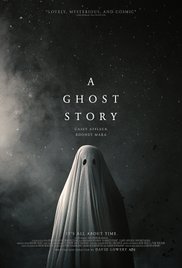
A GHOST STORYIn this singular exploration of legacy, love, loss, and the enormity of existence, a recently deceased, white-sheeted ghost returns to his suburban home to try to reconnect with his bereft wife.
Director: David Lowery
Writer: David Lowery
Stars: Casey Affleck, Rooney Mara, McColm Cephas Jr.

Review by Gilbert Seah
 
If a film is weird enough, it makes matters worse if the filmmaker makes the film even weirder. This is the case with David Lowery’s ghost story drama – an extremely difficult to follow, confusing yet the simple storied film.

Lowery is well known for having directed Disney’s PETE’S DRAGON, now doing his minimalist project, something I guess he always wanted to do.

The story follows a couple who is referred to in the film’s notes simply as C and M. C is the male (Casey Effleck) and M is the female (Rooney Mara). When the film begins, the couple are are in a suburban home about to sell their house. They are quiet, indicating perhaps though director Lowery never makes it certain, that they need more communication. They talk about a piano with M shown dragging it out to the front of the house for garbage collection.

The next scene has C in a morgue. He is next shown in a sheet with two cut out holes as eyes. C is apparently a ghost though no reason is offered. Another ghost in a sheet with two cut out holes appear later on in the. Film. Again, it makes no sense whatsoever.

The film goes on. Moving on at slower than a snail’s space, Lowery tests the audience’s patience to no end. The music is eerie, dialogue kept at a minimum. People move in and out of the house as C occasionally scares people in the house by throwing cutlery.

As if matters cannot get worse, the film shifts back and then forwards in time towards the last third of the film. There is also a scene where a bulldozer suddenly demolishes the walls of the house.

The ghost can disappear, as is assumed when the sheet crumples to the ground. It can therefore move on to heaven or better things? No one is sure.

The film contains lots of long takes – especially long takes of close ups, something not too often seen in films. An example is the re-visited poignant scene in bed where C and M face each other in bed, kiss and fall asleep. The first time the scene is performed, it lasts a full 5 minutes. There are again other scenes this slow moving.

Performance-wise, nothing much is required from Mara nor Effleck. This is a director’s piece not the actors. All the actors are required to do is brood and brood, and maybe put a sheet over themselves. Needless to say, there are no special effects required in this ghost story.

A GHOST STORY is not badly made. It is well executed, well performed and a nice mystery from start to finish, challenging the audience. It is a haunting ghost story, but not a scary one, though the art house concept will scare commercial audiences away. Many critics at the screening loved A GHOST STORY but I am not a fan.

Trailer: https://www.youtube.com/watch?v=c_3NMtxeyfk

Also, Free logline submissions. The Writing Festival network averages over 95,000 unique visitors a day.
Great way to get your story out: http://www.wildsound.ca/logline.html

Deadlines to Submit your Screenplay, Novel, Story, or Poem to the festival:http://www.wildsound.ca

Watch recent Writing Festival Videos. At least 15 winning videos a month:http://www.wildsoundfestival.com

Film Review: NEAR DARK (USA 1987) ***** Top 10

Deadlines to Submit your Screenplay, Novel, Story, or Poem to the festival: http://www.wildsound.ca

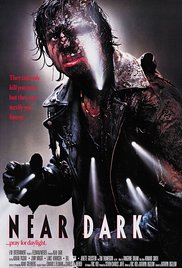
near darkA small-town farmer’s son reluctantly joins a traveling group of vampires after he is turned by a beautiful drifter.
Director: Kathryn Bigelow
Writers: Kathryn Bigelow, Eric Red
Stars: Adrian Pasdar, Jenny Wright, Lance Henriksen

Review by Gilbert Seah

NEAR DARK is Kathryn Bigelow’s first and arguably BEST movie, which did badly at the box-office in 1987 making only $3.5 million on its $5 million budget. The film did garner positive reviews.

NEAR DARK mixes the western and vampire horror genres based on a script written by Bigelow and Eric Red. The story follows a young man, Caleb Colton (Adrian Pasdar) in a small midwestern town who becomes involved with a family of nomadic American vampires. Starring then little-known actors Adrian Pasdar and Jenny Wright, the film was part of a revival of serious vampire movies in the late 1980s.

It all starts one night, when Caleb meets an attractive young drifter named Mae (Jenny Wright). Just before sunrise, she bites him on the neck and runs off. The rising sun causes Caleb’s flesh to smoke and burn. Mae arrives with a group of roaming vampires in an RV and takes him away. The most psychotic of all the vampires, Severen (Bill Paxton), wants to kill Caleb, but Mae reveals that she has already turned him. Their charismatic leader Jesse Hooker (Lance Henriksen) reluctantly agrees to allow Caleb to remain with them for a week to see if he can learn to hunt and gain the group’s trust.

In the meantime, Caleb’s father (Tim Thomerson) searches for Caleb and Jesse’s group. The action is non-stop and the film an absorbing watch from start to end.

It often happens that a director’s first film is his or her best, the director often putting everything he or she has into it. None of Bigelow’s features including her Oscar Winning THE HURT LOCKER could ever match the energy and inspiration that can be observed in NEAR DARK. “The night is so bright, it will blind you.” is a sample of some of the dialogue spoken. Bigelow must have loved this line so much that it is repeated in the film.

Bigelow also ups the ante in her horror movie with the introduction of a really creepy character in the form of a child vampire called Homer (Joshua John Miller). This is an old man in a child’s body. A case of Pedophilia. When Homer meets Caleb’s little sister Sarah (Marcie Leeds) and wants her as his mate, it is no wonder Caleb sacrifices all to save her.

I first saw NEAR DARK in September 1987 at the Toronto International Film Festival as part of the public, before I was a film critic. NEAR DARK was brought in and screened last minute. But Bigelow was there after the screening for a Q & A session. I remember being really impressed at the film and at a female director capable of such exciting male action. I recall someone asking her too: “Why did you pick Tangerine Dream to do the music for the film?” Her answer: “Aren’t they great?” This is pure inspiration and filmmaking from the heart.

NEAR DARK is one action set piece after another, the top two being the bar segment where the vampires terrorize a local biker bar, killing everyone before burning it down followed by a police takedown at a motel.

NEAR DARK screens on July 21st, as part of the TIFF Cinematheque retrospective of Kathryn Bigelow films.

Trailer: https://www.youtube.com/watch?v=FiYSirEHS5E

Also, Free logline submissions. The Writing Festival network averages over 95,000 unique visitors a day.
Great way to get your story out: http://www.wildsound.ca/logline.html

Deadlines to Submit your Screenplay, Novel, Story, or Poem to the festival:http://www.wildsound.ca

Watch recent Writing Festival Videos. At least 15 winning videos a month:http://www.wildsoundfestival.com

Film Review: NOT MY DAY (Nicht Mein Tag) (Germany 2014) ***

Deadlines to Submit your Screenplay, Novel, Story, or Poem to the festival: http://www.wildsound.ca

not my day
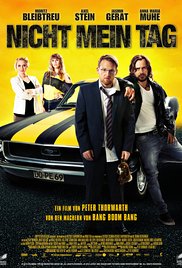
Bank teller Till Reiners’ life is torn out of a rut by a series of offbeat coincidences, which ultimately lead him to find himself and realize: His life isn’t so bad after all…

Director: Peter Thorwarth
Writers: Stefan Holtz, Ralf Husmann (novel)
Stars: Moritz Bleibtreu, Axel Stein, Jasmin Gerat

Review by Gilbert Seah
 
Those quick to dismiss this straight to VOD platform German action comedy will miss this quiet gem of a box-office hit in its own country. Though the incidents in the story have been used in other films before, director Thorwarth still injects a certain freshness to their execution, so that all ends up good in this very entertaining comedy.

The film is part road trip part buddy buddy and part romantic comedy film centring on two mismatched characters. The film begins with what appears to be a bank job with a guy stuck in the building when police arrive. Director Thorwath tells what has happened that has has to this state of affairs.

It all begins when a disgruntled bank client Nappo (Moritz Bleibtreu) expresses his anger at waiting his turn while the bank officer, Till (Axel Stein) openly talks about a retirement party for one of the tellers. In his office, Nappo is denied a loan. In the next scene Till is shown having a lengthy argument wit his wife on the office phone about silly stuff like vacation time. Unknowing to Till, the bank is being robbed by a masked man. When the getaway driver takes off, the bank robber takes Till hostage. Taking off his mask, the robber is revealed to be Nappo who forces Till to drive him out of town. Thus begins the road trip of the two mis-matched characters.

If all this sounds a bit mundane, Thorwarth executes the above with grand flare. What works particularly is the contrasting chemistry of the two. Till follows rules while Nappu breaks them. Though they have opposite tastes in music they do share a comical sing-along in one of the film’s best scenes. Till is bespectacled, strumming his guitar while Nappo is screaming out the words: “yeah, yeah!” It is a meaningful scene which hits the truth in which people who can share the likes of an identical song can immediately bond.

The film also plays for romantic comedy with Till’s marriage to his wife, Miriam. They don’t have sex as she is aways back late from work trying to make it in the design business. Till, as he says, makes the money to pay the bills by doing a job he says he hates. They hope to rekindle the fire of their relationship, oddly enough from a vacation that they cannot coordinate in terms of time.

When Till thinks his wife is cheating on him, Nappo’s hilarious advise is: “Snap out of it! There are other chicks in town.” This is how Nappo convinces Till to do a job for money. The caper leads to a climatic car chase in Amsterdam at night with cars crashing into the canals.

What distinguishes this film from making it so engaging, is that director Thorwarth allows the audience to identify with all the film’s characters, from Till, Nappo and even the wife. They are shown as real characters especially, when the square Till finally throws caution out the window and goes ultimately crazy, at one point taking down a gang of Albanian gangsters.

If this comedy is your cup of tea, Milky Way also has released on major VOD platforms on July 11th, a part of their ‘comedies a la carte’ collection:
– DYKE HARD (Directed by: Bitte Anderson, Comedy, Sweden, 90 mins)
– LOVE AT FIRST CHILD (Directed by: Anne Giaferri, Comedy, France, 91mins)
– ONE MAN AND HIS COW (Directed by: Mohamed Hamidi, Comedy, France, 91 mins)
WINWIN (Directed by: Daniel Hoesl, Comedy, Austria, 84 mins)
Trailer: https://vimeo.com/97813230

Also, Free logline submissions. The Writing Festival network averages over 95,000 unique visitors a day.
Great way to get your story out: http://www.wildsound.ca/logline.html

Deadlines to Submit your Screenplay, Novel, Story, or Poem to the festival:http://www.wildsound.ca

Watch recent Writing Festival Videos. At least 15 winning videos a month:http://www.wildsoundfestival.com

Film Review: THE BLACK PRINCE (UK/India/USA 2017) **

Deadlines to Submit your Screenplay, Novel, Story, or Poem to the festival: http://www.wildsound.ca

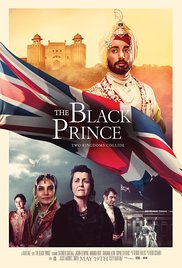
THE BLACK PRINCE.jpg‘The Black Prince’ is a story of Queen Victoria and the Last King of Punjab, Maharajah Duleep Singh. His character as it evolves, torn between two cultures and facing constant dilemmas as a result. His relationship with Queen Victoria will be the most impactful relationship in the film, the Queen representing the English culture he was drawn into.

Director: Kavi Raz
Writer: Kavi Raz
Stars: Jason Flemyng, Amanda Root, Shabana Azmi

Review by Gilbert Seah

 A lavish production, the true tragic story of the Maharaja of Punjab entitled THE BLACK PRINCE was launched at Cannes this year at a glitzy event at the Indian Pavilion. But the film was not shown but its trailer together with interview opportunities with its star Satinder Sartaaj a famous singer/poet making his transition to big screen acting. The film finally arrives, but unfortunately the film is not what is expected from Cannes.

THE BLACK PRINCE is a story of the last king of Punjab, Maharajah Duleep Singh (Satinder Sartaaj) and Queen Victoria (Amanda Root). The film follows Maharaja Duleep Singh, first placed on the throne at the age of 5, after the death of his father. In 1849, Punjab was annexed to British India. The young prince was removed from the throne and eventually sent off to England. His attempts to return to India and reclaim his kingdom were thwarted by the British. He ended up a pauper, dying alone in a Paris hotel in 1893.

It is difficult to see the reason a film based on the failure of a man trying to regain his thrown got made, except perhaps to show the evil the British had done in the past, which the film emphasizes once too many a time, like an old racist grandparent nagging a grandchild of the evil of a particular culture. The film is not only a downer but also monotonously boring and badly executed.

There were a number of film critics that walked out of the press screening and a number that kept walking in and out to the toilet. It was indeed difficult to keep still during the long 120 minutes of the film’s running time. Apparently the film’s first cut was 4 hours.

There are a lot of things wrong with the film as evident in a number of scenes. In one where Duleep’s first wife struggles to tell him not to give up his English heritage, the camera focuses on Duleep’s reactions instead of her facial expressions. The two should be closer together in the argument and the camera should not show both of them, focusing one face to another but rather show more close-ups for emotional tension. The wife in the next segment is shown backing up her husband and then in the next, against him once again. Duleep’s son (one of them) suddenly appears in one scene condemning his father’s actions to the British Empire. The annoying soundtrack coaching the audience when and how to feel what does not help either.

The Maharajah also sports one of the worst haircuts ever seen on the screen EVER – a bald head with long hair streaming down the bottom half of his head. If there is anything this film is to remembered for, it is this haircut.

The dialogue at times, when meant to be serious comes across as laughable. Take for example Duleep’s big speech: “We will stick our daggers into their hearts and we will take back our Kingdom!” The film also does not explain where Duleep gets all his money to finance his trips and to travel to Paris, France whenever his heart desires.

All good intentions aside to tell the true story of a Prince whose throne was stolen from him, THE BLACK PRINCE is one dull history lesson. For all that it’s worth, the film displays impressive production values. Shot in Punjabi and English.

Trailer: https://www.youtube.com/watch?v=R2TTXSPVn8c

Also, Free logline submissions. The Writing Festival network averages over 95,000 unique visitors a day.
Great way to get your story out: http://www.wildsound.ca/logline.html

Deadlines to Submit your Screenplay, Novel, Story, or Poem to the festival:http://www.wildsound.ca

Watch recent Writing Festival Videos. At least 15 winning videos a month:http://www.wildsoundfestival.com

Movie Review: DEVIL WEARS A SUIT, (Australia) LGBT, Sci-Fi

Played at the June 2017 LGBT Toronto Film Festival

Directed by Eli Mak

A high-concept drama/scifi about a Jewish boy who must decide whether to ‘cure’ his homosexuality with an injection or be ostracised from his community forever.

CLICK HERE – and see full info and more pics of the film!

Review by Kierston Drier

 Some films make you laugh, some make you think. Some punch you in the gut and break your heart. Few do this so well as DEVIL WEARS A SUIT, coming to us from Australia by Director Eli Mak.

In this transcendent science-fiction piece, teenage Adam from an established Jewish household, must submit to a homosexulity test at his school. If he fails and is shown to be gay, he will be kicked out of school and likely disowned by his family and community. But sweeping the world is a new homosexuality “cure”- an injection that can “make your straight.”

Adam considers his options and goes to buy the cure, when he runs into an old friend from high school he hasn’t seen in years, Jarred. It turns out Jarred didn’t move to Israel as his family has said. Jarred didn’t pass the homosexuality test years before, and is now living in near squalor conditions, a social outcast from his community. Seeing what Jarred has, and what he gave up in order to live the life he wanted, Adam must question what his freedom is worth.

Academically speaking, science fiction is a medium of storytelling that addresses a current issues, softened through the lenses of the almost-unbelieveable. When we think of the areas in the world where people must hide and conceal their sexuality for fear of ostracization, it becomes terrifyingly easy to believe a “cure” like the one is this movie might be utilized, even in today’s society. But at what cost to human lives?

Not only is DEVIL WEARS A SUIT beautifully shot, superbly casted and performed and stunningly cinematic, it’s story will leave you breathless. It’s impact will resonate with anyone who has ever questioned what a life without love is worth. It will throw into sharp focus the lengths people can go to in order to conform. DEVIL WEARS A SUIT has an ominous undertone, that foreshadows the outcome of a world that puts conditions of love.

This is science fiction at it’s finest, and it is cinema at it’s most engaging. A special note must be made to the exceptionally well chosen and well executed score, for the music in the piece adds a rich emotional element.

Bravo, Eli Mak. DEVIL WEARS A SUIT is a multifaceted, deeply layered, dramatic, emotional, thought-provoking and fundamentally beautiful film. See it.

devil_wears_a_suit_movie_poster.jpg
 

Movie Review: MASC ONLY (USA) LGBT, Comedy

Played at the June 2017 LGBT Toronto Film Festival

Directed by Drew Droege

Gay best friends, Tommy and Wesley, unwittingly venture to an intimidating party hosted by the gay elite. 

CLICK HERE – and see full info and more pics of the film!

Review by Kierston Drier

This racus American Comic short is a delight to the senses. Tommy is a young gay man living in New York and frustrated with his life. Why? Because he lives in the classic cliche of his community. His friends, even his best friend Wesley, are vain, superficial, sassy and larger-than-life. Acquaintances and potential lovers distill him down to a walking stereotype and it’s getting on his nerves.

Yet when Wesley invites Tommy to a party hosted by upper class gay elite, Wesley goes- looking for love, lust, a good time? He’s not sure, but something fun has to happen, right?

What is brilliant about MASC ONLY is that our character it butting against the bubble he’s been put in, while still having to actively engage in it. And this deeper social commentary is hidden within the piece, covered over by layers and layers of raucous, laugh-a-minute comedy. The piece has no bad lines, no dead air and no dull moments. It escalates higher and higher with physical and visual comedy, while still sparkling with wit. The performances are fantastic! You will laugh at every turn, but you will leave the theatre thinking.

This piece looks like a comedy and acts like a comedy, but within it beats the heart of deep social satire. A worthy watch indeed. To director Drew Droege, well done.


masc_only_movie_poster.jpg

Movie Review: HOW TO BE ALONE (Israel), LGBT, Drama

Played at the June 2017 LGBT Toronto Film Festival

Directed by Erez Eisenstein

Relying on “How To Be Alone” – a self-improvement audio book – a heartbroken woman, struggling with her lonesome existence, decides to embrace solitude and to learn how to survive without love. 

CLICK HERE – and see full info and more pics of the film!

Review by Kierston Drier

 HOW TO BE ALONE is a pensive film. Coming to us from Israel from director Erez Eisentein, this is a piece that makes you question introversion and healing from a broken heart. Our heroine, a newly single woman gets a self-help audio book about solitude, and following its’ advice, beings to live a life alone.

Regardless of the stoic, yet occasionally humorous advice the audio-book gives her, our protagonist can not seem to shake the image of her lover from her mind. Can her life be lead to it’s fullest without love in it? Will this book with it’s lonely advice deliver her to happiness and self-sufficiency, or will it drive her crazy?

This piece is a thinking piece. It takes us in, and engulfs us in our hero’s world so completely, that by the emotionally packed final scenes we are left to wonder if the book is real, or if it is all in her head.

A testament to good filmmaking, by the end of this film, we watch our hero take a plunge to get her lover back, and we are filled with the overwhelming urge to tell her to stop. Only a well crafted film could make a viewer feel so strongly for the hero’s well being.

Eisenstein has done an excellent job on examining love and human relationships through the lenses of solitude, while crafting emotion with a character that rarely speaks in the film. Silence and space are characters as much as our hero and her lover are. An introspective and poignant cinematic short.

how_to_be_alone_movie_poster.jpg


Movie Review: WAJOOD (SELFHOOD) (India) LGBT, Drama/Romance

Played at the June 2017 LGBT Toronto Film Festival

Directed by Vishal Srivastava

Revolves around a young hijra’s (trans-woman) life, who seems to fancy herself with an auto-rickshaw driver. When confronted by the elders of her community about her unrealistic expectations, she goes on a quest to know if somebody will ever fall in love with her or is this thought as naive as told by everyone around her? 

CLICK HERE – and see full info and more pics of the film!

Review by Kierston Drier

WAJOOD, or Selfhood, is a powerful short coming to us from Indian by director Vishal Srivastava. Bright with colors and boasting gorgeous cinematography, this piece sheds light on a little known part of Indian culture. The Hijra, known as the Third Gender, are a community of transwomen who are often misunderstood and shunned in society.

Yet WAJOOD takes a look at this section of society kind, compassionate and sensitive eyes. We follow our heroine through her emotional journey of dissecting her sense of self. She pines for the attractive rickshaw driver near her community, and wakes every morning to watch him. But her community members remind her that there is no future for people like herself. Her fate has been determined- she is not to be understood, and not to find conventional love. Her life, will be a lonely one. Yet a kind stranger will change her mind about what it means to be who she is.

What make WAJOOD special is it’s bravery. It tackles a topic worthy of discussion, about a group deserving of attention. More than that, it stands before adversity and shouts for recognition. But it will charm you as it does so. It will charm you with its stunning images, it’s entrancing music and it’s’ undeniably lovable and sympathetic main character.

If you watch WAJOOD, you may not identify with my main character right away, but you will love her. WAJOOD reminds us that we are far more similar that we are different.

wajood_movie_poster.jpg