Film Review: SKATE KITCHEN (USA 2018) ***

 Submit your Screenplay to the Festival TODAY

Skate Kitchen Poster
Trailer

A teenaged skateboarder makes friends with a bunch of other skateboarding girls in New York City.

Director:

Crystal Moselle

Writers:

Crystal Moselle (story), Crystal Moselle | 2 more credits »


The Skate Kitchen is the name of a group of female skateboarders first featured in director Moselle’s THE OTHER DAY (a short film created for fashion designer Miu Miu).  Moselle first gained attention with her documentary about her siblings 

THE WOLF PACK that won the U.S. Grand Jury Prize/Documentary at Sundance 2015.

SKATE KITCHEN, Moselle’s debut full length feature also featuring the skateboarders, begins really well but unfortunately fades away to a sappy Hollywood happy ending despite many bright moments.  The opening shots with the camera following the main subject as she skate boards in a skate park gliding as confidently and smoothly set the stage for an excellent film.  The high expectations are indeed tough to meet.

This is could be what movie making is all about – taking the audience into a fantasy world (in this case the world of skate boarding) and bringing them to a new exhilarating high.  The film best moments are when the skaters are just goofing around on the street, music blaring (a few good tunes courtesy of D.J. Khaled) and they just dancing and goofing around.  It shows their world, oblivious to the problems of adults and their outside world, a world of beauty and wonder, an Utopia and state that one wish to be, a pure high and without the use of drug or alcohol.

Camille (Vinberg) is a shy 18-year-old living with her single mother (Elizabeth Rodriguez) in Long Island.  After a scary skate accident (shown all bloody and gross at the start of the film), Camille promises her angry and disturbed other that she will hang up her board.  But  as expected, the urge to skate is too great – so she responds to a social media post about a “girls skate sesh” in New York’s Lower East Side.  Finding the camaraderie she’s been missing all her life, Camille falls in with the crowd and falls out with her mother.  But when she falls for a mysterious skateboard guy (Will Smith’s son, Jaden Smith), the relationship proves to be trickier to navigate than a kickflip.

The kids speak in their own lingo.  But when director brings The main lead’s world into reality – romance, an over-wring mother, a boyfriend, drugs and team loyalty, the movie high dissipates slowly.

One wishes there would be more depth in each of the characters in the film.  Except for the main character, Camille (Rachelle Vinberg), no one knows any of the family of the other skaters.  Even for Camille, nothing is mentioned of her father and her troubled relationship with her mother is sketchy at best.

The film plays like a documentary though it is clearly scripted.  Quite a bit of improvisation goes into the making of the film a evident in the many candid scenes.  Playing fictionalized versions of themselves are The Skate Kitchen (an all-female skateboarding crew in New York), including co-founder Rachelle Vinberg who has a main role in Moselle’s film.

SKATE KITCHEN when working, is a wonderfully different female film.  It makes a feminine statement by showing how much fun it is to be a human being with no penis.

Trailer: https://www.youtube.com/watch?v=iT1izrIxoos

 Submit your Screenplay to the Festival TODAY

Film Review: NICO, 1988 (Italy/Belgium 2017) ***1/2

 Submit your Screenplay to the Festival TODAY

Nico, 1988 Poster
Trailer

The last year of singer Nico’s life, as she tours and grapples with addiction and personal demons.

NICO, 1988 is as the title implies, about Nico during her last years before 1988.  Nico is Christa Päffgen (an outstanding performance by Dane actress Trine Dyrholm), known to the world by her stage name “Nico”.   Nico was one of Warhol’s muses, a singer of The Velvet Underground and a woman of legendary beauty.  But expect a different person portrayed in the film, as Nico says in the film: “Don’t call me Nico.  My name is Christa.”  She admits she does not want to talk about The Velvet Underground followed by confessing that she thinks she is ugly.

The film follows Nico as she lived a second life after the story known to all, when she began her career as a solo artist.  Nico, in the time prior to 1988 is the story of Nico’s last tours with the band that accompanied her around Europe in the Eighties: years in which the “priestess of darkness”, as she was called, found herself again, shaking off the weight of her beauty and rebuilding the relationship with her only forgotten son.   The son, Ari (Sandor Funtek) appears at exactly the half way mark of the film.  Besides the story of an artist and her tour, the film is also the story of a rebirth, of an artist, of a mother, of the woman beyond the icon.

One problem with NICO, 1988 is that the many people familiar with her would have high expectations for this biography, since Nico is a larger than life personality and hard to replicate.  Getting the audience interested and caring for Nico is another thing –  an important task for the director making the film..  

As in most films on music performers, the drug problem needs be addressed.  Nico is no stranger to drugs.  It gets ugly.  She uses the hard stuff – heroin and is not afraid to state it.  In one  disturbing scene set in a Prague restaurant, she goes ballistic when she cannot get some, blaming the communists for stealing her passport.

The last half hour of the 90 minutes film is a powerhouse where director Nicchiarelli

turns up the film full throttle.  The audience sees Nico performing her songs.  One can see the reason she got so popular.  The film ends in the year 1988, which the audience can predict as her end.

The film’s best segment is the one Nico performs at her illegal concert in Prague.  Before she goes on stage, she curses her manager for arranging the gig.  But when the spotlight shines on her on the stage and she starts crooning, director Nicchiarelli captures the singer’s anger, regret and finally respect for her audience.  It is a powerful, unforgettable and rare moment beautifully captured on screen.

What is also interesting is Nico’s despicable personality.  She calls her band members amateur drug addicts.  She springs her drug addicted son, Ari from the sanatorium and drags him on tour believing herself that she is doing good, loving her son.  She also accuses her manager (John Gordon Sinclair who played the main role of Gregory in GREGORY’S GIRL, way back when) of devising different ways of stealing from her.  In one rare mement though, she unexpectedly thanks him.

NICO the film, (like the artist herself), can be best described as an exhilarating feel-bad biography.

Trailer: https://www.youtube.com/watch?v=38RBdHtWkWo


 Submit your Screenplay to the Festival TODAY

Film Review: EL ULTIMO TRAJE (THE LAST SUIT) (Argentina/Spain 2017) ***

 Submit your Screenplay to the Festival TODAY

El último traje Poster
Abraham Bursztein, an 88 year-old Jewish tailor, runs away from Buenos Aires to Poland, where he proposes to find a friend who saved him from certain death at the end of World War II. After…See full summary »

Director:

Pablo Solarz

Writer:

Pablo Solarz


When Hollywood makes a movie about old people, they normally turn out to be old fart fantasies where old people live forever (COCOON), win some competition (FINDING YOUR FEET) or find love again.  Often the actors playing the old farts try to outdo each other in looks and cosmetic get-up so much so that watching these movies have become so cliched.  In this Argentine/Spanish co-production about an 88-year old man, the subject is not the  search for the fountain of youth.  Abraham Borsztein runs away from his home in Buenos Aires for survival.  His daughters not only want to put him in a nursing home but amputate his and leg.  Armed with the little money that he has managed to save, he bolts for dear life off to Poland.

Why Poland?  Apparently some guy there had saved him from certain death at the end of World War II.   Abraham has made a promise to bring him a suit (THE LAST SUIT of the film title) and he aims to keep that promise.

The journey does not run as smooth as expected.  Abraham misses his train and gets his money stolen.  But the adventure has only begun.  He meets Maria (Angela Molina) who also has a few dreams of her own.

Director Solarz has his audience sympathize with Abraham.  The camera is not shy to reveal an awful looking bad leg, all white in colour and might in need to be amputated to prevent the poison from spreading throughout he body.  Details are not mentioned.

THE LAST SUIT is a nicely made (pardon the pun) film that may be described as a coming-of-age story of a senior 88-year old man.  His journey of escape and fear for his last days is a real one for many seniors who cannot help themselves but fall to the mercy of their sometimes uncaring and insensitive children.  One thing Abraham still has are his wits.  He is sharp as can be.

The story also reveals that there is some good in man.  The rude musician that Abraham first meets on the plane who first has his feet upon the chair turns out to be a really kind man after Abraham reluctantly helps him at customs.

THE LAST SUIT would be a film that targets the older demographic.  The film’s pace suits an elderly crowd as its good intentions.  It is a good natured as many of the characters Abraham meets during his journey.

Despite its lightness in tone, THE LAST SUIT gets serious at the end, with a message that replaces a climax.  Abraham searches for the friend that saved his life, mainly through his memories.  Through flashbacks, the audience is brought back to the war and the injustice committed against the Jews.  The film offers redemption in the form of a very kindly Germany lady that Abraham meet who helps him along the way.  Though this is enlightening, the audience is manipulated in a way.

The film brings the thought that without memories, nothing else matters.  One feels sadder for those with dementia and have nothing else when they reach that demise.  THE LAST SUIT ends up a sad film about old age, but at least it is a realistic one about certain hardship that seniors can never escape.

Trailer: https://www.youtube.com/watch?v=BLZVMgJoo-k

 Submit your Screenplay to the Festival TODAY

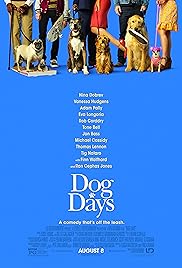
Film Review: DOG DAYS (USA 2018)

 Submit your Screenplay to the Festival TODAY

Dog Days Poster
Trailer

Dog Days follows a group of interconnected people in Los Angeles who are brought together by their lovable canine counterparts.

Director:

Ken Marino

Writers:

Elissa Matsueda (screenplay by), Erica Oyama (screenplay by) | 1 more credit »


The logo at the start of the film “Life is better with a dog” implies what director Manrino’s film sets up to prove.  It is not a very subtle message and not a very subtle film too.  DOG DAYS is a family oriented movie about humans and man’s best friend.  Unfortunately the word dog can also be used to describe the movie.  DOG DAYS is sporadically funny at best with a very low joke hit/miss ratio.

The film contains four humans stories – all silly and uninteresting.  The first is a TV host who ends up interviewing Jimmy Johnston a sports star only to end up arguing on set.  The cliché ridden script would mean that the two will fall in love, which they do, and lo and behold, what a surprise – it also turns out that they each own a cute dog.  The next story begins at a Starbucks style coffee shop where a regular customer meets an employee who falls for Mr. Hots, a dog doctor who owns a fabulous car.  The customer, as geeky as they come owns a dog shelter that, yes, any 2-year old can guess is going to have trouble financially.  She helps him out with a fundraiser but is dated by Mr Hots.  A one-year old can guess what happens next – yes, she discovers Hots to be an a-hole and realizes true love might be Mr. Geeky himself.  Then there is the musician who babysits sister’s dog while she is having twins.  The dog is a huge but cute one who changes Mr. Annoying’s life.  My Annoying is not only annoying buy terribly unfunny. The last story involves a sad man who ha substituted the love for his past wife with a dog he has lost due to Pizza boy.  The dog is found and looked after by a couple who adopts a little girl.  

Director Marino clumsily intercuts these stories with weak links.  For example, Johnson’s dog is brought to the clinic owned by Mr. Hots.  The lack of a villain in the story means that each story meanders around with no purpose except to display the cuteness of different dog breeds.

The film has no shortage of cliches.  A girl ditches her not-that-good-looking friend to date Mr. Hots only to find Mr. Hots an idiot and then dates back her not-that-good-looking friend who is actually in love with her. A lost dog found by a family who needs the dog more than the owner is eventually given the dog by the owner and so on.

The human stories are weakly linked to each other like an excuse.  The stories are predictable and unexciting.  No one really cares. 

As if cliches are not enough, director Marino aims to pull at the heart strings with no signs of stopping  A lost dog is re-united with its owner; an owner learns about life lessons from his canine friend. It is as if Marino has discovered that his humour is to working and trying for tears as a last resort.  

Containing more cliches than dog tricks, DOG DAYS makes one wonder who let this one out of the dog house?  This is just a very bad dog of a movie.

Warning!!  Make sure you leave before the closing credits.  There are extra takes of the actors cracking more unfunny jokes that will guarantee to make your skin crawl.  

Trailer: https://www.youtube.com/watch?v=zEilmeGeVXY&t=5s

 Submit your Screenplay to the Festival TODAY

Film Review: THE BOOKSHOP (Spain/UK 2017) ***

 Submit your Screenplay to the Festival TODAY

The Bookshop Poster
Trailer

England 1959. In a small East Anglian town, Florence Green decides, against polite but ruthless local opposition, to open a bookshop.

Director:

Isabel Coixet

Writers:

Isabel Coixet (screenplay), Penelope Fitzgerald (novel)


The underdog trying to keep his or her land against insurmountable odds like high authority and the government has been a solid premise for films.  Two routes may be taken – the comedy or drama.  One of the most successful Australian films THE CASTLE saw a country bumpkin fighting to keep his house (a castle is a man’s home) from being taken way to build an airport runway.  In best selling novel adapted into the film THE BOOKSHOP, a widowed woman attempts to fulfil her dreams be opening a bookshop in a small English town which the town wants to take away from her.

Though looking quite the ordinary film Isabel Coixtet’s THE BOOKSHOP , based on Penelope Fitzgerald’s acclaimed novel arrives in Toronto of a special engagement run after winning 3 prestigious Goya Awards including Best Film and Best Director. Director Coixtet is Spanish.  The film stars Patricia Clarkson as the ‘baddie’ who has previously worked with Coixtet in LEARNING TO DRIVE as well as stars Emily Mortimer and Bill Nighy.

This is the second British film this year to tout reading books in a period setting, the other being the yet to be released Mike Newell’s THE GUERNSEY LITERARY AND POTATO PEEL PIE SOCIETY.  Both films involve the rendering of personal resolve, tested in the battle for the soul of a community.

The setting is England, 1959.  Free-spirited widow Florence Green aka Mrs. Green (Emily Mortimer) risks everything to open a bookshop in a conservative East Anglian coastal town.  While bringing about a surprising cultural awakening through works by Ray Bradbury and Vladimir Nabokov (who wrote the controversial LOLITA which Mrs. Green intends to promote and sell in the bookshop), she earns the polite but ruthless opposition of a local grand dame (Patricia Clarkson) and the support and affection of a reclusive book loving widower (Bill Nighy).   As Florence’s obstacles amass and bear suspicious signs of a local power struggle, she is forced to ask: is there a place for a bookshop in a town that may not want one?   

Coixtet’s film unfolds at such a leisurely pace, it might turn out too slow for some audiences (just as people might nod off during reading a book, as one character in the film says). .  She spends a good third of the film introducing the film’s main characters.  Clarkson is only seen for a few minutes during the first half the the film and Nighy only speaks after a third of the film.  

Based on a book by a female author and directed and starring a female, the film naturally extols female independence.  Unfortunately, the film falls into the familiar trap of containing weak or dislikable male characters, the exception being the Bill Nighy character despite revealed of a timid nature.   All other male characters like the General (the grand dame’s husband), Mr. North and Mr’s Green’s solicitor are all spineless detestable beings.

THE BOOKSHOP opens Aug 24th, but being British and already released n Europe, is also readily available on disks through Amazon and other similar platforms.

Trailer: https://www.youtube.com/watch?v=3KgMW3rowXY

 Submit your Screenplay to the Festival TODAY

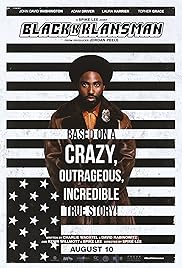
Film Review: BLACKKKLANSMEN (USA 2018) ****

 Submit your Screenplay to the Festival TODAY

BlacKkKlansman Poster
Trailer

Ron Stallworth, an African-American police officer from Colorado, successfully managed to infiltrate the local Ku Klux Klan and became the head of the local chapter.

Director:

Spike Lee


BLACKKKLANSMEN opens with a shot similar to the famous one seen in the poster of one of Spike Lee’s best films DO THE RIGHT THING.  The shot is focused on the centre of the image but the characters stand around in the perimeter.  Both that film and his new Cannes premiere hit BLACKKKLANSMEN tackle the problem of racism with savage brutality.  Though this film contains more content, Lee tones down his anger a little compared to the more energetic DO THE RIGHT THING. 

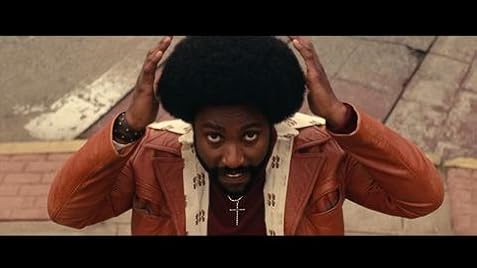
The film is based on the autobiographical book Black Klansman by Ron Stallworth. Set in 1970s Colorado, the plot follows an African-American detective Stallworrth (former footballer John David Washington and son of Denzel) who sets out to infiltrate and expose the Ku Klux Klan.

The film arrives after lots of hype after the Cannes premiere where many critics have hailed the film as one of the Top 10 films screened there.  The truth is that the film is that good though not without flaws.  It competed for the Palme d’Or and won the Grand Prix at Cannes.

Not since Francis Ford Coppola’s THE GODFATHER’s climatic scene where he intercut the talking of peace with the different crime bosses to the execution of the bosses has irony been so vividly captured on screen.  Lee intercuts the two rallies of the rise of black power to that of white power in one of the film’s key segments.  Best still is the irony on display when Jewish cop Adam Driver denounces his Jewish heritage as Lee’s camera is placed in the position to emphasize Driver’s semitic nose.

Lee is fond of filming his segments with the camera slanted with a resulting slanted frame, used by many directors to emphasize a distortion of the events occurring on screen.  Lee uses the tactic several times, particularly during the black rallies.

Though basically a period piece, Lee ties in current events to the story.  There is a shot of Trump’s speech about very bad people in demonstrations s well as newsreel footage of violent police and crowd clashes during demonstrations in the August of 2017.  Trump’s favourite line of making America great again is echoed in the film’s dialogue during of of the Ku Klax Klan leader’s speeches.   Lee obtained permission to include the image in his film of Heather Heyer who called killed by the car ploughing into the crowd during a white supremacy rally.

Lee’s film not only incites anger among African Americans but also among Jews and gays.  It is as if Lee is recruiting allies agains redneck whites in the movie.

It is always a pleasure to watch Adam Driver in a film.  Driver (PATERSON) delivers an astonishing and powerful performance without having to resort of cheap theatrics, written dialogue or bouts of put-on anger.  His mannerisms and body language tell all.  Alec Baldwin is also memorable and hilarious as a bigoted doctor speaking on white supremacy.  But all the white racists are treated as silly, stupid and ignorant country bumpkins, easy target for Stallworth and the good cops.  It would be a more challenging task to have them made a more formidable foe.

The film contains lots of film references like the opening scene with the famous GONE WITH THE WIND  street scene where wounded soldiers lay scattered to the blackpoitation films like SUPER FLY, COFFY, CLEOPATRA JONES and SHAFT.  Included for laughs is a debate on who is better, Ron O’Neal or Richard Roundtree?  The racist D.W. Griffith’s classic, BIRTH OF A NATION is also given special treatment – Spike Lee style.

BLACKKKLANSMAN is quite good but could have been more effective if Lee put more anger and opted less for comedy in the film.

Trailer: https://www.youtube.com/watch?v=pFc6I0rgmgY


 Submit your Screenplay to the Festival TODAY

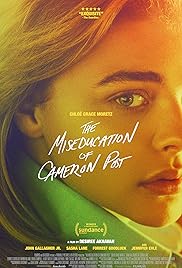
Film Review: THE MISEDUCATION OF CAMERON POST (USA 2018) ****

 Submit your Screenplay to the Festival TODAY

The Miseducation of Cameron Post Poster
Trailer

In 1993, a teenage girl is forced into a gay conversion therapy center by her conservative guardians.

Director:

Desiree Akhavan

Writers:

Desiree Akhavan (screenplay), Cecilia Frugiuele (screenplay) | 1 more credit »


Young adults forming alliances and fighting formidable foes of evil in an alien environment.  It is all part of survival and retaining ones identity while saving the world.  This might be the description of the young adult films like DIVERGENT, THE HUNGER GAMES or the recent THE DARKEST MINDS but also for a very real and disturbing film entitled THE MISEDUCATION OF CAMERON POST.  The quiet Cameron Post has only her self appreciation and wits as weapons against the forces of evil, which here is in the form of misguided Christianity.

Abuse can take many forms, but not as bad as those suffered by the young orphan girl Cameron Post (Chloë Grace Moretz).  Caught during her prom night making out with another girl (the prom queen) in the back seat of a car by her date,  Cameron Post is sent to be ‘cured’ at a gay conversion therapy camp.  In one scene she is seen hiding under a table sneaking a telephone call home, crying her eyes out because she cannot take the abuse any longer.

Abuse is the worst when it is psychological.  “Isn’t teaching a person to hate herself for being gay self abuse?”  asks Cameron at one point in the film.

Co-written by Cecilia Frugiuele and directed by Desiree Akhavan, adapted from Emily Danforth’s acclaimed 2012 YA novel, “The Miseducation of Cameron Post” is the survival story of this young, spirited, orphaned, small-town Pennsylvanian, forcefully sent the equivalent of a prison camp with no privileges.  The setting is 1993, just after AID’s had taken the world by storm and just before gay rights, same-sex marriage and gay acceptance were the norm.  It is indeed sad to be gay during this period. 

The film has two standout performances by two young actresses Moretz and Sasha Lane (as Jane Fonda).  Why that character is called Jane Fonda is humorously explained in the film.  Lane is immediately recognizable from her last role in Andrea Arnold’s 2016 film AMERICAN HONEY where she earned the title role as a spirited teen.  Of course, she plays another here, but one is is of such independent spirit that she survives the brainwash and helps Cameron stay glued to her sexual orientation.  But it is Moretz from SUPERBAD who steals the show as the vulnerable Cameron who finally sees the way.  She delivers a controlled yet powerful performance, often crying intend of yelling, planning instead of physical retaliation.

Director Akhavan moves her film at a leisurely yet gripping pace.  She understands the power of the story and the gravity of Cameron’s desperation.  She lets her story unfold with all its intensity without resorting to cheap theatrics or dramatic set-pieces except for the one displaying a suicidal’s troubled outburst.  This allows the audience to think and feel for the film’s characters.

The villains at the Christian camp are Dr. Lydia Marsh (Jennifer Ehle) and her visibly oppressed, “ex-gay” brother Reverend Rick (John Gallagher Jr.).  The two of them are smiling all the time making them really creepy.  Dr. Marsh runs the camp with a Nurse Ratchet-like efficiency.

THE MISEDUCATION OF CAMERON POST, a hit when premiered at Sundance ends up a powerful told tale of the triumph of the individual spirit over evil.

Trailer: https://www.youtube.com/watch?v=VEdngvMGjg0

 Submit your Screenplay to the Festival TODAY

Full Review: THE CRESCENT (Canada 2017)

 Submit your Screenplay to the Festival TODAY

The Crescent Poster
Trailer

After an unexpected death in the family, a mother and son struggle to find spiritual healing at a beachfront summer home.

Director:

Seth A. Smith

Writer:

Darcy Spidle (screenwriter)


This horror film from Nova Scotia, Canada has an excellent though slow beginning.  Weird colourful patterns are formed and changed, which seems to flow naturally.   Those who are in engineering or science, will be quick to realize that the patterns follow the Second law of Thermodymanics which state that the entropy of a closed system will always increase towards its equilibrium.  So, is the chaos that affects the mother and young son in the film something that will naturally occur?

The film, after the opening credits and patterns turns to a funeral service where the preacher talks about suffering and pain before coming to a final rest.  The film then focuses on the single mother and young son, and advised by her mother (Danika Vandersteen) than in order to survive: “You have to keep a level head.”  

Smith plays around with sounds effectively as he uses different sizes images to frame his film.  The frame sizes change when showing an image as seen from a window or from Beth’s paintings.  Smith also uses tilted and upside down images, the latter as seen from the reflection of the sea water at low tide as Beth and Lowen (Woodrow Graves) walk along the beach.  The intermittent blaring sound is used at many points in the film.  The sound could be the sound of a ship’s horn as one blaring during a fog or the sound of a house alarm system.  Beth takes out the alarm electronics thinking it to be coming from there but the sounds persists during the night.  Sound is also used to create ambiguity as in Lowen’s baby voice.  The audience would strain to hear what the child is saying as he often mumbles along.  Danika Vandersteen also delivers a memorable performance.

The best thing about the film is the young boy Woodrow Graves’ performance as Lowen.  Lowen is hardly old enough to walk properly, less climb up and down the stair, and is seen throughout the film just mumbling his dialogue like a child.  His humming of tunes, the child-like “Row, row, row your boat,” and utterings like: “Where’s mommy?” are so real and eerie.  It must have taken Smith (Graves is his son) quite a while to film the boy’s abilities.

The actually ghosts first appear at the one hour mark into  the film.  For those who love their horror violent and gory, they might have to wait a while, but the blood parts do occur.  Most of the weird puzzles are also explained by the end of the film, though a few more are introduced.

Smith’s film might be a bit too slow paced for the typical horror film.  But THE CRESCENT more than makes up for it in terms of atmosphere and ecstatics.  Normal horror fans will also not be too happy at this too arty piece of work that looks too smug for its own good.

Trailer: https://www.youtube.com/watch?v=Bji7jatpHqA

 Submit your Screenplay to the Festival TODAY

Film Review: PUZZLE (USA 2018) ***1/2

 Submit your Screenplay to the Festival TODAY

Puzzle Poster
Trailer

Agnes, taken for granted as a suburban mother, discovers a passion for solving jigsaw puzzles which unexpectedly draws her into a new world – where her life unfolds in ways she could never have imagined.

Director:

Marc Turtletaub

Writers:

Polly Mann (screenplay by), Oren Moverman (screenplay by) | 1 more credit »


As PUZZLE opens audiences to the world of jigsaw puzzles, PUZZLE opens the world of taken-for-granted housewife, (I work at home too, she says), Agnes (the wonderful also under-utilized Scottish born Kelly Macdonald) into a world of self discovery.

It all begins at her birthday party where husband Louie (David Denman) breaks a plate that she glues the pieces back together.  She is given a 1000-piece jigsaw puzzle which she puts together again and again.  She discovers this hidden passion and leaves the house in Bridgeport, Connecticut to buy another where she learns that a mother puzzle solver wants a partner for a competition.  She travels twice a week without her family knowing to Manhattan where she meets Robert (Irrfan Khan), a wealthy recluse and together put together jigsaw puzzles in record time.  

At the same time, Agnes finds her life unfolding in ways she could never have imagined.

Director Turtletaub directs this delicate tale of a housewife’s self-discovery from a script by Oren Moverman and Polly Man based on the Argentine movie Rompecabezas by Natalia Smirnoff.  The film is dedicated to Turtletaub’s mother who we would think would also have been an under-appreciated mother.

Turtletaub’s only other directorial feature was GODS BEHAVING BADLY, a flop with negative reviews.  PUZZLE proves his worth given a second chance.  He is described to shoot with only a few takes allowing the actors to deliver their own interpretation of their roles allowing the film to be fresh.  True to what have been described, the performances are honest, fresh and occasionally powerful.  Macdonald (GOSFOD PARK), always an excellent actress, discards her British/Scots accent for an American role.  Macdonald is the one reason to see this moving story.  She is perfect even in he looks for the role.  At times, looking like a simple housewife, she can also look radiant, especially in the scene where she lying on the grass, the camera right above her when she talks to Robert on her cell phone.  Of the supporting cast, the young unknown Bubba Weiler stands outs Agnes’ elder son, Ziggy who does not get accepted to college and is stuck in a dead end job he detests working for his father in the auto shop.

The film’s best scene has the two of them Agnes and Ziggy having a heart-to-heart talk one evening.  It is a candid one whee they share unexpectedly each other’s secrets.  The shocking question Ziggy asks his mother is why she has not left his father.

The film has a neat spill on coincidences.  Agnes believes that there is a reason things happen as in the train where “Ave Maria” is sung to the words, “Tea, Maria” uttered by Robert.  Robert on the other hand believe that these are are coincidences.  The metaphor of the jigsaw puzzle as life is therefore quite obvious.  The jigsaw is a puzzle where the wrong pieces can be put right whereas life’s puzzle might not be solved in the same manner, as the film proves.

As expected, the family eventually learns what Agnes is up to.  She gains her independence and there is a neat ending as to what on she eventually decides on doing.  A housewife’s fantasy that audiences can relate to, thanks to director Turtletuab 

Trailer: https://www.youtube.com/watch?v=wl_SoMNi0rw

 Submit your Screenplay to the Festival TODAY

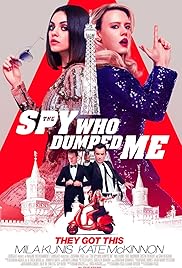
Film Review: THE SPY WHO DUMPED ME (USA 2018)

 Submit your Screenplay to the Festival TODAY

The Spy Who Dumped Me Poster
Trailer

Audrey and Morgan are best friends who unwittingly become entangled in an international conspiracy when one of the women discovers the boyfriend who dumped her was actually a spy.

Director:

Susanna Fogel


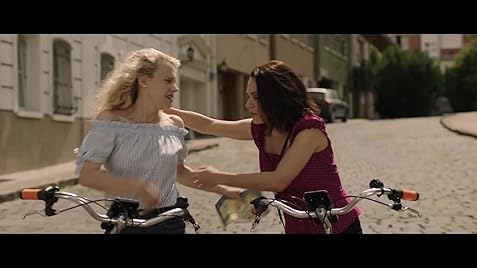
When the film title is a rip off of a rip off (Austin Power’s THE SPY WHO SHAGGED ME, the ripoff of 007’s THE SPY WHO LOVED ME), one would not have high expectations going into the movie.  True to instinct, THE SPY WHO DUMPED ME, which absolutely wastes the talents of SNL’ s Kate McKinnon and Mila Kunis is a totally painfully unfunny buddy, buddy spy movie that makes Paul Feig’s SPY starring Melissa McCarthy look like a masterpiece.

The number one mistake of director Susanna Fogel who co-wrote the script with David Iserson (LIFE PARTNERS) is the decision to make this comedy also an action movie.  Comedy and action do not usually go well together except for a few exceptions like KINGSMEN, and that film worked hard to achieve the correct blend between action and slick comedy.  THE SPY WHO DUMPED ME goes for lower-brow comedy, that despite sleek looking sets and looks still clings desperately to puke, vagina and fart jokes (in the Amsterdam hostel).

Kunis (the straight one in the duo) and McKinnon (the clown) play best friends, Audrey and Morgan.  When the film opens, Fogel intercuts comedy and action.  The comedy is  Audrey’s birthday celebration hosted by Morgan.  The action scene takes place in Lithuania where the boyfriend, Drew (Justin Theroux) who has just dumped Audrey is fighting off dozens of assassins in search for a flash drive that contains some important information.  It turns out, of course, that Audrey is in possession of the drive which puts her, and busybody best friend Morgan in trouble.  They encounter CIA agent Sebastian (hunky gorgeous Sam Heughan) who helps them.  Audrey and Sebastian have a thing going.

It only takes 10 minutes or so into the film when it can be observed that the film does not work.  McKinnon tries her utmost best to be funny.  Though she occasionally succeeds, she turns out more annoying than anything else, especially when she becomes loud and irritating.

The international locations of Prague, Paris, Berlin and others do not help either and it is doubtful that the film was actually shot in these cities.

Too much time is spent on car chases, actions sequences and killings which are below par in terms of excitement (audiences have seen much better in real action films like MISSION: IMPOSSIBLE – FALLOUT and the Marvel films) while being unfunny and out of place in a film billed as a comedy.  The story with an icy cool female boss or female villain has been done before as are so are the story twists.  Who is the real villain at the end?  Audrey’s new or old boyfriend?  A 5-year old would be able to guess.  For a comedy, the violent segments (such as the cutting off of a thumb for a thumbprint to use the cell phone; the tasers and stabbings) are hardly necessary and kind of uncool. 

Do not stay for the outtakes during the closing credits.  These are just more examples of the painful humour that do not work.

Trailer: https://www.youtube.com/watch?v=APL30ptgwvg

 Submit your Screenplay to the Festival TODAY