Film Review: THE DEATH (AND LIFE) OF CARL NAARDLINGER (Canada 2016) ***1/2

Submit your Screenplay to the Festival TODAY

The Death (and Life) of Carl Naardlinger Poster
When a mild-mannered IT specialist discovers that a man with the same name as his is missing, he goes looking for him in the Toronto ravines. But instead of finding him, he finds the missing man’s identical twin brother.


THE DEATH (AND LIFE) OF CARL NARRDLINGER is one of those quirky little films about quirky little characters that succeeds in a quirky sort of way.  Consistent, meticulous and occasionally insightful, this was the kind of Canadian film that shot directors like Atom Egoyan and Ingrid Veninger to fame.

Carl Naardlinger (Matt Baram) has spent most of his life answering questions – on the telephone.  When your computer does not work – he is the IT consultant you call. Patient, intelligent and kind he is a voice in the interconnected ether – touching the lives of thousands of people he will never see, or meet. The film opens with Carl Naardlinger in action, doing what he does best on the telephone, though the caller goes on and on (comically) about her life rather tan seeking the solution from him.

The next scene is set in the Naardlinger home where Carl celebrates his birthday with his wife, Pam (Grace Lynn Kung).  Pam is a real estate agent, over meticulous over her work and also in maintaining the perfect relationship with her husband.  They eat healthy, speed walk daily and tell each other everything that happens daily.  Well, almost.  After Carl blows out the candle on his cake, they are interrupted by a knock on the door by missing persons person, Detective Renton (Anand Rajaram).  A man with the same name as his has gone missing and is presumed dead.  Carl instinctively feels related to the stranger that bears his own name.  Pam, his wife, is unnerved by a shocking coincidence of her own, when their annoying neighbour dies after she wishes it. It seems the Universe is playing a cruel joke on them both. Things get stranger when instead of finding the missing Carl Naardlinger, Carl finds his identical twin brother Don (Mark Forward) who happens to be in town for a conference.

If all these events sound implausible, director Schleemer resolves the puzzle neatly at the end.  But her film is not to be enjoyed for the puzzle but by the odd behaviour of each character in her story.  Two other characters, a couple Paula (Beatriz Yuste) and Larry (Ryan F. Hughes) a non so perfect couple, acquaintances of the missing Carl come into the picture.  The one common trait among all of Schleemer’s characters is neediness.

Of all the actors creating all these oddballs, Grace Lynn Kung is terrific as the perfectionist Pam.  Kung won the Best Actress ACTRA Award for her role in this film.

The film is shot around Toronto in the city area and in the ravines where there still are lots of green.  The script make good use of Toronto and its surroundings with familiar names (to Torontonians) of areas and streets mentioned in the film.

Given the unknown names in the cast, the odd plot and the small budget, the film might no attract big enough a crowd to give this film the credit it deserves.

Trailer: https://www.youtube.com/watch?v=rrWZPADPm3I&feature=youtu.be

Submit your Screenplay to the Festival TODAY

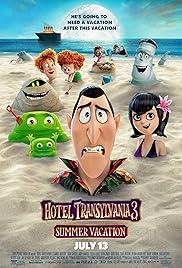
Film Review: HOTEL TRANSYLVANIA 3: SUMMER VACATION (USA 2018) ***

Submit your Screenplay to the Festival TODAY

Hotel Transylvania 3: Summer Vacation Poster
While on a vacation with his family, Count Dracula makes a romantic connection.

According to Cineplex Magazine, writer/director Genndy Tartakovsky finally agreed to do the second sequel when his in-laws invited him and his family on a cruise ship to celebrate New Year’s Eve.  This was when Tartakovsky realized that being confined to one location with ones family’s is fertile ground for the drama and disaster needed for this third outing.

The first two H.T. films were only so-so, so one wonders the reason Tartakovsky was so reluctant to do a third film.  To his credit, this one is the funniest of the lot, likely because Tartakovsky has gained more experience as an animated comedic director.  There are not that many jokes that involve the monsters in the confined space of a cruise ship, likely because the ship is large enough for the monsters to get lost.

Unlike most animated films (DESPICABLE ME, ZOOTOPIA) in which the plot involves something really substantial like saving the world, the lazy story involves the monsters escaping extinction as they are pursued throughout the ages by the Van Helsing family who believe that all monsters are bad and must be eradicated from the face of the earth.  This is introduced at the film’s start, which is actually the film’s most hilarious bit, where the monsters are in disguise trying to pass on as humans on a train when Van Helsing suddenly appears.  A chase on the top of the running train ensues with the monster all getting away with Van Helsing as the only casualty.

Dracula (Adam Sandler) agrees to go on a cruise ship with his daughter Mavis (Selena Gomez) and his troupe of monsters that includes Frankenstein (Kevin James), the werewolf (Steve Buschemi) and the invisible man (David Spade).  He goes on a date and falls in love with the ship’s captain, Erika (Kathryn Hahn) who not only happens to be a woman but Van Helsing’s daughter and has it in her blood to destroy Dracula and his pals.

With Adam Sandler leading the voice cast, one can expect the jokes to be silly.  And the jokes come as silly as they get, which fortunately are quite hilarious.  One complaint is that they happen a bit too fast, so that a lot will be missed if one is not paying full attention.  The lazy plot allows for a lot of improvised jokes with the monsters reacting largely to each other.  The voice cast is impressive, and includes the likes of Kathryn Hahn, David Spade, Wanda Sykes and even Mel Brooks.  It is hard to know who is voicing which character even with Sandler voicing Dracula, as Sandler does his characterization with an East European accent.

Even a child will know that Dracula will survive once again from the clutches of Van Helsing or his daughter.  Director Tartakovsky manages to sneak in a nice message or two within the proceedings.

The idea of an animated feature containing all the known movie monsters is a good one, thus spurning three in the franchise and with more, more likely to come.

Trailer: https://www.youtube.com/watch?v=d5exSS74Lh0


Submit your Screenplay to the Festival TODAY

Film Review: FIREWORKS (Uchiage hanabi, shita kara miru ka? Yoko kara miru ka?) (Japan 2017)

Submit your Screenplay to the Festival TODAY

Fireworks, Should We See It from the Side or The Bottom? Poster
Trailer

Schoolchildren Norimichi, Yûsuke and Jun’ichi want to know if fireworks look round or flat from the side. They make a plan to find the answer at a fireworks display, while Nazuna schemes to… See full summary »

Directors:

Akiyuki Shimbô (as Akiyuki Shinbô), Nobuyuki Takeuchi (co-director)

Writers:

Shunji IwaiHitoshi Ône (screenplay)


FIREWORKS is the hit Japanese animation feature featuring teen boys doing what they do best during their free time – chasing girls and making pranks.  Despite this theme, FIREWORKS turns out to be an extremely boring exercise from the very start.  Be it the unfamiliar Japanese culture but that should not be a sufficient reason. 

It is based on the 1993 Japanese live-action television play of the same name, also released in cinemas in 1995, by Shunji Iwai.

The lengthy title can roughly be translated to ‘Fireworks, Should We See It from the Side or the Bottom?’ as teen wonder as they travel to an island for the purpose of watching fireworks.

To directors Akiyuki Shinbo and Nobuyuki Takeuchi’s credit, FIREWORKS has a solid look that can pass for a Hayao Miyazaki movie.   The typical Miyazaki movie regularly contains a plot that includes the element of teen true love, and part of this theme is present.

The story is set in the town of Moshimo.  The vents take place from the point of view of teen Norimichi Shimada.  Norimichi and his friends, Yusuke, Miura, and Junichi live while harassing their teacher and the former half galvanising over the beauty of their classmate Nazuna Oikawa, who is poised to move to a new town with her family.   Nazuna, on the day she is supposed to leave, picks up a small strange-looking glass marble she finds by the sea.  After school, she encounters Norimichi and Yusuke who happen to be on pool-cleaning duty.  Challenging them to a swimming race, she proposes the winner has to follow whatever she says. Yusuke wins and she asks him to go together to the festival to see the fireworks. 

Both Norimichi and Yusuke have the hots for Nazuna but it is the former that prevails.  He uses the marble to alter time in order to eve Nazuna.  And so the story goes.

The story/film can be described as a teen coming of age drama with magic though it leans more towards the whimsical than the dramatics.

The film is to be commended for its lively coloured animation with  haunting music by Satoru Kōsaki

The supernatural slant is provided in the shape of the glass marble that when thrown turns back time.  Unfortunately, the audience is forced one again to view a few of the boring scenes.  The glass marble is thrown a couple of times.  It is all about the glass marble. Nothing is mentioned of where it came from or how in got its powers.

Why would, this film, many may wonder earn a commercial release?  For one, Bell Lightbox gives foreign films a chance – a good thing and also the fact that though the film received mixed to positive reviews from critics, many have praised the film for its music and animation.  The film has so far grossed $26 million worldwide, becoming the sixth highest-grossing anime film of 2017 and the highest-grossing Shaft (the film company that made FIREWORKS) film.

Trailer: https://www.youtube.com/watch?v=KG770hOuT2k

Submit your Screenplay to the Festival TODAY

Film Reviews: Summer in Japan

Submit your Screenplay to the Festival TODAY

TIFF Cinematheque presents every year summer classics films from different countries like France and Italy are screened.  This year it is Japan.

The programme is an essential primer on the country’s cinema, featuring 30 works from some of its most celebrated auteurs, as well as a selection of titles by rarely-screened Japanese masters.  The programme runs from July 5 – September 1, 2018 at the TIFF Bell Lightbox

From samurai epics to intimate family dramas and every genre in between, this vast survey includes not only some of the best-known titles by the five most celebrated Japanese auteurs — Mizoguchi, Ozu, Kurosawa, Ichikawa, and Naruse — but also the stars of the Japanese New Wave, as well as rarely-screened yet immensely gifted directors.  


Curated by TIFF Cinematheque Senior Programmer James Quandt, and co-presented by The Japan Foundation, this cinematic omakase features 16 titles in 35mm, two digital restorations, and several introductions by guest speakers.

AN ACTOR’S REVENGE (Japan 1963) ***
Directed by Kon Ichikawa 

AN ACTOR’S REVENGE is exactly what it is – the film is fully about an actor’s revenge.  When performing on stage, an actor, famous from his Osaka Performing Troupe, recognizes his eternal enemy who is watching him perform.  The Lord has made love to his mother causing her to take her life.  He wants to have him, his daughter and associate done away with.  Distraction occur when a pickpocket thief, a really beauty falls for this actor.  The actor in question is a male in drag, since the role he plays on stage is that of a female.  But he is skilled in swordplay and he encounters a past student who becomes his help.  All this looks strange but somehow wonderful, as the audience witnesses the events leading the revenge, including a beautiful femme fatal who falls for him.  A lot of the fights are occur in the dark of night, and the resulting filming of the action scenes are magnificently shot with very effective use of lighting and editing.

Trailer: https://www.youtube.com/watch?v=jQyCnC8tkSc

AN AUTUMN AFTERNOON (秋刀魚の味) (JAPAN 1962) ****
Directed by Yasujirō Ozu. 

Ozu’s final film which many consider a masterpiece.  Ozu regular Chishū Ryū plays the patriarch of the Hirayama family consisting of a daughter, Michiko (Shima Iwashita) and two sons, one married and one still living at home with the father and unmarried sister.  He is comfortable with his unmarried daughter, Muchiko cooking and looking after him but eventually realizes that he has a duty to arrange a marriage for her. It was Ozu’s last film; he died the following year on the day he turned 60.  Ozu’s films often feels stage-like with his actors moving in and out of his frames.  Closeups are rare.  But this is Ozu’s style and one expects this from his films   Still Ozu is a Master story-teller, and in AN AUTUMN AFTERNOON, his beautifully crafted observational piece, captures the life of the patriarch, even right through World War II whence served as Captain in the Japanese Navy.  The films show how true happiness can be achieved with kindness, humanity and simplicity.

Trailer: https://www.youtube.com/watch?v=Wq0XhT1SRho

THE BALLAD OF NARAYAMA (Japan 1958)***1/2

Directed by Keisuke Kinoshita

Narayama-bushi Kō is a 1958 Japanese period film directed by Keisuke Kinoshita and based on the 1956 novella of the same name by Shichirō Fukazawa. The film explores the legendary practice of obasute, in which elderly people were carried to a mountain and abandoned to die.  The subject of the film is the grandmother Orin, reaching her ripeful age to make the final journey to Narayama before her death.  She lives with her son, another son and daughter-in-law in a poor village where she cooks and tends for them.  As she prepares for obasute, several events happen including the arrival of a new bride for the widowed son, theft in the village and neighbour problems.  Director Kinoshita immerses his audience right into the action from start to finish.  The events of the story are punctuation by Japanese rhythmic folk songs.  The film has a surreal look as Kinoshita shoots the action amidst bright colours that include made-up sets and artificial vegetation.

Trailer: https://www.youtube.com/watch?v=Lw08P2VDdgM

RASHOMON (Japan 1950 ***

Directed by Akira Kurosawa

A man and his beautiful bride travel along dangerous and lonely roads.  They are robbed by a bandit played by Kuroswa’s regular, Toshiro Mifune and the wife apparently raped.   Having being had by two men, the wife is either: spurned by the two men or seduced by the robber and leaves the husband.  Different versions of the tale (the most horrible of all time, the audience is warned) are revealed in flashbacks as recounted by different witnesses, including a dead spirit.  Audiences will be a bit rattled to find out that what is seen in flashback might not really be true.  Hitchcock did the same with a false flashback in STAGE FRGHT that audiences never forgave him for.  The only truth is the man being murdered. RASHOMON, shot in black and white has stunning photography from the pouring rain at RASHOMON, the name of the gate where three men recall their stories to the bright sun shining though the forest trees as the camera is turned towards the sky.  RASHOMON is supposedly Kurosawa’s best piece alongside THRONE OF BLOOD.

Trailer: https://www.youtube.com/watch?v=xCZ9TguVOIA

UGETSU (Japan 1953) ****

Directed by Kenji Mizoguchi

A historical period classic on how greed, pride and temptation destroy men.  Shot in crisp black and white, UETSU has been widely regarded as one of the greatest films in the history of cinema, director Mizoguchi’s unforgettable fable taking place in 17th-century Japan  where people are poor and suffer under the tyranny of warlords and their soldiers.  The subjects are two villages  men — a peasant who yearns to become a samurai and a potter who would stop at nothing, including risking in life to gain fortune from selling his wares.  Their poor long-suffering wives grumble but are unable to change their husbands’ ways.  A supernatural element is added into the story when the potter is seduced by an exquisitely beautiful woman who turns out to be a phantom.  UGETSU is gripping from start to finish with the audience always rooting for the poor men but alas! They get war they deserve!

Trailer: https://www.youtube.com/watch?v=0dUwz9j4oGM


Submit your Screenplay to the Festival TODAY

Film Review: THE KING (USA 2018) ***

Submit your Screenplay to the Festival TODAY
The King Poster
Trailer

Forty years after the death of Elvis Presley, a musical road trip across America in his 1963 Rolls Royce explores how a country boy lost his authenticity and became a king while his country lost her democracy and became an empire.

Director:

Eugene Jarecki

Writers:

Eugene JareckiChristopher St. John (co-writer)


It is about time a documentary surfaced on Elvis Priestly – aka The King.

Why is Elvis nicknamed The King?  In Kevin Smith’s DOGMA, Satan claimed that he does not believe in fighting in God’s army and was therefore banished from God’s Kingdom.  A character goes to say, Elvis served in the army and that is why he is The King!  But the most appropriate reason would be that Elvis is the King of Rock and Roll.

“How does it feel to be right up there on top?” is a question asked at the start of the movie.  As much as Elvis represents the American Dream – (anyone can be what he wants if one works for it), the film accurately reveals the truth that it should be peace, love and the pursuit of happiness that one poor black woman in the film confesses.

But THE KING the movie is not so much a biography of Elvis but a history of Elvis tied  to America and its politics.  Writer/director Melecki devotes a fair amount of scene time to the debate of Elvis’ appropriation of black music.  One black interviewed says that he stole black music and never did anything for the black man.  But another says that music should not be segregated.  There are two sides to each story.

As Elvis was such a famous star, there exists much archive footage available for Melecki to choose.   Included are clips from his many films. 

A good impressive cast of stars that include Ethan Hawke have their say.  Hawke speaks with authority about Elvis as if he knew the king personally.  Other interviewees include Elvis’ best teen friend but one wonders the reason Melecki includes the folks that used to stay in the original house where Elvis grew up.  These people did not even know that it was Elvis’ house they lived in.  Melecki also includes himself in the doc as he is driven around asking questions.

It is hilarious how all documentaries include clips of President Donald Trump and very unflattering ones at that.   THE KING is no exception with Trump displayed at his lower common denominator.  The film contains a neat look at America from Canadian Mike Myers’ perspective.  Melecki puts American down at many points in his documentary.

Director Melecki’s last third of the film covers the reason why American is not great again.  Despite what Trump had said: Make America great again!”  America can only be great if it cares again.  Melecki also contrasts Elvis loyalty to the country and military to Mohammed Ali’s refusal to join the army.  “Going to jail is better than killing innocent Chinese and Vietnamese,” says Ali in the film.  Then there is the Alec Baldwin bit degrading Trump again.  It is an excellent debate.  The only problem is the film going completely off-track with the downside of America, though Melecki ties it to Elvis at the end.

The film ends sadly with the death of THE KING, sadly at the young age of 42.  THE KING is as much a story of the downfall of Elvis as it is of America.

Trailer: https://www.youtube.com/watch?v=csXtdjsqYLM


Submit your Screenplay to the Festival TODAY

Film Review: BOUNDARIES (USA/Canada 2017) ***1/2

Submit your Screenplay to the Festival TODAY

Boundaries Poster
Trailer

Laura and her son Henry are forced to drive her estranged, pot-dealing, carefree father Jack across country after being kicked out of a nursing home.

Director:

Shana Feste

Writer:

Shana Feste


BOUNDARIES is a film about breaking boundaries, not creating or keeping them.  When the film starts, Laura (Vera Farmiga) talks to her therapist about the boundary she had created with her estranged father, Jack (Christopher Plummer).  Jack has telephoned but Laura has refused to pick up.  But she eventually makes contact with him.

BOUNDARIES is a feature by writer/director Shana Feste who has made 5 or so features including THE GREATEST and COUNTRY SONG.  BOUNDARIES caters to the commercial moviegoer, hitting all the right buttons at the correct times  For the more critical filmgoer, critics included, all that transpires might be all too much.  BOUNDARIES has so far received very mixed reviews.  Hate it or love it!

Laura (Farmiga) is a single mother who lives with her son Henry (Lewis MacDougall) and a slew of stray animals she’s rescued.  When Henry is expelled from school for drawing the principal nude and her estranged father Jack (Plummer) is booted from his senior home, Laura makes a deal.  She agrees to drive Jack from Seattle to LA, where her sister (Kristen Schaal) 

has reluctantly agreed to take him in.  In return, Jack promises to pay for Henry to attend a private school, where his creativity can be nourished.

Expect lots of theatrics that will involve lots of tears and laughter.

So, Laura, Jack, Henry and a few of the furry strays head off, with Jack insisting they stop along the way to visit a Buddhist camp, a couple of old pals (Christopher Lloyd et al.) and even Laura’s feckless ex-husband (Bobby Cannavale).  Little does Laura know that Jack is selling weed from the $200,000 stash in his trunk, having a last bit of fun before the drug becomes legal.  Still oozing charisma at age 85, Jack has also cajoled Henry into helping him.

Despite its predictable Hollywood happy ending, Feste takes her audience for a ride with some good dialogue and good performances from her actors.

Christopher Plummer is quite hilarious.

Vera Farmiga is also quite hilarious

Teen actor Lewis MacDougall not only hilarious but dramatic, emotional and winning,

Of the supporting cast. Peter Fonda does what is expected as the film deals with weed.  But it is Bobby Cannavale steals the show as Laura’s ex, a real a-hole.  The films most dramatic and powerful scene involves him and Farminga, who also proves her acting mettle.

Feste’s script could be improved on the way it manipulates audiences.  But to her credit this manipulative script contains choice lines like:

“I’m so fucked up, I can’t even tell my therapist how fucked up I am.”

“I’m desperate.  Don’t tell me things are going to get better.”

“My family is awful, But they cannot help it.”

The film can also be described as an edgy family road movie.  The film includes an appropriate road movie soundtrack, pleasant to listen to especially on the road.

Director Feste admits that the film is an unabashedly autobiographical portrait of her own charming grifter dad, who was in and out of her life during her early childhood and then 

moved in with her when he became ill.  Her father (who recently passed away) has a cameo in the film as the construction guy who cops weed from Jack.

Trailer: https://www.youtube.com/watch?v=xf6qk93WHf0

Submit your Screenplay to the Festival TODAY

Film Review: ALWAYS AT THE CARLYLE (USA 2018) ***

The iconic Carlyle hotel has been an international destination for a particular jet-set as well as a favorite haunt of the most discernible New Yorkers.

Director:

Matthew Miele

Writer:

Matthew Miele

Documentaries are made for varying reasons. They could be for education, to inform the world of some little known subject, to celebrate a famous person, to whistle blow or to honour a person in a biography.  ALWAYS AT THE CARLYLE, the new documentary written and directed by Matthew Miele celebrates a famous hotel – the famous hotel called the Carlyle.

The iconic Carlyle hotel has been an international destination for a particular jet-set as well as a favourite haunt of the most discernible New Yorkers.  This documentary celebrates glamour – the glamour of the hotel (the cost of a suite could go for as high as $22,000) and the glamour of the guests that have stayed there.  The list of guests includes stars Woody Allen, Wes Anderson, Anthony Bourdain, Naomi Campbell, George Clooney, Sofia Coppola, Alan Cumming and Jon Hamm as well as Presidents and dignitaries like John F. Kennedy and Ted Roosevelt.

The Carlyle Hotel enjoys the reputation popularized by recent movies like the JOHN WICK films and HOTEL ARTEMIS with Jodie Foster.  In these films, a hotel would service any client no matter what background with everyone treated fairly and equally despite any shadiness. At the Carlyle, the management declined to tap the rooms of any suspicious clientele as all hotel guests are treated with respect.  The example given is the request by the government agency to  tap the Iraqi delegation that stayed there during the Gulf War.  No was the answer.

Whatever happens at the Carlyle stays at the Carlyle.  That is the saying and understand of both the staff and guests of the plush expensive hotel.  Even the names of the celebrities are not disclosed by the staff.

Director Mile has assembled a varied cast of interviewees to shed light on the hotel.  Besides the stars mentioned, the hotel staff, many of whom have spent their entire lives working there.  These include Kim of Room Service, Ernesto the doorman, Helal the waiter and several of management from sales to decor designer.

The film reveals the uniqueness of the Carlyle, in the words of both sides, the clientele and staff.  The art decor, the personal friendliness, the class, the care taken and style are a few of the factors.  The staff also speak of their favourite encounters.  George Clooney (who also speaks to the camera in an interview) and John F. Kennedy top the list of the staff’s favourite guests.

What is a hotel without some wicked scandal?  The hotel staff is asked about Marilyn Monroe and Kennedy and about many young and super gorgeous twenty-somethings that enter the hotel doors.  Fortunately, the staff is discreet.

The film’s highlights are the performances that take place at the hotel’s cafe.  A seat is reputed to cost at least $150 with a minimum of a $75 order.  One of the most popular performers is Bobby Short who is shown performing in a brief clip.  His performance and the hotel are also featured in Woody Allen’s film HANNAH AND HER SISTERS.  Woody Allen is also featured playing the clarinet in the cafe.

ALWAYS AT THE CARLYLE is entertaining fluff.  The film celebrates celebrities.

Trailer: https://www.youtube.com/watch?v=chbAw9uNV8U

Film Review: THE UNSEEN (Canada 2016) ***1/2

Submit your Screenplay to the Festival TODAY

The Unseen Poster
A man who abandoned his family now risks everything to find his missing daughter, including exposing the secret that he is becoming invisible.

Director:

Geoff Redknap


Submit your Screenplay to the Festival TODAY

Film Review: SICARIO: DAY OF THE SOLDADO (USA 2018) ***

Submit your Screenplay to the Festival TODAY

Sicario: Day of the Soldado Poster
The drug war on the U.S.-Mexico border has escalated as the cartels have begun trafficking terrorists across the US border. To fight the war, federal agent Matt Graver re-teams with the mercurial Alejandro.

Director:

Stefano Sollima


Italian director Stefano Sollima takes over the director duties from Denis Villeneuve in the SICARIO sequel, both films written by Taylor Sheridan.  The director’s imprint makes a difference with the sequel, a solid one at that playing more like a no-nonsense action suspensor.  In case one is wondering, the film translating to English would read: Hitman: Day of the Soldier.

The film’s trailer shows the film’s key scenes where the task and thus the subject of the film is at hand.  It is an operative that has no rules, and one that is as dirty as it gets.

The film is as current as it gets with Trump wanting to build a wall between the border of the the U.S. and Mexico.  The setting is the U.S. Mexican border where illegal aliens are crossing the river to get into the States.  The drug cartels are, according to the film, smuggling terrorists across the U.S. border.  When the film opens, a terrorist attack has just occurred with innocent Americans killed.  The Americans want revenge and hire CIA agent Matt Graver (Josh Brolin) from the first movie to start a drug war. so that these drug lords will destroy each other.  Graver hires undercover operative Alejandro Gillick (Oscar Winner Benicio Del Toro) to kidnap Isabela Reyes (Isabela Moner), the daughter of a drug lord, in a false flag operation designed to incite war between rival cartels.   The mission goes awry when it is discovered by the Mexican government, prompting Graver to order Reyes’ execution.  When Gillick refuses, he turns rogue to protect her as Graver assembles a new team to hunt them both.  

One of the film’s extended segments shows Isabela in school having a schoolyard fight with another girl who she punches in the face.  At the principal’s office, she challenges the principal to expel her.  Her toughness is clear but after her kidnapping, all she does is scream and get scared.  It is puzzling the reason Isabel is shown to be tough unless it is to show the trauma she is going through while being kidnapped.  The film also omits any scene with her father, Carlos Reyes.

The script by Sheridan opens the film up for many subplots.  One is the young Mexican who is an expert on the area around the border, and who is hired to guide the illegal aliens across the border.  His character is smart, merciless and yet vulnerable with a family he cares for.

Benicio Del Toro and Josh Brolin make the movie.  They play hard-ass characters who are violent, determined and efficient sicario (hit-men) in what they do.  Christine Keener does well as Graver’s boss who is just as brutal in the execution of her duties.  The screen lights up when these characters come head to head in confrontation.

If this SICARIO makes money, the ending prepares the audience for yet another sequel.  There are plenty of potential and opportunities for more action packed stories.  If Brolin, Del Toron and Keener are in for another SICARIO, that would indeed be a good thing.

Trailer: https://www.youtube.com/watch?v=Pymm6cmE9uQ

Submit your Screenplay to the Festival TODAY

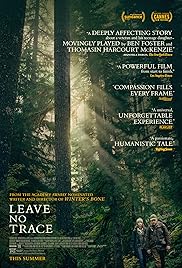
Film Review: LEAVE NO TRACE (USA 2018) ***

Submit your Screenplay to the Festival TODAY

Leave No Trace Poster
Trailer

A father and his thirteen year-old daughter are living in an ideal existence in a vast urban park in Portland, Oregon, when a small mistake derails their lives forever.

Director:

Debra Granik

Writers:

Debra Granik (screenplay by), Anne Rosellini (screenplay by) | 1 more credit »


LEAVE NO TRACE is another strong female character drawn adventure drama after her successful WINTER’S BONE.  Written and directed by her and based on the book My Abandonment by Peter Rock, the film premiered at the 2018 Sundance Film Festival.[2][3] Bleecker Street will release the film in the United States on June 29, 2018.[4]

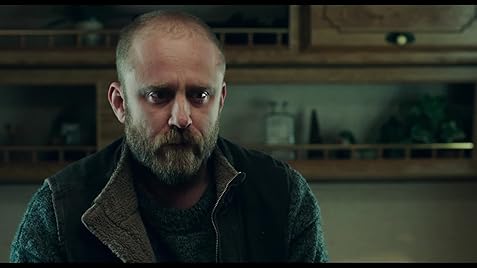
The summarized plot tells the story of a father and his thirteen-year-old daughter .  Will (Ben Foster) is an ex-military who has lost his faith in humanity for reasons not disclosed.  When the film opens, he and daughter Tom (Thomasin McKEnzie) live in an isolated existence in a vastly urban park in Portland, Oregon, (the film was shot in Eagle Fern Park in Clackamas County) when a small mistake derails their lives forever.  They are taken in by social services.

The film contains several embedded messages.  The first and foremost is the question on homeschooling.  Will and Tom live an isolated existence at the film’s start, living in conditions unacceptable by normal Americans.  Tom sleeps in close proximity with her dad.  Though this is a no-no, nothing sexual occurs.  To is home schooled.  When interrogated about this, The interrogator admits that Tom is advanced in her schooling though cautioned that she lacks the social aspect of education.  But director Granik eventually pushes Tom towards normal life which she has not experienced.  Tom loves the social and interactive aspect as they are slowly integrated into society.  Until Will escapes with Tom back to square one.  When an Will has an injury, Tom is forced to choose between the two lifestyles.

LEAVE NO TRACE is Granik’s gentler more accessible film.  There is much kindness depicted in this movie than in WINTER’S BONE.  The truck driver and other strangers that encounter Will and Tom are always more than eager to help them.  

Both actors Ben Foster (THE PUNISHER, X-MEN) and Thomasin McKenzie deliver believable an human performances, worthy of any audience’s sympathy.

As far as anticipation goes, one keeps wondering where everything is leading to and how everything will end.  One can predict some friction between father and daughter when she makes her stand on independence. “The same thing that is wrong with you is not wrong with me,” is the all important line Tom confronts Bill with.  And the reply; “I know.”   The film moves on a different tangent when the father is an understanding and caring one.

The film contains a few originally performed songs with original music by Dickon Hinchliffe.  The cinematography of the vegetation and fauna of the national parks is effectively captured by Michael McDonough.

LEAVE NO TRACE is that rare film that proves that confrontation in a story need not always be resolved by shouting, screaming and cheap theatrics.  Here, the confrontation is resolved with reason and understanding.  And the film succeeds as a quiet yet effective drama of human inadequacies that sort themselves out.

Trailer: https://www.youtube.com/watch?v=_07ktacEGo8


Submit your Screenplay to the Festival TODAY