Film Review: BORDER (GRANS) (Sweden/Denmark 2018) ****

Border Poster
Trailer

A customs officer who can smell fear develops an unusual attraction to a strange traveler while aiding a police investigation which will call into question her entire existence.

Director:

Ali Abbasi

Writers:

John Ajvide Lindqvist (based on the short story “Gräns” by), Ali Abbasi (screenplay)| 2 more credits »

The hit at Cannes, BORDER is likely the weirdest film to emerge in cinemas this year.  And it is totally unpredictable even with a feel-good romantic element despite the ugliest looking characters in a film.

BORDER is a film about changelings.  This is not apparent till the last third of the film, so how the film gets there is a good part of the story’s mystery, which will not be revealed in the film.  A changeling is a creature found in folklore and folk religion.  A changeling child is believed to be a fairy child that had been left in place of a human child stolen by the fairies, and is perceived as an ugly creature.

But the film is entitled BORDER, because the film’s protagonist is a border customs officer, and one very good at her job owing to a unique ability. Tina (Eva Melander) has a bestial-looking face, a scar above her tailbone.  Her ability is sensing how people feel though smell.  She is especially adept at detecting fear or unease (sex, hilt and shame), skills that make her an invaluable border guard.  Nobody likes a border guard, especially when they get caught cheating customs by one, and especially more if the officer is as ugly as Tina.  “Ugly bitch,” is what one caught curses under his breath for attempting to sneak though above the limit alcohol.

Yet Tina’s latest customs stops are more troubling than the usual routine arrests. First, there’s the twitchy businessman carrying child pornography, whose crime so enrages Tina that she begins to take foolish risks when she’s brought in to help with the investigation. 

But her life changes when she meets a suspicious Vore (Eero Milonoff), who shares physical traits with Tina (being ugly and sort of a look-alike),  Vore wears a permanent cocksure smirk that suggests he knows things she does not, which the film reveals later on to be true. 

A sample of the weirdness includes consumption of maggots, uncomfortable sex scenes and very odd mannerisms (facial twitching and grunting) of the characters.

The cinematography by Nadim Carlsen is stunning, especially the scenery around where Tina lives.  The dark water of the pool, waterfalls and forest greenery are something right out of a fairy tale.

Excellent performances by both Milonoff and Melander complete the honours in the acting department.

The film contains some acute observations (not not necessarily a life lesson or message) on life.  One is that like Tina, not matter how weird, she thought herself special as a child.  Beautiful things can also happen to someone as unfortunate as Tina.  Tina chooses good over evil.  The film demonstrates that anyone including any human being or monster is capable of both.  There should be no prejudices.

Though extremely weird, the story is based on a short story by Swedish author John Ajvide Lindqvist,  Border conjures up memories of unsettling folk tales that tie humans to the natural world and its odder anomalies, a world that now seems distant yet creepily familiar.  

BORDER won its director Abbashi the Best Director Prize in the Un Certain Regard section at this year’s Cannes.  The film has also been winning awards in festivals around the world.  The film is a must-see.  I have seen it twice, though the film loses its surprise element the second time viewing.

Trailer: https://www.imdb.com/title/tt5501104/videoplayer/vi3736910361?ref_=tt_ov_vi

Film Review: A PRIVATE WAR (USA 2018)

A Private War Poster
Trailer

One of the most celebrated war correspondents of our time, Marie Colvin is an utterly fearless and rebellious spirit, driven to the frontline of conflicts across the globe to give voice to the voiceless.

Director:

Matthew Heineman

Writers:

Marie Brenner (based on the Vanity Fair article “Marie Colvin’s Private War” by), Arash Amel

A Private War has been described as an American biographical drama film though director Matthew Heineman has made it clear that he did not intend the film to be a run-of-the-mill biography.  This is obvious once the film starts kicking into gear as it becomes clear exactly where the film is heading.  Heineman praises his subject, British journalist, Marie Colvin (an admirable performance by Rosamund Pike despite the film’s flaws) to no end – a martyr for the course of war journalism.  The film is based on the 2012 article “Marie Colvin’s Private War” in Vanity Fair by Marie Brenner and written for the film by Arash Amel.

Heineman’s film begins with Marie Colvin in a war zone doing her job covering the Tamil Tigers in Sri Lanka.  When the film whisks Colman from one war zone to another, ending in HOMS in Syria, it is clear that the film is not really interested in telling the stories of the casualties of war – nor of the sufferings of the people; nor of the lies told by Governments nor of the fact that world needs to be told of what is going on and to be aware (as Colvin, herself says her goal in journalism is).  It is to tell of the heroism of one Marie Colvin – but without the warts at all.

At the film’s worst, Colvin is seen in the battlefield with perfect hair with nicely groomed curls down her sides.  The fact must have been pretty obvious as most of her other war scenes has her hair tied in a bundle.

The film contains no shortage of subtleties.  When Colvin receives the Foreign Correspondent of the year Award, the film quickly moves away from the scene and omits her acceptance speech.  Yes, the audience gets the point the she is not in the business for the fame.  A PRIVATE WAR is all abut Colvin’s conviction in telling stories in dangerous scenarios.  The other fact is her Sunday Times boss, Sean Ryan played by Tom Hollander is always seen in a suit and tie, another indication that the director needs to keep reminding the audience that Colvin is doing a dangerous job in the field while he is having it ‘cushy nice’ in the office.  “I want to tell their stories,” Colvin says at one point in the film.  Heineman isn’t interested in telling ‘their’ stories at all but only her story.  So unsure that his audience will not get the film’s point, the point  has to be said out loud to Colvin in the dialogue:  “If you lose your conviction, what hope do we have?”

The best film about journalism, and one that demands to be seen is Phillip Noyce’s NEWSFRONT, also arguably one of the best Australian films ever made.  Bill Hunter plays a newsreel man in the 60’s in a film that exhorts its heroes in the news without resorting to glamorization and overblown set pieces.  The one shot in NEWSFRONT of a drowned cameraman in a flood he was covering is enough to say it all.  A PRIVATE WAR, in contrast drums the fact into the audience to no end.  Even Colvin’s PTSD (Post Trauma Stress Disorder) is downplayed.  With the scene of her having a bath together with her wealthy lover played by Stanley Tucci, the film has reached its ridiculous limit.

But there is a reward in staying for the closing credits.  Annie Lennox delvers a beautiful rendition of the song “Requiem for a PrivateWar”.

Trailer: https://www.youtube.com/watch?v=TTf0Lc5YAcc

Film Review: OUTLAW KING (UK 2018) ***

Outlaw King Poster
Trailer

Director:

David Mackenzie

Writers:

Bathsheba Doran (screenplay by) (as Bash Doran), David Mackenzie (screenplay by)| 3 more credits »

OUTLAW KING, a lighter version of BRAVEHEART chosen to open this year’s Toronto 

International Film Festival is also known to be a Netflix original movie.  Netflix has come a long way at producing movies and can now be known for some good solid cinema.

OUTLAW KING, based historical events takes place after BRAVEHEART, though the story of the war between the English and the Scots never ends.  Few dramatized segments like the reunion of King and kidnapped queen on a deserted Scots beach help spice the movie.

MacKenzie has mounted a handsome production at a cost of $120 million, quite different from his last entry an American heist film that also starred Pine.  Here in OTULAW KING, it is horses, mud and the beautiful but dreary Scots landscape.

There is a lot of history to be told in the film, before the story of Robert the Bruce (Chris Pine) begins.  MacKenzie effectively gets this out of the way in the film’s first segment when King Edward of England forces Robert into allegiance with the English.  The villain of the piece is Robert’s old friend now a sworn enemy, the Prince of Wales (Billy Howle, the handsome lad from ON CHESIL BEACH looking sufficiently ugly and nasty for this role) who seems to be an uncouth loud-mouth that nobody respects, not even his father, King Edward.

Relief from the war is provided by the romance between King Robert and his wife, Elizabeth de Burgh (Florence Pugh) given to him by Edward, King of England (at the start of the movie).  She is a feisty female who stands by the side of her husband and not afraid to say what she feels is right.  Robert has a daughter, Marjorie from his wife who died while giving birth.  They remain chaste on their wedding night and consummate the marriage much later.  Audience will find the wait worthwhile in a steamy sex scene that lasts too short a time.  An additional bonus includes Pine’s full frontal nudity shot when he takes a dip in the river later on in the film.  The romance makes the film more personal as audiences can relate to a family.  When Robert promises to fight a foe, one-on-one the next day, the worry of a wife for her husband rings real.

There is a lot of story that goes with the film – how Robert became King of the Scots through the priests (only briefly shown) , his allegiance to a new ally, James Douglas (Aaron Taylor-Johnson) and how Robert rounds up an army of Scots with the help of Lords still loyal to him, who are willing to go back to war.  Director MacKenzie effectively gets this out of the way to prepare for the main course – the battle between the Scots and the English at Loudoun Hill.

MacKenzie, no stranger to gut violence and gore, having made his mark also in horror films, shocks his audience with a few stomach-turning scenes like the live gutting of a Scots by the English.  The battle scenes are also sufficiently violent with lots of screaming and blood.

The TIFF version ran close to 2 and a half hours, but Netflix cut the film down to a 2 hour version, the one that is being reviewed.  This new edit arrives just the week before the film opens on Netflix.  I have not seen the longer version, but this one is sharp no-nonsense story-telling that is compelling enough for the average moviegoer from start to finish.

Trailer: https://www.youtube.com/watch?v=Q-G1BME8FKw

Film Review: BOY ERASED (USA 2018) ***1/2

Boy Erased Poster
Trailer

The son of a Baptist preacher is forced to participate in a church-supported gay conversion program after being forcibly outed to his parents.

Director:

Joel Edgerton

Writers:

Garrard Conley (based on the memoir Boy Erased by), Joel Edgerton (written for the screen by)

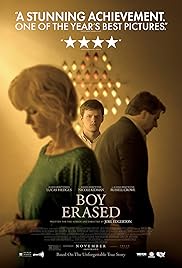
This year sees two films based on Christian gay conversion therapy camps.  The recent Desiree Akhavan’s THE MISEDUCATION OF CAMERON POST follows a female survivor while BOY ERASED written and directed by Joel  Edgerton sees a male counterpart.  Both are excellent films.  It is worthwhile to watch both films as the two films treat the material quite differently.  But the aim of discrediting these camps is identical.  And both films are based on true stories written into acclaimed novels.  BOY ERASED is based on Garrard Conley’s memoir.  Conley, who was present during the promo screening I attended mentioned the one incident that was changed in the film that Edgerton inserted for artistic purpose.  Which I agree works.

BOY ERASED has as its subject the teenaged son of a Baptist pastor.  Jared gets good grades, plays basketball, and is in a steady — but chaste — relationship with a girl from school. Everything in his life is going according to plan, until a college friend outs Jared as gay.

Jared (Lucas Hedges) is forced into a gay-conversion program by his parents (Nicole Kidman and Russell Crowe) – shown in the film as a very scary cloistered world of brainwashing.

Overseen by Victor Sykes (Edgerton, in a superbly cagey performance), the program’s bullying and bigotry fosters an environment that is anything but a refuge. Though Jared begins the program desperate to be healed, he begins to wonder about the validity of the program after witnessing a few terrible incidents.

Being based on real live events, what transpires on screen is realistically scary.  One incident includes a suicide that occurs as a result of extreme psychological distress of the patients. What is moving about the story is the sincere love of Jared’s parents.  Pastor Marshall loves his son but cannot accept that his son his gay.  In the film’s most dramatic confrontational scene between father and son, Jared tells his father:”I am gay, deal with it!”   Mother Nancy does what a wife should do but not what a mother should.  She sides with her husband till she finally sees the light and switches to her son’s side.  Kidman delivers an extraordinary performance as the mother.  The parents are not the villains in this piece.  (This issue is sidestepped in THE MISEDUCATION OF CAMERON POST as Cameron is an orphan.)  Sykes is the villain, brainwashing the patients while preventing them from letting outsiders know what really goes on in the place.  Sykes has no real qualifications either.  The irony of all this is at present (according to the closing credits), Sykes is living with his new husband somewhere else in the U.S.

It is not doubt that BOY ERAESD is a dramatic film with a clear message about the survivors of these Christian therapy schools.  In the words of the author Conley present at the promo screening, it is extremely disturbing to learn that many of these centres are still existing, even in New York City.  Many states have already banned these centres.

BOY ERASED is a courageous film that demands to be seen.  Writer/director Edgerton is straight but knows the urgency of the film’s message.

Trailer: https://www.youtube.com/watch?v=-B71eyB_Onw

Film Review: THE GIRL IN THE SPIDER’S WEB (USA 2018) **

The Girl in the Spider's Web: A New Dragon Tattoo Story Poster
Young computer hacker Lisbeth Salander and journalist Mikael Blomkvist find themselves caught in a web of spies, cybercriminals and corrupt government officials.

Director:

Fede Alvarez

Writers:

Jay Basu (screenplay by), Fede Alvarez (screenplay by) |3 more credits »

After a hiatus so long that audiences have likely forgotten the story of men-hating bi-sexual heroine Lisbeth Salander, THE GIRL IN THE SPIDER’S WEB appears with all the Hollywood aplomb.  But one should be aware, at least briefly of the history of Lisbeth Salander.

Lisbeth Salander is the Swede heroine of the trilogy of Millennium’ books (The Girl with the Dragon Tattoo, The Girl who Played with Fire and The Girl in the Hornet’s Nest) all made into Swedish films with only the first remade by David Fincher into an English Hollywood version.  But the author Steig Larsson has passed away (Dragon Tattoo was published posthumously) and the new book which this film is based on is penned by a new author, Larsson’s successor, David Lagercrantz.

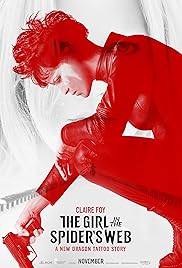
Computer hacker Lisbeth Salander (Claire Foy) and journalist Mikael Blomkvist (Sverrir Gudnason) find themselves caught in a web of spies, cyber criminals and corrupt government officials.  The rough story involves her hacking computers trying get code belonging to Frans Balder (Stephen Merchant) while her code is stolen.  At the same time, Edwin Neeham (LaKeith Stanfield), a National Security Agency (NSA) security expert is tracking Salander.  Things get complicated with Camilla Salander (Sylvia Hoeks), Lisbeth’s estranged sister, who is the head of a major crime syndicate.

The best of all the films is the original Swede version of THE GIRL WITH THE DRAGON TATTOO that shocked with its violence and theme where the audience really felt Lisbeth’s trauma, being raped and abused by several men before merging a female vigilante killer.

Uruguay director Nede Alvarez’s (DON’T BREATHE) version shows Lisbeth instead as a female James Bond.   Her job is to save the world just as is the job of Bond in all the Bond movies.  He is less interested in Lisbeth’s drama but more in the film’s action set-pieces that involve countless car chases and explosions. 

Alvarez does not bother about continuity either. In one action scene, Salander fires on a car driven by a kidnapper and the autistic son.  The car is stranded on a bridge and Salander gets the boy out of the car.  Where is the man at this point in time?  He appears two minutes later firing bullets rapidly at them from a machine gun.  The suspended bridge is then lifted.

Not much sense can be made of the technology or gimmicks either.  When the logic of the password is revealed – some spill about prime numbers – the dialogue is so fast as if to prevent the audience from catching on that all this makes no sense.  Anyone can get killed and with Salander almost invincible, the film generates no suspense.  Even the sex scenes, between Salander and her female lover creates no surprise, the audience already aware of her bi-sexuality.

The film is set mainly in Sweden with all the actors speaking with an English or with a Swedish accent.  There is an American character, a black tech expert who has to turn out to be a good guy.

All the originality of the Lisbeth Salandar’s previous films is gone.  What is left is a slick and sloppy thriller, with too many scenes not making much sense.  Don’t get tangled up with this one!   

Trailer: https://www.youtube.com/watch?v=XKMSP9OKspQ

Film Review: TRANSIT (Germany 2018)

Transit Poster
When a man flees France after the Nazi invasion, he assumes the identity of a dead author whose papers he possesses. Stuck in Marseilles, he meets a young woman desperate to find her missing husband – the very man he’s impersonating.

Writers:

Christian Petzold (adaptation), Anna Seghers (novel)

Man in TRANSIT.  Adapted from Anna Seghers’ WWII-set novel, TRANSIT transposes the plot to an indistinct era that resembles the present-day. 

I am not a fan of transposed plots or of adaptations of literary classics to a different place or time.  Writer/directors can aim at making their films accessible or more difficult.  It seems the latter case for German director Christian Petzold’s (PHOENIX, which I admired) TRANSIT.  To set his WWWII film to the present, he could have made that decision for an easier way out at fillming.  For one, he has no vintage cars or expensive sets or war uniforms to worry about.  But critics will always find an excuse to favour a script or an idea made more difficult to follow.  TRANSIT has therefore, unsurprisingly garnered favourable reviews.

Georg (Franz Rogowski) is a German refugee who escapes to Marseille in France, a port for migrants fleeing an unspecified war.  Georg carries the documents of a famous writer, Weidl: a manuscript, the promise of an elusive transit pass from the Mexican embassy, and letters from the writer’s wife, Marie (Paula Beer).  Discovering that Weidl has taken his own life, Georg assumes the author’s identity, grows ambivalent about leaving the continent, and develops an obsessive desire for the mysterious Marie — herself stranded in the city.  The film is made more confusing with Marie having an affair with another lover, a doctor when Georg arrives.  Georg also meets a young kid and his deaf/mute mother.

It is clear that the film bears shades of the classic CASABLANCA where refugees are waiting for an opportunity to escape the Nazis and enter a better way of life through passage to another country.  But this thrill and suspense are lessened when the war environment becomes foggy as the setting is not really WWII.

Actor Rogowski has an uncanny resemblance to Joaquin Phoenix.  He even sports a hairlip like Phoenix.  His brooding performance, always at a loss of what to do next, even after falling in love with Marie helps propel this difficult along.  He is the one good thing about this otherwise tedious film that leads nowhere, like always being lost as in the characters in constant transit.

An art-house piece, TRANSIT requires a lot of work to appreciate.  Many will just not be bothered with it.

Trailer: https://www.youtube.com/watch?v=oOTZiS2erb4

Film Review: THE FAVOURITE (UK/USA 2018) ****

The Favourite Poster
Trailer

In early 18th century England, a frail Queen Anne (Colman) occupies the throne and her close friend Lady Sarah (Weisz) governs the country in her stead. When a new servant Abigail (Stone) arrives, her charm endears her to Sarah.

Director:

Yorgos Lanthimos

Lanthimos’s latest film after DOGTOOTH, THE LOBSTER and THE KILLING OF A SACRED DEER is his most extravagant, with a period setting in a castle with royalty as its subject.

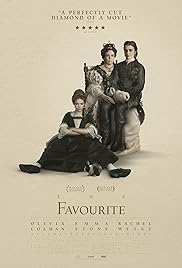
It is the early 18th century when England is at war with the French though the film opens oddly enough with royalty involved with duck racing and pineapple eating.  The poor are taxed and the poor go to war.   A frail Queen Anne (Olivia Colman) occupies the throne and her close friend Lady Sarah (Rachel Weisz) governs the country in her stead while tending to Anne’s ill health, temper and sexual desires .   When a new servant Abigail (Emma Stone) arrives, her charm endears her to Sarah.  Sarah takes Abigail under her wing and Abigail sees a chance at a return to her aristocratic roots.   Abigail schemes to fill in as the Queen’s companion. Their burgeoning friendship gives her a chance to fulfil her ambitions and she will not let woman, man, politics or rabbit stand in her way.

THE FAVOURITE stands as a film that those familiar with Lanthimos will find quite similar to his last movie THE KILLNG OF A SACRED DEER.  As in both films, the status quo of a family is challenged (Farrell’s in DEER and Queen Anne’s in FAVOURITE).  Both sees the arrival of a stranger who is revealed to have closer connections with the family that will shake formalities and turn the family upside down for better or for worse.  Though Lanthimos’s favourite actor Colin Farrell is not in this film, one can see him inhabiting a similar character now taken on by Nicholas Hoult.  THE FAVOURITE also contains Lanthimos’s odd pounding soundtrack and his fade outs to black.  

Lanthimos sees that the audience takes the side of Emma Stone from the very start when she falls flat with her face onto the mud on arrival at the castle.  She can do no wrong, compared to Lady Sarah that the script by Deborah Davis and Tony McNamara ensures the audience dislikes from start to finish.

Both films contain odd dialogue that are funny because they can occur at the least likely moment.  THE FAVOURITE’s best line is when Queen Anne rebutting Lady Sarah when asked to dismiss Abigail: “I will not, I enjoy having her tongue inside me.”  Those unfamiliar with Lanthimos previous films (and better still if the trailer is not seen beforehand) will likely find THE FAVOURITE more amusing, shocking and refreshing while those who are will find him doing the same tricks in a different setting.  All the main actors  Weisz, Stone and Colman have been in Lanthimos past films.  Surprises  are no more surprises if they are expected to occur.  One can say the same for a Lanthimos film – to expect surprise after surprise.  It would be a surprise if his films did not shock or surprise. Still. Lanthimos’s The FAVOURITE succeeds well in its ambitions.  But the dialogue (in literally the Queen’s English) – except one would imagine the words ‘cunt’ and ‘fuck’ were not used in those times – is sped up several notches compared to the slow dialogue in Lanthimos’s other entries.

THE FAVOURITE arrives after the Venice International Film Festival with favourable reviews.

Trailer:  https://www.youtube.com/watch?v=SYb-wkehT1g

Film Review: WIDOWS (USA 2018) ***1/2

Widows Poster
Trailer

Set in contemporary Chicago, amidst a time of turmoil, four women with nothing in common except a debt left behind by their dead husbands’ criminal activities, take fate into their own hands, and conspire to forge a future on their own terms.

Director:

Steve McQueen

Writers:

Gillian Flynn (screenplay by), Steve McQueen (screenplay by) | 1 more credit »

Drama heavyweight director of critical hits like HUNGER and 12 YEARS A SLAVE attempts an action packed pyro-technics thriller WIDOWS with quite an impressive cast of heavyweights headed by Viola Davis.

WIDOWS is that rare action movie centring on women proving that they too can carry an action film.  The script is by GONE GIRL author Gillian Flynn.

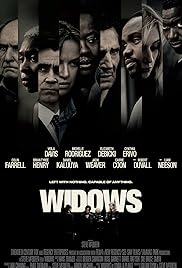
Veronica (Davis) lives an idyllic life in Chicago, ensconced in the loving arms of her husband, Rawlins (Liam Neeson), and in their luxurious condo.  But Rawlins bought that cushy life robbing people, unknown to Veronica, a teacher in the Chicago education system.  (There is no scene of Veronica at her work.)   When a job with his gang goes fatally wrong, Veronica’s life falls to pieces.  With a local crime lord (Brian Tyree Henry) and his muscle (Daniel Kaluuya) pressing her to pay Rawlins’s $2 million debt,  Veronica realizes her late husband’s shady business sees only one option: round up the three other women who had slept for years next to these seasoned criminals, and make a plan left by her husband to win their lives back.  There is also a side plot involving the crime lord running for office against another crooked white politician Tom Mulligan (Colin Farrell).  

The film’s most interesting character is Tom Mulligan.  Tom exerts a power both within and beyond the law, pushed by his father (Robert Duvall).  Tom appears to be a worthy candidate but deep inside, he is fed up of the father’s dynasty in Chicago and wants out.  It is not surprising that the film is at its most interesting when McQueen deals with the drama rather than the action as in the film’s best scene – the confrontation between Farrell and Duvall.

To make the heist film more personal, the film interweaves the lives and hence, problems of the 4 widows that undertake the heist.  Each have their own burdens.  The other three are played by Michelle Rodriguez, Cynthia Erivo, and Elizabeth Debicki all of whom shine in their roles.

McQueen has achieved the rare feat of being able to elicit unforgettable performances – not from a  few but from his entire cast.  The best two performances belong to Farrell who is aided by the most intriguing written character and GET OUT’s immediately recognizable Daniel Kaluuya who demonstrates how smooth violence can be executed.

As this is McQueen’s first action flick, one can see him trying too hard at times.  The romantic scenes are a bit too livid for comfort, all the kissing scenes involving the tongue.  This results in the kissing scene (mixed race) between Viola Davis and Liam Neeson that would make quite a few quite uncomfortable.  Credit for trying.

As a thriller, WIDOWS contains quite a few plot twists.  Well written and inserted into the storyline, they serve to enrich the drama rather than just being there for the sole purpose of surprise, a tactic that seems now too common in most Hollywood thrillers.

WIDOWS premiered successfully at the Toronto International Film Festival to general favourable reviews.  WIDOWS should not only please McQueen’s fan base but extend his career into the Hollywood mainstream.

Trailer: https://www.youtube.com/watch?v=nN2yBBSRC78

Reel Asian Film Festival 2018 Review: TOMORROW IS ANOTHER DAY (Hong Kong 2017) ****

Tomorrow Is Another Day Poster
Mrs. Wong knows her husband is carrying on an affair, but for the sake of their marriage and autistic son, she has chosen to silently endure. However, the mistress comes to disturb them, …See full summary »

Director:

Tai-lee Chan

Writers:

Tai-lee Chan (screenwriter), Nicholl Tang (screenplay consultant)

Don’t let the ordinary sounding title fool you.  This one is the best of the films I have previewed at Reel Asian 2018.  Mrs. Wong (Teresa Mo) knows her husband, a driving instructor (Ray Lui) is having an affair, but for the sake of their marriage and their autistic son (Ling Man Lung), she chooses to silently endure his infidelity for the time being. What follows is an extremely realistic, heartfelt drama of a working-class woman struggling to breakthrough her midlife crisis. 

 One cannot help but feel for the central character, Mrs. Wong.  Director Chan lets us into the reason she persists.  Two reasons, one which is her son who occasionally shows how loving he is  The other is that she has little other alternatives.  TOMORROW IS ANOTHER DAY and there is nothing one can do about it.  At the film’s mid-point, the film turns into a suspense thriller as Mrs. Wong decides to stab the husband’s mistress to death.  Besides  the compulsive storyline, Chan’s camera also shows the beauty of Hong Kong as a city as well as the terrible gossip that exists in every neighbourhood in such a closed community as Hong Kong.  

Teresa Mo and Ling Man Lung both win acting honours at the Hong Kong Film Awards.

Trailer: https://www.youtube.com/watch?v=8FF-BiUHpUc

Film Review: DOLPHIN MAN (L’HOMME DAUPHIN)

Dolphin Man Poster
Trailer

Dolphin Man draws us into the world of Jacques Mayol, capturing his compelling journey and immersing viewers into the sensory and transformative experience of free-diving. From the …See full summary »

The title DOLPHIN MAN belongs to the legendary free-diver Jacques Mayol whose life became the inspiration for Luc Besson’s cult-movie THE BIG BLUE (LE GRAND BLEU) .  The bio doc is narrated by Jean-Marc Barr who played Mayol in THE BIG BLUE.

Free diving is as the name implies, diving deep into the ocean without any breathing aid. Lungs get compressed and without oxygen, if the diver faints, he or she will be unable to re-surface which implies certain death.  Mayol is world famous as a free diver having broken his own records of depth free diving many times.

Mayol achieved fame in 1976 when he became the first free diver ever to descend 100 metres.  This legend of the sport spent his life setting records and going beyond what was considered humanly possible.

Charitos’s bio plays safe and covers all aspects of the diver’s life from his childhood, to his philosophy (of being one with the ocean), to his lifestyle and finally to the legacy he leaves behind.

His childhood is narrated with archive footage of China.  Mayol was born and lived as a child in Shanghai as his father was a French architect there.  Mayol loved the sea and when he was old enough took off to travel the world.  He married and settled in California with a Dane.  They broke up.  Before attaining fame, Mayol worked all kinds of jobs including the chauffeur of Zsa Zsa Gabor.  (Wish there were shots of him and Zsa Zsa together.)  But always broke, he used to stay at friends’s places for free.

The title Dolphin Man comes from Mayol’s fascination of the mammal.  He was nicknamed the French Dolphin by the Japanese.  He preferred a world of dolphins without humans.  In a way, Mayol has led his life similar to the dolphin’s.  The film reveals Marol’s first sight of the creature while on a ship as a child.

The bio finally rests on the diving.  Mayol is shown in many segments, diving into the waters for various purposes – treasure hunting; lobster fishing or breaking new records.

The film includes interviews with friends, family and free-diving champs like William Trubridge and Mehgan Heaney-Grier, and the vast beauty of the ocean is explored through fascinating archival footage and breathtaking present-day underwater cinematography.

Chartos’s film diverts a bit to the subject of breathing, as breathing is an important element in free diving.  His camera takes the audience to India to meet Yoga Masters that tag the wart of breathing or non-breathing.  The film also diverts to other free divers who are also champions in the field.

Every subject in a doc would have a downturn in his or her life.  For Mayol, one downturn was the death of his true love Gerda.  Gerda was the love of his life, loving the same things he loved like animals, eating the same food and sharing the simple pleasures of his life.  Gerda died in his arms – though the reason is not given in the film.  Mayol, described as a lolly man by nature, goes into deep depression as a result.  Another time was when he was shooting a film when he descended the deep too quickly bursting an ear drum.  The footage shows Mayol much older and obviously not the young athlete he was.  Again, Mayol went into depression.

Director Chartos uses Mayol’s depression to lead the film towards its sad conclusion that nevertheless provides the audience with some valuable insight on life – distinguishing DOLPHIN MAN from the run-of-the-mill bio documentary.

Trailer: https://vimeo.com/237685725