Movie Review: THE MAN WHO KNEW TOO MUCH (1956) Directed by Alfred Hitchcock

Deadlines to Submit your Screenplay, Novel, Story, or Poem to the festival:http://www.wildsound.ca

THE MAN WHO KNEW TOO MUCH MOVIE POSTER
THE MAN WHO KNEW TOO MUCH, 1956
Classic Movie Review

Directed by Alfred Hitchcock
Starring James Stewart, Doris Day
Review by Steven Painter

SYNOPSIS:

Dr. Ben McKenna, his wife Jo and their son Hank are on a touring holiday of Africa when they meet the mysterious Louis Bernard on a bus. The next day Bernard is murdered in the local marketplace, but before he dies he manages to reveal details of an assassination about to take place in London. Fearing that their plot will be revealed, the assassins kidnap Hank in order to keep the McKenna’s silent. Ben and Jo go to London and take matters into their own hands.

REVIEW:

Remakes are a part of Hollywood. So are projects that are announced, but then scrapped. A remake that has been announced, but hopefully won’t be made is The Birds (1963). From what I have read the people involved with the project totally miss the point of the movie. It isn’t about birds attacking people, but families. Anyways, The Birds is a movie that will be talked about sometime in the future. For now, I’ll go back to remakes and those trendy remakes of Alfred Hitchcock movies. Psycho (1998) is a good example of a poor Hitchcock remake. Hitchcock himself even traversed in the remake universe when he remade his own The Man Who Knew Too Much (1934) in 1956.

Being the most popular director in the world, Hitchcock movies were always in demand. Because of this demand, producers pressured him to come up with stories quickly. It wasn’t his style to rush into anything so at certain points in his career he would take on an easy project just to “recharge the batteries” as he called it. One such project was Dial M for Murder (1953), another The Man Who Knew Too Much (1956). Universal came to Hitch and asked him to remake one of his earlier British movies. After much deliberation, Hitch and his associates decided on The Man Who Knew Too Much. The original is fairly good, but could definitely be improved. The remake is in color, which makes it more acceptable to modern audiences and it does feature James Stewart and Doris Day in order to better market the picture. Other than that, though, there isn’t much that makes this remake special.

Besides asking Hitch to remake one of his films, Universal requested that a catchy song be put in so that they could sell records on top of movie tickets. Bernard Herrmann, who composed the score and played the role of the Albert Hall conductor in the movie, was not known for catchy lyrical music. So some songwriters were brought in and wrote “Whatever Will Be, Will Be (Que Sera, Sera)” for Doris Day to sing. Her singing is about the only bright spot of her time on screen. The title of the song was derived from a line in the Ava Gardner movie The Barefoot Contessa (1954). The song, of course, has become a hit and associated with Doris Day more so than with the movie.Hitch and Stewart made a good team and Stewart performs well here. His performance is superior to Leslie Banks’ in the original. This might be because Stewart’s character is better developed here. He is Dr. McKenna. Not only a doctor, but a father. The man who is supposed to have all the answers and protect his family. So when his son, Hank is kidnapped, Dr. McKenna has to find the answers. He struggles to do this. Stewart does a great job, as he did throughout his career, as the everyman looking for answers. He is a big reason why this movie is worth watching.

The biggest defect of the remake, other than Doris Day, is the absence of Peter Lorre as Abbott. In the original, Abbott is a suave bad guy who is extremely cultured. The epitome of the white-collar criminal. There is not hint of a cultured villain in this one. Mr. and Mrs. Drayton who capture Hank, are not good substitutes. This is odd, as like most of the movie, the characters are stronger. As great as Peter Lorre’s performance in the original was — his character was rather limited. Had Lorre been asked to play Mr. Drayton I can only imagine how great this movie would have been. But he was not asked to play the part and the actors who replaced him are not in his league.For the most part, the original and the remake follow the same storyline — once arrived in London that is. The beginning of the remake in Morocco is interesting, especially the scene in the restaurant where Stewart and another family from America have difficulty with the local customs. Here we see Hitchcock’s wonderful sense humor.

There is also the famous scene where the black make-up comes off of the murdered Louis Bernard, onto the hands of Dr. McKenna. This murder is shot well and is the catalyst for the rest of the story. Because Dr. McKenna has learned Bernard’s secret, his son is captured in order to silence him.

The McKennas arrive in London and begin their search for Hank, but are conveniently stopped from being able to find him. These suspense methods were employed in the first movie and have been kept for the most part intact here.

There is an interesting scene in a taxidermy store, which will echo a similar scene in the parlor of the Bates Motel four years later in Psycho (1960). Hitch had a fascination with birds and taxidermy. The scene itself is not great and probably didn’t need to be added. It was just a directorial splurge.

The Albert Hall performance is longer in the remake, probably to give Herrmann some more screen time. It is great to see the Albert Hall in color for the first time in a Hitchcock picture. The old performance hall had been a staple of Hitch’s British pictures. The famous image of the gun coming out from behind the curtain to murder the foreign dignitary during the cymbal crash during the symphony is still intact from the first movie.Doris Day screams and saves the day for the foreign dignitary. This is all nice, but it is only Hitchcock’s MacGuffin. A MacGuffin is basically a plot point in the story that doesn’t matter. There is a great joke that Hitch used to tell about the meaning of the word MacGuffin, but that will be saved for another day. Since the overt plot points are basically MacGuffins, I’ll sum up the story by saying that the McKennas work hard trying to find their son somewhere in London. They are unable to and are about to give up when Day prevents the murder of the foreign ambassador at the Albert Hall. The smitten ambassador invites the McKennas back to his embassy to say thanks.

Lo and behold Hank happens to be in the embassy. The McKennas find this out when he whistles “Whatever Will Be, Will Be.” This gives Day another chance to showcase the song. The extra screen time was also beneficial to the pocketbooks of the Universal board of directors.

I guess you could say, like all remakes, this one was done for purely commercial reasons. Perhaps that is why it does not really build as much on the original as it could have.

Also, Free logline submissions. The Writing Festival network averages over 95,000 unique visitors a day.
Great way to get your story out: http://www.wildsound.ca/logline.html

Deadlines to Submit your Screenplay, Novel, Story, or Poem to the festival:www.wildsound.ca

Watch recent Writing Festival Videos. At least 15 winning videos a month:http://www.wildsoundfestival.com

Short Film Movie Review: MOUSSE (Sweden, 40min. Comedy/Crime)

  MOVIE POSTERMOUSSE, 38min, Sweden, Comedy/Crime
Directed by John Hellberg

MOUSSE is a medium length droll and blackly comic tale of an honest criminal and police ineptitude.

MOUSSE was the winner of best film at the 2014 FEEDBACK Film Festival. 

Watch the Audience FEEDBACK Video of MOUSSE:

Movie Review by Amanda Lomonaco:

Absolutely brilliant. I’ve seen this movie 3 times already and I can’t get enough of it. After watching it the first time at WILDSound, I could not stop thinking about how great it was, I even hunted parts of the soundtrack down, until finally I had to hunt down the film itself. This is especially surprising considering this film is one of the longer selections I’ve seen at WILDSound, standing at 41 minutes. Even if you’re not a lover of subtitles, I would give this film a try.

To begin with, the acting in this film is exceptional, particularly for a film with such a wide diversity of cast, and an equal diversity of languages. Every character in Mousse is meticulously developed and well rounded, and every performance throughout the film feels nothing but genuine. The casting of the elderly policemen could equally not have been more perfect as it added a surprising element of hilarity to the film.

It’s hard to call John Hellberg’s picture a “short film” given its ambiguous length, standing somewhere between a feature and a short film, but at no point during the film do you find yourself disengaged or uninterested. Hellberg propels the story forward through a series of juxtapositions that intertwine seamlessly into the main story line, and prevent any semblance of boredom. Moreover, the production quality gives no sense of cutting any corners, giving Mousse an almost feature like quality.

Between the odd translations and awkward pauses in communication, the age and attitude of the policemen, & the jokes the actors tell each other, it’s hard to say what part of Mousse isn’t hilarious. It’s almost as if Hellberg is trying to cover all his bases in the humour category, from visual, to verbal, he even throws a couple of fart jokes in there just in case.

If you haven’t caught on by now, I think this film needs more visibility. Heck, if it were a part of a DVD collection I would buy it right away just to show others. It will take a little more of your time than most short films, but you’ll be laughing so hard the whole time you’ll hardly notice it passing. This is the first of Hellberg’s films that I’ve ever encountered, but I hope to come across many more in the future.


Movie Review: CHICKLAND (Short Film) 2015

CHICKLAND played to rave reviews at the November 2015 FEEDBACK Film Festival

Watch the Audience FEEDBACK Video from the Festival:

  MOVIE POSTERCHICKLAND, 11min, France, Comedy/Sci-Fi
Directed by Stanislav Graziani

Bubu and Toufik think they are the next Steve Jobs and Martin Zuckerberg… They have implanted a chip in their brain, which gives them access to the web… giving them instant access to universal knowledge. For their first experiment, they test it on picking up girls…

Review of the Short Film by Amanda Lomonaco:

Chickland left me a little bit on the fence. With the growing dissemination of devices like the Google Glass, and the expansion of Virtual Reality technology Chickland is a bit of a terrifying reminder of a reality that we could all soon be living in. Nevertheless, director Stanislav Graziani did a good job at balancing out the miracles of new technology, with the limitations of our own human psyche, providing  a slightly less dystopic view of the future.

The hardest thing to understand about the film was the age range of the actors involved. The male actors seemed far too young to be approaching the girls they were trying to pick up, although perhaps this was done on purpose, considering the end result of their experiment. The end of the film itself is also a bit reassuring, emphasizing the humanity of even the most technologically oriented minds.

There isn’t much that can be said about Chickland without revealing much of the film’s plot. It’s a peek into the future, into what life might look like if Google Glass ever really catches on. Of course there are certain differences. It’s not likely that the Google Glass “victims” of the future will have no suspicion of the tactics being used on them. Then again perhaps this was what Graziani was indicating in his depiction of the boy’s interaction with the math student.

Students of art might also find this film a little insulting in how easily the one boy was able to fake being a literary connoisseur, while his counterpart struggled to prove his math prowess. Nevertheless both the boys’ reactions to “completing the task” at the end of the film showed a lot of emotional sensitivity, one that most young boys of that age would normally not be so ready to admit or expose.

Chickland is an interesting experimental look into what our future might look like, how our grandchildren might date, find partners, or explore their sexuality. It sparks a lot of thinking about where our technological pursuits are heading, what it might truly bring us in the future. This wasn’t by any means one of my favourite short films to watch, but it certainly carried some interesting ideas that will inspire you to consider how natural human emotion is able to coexist with the calculated patterns of digital technology.

Movie Review: SHOOT GRANNY (Short Film) 2015

SHOOT GRANNY played to rave reviews at the November 2015 FEEDBACK Film Festival

Watch the Audience FEEDBACK Video from the Festival:

  MOVIE POSTERSHOOT GRANNY, 5min, Spain, Comedy/Musical
Directed by Olivier Kowalczyk

Shoot Granny or when an ordinary tea time between three friends turns into an improvised Gymkhana. On a music of Todd Terje.

Review of the Short Film by Amanda Lomonaco:

Shoot Granny garnered a really good laugh from the audience, with great reason. It’s common to hear complaints about loud, partying teenagers, but what happens when those loud partiers are actually your grandparents?

The director Olivier Kowalczyck says he was inspired by his work as a doctor; disappointed by how they seemed to perscribe anti-depressants to help seniors sleep rather than provide them with any real psychological support. He claims to have felt like more of a drug dealer than a doctor, and this thought led him to create the storyline for Shoot Granny.

Thankfully Kowalczyck has managed to turn this upsetting subject matter into quite a hilarious repartie. With the background knowledge of this film in mind it might be easy to reprimand Kowalczyck for his comedic approach, but in actual fact what he has done by injecting comedy into this topic is open it up to a much wider public that might otherwise want to ignore the issue. Kowalczyck also manages to add a stronger element of agency to the elderly, allowing us to relate to them as people who like to enjoy themselves, just as we all do, rather than as victims with no control over their ailments.

Some members of the audience seemed a little put off by the loud music, or by the fact that the film didn’t carry subtitles, but Shoot Granny could very well be played on mute and still get its message across. Someone once told me that a film is only truly good if it is able to be played in black and white, and silently while still achieving the same level of emotional impact. Despite the fact that its bright, psychodelic patterns and blaring music adds greatly to the story, I still believe this film would achieve the same purpose without these elements. I think anyone would benefit from watching Shoot Granny, who knows, it might help you approach and understand again, or your elderly loved ones, with just a little more affection and care.

Movie Review: FAMILY ON BOARD (Award Winning Short Film) 2015

Family on Board played to rave reviews at the November 2015 FEEDBACK Film Festival. 

Watch the Audience FEEDBACK Video from the Festival:

  MOVIE POSTERFAMILY ON BOARD, 15min, USA, Drama
Poetry by George Pogatsia

On his way to report to prison, Mike Petito reflects on his life and anticipates what lies ahead … that’s when catastrophe strikes.

Review of the Short Film by Amanda Lomonaco:

Family on Board encompasses so many different elements and genres that it seems almost impossible to put it all into a few reductive paragraphs. In fact I find it difficult to even fit it into one single genre. Despite all this confusion, or perhaps exactly because of it, most of the audience seemed to really enjoy it. Considering the ominous title and the manner in which the film ends I have a feeling that the mish-mash of genres was very much intentional to make the twist ending even sharper.

People’s reactions to this film seem to be largely dependent on how they interpreted the ending. Like many of the films shown at WILDSound, Family on Board ends quite ambiguously, leaving viewers to imagine for themselves how they believe the story ended. This became all the more evident during the  feedback session, where several audience members voiced a plethora of opinions about the end, that I would have never even considered.

Many people also seemed a bit taken aback by how the film begins. Some were put off by the intense violence depicted, others seemed to find the beginning weak, and the performance of the thieves to be unconvincing. I have the feeling this beginning also weighed heavily on how people imagined the films’ ending. With a film that has so many turns and shifts it’s hard to say which points actually influenced the audience’s reaction the most.

Although George Pogatsia goes through a lot of effort to convince us that the main character is a positive member of the community with nothing but good intentions, at times his benevolence seems a little forced or exaggerated. Despite the crime he committed and his ownership of a gun, the main character seems like the kindest and most caring person in the world, going out of his way to help every stranger that crosses his path. The need for this juxtaposition is understandable in order to attract audience sympathy, but it perhaps could have been carried out a little more subtly and had the same, if not a greater, impact. Nevertheless, the familiar famous faces scattered throughout the main character’s “benevolent” sequence do help distract from this exaggeration, if only a little.

Family on Board is definitely a film for lovers of crime dramas and unsolved mysteries. Certainly Tony Sirico’s presence is bound to bring a smile to many a lover of The Sopranos or Goodfellas. There’s a lot to absorb in this film, and it will take you through a bit of a roller-coaster, but who doesn’t love a good old fashioned roller-coaster ride?

Movie Review: TWISTED (Award Winning Short Film) 2015

TWISTER was awarded best cinematography at the November 2015 FEEDBACK Film Festival

Watch the Audience FEEDBACK Video from the Festival:

  MOVIE POSTERTWISTED, 14min, Australia, Drama/Thriller
Directed by James Hartley and James Shepherd

After a night with the girl of his dreams, Michael has a story to tell. And a favour to ask…

Review of the Short Film by Amanda Lomonaco:

Wow! Is any Australian film at the WILDSound Festival ever going to be bad? I never thought I would have a bias for flicks from the land down under, but I may have to reasses. I promise my preference for these films is in no way intentional. I’ll do my best to keep this one as balanced as possible.

To begin with, the title itself is the perfect definition of the film. The story is, in fact, incredibly twisted. From the very start you can feel something is a little bit off about the film. The shaky camera angle, the slightly unkempt boy in a school uniform coaxing you to do something you clearly don’t want to do. In fact, the very position of the camera is offputting; throughout the film the main character, Michael, addresses the camera directly as his school mate. This allows Jame Shepherd & James Hartley, the directors of Twisted to throw audience members directly into the world of the film, and creates a sense of complicity with Michael’s acts.

Despite all my bias and admiration, Twisted is obviously far from perfect. Since the film is carried almost entirely by the monologue and perspective of a single character, there are some inevitable points of monotony, which I’m not sure whether to blame on the writing, or on the acting. Neither element was poor, which is why it’s so difficult to pinpoint where exactly the film goes wrong at the few moment where it does.

One particular moment that pulled me out of the story abruptly was  when the film’s title was inserted into Michael’s monologue. I’ve never been a fan of playing with film titles inside the actual story, precisely because it removes me from the story world. In this instance the disruption is even more jarring as Michael’s repeated enunciation of the word “Twisted” gradually appears more forced and unnatural. This might have been more appropriately treated with some more complimentary camera movement, perhaps, but as it stands on its own I can’t say I appreciated it.

Regardless of this one instance, I loved this film, even with all its flaws. Some of my reason for this bias towards the Aussies may just be their propensity towards making slightly disturbing and… well… twisted films, which I have already been vocal about preferring. With that said, it would probably be advisable to stay away from this film if horror and suspense aren’t really your genre of choice. For all the rest of you, add this to your bucket list, for sure.

Movie Review: EXIT RIGHT (Award Winning Short Film) 2015

EXIT RIGHT was awarded best film at the November 2015 FEEDBACK Film Festival.

Watch the Audience FEEDBACK Video from the Festival:

  MOVIE POSTEREXIT RIGHT, 5min, Germany, Drama
Directed by Bernhard Wenger & Rupert Holler

Look away or intervene? When a black man is victim of unfounded, racial abuse in a packed bus, there is only one passenger who won’t ignore the situation like everyone else.

Review of the Short Film by Amanda Lomonaco:

In Exit Right Bernhard Wenger & Rupert Holler take a light hearted approach to an unfortunately all too common situation. With the current discussion about Syrian refugees, as well as the Paris bombings, this film is incredibly relevant to the issues we face today, and yet still manages to permeate through time with it’s gentle, comedic approach to the topic. It’s comforting to see that even tragic and disturbing issues can be given a lighter tone.

Those of us who use public transport frequently are well accustomed to witnessing awkward, messy, and at times even violent situations while riding the bus, or sitting in the subway car. On these occasions most of us will look away and pretend we don’t hear or see anything, however every once in a while a brave samaritan will stand up and do something about it. Wenger and Holler decided precisely to portray one such situation in their short film, and with it demonstrate that standing up to bullies doesn’t always need to result in aggression, or negativity.

It’s a lesson that we all learned in school, but often needs to be repeated throughout our lives. Many different cultures have similar stories that you may have heard before in different manners, but no matter how many times it is told or portrayed, the result is always heartwarming. By bringing this anecdotal tale to life within modern day Europe, Wenger and Holler also emphasize how this lesson persists through time periods, cultures, and locations.

Exit Right is definitely a great film to watch when you feel like you’re starting to lose your faith in humanity a little, but it’s also a fun short to enjoy on any day of the week. The directors did miss a slight opportunity for a fun extended ending that could have shown what happens to the man after he has been kicked off the bus, but that itself did not leave the film lacking in anything. This one is worth a few repeated watches, whenever you feel like you need a reminder that standing up to bullies and racists is always the right thing to do, so long as you don’t stoop to their level and respond with equal aggression.


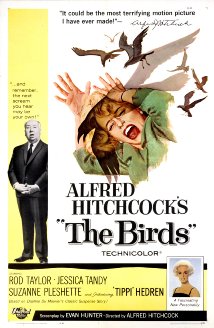
Movie Review: THE BIRDS (1963) Directed by Alfred Hitchcock

Deadlines to Submit your Screenplay, Novel, Story, or Poem to the festival: http://www.wildsound.ca

the_birds_posterTHE BIRDS, 1963
Horror/Thriller Movie Review
Directed by Alfred Hitchcock
Starring Rod Taylor, Jessica Tandy, Suzanne Pleshette, Tippi Hedren, Melanie Daniels, Veronica Cartwright
Review by Steven Painter

SYNOPSIS:

A wealthy San Francisco playgirl pursues a potential boyfriend to a small Northern California town that slowly takes a turn for the bizarre when birds of all kinds suddenly begin to attack people there in increasing numbers and with increasing viciousness.

REVIEW:

In 1960 Alfred Hitchcock revolutionized the way movies were watched with Psycho. Three years later he would pioneer special effects techniques that were ahead of their time in The Birds (1963). Although the special effects look dated now, at the time they sent chills down audiences.

Daphne Du Maurier wrote a short story about a ton of birds attacking and eliminating human kind. Seems pretty unbelievable right? Actually while making the movie, Hitchcock spoke with farmers in California who complained that some of their cows had their eyes gouged by birds. So there had been instances of bird attacks in the area where Hitchcock’s movie takes place.

Although apocalyptic birds are interesting and what most people focus on, they are only the MacGuffin. They are the biggest MacGuffin Hitchcock developed. A MacGuffin is the same thing as a red herring. Ironically, Hitchcock frequently used birds as his MacGuffins. Like the Crane who steals $20,000 in Psycho. What The Birds is really about is the family.

The story begins in San Francisco. Socialite Melanie Daniels, played by Tippi Hedren, is walking down the street and gets whistled at before walking into a pet store. This is a little joke Hitch included because he discovered Hedren while watching the “Today Show.” Hedren appeared in a commercial in which she was walking down the street and got whistled at.

Melanie enters the pet store and asks for some birds. They haven’t arrived yet, but the owner says she’ll look in the back just to make sure. When the owner leaves, lawyer Mitch Brenner strolls in and asks Melanie if she could help him find some lovebirds. He acts like he believes she works there, but he really knows who she is. He enjoys watching Melanie make a fool of herself because she doesn’t know what lovebirds look like. When the pet store’s owner returns, it is learned that store has no lovebirds. So Mitch leaves.

Having left some sort of impression on her, Melanie decides to order lovebirds as well and deliver them to Mitch for his sister’s birthday. Melanie doesn’t have much of a family. Her father is too busy running his newspaper to bother with her and she never really had a mother.

After purchasing the birds, Melanie learns that Mitch has left San Francisco for Bodega Bay, where his mother and sister live. So Melanie makes the drive up the coast. While there she and some of the locals have a problem with Mitch’s sister’s name. Melanie has to ask the school teacher, Annie Hayworth, what the little girl’s name is. Annie happens to have dated Mitch while the two were in San Francisco. She moved to Bodega Bay to be with him, but was never accepted by his mother.

You can probably see where this is all going. Cold mother eventually warms up to heroine leaving hero’s former girlfriend as a bitter rival. It almost works out this way, but there is a complication with some birds that start to act funny.The birds begin doing weird things once Melanie drops off the lovebirds in the Brenner home. While on the bay, she is attacked by a bird. Mitch happens to have seen her get injured and comes to her aid. Melanie and Mitch fight, but it is easy to tell that the two are in love.

From here, the birds increase in number and get bolder with their attacks. Eventually there seems to be nothing more Hitch can do except show that the whole world has been dominated by birds. But Hitch doesn’t do this because the true story of The Birds has concluded. Despite the reasons for the birds attacks never being explained, and there being no end in sight for their attacks, Hitch ends the movie once Mitch’s mother accepts Melanie into the Brenner family. Of course this point about the family is typically missed by a lot of people. It will almost surely be lost in the proposed remake of the movie coming out in 2009. Apparently Michael Bay has been signed on to produce. Judging by his work, the special effects will be improved, but the story will be ripped to shreds. This is sad because although the special effects seem dated, the story and suspense created are still top notch today. The Birds is the last of Hitchcock’s big four (Vertigo, North by Northwest and Psycho), it is the most technical one of the series.

Also, Free logline submissions. The Writing Festival network averages over 95,000 unique visitors a day.
Great way to get your story out: http://www.wildsound.ca/logline.html

Deadlines to Submit your Screenplay, Novel, Story, or Poem to the festival: http://www.wildsound.ca

Watch recent Writing Festival Videos. At least 15 winning videos a month: http://www.wildsoundfestival.com

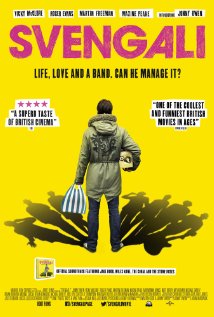
Movie Review: SVENGALI (UK 2015)

Deadlines to Submit your Screenplay, Novel, Story, or Poem to the festival: http://www.wildsound.ca

svengali_posterSVENGALI (UK 2013) **1/2
Directed by John Hardwick

Review by Gilbert Seah

The story of this straight to Video on demand British film is as simple the mind of the lead character who nicknames himself Dixie (Jonny Owen). Dixie leaves his small Welsh mining town for the big city of London. He intends to become the manager of what he thinks is the best band in the world. This he thinks after watching them on Youtube. He brings along to London his long-suffering girlfriend, Shell (Vicky McClure). Things are not that straightforward in the big city but Dixie and Shell manage somehow.

As the ads ask, can Dixie manage a relationship, a band and his life? That is what director Hardwick (mostly British TV stuff) intends his audience to find out.

Hardwick’s film has several charms. For one, the lead character, though annoying that he may be at times, wearing the same old disgusting vintage parka and carrying around a Tesco plastic bag, is a loveable lug who always means well. His favourite words are: “I am sorry” uttered with his Welsh accent. It is hard not to feel for a small town boy (big though he may be) moving to London in search of his big dream.

Newcomer Jonny Owen isn’t half bad as Dixie. He basically plays himself, a music enthusiast, star and producer of his own internet-based sketches of the same title in real life, which he has expanded for the big screen. But running at 90 minutes, the task becomes massive and different from the execution of short skits on the net. The little jokes and humour fail to sustain, and the one idea film soon runs out of steam. The story is also too predictable but there are a few prize characters such as the fat pop drinking Russian landlady. The camera is fond of showing her ass.

It would be an additional bonus if the band did put out some good songs on film. As it is, the band members are all shown as a lot of arguing misfits.

The word Svengali, the film title, refers to a person who manipulates or exerts excessive force over another. It also refers to a character in the George Du Maurier’s 1895 novel made into a film several times called Svengali who hypnotizes and brings to fame a young singer. It is not clear which of the three director Hardwick or writer Owen has fashioned his title from. Dixie manipulates his girlfriend and the band to stardom, though not with excessive force.

The film contains cameos from several TV personalities that North Americans will not be familiar with. Martin Freeman from the three Lord of the Rings HOBBIT films is perhaps the only one recognizable.

It is difficult to envisage huge North American audiences getting too excited about this small British export. Unless one is ex-British staying in North America, in the music business industry, in a struggling band or have Welsh roots, SVENGALI will have little appeal. This film therefore goes straight to VOD (video on demand) skipping the theatres on January the 10th. Myself, I visited Wales 2 years back, which is the main reason this little film attracted me to review.

Also, Free logline submissions. The Writing Festival network averages over 95,000 unique visitors a day.
Great way to get your story out: http://www.wildsound.ca/logline.html

Deadlines to Submit your Screenplay, Novel, Story, or Poem to the festival:http://www.wildsound.ca

Watch recent Writing Festival Videos. At least 15 winning videos a month:http://www.wildsoundfestival.com

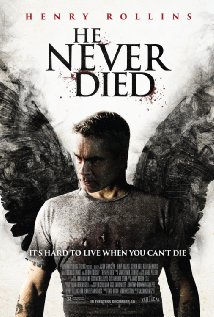
Movie Review: HE NEVER DIED (USA/Canada 2014) **1/2

he_never_died_posterHE NEVER DIED (USA/Canada 2014) **1/2
Directed by Jason Krawczyk

Review by Gilbert Seah

HE NEVER DIED is an odd movie with a theme that counters the good cheer of the Christmas festivities. It is everything the festive season isn’t, so if one is fed up of friends and family and want something completely different, HE NEVER DIED might just be the film to satisfy.

The film is an off-beat one with an equally off-beat character. When the film opens, Jack (Henry Rollins) answers a knock on the door. It is his landlady. Paying cash from a suitcase full of money, he asked her for the time, date and day of the week. He then goes to his usual restaurant and orders the same stuff – hot tea. Things get weirder.

Apparently, he discovers he has a daughter, Andrea (Jordan Todosey).
People are trying to get to him and kidnap Andrea as a result. Jack is shown to display super human strength. Though he gets hurt, bullets do not kill him. And Jack plays BINGO to kill time. (See photo inset of Jack with his dabber.)

So what is the explanation? It comes right at the end of the film. It does not make much sense, but at least it is an explanation. A few things are left unexplained, such as how he got the suitcase of money and how he got some woman pregnant.
But the entertainment of the film comes from Rollins’ performance. He is simply the best thing of the film, delivering a deadpan performance, full of one-liners while constantly sneering. Rollins is no newcomer in film, but he has never landed a leading role before.

His credits include bit parts in Michael Mann’s HEAT, JACKASS: THE MOVIE, BAD BOYS II and LOST HIGHWAY. The supporting cast do not fare badly either. Booboo Stewart plays a native student, Jeremy, capturing the perfect slacker loser character while Steven Ogg plays the villain, Alex over-the-top in contrast to Jack’s character. Kate Greenhouse plays Cara, the waitress who tries to date Jack, though one cannot see any reason to do so.

Krawczyk’s film is exceptionally violent but deserves to be so. Without it, the film would lose the audience’s attention. The violence feeds into the audience so that more and more is wanted. It is human nature to root for the underdog who is trying to survive no matter what reason. So when Jack clips off a victim’s finger or breaks another’s foot to prevent him from escaping, one can only winch and watch.

The film is a U.S. and Canadian co-production shot in Toronto. The setting of the film is never mentioned but judging from the American notes in Jack’s suitcase and one reference to Jack being in the Civil War, it is assumed that the film is set in the States.

But the one-joke one-gimmick film is unable to sustain the 90-minute length. Despite the violence and super-dry dead pan humour, HE NEVER DIES would be deemed too slow for most audiences.