Interview with Oscar Winning Editor Alan Heim (All That Jazz, Network)

Alan Heim is an Oscar & Emmy winning editor. Many will say that he’s one of the greatest editors in the history of cinema. All you need to do it watch “Network” (1976), and “All that Jazz” (1979) to see the uniqueness of his talent. If you haven’t seen those films I highly suggest you do because they are timeless in their themes and character studies. It was an honor to chat with Alan about his career. A career that’s still going strong  at 80 years of age.

Matthew Toffolo: In recent years you’ve worked with director Nick Cassavetes in collaboration (The Notebook, My Sister’s Keeper, The Other Woman, Alpha Dog). How did you first meet? What makes your working relationship so strong?

Alan Heim: I believe Dede Allen (Editor: The Hustler, Bonnie & Clyde) suggested I cut “The Notebook” and Nick and I have gotten along together very well since. He likes my honesty in assessing the material and I love his rather rebel ways.

MT: You won the Oscar for the amazing “All That Jazz”. A film that still holds up today. How were your experiences working on that film? How did it feel when you went up to accept your Academy Award?

AH: All That Jazz was wonderful to work on because the material was so unusual and Fosse and I had a wonderful collaboration. Every day was a challenge and filled with discovery. Bob had written many of the structural things we had found in the cutting room on ‘Lenny’ into the script of “Jazz” but we discovered that we still had to struggle with certain areas to make the film work as planned.

As far as the Oscar, I was thrilled, as any winner should be. I even forgot to kiss my wife when they called my name. It was also very rewarding to share the stage with so many of my coworkers on the film.

PHOTO: All that Jazz starring Roy Scheider:
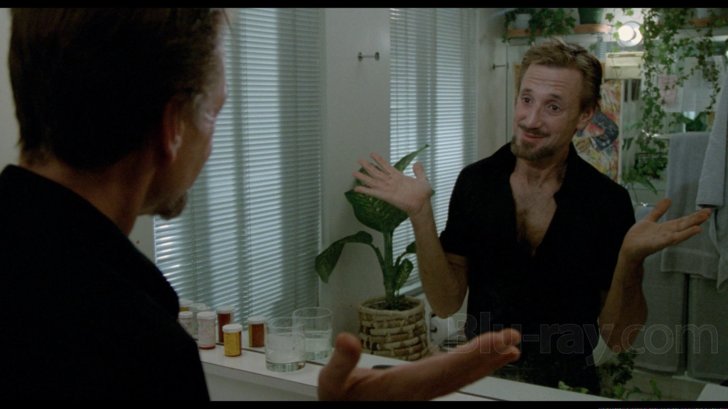
allthatjazz

MT: What is the key to editing a musical?

AH: The key to editing a musical is to always keep an eye on the story and always try to make the audience follow the flow of the dance. A good script keeps the musical numbers integrated into the structure of the film.

MT: You also worked with Bob Fosse on “Lenny”. How was your working relationship with the iconic musical Choreographer/Movie Director? “Lenny” also appears in “All that Jazz” too! It’s almost like you edited “Lenny” twice!

AH: Bob and I worked together well because we both wanted the very best we could get out of the film. I love working with directors who won’t settle and always want to reach for perfection. I feel the same way about Nick Casavettes.

As far as editing “Lenny” twice….I always like my films to be an adventure of discovery and I’ve been pretty lucky this far.

MT: The film “Network” is a masterpiece that really was ahead of its time. It’s a film with themes and settings that still ring true to today’s world and situations. What are you feelings and memories working on the film as it approaches its 40th anniversary?

AH: “Network” has always been one of my favorites. Paddy Chayefsky was a brilliant, prescient polemicist and wrote a near flawless script, beautifully acted and directed perfectly by Sydney Lumet. What more could an editor want? Except for some unfortunate clothing choices and sideburns, the film can be released today with great pride and timeliness.

PHOTO: Peter Finch is “Mad as Hell” in Network:
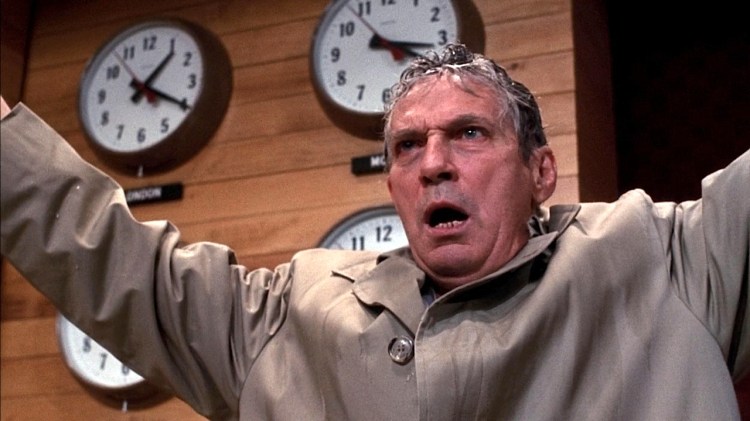
network

MT: You also edited (and won the Emmy for) the landmark TV mini-series “Holocaust”, which premiered in 1978. It stars a young Meryl Streep and James Woods. Were you aware when editing this series how important it was going to be for the education of many people watching?

AH: I only worked on one of the four episodes and I had to re-edit it. It was the first time I ever “doctored” a film and basically put it back in dailies form and totally recut it. It was very meaningful for me and I’m happy for whatever it has done to retain the Holocaust in people’s memories.

MT: What is an editor looking for in their director? What is a director looking for in their editor?

AH: I think the answer is the same to both questions. Editors and directors should both try to find a person that they can spend a LOT of time with in close quarters working to get a vision on the screen. One hopes for it to be the same vision or herd will be a lot of tension in those close quarters.

MT: Is there a type of film that you would love to edit that you haven’t edited yet?

AH: I’m very happy to have worked on the type of film I’ve worked on, mostly films with emotional reality on a fairly small scale. Few fights and those mostly with fists, not lasers.

MT: What film, besides the ones you’ve worked on, have you seen the most times in your life?

AH: Probably “Citizen Kane”, “Casablanca” and lots of older comedies.

MT: What suggestions would you have for people in high school and university who would like to get into the industry as an editor?

AH: If you really are devoted to becoming an editor try to hang around cutting rooms, look at lots of movies and practice cutting wherever you can.

Don’t neglect reading, listening to all kinds of music, seeing plays and art shows and generally opening your mind to all things cultural. It all helps when you’re trying to tell a story and that’s what editing is all about..

_____

Interviewer Matthew Toffolo is currently the CEO of the WILDsound FEEDBACK Film & Writing Festival. The festival that showcases 20-20 screenplay and story readings performed by professional actors every month. And the FEEDBACK DAILY Festival held in downtown Toronto and online daily. Go to www.wildsound.ca for more information and to submit your work to the festival.

Interview with Special Effects Coordinator Donnie Dean (Emmy Winner – American Horror Story)

A special effects coordinator is an individual who works on a television or film set creating special effects. The supervisor generally is the department head who defers to the film’s director and/or producers, and who is in charge of the entire special effects team. Special effects include anything that is manual or mechanically manipulated (also called “practical effects” or in camera effects). This may include the use of mechanized props, special effects makeup, props, scenery, scale models, pyrotechnics and atmospheric effects: creating physical wind, rain, fog, snow, clouds etc.

Interview with Donnie Dean: 

Matthew: Explain the process of being a Special Effects Foreman and Coordinator. What is your job description?

Donnie: To become a Special Effects foreman a person must demonstrate a certain level of competence and management experience. This is gained through years of learning the trade and being mentored by people who have been in the industry for some time, some of them for several decades. When you start in the business, you must earn the respect and trust of these professionals. Once you have that they will generally teach you anything you are willing to put in the effort to learn. Its all about attitude and persistence.

My current job description is Operations Coordinator for Spectrum FX. I’m responsible for the day to day operations for whatever films or television shows we are working on. Usually I’ll take on different roles depending on what the projects require, from “consulting” with the SPFX Coordinator who is running the project to acting as SPFX Coordinator or Foreman personally. The job requires knowledge of budgets, schedules, and most importantly how the Effects on the show are to be done and when. About eighty percent of the time I copy Matt Kutcher (FX Supervisor) on emails and/or photos and videos of the planned Effects for his input or approval. He has almost 3 decades of experience so his input is extremely valuable.

Matthew: You were the Special Effects Coordinator on the landmark TV series “True Detective”. How was your set experience? During the production did you and the crew know you were doing something special?

Donnie: True Detective brings back memories of sweating buckets in the sauna that is New Orleans in the summer. Carey Fukunaga is very specific about what he wants to see, which helps in planning the Effects on a show. This was the first show in which we filmed the whole season as if it were one huge feature, so keeping up with the schedule was a bit of a challenge. Matthew McConaughey and Woody Harrelson are both really strong actors, watching them perform in person was really amazing.

I would say it’s very difficult to judge how “special” a film is when you’re actually creating it. They all feel special in various ways sometimes only because you work so closely with so many really great people, and it can be sad to see all the heart that goes into a film like “Beautiful Creatures” or “Abraham Lincoln Vampire Hunter” and then it doesn’t really see success in theaters.

PHOTO: Matthew McConaughey in True Detective Season 1:

truedetectiveseason1.jpg

Matthew: You’ve worked on over 50 productions in the last 8 years alone. That’s amazing. Do you have a favorite experience?

Donnie: The final episode of American Horror Story: Coven was one of my favorites. We had to perform virtually every effect from the entire season in one night of shooting. The biggest moment for us was the tracking shot of Emma Roberts in the bathtub when the camera comes in and you see the fireplace light, then the bubbles fill the tub, and with a wave of her hand the candles on the floor light spontaneously. There was no VFX required in that shot, although it took 3 takes to get the timing right. Between the time it takes to ignite a fireplace and the bubbles filling a tub alone its a very difficult thing to provide cues. The call goes to the technicians ear (because he can’t see the set) then there is a delay to his hand moving the valves, and then the time for the propane to travel to the ignition source. There is a similar process for every mechanical effect. The whole crew cheered on the last one, they had seen the process as we developed these effects over the 6 months we filmed, on that last day it took literally 8 technicians on set to accomplish everything. Making a candle light on its own is an “impossible” practical effect to achieve all by itself, if its ever been done we don’t know of the instance but we did it over and over throughout the season. It was just a perfect end to that show.

PHOTO: American Horror Story: Coven. Emma Roberts bathtub scene: 

americanhorrorcoven

Matthew: What job have you performed on set that you’re most proud of? Your crowning achievement to date?

Donnie: The job I’m most proud of is without a doubt the Emmy Award for American Horror Story: Freak Show. We spent a lot of time on so many details that showed up but are not so obviously Practical Effects. From the tents moving a little because they are supposed to be outside instead of inside a stage to spending days on the display tanks for the “freaks” to be in for the museum, it’s the little things things no one really recognizes as Practical Effects that help a set come to life.

I can’t really say it is “my” achievement however, as much as it was an achievement for everyone who has ever trained me or worked with me from day one. More than anyone, I think it reflects on Matt who has mentored me personally for the last seven years, being available every single day 24/7 on both a personal and professional level.

Matthew: You have also done some Stunt Driving too. How does one become a stunt driver?

Donnie: To become a real stunt driver requires time, training, and experience. I’ve worked with quite a few and am far from being a “professional stunt driver” by definition. I managed to get into it on True Detectives because we constructed a driving module on top of the car. As the actors were inside performing the car was driven from outside the vehicle, we constructed the “driving pod” and I was familiar with its operation so it was an easy step into driving the car.

Matthew: What do the Special Effects team look for in their director?

Donnie: The more details a director provides, the better. I think the same is true with all departments. For us the more interactive and approachable the director is, the easier it is to achieve the desired effect. As a matter of process we do demonstrations of the more specific effects to be used in a show and rely on the director’s feedback to make changes.

Matthew: What film, besides the ones you’ve worked on, have you seen the most times in your life?

Donnie: It’s hard to name one specifically, I’ve watched The Fifth Element so many times I know each frame, and the same with Tombstone. It would have to be a tie between those two.

Matthew: What suggestions would you have for people in high school and university who would like to get into the industry in special effects?

Donnie: The first thing is to find a mentor or a group to work with, you go in humble and you just do what is asked. Nobody really cares how cool you are or what you “know how to do”. You do what is asked and you do it to the very best of your ability every time.

It’s the same as for any industry. You have to really enjoy what you do, so much so that you don’t care about the money. You really have to give yourself over to it just like a Doctor in Medical School, it has to become the most important thing for a while. You don’t know what day that moment will come when you get the call and everything has to go on hold because it’s your opportunity. We work 12-14 hour days 5-6 days per week, you won’t even know what day of the week it is, much less if its a birthday or anniversary, and NO ONE understands why from your “real life”. You can’t RSVP to anything…well you can but you might have to cancel. There are a LOT of people who think they want to work in film in general, but its not for everyone.

If it is for you, then you show up every day, and show up on days you’re not getting paid, somewhere, anywhere there is a person who can teach you. You do jobs to demonstrate what you can do, if you are asked to sweep you smile and sweep better than any person ever could. If you’re asked to dig a hole its the neatest hold ever dug with the dirt that came out of it is on a tarp all nice and neat. You always say yes with a smile even if its fake. Once that door is open you never walk back out of it unless you’re sure you don’t care if you’re there or not. Because right outside is another guy like me that can’t wait to get in there and nail that door shut because he wants it worse than you, and if it takes 6 months of sweeping a shop or cleaning trailers for free, and doing other side jobs just to survive and be present, then that’s what he’ll do. The money and success will come if the passion and persistence are there.

One of my favorite quotes is from Will Smith to the point of “other people may have more talent and skill than you, but there is no excuse for anyone to outwork you.”

____

Interview with Cinematographer Tristan Oliver (Isle of Dogs, ParaNorman, Fantastic Mr. Fox)

It was a true honor interviewing the extremely talented Director of Photographer Tristan Oliver. Every single film he’s worked on has turned out great. And there’s not many people you can say that statement about! If you don’t believe, simply go to his website and watch some of the short films he’s worked on and see his list of feature credits: https://www.tristanoliver.co.uk/

Matthew Toffolo: Where were you born and raised? Was cinematography something you always wanted to do as your career?

Tristan Oliver: I was born and raised in Gravesend in Kent. An unlovely and somewhat godforsaken town on the Thames estuary.

I knew nothing about films or photography as a child. My main passion was the theatre. I wanted to act (or be a doctor or something) My first real contact with the camera dept came when I was acting in a movie. It was something of a Damascene moment and I really threw myself into trying to get into that environment immediately afterwards. I didn’t even own a stills camera when that movie started!

What has been your most proudest work of your career? Or, what has been your favorite project to date?

In terms of feature films I would say ParaNorman. I had a fantastic time at Laika for two years and a very close, creative and rewarding relationship with the directors of that movie. I’m exceptionally proud of how it looks (even if no-one has seen it.)

Can you explain to us what an Animation Director of Photography does?

There is really no difference in being a DOP for stop frame or live action. The ultimate aim is to create something beautiful for the camera. To light and frame according to what you consider to be visually special. I wouldn’t want to make concessions to the medium of animation. That is by the by.

In practical terms, there are a few differences. We typically run a 50+ unit shooting environment which is an enormous amount of stuff to keep tabs on. That’s 50 sets, 50 cameras all running together. I need to ensure continuity and quality of look across that huge mess of stuff.

Other than that the main difference is working into the macro end of the lenses which can severely compromise the depth of field. We tend to work at very tight stops (16, 22) to compensate for this.

You just finished working on ISLE OF DOGS. Can you give us a sneak peak of what do expect?

Unique. Many of his tropes will be familiar to audiences. The flat lighting. The highly symmetrical framing. The art direction and propping. This particular movie is very busy and visually complicated. Compared with Fantastic Mr Fox for example it is really intense viewing. There’s an awful lot going on up there!

Advertisement

Is there a type of film/TV show that you love to work on that you haven’t worked on yet?

I’d love to get my teeth into some American TV drama. The quality of work coming out of the States is astonishing. There’s so much of it and it’s nearly all really good. Well written, well plotted and edited. Everything.

In terms of movies, more live action please. I need a rest from the puppets!

What are you generally looking for in a director in order for you to do your job as best as possible?

All directors are different and as such, what they require from the DOP varies. Wes wants me to exactly put up on the screen what he has in his head. It is totally his vision so my role is very much reactive. With some other directors there is more of a creative collaboration, the role is proactive if you will. Neither is necessarily better than the other as long as you trust the director to bring the movie in.

What do you think a producer/director is looking for when they bring on you to DP the film?

I’d like to think that I’m the best at what I do. I have a huge amount of experience. I’m very professional and I bring on the best, most user friendly crews but essentially what a director needs is someone they can trust.

What is your passion in life besides cinematography and film?

So many. My daughters, my partner, beautiful Swiss wristwatches, restoring my 17th century house, good food, good wine , good company.

What movie have you watched the most times in your life (besides the ones you worked on?

There are lots but probably Kind Hearts and Coronets, the first Matrix and Ferris Beuler’s Day Off. That’s just for fun. In terms of cinematography, I think Conrad Hall was a genius and I can watch Road To Perdition any day of the week.

What advice do you have for young cinematographers who would eventually like to DP movies for a living one day?

Keep learning. Watch movies, read about movies. Who do you like? Why? Think about how stuff has been made. Don’t rely on your innate talent but keep building your technical knowledge, the two together will be very useful to you. And never ever send out a CV for a camera trainee position with your name followed by the letters DOP. It goes in the bin.

tristan olivier 2
_____

Interview with Production Designer Beth Mickle (Drive, Whiskey Tango Foxtrot)

I was fortunate to get an interview with the very talented and very busy Production Designer Beth Mickle. She is currently in the middle of production on the highly anticipated film “Collateral Beauty”. We talked about that film and much more in our chat together:

Matthew Toffolo: You have been the Production Designer on over 30 films in the last 15 years. Is there a film or two that you’re most proud of?

Beth Mickle: I’m incredibly proud of so many films that I’ve been involved with—fortunate to have had so many great opportunities! One that I’m especially proud of is “Lost River”, Ryan Gosling’s directorial debut. It was such a special project from the very beginning—Ryan wrote such a beautiful script with so much imagination, so many fantastical backdrops to play with. It was a smaller movie, and we all lived and worked together in downtown Detroit, collaborated closely to really shape that film as a team. I remember many adventurous weekends with Ryan and our cinematographer Benoit Debis, exploring the many awesome hidden areas of that great city. With limited resources, everyone jumped and got their hands dirty, and we built so many elements out of cardboard, tape, late-night pizza, and music…so proud of how every one of those sets came together, and the tone we found in that film. It’s one of my favorite films of all time!!!

PHOTO: Ryan Gosling, Eva Mendes & Christina Hendricks on set in “Lost River”:

lost_river.jpg

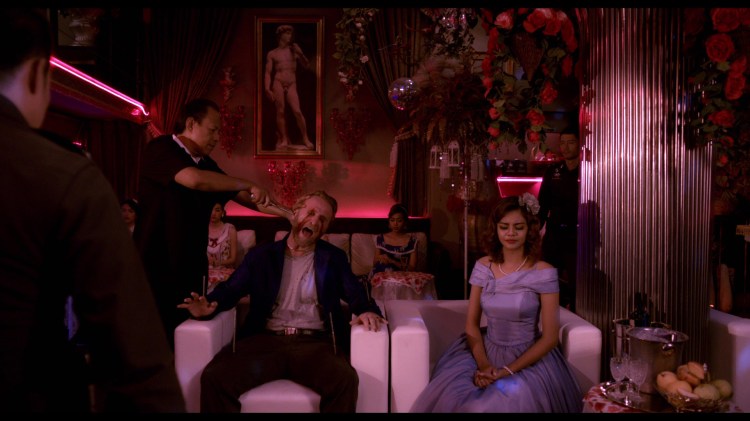
The other film I’m wildly proud of is “Only God Forgives”, which Nic Refn directed and Ryan starred in. This was another lower-budget film, this one in Bangkok, where we all lived and worked together very closely once again. Exploring every neighborhood in Bangkok was a complete joy for a gal who loves to travel as much as I do, and Nic gave me so much creative freedom with that film. My fiance Russell Barnes (an incredibly talented Production Designer) joined me on the project as the art director, and we had the most memorable 7 months together in Thailand. the lower-budget nature of the production meant that we did a lot of the heavy lifting along with our amazing Thai crew—building, painting, and decorating sets with our own hands. And the markets were phenomenal!! We ran around to tons of different vintage markets and flea markets every week, loading the trucks with so many beautiful and unique pieces. Bringing together these rich, vividly stylized sets in this unbelievable country where we were living was such an unforgettable time in our lives.

PHOTO: Set Design on “Only God Forgives”

Only-God-Forgives-141.jpg

MT: You started your career working on lower budget/Indy films as a Production Designer. Would you suggest other people who are striving to become Production Designers in this industry take this route? What are the pros/cons of taking this route in comparison to starting on the low rung and working on Union productions?

BM: I would absolutely recommend this route for aspiring production designers. The lower budget world is where you learn to be resourceful, where you can somewhat safely make mistakes which can be recovered, where you learn the complete fundamentals of how a film is made. I try to approach every production—large or small–with a calm nature, and I think that comes from being in the trenches for so many years and learning how to adapt to in all situations. The biggest con to this route is that formal “union” filmmaking can be a bit jarring when you do finally make the leap to the larger arena—but once you learn those nuances, the process really smooths out. That is definitely one pro if you do start in the larger union world—you learn those protocols right away, so you enter the film world knowing how union positions are categorized and how the different departmental responsibilities are broken down.

In terms of career growth—I also think designers can make that mental shift of thinking on a smaller scale early in their careers on smaller films, to thinking on a larger scale as projects grow in size. But I think it’s much more difficult for designers to start with thinking on a larger scale, then downsizing their approach and expectations on a smaller project. And as we’ve seen so much lately—some of the highest quality films being made right now are the smaller, independent projects (“Ex Machina”, “12 Years a Slave” to name a few), and if a designer catapults you to doing an $80 million film as his or her first film, downshifting to this smaller budget range can prove to be a difficult maneuver.

MT: What is the biggest difference when working on an Independent film in comparison to a Hollywood Union Production?

BM: Union rules and guidelines!!! On an independent film, everyone is moving and touching and painting everything…on a union film, none of that flies. this took me forever to learn!!!! I’m always eager to grab the other side of a couch, to rehang picture frames on my own, always telling the set dressers “this is how i keep my muscles!!”…some laugh and some are not amused at all:)…At first I resisted the union delineations, preferring the all-hands-on-deck team approach, but after doing over 20 union films, and seeing that crews are treated so fairly and safety is so championed, I do see the benefits of having a regulated system. Film productions are such incredible, finely-tuned organisms that function so efficiently….though I’d still paint walls if they’d ask me!..:)

MT: Some will argue that DRIVE is one of the best films in the last 10 years. Do you remember the initial conversations with the director and your team about the overall look, feel, and tone of the film?

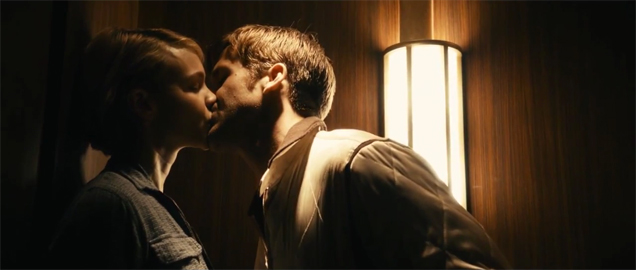
BM: “Drive” is a film is very near and dear to me. It made my career the incredible adventure that it is right now. I remember my initial meetings with Nic Refn well. I think he’s one of the most brilliant directors working today, and seeing how he approaches filmmaking is nothing less than inspiring. He’s constantly striving to shoot scenes in ways they’ve never been shot before, to make every frame as great as it can be. And his mandate is always “more is more.” So for a designer, taking this approach is a dream…every set can be as elevated and amplified as you want it to be. Every color can be as rich as possible, the idea of “extreme” is always embraced. so making “Drive”—as well as Nic’s following movie “Only God Forgives”—were a career highlight for me.

PHOTO: Ryan Gosling and Carey Mulligan in “Drive”:

drive.jpg

MT: Whiskey Tango Foxtrot is out in theaters. What can people expect to see? How were your experiences working on that film? A lot of exterior scenes.

BM: “WTF” was another fascinating project to do. All but 4 minutes of the film takes place in Afghanistan, and we shot the entire film in New Mexico!!! It was by far the most challenging film I’ve ever done, but I was lucky enough to be working alongside the best art department I’ve ever had. We built 2 Kabul city street sets—both nearly a football field in size, and both almost built from scratch. Building so much scenery was such a great challenge on a relatively small studio film—we reused so many facades, repurposed so much architecture, repainted so many pieces….at first it seemed nearly impossible to pull off the tall order, but once we started improvising and playing around, the possibilities really became endless. Anthony Syracuse was our construction coordinator on that film, and I’m certain that he’s one of the best construction coordinators this industry has ever seen.

Interview with Storyboard Artist James Doh (Captain America, X-Men: First Class, Drive)

 James Doh is one of the most sought after Storyboard Artists in the industry today. His imprint is on most of the top action movies in the last 15 years. In 2016 alone, he worked on “The Conjuring 2”, “Suicide Squad”, and “Star Trek Beyond”. He also worked on the blockbusters “Ghost in the Shell (2017”, “Aquaman (2018)”, and “The Predator (2018)”.

Go to his website at http://www.jamesdoh.com/

It was an honor to chat with him about his craft:

Matthew Toffolo: You have worked as a Storyboard Artist on over 30+ productions in the last 15 years. Do you have a favorite experience?

James Doh: It is sometimes rare to work with other storyboard artists, but through the years I’ve had the good fortune of having met some great colleagues.

That will probably be what I remember most from my work experience.

I’ve been fortunate to work with and meet some wonderful people.

PHOTO: James’ storyboard from X-Men: Origins:

storyboard_xmen-origins.jpg

MT: The film DRIVE (2011), is a very stylistic film, but not the conventional action/thriller film that you work on. How was your experience working on that film?

JD: That show had a great crew from the top down. It was a low budget production, but the crew were all top talents.

Credit to the EP for bringing together such a great team.

They wanted to bring me in for the car chases and sequences that required production prep.

When I read the script, it was one of those that you rarely get as a storyboard artist. Hossein Amini wrote a great screenplay.
I was also a fan of Nicolas Refn’s Pusher series of films, so I thought it was an exciting combination of material and director.

Advertisement

Interestingly, Nicolas was batting around different ideas for that elevator scene where Driver stomps the hitman to death. He had me board a different version that certainly was more brutal, but I like the elevator because it works so well for the entire sequence.

MT: How important is the creation of the storyboard to the production team for the action and fight scenes?

JD: Storyboards have several key roles. One of them is a communication tool for the production. It’s a visual script of those sequences.

It’s important to get the sequence down, to allow various departments to prep.

Boards are also important early on for budgeting, and to start developing what the sequences will look and feel like.

There are amazing fight and stunt choreographers, whose ideas we will integrate into the boards if they are involved at the time.

Other times, the boards are a jumping off point for the stunt/action team and a way for the director to convey his ideas on action sequences.

By the way, 2nd unit also can have their own storyboard artists to plan out their sequences too. Again, for communication, a drawing is a fundamental tool.

They are especially important for VFX intensive films, where costs and feasibility have to be looked at and planning is vital. Storyboards put everyone on the same page.

On Furious 7, we had the tragic death of Paul Walker and had to go into some very specific VFX planning to make the film work. There was some innovative work there and the storyboards were a part in planning those shots and sequences.

There are a multitude of uses for storyboards, so it can be a very powerful tool for directors to utilize.

PHOTO: James’ storyboard from Fast & Furious 7:

newstoryboard.jpg

MT: What’s the general working relationship and process between a storyboard artist and the director? How early do you meet before production begins?

JD: Very early. Many times we are the first ones on the show, months ahead of production many times. Often they circle back in post, and need storyboards once VFX gets into the nitty gritty of creating shots.

The working relationship is different with everyone but it’s really about developing the ideas or getting the boards to convey what the director is looking for.

MT: What are you looking for in a director?

JD: Good communication, convey vision, intent, style of the sequence. I’m looking to get as clear a vision as I can for the sequence.

Sometimes it’s wide open and they want you to run with it, and other times it’s very specific. Many times it falls somewhere in the middle.

I have been fortunate to work with directors that love to collaborate, encourage creative contributions, and understand the process of storyboarding.

MT: What does a director look for in a storyboard artist?

JD: To translate their ideas into a viable sequence. Directors look to you to visually lay out the sequence with creative solutions, in a way that they can shoot.

I also think it’s important that you have a good working relationship, because you can spend a lot of time hashing out ideas.

For storyboard artists, the fundamental key is visual storytelling.

You need to hash out the sequence and make it work for the director.

MT: What advice would you have for people who would like to do what you do for a living?

JD: Translating scripts to visual sequences can take a lot of time. If someone wants to become a storyboard artist, 1. Watch a lot of films. 2. Think about where you are placing the camera 3. Be able to draw anything at any angle. I know that sounds so broad, but if you learn to draw the human figure, you will be alright with everything else.

Advertisement

Most importantly, don’t be precious about your work. Things can and will change often for a multitude of reasons.

Storyboarding is a process. Sequences are developed. Things are culled, new ideas crafted, budgets change… you have to roll with that and adapt.

Did you see the Amityville flashback sequence in Conjuring 2? Look at the basics. Look at how he staged and told the story inside the house. He had a house, and a few actors to work with.

How do you tell that story in a way that’s fresh? That is film school. The Conjuring and Conjuring 2 are film school.

I would tell people to look at movies, and see how they tell the story. See what it takes to make simple things interesting.
Ask a lot of questions while you watch a film. It’s about decisions. What setups are you choosing and why?

Push yourself to improve. Always be a student of film and be a good listener.

I think we all push ourselves every show to do better, and push ourselves creatively.

MT: What movie have you watched the most times in your life?

JD: Aliens (extended edition) and Heat (Michael Mann) are ones i’ve seen a million times.

I love genre films and Korean films.

Korean cinema is tremendous, and I would encourage anyone to give it a try.

So many films on heavy rotation in my library! Tony Scott’s work, Gareth Evans…

BTW, one of my favorite scenes of brilliant acting is Christopher Walken in Catch Me if You Can. The scene in the restaurant when his son (DiCaprio) tries to give him a Cadillac. That is just masterful. Every moment tells you a story, and within a couple minutes you deeply know this man. It’s amazing, most of it unspoken.

MT: Where did you grow up? How did you get into the film industry?

JD: I had always been interested in design and film.

My introduction to art in film was with my college teachers Tim Flattery and Warren Manser who are brilliant concept artists and designers in their own right.

They really sparked the possibility to enter the film business.

My first job was with RGA/LA (now Imaginary Forces) a main title company. I learned an appreciation for typography and graphic design there.

Then moved on to feature film storyboarding because that is where my passion was.

MT: Is there a type of film that you love to work on that you haven’t worked on yet?

JD: What is rewarding for me is working with great directors and crew. The projects rarely get me more excited than the possibility of working with great people.

It’s not so much the material itself as the director’s take on the material that gets me excited.

And by the way, it’s not just directors but all the other departments you interact with as a storyboard artist. Those professionals are at the top of their respective fields.
You are working with the absolute hallmark people in every department and that’s really exciting to see.

The challenge to board for these directors is in pushing the creative solutions and coming up with ideas that work for their respective visions.

PHOTO: James’ storyboards from Suicide Squad: 

storyboard-suicidesquad.png

_____

The art of Cinematography

FILM PHOTOGRAPHY
FILMMAKING NOTES

Cinematography is the art of manipulating light and shadow, and capturing it as a moving image. We’ll be posting articles and insights – maybe a bit of inspiration too! Whether you’re a pro or have hardly picked up a camera except to point and shoot at a birthday party, we hope you’ll find some useful information below.

CINEMATOGRAPHY – SHOTS AND CAMERA ANGLES

QUESTIONS TO ASK:
-What is the best viewpoint for filming this position of the event?
-How much area should be included in this shot?

SCENE defines the place or setting where the action is laid
SHOT defines a continuous view filmed by one camera without interruption
SEQUENCE A series of scenes or shots complete in itself.

TYPES OF CAMERA ANGLES
OBJECTIVE The audience point of view
SUBJECTIVE The camera acts as the viewers eyes-movement
POINT OF VIEW What the character is seeing

CAMERA ANGLES Are the most important factor in producing illusion of scenic depth. Which angle the object is photographed.

FIVE BASIC ANGLES

EYE LEVEL SHOTS Provide frames or reference. Audiences sees the event as if in the scene. Most scenes in movies are photographed from eye level. 5 to 6 feet off the ground. Capturing the clearest view of an object.-Treating your characters as equals. Discourages viewers at judging them and permits audience to make up their own minds.

BIRDS EYE VIEW Photographing a scene from DIRECTLY OVERHEAD. Hovers from above like all powerful gods. Idea of fate.

HIGH ANGLED SHOTS Camera is tilted downward. Movement is slowed down. A person seems harmless and insignificant photographed from above.-The higher the angle, the more it tends to imply fatality

-Heightens the importance of a subject. Scenes depicting heroism

OBLIQUE ANGLE Lateral tilt of the camera. As though the object is about to fall to one side. POINT OF VIEW SHOTS.
-Suggests tensions, transitions, impending movement
IMAGE THAT SLANTS TO THE RIGHT Acting forceful
IMAGE THAT SLANTS TO THE LEFT Weak, static
ASK YOURSELF
-How much should be included in this shot?
-Where should the camera be positioned to view this particular part of the action?

A shot should be held no longer than required to make its point.

Approach each sequence with a fresh attitude and strive to treat the action in an individual matter.

A definite change in camera angles will assure a smoother flow of images.

Cinematography

“And later I thought, I can’t think how anyone can become a director without learning the craft of cinematography.”
– Nicolas Roeg

SIX BASIC SHOTS

1) Extreme Long Shot Taken at a great distance. Almost always an exterior shot and shows much of the locale. Establishing shots usually
2) Long Shot The distance between the audience and the stage in the live theater
3) Full Shot Barely including the whole body
4) Medium Shot Knees to waste up. Useful for exposition scenes, carrying movement and for dialogue
5) Close-Up Concentrates on a relatively small object. HUMAN FACE
6) Extreme Close-Up Might just show eyes or mouth

CLOSEUPS
-Are among the most powerful storytelling devices available to the filmmaker
-Allows removal of tedious or repetitious action
-Can be used to provide a time lapse
-Bring that dramatic punch

FRAMES
-Area near the top of the frame can suggest ideas dealing with power, authority and aspiration
-Left and right edges of the frame can suggest insignificance

DOMINANT CONTRAST Area that immediately attracts our attention because of a conspicuous and compelling contrast

SUBSIDARY CONTRAST Structured image so that specific images are followed in sequence. Whatever character or object that is most dramatically important will assume dominance.

The HUMAN EYE scans pictures from left to right

HORIZONTAL LINES Move from left to right
VERTICAL LINES Move from top to bottom
DIAGONAL OR OBLIQUE LINES tend to sweep upward
TERRITORIAL SPACE movie images must tell a story in time. A story that involves human beings and their problems.THREE VISUAL PLACES MIDGROUND, FOREGROUND, BACKGROUND

SPACE is one of the principal mediums of communication in film

Dominant characters are almost always given more space to occupy than others are.

You can define, adjust and redefine human relationships by exploiting spatial conventions

ACTOR CAN BE PHOTOGRAPHED IN FIVE BASIC POSITIONS
1) Full Front Facing the camera
2) Quarter turn
3) PROFILE looking off frame, left to right
4) Three quarter turn
5) Back to Camera

FULL FRONT Most intimate, vulnerabilities exposed-Audience agrees to become their chosen confidante.

QUARTER TURN Involves a high degree of intimacy but with less emotional involvements

PROFILE More remote.
-Character lost in their own thoughts.

THREE QUARTER TURN More anonymous. Rejecting audiences

BACK TO CAMERA Characters alienation from the world. Sense of concealment, mystery.

TIGHTLY FRAMED SHOTS Confined

LOOSLY FRAMED SHOTS Freedom

PROXEMIC PATTERNS Climax, noise level and the degree of light all tend to alter the space between individuals

1) INTIMATE Eighteen inches away. Distance of LOVE, COMFORT, TENDERNESS between individuals

2) PERSONAL Eighteen inches to about four feet away. Reserved for friends and acquaintances

3) SOCIAL Four feet to about twelve feet away. Business and casual social gatherings

4) PUBLIC – Twelve to about twenty feet away.

ANALYSIS OF ANY GIVEN SHOT – TWELVE ELEMENTS

1) SHOT AND CAMERA PROXEMICS
-What type of shot is it? How far away from the action is the camera?

2) ANGLE
-Are we looking up or down on the subject, or is the camera neutral?

3) LENS and/or FILTER
-How do these distort or comment on the photographed materials?
4) LIGHTING STYLE
-High or low key lighting? High contrast? Some combination of these?

5) DOMINANT
-Where is our eye attracted first?

6) SUBSIDIARIES
-Where does our eye travel after taking in the dominant?

7) COMPOSITION
-How is the two-dimensional space segmented and organized? What is the underlying design?

8) FORM
-Open or closed? Does the image suggest a window that arbitrarily isolates a fragment of the scene? How are the visual elements carefully arranged and held in balance?

9) FRAMING
-Tight or loose? Do the characters have room to move around in, or can they move freely?

10) DEPTH
-On how many planes is the image composed? What do we see in the background?

11) STAGING PROBLEMS
-Which way do the characters look from the camera?

12) CHARACTER PROXEMICS
-How much space is there between the characters?

MOVEMENT IS NOT SIMPLY A MATTER OF WHAT HAPPENS, BUT HOW THINGS HAPPEN.

The OBSERVER has to be the CAMERA and it needs to know where it�s going.

THE VALUE OF A SHOT ALWAYS DEPENDS ON A NARRATIVE.

” You make the movie through the cinematography – it sounds quite a simple idea, but it was like a huge revelation to me.”
– Nicolas Roeg

THE PRINCIPLES OF PERSPECTIVE

-Finding the right points of the sequence and getting to tell the best narrative story

AESTHETIC DISTANCE Phrase used to describe the degree to which a work or art manipulates the viewer

FIRST PERSON POINT OF VIEW Sees events through the eyes of the character

THIRD PERSON POINT OF VIEW Presents action as seen by an ideal observer

OMNISCIENT POINT OF VIEW Having to know what the character is thinking. Requires a type of narration, voice-over or graphics

PAN SHOT, Used to:
-Include space greater than can be viewed through a fixed frame-Follow action as it moves
-Connect two or more points of interest graphically
-Connect of imply a logical connection between two or more subjects

“Cinematography is infinite in its possibilities… much more so than music or language.
– Conrad Hall

CRANE SHOT
-Inherently majestic and holds our interest regardless of the subject because of the sheer physical pleasure of the move
-Permits us to feel the dimensions of the world by penetrating space, further endorsing its reality through the illusion of depth
-Eats up time on the set
-Careful planning and preparation is vital

TRACKING SHOT
-Used to follow a subject or explore space
-A dolly moves towards a subjects face can be used to emphasize a character’s moment of realization. A dolly always tends to isolate the subject as well

TRIPOD SHOTS
-Usually is used only in stable and relatively predictable shooting situations
-Makes very controlled transitions from subject to subject possible
-Makes very controlled image transitions possible
-Makes stable close-ups possible at the telephoto end of the zoom lens
-Conveys the cool, assured view

HANDHELD SHOTS
-Can react to events, much as we do in life
-Implies a spontaneous event driven quest
-Conveys a subjective, even vulnerable point of view

__

The SHOTS are all you have. Film Directing SHOTS

FILM SHOTS
FILMMAKING NOTES

Interview with Oscar Nominated Production Designer Michael Corenblith

FILM DIRECTING SHOTS – One of the most over used cliches in film is “The Shots are all you have.” The following are what you need to think about practically so you can think creatively and device the best shot list and camera shots you possibly can:

QUESTIONS TO ASK?
-What is the best viewpoint for filming this position of the event?
-How much area should be included in this shot?

SCENE – Defines the place or setting where the action is laid
SHOT – Defines a continuous view filmed by one camera without interuption
SEQUENCE – A series of scenes or shot complete in itself

TYPES OF CAMERA ANGLES
OBJECTIVE – The audience point of view
SUBJECTIVE – The camera acts as the viewers eyes-movement
POINT OF VIEW – What the character is seeing

SIX BASIC SHOTS

1) Extreme Long ShotTaken at a great distance. Almost always an exterior shot and shows much of the locale. Used a lot in Establishing shots

2) Long Shot

The distance between the audience and the stage in the live theatre

3) Full Shot

Barely including the whole body

4) Medium Shot

Knees to waste up. Useful for exposition scenes, carrying movement and for dialogue

5) Close Up

Concentrates on a relatively small object. HUMAN FACE

6) Extreme Close-Up

Might just show eyes or mouth

CAMERA ANGLES

Are the most important factor in producing illusion of scenic depth.

Which angle the object is photographed.

FIVE BASIC ANGLES

EYE LEVEL SHOTS- Provide frames of reference. Audience sees the event as if the scene happening right in front of them. Most scenes in movies are photographed from eye level. 5 to 6 feet off the ground. Capturing the clearest view of an object
-Used to treat your characters as equals. Discourages viewers at judging them. Permits audience to make up their own mind.

BIRDS EYE VIEW- Photographing a scene from DIRECTLY OVERHEAD. Hovers from ABOVE like all powerful gods. IDEA OF FATE
HIGH ANGLED SHOTS- Camera is tilted downward. Besides the obvious power shot, movement is slowed down during fast moving action. Ground is in the background. A person seems harmless and insignificant is photographed from above.
-The higher the angle, the more it tends to imply fatality

LOW ANGLES SHOTS- Camera it titled upwards. Use to inspire awe or excitement. Motion in speeded up. Environment is usually minimized. Sky or ceiling is background.
-Heightens the importance of a subject. Scenes depicting heroism

OBLIQUE ANGLE- Lateral tilt of the camera. As though the object is about to fall to one side. Point of view shots. Suggests tension, transitions, impending movement
-Image that slants to the right – Acting Forceful
-Image that slants to the left – Weak, Static

ASK YOURSELF
-How much should be included in this shot?
-Where should the camera be positioned to view this particular part of the action?

A SHOT SHOULD BE HELD NO LONGER THAN REQUIRED TO MAKE ITS POINT

Approach each sequence with a fresh attitude and strive to treat the action in an individual matter.

A definite change in camera angles will assure a smother flow of images

TAKE A LOOK AT: Film Director Quotes from some of the most famous directors of our time.

CLOSE-UPS
-Among the most powerful storytelling devices available to the filmmaker
-Allows removal of tedious or repetitious action
-Can be used to provide a time laspe
-Brings that dramatic punch

FRAMES-Area near the top of the frame can suggest ideas dealing with power, authority and apiration
-Left and right edges of the frame can suggest insignificance
-Dominant Contrast – Area the immediately attracts our attention because of a conspicuous and compelling contrast
-Subsidiary Contrast – Structured image so that specific images are followed in sequence

Make sure to check out WILDsound’s Film Festival where you can submit your film and get it watched my industry people, plus hear firsthand to what people think of your film.

THE HUMAN EYE SCANS PICTURES FROM LEFT TO RIGHT

HORIZONTAL LINES – MOVE FROM LEFT TO RIGHT
VERTICAL LINES – MOVE FROM TOP TO BOTTOM

DIAGONAL OR OBLIQUE LINES tend to sweep upward

TERRITORIAL SPACE – Movie images must tell a story in time, a story that involves human beings and their problems

THREE VISUAL PLACES
-Midground
-Foreground
-Background

CRUCIAL DECISION – How much detail should be included within the frame?

HOW CLOSE SHOULD WE GET TO THE SUBJECT?
-How much space is just right for the shot?
-What’s too much or too little

AN ACTOR CAN BE PHOTOGRAPHED IN FIVE BASIC POSITION

1) Full Front – Facing the camera
-Most intimate, vulnerabilities exposed
-Audience agrees to become his chosen confidante

2) Quarter Turn
-Involves a high degree of intimacy but with less emotional involvement

3) PROFILE – Looking off frame, left to right
-Character lost in their own thoughts

4) Three Quarter Turn
-More anonymous. Rejecting audiences

5) Back to Camera-Characters alienation from the world. Sense of concealment, mystery

Tightly framed shots – CONFINED

Loosely framed shots – FREEDOM

USING SPACE IN FOUR WAYS

  1. INTIMATE
    Eighteen inches away. Distance of LOVE, COMFORT, TENDERNESS between individuals

2) PERSONAL
-Eighteen inches to about four feet away. Reserved for friends and acquaintances

3) SOCIAL
-Four feet to about twelve feet away. Business and casual social gatherings

4) PUBLIC
-Twelve to about twenty feet away

Best of Interviews with Professional Production Designers

From Oscar winners to box office successes. Amazing insights from some of the best productions designers working today.

Interview with Production Designer Beth Mickle (Drive, Whiskey Tango Foxtrot)

In terms of career growth—I also think designers can make that mental shift of thinking on a smaller scale early in their careers on smaller films, to thinking on a larger scale as projects grow in size. But I think it’s much more difficult for designers to start with thinking on a larger scale, then downsizing their approach and expectations on a smaller project. And as we’ve seen so much lately—some of the highest quality films being made right now are the smaller, independent projects (“Ex Machina”, “12 Years a Slave” to name a few), and if a designer catapults you to doing an $80 million film as his or her first film, downshifting to this smaller budget range can prove to be a difficult maneuver.


Interview with Production Designer Jane Musky (When Harry Met Sally…, Ghost)

Each Director I work for has their own different idea as to what they want from their Designer. The Director and Designer are the first ones of the Creative Staff working on the job. Those early moments together are used to dissect the story and begin to give it a visual tone and map the moments. It is during these first weeks the Designer morphs to suit the Director’s vision and enhance that vision and help tell the story. The Director must be followed and a Designer must take their lead from the Director and faithfully back that vision.


Interview with Director/Production Designer David Hackl (SAW Franchise)

I’m very proud of the Saw franchise and feel grateful to have had the opportunity to work on it. It a piece of cinema history now. I also have a real fondness for Outlander as it was one of the most epic projects that I’ve done. I had to research it like crazy and learn everything about viking architecture, culture, weaponry etc. We had to build everything, weaponry and huge sets that included a viking village with 22 buildings and an 80 foot Viking ship that was fully practical. The craftsmanship from the whole crew was outstanding in every department. I’ve always loved viking stories and would love to direct a viking feature now.


Interview with Oscar Nominated Production Designer Anne Seibel (Midnight in Paris, Bonjour Anne)

Woody gives me a total freedom and is even open to ideas of locations how we can make the script better. Like in “Magic in the Moonlight”. We found this amazing Observatory in Nice and he liked it a lot. Then we used it for the scene when they run to protect themselve from the rain in the night. It is magical moment in the film and inspired the tittle.


Interview with Oscar Nominated Production Designer Michael Corenblith (Apollo 13, The Blind Side)

Initially, a director is seeking a Partner who shares his passion for the project, and regards it from a perspective that adds visual continuities that help tell the story as a whole.  Good Directors are always seeking the better answer, and asking the better questions, and it’s during this interaction that the film begins to take shape.  Later on, a Director is looking for supportive team play from the Art Department, and good communication with the Costume Designer, Cinematographer,and their teams, ensuring that the shooting days are about performances rather than these Crafts.


How to make a Documentary Film

MAKING A DOCUMENTARY
FILMMAKING NOTES

DOCUMENTARY FILM – TIPS for Documentary Film Production

THE FOUR BASIC DIVISIONS OF STYLE

1) EXPOSITORY DOC’S
Commenting on the Acting of the scene rather than being a part of it
-A lot of times Propaganda films (TV NEWS)
-Express point of view clearly and leave little room for misinterpretation

2) OBSERVATIONAL DOC’S
MIRROR TO THE WORLD – Way it’s going on, is going on
-Keeping the camera rolling
-Story comes out of the life of the people, not from the actions of individuals
-Conveys the rhythms and texture of everyday life

3) REFLECTIVE DOC’S
A relationship between the filmmakers and its subjects
-Filmmaker is a part of the film. -Seen through the eyes of the filmmaker. They are usually the main character in their own film

4) IMPRESSIONISTIC DOC’S
NO RULES-Poetic instead of argumentative-Generally categorized under Experimental film

WE ALL LOOK AT OURSELVES AS UNIQUE – SO DO THE SUBJECTS

“The proper route to an understanding of the world is an examination of our errors about it.”
– ERROL MORRIS director (The Thin Blue Line, Dr. Death)A DOCUMENTARY DIRECTOR’S MAIN TASK IS LISTENING TO PEOPLE

Once you get an idea worth spending some time on ASK QUESTIONS
1) Is it practical?
2) Would it be high or low budget?
3) Does it have broad or narrow audience appeal?
4) What approach could we take to the subject?
5) Can we sell the brilliant idea?
6) And if so, how?

CONCEPT – A comprehensive idea that will drive the film in a distinct direction according to a clear plan

AMBIGUITIES – People who see they are being filmed want to know how to act in front of the camera

IN DOCUMENTARY FILM
ARE WE THE FILMMAKER TELLING THE STORY
OR ARE THOSE OF OUR SUBJECT TELLING IT

In Documentary Film, just like any other film, you need to write a script before you begin filming. You have to have a plan and an overall THEME in what you are trying to say with this film.
DOCUMENTARY SCRIPT FUNCTIONS

1) The script is an organizing and structural tool. A reference and a guide that helps everyone involved in the production

2) Communicates the idea of the film to everyone concerned. Helps everyone understand what the film is about and where it is going

3) Essential to both the cameraman and the director. It conveys to the cameraman a great deal about the mood, action and problems of the camera work
Also helps the director define the approach and the progress of the film, its inherent logic and continuity

4) Script helps crew answer a series of questions
-What is the appropriate budget for the film?
-How many locations are needed and how many days shooting?
-What lighting will be required?
-Will there be any special effects?
-Will archive material be needed?
-Are special cameras or lenses called for because of a particular scene?

5) Guides the Editor
As soon as you have an understanding of the subject, ASK YOURSELF:
Who are you going to show it to?
How will the project be cinematic?
How are you going to structure the film
What are you going to do?
What do you want to say?
How are you going to reach the audience?
What is the Target audience?
What is your own personal motivation to the subject?
Why is there a need for the film?
Why NOW?

THEN YOU’RE READY TO RESEARCH THE SUBJECT

As a researcher you must be an observer, analyst, student and note taker

1) PRINT RESEARCH
Learning to see and to distinguish the important fact from the obscuring detail
-Remember biased and self-serving points of view
-There lies, more lies and statistics in a lot of research

2) PHOTOGRAHS AND STOCK FOOTAGE

3) INTERVIEWS
-Talk to as many experts in the field as possible
-Get the best people — the most knowledgeable, most open

4) LOCATION RESEARCH
-Getting the feel of the actual place
-Try to suck up the subject, getting as close as possible

RESEARCH IS LIKE AN ICEBERG — SEVEN EIGHTHS OF IT IS BELOW THE SURFACE AND CAN’T BE SEEN

Make quick choice and select boundaries

“It’s sad that too many documentary filmmakers set out to make a documentary and not a movie.”
MICHAEL MOORE, director (Bowling for Columbine, Roger and Me)

DIRECTING THE DOCUMENTARY FILM

The job of the director is to find the pieces that will come together in the editing to make a complete film

AS A DIRECTOR YOU HAVE TO BE TOTALLY SURE OF WHERE YOU WANT TO GO AND HOW YOU ARE GOING TO GET THERE

Director has to have the ability to listen – Need to absorb and pay attention. In trying to understand the progress of story, there is no other way but to LISTEN

YOU NEED THE INTELLIGENCE TO SHOOT THE RIGHT THING
-If you are uncertain, consult the crew and listen to their opinions

-When something happens that is completely out of your hands (and something WILL happen) you need to make fast decisions in order TO SAVE THE FILM

THE DIRECTOR’S EYE

Please remember VISUALS
The sense of what is VISUALLY important

Let the cameraman know your thoughts and feelings

Have a good sense of freedom and composition
Seeing the best angle from which the story can be told

HUNTING FOR THE SYMBOLIC SHOT

DIRECTOR AND THE CAMERAMAN

Getting the Cameraman to understand and translate your vision to film as accurately as possible. Then adding their own creative skills to the project

TALK OVER WITH THE CAMERAMAN ON WHAT YOU PLAN TO DO WITH THE FILM

Most build the relationship of openness and trust — a relationship where each values and respects the other’s creativity and judgement

REMEMBER: A shot doesn’t stand by itself. It has to be edited into a sequence

DIRECTING THE INTERVIEW

You need to build confidence into the person being interviewed
-Make sure you get to know the person being interviewed
-You need to know your objectives and what you want to get out of the film session

Make the subject feel that he or she matters
You are concerned and involved in what they have to sayThat you care about their opinions

EMPATHY – The more the interviewer feels this, the better the interview

THREE BASIC SETUP POSSIBILITIES FOR THE INTERVIEW

1) The interviewee looks, or appears to look directly into the camera
ADDS A CERTAIN AUTHORITY, POLITICAL STANCE – I’M YOUR FRIEND

2) The camera catches the interviewee obliquely, so that he or she seems to be having a conversation with an unseen person off camera – left or right
MORE FORMAL AND FRIENDLY

3) The interviewee is seen on-camera with the interviewer so that we are quite clear who is the second person involved in the conversation
WHEN THE HOST IS THE STAR OR WHEN YOU EXPECT A CONFRONTATION

Ask yourself — How far do you want the viewer to be drawn into the film?

People perform most naturally when they are doing some sort of ACTION

DON’T BE OVERLY SENTIMENTAL OR EMOTIONAL

EDITING THE DOCUMENTARY FILM

The best EDITING is done with a FRESH EYE
The Editor sees only what’s on screen. Suggestion is to get someone else to edit your film. They are not as close to the footage as you are

During filming, you should have ORGANIZED what you have shot for the editor

When editing a documentary film, it’s just like editing a Narrative film. You have to make a STORY with the basic storytelling functions
The proper editing structure – CLIMAXES, PACE and RHYTHM

-Is there a smooth and effective opening?
-Is there a logical and emotionally effective development of ideas?
-Does the film have a growing sense of drama?-Is it focussed?
-Are the climaxes falling in the right place?-Is your ending effective?
-Is there a proper sense of conclusion?

CONTINUALLY ASK YOURSELF – Is the material really working where I have placed it?

Pay attention to the RHYTHM within the sequence?
Are the shots at the right length?
Do they flow and bend well?

NARRATION IN A DOCUMENTARY
Pictorial narration rhythm and flow should be the fist consideration and the words should be written to picture, rather than pictures adjusted to words

WRITING THE FINAL NARRATION
Can set up factual background of a film providing simple or complex information that does now arise easily or naturally from the casual conversation of the film participants

COMPLIMENT THE MOOD OF THE FILMPROVIDE FOCUS AND EMPHASIS

LETTING THE READER KNOW THE 5 W’S
WHO, WHERE, WHEN, WHAT, WHY
You draw attention to certain situations and present evidence about them. The Judgement must come from the viewer

The basic RULES OF NARRATION
1) Don’t describe what can clearly be seen and understood by most people
2) And then AMPLIFY and explain what the picture doesn’t show

CLEAR AND EXPRESSIVE

SIMPLE POWERFUL SENTENSES

DIRECTING ATTENTION – LETTING THE AUDIENCE SEE WHAT YOU WANT THEM TO SEE

Remember that people remember the visuals – not the narration – don’t be too wordy

LET THE PICTURES TELL THE STORY

“I never, ever want to apologize for a film. If it’s bad I’ll say it’s my fault. And that’s what I can say so far in all the films that I’ve done, that if you don’t like it, it’s entirely my fault.”
– KENS BURNS director (The Civil War, Baseball, Jazz)

Submit to the Toronto/LA DOCUMENTARY Festival:

Directing Actors. And Actors working with Directors. TIPS

DIRECTING ACTORS
FILMMAKING NOTES

Film Directing and being a Film Director

What Is A Film Director? How do you run an independent film casting call? How do you get the best out of the actors you’ve chosen to bring your film to life?

Whether you’re running your first independent film casting call or into your millionth day of shooting, you may find some useful ideas here. Below, we investigate some of the techniques you can use and pitfalls you may face in casting and directing actors. A good resource for actors as well as directors!

We’ll be posting more articles all the time, so make sure you come back and check every now and then.

What is a film director? More than anything, the person responsible for bringing together the technical aspects of capturing performances with the actors who will bring a story to life. One of the most important aspects of a director’s job is to have a rapport with the actors, and it’s not any easy thing.

INSECURITY is the evil heart of a bad performance.

You need the actor to feel SAFE and COMFORTABLE in the creative process. They need to be relaxed.

Ask the actors to do something, not be something.

The presence of a camera should never change people, it only changes the aspect or degree of a person’s response.

The main job is to prepare the ground for inspiration. You can’t decide to be inspired. If you try it, it only creates tension, taking you farther and farther away.

The DIRECTOR is the viewer and the ACTOR is the viewed.

Let the actors help out with blocking. It solves all kinds of problems.

Actor and Director must respect each others creative territory.

Adjusts your beliefs about a character if the actor sees something different.

WHAT DO ACTORS WANT FROM DIRECTORS?
– Not to give up until you get the performance
– To make sure it’s the best take before moving on
– Must have confidence that you understand the script
– Need clear, brief, playable direction
– They want to be pushed to grow and learn
DON’T TELL ACTORS TWO DIRECTIONS THEY CAN’T PLAY TWO THINGS AT ONCE.

LISTEN to the actors and hear what they have to say.

Actors need insight, in language that is experiential, not descriptive. Adjectives are generalizations. USE VERBS Actions speak louder than words.

Verbs describe what someone is doing. They describe experiences rather a conclusion about experience.

USE THESE PHRASES
To believe
To fear
To accuse
To confront
To convince
To beg
To complain
To punish
To tease
To soothe

VERBS are also important to the basic understanding of a character

Acting should be a performance of the simple physical actions that tell the story.

Movies are made out of very simple ideas – A good actor will perform each small piece as completely and as efficiently as possible.

All good work requires self-revelation. The talent of acting is one in which the actors thoughts and feelings are instantly communicated to the audience. The instrument the actor is using is himself.

DON’T REPRODUCE LIFE CREATE IT

CONFIDENCE is an important element in an actor’s performance

LEARN FROM ACTORS SEE:
-What stimulates them?
-What triggers their emotion?
-What annoys them?
-How’s their concentration?
-Do they have a technique?
-What method of acting do they use?

An actor’s personality always comes out in their performance.

Tell them to go as far as they feel. Never be negative.

MOVMENT OF THE ACTOR You can always tell if an actor is truly in character by looking at his or her feet.

Actors need to have a GOOD EAR

Sometimes they need to just speak and try not to hit the furniture.

They need to trust the script, and you have to guide them if they want to stray from it. Unless they have an absolutely brilliant idea that serves the story BETTER than the original script, they should stick with the words as written. It’s tempting for actors to add or subtract words. That’s seldom a good idea.

Most actors need to know the technology that is around them.
-Where is the camera?
How are they being framed – close up, mid-shot, long shot?

NEVER JUDGE A CHARACTER

Acting is not pretending, is not faking something. It’s honesty. A director’s job is to recognize that and facillitate it.

For an artist there are two worlds the social realm, where we live and work day to day and the creative realm.

To enter the creative realm one must be free of the social realm, uncensored in the moment, away from concerns with result, following impulses, obeying only the deepest and most private truths.

An actor can’t lose trust in the process. As an actor, you need to:
1) Stay in the moment
2) Feel your feelings
3) Don’t move or speak unless you feel like it
4) Forgive yourself for your mistakes
5) Connect to the deepest and freshest meaning of the script
6) Turning themselves on and capturing their imagination
7) Connect with emotional honesty and get to the places they need to go

The best moments usually come from mistakes!

The scene is the event the words are the clues

Eye contact is very helpful to listening

ACTOR CHOICES
Choices create behavior. The behavior dictates the way the lines are said

THE SPINE IS WHO THE CHARACTER IS
Discover what is person’s great need in life.
Michael Corlene To please his father
Andrew Dufrane To get out of prison
Every choice actors make about their character relates to their spine

AN ACTOR HAS TO THINK
How does my character see the world?

WHAT DOES A DIRECTOR WANT IN AN ACTOR?

MEMORY (Personal Experience)
– Each individual is essentially unknown to all others
– Actors allowing their memory to occur physically 5 senses rather than intellectually

OBSERVATION

RESEARCH
– Know the character
– Know their history and back story
– Know their habits and mannerisms, physical and spoken

IMAGINATION

IMMEDIATE EXPERIENCE
– Energy and confidence to pull off a performance and scene

SENSORY LIFE
– What they observe through their senses

CONCENTRATION
– Performances are usually more successful when actors play against whatever feeling they have

PROFESSIONALISM
– Camera technique
– hitting marks
– not blinking
– ability to repeat successful performances and built on successes
– able to alter what’s not working
SCRIPT ANALYSIS
– Finding the subworld of behavior and feeling in the script
– Understanding the whole arc of the story to know how to play the scene

As a DIRECTOR you must stop JUDGING and begin to engage

Actors should remember that characters are real people. They don’t always tell the truth. They don’t always know the truth.

Certain questions an actor should ask about every character?
1) What is this person smart about?
2) What does this character find funny?
3) Where is his pain?
4) How does he play?
5) In what way is he an artist?
6) What does he most fear?
7) What profession has he chosen or does he aspire to?
8) What does he look up to?
9) Whom does he look up to?
10) What is the biggest thing that has ever happened to him?
11) How does this character differ at the end of the story from the beginning?

WHAT IS THE CHARACTER NOT SAYING?

FOUR AREAS OF IMPORTANCE IN CASTING
1) Actor’s ability
2) Whether he/she is right for the part
3) Whether you can work well together
4) Casting the relationship as well as the roles

AREAS OF A REHEARSAL PLAN
1) Ideas of what the film is about, what it means to you personally
2) Spines and transformations of all the characters
3) For each particular scene, its facts, its images, the question is raises
4) What the scene is about, its emotional event and how the scene fits in the arc of the script
5) Candidates for each character’s objective
6) The beats of the scenes, how you might work each beat
7) The scene’s physical life and its domestic event
8) Research you have done and research you have left to do
9) Your plan of attack
10) Blocking diagram

No matter how small the role is, the actor should read the entire script several times. They need to be aware of the function the author intends for the character in terms of overall storyline.

REMEMBER: The actor is playing someone with a HISTORY, not a FUTURE

FILM ACTING IS BROKEN DOWN INTO FOUR CATEGORIES
1) Extras
2) Non-professional performers
3) Trained Professionals
4) Stars

Know the skills and potentials of the actors you’re working with, and frame your suggestions according to their level of experience. What is a film director? Someone with the ability to help all actors grow. A good film director is someone who knows the power they have on set and uses it to guide a film to the best possible completion.

THINGS THAT MATTHEW TOFFOLO LOVES AN ACTOR TO DO

Matthew Toffolo loves actors to:
1) Arrive on set with their business planned and rehearsed and knowing their lines
2) Add extra ideas and business to the shoot, understanding what is possible and not
3) Do the same business on the same syllable of a speech in every take
4) Automatically ease themselves into the right position so that they fill the screen. Their two-shot is maintained or they come to a perfect three-shot
5) Understand the craft of screen acting and make additions and suggestions within the framework or what is possibly both technically and in the time available

AND… MAKE THE CHARACTER THEIR OWN

—-