Piero Mura has worked in the sound department on over 100 films in the last 25+ years. His list of credits include Ben Hur, Fast & Furious 6, Skyfall, Warrior, War of the Worlds, and Training Day to name a few. It was an honor talking to him about his career and sound in general.
Matthew Toffolo: How would you describe what a Sound Effect Editor does in one sentence?
Piero Mura: A Sound Effects Editor directs the attention of the audience to what he/she believes is important in terms of story and entertainment.
MT: You were the Sound Designer on the the remake of Ben-Hur. A film that did not do well box office-wise. You work on months on a film that I’m sure you’re proud of and then it quickly goes away after it opens. How does that feel?
PM: Ben Hur 2016 did not go away after it opened. As I write it is still being released in the foreign markets and it’s doing reasonably well. There is always a bit of disappointment when a movie you work on doesn’t find it’s audience but it’s the nature of what we do. We put our work out there and we move on. If I think a movie is a good movie the fact that made money or not is irrelevant. I leave the commercial aspect of our industry to others.
MT: Were there some films you worked on that you thought would not do well financially and were big hits? Or, films you assumed were going to be a big success, but ended up not doing well?
PM: As I said I leave it to others to make this kind of considerations. But I was happy when “500 Days of Summer” was well received by a large audience. Probably larger than i thought at the time.
Zooey Deschanel & Joseph Gordon-Levitt in “500 Days of Summer”
MT: How has sound mixing changed from a technology and creative point of view from the year you started to today?
PM: Everything in post-production changed in the last twenty years. I believe that they were positive changes. Today the line between mixing and editing is not as well defined as it used to be.
Quite a few sound editors now seat behind the faders and a number of mixers do not hesitate to do sound design or supervise.
Personally I like the opportunity to bring to the stage coherent tracks where backgrounds, sound effects and foley are already balanced and pre-panned. Establishing spacial relations helps me to understand the sequence better and go a little deeper with my work.
MT: Where do you see the future of Sound Designing in film?
PM: Probably it will be a good future. It’s a fun thing to do and a lot of people would want to be part of it . MT: You’ve been working in the industry for 30+ years on over 100+ productions. Is there is a film or two that you’re most proud of?
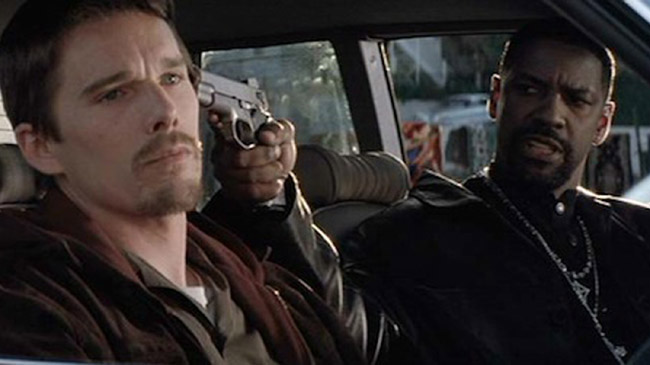
PM: If I have to pick one I would pick Training Day. I believe is one of the best movies of the last twenty years. The late George Simpson was the sound supervisor. I cut the sound effects together with a few other sound editors. There’s an important creative line that connects Training Day with Harsh Times,Street Kings and Sabotage.
Denzel Washington and Ethan Hawke in “Training Day”:
MT: What makes a great sound designer? What skills does he/she need?
PM: Patience and endurance. Also humility helps. Never go for the esthetic qualities of a sound. If it is not helping the story it’s beauty is useless. As far as skills needed I believe that the best skill to have is to be open to learn from others. Actually this is the same advise I was given when i started.
MT: What film, besides the ones you’ve working on, have you watched the most times in your life?
PM: The Godfather. Characters and story are incredible in this movie.
MT: Where did you grow up? How did you get into working in the film industry?
PM: I was born and grew up in Rome. I started as an apprentice in the Sound Department of the Cinecitta’ Studios. After a couple of years I I got the chance to edit something. It felt good and I liked it. And I still do.
_____
Interviewer Matthew Toffolo is currently the CEO of the WILDsound FEEDBACK Film & Writing Festival. The festival that showcases 10-20 screenplay and story readings performed by professional actors every month. And the FEEDBACK DAILY Festival held online and in downtown Toronto on the last Thursday of every single month. Go to http://www.wildsound.ca for more information and to submit your work to the festival.
A production designer is the person responsible for the overall look of a film. They ave a key creative role in the creation of motion pictures and television.
What an honor it was to talk with the amazing Production Designer Michael Corenblith. His resume is filled with some of the best movies in the last 20 years, including: Saving Mr. Banks, The Campaign, Game Change, Dinner for Schmucks, The Blind Side, Frost/Nixon, Apollo 13.
Matthew Toffolo: You’ve worked as a Production Designer in 35 productions over the last 30 years. Are there one or two films that you’re most proud of?
Michael Corenblith: There are countless ways to measure my affection for all of these projects. There have been so many valuable collaborators and shared experiences that each film has its own special place. “Apollo 13” will always remain one of the most exciting, and I’m so pleased to see it aging so gracefully. Other times the work that we do on a film can have a benefit of bringing a good cause to the public’s attention, as we were able to do with “Dolphin Tale” and the Clearwater Marine Aquarium,and now with “The Finest Hours,” and the Coast Guard boat maintained by the Orleans Historic Society. After the release of “Saving Mr. Banks,” Disney fans enjoyed seeing Walt’s Office circa 1961, that The Disney Archives, after 50 years, have restored Walt’s office suite in the Animation Building to a remarkable effect. So sometimes the thing you can be proudest of is accidentally doing some actual good in the world.
Photo: Re-creating the 1970 Space Station in Apollo 13 (1996). Actor Ed Harris:
Apollo 13 movie image Tom Hanks
Matthew: What is a director looking for in a Production Designer?
Michael: Initially, a director is seeking a Partner who shares his passion for the project, and regards it from a perspective that adds visual continuities that help tell the story as a whole. Good Directors are always seeking the better answer, and asking the better questions, and it’s during this interaction that the film begins to take shape. Later on, a Director is looking for supportive team play from the Art Department, and good communication with the Costume Designer, Cinematographer,and their teams, ensuring that the shooting days are about performances rather than these Crafts.
Advertisement
Matthew: What is a Production Designer looking for in a director?
Michael: The Directors who I’m attracted to are gifted storytellers, with strong character and dialog skills. Because of their storytelling orientation, they are enthusiastic about making the visuals work in a more orchestral way. I’m looking for someone who is full of ideas, and then figuring out how to create an overall scheme that incorporates these individual ideas into a cohesive whole.
Matthew: When working on comedies, are your tones and styles different in comparison to working on dramas?
Michael: My philosophy is that comedies are best visually supported when the environs and decors create a plausible canvas for the comedic events to occur. In formulating a visual scheme for a film, it’s more important that the story’s entire arc be considered, and the audience be more involved with the comedic predicaments of our protagonists. Sometimes, the screenplay will call for the Scenery to become part of the Physical Comedy, which seems to support this theory by not “telegraphing” the gag or stunt. Other screenplays will call for the protagonist to interact with an unfamiliar or uncomfortable environment, and in this case I remain true to the overall arc, but increase the vividness of these new decors.
Photo: Dinner Scene in the comedy film Dinner for Schmucks (2010):
Matthew: You have worked on a lot of movies that were based on true stories. In fact, you just completed one that is about Ray Kroc, the owner of McDonalds. Do you enjoy the research process of re-creating historical times? How far can you go to stretch the “truth” in design for the sake of the story and themes that are being presented in the film? I’m sure it’s a fine line.
Michael: One of the great treats of being a production designer is the opportunity to explore such a variety of eras and remarkable true stories…..and meet people who brought great knowledge and insights either through their presence or their scholarship. Films that stand out in this regard are “Apollo 13,” ”The Alamo,” “Saving Mr. Banks,” and recently, “The Finest Hours.” Each of these films aimed not only toward archival re-creation, but also had to temper a finished look that communicated the film’s emotional truths. Ray Kroc and the story of McDonald’s offered another wonderful opportunity to research something that is so fundamentally American, and then create a wonderful replica of the 1954 Golden Arches franchise. But while being respectful of the archivists and historians, the fundamental idea is for the audience to experience the film’s real emotions and sense of place, even if it means measured and thoughtful deviation from some known historic truths.
Teaser Photo of “The Founder” starring Michael Keaton (left):
Matthew: You also like to work on political movies. In fact, you went back to back with director Jay Roach on Game Change (2012) to The Campaign (2013). Are you a political person yourself? How was it to re-create that infamous 2008 campaign?
Michael: Political films have always interested me, particularly Michel Ritchie’s “The Candidate,” which was really the first time that the confluence of Media and Celebrity and Politics came together in a modern way. And in many ways, “Frost/Nixon” was an intensely political film that played out in a different arena. “Game Change” and “The Campaign” were made more or less back to back, during the Republican primary season of 2011, so it was great to see the foibles in our screenplay occurring in real time on CNN. McCain’s 2008 was an absolute blast to re-create, as it was so well branded, and so well documented. The most interesting challenge was in re-creating the Vice Presidential debate with Joe Biden, which required great precision for the split screen between the archival footage and our new footage, but when we reached out for the drawings from the original debate, found them to be somewhat “classified,” and had to resort to a very deep bag of tricks to creating our matching set.
Matthew: I have a funny feeling that you and Jay will be back for Game Change 2 after this political season (and of course after the book is written). Are you looking forward to re-creating the campaign worlds of Hillary, Bernie, Donald, and Ted?
Michael: I’ve been a big fan of “Presidential Politics as a Contact Sport,” and enjoyed Mark Halperin and John Heilmann’s telling of the 2102 campaign, “Double Down.” So yes, absolutely, I’d love to see what the Game Change team would bring to telling the story of this Campaign.
Photo: Julianne Moore becomes Sarah Palin in Game Change (2012):
Matthew: How early do you come into pre-production before shooting starts? When do your hire and bring on the rest of your key team members?
Advertisement
Michael: Generally, in early pre-production, the location work has yet to begin in earnest, so my first priorities are getting the location scouting underway, and beginning to line up my team. I often have a couple of weeks to lay out a general scheme, and scout with the Director and Producers. My department generally gets about the same number of pre-production weeks as the shooting schedule, so the Art Department Coordinator is the next hire, to set the table for the arrival of the Set Decorator and Art Director, followed by the Set Designers, and Graphic Designer.
Matthew: What percentage of the budget generally goes to the Art Department when working on a Hollywood film?
Michael: This is always going to be Situational in relationship to a lot of other moving parts within any individual project. The scripted locations also play a major role, as shooting in a high school or in a submarine mean very different budget allocations for the Art Department.
Matthew: What film, besides the ones you’ve worked on, have you seen the most in your life?
Michael: Without a doubt, Francis Ford Coppola’s “The Godfather,” with Kubrick’s “Dr. Strangelove,” and Mike Nichols’ “The Graduate” coming in distant silver and bronze. All wonderful, complex, human stories, each with its own beautiful visual signature…..each designed by one of the greats of my generation…Dean Tavoularis, Ken Adam, and Richard Sylbert. Each film left a very lasting impression on my cinematic development.
Matthew: Do you have a Production Designer mentor?
Michael: I am blessed in having two gurus. When I first had the opportunity to hear Richard Sylbert speak of the Craft of Production Design, his concepts and theories immediately resonated, and I suddenly understood that designing films could be so much more than simply reflecting what was already on the page. Years later, I came upon the work of USC Professor, Bruce Block, and his book “The Visual Story: Seeing the Structure of Film, TV, and New Media.” After hearing Bruce speak, I felt that he had brought order to a multitude of concepts that I’d been employing, and through his teachings could now employ them in a coordinated way.
Matthew: Do you have any advice to kids currently in high school or in university who want to be a Production Designer?
Michael: This is probably indicative of my generation being one of the last analog skill-based one, but in general my Old School Advice would be to develop some basic non-digital ways of conveying visual information. Come to classroom with some ways to express your ideas that can be simple as chalk on a blackboard….and don’t require a laptop.
Photo: Re-creating Walt Disney’s office in Saving Mr. Banks (2013) starring Tom Hanks:
This image released by Disney shows Tom Hanks as Walt Disney in a scene from “Saving Mr. Banks.” (AP Photo/Disney, François Duhamel) ORG XMIT: NYET626
_____
Interviewer Matthew Toffolo is currently the CEO of the WILDsound FEEDBACK Film & Writing Festival. The festival that showcases 10-20 screenplay and story readings performed by professional actors every month. And the FEEDBACK DAILY Festival held online and in downtown Toronto on the last Thursday of every single month. Go to www.wildsound.ca for more information and to submit your work to the festival.
Ute Bergk answered the set of questions I emailed her on the airplane on her way to Budapest, Hungary to complete the television mini-series “Emerald City”. Based on the “Wizard of Oz” universe, Ute promises that the series is “going to be something else” and that director Tarsem Singh is a delight. Two months in Hungary and they are wrapped.
She was happy to answer these questions on the plane and send them my way. In fact, I might have this interview posted before she lands.
Matthew Toffolo: You were the Set Decorator on the action/comedy “Grimsby”, which is currently at a cinema near you. How was your working experience on that film?
Ute Bergk: Yes ‘Grimsby’ came out a few weeks ago. I have been working with Sasha BC before- we build the stage for ‘FunkyZeit’ in Berlin for him /for the movie ‘Bruno’. It’s was just an introduction to the madness of a comedy. Sasha is very mesmerising – it’s more like a life event working with him , really. ‘Grimsby’ was scripted like a feature film, but that didn’t mean anything. The writers were on set all the time and creatively made changes continuously. Now- in hindsight- I can say, that one needs to have quite a team in the background to serve the needs. There is a lot of running around! My experience- interesting but very stressful and full on speed!
MT: Is there a difference when doing set decoration on a comedy film in comparison to a straight up action or drama film?
Ute: Yes- I guess there is. Every comedy I have worked on is always reassuring the moment (of laughter) and rightfully so. But on film all has to be managed the same way like a drama / action pic. The Set Dec. Challenge with Sasha was to decorate cool as always but at the same time having in mind, that certain furniture or dressing actually have a ‘role’ too. A sofa needs to be big enough to walk on or a curtain strong enough to swing from..
PHOTO: Sasha Baron Cohen and Mark Strong in GRIMSBY:
MT: How was the Batman Begins and The Dark Knight experience? You helped create a more grounded and unique comic book world that set the tone for this genre. When working on #2 specifically, did you know that you were going to be a part of such an iconic film?
Ute: Well, well – I am very thankful to have had the opportunity!
When we first arrived at the ‘stage’ where we build ‘Gotham City’ on “Batman Begins”, it took 15 minutes for the door to slide open. I was aware that this is going to be …big. But the process is the same ..you take your piece of chalk and start outlying the sets onto the stage floor. ..Here is we’re the monorail will cross, here it’s ‘leg’ , a little further down ( a few mins walk..) the entrance to the opera.. We walked a lot!
On #2 we mainly did all stunts and action sequences there – the ‘stage’ was big enough to allow that. Not to forget the iMax cameras zooming by on wires every now and than.
PHOTO: Gotham City in BATMAN BEGINS:
MT: “Enemy of the Gates” is such an underrated film as the production design felt so real, almost like we were in 1940s WWII Russia fighting off the Nazis. What are your memories working on that film? Was the entire Art Department shocked that you didn’t receive an Oscar nomination?
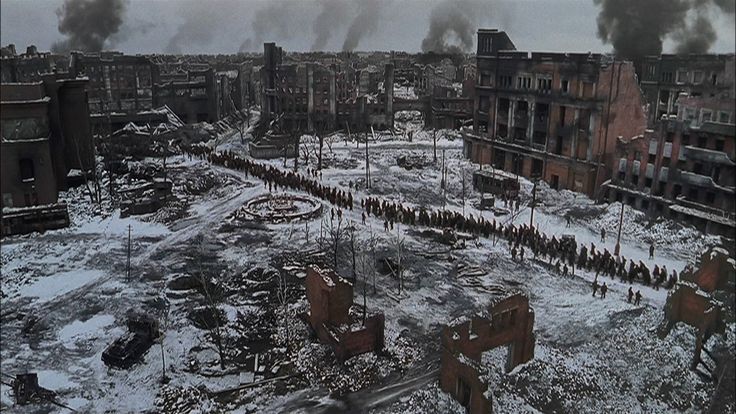
Ute: I am really glad you are asking me this! It’s a long way down on memory lane but this was the greatest experience so far. I was very early into my career and it just happened that I was asked to join the team. We shot it in Berlin and the former East Germany. The set was enormous! Well… I thought so being a youngster. But truly it was. It was the biggest movie in Germany at the time. The logistics required to make it happen were just ..thrilling ..I would say now. The whole art department worked together and I can not recall any ‘counterproductive activities’ amongst us. I developed a close bond to the Russian community and still maintain friendships from those days. The Designer Wolf Kroeger came up with these amazing designs all drawn on paper – sometime a drawing would be up to 4/5 meters long ..on a paper roll. We had to create Stalingrad , destroyed by the war and did a lot of research on bricks and rubble. Wolf insisted to have bricks from a special factory in Russia and so we had lorryloads after lorryloads coming in. Container full of rubble! I earned my nickname ‘rubble-queen’ there- and if I may go to question 10 from here- if you find it thrilling to find yourself in freezing conditions somewhere far from home trying to explain to a Russian speaking lorry-driver on overtime to dump his bricks carefully – I guess you would make a reasonable good member of the art department!
PHOTO: The grand set design in ENEMY AT THE GATES:
MT: Describe the working relationship between the Production Designer and Set Decorator?
Ute: The Designer works very close with the Director. The Decorator works very close with the Designer, but the roles are quite different, I’d say. The Designer has a passion to create using his vision. The Decorator depends more on actual facts than fiction. Is a decor ..available. Do we need to make? Fabricate? What are the practical lighting requirements ? In what I am doing now this has become quite a concept..as ‘Emerald City’ is lit by the ‘Two Moons..’ But generally the Decorator has to be quite ‘realistic’ at some point and the Designer occasionally has to compromise , which they normally don’t like doing.
MT: How soon before production begins does the Set Decorator begin working? What is your initial task?
Ute: At least 3 months prior to the shoot and not long after the Designer is on board.
Initial task? Doing the job with full passion and ability.
MT: What does the Art Department look for in their Production Designer?
Ute: Not always does the Art Department choose with whom to work. An Art Department sometimes can consist of a lot of people and I cannot answer on behalf of all those involved. For me the person I work closely with has to be artistic, visionary, funny, entertaining, always switched on and human. At the end of the day it’s just a movie.
MT: What does the Production Designer look for when working with their Set Decorator?
Ute: You have to ask a Production Designer this .
MT: Besides the films you’ve worked on, what movie have you seen the most in your life?
Ute: Movie seen the most- u mean more than once? Probably “Mulholland Drive” cause I tried to figure out the architecture (there is none..!)
After having worked on “13 hours” – I thought the movie “Timbuktu” is just wonderful, but I have only seen it once- the soundtrack in on my Spotify playlist!
MT: Do you have any advice for high school and university students who want to work in the Art Department in the film industry?
Ute: If you enjoy all things weird and wonderful you have found your space. But only experience can tell if you succeed. It’s competitive and not easy to break into – if there is no other place in the world for you than go for it. Just like the Giant in ‘BigFish’ – see if you like it.
____ Interviewer Matthew Toffolo is currently the CEO of the WILDsound FEEDBACK Film & Writing Festival. The festival that showcases 10-20 screenplay and story readings performed by professional actors every month. And the FEEDBACK DAILY Film Festival on http://www.wildsound.ca and also held in downtown Toronto on the last Thursday of every single month. Go to http://www.wildsound.ca for more information and to submit your work to the festival.
It was an honor chatting with Emmy Nominated editor Allyson C. Johnson. She is currently editing the critically acclaimed series “The Get Down”.
Matthew Toffolo: You edited two episodes of “The Wire”. How was this working experience? Did you realize that you were a part of one of the great TV shows in history?
Allyson C. Johnson: The Wire was my first TV series so I didn’t know what to expect. I had been cutting features and docs and everyone kept telling me TV was soooo different but it was HBO so we didn’t have to deal with the commercials and other restrictions put on you by Network television. I think we all knew it was a really good series but when you’re in the trenches it’s hard to step back and actually see the bigger picture. So, no, I had no idea it was going to be as big as it is. It was a great experience because the Producers were smart, creative and trusting of the editors and it’s always a pleasure to work with a talented cast like the one on the Wire.
MT: What film that you’ve worked on has been your most valuable experience?
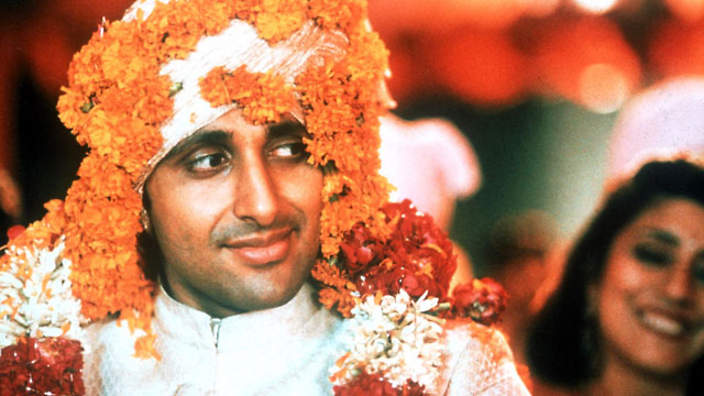
ACJ: I think Monsoon Wedding was my most valuable Feature experience so far. It was my first film and I learned so much from working with a great Director like Mira Nair. She has an amazing talent for making a performance as good as it can possibly and giving a film real heart.
PHOTO: Still from the film “Monsoon Wedding”:
MT: What is the art to being a great TV SHOW editor? How is working in TV different than working on a feature film?
ACJ: I really don’t think there is a difference between a “TV show editor” and a Feature or Doc editor. Now that there’s streaming and cable TV not all TV has the issue of having to stop the story every 8-12 minutes to add a commercial break. The big difference for me is that in TV it’s not a given that the editor will be at the mix. I still don’t quite understand why that is since the editor knows the show inside and out and can be a huge help during the mix. Network TV tends to want more close ups and to be on the actor’s face when they’re speaking plus having to find spots to put commercial breaks that will not be intrusive can be a challenge. Also, working on a series, although the director does the first cut, he/she doesn’t end up having the final say as they would in a Feature film because the Showrunner is the one who must make sure the series has one look and one feel.
MT: Have you ever been surprised after wrapping a production on the success or non-success of a film/TV show? I’m assuming you’ve experienced both pendulums – a film that you assumed was going to be a hit and the audience/critics didn’t respond. And a film that you assumed wasn’t going to do well and then ended up doing very well.
ACJ: I am ALWAYS surprised at the outcome. There are so many different opinions and tastes in this world. I think we just have to make sure we are working on a show or film we believe in and enjoy and not worry about what everyone else thinks. Unfortunately reviews can make or break a show and these days so can social media so I hope people will give a show a chance before they let someone else decide for them.
MT: What is an editor looking for in their director? What is a director looking for in their editor?
ACJ: Big picture? We spend so much time in the editing room together it’s imperative that we can laugh together. More specifically? I always hope for shots to cutaway to so we are not forced into performances that might not be the best and/or continuity issues. I would imagine a director would want an editor who is open to trying new things without complaining.
MT: Is there a type of film that you would love to edit that you haven’t edited yet?
ACJ: I was a musician in college and have always been drawn to musicals. Although I’ve worked on many Rockumentaries in addition to the NBC series Smash and The Get Down for Netflix, I still haven’t cut a musical Feature Film and would love to do that.
MT: What film, besides the ones you’ve worked on, have you seen the most times in your life?
ACJ: Aside from the films you watch a thousand times when you’re a kid I think I have probably seen Cabaret, Broadcast News, Sleeper, To Kill a Mockingbird, Harold and Maude, Minority Report, A clockwork Orange and The Heat. Sorry, couldn’t just pick one. That doesn’t mean there aren’t other films that I loved but some films you just can’t watch over and over again even if you love them.
MT: What suggestions would you have for people in high school and university who would like to get into the industry as an editor?
ACJ: Get a job in a cutting room, any job doing anything. It’s important to be exposed to the process as much as possible and to meet people in the business. If you’re an assistant already cut scenes on your own in your spare time using the footage for the show you are working on so you can get some practice and show them to the editor and ask for pointers. Learn the AVID.
MT: Where did you grow up? Was working in the Film Industry something you always wanted to do?
ACJ: I grew up in Great Neck on Long Island. I always wanted to be a musician and ended up going to college for that. However, I was very involved in Theatre at my High School too and I had a great love for film when I was growing up. Unfortunately it never occurred to me that I could do that for a living. We didn’t have phones that we could use to shoot our own movies and I didn’t know anyone who worked in the business so it seemed a little too out of reach until I got to college. I went to SUNY Purchase and it had a great film program. While I was there I took a few film classes on the side. That was the beginning for me.
_____ Interviewer Matthew Toffolo is currently the CEO of the WILDsound FEEDBACK Film & Writing Festival. The festival that showcases 10-20 screenplay and story readings performed by professional actors every month. And the Daily Film Festival every single day downtown. And also held in downtown Toronto on the last Thursday of every single month. Go to www.wildsound.ca for more information and to submit your work to the festival.
Alex Armbruster is one of the most sought after stunt performers working in Canada today. When Hollywood makes an action film, Alex is generally on-set working is various stunt skills and expertise. He has worked on over 60 movies and TV shows in just the last 7 years along.
It was an honor to chat with him about his career:
Matthew Toffolo: How did you get into the stunt game? Was this something you’ve always wanted to do?
Alex Armbruster: Looking back, I suppose it all started when I was 12 years old. One day I saw a Disney movie called “Brink” about competitive aggressive inline skating, and immediately after the movie, I strapped on my skates and started jumping around outside; little did I know that this sport would become my passion that got me into the world of stunts for film and television. Fast forward a few years, I had been very competitive in the inline skating world and had been part of a live action sports group called the “Craz-E-Crew Stunt Team” that took me all over the world including Saudi Arabia, India, and all around North America. One day I happened to visit a skatepark in Brantford, Ontairo where I met these two brothers who happened to be stuntmen in the business already with their father being a stunt coordinator. We hit it off and started hanging out on a regular basis where I would see how much fun they were having and how much money they were making. I remember thinking to myself “I need to get in on this!” So eventually I convinced them to give me a shot on set; which they did. It was on an MTV show called “Skins” to basically be the buffer between the stunt and background performers to make sure they didn’t get hurt from the fight scene we were doing. From the moment I stepped on set, I was hooked. I ended up doing lots of extra and background work to meet other stunt coordinators in the business; always bringing my resume and demo reel with me. I was constantly training different skill sets, getting as good at everything as I could. Eventually, they also gave me a shot and I started to make a pretty decent reputation for myself. Six years later, here I am today!
Getting into stunts was definitely not what I always dreamed of doing when I was younger. Growing up, I always wanted to be a professional rollerblader. As time went on, the sport unfortunately started declining and learned that I couldn’t really make the living i wanted from it. I also went to school for business and thought at one point that I would open up a skateshop/skatepark instead. It was around this time (2008-2009) that I had met my stunt friends and began to see my future that satisfied me the same way that rollerblading did. Stunts became my new passion and allowed me the free time I needed to continue rollerblading to my hearts content.
PHOTO: Alex does some “fire” work on set:
MT: You work a lot on Toronto based sets. How is the crew experience in Hollywood North?
AA: Yes, I work mainly in Toronto and Montreal at this point. The crews are usually quite good here in the sense that everyone is very organized, kind and for the most part, efficient. I’ve only got the two locations to compare, but I imagine they would be very similar to the crews in the states as well given that we have to cater to American and other international actors’ as well.
MT: What job has been your most valuable experience so far?
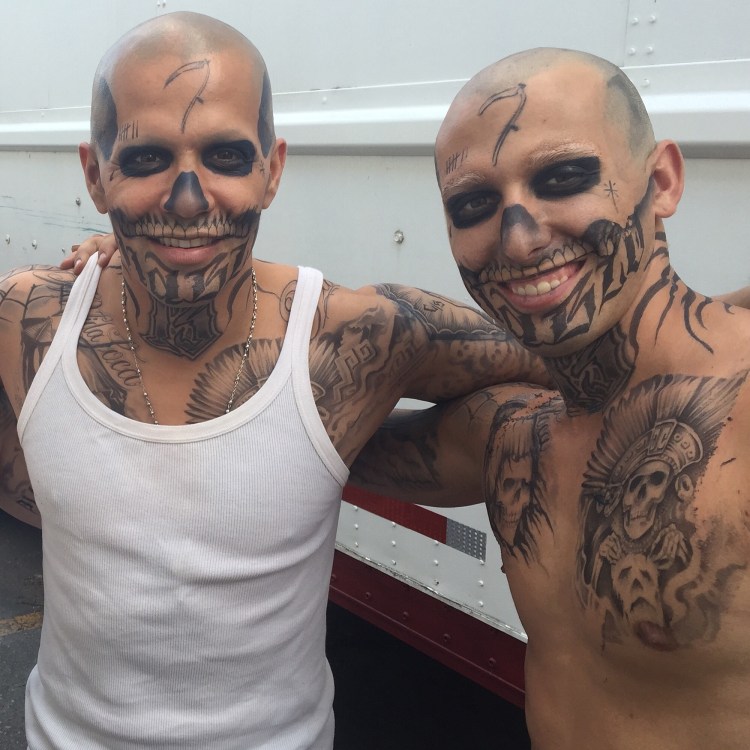
AA: My most valuable stunt job has been stunt doubling for Jay Hernandez who played “El Diablo” in Suicide Squad. It was such an amazing experience working alongside actors like Will Smith and Margot Robbie and just being apart of the DC Comics world. I knew right away when I got the job that it would be a pivotal point in my career in the sense that it would probably be one of the most unique experiences that many stuntmen wouldn’t receive. Getting all dressed up in the makeup, getting the tattoos and shaving my head every morning for this role was very cool and definitely made me feel like a super hero (or villain). Although there were only a handful of stunts for this character in the film, there were a couple of really good ones including when he gets flushed out of the water tank and when Incubus kicks him backwards 60ft over a flight of stairs into a shop window and into a wall in the last train station scene. I’ve now developed a bit of a collecting habit for any Diablo-related merchandise I can find…after all, it’s probably the closest I’ll get to having an action figure of myself!
PHOTO: With actor Jay Hernandez – Suicide Squad stunt double for Diablo Ratchet
MT: What are the differences between working on a big budget movie (X-Men: Days of Future Paste, xXx) in comparison to working on a television series (Dark Matter, Designated Survivor?
AA: The difference between working on a big feature film and a smaller TV show basically comes down to two things: time and money. On a big feature film like Suicide Squad, they have hundreds of millions of dollars to work with while trying to create a film that’s around 2 hours long in about 4-5 months. On a TV show, they have a few million while trying to create 1 hour episodes every week or two over the course of 3-4 months as well. As a result, the big features move a lot slower on set since they’re usually only trying to get a couple scenes shot everyday. Since the budgets are so big, everything is a little more relaxed and casual since they don’t have to get everyone off the clock so soon. On a TV show, they’ve got usually around 5-6 scenes to film in one day with set shifts in there as well so they tend to move along a bit quicker and more efficiently to get that all accomplished on time.
MT: Is there a type of stunt that you haven’t performed yet that you would love to work on?
AA: One of the things I actually haven’t done yet is to do a full body burn (to be set on fire). It’s just one of those things where the opportunity doesn’t come around too often and when it does, it often goes to someone who has done it already. Even if the opportunity doesn’t come up in film this year, I’ll definitely be getting my friends to set me on fire just so I can experience it and put it on the resume.
MT: What makes a great stunt performer? What skills does he/she need?
AA: A great stunt performer should first off, have a great positive attitude. The film business can be quite tough to break into and even to make a living in and it takes a very special breed of person that is willing to persevere through all of the ups and downs. They need to be okay with not knowing when they’re going to work next, where they’re going to be working, what they’re going to be performing, etc. They need to be comfortable with being uncomfortable for extended periods of time on set; for example, wearing a prosthetic costume in extremely cold weather for over 14 hours overnight gets pretty tough mentally. Another huge asset that every great stunt performer needs to have is the ability to take and follow direction; even if the stunt performer is one of the best in the world in terms of skill, if they can’t take direction and do what the director or stunt coordinator is asking of them, then they’re essentially useless to the production. In terms of skill required, it is to the performers’ maximum benefit if they are as good at as many skills as possible. Most stunt performers break into the business by having some sort of specialty skill that they excel in, but this skill alone won’t keep you working all of the time. Most of the stunts you see in films include skills such as precision driving, high falls, fight choreography, gun work, wire work, gymnastics, parkour, horsemanship, acting, etc. A great stunt performer should be relatively well-rounded in most of these areas so that they can confidently accept any type of job opportunity that comes their way.
PHOTO: Doing wire work on the TV show Minority Report:
MT: What film, besides the ones you’ve worked on, have you watched the most times in your life?
AA: Good question. I’ve always been a huge fan of the Back to the Future trilogy with Michael J. Fox. Every year I usually watch these films a few times. Everything about the trilogy is so well done that it’s just one of those classics that you never really get sick of; the story telling, the music, the characters, the stunts, the one liners… it really is a “timeless” movie… pardon the pun. A career goal would be to be apart of a film as good or even better than that… which these days is pretty hard to come by.
MT: What’s the biggest high risk stunt you’ve performed to date?
AA: The biggest high-risk stunt I’ve performed to date is probably the one on Suicide Squad which i mentioned earlier where I went flying on a wire (we call it a ratchet) backwards 60ft. over a flight of stairs, through a window sill and into a wall. The reason why this one was such high-risk was because of the huge distance that I had to travel backwards and the speed that it was being done at. When the distance is that big between your take-off and your landing, there’s a lot of room for error; it’s very easy for your body position to change into one that’s not very favorable for your landing. The wardrobe I was wearing ( a tank top and jeans) also didn’t allow me to wear any pads on the upper half of my body which was a concern considering I wasn’t landing on any mats. We were planning for me to launch backwards, hit and break through the window sill and then hit the wall with my back pad, landing safe and sound. Here’s what actually happened: from the take-off, everything was going very well until I hit the window sill (which was breakaway so I could go through it easily). Once I hit the window sill, my body position changed unfavorably and my legs swung back behind me and smashed into the wall first before my back which ended up giving me a nasty spiral fracture on my left fibula (ankle). Although the rest of my un-padded body was somehow unscathed, I found myself healing for a good 6 months after that. Sometimes these things happen, and these are the types of risks we take as stunt performers but it definitely could have been a lot worse if I hit my head instead of my leg. However, I did make a full recovery and I’m 100% again.
MT: Where do you see the future of green-screen stunt performing in the motion pictures?
AA: With the steady increase in visual effects technology, there’s without a doubt going to me more green screen stunt performing in the future. Using green screens in the background for stunt performing typically isn’t a big deal since they usually use it to simply put a different background image in the scene which keeps all of the stunts real and authentic. Where we might get into trouble later on is increased CGI replacing stunt performers. For example, even now in some films instead of actually lighting a stunt double on fire, they’ll simply CGI the fire on the actor which eliminates the need for a stunt performer completely in that case. Luckily at this point, CGI only works for certain types of stunts and there’s still a need for real people performing real action. It’s also very costly to involve CGI and it still remains less expensive to pay a stunt performer who will make the stunt look better in the end anyways.
_____
Interviewer Matthew Toffolo is currently the CEO of the WILDsound FEEDBACK Film & Writing Festival. The festival that showcases 20-50 screenplay and story readings performed by professional actors every month. And the Daily FEEDBACK Film Festival held in downtown Toronto, and online. Go to www.wildsound.ca for more information and to submit your work to the festival.
Alan Heim is an Oscar & Emmy winning editor. Many will say that he’s one of the greatest editors in the history of cinema. All you need to do it watch “Network” (1976), and “All that Jazz” (1979) to see the uniqueness of his talent. If you haven’t seen those films I highly suggest you do because they are timeless in their themes and character studies. It was an honor to chat with Alan about his career. A career that’s still going strong at 80 years of age.
Matthew Toffolo: In recent years you’ve worked with director Nick Cassavetes in collaboration (The Notebook, My Sister’s Keeper, The Other Woman, Alpha Dog). How did you first meet? What makes your working relationship so strong?
Alan Heim: I believe Dede Allen (Editor: The Hustler, Bonnie & Clyde) suggested I cut “The Notebook” and Nick and I have gotten along together very well since. He likes my honesty in assessing the material and I love his rather rebel ways.
MT: You won the Oscar for the amazing “All That Jazz”. A film that still holds up today. How were your experiences working on that film? How did it feel when you went up to accept your Academy Award?
AH: All That Jazz was wonderful to work on because the material was so unusual and Fosse and I had a wonderful collaboration. Every day was a challenge and filled with discovery. Bob had written many of the structural things we had found in the cutting room on ‘Lenny’ into the script of “Jazz” but we discovered that we still had to struggle with certain areas to make the film work as planned.
As far as the Oscar, I was thrilled, as any winner should be. I even forgot to kiss my wife when they called my name. It was also very rewarding to share the stage with so many of my coworkers on the film.
PHOTO: All that Jazz starring Roy Scheider:
MT: What is the key to editing a musical?
AH: The key to editing a musical is to always keep an eye on the story and always try to make the audience follow the flow of the dance. A good script keeps the musical numbers integrated into the structure of the film.
MT: You also worked with Bob Fosse on “Lenny”. How was your working relationship with the iconic musical Choreographer/Movie Director? “Lenny” also appears in “All that Jazz” too! It’s almost like you edited “Lenny” twice!
AH: Bob and I worked together well because we both wanted the very best we could get out of the film. I love working with directors who won’t settle and always want to reach for perfection. I feel the same way about Nick Casavettes.
As far as editing “Lenny” twice….I always like my films to be an adventure of discovery and I’ve been pretty lucky this far.
MT: The film “Network” is a masterpiece that really was ahead of its time. It’s a film with themes and settings that still ring true to today’s world and situations. What are you feelings and memories working on the film as it approaches its 40th anniversary?
AH: “Network” has always been one of my favorites. Paddy Chayefsky was a brilliant, prescient polemicist and wrote a near flawless script, beautifully acted and directed perfectly by Sydney Lumet. What more could an editor want? Except for some unfortunate clothing choices and sideburns, the film can be released today with great pride and timeliness.
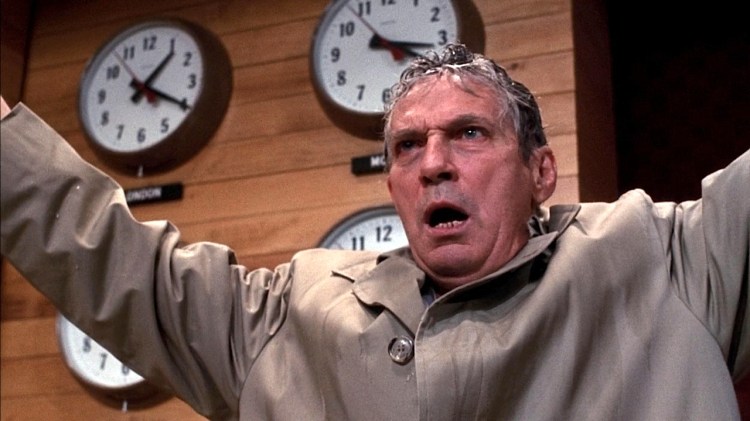
PHOTO: Peter Finch is “Mad as Hell” in Network:
MT: You also edited (and won the Emmy for) the landmark TV mini-series “Holocaust”, which premiered in 1978. It stars a young Meryl Streep and James Woods. Were you aware when editing this series how important it was going to be for the education of many people watching?
AH: I only worked on one of the four episodes and I had to re-edit it. It was the first time I ever “doctored” a film and basically put it back in dailies form and totally recut it. It was very meaningful for me and I’m happy for whatever it has done to retain the Holocaust in people’s memories.
MT: What is an editor looking for in their director? What is a director looking for in their editor?
AH: I think the answer is the same to both questions. Editors and directors should both try to find a person that they can spend a LOT of time with in close quarters working to get a vision on the screen. One hopes for it to be the same vision or herd will be a lot of tension in those close quarters.
MT: Is there a type of film that you would love to edit that you haven’t edited yet?
AH: I’m very happy to have worked on the type of film I’ve worked on, mostly films with emotional reality on a fairly small scale. Few fights and those mostly with fists, not lasers.
MT: What film, besides the ones you’ve worked on, have you seen the most times in your life?
AH: Probably “Citizen Kane”, “Casablanca” and lots of older comedies.
MT: What suggestions would you have for people in high school and university who would like to get into the industry as an editor?
AH: If you really are devoted to becoming an editor try to hang around cutting rooms, look at lots of movies and practice cutting wherever you can.
Don’t neglect reading, listening to all kinds of music, seeing plays and art shows and generally opening your mind to all things cultural. It all helps when you’re trying to tell a story and that’s what editing is all about..
_____
Interviewer Matthew Toffolo is currently the CEO of the WILDsound FEEDBACK Film & Writing Festival. The festival that showcases 20-20 screenplay and story readings performed by professional actors every month. And the FEEDBACK DAILY Festival held in downtown Toronto and online daily. Go to www.wildsound.ca for more information and to submit your work to the festival.
A special effects coordinator is an individual who works on a television or film set creating special effects. The supervisor generally is the department head who defers to the film’s director and/or producers, and who is in charge of the entire special effects team. Special effects include anything that is manual or mechanically manipulated (also called “practical effects” or in camera effects). This may include the use of mechanized props, special effects makeup, props, scenery, scale models, pyrotechnics and atmospheric effects: creating physical wind, rain, fog, snow, clouds etc.
Interview with Donnie Dean:
Matthew: Explain the process of being a Special Effects Foreman and Coordinator. What is your job description?
Donnie: To become a Special Effects foreman a person must demonstrate a certain level of competence and management experience. This is gained through years of learning the trade and being mentored by people who have been in the industry for some time, some of them for several decades. When you start in the business, you must earn the respect and trust of these professionals. Once you have that they will generally teach you anything you are willing to put in the effort to learn. Its all about attitude and persistence.
My current job description is Operations Coordinator for Spectrum FX. I’m responsible for the day to day operations for whatever films or television shows we are working on. Usually I’ll take on different roles depending on what the projects require, from “consulting” with the SPFX Coordinator who is running the project to acting as SPFX Coordinator or Foreman personally. The job requires knowledge of budgets, schedules, and most importantly how the Effects on the show are to be done and when. About eighty percent of the time I copy Matt Kutcher (FX Supervisor) on emails and/or photos and videos of the planned Effects for his input or approval. He has almost 3 decades of experience so his input is extremely valuable.
Matthew: You were the Special Effects Coordinator on the landmark TV series “True Detective”. How was your set experience? During the production did you and the crew know you were doing something special?
Donnie: True Detective brings back memories of sweating buckets in the sauna that is New Orleans in the summer. Carey Fukunaga is very specific about what he wants to see, which helps in planning the Effects on a show. This was the first show in which we filmed the whole season as if it were one huge feature, so keeping up with the schedule was a bit of a challenge. Matthew McConaughey and Woody Harrelson are both really strong actors, watching them perform in person was really amazing.
I would say it’s very difficult to judge how “special” a film is when you’re actually creating it. They all feel special in various ways sometimes only because you work so closely with so many really great people, and it can be sad to see all the heart that goes into a film like “Beautiful Creatures” or “Abraham Lincoln Vampire Hunter” and then it doesn’t really see success in theaters.
PHOTO: Matthew McConaughey in True Detective Season 1:
Matthew: You’ve worked on over 50 productions in the last 8 years alone. That’s amazing. Do you have a favorite experience?
Donnie: The final episode of American Horror Story: Coven was one of my favorites. We had to perform virtually every effect from the entire season in one night of shooting. The biggest moment for us was the tracking shot of Emma Roberts in the bathtub when the camera comes in and you see the fireplace light, then the bubbles fill the tub, and with a wave of her hand the candles on the floor light spontaneously. There was no VFX required in that shot, although it took 3 takes to get the timing right. Between the time it takes to ignite a fireplace and the bubbles filling a tub alone its a very difficult thing to provide cues. The call goes to the technicians ear (because he can’t see the set) then there is a delay to his hand moving the valves, and then the time for the propane to travel to the ignition source. There is a similar process for every mechanical effect. The whole crew cheered on the last one, they had seen the process as we developed these effects over the 6 months we filmed, on that last day it took literally 8 technicians on set to accomplish everything. Making a candle light on its own is an “impossible” practical effect to achieve all by itself, if its ever been done we don’t know of the instance but we did it over and over throughout the season. It was just a perfect end to that show.
PHOTO: American Horror Story: Coven. Emma Roberts bathtub scene:
Matthew: What job have you performed on set that you’re most proud of? Your crowning achievement to date?
Donnie: The job I’m most proud of is without a doubt the Emmy Award for American Horror Story: Freak Show. We spent a lot of time on so many details that showed up but are not so obviously Practical Effects. From the tents moving a little because they are supposed to be outside instead of inside a stage to spending days on the display tanks for the “freaks” to be in for the museum, it’s the little things things no one really recognizes as Practical Effects that help a set come to life.
I can’t really say it is “my” achievement however, as much as it was an achievement for everyone who has ever trained me or worked with me from day one. More than anyone, I think it reflects on Matt who has mentored me personally for the last seven years, being available every single day 24/7 on both a personal and professional level.
Matthew: You have also done some Stunt Driving too. How does one become a stunt driver?
Donnie: To become a real stunt driver requires time, training, and experience. I’ve worked with quite a few and am far from being a “professional stunt driver” by definition. I managed to get into it on True Detectives because we constructed a driving module on top of the car. As the actors were inside performing the car was driven from outside the vehicle, we constructed the “driving pod” and I was familiar with its operation so it was an easy step into driving the car.
Matthew: What do the Special Effects team look for in their director?
Donnie: The more details a director provides, the better. I think the same is true with all departments. For us the more interactive and approachable the director is, the easier it is to achieve the desired effect. As a matter of process we do demonstrations of the more specific effects to be used in a show and rely on the director’s feedback to make changes.
Matthew: What film, besides the ones you’ve worked on, have you seen the most times in your life?
Donnie: It’s hard to name one specifically, I’ve watched The Fifth Element so many times I know each frame, and the same with Tombstone. It would have to be a tie between those two.
Matthew: What suggestions would you have for people in high school and university who would like to get into the industry in special effects?
Donnie: The first thing is to find a mentor or a group to work with, you go in humble and you just do what is asked. Nobody really cares how cool you are or what you “know how to do”. You do what is asked and you do it to the very best of your ability every time.
It’s the same as for any industry. You have to really enjoy what you do, so much so that you don’t care about the money. You really have to give yourself over to it just like a Doctor in Medical School, it has to become the most important thing for a while. You don’t know what day that moment will come when you get the call and everything has to go on hold because it’s your opportunity. We work 12-14 hour days 5-6 days per week, you won’t even know what day of the week it is, much less if its a birthday or anniversary, and NO ONE understands why from your “real life”. You can’t RSVP to anything…well you can but you might have to cancel. There are a LOT of people who think they want to work in film in general, but its not for everyone.
If it is for you, then you show up every day, and show up on days you’re not getting paid, somewhere, anywhere there is a person who can teach you. You do jobs to demonstrate what you can do, if you are asked to sweep you smile and sweep better than any person ever could. If you’re asked to dig a hole its the neatest hold ever dug with the dirt that came out of it is on a tarp all nice and neat. You always say yes with a smile even if its fake. Once that door is open you never walk back out of it unless you’re sure you don’t care if you’re there or not. Because right outside is another guy like me that can’t wait to get in there and nail that door shut because he wants it worse than you, and if it takes 6 months of sweeping a shop or cleaning trailers for free, and doing other side jobs just to survive and be present, then that’s what he’ll do. The money and success will come if the passion and persistence are there.
One of my favorite quotes is from Will Smith to the point of “other people may have more talent and skill than you, but there is no excuse for anyone to outwork you.”
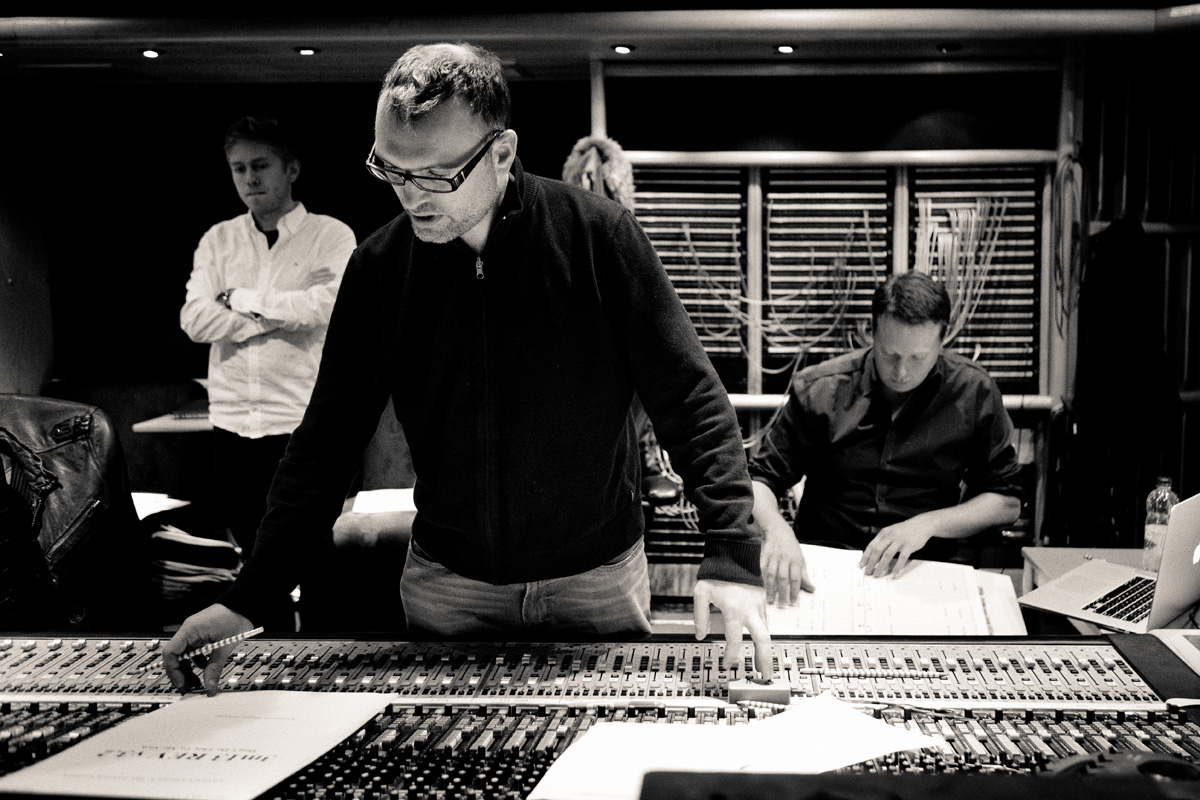
Henry Jackman // Captain America II scoring sessions, December 19, 2013 Air Studios, London Commissioned by Costa Communications
When I called up composer Henry Jackman’s office to do the interview, I was put on hold. Fittingly, while I was waiting I got to listen to the music of Henry Jackman. It was a great way to start the interview as his music is moving even when it’s “on hold” music from the phone.
Henry’s list of credits is already legendary, and he’s just getting started. He has composed Captain America 2 & 3, X-Men: First Class, Kinsman 1 & 2, and the upcoming Jack Reacher: Never Go Back, just to name a few. And I didn’t even mentioned his Animation movie composing (Go to his imdb profile).
In this interview, we centered on his score on “Birth of a Nation”, which should definitely lead him to his first Oscar nomination.
Matthew Toffolo: When did you first come aboard “Birth of a Nation?
Henry Jackman: The very early stages. My agent was friendly with Nate Parker (director of the film) and he introduced us. He initially suggested Nate get in touch with me, stating that I’m not just a big budget composer.
I read the script and I knew this needed to happen. Nate was a man consumed with purpose and whatever was needed to get this film done, he was going to do it. So I was in right away. There was no financing completed, and he didn’t even have a studio on board yet, but I knew that Nate was going to make it happen.
The story of Nat Turner in “The Birth of a Nation”:
MT: How did the process work with you completing the score of the film? Did you receive a rough cut at first?
HJ: By the time I got the picture, it was about 85% completed. He didn’t have the luxery of doing an extended cut where I score the music and they cut that. He knew what he wanted in production and shot it. So when I began working on it, it was almost already done.
MT: What kind of direction did you get? What kind of thematic were you told to create?
HJ: Nate just told me that he loves the human voice and it would be a great way to connect with the audience for this story. I had the budget contraints on my mind and thought we could get really creative and use a solo singer, and a solo celloist and just a few other intruments. But to Nate’s credit, he said to create the score like we have all the money in the world, and he’s figure out the budget. And that really helped me. By the time we got to the ending, I knew we needed a big musical score with lots of singers and Nate got it done. We ended up with what we needed.
MT: From a practical and creative standpoint, working on this film must have been apples compared to oranges in comparison to you working on the Captain America films?
HJ: It’s funny you say that. Ultimately, yes, there are differences, but the differences are only surfaces. The process of coming up with the thematic score, writing the music etc… is the same on both films. The budget is there and of course I had more financial freedom with Captain America, but the creative process was exactly the same.
MT: I was at the TIFF (Toronto International Film Festival) screening of “Birth of a Nation” and the energy was amazing in the cinema. When the film ended, it received a standing ovation. But of course there is a controversary with the director (if you do not know, please Google it) that the media keeps bring up that, and some can say, has tainted the film. Do you have any opinions of the conversary surrounding the film? How “Birth of a Nation” is probably not getting the attention it deserves?
HJ: The only thing I can say is that I encourage anyone to go see this film. Speaking about myself growing up in a European heritage, I didn’t even know about this part of history and the story of what happened in 1831. Everyone knows the basic history, but this film tells a story, without being heavyhanded about it, about what happened then and the legacy this time still holds for us today. That’s such an important thing. So if anyone has any hesitation, please keep that in mind.
MT: The controversary is kind of a 2016 problem. The film itself is never just the story and promotion now. It’s the social media influence and how the personal lives of everyone part of the film get mixed into what the film is trying to say. So Nate’s personal history, some can argue, taints what this film is trying to say.
HJ: That’s true. People make their own opinion and judgements. Whatever tweets that are flying around now is part of our present day communication and there’s nothing wrong with that. The story of Nat Turner is definitely something people should also be talking about – and going to see this film.
MT: What type of working relationship do you like to have with your director?
HJ: I think the best relationship is a consistent vision and they are never flip-flopping. An overall vision that’s in the costumes, editing, acting etc…, but with sufficient space that allows each artist do what they need to do.
For example, all the conversations with Nate were about the film and it’s themes. What each scene is about. So all the little conversations, like what’s not working etc…, is about the overall vision. So there isn’t any conversations that are NOT about the film and its visiion. Which makes for the best working relationship.
Edward Zwick (just finished working with him on Jack Reacher: Never Go Back) is an example of a great director/composer experience. He brought the tranquility to the process. Everyone is pulling on the same rope to create the vision. When films get in trouble is when the vision changes.
MT: Tell us about the CAPTAIN AMERICA experience? Working for MARVEL?
The Russo Brothers are also great directors to work with. It is different because we’re working on a franchise and all of the films in the Marvel universe need to connect. What makes the Russo’s amazing is that they can do their own film and make it connect with all of the other films. They are masterful directors in capturing their own unique voice in this massive franchise.
Captain America: Winter Soldier was such an amazing experience and many regard it as the best comic book movie made.
MT: Because it wasn’t a comic book movie. Tone-wise it was a spy/thriller?
Exactly. But they didn’t go so far in that direction and leave the fans behind. They mastered the circle. So by the time we did the 3rd film (Captain America: Civil War), Marvel left them completely alone to do their thing as they trusted them. And I have to say they nailed it.
MT: And you nailed it with the score of that film?
Thanks. I am proud of that film.
MT: From a technology standpoint, where do you see the future of composing in the movies?
The future is always a guess. If you go back 30 years in music in film, the tolerance then is different than it is today. There is more variety in music in film today. Film scores are now a broad church. Producers are less freaked out by a wide score of music composed in a film. People now listen to a wider range of music so in relation there is more freedom for the composer to add a wider range. So the future is probably going to simply go wider as access to all kinds of music that people listen to become less judgemental.
In the heart of Bangkok, Detective Aran Chen, a defiant inspector haunted by his past, pursues the elusive “Shadow Killer,” a ruthless serial murderer. Armed with his sharp instincts and lethal martial arts skills, Aran battles through the city’s underworld, uncovering a chilling link between the killer’s motives and his own scars. As the lines between justice and revenge blur, Aran faces a deadly confrontation that will test his resolve and redefine his destiny.
Get to know the writer:
1. What is your screenplay about? Shadow Killer is a grounded crime thriller set in Bangkok, following a police investigator haunted by his past as he hunts down a mysterious serial killer. As the body count rises, he relentlessly pursues the murderer, relying on sharp detective work and his martial arts skills. His past looms over him, threatening to cloud his judgment, but he pushes forward, determined to stop the killer. The chase builds to a brutal final confrontation, where his skills and resilience are put to the ultimate test.
2. Why should this screenplay be made into a movie?
Shadow Killer is a bold, high-impact reinvention of the action genre, fusing a gripping crime investigation with bone-crunching martial arts combat. In a world where thrillers often fall into predictable formulas, this film keeps audiences on edge with relentless action, shocking twists, and a hero who fights both a deadly killer and his own past.
With one or two game-changing twists leading to a high-stakes, brutal finale, Shadow Killer delivers exactly what modern audiences crave—an electrifying, no-nonsense action experience that’s as smart as it is thrilling. It’s a ride that never lets up, never holds back, and most importantly, never forgets to entertain.
This isn’t just another action movie, it’s the one that will leave audiences breathless.
3. How would you describe this script in two words? Relentless and thrilling
4. What movie have you seen the most times in your life? Probably the Princess Bride, it’s a classic but it’s a good classic and one that never gets old.
5. How long have you been working on this screenplay? I formulated the idea about 3 or 4 years ago but finally put it into words this last year so all in all it’s been about 4 years in the making.
6. How many stories have you written? I have always loved storytelling but never really got into it until recently. That being said I have written multiple scripts and have a few already on the backburner that I’m still working on.
7. What motivated you to write this screenplay? I love martial arts movies, I used to watch Jackie Chan and Chuck Norris as a kid then as I got older I branched off into different actors like Tony Jaa and Scott Adkins. All this to say I love the genre and I wanted a fresh take with a blend of the gritty martial arts action and an interesting story.
8. What obstacles did you face to finish this screenplay? Formatting was the biggest obstacle I faced, I hadn’t really ever formatted a proper screenplay before so that took time and effort trying to learn all I needed to learn about that. Besides that, this story and screenplay actually came together pretty smoothly for me without many obstacles.
9. Apart from writing, what else are you passionate about? give me anything in the entertainment industry and I’m fascinated by it, whether it’s directing, acting, behind the scenes work etc. It all fascinates me. Apart from the film industry I am passionate about fitness and health and take that area of my life very seriously.
10. What influenced you to enter the festival? What were your feelings on the initial feedback you received? I was looking for a way to get my writing seen which seems to be increasingly difficult.
11. What genres does your screenplay fall under? Action, crime thriller, and mystery
A fierce forty-something woman tries to escape traumatic memories by participating in the Ironman triathlon, only to be diagnosed with CFS. As her life unravels, she clings to an unlikely friend who helps and then hinders her journey to recovery.
Get to know the writer;
1. What is your screenplay about?
This film is centered around the protagonist Jade, a 40-something newly single woman who is very driven in her work life and with her athletic pursuits.
On the surface she appears to be chasing her dreams, but in reality, she is running away from a nightmare.
This film explores themes of how people cope with trauma. We’ve all seen stories about people who dive into counselling, others who self-medicate or those who sink into depression. In this story, the character doubles-down on pursuing her goals. We know that society celebrates and admires driven people. In this story Jade’s drive causes her life to unravel, and she sinks into a state of self-loathing.
This film also deals with themes of identity. Jade struggles with the loss of her identity because she defines herself by the things she does, not who she is at the core. Rewiring Jade explores the complex relationships Jade has with unlikely friends who both help and hinder her journey.
2. What genres does your screenplay fall under?
My screenplay is a character drama or a dramedy. It may be important to note that this is not a sports movie (even though the Ironman is a small part of it).
3. How would you describe this script in two words?
Inspiring and bittersweet.
4. What movie have you seen the most times in your life?
Probably a tie between The Wizard of Oz, Witness, Goodwill Hunting and Silver Linings Playbook
5. How long have you been working on this screenplay?
For five years
6. How many stories have you written?
I made several short documentaries in my role as a fundraiser, however, this is my first feature film.
7. What motivated you to write this screenplay?
I struggled with a chronic illness for a decade and my recovery felt transformational. When I came out the other side, I was not the same person as before. Writing this script allowed me to process and release the traumatic memories, making it a cathartic experience! Adding unexpected humour to the story helped me take my power back from an experience that almost destroyed me.
This film is not literally about me – rather it is inspired by what I went through. While the characters are fictional, a few are inspired by a combination of real people and imaginative elements.
While snippets of the story mirror real events, the main similarity that aligns with my experience is how Jade felt in certain situations. I have also tried to be as realistic as possible about the impact of CFS, but it has been toned down for the film.
8. What obstacles did you face to finish this screenplay?
There were two main obstacles. One was time, as I work full-time as a fundraiser. Therefore, I was working on it during evenings and weekends. In order not to burn out, I took long breaks.
This was helpful as it allowed me to look at scenes with a fresh perspective.
While this film is inspired by true events, it took some time to let go of my attachment to the actual events and focus more on what made the best story.
9. Apart from writing, what else are you passionate about?
I am passionate about wellness from a 360-degree POV. I am being certified as a Rieke practitioner. I am passionate about inclusion and social justice.
10. What influenced you to enter the festival? What were your feelings on the initial feedback you received?
This festival has been running for nine years and has complimentary reviews. I was particularly excited about the podcast opportunity because it allows me to share my passion project with a broader audience. The initial feedback focused a lot on the illness that the main character Jade struggles with. I understand that is natural as there are almost no stories about chronic fatigue syndrome.
However my hope is that audiences see beyond the illness to the broader themes in the film. I did not set out to write a ‘disease movie of the week’. Rather my focus was on creating well defined, intriguing and relatable characters that the audience cares about.
11. Why should this screenplay be made into a movie?
This story could be described as a mash-up between Silver Linings Playbook and The Big Sick. Rewiring Jade may have broad appeal with its themes of identity, friendship, loss, and ultimately hope and resilience.






 When I called up composer Henry Jackman’s office to do the interview, I was put on hold. Fittingly, while I was waiting I got to listen to the music of Henry Jackman. It was a great way to start the interview as his music is moving even when it’s “on hold” music from the phone.

 Festival Reviews