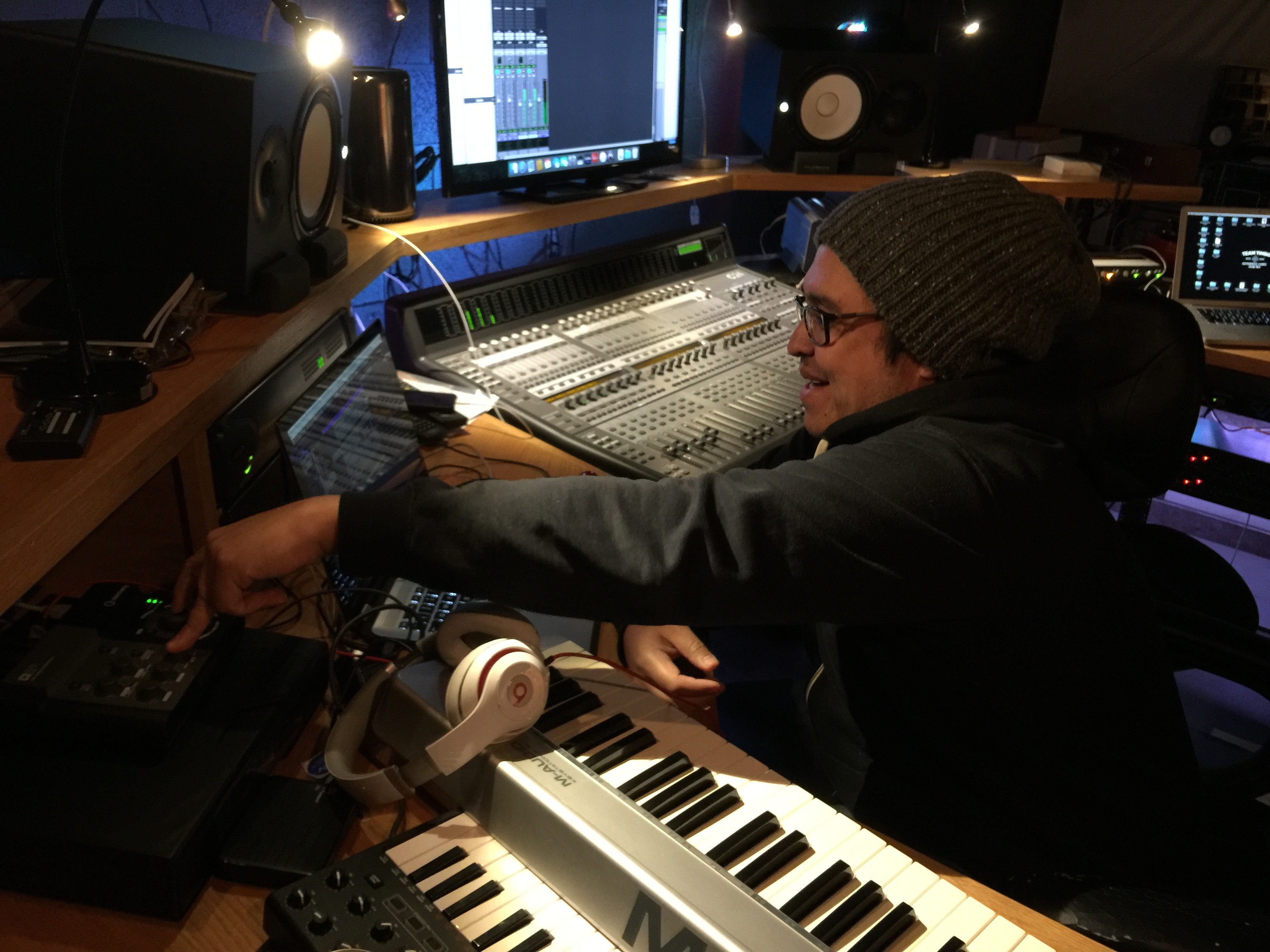
Gilde has been in the business for over 20 years and has over 80 credits to his name. It was an honor to interview the extremely talented musician and composer:
Matthew Toffolo: Where were you born and raised? Was music something you always wanted to do as your career?
Gilde Flores: I was born and raised in Hereford, Texas. Music was something I’ve always loved and occasionally dabbled in some with a few instruments, but saw no future in. That was up until the age of 14 when my father decided to recruit me into his band. I tried desperately to play awful, in hopes of being booted, but found myself advancing to other instruments. In time, I grew into having this love for music, which eventually led to me play/touring the US with various bands in various genres.
What has been your most proudest work of your career? Or, what has been your favorite project?
My proudest work would definitely be the time a music cue of mine was used in scene for Marvels, The Wolverine. Being a geek, this was instantly a highlight for my career, and I personally consider so…..for now.
You’ve been credited as being a “Composer: Additional Music” on many films. Explain exactly what that means?
A composer for additional music basically accounts for work from someone who’s not the hired/lead composer of the project, similar to taking the role of an assistant Composer. In the TV realm, it identifies as any of my music that is used aside from the main themes or recurring music. I’ve had the honor of working on many projects in this manner, especially when first starting out, which helped earn the credits I’ve received, in turn, opening many door and countless opportunities.
What are you generally looking for in a director in terms of guidance and tone for your music?
What I look for in a director is their ability to give me as much info as they possibly can about their vision. From the emotions of the characters, the emotions that can’t easily be seen by the viewers. I really love to get the full in depth of what the director is trying to portray from the inside out and help being that to life, especially the intangible elements.
What do you think a producer/director is looking for when they bring on their composer to score the film?
I really feel the producer/director is looking for the composer help them tell their story, or to fill in the gaps of what can’t easily be seen. They want the audience to capture/feel the full experience of what’s being put out in front of them, and music can move them in a way that perfectly pairs with what they are witnessing, or guides their imaginations to possibilities and uncertainty.
What is your passion in life besides music?
My passion in life besides music would simply be life and all its experiences. I try to stay passionate with every little thing that makes sense to in life. it’s how I tend to stay on the creative side and always looking for new colors to add to my palette. I know that’s a bit vague, so I would say family and helping others. Family, because they are the ones who cheer my on and help pick me up through this long journey, and helping others, that’s something I’ve always gravitated to, mostly due to my academic studies a few years back at Texas Tech University in Lubbock Texas where I studied to become a counselor; however music pulled me in a completely opposite amazing adventure.
What movie have you watched the most times in your life?
The movie I watched the most times in my life would be extremely hard to try and identify. Being a huge fan of comics, video games, and exploring into different genres, I’ve watched so many titles over and over again; especially in my traveling days. To maybe narrow it down, one of my favorites I tend to watch anytime it’s on, aside from the original Star Wars trilogy, would be the first Matrix; mainly because at the time it was released it completely blew my mind. I remember seeing it in the theater and was so impressed with the visuals, the pacing, the cinematography, storytelling, just everything, that it imprinted on me till this day.
What advice do you have for young musicians who would eventually like to compose movies for a living?
The advice I would give to any young musicians who want to eventually compose movies is to be PATIENT, always work on your skill set/stay teachable, have an amazing work ethic, have consistency, have respect, and learn how to take a “no/pass on your work.
This career, in my experience, is something that takes much time and lots of patience to pursue, and being that passion is usually poured in at some point, if one doesn’t know how to filter a “pass up” on their work, it can really devastate and discourage one moving forward. There are plenty more “no’s” than “yes’s” we all get on projects, and learning to understand that the pass up on one’s work usually comes from the music being submitted does not fit the project, not necessarily meaning it’s bad/horrible. Just feed the passion, knock down the self made barriers, and stay focused and it will eventually happen.
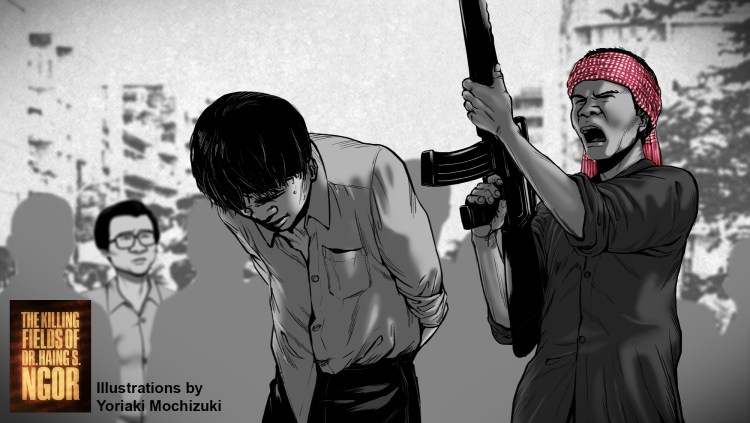
A Khmer Rouge cadre arrests a civilian in an animated scene from “The Killing Fields of Dr. Haing S. Ngor.” Illustration by Yori Mochizuki.
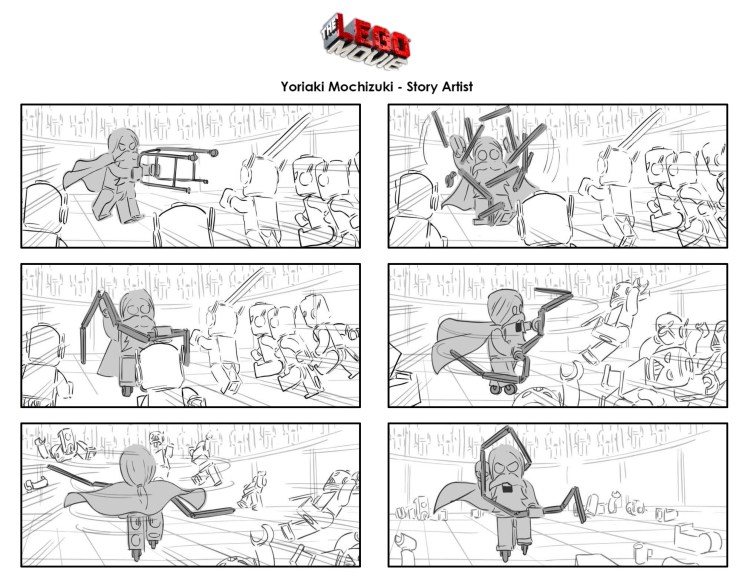
It was definitely an education chatting with story artist Yoriaki Mochizuki. He chats about working storyboarding animation movies and how it can be a much more creative process than working on live action films, and so much more….
Matthew Toffolo: How was your storyboard experience working on STORKS? When did you come aboard the film? Who did you mainly collaborate with?
Yori Mochizuki: I joined the Storks team in the spring of 2013. I collaborated primarily with directors Nick Stoller, Doug Sweetland and editor John Venzon. The story team worked in one open room which allowed us to discuss the story as a group regularly. We built animatic for the film with storyboards and temp sounds and tested it to ensure the story was working. Storks was a very special project for me because my daughter was one-year-old at the time and I used a lot of my parenting experiences as inspiration for my storyboards.
MT: You also worked as a Story Artist on the massive successful film THE LEGO MOVIE. What did that job entail?
YM: The LEGO Movie was one of the most creatively satisfying experiences. I collaborated closely with directors Phil Lord and Chris Miller as well as co-director Chris McKay. I was encouraged to come up with my own ideas and to create sequences, often even without a script. One of my favorite experiences on the LEGO Movie was when I storyboarded the live-action sequence. First I storyboarded it purely from my imagination. Once the set was built, I revised it with Phil and Chris. Then I worked side by side with editor Dave Burrows to create the animatic. Phil and Chris shot the sequence based on our animatic in the sound stage next door. It was one of the most harmonious filmmaking processes I have been privileged to be part of.
MT: What advice would you have for people who would like to do what you do?
YM: Being a story artist is like being a director, writer, cinematographer, editor, and actor, all at once. It’s important to study visual storytelling and to develop your own point of view. No matter what job you are working on – big or small – always do your absolute best because that’s the only way you can grow as a filmmaker.
MT: Would you like to storyboard and collaborate on a live action film?
YM: I enjoyed collaborating with Guillermo del Toro on Pacific Rim, but, generally in live action films storyboard artists can influence the story visually, but not necessarily the story itself. On animated films, story artists literally shape the stories. There’s a clear distinction between storyboarding live action and storyboarding animation and each requires different skill set. Personally, I enjoy working in animation because I get to create the story and find the process much more creative and collaborative.
MT: What movie have you watched the most times in your life?
YM: I grew up watching a lot of Hayao Miyazaki’s films. Star Wars, Back to the Future and Dead Poets Society are some of my favorites and I have watched them many times.
MT: What first attracted you to work as a storyboard artist?
YM: I drew my own comic books as a kid and I storyboarded all my student films. When I moved to Los Angeles, I worked as production assistant for a TV pilot and met storyboard artist, Joe Musso. Joe was generous enough to teach me how to storyboard and helped me land my first commercial jobs. That’s where my storyboard artist career began.
MT: Where did you grow up? When did you first start drawing?
YM: I was born in Tokyo and grew up in a suburb of Saitama, Japan. I started drawing before I can even remember. I still have some drawings from my early childhood of giant robots.
Selected Yoriaki Mochizuki Storyboards:
____
Interviewer Matthew Toffolo is currently the CEO of the WILDsound FEEDBACK Film & Writing Festival. The festival that showcases 10-20 screenplay and story readings performed by professional actors every month. And the FEEDBACK DAILY Festival held online, and in downtown Toronto on the last Thursday of every single month. Go to www.wildsound.ca for more information and to submit your work to the festival.
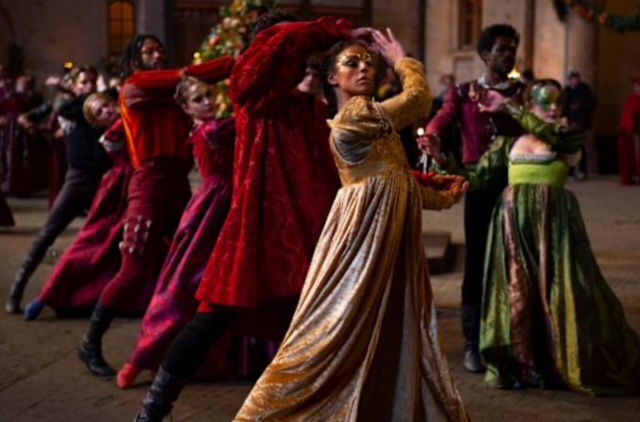
1. Tell us about your new film that’s just coming out (Juliet & Romeo)? How was your experiences working on the film?
It’s a musical that tells the true story that inspired Shakespeare to write Romeo and Juliet. It was exciting! The director and producer of the film, Timothy Scott Bogart, wanted to tell this story with a decidedly new touch compared to the past: Fresher and more dynamic, so it was a real challenge for everyone! We shot for two months at night, in winter between Verona and other cities in central and northern Italy, in beautiful locations. There is a lot of color in the film, and in my costumes, a lot of music. and fantastic actors.
2. How did you get your start in the film industry? I was lucky enough to train in a school where, in addition to purely academic notions, we students were also offered the opportunity to work directly for both theatrical and cinematographic productions! My baptism of fire was a theatrical performance: Euripides “Cyclops” in the ancient theater of Segesta (Sicily), in front of 5000 people, while the first film I participated in was “O Re” a historical movie, with Giancarlo Giannini and Ornella Muti.
3. What did you learn the most working on your first film? It was all magical: entering Cinecittà for the first time… my First day, I was sent to the set to check the costumes, after dressing a group of about 250 soldiers (obviously I wasn’t alone). It was a summer day at the end of June, very hot…so Beautiful! I ran all day to arrange these extras, who as soon as they could, would lay down in the shade of some trees, dropping their beautiful feathered hats and their heavy wool jackets. I returned home in the evening very happy, but practically destroyed (big laugh), that day I realized how magical, but challenging (even physically), my job would have been.
4. What are the key differences when working on a TV series in comparison to a movie? They are two mediums that use similar but not identical languages . In both cases the script and the characters are defined starting from a search for various references: pictorial, photographic, filmed, depending on the period covered. The real difference is that in a television series, the costume designer has a longer period of time during which he can “ speak“ about a character. Obviously in cinema, the definition of details is greater. However, especially in recent years, also thanks to the success of on demand platforms, the “visual” quality of television products has grown a lot. Years ago the substantial difference was also the schedule to prepare and to shoot : Proportionally longer for a movie, shorter for a television serial. But even in this case, these differences almost completely disappeared.
5. Is there is film/TV show or two that you’re most proud of that you’ve worked on? I am emotionally attached to my first international film ‘Los Borgia’ with which I received the nomination for the Goya award, I won the award for best costume designer at the French costume film festival (mullen sur Aller 2008) and also the Spanish Coronas award. I also remember with great affection the television series Titanic blood and steel because it allowed me to receive other awards, but above all to tell the story of the Irish society at the beginning of the 900s, in a very poetic way.
6. What type of film would you love to do costumes for that you haven’t done yet? I would like a drama like Rose Tattoo by Tennessee Williams but I also miss an horror film in costume but also contemporary, and a fantasy too … I had a nice project years ago, “transcendent kingdom”, of which I had started making sketches, which unfortunately was never made.
7. Describe the process of a typical production. How early do you get hired in pre-production? Do you work and report to the Production Designer? Is your wardrobe budget already set in stone by the time you begin your first day?
I am usually contacted directly by the director or producer of a project in the pre-preparation phase. They send me a short synopsis so that we can start talking about it. Once my presence is confirmed, I begin the preparation which varies depending on the type of product, usually not less than 3 months to be able to work on the script, to search for references, to create sketches and to search for material. In this phase, there are meetings between the various departments, to make sure that everyone follows the same mood and it is precisely on these occasions, that I interact with the other department heads to coordinate the work. Regarding the budget, this is defined before starting the preparation.
8. What makes a great costume designer? The ability to put himself at the service of a director, with his experience, sensitivity and style, trying to be an added value for the film with his work. Even a good ability to intertwine good professional relationships, a good agent and certainly a pinch of luck does not hurt.
9. What advice do you have for high school or university students who are looking to work in the Costume Department in the movie industry? I would advise them to try to maintain their youthful enthusiasm, as long as possible and to be prepared for the inevitable difficulties that will arise. The profession of costume designer is in fact very fascinating, but also more complex than one might think. I would advise them not to want to rush things, because the apprenticeship is very important and I would also advise them, to learn right away to make their work respected.
10. What film have you watched the most times in your life? Definitely Rose tattoo, Blade Runner, Bread love and Dreams, and Orlando.
A sound editor is a creative professional responsible for selecting and assembling sound recordings in preparation for the final sound mixing or mastering of a motion picture.
I was fortunate enough to sit down with the brilliant Sound Designer Kami Asgar. He has been the Supervising Sound Editor on over 100 films including, “Ride Along 1 and 2”, “Sisters”, “Pitch Perfect 1 and 2”, “The Muppets”, “Country Strong”, “Secretariat”, “Obsessed”, “Passion of the Christ” and “Apocalypto” which earned him an Oscar nomination.
Matthew Toffolo: In a typical studio film, how many post-production sound crew members are there? Do you usually work with the same team?
Kami Asgar: As far as the first part, that really depends on the budget the schedule and type of project. Typically you have Supervising Sound Editor/s, ADR supervisor, Dialog editor/s, Sound FX editor/s, Assistant/s, Foley artists, Foley mixer, ADR Mixer/s and Re-Recording mixers. The number shrinks or grows based on work load.
As far as the team, we have a core group in our team of editors, and we bring on freelance editors as needed.
Matthew: In the initial stages do you generally have a lengthy discussion with the director about themes, tone etc..? Are some directors more hands on than others when it comes to sound design?
Kami: Yes typically we have a spotting session with the director and picture editor to get the tone and feel for the project. We also discuss ADR and problem scenes as far as dialog and sound design.
Some directors only come for playbacks and give notes and leave, Others listen to every sound that is placed in the track and approve what works for them.
Matthew: You’ve been working in the industry for the last 25 years in over 100 productions. Is there is a film or two that you’re most proud of?
Kami: You spend so much time with every film that they are so much a part of you. There is moments in every film that challenge you, and you have to creatively find a way to overcome them. So there is moments that make you proud to have worked on. But as an entire package my personal favorite sound job is The Passion of the Christ. We spent almost nine months working on creating that world through sound.
Matthew: In recent years you have worked on many successful comedies. Is there is a distinct difference in comedy sound design in comparison to working on your other films, like The Taking of Pelham 123?
Kami: In comedies sound is so much a part of the punchline and finding the right sound to make you laugh is sometimes hard and demanding. Action movies are different there is a flow that has to happens from scene to scene, the sound design encompasses the whole sound scape, from atmospheres, foley, dialog and sound effects to how designed sound elements work with the score to keep the audience engaged.
Matthew: You seem to be the guy to go to when you need sound design for musicals, as you supervised The Muppets, Pitch Perfect (1 and 2), and Country Strong (to name a few). Is working on Musicals something you really enjoy?
Kami: Musicals are such a collaboration between the music camp and sound camp. It’s unlike a regular movie where each camp shows up to the mix and you work out a balance. In a musical, our sounds really have to be worked out with the music in advance, they have to play seamlessly. Like with the Muppets, the sound effects and the foley have to be in time with the music and have to hit comedy beats too. All of that comes with close collaboration with songwriters, composers and music editors.
Kami: I’ve been blessed to work on a varying body of work, and all have been fun and challenging. Luckily I have been typecast in to a genre.
Matthew: What are you looking for when you first listen to the on-set sound recordings?
Kami: Clean Dialog, the rest we’ll build.
Matthew: When do you first come aboard the film? Most assume it’s after the last day of production, but I’m assuming it’s way earlier than that?
Kami: Depends on the project, Like on Pelham 123, we came on during the shoot to record subway trains in NYC, motorcycles and cars in and around Los Angeles, and supplied the picture editor and his staff with sounds effects throughout the editorial process. By the time we did our first preview screening, 95% of the sound track was already built and approved.
Most other movies we come on right before the first preview and build a temp track for the screening, and then build on that for the final mix.
Matthew: You seem to have consistently worked on 4-5 projects a year. How long do you typically work on a movie?
Kami: That depends on the movie and a lot of outside influences, typically anywhere from 10 to 20 weeks.
Matthew: How often does an actor have to come in and do ADR work (process to re-record dialogue after filming) to complete the dialogue sound mix?
Kami: On every movie. Sometimes we complete all other work and wait till an actor is available to come in and finish the movie
Matthew: Is there a type of film that you haven’t worked on yet that you would love to work on?
Kami: I’d like to do a big action super hero movie, come close a couple of times but that would complete the genre mix
Matthew: How has sound design changed from a technology and creative point of view from the year you started in 1990 to today?
Kami: I literally came in to this field because I worked on Macintosh computers doing graphic design. I was asked to show the guys in my father’s sound studio how to use the new Mac 2 computer with 1st version of sound tools (later protools) they had purchased so they could cut sound effects with.
I taught the editors how computers worked and how to utilize the programs to cut sounds with. In return the guys showed me how to work on an upright Moviola (useless knowledge now) and how to cut dialog and sound effects.
Everything used to be a lot more time consuming and cumbersome.
As an example you had to go down to the sound library and search through reels of sound fx (later CDs) armed with a notebook looking for one sound effect. You usually picked the first one you found, took it back to your room, and sampled it in to the computer and synchronized it to the picture and went to the next effect and the repeated the cycle. since you could only do very short sequences because of lack of computer memory, you laid back to tape and hand wrote (legibly) each event on a cue sheet for the mixer.
Now you audition sounds from your database of hundreds of thousands of sound effects available to you remotely and pick just the right sound, and if you want to alter the sound, you have at your disposal a dizzying amount of plug-ins to change every aspect of your sound to fit the picture. You then upload it for the mixer to open in his session. (no more carrying reels and reels to the stage)
Matthew: Besides the films you’ve worked on, what movie have you seen the most in your life?
Kami: There is three that I can safely say I’ve watched over and over “Top Gun” (best sound movie of all time) “Shawshank Redemption” (best movie of all time) and don’t laugh “Fletch”
—- Interviewer Matthew Toffolo is currently the CEO of the WILDsound FEEDBACK Film & Writing Festival. The festival that showcases 10-20 screenplay and story readings performed by professional actors every month. And the FEEDBACK DAILY Festival held online and in downtown Toronto on the last Thursday of every single month. Go to www.wildsound.ca for more information.
rent Opaloch is easily the most talented and sought after cinematographers in the world today. He has DP’d for director Neil Blomkamp on “District 9”, “Elysium”, and “Chappie”, and director’s Anthony & Joe Russo on “Captain America: Winter Soldier”, and the upcoming “Captain America: Civil War”. It was an honor to sit down with him to chat about his career and the art of cinematography.
Mathew Toffolo: You first worked with director Neil Blomkamp on the short films “Tempbot” and “Yellow”. How did you two meet? What makes your director/DP relationship so successful?
Trent Opaloch: I met Neill shooting low budget music videos. We shot a handful of videos & short films while I was working at Clairmont (camera rental house) & he had just left a vfx house here in Vancouver.
He used to do all his own vfx work back then so it was really interesting to see the the whole process. That was all happening at a very exciting time for vfx where some pretty sophisticated tracking software was coming out and it really freed up the camera & made it possible to use that hand held energy with extremely realistic visual effects. It was great because it was the first time your imagination wasn’t limited by what you were able to build in reality. It opened up the possibilities for story telling and those shorts and small projects were a great training ground for the big vfx movies that we’re doing now. You can apply those same basic principals on a much larger canvas at bigger budget levels.
MT: You both leaped into the feature film world in the highly successful film “District 9”. How was the initial experience moving from shorts to features? Do you remember the initial cinematic design conversations you had with Neil about the film?
TO: It was a pretty easy transition for Neill & I to go shoot District 9. We had developed a good short hand over the years on the shorts and music videos so it was just a matter of doing our thing with a much larger crew. The challenge is to communicate with the crew so everyone is on the same page. That’s a different dynamic to how we would have worked on the smaller things with just a few people.
The way Neill described the film to me, and to this day this is the best pitch I’ve ever heard. He said imagine there was a documentary made by the NFB (National Film Board here in Canada) that was about these aliens landing in Johanessburg in the 80’s. And someone taped that documentary when it played on tv in the 80’s on a vhs tape and then threw that tape in a drawer for 20 years. And you come along and blow the dust off it & pop it into your retro vhs machine & press play. That was his pitch for District 9 and it instantly communicated everything you needed to get the film. Brilliant.
Now things changed in the process of course so it wasn’t as degraded an image as that. I actually wanted to shoot on 16mm with the NFB doccie esthetic in mind but Peter Jackson bought a boatload of RED ONE cameras so that was nipped in the bud.
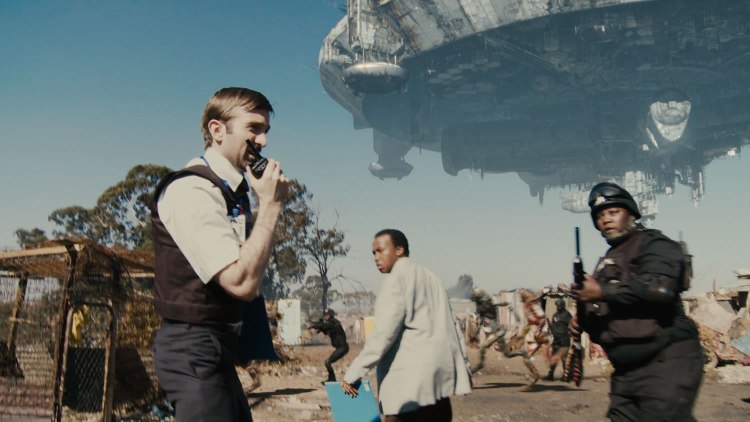
PHOTO: Cinematography of the film DISTRICT 9:
MT: What were your reactions to the success of “District 9”? It must have really changed your life and career path?
TO: Well it was pretty amazing to work on something that was so well received around the world. It was a difficult film to make in some pretty harsh environments but we had a great group of people on it. It sort of felt like there weren’t any ‘grown ups’ around to tell us what to do really. Neill had set things up so that were on our own to make the movie our own way which was pretty amazing when you think it was his first feature.
MT: What brought you to the Captain America movies? How is it to DP a film that has two directors?
TO: I’ve actually worked with directing duos quite a bit in commercials so it wasn’t that strange for me to step into that sort of thing for Winter Soldier. I got the call for the first meeting with Joe & Anthony Russo and I was really impressed with them and their approach and how they wanted the film to feel.
I actually don’t mind the director duo thing as long as they have their dynamic figured out between them. Different directing teams work in their own way that is specific to their combined personalities so you get different approaches. The fact that Joe & Anthony are brothers is great because they have this great bond between them that goes back decades and they’ve worked together on so many things in films & tv shows that they have a good system down.
MT: “The Winter Soldier” was an amazing comic book/action film. Even the Fanboys couldn’t help but give it ultimate praise. What were the broad strokes ideas you had with the Russo’s in terms of the cinematic life you gave the film? It was a different feel to the other Marvel films, but it still was a Marvel film. A fine line to balance one would assume!
TO: It’s funny because I never really planned on ever shooting anything like that but I loved the creative approach that the Russo’s had for the film. Our whole thing was to take the edge off the genre of it all by basing it in reality as much as we could. I really liked the idea of shooting the film like a 70’s conspiracy thriller to ground the whole thing a bit. We referenced films like “Marathon Man” & “The Three Days of The Condor” early in prep.
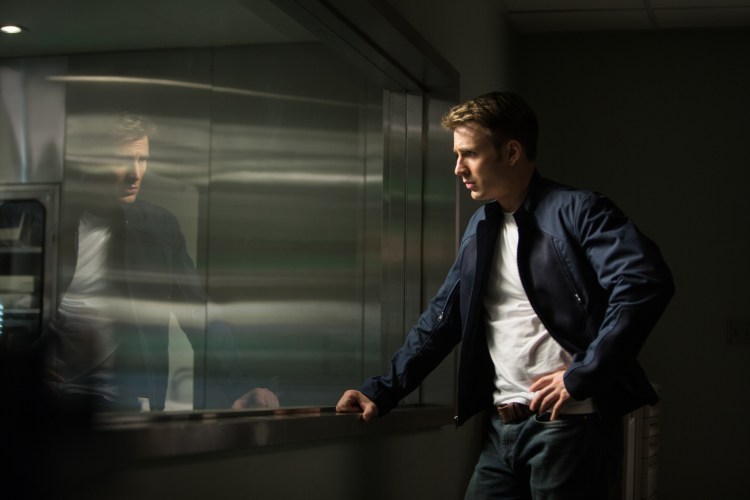
PHOTO: Chris Evans in Captain America: Winter Soldier:
MT: You have a big film coming up in “Captain America: Civil War”. How were you experiences working on that film? Can you give us a sneak peak as to what to expect? It seems like all of the stars of the Marvel Universe are in this film!
TO: It was great to get back with the Russo’s and the team again for Civil War. We had just an amazing crew so that makes the whole experience so much better. The people around you are very important when you’re up against challenging situations. We shot quite a bit of our exteriors on the Pinewood backlot in Atlanta & the heat & humidity can be quite brutal.
On a movie of this size it’s assumed that everybody knows their jobs at this point so it really comes down to having a great attitude under pressure and being there together for the film.
We were also very fortunate to work with a great German crew in Berlin that made our transition over there very smooth.
There were a ton of actors on this film and that was actually quite challenging to shoot them all with their crazy schedules. The tough thing is that you can end up shooting someones close up in another country and weeks after you’ve shot the other side of the conversation so it’s always a challenge dealing with changing weather conditions etc. to maintain some cohesiveness to the scene.
I’m starting up prep on the new Infinity Wars films that we’re shooting back to back with the Russo’s later this year & the scale of those two films combined is a bit mind blowing so it’s good that these last two films have ramped up in terms of scale and complexity because each one prepares you for the next.
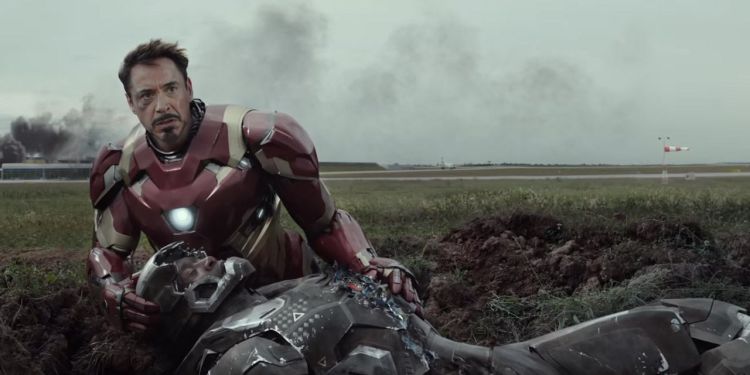
PHOTO: Robert Downey Jr. in Captain America: Civil War:
MT: How much of the Captain America films are storyboarded? Are you a part of that process in pre-production?
TO: These films are heavily boarded & pre-vised, far more than anything else I’ve ever done. The pre-vis process starts very early in the film’s development so that’s when you have to get in there to help start guiding the process along with the directors so that it fits in with what everyone is aiming for and what the production team is going to do on set.
The Marvel films are incredibly collaborative and that’s a huge part of their success I think. We have worked with the vfx supervisor Dan Deleeuw on these last two films and he is in charge of building the pre-vis sequences so that is an invaluable resource to start the discussion with the whole team before you get out there on the real-time clock burning production money.
MT: You have obviously mastered the cinematic artform of the intense action/thriller film. Is there another genre that you like to work in?
TO: I don’t have any specific genre goals as far as the types of films I’d like to work on really. I’m always just looking for scripts that I enjoy and that hopefully have something to add to what’s out there already. I shoot a lot of commercials in between film projects so I don’t mind turning down things & waiting until something interesting comes along. Feature films have such a long development period & then you’re away from home for most of the year prepping & shooting so you have to choose your projects carefully.
MT: What advantages/disadvantages do you think you have had starting in the short film/indy world in comparison to other DPs who worked through the Unions to become a cinematographer?
TO: The biggest thing I feel was missing from the early days was the opportunity to see how other cinematographers worked. That’s the nice thing about working your way up through the ranks. You’re in the front row watching how the big boys do it. I used to do set visits when I worked at the rental house & it was always cool to see the different lighting approaches or specific rigging that someone had done.
Also my step dad had a subscription to American Cinematographer so I had read every single page of every issue since I was 16 years old. That was invaluable, of course this was years before the internet and the behind the scenes special features on dvd’s & blu rays that we have now so that was the best way of seeing how things were done at the time.
I think the advantage of starting the way I did is that you’re doing what you want to do from the beginning so you start developing right away. The trap in working your way up through the different crew positions is that you can get trapped there. All of a sudden you’re 15 years into working sets and paying off a mortgage so it’s tough to make the leap & reimagine your career as a DP. I think if you want to do something than you should just start doing it at whatever level you can.
MT: Do you have a Director of Photography mentor?
TO: I don’t have one individual really but there are countless people that I learned from when I first started shooting. I started working at Clairmont Camera in Vancouver after film school so I was around professional camera crews full time & just tried to learn everything I could, just hoover up as much information as you can. Why that lens over this one, when to use a fluid head vs. wheels etc. Just tons of little details that you absorb over time. I think that was a great introduction to how things worked on set but at the same time I wasn’t that interested in working on tv shows or MOV’s at the time so I shot my own stuff or with friends on the weekends & was able to develop over time and make mistakes in a safe environment where there wasn’t a ton of money on the line.
MT: Where do you see the future of camera/lighting technology in film?
TO: Well it’s an exciting time as far as what’s out there already & what’s coming out. The camera technology just keep getting better every year and LED lighting is really coming into it’s own so it’s great to have options available to you to choose from the toolbox for different scenarios. I’ve really been enjoying running our lighting setups through DMX lighting consoles and media servers for the last couple of years. You just have almost infinite control over the quality and the dynamics of the light as far as movement and colour.
MT: What film, besides the ones you’ve worked on, have you seen the most times in your life?
TO: That’s a tough question. Probably “Blade Runner”, “Heat”, “Close Encounters of the Third Kind”, “Jaws”, “Godfather 1&2”, “Stalker”, “The Conversation” “Apocalypse Now” all the classic iconic movies. There’s a ton more for sure. There are just some films that you come across on tv and it’s impossible to stop watching even if you’ve seen it a hundred times. My parents had “Das Boat” and “Fitzcarraldo” basically on infinite repeat in my house when I was young too which drove my sister and I crazy at the time.
MT: Where did you grow up? Did you always want to be a cinematographer?
TO: I was born and raised in a place called Thunder Bay in Ontario Canada. It’s quite a small town and I moved away for high school but went back to film school at Confederation College so it was great to be back in my home town, starting a new chapter of my life. I was more into music as a kid and played in different bands growing up so I never really thought of film as a career until my early 20’s when I went to film school.
My step dad was a nature cameraman when I was a kid so he took me out on his shoots and taught me how to load film and thread the camera etc. Of course it was more documentary work so there was no lighting at all but it was a good introduction to camera and sound equipment. I used to go into the post production offices where they cut his films and would see shots that we had taken cut into the edit so it was almost like pre-film school for me as a kid.
_____
Interviewer Matthew Toffolo is currently the CEO of the WILDsound FEEDBACK Film & Writing Festival. The festival that showcases 10-20 screenplay and story readings performed by professional actors every month. And the FEEDBACK DAILY Festival held online & in downtown Toronto on the last Thursday of every single month. Go to www.wildsound.ca for more information and to submit your work to the festival.
Chatting with Costume Designer Malgosia Turzanska was inspirational, educational, and fun! She’s a true talent and someone who is obviously in love with her job. Maggi
Matthew Toffolo: I recently interviewed director Rebecca Miller about the film “Maggie’s Plan” and she raved about her working relationship with you. How did you find working on the film and collaborating with Rebecca?
Malgosia Turzanska: Rebecca is a wonderful artist. She is a fearless writer and director and honestly, she took a chance on me. The images I brought to the first interview were so abstract, that it really took courage to trust they would end up as regular clothing rather than people dressed as snowflakes. I am very grateful to her for that trust, because it lead to one of my favorite collaborations. I am very proud that the costumes ended up a little pushed and I have Rebecca and our fantastic actors to thank for embracing them and encouraging me to push further. Julianne, Greta and Ethan are such smart and sensitive artists and working with them was very inspiring.
The rest of the team as well — DP Sam Levy, Production Designer Alexandra Schaller, Producer Damon Cardasis — they’re wonderful to work with and created an environment where we could really find the world of the film together and end up in a very satisfying place, having a lot of fun on the way.
PHOTOS: Original Maggie design sketches from “Maggie’s Plan:
MT: Do you have a favorite working experience? What film are you most proud of?
Malgosia: I’ve been incredibly lucky to have worked with talented directors whose vision I fully believed in, so I enjoyed basically every project I’ve been on, but there’s a few stand outs.
“Ain’t Them Bodies Saints”, directed by David Lowery was an amazing experience. David Lowery is one of the most brilliant directors of his generation, and I absolutely love the lyrical, sensuous movie we made.
The people I met during that shoot have become my dearest friends and I hope to continue working with them forever, as they bring out the best in me.
“In A Valley of Violence” directed by Ti West was an absolute blast. It’s a revenge western set in late 1870s, with Ethan Hawke, John Travolta, Karen Gillian, Taissa Farmiga, and Jumpy the amazing dog. It was just joyous, and brought back together part of the ATBS team. I am very very proud of that one and can’t wait to share it with people. It’s opening in theaters this September, but will screen at BAM in New York during the upcoming cinema fest if you want to see it before then! That shoot was a also a beautiful adventure, including rattle snakes, tarantulas and a whole lot of mice. I also learned the hard way how difficult it is to shave a buffalo hide.
But I’d go back in a beat.
“Hell or High Water” was another favorite New Mexico escapade. A modern western with Jeff Bridges, Ben Foster and Chris Pine, it was written by Taylor Sheridan, who also wrote Sicario, and directed by David Mackenzie.
David was wonderful to work with and fearlessly walked the tight rope between bleak and sexy, hopeless and funny, making a film that is enjoyable and entertaining, but also incredibly heart wrenching and valid. I really can’t wait for August, when it’ll open in theaters.
PHOTOS: Original sketches from Malgosia and on set photos from the film “Hell or High Water”:
MT: What type of film (genre, setting etc..) would you love to do costumes on that you haven’t done yet?
Malgosia: I love movies that are firmly set in reality, and then have an unexpected, magical element introduced to that reality, shifting the rules and creating a new logic, unraveling into a different dimension. My absolute dream would be an adaptation of Mikhail Bulgakov’s “Master and Margarita”, which is one of my favorite books. I get goose bumps just thinking about it! The second one would be an adaptation of “The Tiger’s Wife” by Tea Obreht, who is an outrageously talented young author and whose next book I’m waiting for very impatiently.
MT: Rebecca talked about you building a character from the inside out. How you need to know the person before you dress them. Can you share your plan/structure when you begin a project?
Malgosia: It starts with the script. I read it once or twice and create a primary, emotional response to the whole piece or to specific characters. That phase tends to be pretty abstract, raw and untethered. I’m often drawn to images that are seemingly not relative to the story, but I later discover that they become the core of the design. So I don’t censor myself at that phase and just go with my gut. Then I do a proper breakdown, which helps me learn the script by heart, and research it properly. I study the specifics of the period and environment where the story takes place, which includes reading books, looking at photos, going to museums, watching movies — whatever is available. That’s one of my favorite stages, because you come across so many unexpected tidbits that gradually shape the design. I then create a moodboard for each character and start sketching. I find that sketches are a crucial part of my process. It’s a moment where I start asking specific questions about the characters, when the initial abstract ideas begin to take a concrete, realistic form. Fabric swatches are very informative and inspiring during that phase too — color and texture are my favorite things to play with, and often I’ll dye or fade swatches to see what happens to the color or pattern and find surprising outcomes that I wouldn’t necessarily think of off the bat. Of course throughout the whole process, I talk to the director, DP and PD and exchange ideas to make sure we’re on the same page.
Then comes the actual shopping/building stage. We use the sketches and boards as a roadmap, and decide what we’re making from scratch and what we’re buying or renting. Usually the things that are purchased are either altered heavily or dyed, so very few things actually are off the rack, unless the character calls for it.
For Maggie’s Plan for example, my design for Georgette was inspired by frozen twigs and cracked ice and various textures of snow and fur, to emphasize her Viking nature, so we ended up building quite a few pieces in house. Her grey leather minidress, the fur vest and one of the fur stoles.
We added leather trim to a few tops for more detail. She also wears beautiful custom-made No.6 Store clog boots that I ended up changing the color of to fit in more with her controlled palette. But there were a few pieces that we were in love with from the very start that became her signature, like the gorgeous blush pink Ryan Roche sweater which was just perfect the way it is. For Maggie’s costumes, it was crucial to feel the handme-down and reused nature of the clothes— she is so practical and so careful of not being wasteful that we did not want anything of what she wore to feel new, but still wanted to retain the unabashedly vibrant hues.
We used a lot of vintage clothes that we altered and dyed (a big thank you to my husband for letting me turn our home bathroom into a dye room for weeks) and also were very lucky to get pieces from Archerie NY that have the feel we desired but fit a modern shape beautifully. We found a lovely men’s double breasted coat and turned it into a single breasted women’s one for her, changed buttons on pretty much every garment for various reasons (like the ones on the dressing gown that Ethan Hawke’s character unbuttons, one by one). And just all in all, made every garment personal to the character.
I feel this specific process is emblematic to my general way of working. And it’s exciting every time!
PHOTOS from “Maggie’s Plan”. Pictures taken by Jon Pack:
MT: How early do you get hired in pre-production? Do you work and report to the Production Designer? Is your wardrobe budget already set in stone by the time you begin your first day?
Malgosia: It varies from project to project, but around 5-6 weeks of prep is what I’ve usually been given so far.
The budget discussions happen during prep, so all should be agreed upon, unless there’s a huge change to the script, or for example a shift of a number of period extras from 20 to 200. It’s all a living, shape-shifting organism until it’s picture locked!
The collaboration with the Production Designer as well as with the DP is crucial. We perform a creative cross-pollination of sorts, exchanging ideas, lookbooks, comparing fabric swatches and paint chips and making sure the various layers of the world we’re creating are congruent and that we’re not stepping on an another’s toes in any way.
MT: What are the key differences when working on a TV series in comparison to working on a movie?
Malgosia: In film, you have the luxury of having a complete arc of the story and of each of the characters from the get go. You can break down each character and graph their progress through the story and plan out the emotional or practical changes to the costumes to design it from the beginning to the end. In TV, you have a script to an episode or two and then a general idea of what’s happening further in the season, but without the specifics. Also, the arcs are more open-ended, as you’re never sure if season 2 will or will not happen, or will a certain character be involved in the following season or not.
MT: What do you look for when hiring your assistants?
Malgosia: I’ve been very lucky to find incredible people that I work with over and over again, who are talented, hardworking and generous. They know me through and through and speak my language perfectly, so there’s no need to establish an alphabet every time we start a new project. I hope they know how much I treasure their presence in my life, both professional and personal.
But when hiring new team members, I look for honest people who are not sissies, who are curious, efficient, don’t melt under pressure, have a sense of humor and who treat work as an adventure and an opportunity to learn rather than clocking in and clocking out.
MT: What type of skills do you need to be a great costume designer?
Malgosia: I think imagination and the love of story-telling are key. Not being afraid to get your hands dirty, whether digging through batches of moldy thrift store bails for treasures, or some last minute distressing of a too-pristine hem.
Finding sunrises enough of a reward for getting up at ungodly hours. Creative problem solving. Letting little things like an unusual button or a faded piece of lace speak to you. Being ready to be creatively challenged at every step, and to challenge others if need be. But most importantly, understanding that the initial sketch is not the be all end all — it doesn’t exist in a vacuum, it’s not a fashion plate, but a tool to collaboration with the whole team.
MT: What movie, besides the ones you’ve worked on, have you seen the most times in your life?
Malgosia: It’s not the movie that I’ve seen the most, but it’s seminal enough that I feel I should mention it —Almodovar’s Kika was the first movie that I ever saw that made me think of costume design as an art form. I was in high school probably skipping a math test or something like that, and happened upon its screening. I had no idea who Almodovar was, and sat there saucereyed, having some sort of a religious experience. I was especially blown away by Jean Paul Gaultier’s creations for Victoria Abril’s character. Such joy!
But the two films that I love beyond anything else and that perfectly reflect my own film aspirations are Gondry’s “Eternal Sunshine of the Spotless Mind” (Melissa Toth’s costumes) and Spike Jonze’s “Being John Malkovich” (Casey Storm). Both written by Charlie Kaufman, so I guess there’s that!
But also, I would be dishonest if I didn’t mention my guilty pleasure — Wayne Wang’s “Maid in Manhattan” with costumes by Albert Wolsky. I love that it’s a Cinderella story where the magical garment that transforms a maid into a princess is a pant suit! How brilliant!
_____
Interviewer Matthew Toffolo is currently the CEO of the WILDsound FEEDBACK Film & Writing Festival. The festival that showcases 10-20 screenplay and story readings performed by professional actors every month. And the FEEDBACK DAILY Film Festival held online, and in downtown Toronto on the last Thursday of every single month. Go to www.wildsound.ca for more information and to submit your work to the festival.
Jeff Russo is one of the most talented musicians and composers working in the industry today. His list of credits in the last 9 years is loaded with successful TV series and movies. In the last 2 years alone his has composed for the series Bull, Legion, Counterpart, Star Trek: Discovery, Lucifer, and his Emmy winning work in Fargo. It was an honor chatting with him one afternoon in his office while he was taking a break.
Matthew Toffolo: Where were you born and raised? Was music something you always saw yourself doing as a career?
I was born and raised in New York City. As far as I can remember, I loved music and it became apparent to me that this was something I always wanted to do – to be a musician. From middle school on I was always playing in bands. It’s something I was better at than other things. I was better at music than math or science for example. And I loved it too! It was obvious very early on that this was what I was going to do.
Are you from a family of creative people and musicians?
My dad was in fashion. He died when I was very young so I’m not all that familiar with what exactly he did. My mom was a homemaker. Not a huge fan of music, but very supportive in my passion for it.
So you’re in high school – where did you think you were headed as a musician?
I always wanted to be in a Rock Band. Rock and Roll was my drive! I was in a band for 25 years. Only 9-10 years ago did I change careers and think about composing.
What was your first composing job? And how did you get the job?
In 2006, my band took a break from playing and I had to figure what I had to do with my life. A good friend of mine, Wendy Milette, was working on a couple of television shows and asked me to come by. I watched what they did for a bit, and then they asked me to come to work. Watching what they did got me intrigued and eventually they asked me to write music cues for them and from there I was hooked. I worked for them for about a year and a half and eventually I got hired as a composer for my first job which was a TV show called THE UNUSUALS. Then things took off from there.
Noah Hawley was the showrunner of that show, and also the showrunner/creator of the TV series FARGO. So you guys have a relationship?
Yes. Great one. He called me up in 2013 and said he’s doing a series based on the FARGO movie and told me I’m on board. Then we got to work.
How did you prepare for doing that show? Did you go back and watch the original film?
I didn’t see a need to. I just read the scripts and looked at the emotional places in the script. Saw that the same tone was involved.
You were nominated for an Emmy for best music composition for the first two years, and eventually won the Emmy last year for your work in season 3. What is the Emmy winning experience like?
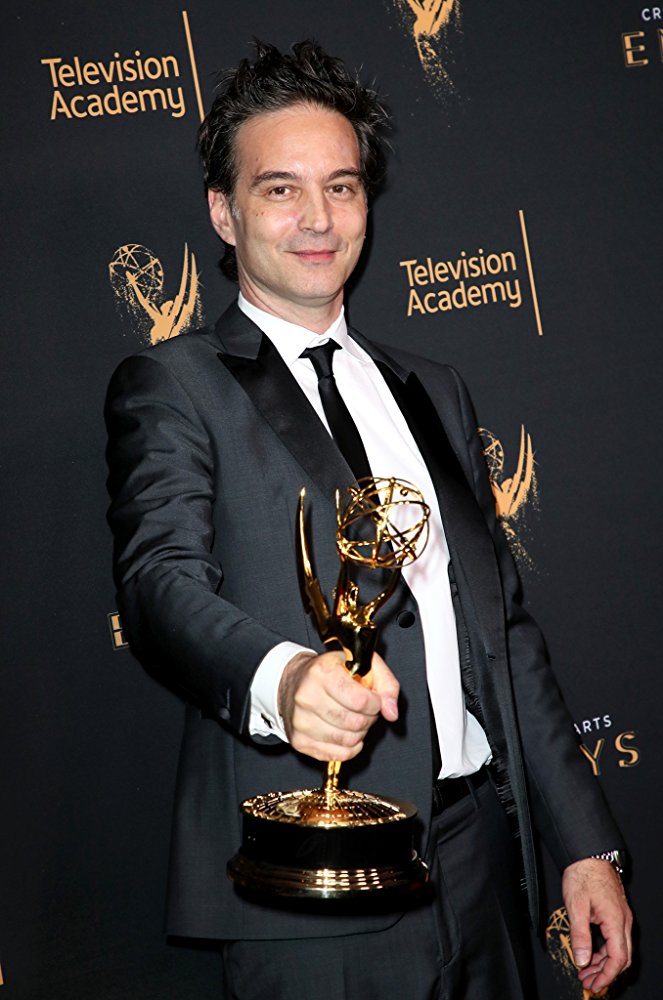
It’s a feeling is disbelief. The Emmy sits on the shelf in my office and it’s a crazy reminder. The feeling going up there and accepting the award is hard to describe. That moment – incredible. People will now say to you, “You’re an Emmy winner”. People have that in their minds from now on. My peers acknowledged me. It’s an honor.
What are you currently working on right now as we speak?
Season #2 of LEGION. And a Mark Wahlberg film coming out this summer (MILE 22, directed by Peter Berg). It’s been a lot of fun working on that film.
Besides the films you’ve work on, watch move have you watched the most time in your life?
Empire Strikes Back. I’ve seen it over 40 times.
Is there a type of project that you would like to work on that you haven’t yet?
I’d like to work on a Western.
What advice do you have for people who would like to work as a composer some day in the industry?
Most important thing is for someone to create their own voice. We are all unique and original in our own way so we all have a voice. Find it. It’s the only way to move forward.
Jane Musky is one of the top Production Designers working in the industry today. She has designed over 40 productions in the last 30 years, working with directors Mike Newell, Ivan Reitman, Andy Tennant, Gus Van Sant, Jerry Zucker, James Foley, and The Coen Brothers, to name a few. She also happens to be married to the President of the United States (well on the TV show Scandel) for the last 28 years too!
It was an honor to interview Jane and talk about her amazing career, and it looks like she’s just getting started.
Matthew Toffolo: You have been the Production Designer on over 30 films in the last 35 years. Is there a film or two that you’re most proud of?
Jane Musky: My favorite films as a Designer are GLENGARRY GLEN ROSS and THE DEVIL’S OWN.
GlenGarry was a once in a lifetime chance to work with an INCREDIBLE ensemble of actors, great Director and DP and Mamet script. Who could ask for more?
David Mamet’s stories are full of great language, texture and sense of place which feeds his stories. That sense of place, that moment in time is a gift for a Designer to define.
PHOTO: Alec Baldwin gives his famous speech in Glengarry Glen Ross (1992)
The Devil’s Own was not only a large budget film that involved the two biggest male film actors of that time, but was Directed by Alan Pakula and was his last film. Gordon Willis shot the film. I was very lucky to be with this group. Alan taught me more than any other Director I have been associated with.
I had started another film with Alan and Gordon that folded so I was happy when we launched into this story about the IRA. We shot in Ireland and New York. I loved doing the big shootout in the opening with a great Dutch special effects group.
MT: Early in your career, you were the Production Designer on the first two Coen Brothers films: Blood Simple and Raising Arizona. How did you first meet the brothers? After Blood Simple wrapped, what were your feelings? Did you foresee their iconic career?
JM: I met Ethan and Joel through a mutual friend, Mark Silverman. Mark was an up and coming Producer they had hired and I had worked with Mark before.
I was doing Summer Stock at the Williamstown Theatre Festival and they all drove up to meet me. I had never done a film, just smaller TV work. Most of my Design work was in the theatre then. We hit it off.
Blood Simple was really the first film for all of us. We were a very small crew. It all just clicked. We worked so hard and when it was over we all knew we had made a good film full of humor and irony and I thought it was stylish. Ethan and Joel were and still are great in how they plan and execute their work. It is all very lean and mean and cohesive. It was a utopian time for a young designer. We were a great young gang of filmmakers and everyone has done well from that original Coen Bros. group.
PHOTO: Bar Scene in Blood Simple (1984):
MT: Some will argue that Raising Arizona is a masterpiece. You created a fantasy universe within the context of the reality of Arizona. Do you remember the initial conversations with the directors and your team about the overall look, feel, and tone of the film? How was your overall experience working on the film?
JM: Well, Raising Arizona. We had a blast. I have to say Phoenix back then was such a bizarre place. It was still a small town pretending it had the hutzpah of Dallas.
There was a great collision of the Wild West meets the nouveau riche of Arizona.
Once I got that vibe it was easy to create the fantasy of their world. I enhanced the style that was already rampant. What a confusing place, stylistically. Once I grabbed the idea of the Arizona home I next designed the GRIB for the Boys to get of sense of how far everyone wanted to go with the humor and then it all flowed. Ethan and Joel’s scripts were very much defined as to what happens; dialogue and great descriptions of each character. They really allow their Designers to run with it.
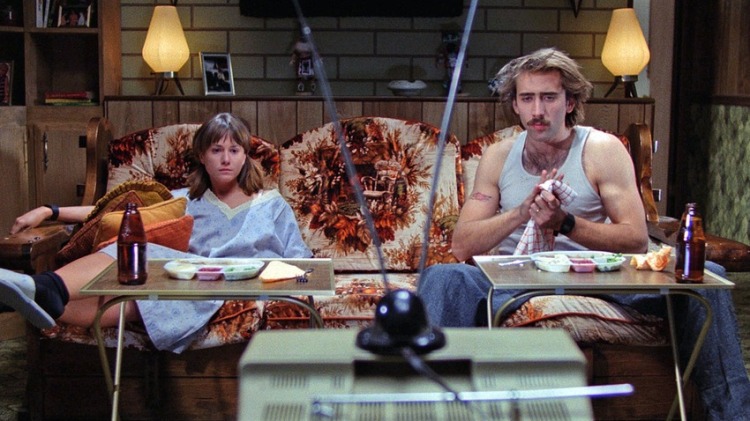
PHOTO: Nicolas Cage and Holly Hunter in Raising Arizona (1987):
MT: When Harry Met Sally…, is another all-time classic. It has a timeless feel to it. How was your experience creating the world of this couple in a span of 15 years in New York City?
JM: When we began working on “When Harry Met Sally”, New York City was on a roll.
It was a Single’s City full of romance. Harry and Sally’s opening drive to begin their lives after college in NYC had to be as unsophisticated as could be so we could feel their rite of passage into adult life in a complicated city. What are the chances they would meet again after parting at Washington Square, and how complicated their lives had already become after a few years apart?
The passage of time allows for a more complicated story and Nora Efron just hit a great stride in her writing and fed the complications of the relationships which in turn allows the Designer to jump right in to define their lives and begin to ground the story for the audience visually.
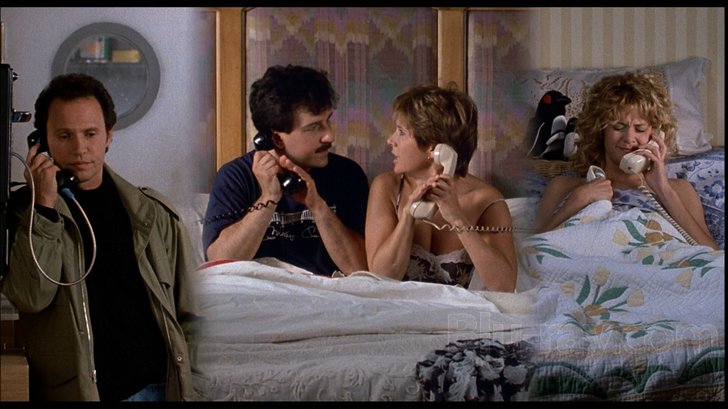
PHOTO: The 3 frame phone call shot in When Harry Met Sally… (1989):
MT: Harry/Sally had a lot of exterior shots of NYC, plus interior locations within the city (like the famous restaurant scene). Generally, what is the Production Designers main job when working on a location that is already established and known by many? What do you need to add or remove (or not) to enhance the story?
JM: Iconic locations are picked because they are perfect or almost perfect for the story in that moment. There is little I can do to enhance the Design value of these landmarks other than to pick the right ones for the moment. We had many Iconic locations; Katz’s Deli, Central Park. All were chosen to give us a romantic New York. The more romantic the location or the more counter to the romantic moment like Katz’s, the more we hit Harry and Sally on the head saying…Fall in Love. Iconic locations give the audience a great comfort and familiarity that allows them to fall into the story more easily wishing they were there.
MT: What is a director looking for in a Production Designer?
JM: Each Director I work for has their own different idea as to what they want from their Designer. The Director and Designer are the first ones of the Creative Staff working on the job. Those early moments together are used to dissect the story and begin to give it a visual tone and map the moments. It is during these first weeks the Designer morphs to suit the Director’s vision and enhance that vision and help tell the story. The Director must be followed and a Designer must take their lead from the Director and faithfully back that vision.
MT: What is a Production Designer looking for in a director?
JM: The Designer and Director are first of the Creative Team on a film. That is what I consider my Golden Time. This is when I look to the Director to take the lead as to where the story is headed creatively. We spend a lot of One to One time these first few weeks to set the visual plan for the film. At times I have to work hard to pull at ideas from a Director. The more comfortable this process, the better the journey.
MT: How early do you come into pre-production before shooting starts? When do your hire and bring on the rest of your key team members?
JM: I come on to a film very early on and the earlier the better so I can wrangle the location scouting. I am usually on 6-8 weeks before the DP depending upon the project. My crew comes on about 6- 8 weeks before we shoot but now a days with smaller budgets sometimes this moves up to 5 weeks before we shoot which is scary.
MT: What film, besides the ones you’ve worked on, have you seen the most in your life?
JM: Well, of course everyone has seen the Wizard of Oz tons of times, and Munchkin Land made me wonder, WHO creates this stuff?!
I am a fan of To Kill a Mocking Bird. The story is stirring for sure but as a Designer; The Town, The House. I also love, Last Picture Show. Again the subtlety of the Town and easiness of creating the environments. Carnal Knowledge also for many of the same reasons.
For a bit of Romance I love The Goodbye Girl. I’m not as old as my taste in favorite films, haha.
MT: Do you have a Production Designer mentor?
JM: That is easy…Polly Platt and Eugene Lee. Their work has always pointed me in a good direction. I started in the theatre as a Designer so Eugene Lee was a big influence and then I watched him move between Theatre and TV/Film/Concert Sets, (Simon and Garfunkel Central Park). He helped me understand how a Designer could move between these Mediums.
MT: What type of film would you love to work on that you haven’t worked on yet?
JM: I’d love to do a BIG FAT period piece in Europe or Asia.
____
Interviewer Matthew Toffolo is currently the CEO of the WILDsound FEEDBACK Film & Writing Festival. The festival that showcases 10-20 screenplay and story readings performed by professional actors every month. And the FEEDBACK DAILY Festival held online, and in downtown Toronto on the last Thursday of every single month. Go to www.wildsound.ca for more information and to submit your work to the festival.
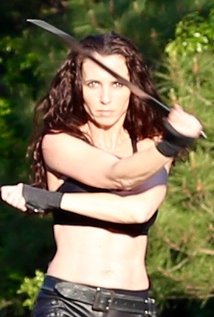
What a great honor it was to interview the amazingly talented Stunt Performer Jennifer Badger. She has worked on over 170 productions in the last 20 years as a Stunt Double (for Angelina Jolie, Courteney Cox, Kelly Greyson), Stunt Driver (Captain America: Winter Soldier, Talladega Nights), Stunt Performer (The Walking Dead, Ant-Man, Fast & Furious 7), and now Stunt Coordinator (The Originals, Complications). Enjoy!
Matthew Toffolo: How did you get into the stunt game? Was this something you’ve always wanted to do?
I was 13 years old and doing acting for Nickelodeon in Florida when learned about stunt work, took a weekend workshop, and started becoming interested in this more physical form of acting. I was a tom boy and had competed in gymnastics, swimming, and diving and the stunt industry really appealed to me. I auditioned for the Batman Stunt Show in Atlanta in 1993 when I was 16 years old and was hired on the spot. I nearly lost the job when they learned my age but my mother assured them that I had a work permit and that she and my father would support this endeavor. I thank God for my wonderful parents because this became the start of the career that I love. After training and working with the stunt performers in Atlanta, I was called for my first film when I was 17 years old as a show in New York needed a girl my size who could ride motorcycles and rollerblade well. The show was Hackers and the first actress I ever doubled was Angelina Jolie.
MT: You’ve worked on a ton of successful films (Captain American, Pirates of the Caribbean, Transformers, Ant-Man, to name a few). Do you generally work with the same crew? How do you usually get hired?
While there are several stunt teams that I am grateful to be a part of, I work with many different groups. When you first begin in the industry you have to really hustle and market constantly to keep your name and face in people’s minds. As you grow and develop in the market, people begin to know your work and word of mouth tends to generate a lot more work. For that reason too, I believe it is important to never get complacent and to have the mind set that you have to prove yourself each and every time you walk on a set. Having one bad day could potentially create negative associations so hard work and integrity have to be a constant.
MT: What job has been your most valuable experience so far?
That is an interesting question to answer because it truly shows what one values. I have had projects that brought forth great financial value but while I am appreciative, that isn’t the highest of my priorities. I’ve had shows where I was treated as a great asset and value to the production- treated like a star- and while that was nice, it isn’t necessary. I put the most value on the people that I work with and how they treat those around them. For that reason, I value most any project I work on for coordinator John Copeman, who treats everyone as equals, man or woman, and truly puts incredible care into each person’s safety. I also was so grateful to the core team members of Pirates of the Caribbean: On Stranger Tides, because I had never before that worked a run of a film with a more thoughtful group of gentlemen who showed me respect both as a professional and a person. As I’ve grown in this business over the last 25 years and seen the harsh sides of it that tear people down, I’ve come to recognize and value the kindness and grace that I see in more and more of the other coordinators I work with and that is what I find means the most to me and what causes me to want to work with some teams over and over again.
MT: You have also done some stunt driving too. How does one train for that?
With a teachable spirit! Some people like to jump in and claim to be a stunt driver with very little on set driving experience. I was thrown into some hot spots when I barely had my actual driver’s license for more than a year or two (because I started so young) and so I always took driving very seriously. This is one of the few stunts that if something goes wrong, you could hurt a lot of others who did not sign up for the danger so I always approach it with that in mind and with a lot of though to prepping the car and knowing my ‘outs’. Having said that, there are a few driving schools that have a lot of wonderful training to offer and I encourage all stunt people to attend them. While I learned a lot in that way, I also had the opportunity to ride in with several of our top tier stunt drivers in the industry and I kept my eyes open and my mouth shut, learning as much as possible while in the car with them.
MT: Is there a type of stunt that you haven’t performed yet that you would love to do?
I’ve been up to roll cars (both by pipe ramp and cannon) on several shows but for budgetary reasons these are often the first stunts to get cut. While I’ve crashed cars many, many times, flipping one is definitely on the career bucket list. As I write this, I am scheduled to do so in about two weeks so fingers crossed that nothing changes.
MT: What makes a great stunt performer? What skills does he/she need?
Humility. The minute you think you know everything and stop learning from others, your growth stops and you have less to offer. The minute you think you are the best and quit training, you’ll be replaced by someone better. The moment you think that you are in control and nothing can happen to you, you’ll overlook a potential danger and get injured. We have such amazingly talented people in our industry and I’ve known from my first day that I am not, nor will I ever be, the best out there. Knowing and accepting that has caused me to work harder, train longer, and be very aware of my limitations which has always led me to be very honest with those hiring me about what I can and can’t do. Those traits have served me well over a very long and happy career. Being cocky leads to being complacent and that bodes ill for both business and safety.
MT: From your experience being in charge as the Stunt Coordinator, was has been the biggest thing you have learned to be very good in that leadership position?
That at the end of the day, I need to trust my own instinct about everything from how I want to cut previs to what safety procedures I want to put into place. I’ve had disagreements with others that I highly respect and value about how I want something done but my gut has never failed me. Over the decades I have always had a feeling when something was ‘off’ and the times I was injured it was because I failed to act on my instinct, trusting instead to what my elders told me was right. In hindsight, I see where I shouldn’t have acquiesced and now that I coordinate, I will always listen to the opinion of those that I trust however I will act on my intuition every time. Usually this has led to me being teased for being a ‘mother hen’ due to layering extra safety into a stunt however if everyone is going home healthy each night, I am happy to put up with the teasing.
MT: Is the stunt game still a boys club?
It unquestionably still exists… especially on the coordinating end. I have a small folder of letters threatening my personal safety. I was hazed by a group of stuntmen in LA when I was 18 years old and I have been assaulted twice- once left me with a broken bone- so as to ‘teach me a lesson about staying in my place.’ These things do nothing but serve to make me more stubborn to break barriers and thank God that my husband and son stand with me. Sadly, my son was witness to one of the assaults when he was 10 and, if nothing else, it gave him an awareness of the challenges women sometimes face.
And those situations are happening less- we have more and more female coordinators in the US and our Canadian peers are just rocking it! Having said that, the vast majority of our male counterparts are supportive and encouraging. It does make me appreciate more and more the women who went before us such as Julie Ann Johnson (see the book, The Stuntwoman) and others like her who must have faced so many more physical and verbal attacks.
MT: What film, besides the ones you’ve worked on, have you watched the most times in your life?
The Princess Bride. No question. I had a huge crush on Cary Elwes. But as I learned more about sword work over the years that movie was somewhat ruined for me. Wesley and Inigo are always meeting in the middle with no real intent to actually harm one another. On a fun note, I have now worked with Cary Elwes on two films. The last time he and his wife were about to have their first child and I spent a ton of time bragging on my amazing husband and advising Cary on how to earn a lifetime of brownie points by supporting his wife in the first few months. It is funny how life can work like that.
MT: What’s the biggest high risk stunt you’ve performed to date?
Riding passenger on a motorcycle doing very high speed, very close proximity gags with a ton of vehicles. Of course I was in a little shirt, short shorts, and sandals for the sequence so I had no protection if we crashed. I also did a transfer from the motorcycle to a car carrier at speed and then climbed to the top, loaded passenger in one of the cars, and we drove off of the top and down onto the road, spun out, and took off. I was surrounded by some of the best drivers that our business has to offer and at one point I was told, “you know if anything went wrong there I wouldn’t have been able to do anything to avoid running you over”. I agreed that the gentleman was correct and was grateful that I had such an amazing motorcycle driver. I’ve found that for me, the hardest gags are the ones where I have little to no control. I’ve been thrown into highfalls off of bridges and buildings which can be difficult if the person throwing you doesn’t send you off well. I’ve been burnt on a full body fire burn because my stage one safety person froze up when I went down and someone from much further away had to come in and put me out. And I’ve been passenger on a motorcycle for a head on crash when my driver was jacked up and completely out of control (I got injured on that one) so I’ve found that I’m appreciative when I can have some say in who is controlling my safety. Trust is huge in this business!
MT: Where do you see the future of green-screen stunt performing in the motion pictures?
Obviously it has its place and that will continue growing. I have to say though that I’m still a sucker for practical stunts on practical locations that are either free from CGI or barely enhanced. A good example is the current Assassins Creed movie. The stunt double trained and worked up to this huge practical highfall which was fantastic. The final edit looks like a cartoon due to so much computer enhancement. I’m glad that they did indeed shoot a real person doing a real gag but it was ruined by what they did in editing.
(Coordinating, Driving, Acting, Weapons, and Water Reels)
Four Time Nominee for the World Stunt Awards – 2001, 2003, 2007, 2012
Nominated for SAG award- 2009 “Public Enemies” & 2015 “The Walking Dead”
2012 Winner of the Action Icon Award
____
Interviewer Matthew Toffolo is currently the CEO of the WILDsound FEEDBACK Film & Writing Festival. The festival that showcases 10-20 screenplay and story readings performed by professional actors every month. And the FEEDBACK Monthly Festival held in Toronto & Los Angeles at least 2 times every single month. Go to www.wildsoundfestival.com for more information and to submit your work to the festival.
Crispin Green has edited some of the top TV shows in recent times. It was a pleasure to site down with him to talk about the craft of editing and his career.
Interview with Crispin Green:
Matthew Toffolo: Tell us about the “Game of Thrones” experience. How is editing such a unique show where there are 4-7 plots occurring in a single episode?
Crispin Green: It’s an experience quite unlike working on other shows in that the editors are there for the duration of the shoot (about 6 months) rather than blocks of two or three episodes. This can help in the editing process as you get more of a sense of the season as a whole story.
MT: Will you be back to editing the series “Game of Thrones”? How does the process work? Who do you report to and collaborate with? The showrunners? The novelists? The director of the episode?
Yes I’ll be back if the opportunity arises.
CG: When assembling the dailies I work closely with the director, showing him or her cut scenes as the shoot progresses. He or she will give me notes as we go along if needed as they only have limited time for fine cutting when the episodes are complete. Some VFX heavy scenes have to be fine cut early so that the VFX team has a chance to get their work done in time (dragons take a long time to animate!), in these cases the showrunners will get involved with the cutting process. Once the director has presented a fine cut to the producers, the showrunners take over and I will work with them until picture lock.
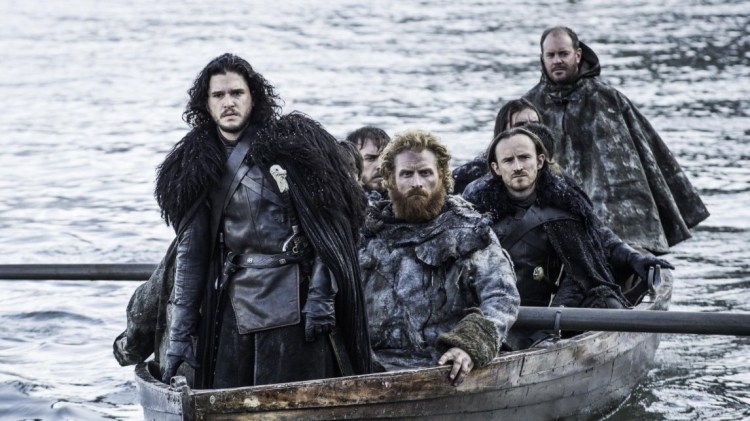
PHOTO: Game of Thrones Season 5:
MT: I have to ask you about editing “Doctor Who”. Another iconic series. Were you a fan of the show before you began editing it? How was your experience working on the show?
CG: Yes I was a fan, I grew up watching the show and couldn’t quite believe it when I got to actually work on it! It was great fun to work on, the showrunners were very open to unusual ideas.
PHOTO: Doctor Who Season 4:
MT: What’s the key difference between editing a feature film in comparison to editing a TV episode?
CG: I’ve only cut one feature (and co-editor on The Great Rock n Roll Swindle – which wasn’t normal!) so I can’t really comment but I would imagine that TV shows have less time available due to pre-booked transmission dates.
MT: Besides “Game of Thrones”, and “Doctor Who”, do you have a favorite experience and film/TV show that you’re most proud of?
CG: Series one of “Bodies” was a ground-breaking medical drama written by Jed Mercurio where we got to try out some interesting stuff and equally “Misfits” was a pretty cool show to cut the first episodes of.
MT: What are the key qualities to be a great editor?
CG: The ability to get the story across in the most interesting way, understanding the director’s vision and being ready to adapt to what the writer/showrunners want.
MT: What is an editor looking for in their director/show runner?
CG: Someone who is good to work alongside (we spend many weeks together in a small room!) and who has an interesting vision of the project.
MT: What is a director/show runner looking for in their editor?
CG: Same answer as above but also it helps if the editor can second guess what the director wants while assembling the scenes.
MT: What film, besides the ones you’ve work on, have you seen the most times in your life?
CG: It’s a three way tie between “The Blues Brothers”, “Some Like It Hot” and “The Italian Job”!
MT: What advice would you have for people who like to be an editor in the film/TV industry?
CG: I started as a runner and worked my way up and I would recommend this route to anyone, you get to meet lots of people on the way who, more often than not, will be happy to help you on your journey. Also, try and cut as many things as you can to develop your cutting instinct, and watch lots of TV shows/movies to try and understand how to (or how not to!) construct an understandable story.
_____
Interviewer Matthew Toffolo is currently the CEO of the WILDsound FEEDBACK Film & Writing Festival. The festival that showcases 10-20 screenplay and story readings performed by professional actors every month. And the FEEDBACK DAILY Festival held at http://www.wildsound.ca and in downtown Toronto on the last Thursday of every single month. Go to www.wildsound.ca for more information and to submit your work to the festival.

 It was definitely an education chatting with story artist Yoriaki Mochizuki. He chats about working storyboarding animation movies and how it can be a much more creative process than working on live action films, and so much more….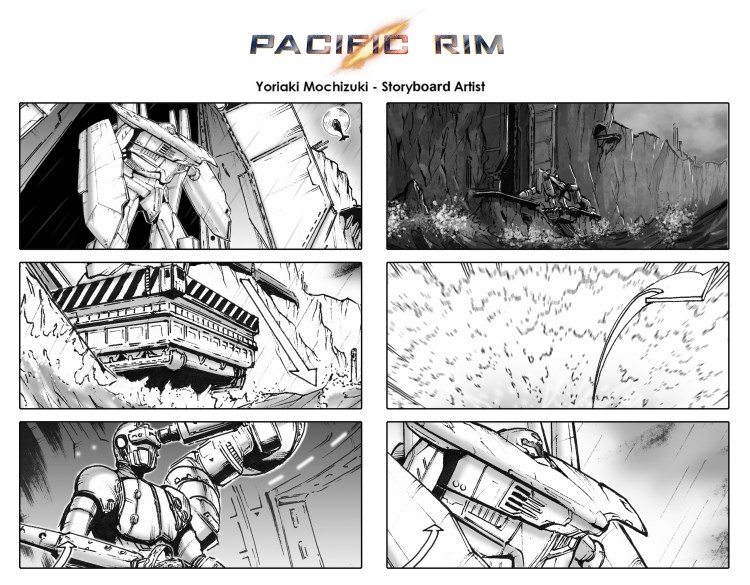












 Festival Reviews