Interview with Sound Editor Piero Mura (Skyfall, Fast & Furious franchise, Training Day)

Piero Mura has worked in the sound department on over 100 films in the last 25+ years. His list of credits include Ben Hur, Fast & Furious 6, Skyfall, Warrior, War of the Worlds, and Training Day to name a few. It was an honor talking to him about his career and sound in general.

Matthew Toffolo: How would you describe what a Sound Effect Editor does in one sentence?

Piero Mura: A Sound Effects Editor directs the attention of the audience to what he/she believes is important in terms of story and entertainment.

MT: You were the Sound Designer on the the remake of Ben-Hur. A film that did not do well box office-wise. You work on months on a film that I’m sure you’re proud of and then it quickly goes away after it opens. How does that feel?

PM: Ben Hur 2016 did not go away after it opened. As I write it is still being released in the foreign markets and it’s doing reasonably well. There is always a bit of disappointment when a movie you work on doesn’t find it’s audience but it’s the nature of what we do. We put our work out there and we move on. If I think a movie is a good movie the fact that made money or not is irrelevant. I leave the commercial aspect of our industry to others.

MT: Were there some films you worked on that you thought would not do well financially and were big hits? Or, films you assumed were going to be a big success, but ended up not doing well?

PM: As I said I leave it to others to make this kind of considerations. But I was happy when “500 Days of Summer” was well received by a large audience. Probably larger than i thought at the time.

Zooey Deschanel & Joseph Gordon-Levitt in “500 Days of Summer”

500_days_of_summer.jpg

MT: How has sound mixing changed from a technology and creative point of view from the year you started to today?

PM: Everything in post-production changed in the last twenty years.
I believe that they were positive changes. Today the line between mixing and editing is not as well defined as it used to be.

Quite a few sound editors now seat behind the faders and a number of mixers do not hesitate to do sound design or supervise.

Personally I like the opportunity to bring to the stage coherent tracks
where backgrounds, sound effects and foley are already balanced and pre-panned. Establishing spacial relations helps me to understand the sequence better and go a little deeper with my work.

MT: Where do you see the future of Sound Designing in film?

PM: Probably it will be a good future. It’s a fun thing to do and a lot of people would want to be part of it
.
MT: You’ve been working in the industry for 30+ years on over 100+ productions. Is there is a film or two that you’re most proud of?

PM: If I have to pick one I would pick Training Day. I believe is one of the best movies of the last twenty years. The late George Simpson was the sound supervisor. I cut the sound effects together with a few other sound editors. There’s an important creative line that connects Training Day with Harsh Times,Street Kings and Sabotage.

Denzel Washington and Ethan Hawke in “Training Day”:
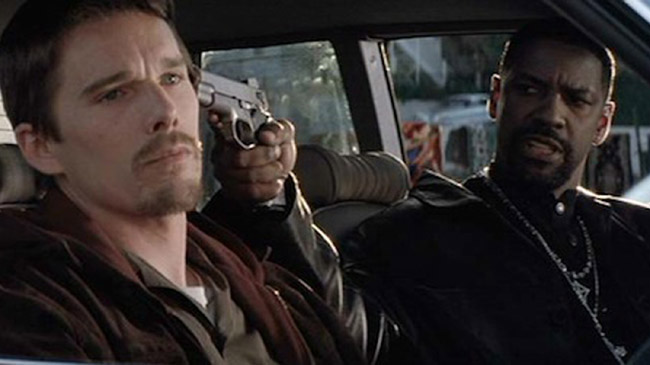
training_day.jpg

MT: What makes a great sound designer? What skills does he/she need?

PM: Patience and endurance. Also humility helps.
Never go for the esthetic qualities of a sound.
If it is not helping the story it’s beauty is useless.
As far as skills needed I believe that the best skill to have is to be open to learn from others.
Actually this is the same advise I was given when i started.

MT: What film, besides the ones you’ve working on, have you watched the most times in your life?

PM: The Godfather. Characters and story are incredible in this movie.

MT: Where did you grow up? How did you get into working in the film industry?

PM: I was born and grew up in Rome. I started as an apprentice in the Sound Department of the Cinecitta’ Studios. After a couple of years I I got the chance to edit something. It felt good and I liked it.
And I still do.

_____

Interviewer Matthew Toffolo is currently the CEO of the WILDsound FEEDBACK Film & Writing Festival. The festival that showcases 10-20 screenplay and story readings performed by professional actors every month. And the FEEDBACK DAILY Festival held online and in downtown Toronto on the last Thursday of every single month. Go to http://www.wildsound.ca for more information and to submit your work to the festival.

Interview with Stunt Performer Hannah D. Scott

I really enjoyed chatting with Stunt Performer/Actor Hannah D. Scott about her profession. She was very open about everything and you can feel her passion for the industry and what she does in her answers. Enjoy!

Matthew Toffolo: What job has been your most valuable experience?

Hannah D. Scott: I think that part of the answer lies in not actually working, but watching people work. The set is such a massive machine and being able to take a step back to listen and learn is priceless. I was once asked, a long time ago, to step in as kind of intern of sorts. Understanding the camera, understanding how the director communicates with actors in order to get the right result, what cues to give to help them understand and so on was incredibly valuable. I could see how different lenses worked, how framing could make or break a shot, how timing is essential as are reactions. I watched how gags were set up and every detail that goes in to even the simplest of stunts. Even for a small trip to the ground, the area has to be checked for hazards like glass for example, but someone outside of stunts might not think of those things because they never have to be the ones hitting ground.

Perhaps the most valuable experience was making a mistake on a job an realizing that that sort of stunt is not something I want to do, and being honest with myself about it. Why try and do something and risk not only yourself but others. We all have things we thrive at and fail at.

PHOTOS of Hannah fighting. Swords & Training: 

hannahscott_1
hannahscott_2
hannahscott_3

MT: Have you suffered a lot of injuries doing stunts? If so, what has been your worst injury?

HDS: Funnily enough everything has been outside of work. My Mirror fell off of my windowsill and went through my foot when I was at home…doing nothing. I always expect to get a little bruised even though I have pads for safety, but it comes with the territory. There have been some terrible accidents, perhaps some were avoidable and some were just simply tragic accidents, but we are all aware in going to work that we stand the chance of being hurt and maybe seriously. Everything in our power and the power of those working with us is done to keep things safe. I don’t think the general public realize how much danger there is involved and how much of the physical stuff we actually do without it being CGI or some such thing.

MT: Has there been a stunt that you love to perform that you haven’t performed yet?

HDS: I haven’t done burns yet, being set on fire. There are full and partial burns, each with their own skill set and risks. For some reason that’s high on my list of things I’d like to learn and have the opportunity to do.

MT: How did you get into the stunt performer game? Was there extensive training involved?

HDS: This is always a hard one to answer as there in no one ‘way’ in. Personally I was picked to work on a film as I had a background in martial arts, gymnastics and fighting. I very much had to learn as I went that day because the most I had was stage combat for a base in understanding reactions and so on, but it’s a whole different world with a camera, pretty much polar opposite. I was lucky enough to be hired, do a good job and keep connections in order to find out how to progress once I’d made a choice to commit to stunts.

There is no ‘training’ for stunts in a way, you can’t go to a school and then come out with a range of skills and find recruiters. There are workshops available and they’re certainly more frequent in NY now. It has been very hard in the past to attend workshops without already being ‘in’ the working community and without a resume. Most were private invites and with good reason. Things are becoming more open to those starting out now and giving people a chance to learn. It’s a catch 22. How do you get into stunts without training but how do you get training and invited without already being in stunts? Who should even be teaching it is another story and sometimes cause for friction, but at the end of the day it’s about keeping each other safe and using the best skills we have individually, working together to make the best picture possible.

We all train regularly at various sports complexes and in teams. You have to keep the muscles moving, work reactions and timing and watch yourself back all the time on video to make sure you’re not catching yourself for example, putting a hand down being shot in the head where in life you’d just collapse…if that makes sense. Conditioning is always important so you’re fit enough to do multiple takes and have the ability to take the impact, are prepared for it.

MT: Where do you see the future of green-screen stunt performing in the motion pictures?

HDS: I’m not sure I”m experienced enough to answer that, but I think that technology will obviously continue to grow in ways we can’t even imagine yet. Look at animation, it’s mind-blowing. But, I do think there will always be a need for physical bodies and work, so hopefully non of the advances will take jobs away.

MT: What’s the biggest high risk stunt you’ve performed to date?

HDS: I’ve done a dog stunt, which could easily go wrong should the animal decide he wants to do what he wants, but I’d say high-fall holds some of the highest risk. Falling off buildings, cliffs, over balconies and so on into boxes, airbags or porta-pits. There are so many factors that could go wrong either from the miscalculation of the person jumping or the people on the ground spotting or prepping the air-bag, it’s a very risky stunt and a speciality. It’s certainly not for everyone.

MT: Do you have a stunt performer mentor?

HDS: Yes, I am very lucky and honored by the people I’ve been surrounded and guided by. I think it’s somewhat essential in this part of the entertainment industry as it can be so hard to navigate. I was incredibly lucky on the first major job I did having the chance to work with some of the longest working members of stunt community, their generosity astounds me.

Whenever I’m confused about anything from a contract to what I might need to work on or where I can find who and what I need, they are all there. It’s never too much to check in and there’s never a question that’s too silly to ask. I feel like they all remember what it’s like to have had that first day and remember where they started. I would love to name them, should I name them? Manny Ayala, Elliot Santiago, Chazz Menendez and Joanne Lamstein are all those I consider it an absolute honor that I have them in my life.

MT: What movie, besides the ones you worked on, have you seen the most times in your life?

HDS: Oh boy…honestly? Probably ‘Pete’s Dragon’, no kidding. I know every part of that script and gutted they have made a new one. I’ve never wanted dragons to be so real in my life!

Her Website: http://www.hannahdstunts.com/

PHOTOS: More Hannah fight photos:

hannahscott_4
hannahscott_5
hannahscott_6
hannahscott_7

_____

Interviewer Matthew Toffolo is currently the CEO of the WILDsound FEEDBACK Film & Writing Festival. The festival that showcases 10-20 screenplay and story readings performed by professional actors every month. And the FEEDBACK DAILY Festival online, and in downtown Toronto on the last Thursday of every single month. Go to www.wildsound.ca for more information and to submit your work to the festival.

Interview with Editor Allyson C. Johnson (The Get Down, The Wire, Monsoon Wedding)

It was an honor chatting with Emmy Nominated editor Allyson C. Johnson. She is currently editing the critically acclaimed series “The Get Down”.

Matthew Toffolo: You edited two episodes of “The Wire”. How was this working experience? Did you realize that you were a part of one of the great TV shows in history?

Allyson C. Johnson: The Wire was my first TV series so I didn’t know what to expect. I had been cutting features and docs and everyone kept telling me TV was soooo different but it was HBO so we didn’t have to deal with the commercials and other restrictions put on you by Network television. I think we all knew it was a really good series but when you’re in the trenches it’s hard to step back and actually see the bigger picture. So, no, I had no idea it was going to be as big as it is. It was a great experience because the Producers were smart, creative and trusting of the editors and it’s always a pleasure to work with a talented cast like the one on the Wire.

MT: What film that you’ve worked on has been your most valuable experience?

ACJ: I think Monsoon Wedding was my most valuable Feature experience so far. It was my first film and I learned so much from working with a great Director like Mira Nair. She has an amazing talent for making a performance as good as it can possibly and giving a film real heart.

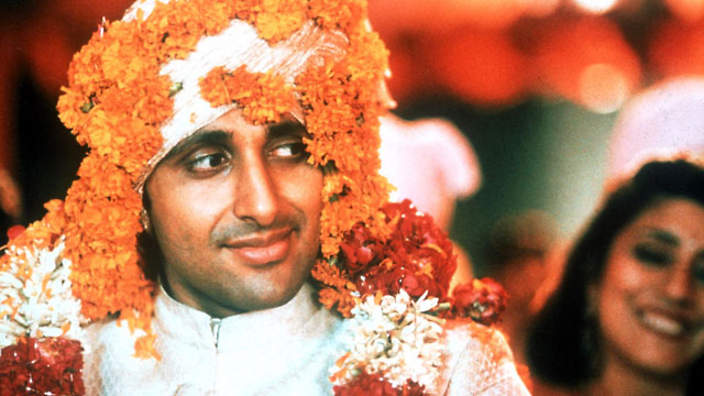
PHOTO: Still from the film “Monsoon Wedding”:

monsoonwedding.jpg

MT: What is the art to being a great TV SHOW editor? How is working in TV different than working on a feature film?

ACJ: I really don’t think there is a difference between a “TV show editor” and a Feature or Doc editor. Now that there’s streaming and cable TV not all TV has the issue of having to stop the story every 8-12 minutes to add a commercial break. The big difference for me is that in TV it’s not a given that the editor will be at the mix. I still don’t quite understand why that is since the editor knows the show inside and out and can be a huge help during the mix. Network TV tends to want more close ups and to be on the actor’s face when they’re speaking plus having to find spots to put commercial breaks that will not be intrusive can be a challenge. Also, working on a series, although the director does the first cut, he/she doesn’t end up having the final say as they would in a Feature film because the Showrunner is the one who must make sure the series has one look and one feel.

MT: Have you ever been surprised after wrapping a production on the success or non-success of a film/TV show? I’m assuming you’ve experienced both pendulums – a film that you assumed was going to be a hit and the audience/critics didn’t respond. And a film that you assumed wasn’t going to do well and then ended up doing very well.

ACJ: I am ALWAYS surprised at the outcome. There are so many different opinions and tastes in this world. I think we just have to make sure we are working on a show or film we believe in and enjoy and not worry about what everyone else thinks. Unfortunately reviews can make or break a show and these days so can social media so I hope people will give a show a chance before they let someone else decide for them.

MT: What is an editor looking for in their director? What is a director looking for in their editor?

ACJ: Big picture? We spend so much time in the editing room together it’s imperative that we can laugh together. More specifically? I always hope for shots to cutaway to so we are not forced into performances that might not be the best and/or continuity issues. I would imagine a director would want an editor who is open to trying new things without complaining.

MT: Is there a type of film that you would love to edit that you haven’t edited yet?

ACJ: I was a musician in college and have always been drawn to musicals. Although I’ve worked on many Rockumentaries in addition to the NBC series Smash and The Get Down for Netflix, I still haven’t cut a musical Feature Film and would love to do that.

MT: What film, besides the ones you’ve worked on, have you seen the most times in your life?

ACJ: Aside from the films you watch a thousand times when you’re a kid I think I have probably seen Cabaret, Broadcast News, Sleeper, To Kill a Mockingbird, Harold and Maude, Minority Report, A clockwork Orange and The Heat. Sorry, couldn’t just pick one. That doesn’t mean there aren’t other films that I loved but some films you just can’t watch over and over again even if you love them.

MT: What suggestions would you have for people in high school and university who would like to get into the industry as an editor?

ACJ: Get a job in a cutting room, any job doing anything. It’s important to be exposed to the process as much as possible and to meet people in the business. If you’re an assistant already cut scenes on your own in your spare time using the footage for the show you are working on so you can get some practice and show them to the editor and ask for pointers. Learn the AVID.

MT: Where did you grow up? Was working in the Film Industry something you always wanted to do?

ACJ: I grew up in Great Neck on Long Island. I always wanted to be a musician and ended up going to college for that. However, I was very involved in Theatre at my High School too and I had a great love for film when I was growing up. Unfortunately it never occurred to me that I could do that for a living. We didn’t have phones that we could use to shoot our own movies and I didn’t know anyone who worked in the business so it seemed a little too out of reach until I got to college. I went to SUNY Purchase and it had a great film program. While I was there I took a few film classes on the side. That was the beginning for me.

_____
Interviewer Matthew Toffolo is currently the CEO of the WILDsound FEEDBACK Film & Writing Festival. The festival that showcases 10-20 screenplay and story readings performed by professional actors every month. And the Daily Film Festival every single day downtown. And also held in downtown Toronto on the last Thursday of every single month. Go to www.wildsound.ca for more information and to submit your work to the festival.

Interview with Storyboard Artist Robert Castillo (X-Men: Apocalypse, Star Wars: Episode VII)

Award winning Director, Animator and Illustrator and Storyboard Artist Robert Castillo discovered his passion for art and illustration at the tender age of five. Nicknamed “Sketch”, Castillo would draw his way through his difficult transition of returning to the US from the Dominican Republic, mastering English, and acclimating to the mostly white environment of Chelsea, Massachusetts.

It was an honor sitting down with one of the more sought out storyboard artists in Hollywood. In just the last year, Robert has worked on “Star Wars”, “Fifty Shades of Black”, “Ride Along 2”, “Keanu”,  “Captain America: Civil War”, “Bad Neighbours 2”, “X-Men: Apocalypse”, and “Teenage Mutant Ninja Turtles”.

Matthew Toffolo: You have worked as a Storyboard Artist on over 60+ productions in the last 15 years. Do you have a favorite experience?

Robert Castillo: I think that there are a few experiences but the one that sticks out to me would be working on the Ant-Man special features for Marvel. In the DVD extra example, they use my drawing of a Court room scene. It was great to do this job because I am a big Marvel fan and grew up with the comics.

Close second would be working on The Sopranos with Steve Buscemi.

Sopranos 1.jpg

MT: You are credited many times as being a Storyboard Artist: Promo Team. What does promo team mean?

RC: The Promo team would be whatever company is doing promotional commercials and advertising for the film. networks like VH1, MTV, TRU TV, Viacom etc.

Advertisement

They have me storyboards any advertising for the Film or TV show.

rooney

MT: You worked on three films that are about to being released for the 2016 summer movie season (Teenager Mutant Ninja Turtles 2, X-Men Apocalypse, Bad Neighours 2). Three different movies in terms of tone and genre. Did you have a positive time working on these films?

RC: Yes I did! I have the greatest job in the world! I read a script someone wrote and try to visualize what they are seeing in their heads. I get to use my imagination all day, as I am doing this interview I am working on a commercial. I am always drawing everyday and I can’t complain. Some jobs are tougher than others and more demanding but at the end of the day I am drawing.

MT: You have worked on a lot of action films. How important is the creation of the storyboard to the production team for the action and fight scenes?

RC: It is super important and crucial to storyboarding action scenes or fight scenes. It helps everyone to be on the same page. Storyboards also have a psychological effect in that when its on paper its just one step away from being a reality.

Bonnie and Clyde set 02

MT: What’s the general working relationship and process between a storyboard artist and the director? How early do you meet before production begins?

RC: I wish I could say we always meet early but sometimes they call me a day before its due! It can be a very stressful lifestyle but I try and do the best job possible.

When things go right I meet with the director at least a week or a few days before I start drawing.

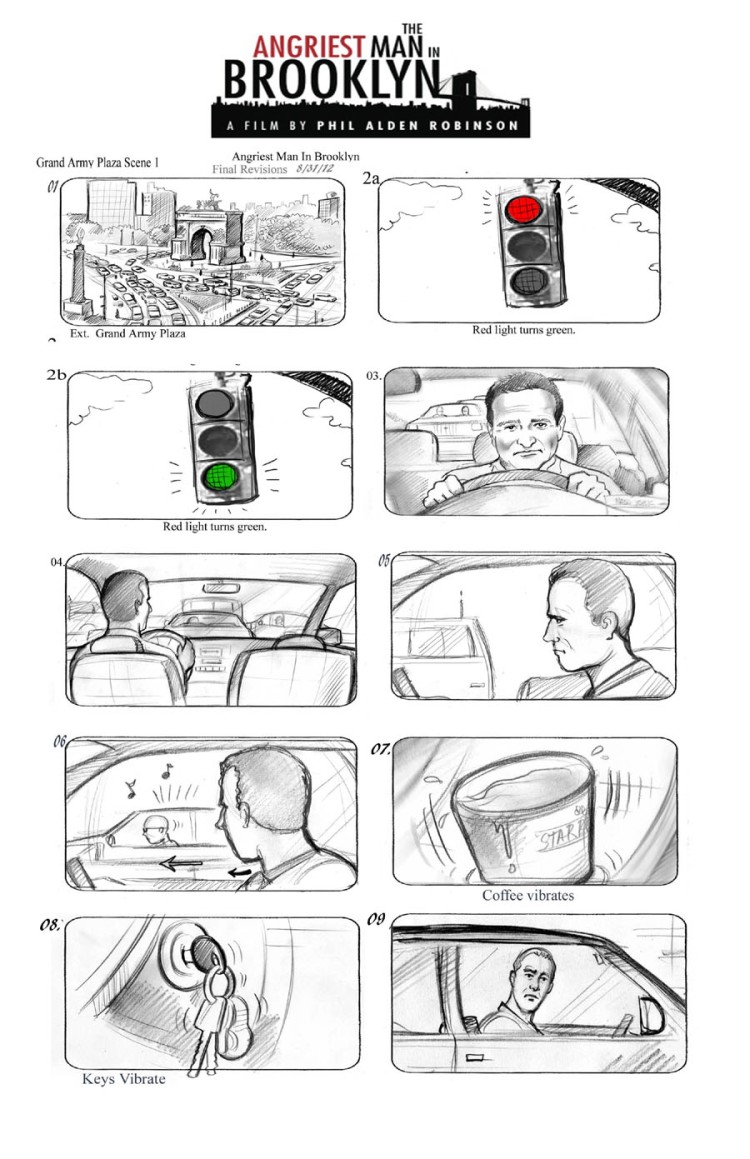
Angriest man in brooklyn.jpg

MT: What are you looking for in a director?

RC: I look for a storyteller, someone that has a clear story in their mind and they know what they want to see on the screen but sometimes I get directors that don’t know what they want and it’s up to me to find that something they are looking for.

MT: What advice would you have for people who would like to do what you do?

RC: If you want to do storyboards for a living make sure that is what you want to do! Don’t do it just for the money! Take a lot of drawing classes or at least practice. Watch movies like Citizen Kane and Kurosawa films to learn composition and pacing. and practice everyday. I am still learning believe it or not after all these years.

MT: What movie have you watched the most times in your life?

RC: The one movie that I have watched the most in my life would have to be the first Star Wars movie, because in 1977 when i came back to the U.S. from Dominican Republic it was the most amazing thing I had ever seen on the screen.

Top Five Storyboards

_____
Interviewer Matthew Toffolo is currently the CEO of the WILDsound FEEDBACK Film & Writing Festival. The festival that showcases 10-20 screenplay and story readings performed by professional actors every month. And the FEEDBACK DAILY Festival held in downtown Toronto on the last Thursday of every single week, and an online daily festival . Go to www.wildsound.ca for more information and to submit your work to the festival.

Interview with Composer Mateo Messina (JUNO, BLOCKERS)

What an honor it was to chat with composer Mateo Messina. Such a talented and positive guy. I was inspired after our 30 minute chat, I have to admit. A total pro who teaches you in this interview many things, including that it’s not a bad thing to sneak into buildings in order to forward your career when you need to!:

Matthew Toffolo: When did music enter your life?

Mateo Messina: When I was 3 years old, I started playing the piano quite a bit and just remember really liking it from a first memory. At 5 years old, I starting coming up with my own compositions. My brothers used to play a game with me where a commercial jingle would play on the radio and I was able to go to the piano and play the song.

So you were a child prodigy then?

I don’t think so. Music was something I liked and was good at.

So you’re in your early years practicing on the piano. Getting better etc… I’m assuming you kept at it into your teens?

In my early teens I started playing at hotels, fancy restaurants, coffee shops. I had my CDs for sale at Starbucks. Had 30 copies to sell. I used to have fun playing these gigs where I would do jazz versions of any piece imaginable to set up the night. Then during the dinner hour, I would play popular heavy metal and alternative music on the piano. Soundgarden, Metallica, Pearl James. Many people didn’t notice where the song came from. It was a lot of fun.

Then I went to University and played drums in a lot of bands. One day a guitarist in a band suggested that we make a record. So we snuck into the school recording studio and….well, by the time I was 21 I made 3 solo piano records. I was about to graduate and I penned out a symphony. And this became a success as I would sell out events with 350 plus people. And I’ve been creating and doing symphony events every since.

When does composing enter your life?

In 2000, a young director asked if I would compose their short film. I didn’t know anything about it, but took a stab at it. I loved it right away. So in my mid-20s I moved to Hollywood to attempt to get into the industry.

Do you remember your first paying job?

Yes. It was a short film for MTV. I got paid $500. But for rent and to survive while I looked for my big break, I actually wrote music for commercials. It was never a passion of mine but it kept me in the loop and kept me busy.

What else were you doing to make connections?

I would do things like sneak on the Fox Studios lot and would try to take meetings and offer my music to studio people. Just do anything to get my music heard.

At that time you were composing a ton of short films!

Yes. A ton. I became the guy who composed shorts. That’s how I met Jason Reitman – which lead to JUNO (2007).

So it’s safe to say that JUNO was your first big break?

Definitely. It started everything.

I was actually at the premiere of the film at TIFF in 2007.

No way. I was there too. I remember standing behind the curtain while the film was playing with the cast and crew and hearing the audience roaring in laughter at all the right times and that energy of engagement. Michael Cera gave me a huge hug of “It’s a success!” feel.

Yes, I remember that day really well. It was a day time premiere at one of the side cinemas at the Ryerson University campass (in downtown Toronto). Usually that’s not a good sign that the festival or the distributors are really “pushing” this film, or believe that it will be successful. I guess they were wrong.

I remember that day too. Great feeling.

And you were on your way!?

Yes.

Let’s talk about the film that’s coming out this weekend: BLOCKERS. How did you get the job?

I didn’t know Kay, but I knew we had similar comedic sensibilities. I watched the film before we took our meeting and told her what I thought of it and what I would do in terms of tone with the music. About a week afterwards, I showed up to a screening of the film. There was about 60-70 industry people there. Just a screening for comedians and others to give their notes on the film. I was introducing myself and people kept telling me, “You’re the composer.” “Nice to meet you.” I didn’t know what was going on and I called my agency. They told me that I was hired but Kay forgot to tell me.

Listen. I work on a lot of comedies and I can honestly say that BLOCKERS is a very, very good film. Must see. Very proud of it.

I went to one of the previews. Sat at the back of the cinema, and there were scenes where the audience was roaring – like a rollar coaster. This film is the “American Pie” for this generation.

It all came together. One of my favorite films I’ve ever worked on.

How was your working relationship with director Kay Cannon? Her directorial debut, right?

Yes, her first time out, but come on, she’s a pro. From creating the “Pitch Perfect” films to helping running the show on “30 Rock”. She is a comedy expert. Kay is very smart. very funny. Patient. Thinks things through. She’s comes at things with so many angles. She’s super funny.

You’re also working on the film LITTLE ITALY, directed by Donald Petrie, who is a comedy pro (Grumpy Old Men, Miss Congeniality, How to Lose at Guy in 10 Day). So you go from a first time director to a veteran director of over 30 films.

LITTLE ITALY has a 90s sensibility and feel to it. There was an interesting moment working on this film. I didn’t want to dumb down the film and be on the nose with the tone of the music and was worried I was doing just that. One of the Producers told me, “NO, be on the nose. We are here to entertain.” It’s good to be reminded of that.

There are many ways to play the TONE. BLOCKERS and LITTLE ITALY are different tones but they are both comedies. Great to go from one extreme comedy to another.

In BLOCKERS, there are big percussions. Lots of drums. Horror tones. Sentimental tones. All kinds of emotions. We’re all over the place with it. With LITTLE ITALY you set the tone and let it play throughout.

How many instruments do you play?

Well I can write for a vast amount. I can play piano and any percussion.

I write everyday. Written everyday for the last 17 years of my career. Always play. Used to writing for all instruments. Can try anything someone throws at me.

What movie have you seen the most times in your life (besides the ones you worked on)?

National Lapoons Vacation.

I love films with heart.

What advice do you have for people wanting to be a composer?

Day dream. Set yourself up to succeed. What I mean by this is write, write, write and write some more. Find a film and write for it even if it’s already done.

Advertisement

Persistance is key. Relentlessness is key. Time and time again I’ve found the people I’ve worked with who are on top of their game are the ones who stayed after years and years struggling. Just keep at it.

And, you don’t play baseball unless you’re on a field. So you have to move to Hollywood, or a city that’s about making movies where you can land jobs.

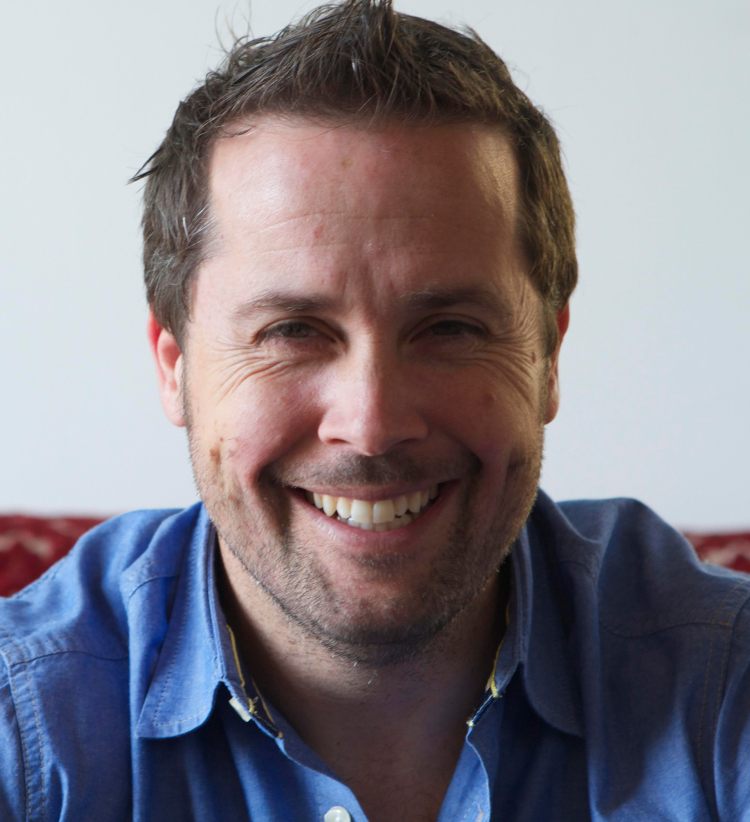
mateo messina.jpg

Interview with Cinematographer Tobias Datum (Imposters, Mozart in the Jungle)

It was a pleasure to have the very talented Director of Photographer Tobias Datum answer some questions.

Go to his website for more information: www.tobiasdatum.com

 Matthew Toffolo: Is there a project to date that you’ve worked on that you’re most proud of?

Not really. I do love all the things I have worked on. I put my best effort into all of them.

Sometimes they turn our great, sometimes they are less successful (according to my personal opinion) but I have yet to have a bad experience making a movie (knock on wood).

What was the biggest thing you learned working on the many shorts that you DP’d?

Shorts can be a great opportunity to try things out. They have a very different rhythm from features and are less forgiving than a longer project can be. You need to find your groove on set a lot faster because the schedule is shorter and the same goes for what you are shooting.

Everything is a bit tighter and you can’t slip

What suggestions would you have for up and coming cinematographers who want to be where you are?

Just keep working.

Keep your expenses low so you can afford to take on projects that don’t pay much but are projects you feel strong about.

Be nice to everybody, stay curious and excited about the work

You have been in a unique position where you were the Director of Photography on two seasons of “Mozart in the Jungle” and the current 1st season of “Imposters”. How have those experiences been like working with different directors for each episode while being the driving force for the look and tone of the television series?

Both of those shows are pretty intimate affairs.

In both cases the majority of episodes are directed by the creators and over the now 3 years of “Mozart” we have grown into a bit of a family.

Outside directors are usually pretty good fits into the existing group. In both cases the creators of the show have a lot of control over the show and the hiring.

I have only had great experiences with the “outside” directors.

In prep the first AD will also give them a good idea of where the challenges are and we then tackle those together as a group.

Most of the time the directors will have a very good idea what the show and are there to play and all of us, cast and crew, are open to play as well.

What are you looking for in your director when working on narrative shorts or features?

Mostly whether I can imagine spending a lot of time together with that person and enjoy it.

What is a director looking for in you?

If I knew… it’s probably different every time.

Is there a project that you love to work on that you haven’t worked on yet? (genre, style etc..)

Anything Azazel Jacobs is going to make in the future.

Where were you born and raised? What becoming a successful DP something you always dreamed of doing?

I was born and raised in Frankfurt, Germany.

No one in my family worked in film or media related jobs and I also didn’t watch much TV or go to the movies as a child and young adult.

I always had jobs as a teenager and ended up being involved in a little music/theater venue. There were a few par cans and a little dimmer board there and one day a friend who also worked there asked me if I could imagine working with him and 2 other guys at a much bigger venue in the summer for an annual theater series. I said yes and I ended up working there for 3 summers.

In that period of time the audience number grew so big that they had to hire someone who was certified. I was 18 at that time. That person took me on as an assistant and introduced me to film. Somehow I liked what a DP did and started exploring anything visual. I did internships/apprentice ships at a post production, editing and animation and worked as a electric and grip and ultimately applied for film school in Berlin, Germany.

After that I went to AFI where a met a lot of people who I still friends with and work with as well.

In short it was a bit accidental and I am still learning as I try to catch up.

What film, besides the ones you’ve worked on, have you seen the most time in your life?

Perhaps Harold and Maude. Not sure. I do like american movies from that time for sure.

In general I gravitate towards older movies. Often international movies.

I really like that streaming service https://www.filmstruck.com/

_____

Interviewer Matthew Toffolo is currently the CEO of the WILDsound FEEDBACK Film & Writing Festival. The festival that showcases 20-50 screenplay and story readings performed by professional actors every month. And the FEEDBACK DAILY Festival held in downtown Toronto, and Los Angeles and every day at home. Go to www.wildsound.ca for more information and to submit your work to the festival.

Interview with Oscar Winning Editor Alan Heim (All That Jazz, Network)

Alan Heim is an Oscar & Emmy winning editor. Many will say that he’s one of the greatest editors in the history of cinema. All you need to do it watch “Network” (1976), and “All that Jazz” (1979) to see the uniqueness of his talent. If you haven’t seen those films I highly suggest you do because they are timeless in their themes and character studies. It was an honor to chat with Alan about his career. A career that’s still going strong  at 80 years of age.

Matthew Toffolo: In recent years you’ve worked with director Nick Cassavetes in collaboration (The Notebook, My Sister’s Keeper, The Other Woman, Alpha Dog). How did you first meet? What makes your working relationship so strong?

Alan Heim: I believe Dede Allen (Editor: The Hustler, Bonnie & Clyde) suggested I cut “The Notebook” and Nick and I have gotten along together very well since. He likes my honesty in assessing the material and I love his rather rebel ways.

MT: You won the Oscar for the amazing “All That Jazz”. A film that still holds up today. How were your experiences working on that film? How did it feel when you went up to accept your Academy Award?

AH: All That Jazz was wonderful to work on because the material was so unusual and Fosse and I had a wonderful collaboration. Every day was a challenge and filled with discovery. Bob had written many of the structural things we had found in the cutting room on ‘Lenny’ into the script of “Jazz” but we discovered that we still had to struggle with certain areas to make the film work as planned.

As far as the Oscar, I was thrilled, as any winner should be. I even forgot to kiss my wife when they called my name. It was also very rewarding to share the stage with so many of my coworkers on the film.

PHOTO: All that Jazz starring Roy Scheider:

allthatjazz

MT: What is the key to editing a musical?

AH: The key to editing a musical is to always keep an eye on the story and always try to make the audience follow the flow of the dance. A good script keeps the musical numbers integrated into the structure of the film.

MT: You also worked with Bob Fosse on “Lenny”. How was your working relationship with the iconic musical Choreographer/Movie Director? “Lenny” also appears in “All that Jazz” too! It’s almost like you edited “Lenny” twice!

AH: Bob and I worked together well because we both wanted the very best we could get out of the film. I love working with directors who won’t settle and always want to reach for perfection. I feel the same way about Nick Casavettes.

As far as editing “Lenny” twice….I always like my films to be an adventure of discovery and I’ve been pretty lucky this far.

MT: The film “Network” is a masterpiece that really was ahead of its time. It’s a film with themes and settings that still ring true to today’s world and situations. What are you feelings and memories working on the film as it approaches its 40th anniversary?

AH: “Network” has always been one of my favorites. Paddy Chayefsky was a brilliant, prescient polemicist and wrote a near flawless script, beautifully acted and directed perfectly by Sydney Lumet. What more could an editor want? Except for some unfortunate clothing choices and sideburns, the film can be released today with great pride and timeliness.

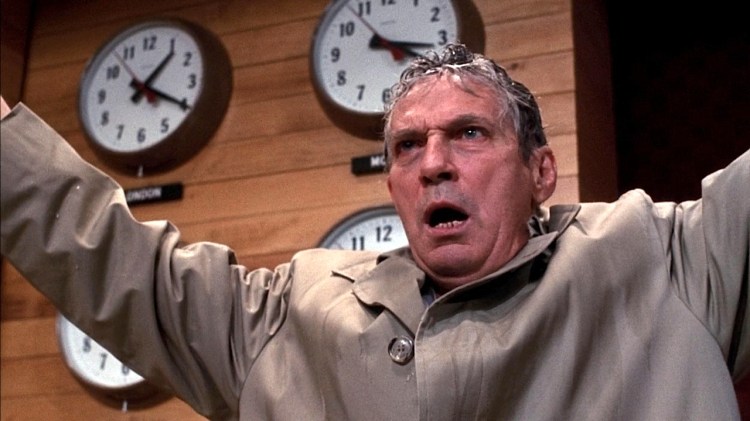
PHOTO: Peter Finch is “Mad as Hell” in Network:

network

MT: You also edited (and won the Emmy for) the landmark TV mini-series “Holocaust”, which premiered in 1978. It stars a young Meryl Streep and James Woods. Were you aware when editing this series how important it was going to be for the education of many people watching?

AH: I only worked on one of the four episodes and I had to re-edit it. It was the first time I ever “doctored” a film and basically put it back in dailies form and totally recut it. It was very meaningful for me and I’m happy for whatever it has done to retain the Holocaust in people’s memories.

MT: What is an editor looking for in their director? What is a director looking for in their editor?

AH: I think the answer is the same to both questions. Editors and directors should both try to find a person that they can spend a LOT of time with in close quarters working to get a vision on the screen. One hopes for it to be the same vision or herd will be a lot of tension in those close quarters.

MT: Is there a type of film that you would love to edit that you haven’t edited yet?

AH: I’m very happy to have worked on the type of film I’ve worked on, mostly films with emotional reality on a fairly small scale. Few fights and those mostly with fists, not lasers.

MT: What film, besides the ones you’ve worked on, have you seen the most times in your life?

AH: Probably “Citizen Kane”, “Casablanca” and lots of older comedies.

MT: What suggestions would you have for people in high school and university who would like to get into the industry as an editor?

AH: If you really are devoted to becoming an editor try to hang around cutting rooms, look at lots of movies and practice cutting wherever you can.

Don’t neglect reading, listening to all kinds of music, seeing plays and art shows and generally opening your mind to all things cultural. It all helps when you’re trying to tell a story and that’s what editing is all about..

_____

Interviewer Matthew Toffolo is currently the CEO of the WILDsound FEEDBACK Film & Writing Festival. The festival that showcases 20-20 screenplay and story readings performed by professional actors every month. And the FEEDBACK DAILY Festival held in downtown Toronto and online daily. Go to www.wildsound.ca for more information and to submit your work to the festival.

Interview with Cinematographer Tristan Oliver (Isle of Dogs, ParaNorman, Fantastic Mr. Fox)

It was a true honor interviewing the extremely talented Director of Photographer Tristan Oliver. Every single film he’s worked on has turned out great. And there’s not many people you can say that statement about! If you don’t believe, simply go to his website and watch some of the short films he’s worked on and see his list of feature credits: https://www.tristanoliver.co.uk/

Matthew Toffolo: Where were you born and raised? Was cinematography something you always wanted to do as your career?

Tristan Oliver: I was born and raised in Gravesend in Kent. An unlovely and somewhat godforsaken town on the Thames estuary.

I knew nothing about films or photography as a child. My main passion was the theatre. I wanted to act (or be a doctor or something) My first real contact with the camera dept came when I was acting in a movie. It was something of a Damascene moment and I really threw myself into trying to get into that environment immediately afterwards. I didn’t even own a stills camera when that movie started!

What has been your most proudest work of your career? Or, what has been your favorite project to date?

In terms of feature films I would say ParaNorman. I had a fantastic time at Laika for two years and a very close, creative and rewarding relationship with the directors of that movie. I’m exceptionally proud of how it looks (even if no-one has seen it.)

Can you explain to us what an Animation Director of Photography does?

There is really no difference in being a DOP for stop frame or live action. The ultimate aim is to create something beautiful for the camera. To light and frame according to what you consider to be visually special. I wouldn’t want to make concessions to the medium of animation. That is by the by.

In practical terms, there are a few differences. We typically run a 50+ unit shooting environment which is an enormous amount of stuff to keep tabs on. That’s 50 sets, 50 cameras all running together. I need to ensure continuity and quality of look across that huge mess of stuff.

Other than that the main difference is working into the macro end of the lenses which can severely compromise the depth of field. We tend to work at very tight stops (16, 22) to compensate for this.

You just finished working on ISLE OF DOGS. Can you give us a sneak peak of what do expect?

Unique. Many of his tropes will be familiar to audiences. The flat lighting. The highly symmetrical framing. The art direction and propping. This particular movie is very busy and visually complicated. Compared with Fantastic Mr Fox for example it is really intense viewing. There’s an awful lot going on up there!

Advertisement

Is there a type of film/TV show that you love to work on that you haven’t worked on yet?

I’d love to get my teeth into some American TV drama. The quality of work coming out of the States is astonishing. There’s so much of it and it’s nearly all really good. Well written, well plotted and edited. Everything.

In terms of movies, more live action please. I need a rest from the puppets!

What are you generally looking for in a director in order for you to do your job as best as possible?

All directors are different and as such, what they require from the DOP varies. Wes wants me to exactly put up on the screen what he has in his head. It is totally his vision so my role is very much reactive. With some other directors there is more of a creative collaboration, the role is proactive if you will. Neither is necessarily better than the other as long as you trust the director to bring the movie in.

What do you think a producer/director is looking for when they bring on you to DP the film?

I’d like to think that I’m the best at what I do. I have a huge amount of experience. I’m very professional and I bring on the best, most user friendly crews but essentially what a director needs is someone they can trust.

What is your passion in life besides cinematography and film?

So many. My daughters, my partner, beautiful Swiss wristwatches, restoring my 17th century house, good food, good wine , good company.

What movie have you watched the most times in your life (besides the ones you worked on?

There are lots but probably Kind Hearts and Coronets, the first Matrix and Ferris Beuler’s Day Off. That’s just for fun. In terms of cinematography, I think Conrad Hall was a genius and I can watch Road To Perdition any day of the week.

What advice do you have for young cinematographers who would eventually like to DP movies for a living one day?

Keep learning. Watch movies, read about movies. Who do you like? Why? Think about how stuff has been made. Don’t rely on your innate talent but keep building your technical knowledge, the two together will be very useful to you. And never ever send out a CV for a camera trainee position with your name followed by the letters DOP. It goes in the bin.

tristan olivier 2
_____

Interview with Production Designer Beth Mickle (Drive, Whiskey Tango Foxtrot)

I was fortunate to get an interview with the very talented and very busy Production Designer Beth Mickle. She is currently in the middle of production on the highly anticipated film “Collateral Beauty”. We talked about that film and much more in our chat together:

Matthew Toffolo: You have been the Production Designer on over 30 films in the last 15 years. Is there a film or two that you’re most proud of?

Beth Mickle: I’m incredibly proud of so many films that I’ve been involved with—fortunate to have had so many great opportunities! One that I’m especially proud of is “Lost River”, Ryan Gosling’s directorial debut. It was such a special project from the very beginning—Ryan wrote such a beautiful script with so much imagination, so many fantastical backdrops to play with. It was a smaller movie, and we all lived and worked together in downtown Detroit, collaborated closely to really shape that film as a team. I remember many adventurous weekends with Ryan and our cinematographer Benoit Debis, exploring the many awesome hidden areas of that great city. With limited resources, everyone jumped and got their hands dirty, and we built so many elements out of cardboard, tape, late-night pizza, and music…so proud of how every one of those sets came together, and the tone we found in that film. It’s one of my favorite films of all time!!!

PHOTO: Ryan Gosling, Eva Mendes & Christina Hendricks on set in “Lost River”:

lost_river.jpg

The other film I’m wildly proud of is “Only God Forgives”, which Nic Refn directed and Ryan starred in. This was another lower-budget film, this one in Bangkok, where we all lived and worked together very closely once again. Exploring every neighborhood in Bangkok was a complete joy for a gal who loves to travel as much as I do, and Nic gave me so much creative freedom with that film. My fiance Russell Barnes (an incredibly talented Production Designer) joined me on the project as the art director, and we had the most memorable 7 months together in Thailand. the lower-budget nature of the production meant that we did a lot of the heavy lifting along with our amazing Thai crew—building, painting, and decorating sets with our own hands. And the markets were phenomenal!! We ran around to tons of different vintage markets and flea markets every week, loading the trucks with so many beautiful and unique pieces. Bringing together these rich, vividly stylized sets in this unbelievable country where we were living was such an unforgettable time in our lives.

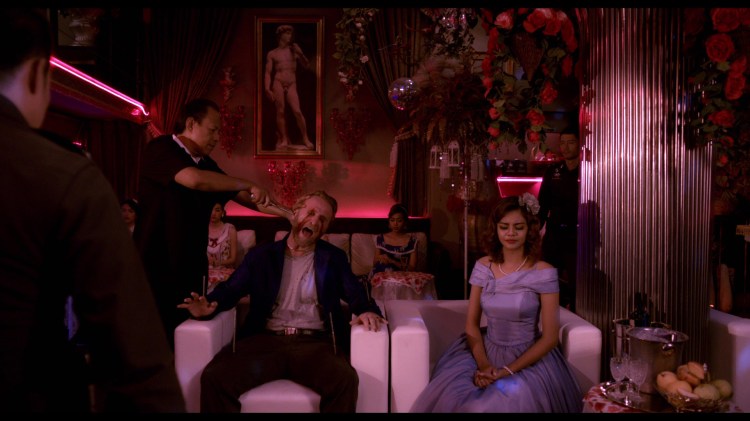
PHOTO: Set Design on “Only God Forgives”

Only-God-Forgives-141.jpg

MT: You started your career working on lower budget/Indy films as a Production Designer. Would you suggest other people who are striving to become Production Designers in this industry take this route? What are the pros/cons of taking this route in comparison to starting on the low rung and working on Union productions?

BM: I would absolutely recommend this route for aspiring production designers. The lower budget world is where you learn to be resourceful, where you can somewhat safely make mistakes which can be recovered, where you learn the complete fundamentals of how a film is made. I try to approach every production—large or small–with a calm nature, and I think that comes from being in the trenches for so many years and learning how to adapt to in all situations. The biggest con to this route is that formal “union” filmmaking can be a bit jarring when you do finally make the leap to the larger arena—but once you learn those nuances, the process really smooths out. That is definitely one pro if you do start in the larger union world—you learn those protocols right away, so you enter the film world knowing how union positions are categorized and how the different departmental responsibilities are broken down.

In terms of career growth—I also think designers can make that mental shift of thinking on a smaller scale early in their careers on smaller films, to thinking on a larger scale as projects grow in size. But I think it’s much more difficult for designers to start with thinking on a larger scale, then downsizing their approach and expectations on a smaller project. And as we’ve seen so much lately—some of the highest quality films being made right now are the smaller, independent projects (“Ex Machina”, “12 Years a Slave” to name a few), and if a designer catapults you to doing an $80 million film as his or her first film, downshifting to this smaller budget range can prove to be a difficult maneuver.

MT: What is the biggest difference when working on an Independent film in comparison to a Hollywood Union Production?

BM: Union rules and guidelines!!! On an independent film, everyone is moving and touching and painting everything…on a union film, none of that flies. this took me forever to learn!!!! I’m always eager to grab the other side of a couch, to rehang picture frames on my own, always telling the set dressers “this is how i keep my muscles!!”…some laugh and some are not amused at all:)…At first I resisted the union delineations, preferring the all-hands-on-deck team approach, but after doing over 20 union films, and seeing that crews are treated so fairly and safety is so championed, I do see the benefits of having a regulated system. Film productions are such incredible, finely-tuned organisms that function so efficiently….though I’d still paint walls if they’d ask me!..:)

MT: Some will argue that DRIVE is one of the best films in the last 10 years. Do you remember the initial conversations with the director and your team about the overall look, feel, and tone of the film?

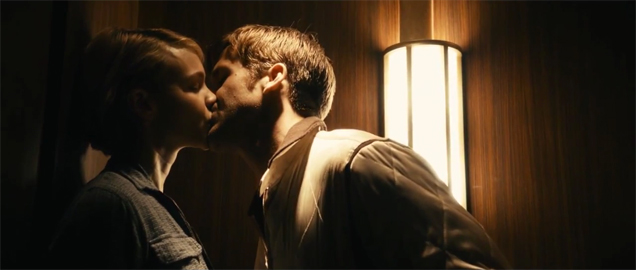
BM: “Drive” is a film is very near and dear to me. It made my career the incredible adventure that it is right now. I remember my initial meetings with Nic Refn well. I think he’s one of the most brilliant directors working today, and seeing how he approaches filmmaking is nothing less than inspiring. He’s constantly striving to shoot scenes in ways they’ve never been shot before, to make every frame as great as it can be. And his mandate is always “more is more.” So for a designer, taking this approach is a dream…every set can be as elevated and amplified as you want it to be. Every color can be as rich as possible, the idea of “extreme” is always embraced. so making “Drive”—as well as Nic’s following movie “Only God Forgives”—were a career highlight for me.

PHOTO: Ryan Gosling and Carey Mulligan in “Drive”:

drive.jpg

MT: Whiskey Tango Foxtrot is out in theaters. What can people expect to see? How were your experiences working on that film? A lot of exterior scenes.

BM: “WTF” was another fascinating project to do. All but 4 minutes of the film takes place in Afghanistan, and we shot the entire film in New Mexico!!! It was by far the most challenging film I’ve ever done, but I was lucky enough to be working alongside the best art department I’ve ever had. We built 2 Kabul city street sets—both nearly a football field in size, and both almost built from scratch. Building so much scenery was such a great challenge on a relatively small studio film—we reused so many facades, repurposed so much architecture, repainted so many pieces….at first it seemed nearly impossible to pull off the tall order, but once we started improvising and playing around, the possibilities really became endless. Anthony Syracuse was our construction coordinator on that film, and I’m certain that he’s one of the best construction coordinators this industry has ever seen.

Interview with Storyboard Artist James Doh (Captain America, X-Men: First Class, Drive)

 James Doh is one of the most sought after Storyboard Artists in the industry today. His imprint is on most of the top action movies in the last 15 years. In 2016 alone, he worked on “The Conjuring 2”, “Suicide Squad”, and “Star Trek Beyond”. He also worked on the blockbusters “Ghost in the Shell (2017”, “Aquaman (2018)”, and “The Predator (2018)”.

Go to his website at http://www.jamesdoh.com/

It was an honor to chat with him about his craft:

Matthew Toffolo: You have worked as a Storyboard Artist on over 30+ productions in the last 15 years. Do you have a favorite experience?

James Doh: It is sometimes rare to work with other storyboard artists, but through the years I’ve had the good fortune of having met some great colleagues.

That will probably be what I remember most from my work experience.

I’ve been fortunate to work with and meet some wonderful people.

PHOTO: James’ storyboard from X-Men: Origins:

storyboard_xmen-origins.jpg

MT: The film DRIVE (2011), is a very stylistic film, but not the conventional action/thriller film that you work on. How was your experience working on that film?

JD: That show had a great crew from the top down. It was a low budget production, but the crew were all top talents.

Credit to the EP for bringing together such a great team.

They wanted to bring me in for the car chases and sequences that required production prep.

When I read the script, it was one of those that you rarely get as a storyboard artist. Hossein Amini wrote a great screenplay.
I was also a fan of Nicolas Refn’s Pusher series of films, so I thought it was an exciting combination of material and director.

Advertisement

Interestingly, Nicolas was batting around different ideas for that elevator scene where Driver stomps the hitman to death. He had me board a different version that certainly was more brutal, but I like the elevator because it works so well for the entire sequence.

MT: How important is the creation of the storyboard to the production team for the action and fight scenes?

JD: Storyboards have several key roles. One of them is a communication tool for the production. It’s a visual script of those sequences.

It’s important to get the sequence down, to allow various departments to prep.

Boards are also important early on for budgeting, and to start developing what the sequences will look and feel like.

There are amazing fight and stunt choreographers, whose ideas we will integrate into the boards if they are involved at the time.

Other times, the boards are a jumping off point for the stunt/action team and a way for the director to convey his ideas on action sequences.

By the way, 2nd unit also can have their own storyboard artists to plan out their sequences too. Again, for communication, a drawing is a fundamental tool.

They are especially important for VFX intensive films, where costs and feasibility have to be looked at and planning is vital. Storyboards put everyone on the same page.

On Furious 7, we had the tragic death of Paul Walker and had to go into some very specific VFX planning to make the film work. There was some innovative work there and the storyboards were a part in planning those shots and sequences.

There are a multitude of uses for storyboards, so it can be a very powerful tool for directors to utilize.

PHOTO: James’ storyboard from Fast & Furious 7:

newstoryboard.jpg

MT: What’s the general working relationship and process between a storyboard artist and the director? How early do you meet before production begins?

JD: Very early. Many times we are the first ones on the show, months ahead of production many times. Often they circle back in post, and need storyboards once VFX gets into the nitty gritty of creating shots.

The working relationship is different with everyone but it’s really about developing the ideas or getting the boards to convey what the director is looking for.

MT: What are you looking for in a director?

JD: Good communication, convey vision, intent, style of the sequence. I’m looking to get as clear a vision as I can for the sequence.

Sometimes it’s wide open and they want you to run with it, and other times it’s very specific. Many times it falls somewhere in the middle.

I have been fortunate to work with directors that love to collaborate, encourage creative contributions, and understand the process of storyboarding.

MT: What does a director look for in a storyboard artist?

JD: To translate their ideas into a viable sequence. Directors look to you to visually lay out the sequence with creative solutions, in a way that they can shoot.

I also think it’s important that you have a good working relationship, because you can spend a lot of time hashing out ideas.

For storyboard artists, the fundamental key is visual storytelling.

You need to hash out the sequence and make it work for the director.

MT: What advice would you have for people who would like to do what you do for a living?

JD: Translating scripts to visual sequences can take a lot of time. If someone wants to become a storyboard artist, 1. Watch a lot of films. 2. Think about where you are placing the camera 3. Be able to draw anything at any angle. I know that sounds so broad, but if you learn to draw the human figure, you will be alright with everything else.

Advertisement

Most importantly, don’t be precious about your work. Things can and will change often for a multitude of reasons.

Storyboarding is a process. Sequences are developed. Things are culled, new ideas crafted, budgets change… you have to roll with that and adapt.

Did you see the Amityville flashback sequence in Conjuring 2? Look at the basics. Look at how he staged and told the story inside the house. He had a house, and a few actors to work with.

How do you tell that story in a way that’s fresh? That is film school. The Conjuring and Conjuring 2 are film school.

I would tell people to look at movies, and see how they tell the story. See what it takes to make simple things interesting.
Ask a lot of questions while you watch a film. It’s about decisions. What setups are you choosing and why?

Push yourself to improve. Always be a student of film and be a good listener.

I think we all push ourselves every show to do better, and push ourselves creatively.

MT: What movie have you watched the most times in your life?

JD: Aliens (extended edition) and Heat (Michael Mann) are ones i’ve seen a million times.

I love genre films and Korean films.

Korean cinema is tremendous, and I would encourage anyone to give it a try.

So many films on heavy rotation in my library! Tony Scott’s work, Gareth Evans…

BTW, one of my favorite scenes of brilliant acting is Christopher Walken in Catch Me if You Can. The scene in the restaurant when his son (DiCaprio) tries to give him a Cadillac. That is just masterful. Every moment tells you a story, and within a couple minutes you deeply know this man. It’s amazing, most of it unspoken.

MT: Where did you grow up? How did you get into the film industry?

JD: I had always been interested in design and film.

My introduction to art in film was with my college teachers Tim Flattery and Warren Manser who are brilliant concept artists and designers in their own right.

They really sparked the possibility to enter the film business.

My first job was with RGA/LA (now Imaginary Forces) a main title company. I learned an appreciation for typography and graphic design there.

Then moved on to feature film storyboarding because that is where my passion was.

MT: Is there a type of film that you love to work on that you haven’t worked on yet?

JD: What is rewarding for me is working with great directors and crew. The projects rarely get me more excited than the possibility of working with great people.

It’s not so much the material itself as the director’s take on the material that gets me excited.

And by the way, it’s not just directors but all the other departments you interact with as a storyboard artist. Those professionals are at the top of their respective fields.
You are working with the absolute hallmark people in every department and that’s really exciting to see.

The challenge to board for these directors is in pushing the creative solutions and coming up with ideas that work for their respective visions.

PHOTO: James’ storyboards from Suicide Squad: 

storyboard-suicidesquad.png

_____