Film Review: HAPPY DEATH DAY (USA 2017)

Submit your Screenplay to the Festival TODAY

Happy Death Day Poster
Trailer

A college student relives the day of her murder with both its unexceptional details and terrifying end until she discovers her killer’s identity.

Writer:

Scott Lobdell


HAPPY DEATH DAY is a teen horror sci-fi comedy in which a college student Tree Gelbman (Jessica Rothe) must relive the same day over and over again until she figures out who is trying to kill her and why.  The day is special because it is also the day of her murder, with both its unexceptional details and terrifying end, until she discovers her killer’s identity.  Why will this day stop repeating if she stops herself from being killed?  That theory is proposed by the script and other time loop movies like the recent BEFORE I FALL, and one should not argue with these rules established in film genres.  No one argues about garlic warding off vampires or sunlight destroying them.  As soon as Tree is killed by the man in a chuckling pig faced mask, she wakes up in the morning in the male dorm room of Carter (Israel Broussard) who took her home after she got sick at the party the night before.

Time loop films have became a genre on itself after the most famous of all, Ivan Reitman’s GROUNDHOG day with Bill Murray waking up everyday to the tune of  “I got you Babe”  by Sonny and Cher.  Another new rule is that the time loop always occur right after the death of the subject.  And it is assumed that if this death is prevented, the time loop will stop and life continues.  Oddly enough no film in this genre bothers to explain the origin of the time loop.  As in BEFORE I FALL, the lead character undergoing the time loop aims to be a better person as her are days repeated.  With this time loop concept, it is wise that the comedy element is added, as one can hardly take this incredible notion as a possible reality.

That said, Tree wakes up in the Carter’s room.  She leaves meets an assortment of characters as she walks across campus to her own girl dorm where she greets her roommate Lori (Ruby Modine) and Danielle (Rachel Matthews) the chief of her dorm.  While going to her surprise birthday party later in the evening, she is killed by the slasher in mask and awakes in Carter’s room again.  The process is repeated.

The good thing about time loop films is that for some unknown reason, no one cannot remember the exact plot of each film.  The most recent of these is BEFORE I FALL which is also about a teen girl undergoing the same demise.  The two films are very similar – both die and wake up the next morning; both are mean girls; both make the identical decision to become a better person.  While BEFORE I FALL is the film with a tighter narrative and arguably better film, this script by  Scott Lobdell is all over the place and contains a significant flaw in the identity of Tres’ killer being totally laughable.

However, as in all time loop films, HAPPY DEATH DAY is not meant to be taken seriously, credible plot or otherwise.  It serves its purpose to occasionally surprise and entertain and this is what these films are only good for.

Trailer: https://www.youtube.com/watch?v=1NTaDm3atkc

Submit your Screenplay to the Festival TODAY

1957 Movie Review: THE BRIDGE ON THE RIVER KWAI, 1957

Submit your Screenplay to the Festival TODAY

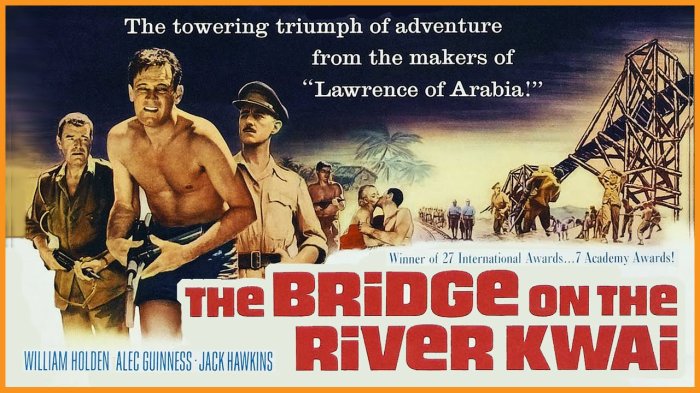
THE BRIDGE ON THE RIVER KWAI,  MOVIE POSTERTHE BRIDGE ON THE RIVER KWAI, 1957
Movie Reviews

Directed by David Lean

Starring: Alec Guinness, William Holden, Jack Hawkins, Sessue Hayakawa, and James Donald
Review by JR Kuzma

SYNOPSIS:

David Lean’s epic of a captured battalion of British soldiers and their proper colonel who are forced to build a bridge over the Kwai River for Japanese supply trains pass over.

Oscar wins: Best Actor- Alec Guinness, Best Cinematography- Jack Hildyard, Best Director- David Lean, Best Film Editing- Peter Taylor. Best Original Score- Malcolm Arnold, Best Picture, Best Adapted Screenplay

REVIEW:

The film starts out with two Allied PoWs burying a dead comrade, one of the men being U.S. Navy Commander Shears (William Holden), who, upon finishing up the burial service bribes a Japanese guard to put him and the other prisoner on the sick list to avoid more labor. It is about this time when they hear the whistling of the British tone “Colonel Bogey March” by a battalion led by Colonel Nicholson (Alec Guinness), Shears blows it off thinking it is just more men he is going to have to bury in the near future.

Upon arriving at the camp, the battalion is greeted by the camp commander Colonel Saito (Sessue Hayakawa) who informs the new prisoners that they will be constructing a bridge for the Burma Railway for the River Kwai and that everyone will be working next to each other. This is a clear violation of the Geneva Convention, which states that officers were exempt from manual labor, Nicholson points out to Saito, Saito seems to take it under advisement and during an officers meeting that night Nicholson believes he had won the argument and orders all to put a halt to any escape attempts. This is the meeting in which Nicholson meets Shears and Shears informs him on how ruthless Saito can be, Nicholson takes his warning lightly believing that he has gotten through to the Japanese commander.

The next day however, Saito orders all the troops, officers included, to the construction site, Nicholson once again goes to Saito to mention that this action was against the Geneva Convention and Saito slaps him for it. Nicholson sends the troops to go work, but orders his officers to stay put. When the men are out of sight a truck carrying a machine gun pulls up and aims at Nicholson and the other officers, Saito warns them that they have to the count of three to join the troops and when they don’t move Saito starts the count, and upon getting to the count of one the camps doctor, Major Clipton (James Donald), informs Saito that the people in the medical tents were witnesses to the actions causing Saito to not give the order to fire, but instead leaves the officers to remain standing there the rest of the day under gun point.

Upon the troops return from their work they see the officers still standing in there position, they start cheering them on. Saito decides to try and negotiates with Nicholson, saying that he didn’t have to work but the rest of his officers did, Nicholson declines the offer and is put into “the oven”, a metal box, that with the heat and humidity of the region is like being cooked alive.

It is during this time that Shears (Holden) and two other prisoners attempt their escape. One man is shot very early on in the attempt and the other is gunned down at point blank range. Upon killing the second prisoner the Japanese guard is killed from behind by Shears and continues running, he makes it to a cliff were he is shot and wounded by another guard and falling into the river, believed to have drowned. We later see that he survived and is found and nursed back to health by some local villagers who give him a canoe and supplies and send him on his way to the Pacific where he is later found by a passing British naval ship and is taken back to their headquarters.

Back in the camp Nicholson is still in the oven, and Saito summons Clipton into his shack to inform him that the men in the medical tent were going to be sent out to work on the bridge, that is far behind schedule at this point, because of the stubbornness of Nicholson. Clipton informs him that this would be a death sentence to most of the men, so Saito sends Clipton to try and make Nicholson give in, once again Nicholson refuses. Clipton also informs Nicholson about the failed escape attempt, which leaves Nicholson to believe that escape would be impossible.

At this point, Saito is faced with the hard truth that everything he and his engineers have done so far hasn’t work, for the bridge continually falls apart, so Saito summons for Nicholson and tells him that if the bridge doesn’t get done in time that he will be forced to kill himself and that he will be taking a lot of people with him. It is at this point that Nicholson informs Saito that a few of the British officers were engineers in India and that they will look over that land to see what the problem was. Saito agrees to this and also makes it so the officers will not have to do any labor.

That night, Nicholson and his officers the maps and charts for the bridge and the next day review the grounds. They find out that the reason why the bridge keeps collapsing is that the bed rock is unstable and they will have to move the location up river a little. Saito allows this and construction is moved. Very quickly the troops morale starts to come back and the bridge’s construction is starting to move much more swiftly.

It is at this time, at the British headquarters, that a Special Operations team is being rounded up by Major Warden (Jack Hawkins) to go and blow up the bridge, thus cutting off the Japanese supply line. Warden recruits Shears because of the insight he has of the island. After much nagging, Shears finally agrees to go. The team of four are dropped on to the island and, though three land safely one does not and dies when he lands in the trees.

Team regroups, and with the help of a guide and a few ladies, makes their way to the bridge site. It is a journey that them takes over several days, where at one point they find out that a train will be using the bridge in the near future and another where they run into Japanese guards which they kill a few, leaving one to flee into the jungle, Warden and one of the other guys follow him in. It is during this encounter that Warden is shot in the foot while killing the Japanese man, forcing Warden to hobble the rest of the trek. Eventually though they make it to the newly completed build.

It is during this the teams journey that Nicholson and his men finish the bridge, where Nicholson ended up forcing his officers to do manual labor and to take some of the people out of the medical tent to also do little things to help finish everything up. Nicholson has taken great pride in the troops accomplishment and on the day the bridge is completed puts a plaque up informing whomever that this bridge was completed by British troops.

Later that evening, the troops put on a show for the camp, it is during this celebration that the Shears, the guide, and the other member of the team mine the bridge. Upon finishing their task, they head down river to a lookout point and wait.

The next morning, the team notices that the river had gone down during the night, leaving the line of cable to be visible when it is stuck on a log. Meanwhile the troops from the camps are sent to another location, but Saito allows Nicholson and Clipton to remain behind to see the first usage of the bridge. Clipton goes to a nearby hill while Nicholson remains on the bridge for one last inspection. It is at this time that Nicholson spots the cable and he and Saito go do to the river to investigate. Seeing something is up, Nicholson and Saito follow the cable to the location where one of the soldiers is hiding with the detonator. The soldier quickly kills Saito, by stabbing him in the back, Nicholson then tackles him and calls for help. On the other side of the river, Shears is watching this take place and quickly goes to aid the other team member, while Warden is on a nearby cliff firing artillery shells down on the Japanese soldiers, all while the train can be heard in the distance.

The other soldier is shot by a Japanese guard, as Shears gets to the beach, heading at Nicholson with a knife in his hand. Shears is gunned down, looking at Nicholson and both noticing whom each other are, he drops dead. Nicholson quickly realizes the error he had made and goes toward the detonator, when a shell lands in his general area, he is morality wounded, but is able to make it to his feet, walks a few more steps when he falls down right on the trigger of the detonator causing the bridge to blow up, right when the train was going over it. Clipton, seeing all this action take place, goes down to investigate and can simply say “Madness”.

When this film was released in 1957, it was highly criticized for not depicting the realistic condition that the British PoWs went through under the Japanese, however most critic ignored this and saw the movie for what it was, a true masterpiece. It took home seven Academy Awards that year including Best Actor for Guinness, Best Director for Lean and Best Picture. In 1998, the American Film Institute voted it the 13th best film of the last 100 years and when they remade the list in 2007 it was 14th.

On a personal level this is my favorite David Lean film. It’s nowhere near as flashy or as epic as Lawrence of Arabia, but it has more emotion. It really causes you to get more caught up in the more, and it has you rooting for until the very end. Though the film is nearly three hours long, it moves quickly, so it doesn’t seem like it. This is a true classic and I highly recommend a viewing. Enjoy.


Submit your Screenplay to the Festival TODAY
bridget on the river kwai

1957 Movie Review: THE BLACK SCORPION, 1957

Submit your Screenplay to the Festival TODAY

THE BLACK SCORPION, 1957
Movie Reviews

Director: Edward Ludwing
Starring: Richard Denning, Mara Corday, Carlos Rivas, Mario Navarro, Carlos Múzquiz, Pascual García Peñat
Review by Kevin Johnson

SYNOPSIS:

Recent volcanic eruptions release an army of giant scorpions to the surface; a team of doctors and army officials work up a plan to try and stop them.

REVIEW:

The problem with the monster films from the “Golden Era” of cinema is that, after the well-budgeted, decently refined classics, one inevitably have to watch the less-than-stellar crop of B-movies that, frankly, may not hold up as well from before. These are the films that are wonderfully ridiculed by the Mystery Science Theater 3000 crew. And, unfortunately, I don’t have Tom, Mike, Joel, or Crow to help me through it.

Still, there’s something revelatory when watching these films. The term “Golden Era” in relation to entertainment doesn’t exactly refer to the overall quality but the streamlined, consistent, large number of films actually produced. So, to see the lower-quality and weaker films that were produced gives a clearer picture of the specifics and details of the overall production of films created in this time period. In other words, it averages out one’s perception of the regulated, controlled studio system.

Two geologists go to investigate a series of volcanic eruption taking place in Mexico. When they find evidence of isolated destruction and several dead people stricken with poison, it’s soon discovered that a number of massive scorpions were freed from their obsidian-trapped prisons from the eruption. They attack the local villages and soon set their sights on Mexico City.

If there’s one thing to gleam from a film like this, it’s the regularity to which studio executives and filmmakers maintained a strict necessity for certain conventions – specifically, the need for a female lead and a romantic subplot. And while a variation of this “rule” certainly exist today, the extent to which it was utilized in the 50s is obviously glaring, especially in films with little subtlety. The Black Scorpion, in a nutshell, completely shifts gears to “park,” to try and develop a chemistry between scientist Hank Scott and Teresa Alvarez. It doesn’t work.

It’s a shame, too. The movie starts of very well—intriguingly so. The geologists find a few dead bodies and large-scaled damage, and the local village panics as rumors spreads, injuries mount up, and spooked ranchers rant about sightings of monsters in the fields. Even the introduction of the female lead works – after all, she’s just a brave rancher who’s just trying to find help in all the paranoid madness. Too bad that, by the thirty-minute mark, the film’s flaws become much more pronounced. Several doctor and military characters exposit plot points just to advance the movie (and are just terrible, terrible actors), and, as mentioned before, the romantic moments add nothing to the overall film or the distinct characters’ relationships. And that’s leaving out the unnecessary poor-acting from the young help, Juanito (Mario Navarro), who just gets into random trouble to try and create tension. It doesn’t work, either.

But what DOES work is the special effects from supervisor Willis O’Brien, who was friends with Ray Harryhausen, the special effects wizard for The Beast from 20,000 Fathoms (looks like the connections never end!). Watching the giant scorpions wreck havoc on trains, buildings, people, cars, tanks, and even helicopters is quite amazing, mainly because everything moves really fast and yet remains clear in visual action. And, to be blunt, the scorpions are vicious with their attacks.

There are also a couple of awesome creatures taken from unused sequences from the film King Kong; specifically, the spider that chases Juanito in the cave, and a strange worm-like creature that assaults a scorpion. It’s pretty cool to see some 1933 beasts return from hibernation to see them in action. What’s not so cool is the close-ups of the scorpions’ faces. While awesomely creepy and scary the first time around, they filmmakers rely WAY too much on it, which just makes it ultimatley annoying in the end.

Still, The Black Scorpion is a decent indication of the “less-than-average” type of film made in the 50s. It’s more indicative of the mediocre B-films of that time period, like how the myriad of B-horror films might explain something about the naughts of this decade. While I won’t try and convince people to watch this film, it does make an interesting study. And the special effects are at least worth it, so there is that.

Submit your Screenplay to the Festival TODAY
THE BLACK SCORPION

1957 Movie Review: AN AFFAIR TO REMEMBER, 1957


Submit your Screenplay to the Festival TODAY

AN AFFAIR TO REMEMBER MOVIE POSTER
AN AFFAIR TO REMEMBER, 1957

Directed by Leo McCarey
Starring: Cary Grant, Deborah Kerr
Review by Michael Aloisi

SYNOPSIS:

A man and a woman both involved in relationships, meet, fall in love and plan to meet each other again in six months to spend their lives together. But does it happen?

Review:

The ultimate playboy, Nickie Ferrante, played by the always enjoyable Cary Grant is about to get married to a famous millionaire. While on a cruise to America to be with his fiancé, he meets Terry McKay (Deborah Kerr), a beautiful woman who is also involved in a relationship of her own. Nickie is at first embarrassed and impressed that she can resist his advances, for almost no woman can. The two begin to spend time together while stuck on the boat for the long journey across the ocean. Slowly but surely they fall madly in love.

Knowing they need time to straighten out their lives and break it off with their current relationships, they make a plan to meet in six months at the top of the Empire State Building. Time ticks by and the two never talk, but work towards their goals to get together. Finally when the day arrives Nickie waits on the 102nd floor, but Terry never shows. Thinking she deserted him Nickie slips into a deep depression as time slips by and the fate of the couple hangs in the balance.

The first hour of the movie takes place almost completely on the cruise ship, with one interlude in Italy. It is thoroughly enjoyable to watch Grant and Kerr play a flirty game of cat and mouse as they both fall for each other. Yet the second half of the film, while the two are apart, lacks the chemistry and enjoyment that the first half does. It feels a bit long and slow and even has two completely unnecessary and long musical numbers that does nothing to help the film. And the fact that the climatic twist in the film is so simple to solve you want to yell at the characters for being stupid, is a bit hard to swallow in modern times. The ending is also a bit anti-climactic and rushed but still satisfying. The chemistry between Grant and Kerr is what placed this movie at number 5 on the greatest romantic movies of all time list by AFI. Those expecting to be knocked over by this classic film should lower their expectations and just appreciate a story of real love.

For those who love Sleepless in Seattle, this movie is a great accompaniment since it mentioned in it several times and even inspired the ending. In fact after Sleepless was released over two million copies of An Affair To Remember were sold! Yet no one seems to remember that Affair is a remake itself of a 1939 film called Love Affair.


Submit your Screenplay to the Festival TODAY

AN AFFAIR TO REMEMBER

1957 Movie Review: 3:10 TO YUMA, 1957


Submit your Screenplay to the Festival TODAY
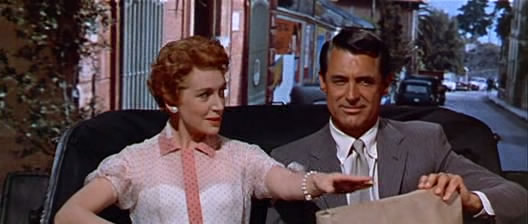
3:10 TO YUMA, 1957
Movie Review
Directed by Delmer Daves
Starring: Glenn Ford, Van Heflin
Review by Alan Barkley

SYNOPSIS:

Against all odds, a man must deliver a captured outlaw to the afternoon prison train.

REVIEW:

In 1974 Toronto took the bold step of enhancing its system of electric streetcars at a time when they had been virtually abandoned in North America as city transportation. A new design was in order and industrial designer Claude Gidman was the handed the task and the question: should a new streetcar be a sleek urban bullet of contemporary design or something less dramatic. Gidman chose to extend the visual legacy of the streetcar rather than upend it and, while the new design incorporated relevant ergonomic and environmental upgrades from the 1930s version, riders experienced the newer streetcars like compatible cousins of the vintage cars that shared the same downtown tracks. 3:10 to Yuma which began as a short story in 1953 and has seen two film adaptations made in 1957 and 2007 exists in much this way: spanning five decades, these three iterations of the story shift along on the same rails, each version advancing the narrative while remaining deferential to its predecessor.

Elmore Leonard’s short story was published in 1953, the year after the successful release of High Noon in which tension builds towards the arrival of a fateful train carrying outlaws sworn to kill Gary Cooper’s marshal. Echoing High Noon’s ticking clock, Leonard’s lawman guards a prisoner in a hotel awaiting the arrival of the 3:10 train that will take the outlaw to a prison in Yuma Arizona. Standing in the way of the lawman’s duty is the outlaw’s vicious gang surrounding the hotel and the handcuffed outlaw himself who uses all his wiles to undermine the deputy’s resolve.

Screenwriter Halsted Welles kept Leonard’s hotel conflict as the centerpiece of the 1957 film adaptation and backed it up with an invented story of a rancher (Van Heflin) living on hard times who accepts Wells Fargo’s two hundred dollars to take outlaw Ben Wade (Glen Ford) to the prison train. In turn, writers Michael Brandt and Derek Hass (2 Fast 2 Furious) kept Halsted’s backstory for their 2007 adaptation but upped the ante for Christian Bale’s rancher, giving him the additional burdens of a sickly son and an amputated foot, his legacy from the Civil War.

If all this seems like excessive motivation it’s certainly true that audiences didn’t always want such explicit crosses for their heroes to carry. The short story’s deputy marshal doesn’t need special reasons to do his job and both films depart from the original’s understated hero who performs his duty bravely and competently because those qualities are simply part of who he is. Leonard’s story cares less about the hero’s character arc and more about the hero’s character.

These days, however, the John Wayne cowboy is a hard sell. We prefer our heroes to have a plight that intersects with the plot and we want those personal challenges to be detailed and specific. We’ve become suspicious of virtues like courage and resolve that appear shopworn when they’re presented without context. So if Halsted and Hass and Brandt gilded the rancher’s hardship lily, their strategy moves us closer to the action, creating serious doubt about an outcome that might otherwise have felt like a forgone conclusion.

Writer Welles fleshed out the personality of Elmore Leonard’s Ben Wade and created an amalgam of ironic charm, ruthlessness, and womanizing that Hass and Brandt retained including the pivotal scene where Ben Wade seduces the lady bartender while hunting posses and fleeing gang members whirl around him. Ben Wade energizes both movies the way Robert Louis Stephenson’s rogue pirate Long John Silver lit up Treasure Island, his villainy at once repellent and attractive, confounding the viewer’s judgment while pulling one deeper into the story. Glen Ford brought Ben Wade to life in 1957 and Russell Crowe added cockiness and unpredictability to the part in 2007.

Haas and Brandt correctly saw the 1957 version as a two-act play and added a rollicking middle section full of fights, horseback chases, and deadly confrontations that we tend to think western movies are all about. And director Robert Mangold makes the most of it, transforming the earlier black and white film into a vivid and active wild west setting for the solid drama.

Remakes don’t succeed when wrong choices are made about what to keep and what to discard. The 3:10 to Yuma films work because they never try to eclipse the original. It’s interesting to see Halstead Welles’ name listed in the screenwriting credits for the 2007 film, along with Brandt and Haas. Although he had died by the time the new version had begun Welles, like Elmore Leonard before him, had already made his contribution.


Submit your Screenplay to the Festival TODAY

310 TO YUMA

1957 Movie Review: 12 ANGRY MEN, 1957

Submit your Screenplay to the Festival TODAY

12 ANGRY MEN MOVIE POSTER
12 ANGRY MEN, 1957
Movie Reviews

Directed by Sidney Lumet
Starring: Henry Fonda, Lee J. Cobb, Ed Begley, Martin Balsam, John Fieldler, E.G. Marshall, Jack Klugman, Ed Binns, Jack Warden, Joseph Sweeney, George Voskovec, Robert Webber
Review by Christopher Almeida

SYNOPSIS:

A dissenting juror in a murder trial slowly manages to convince the others that the case is not as obviously clear as it seemed in court.

OSCAR nominee for Best Director, Best Picture, Best Screenplay

REVIEW:

‘All rise…the court is in session…’ Well, actually, it isn’t. The real drama in this Court Room happens in the Jury room. 12 Jurors have to come to an anonymous vote. While everyone votes guilty, our male protagonist, Juror 11, isn’t quite so sure. This case has to be treated delicately – after all, the defendant has the death penalty for murder.

The hero comes in the form of Henry Fonda. The star has appeared in 106 films. The most famous are 12 Angry Men, The Grapes of Wrath and On Golden Pond.

The director comes in the form of Sidney Lumet, who has made the transfer from television to film. However, don’t let that discourage you- judging by this film, he has done it successfully. Lumet churns the issues around the room using character and innuendos and as a result raises the stakes at a steady pace. For further evidence- it won him the Golden Bear award at the Berlin International Film Festival. The film also won three Oscar nominations.

Lumet’s transfer from one Medium to another may explain the number of close-ups. This isn’t bad thing at all – it does create a nice intense, powerful atmosphere. The close-up shots come in handy when searching for empathy. Lumet gives close-ups to every other character except for the hero at the start of the film. It is almost to the effect that we are examining the evidence and, indeed, the other jurors. This creates the most empathy because we don’t know how it’s going to end and neither does Henry Fonda.

Most heroes, in films, are sure of their objective half an hour into a film, this hero is unsure throughout.

At this point you must be thinking what is Henry Fonda’s character name? This is first thing that separates it from other films. We don’t learn any of the character’s names. The film concentrates on hero and his journey. Not a single line is wasted; all the characters are sculpted using actors from the highest caliber. Another distinction is the cinematography. Which mainstream film uses more close-ups than long shots? Yeah, I heard you- except for The Blair Witch Project! The film together with Rose’s screenplay is a masterpiece.

Reginald Rose’s screenplay is very well crafted. Themes of stereotyping, second chances and ageism are perfect ingredients for the story’s substance. A nice cool beer on a hot day and sitting in your deck chair is the only description I have for the story’s substance without using a clinched word such as refreshing. The themes are well placed- two words- pitch perfect!

The only flaws here is that it relies on stereotypical characters to create predictable sub-issues; Sub-issues such as young, naïve boy and angry man. However, Lee.J. Cobbs does such a powerhouse performance that the flaw blows right over your head.

Target audience? It is for anyone who wants to think afterwards ‘Hmm…Now that was worth seeing!’ But seriously though, the ideal target audience is for 20- to however mature you may be.

Twelve Angry Men requires concentrated viewing but that doesn’t mean it’s boring. The dips into and out of story using light humour gives it a nice balance.


Submit your Screenplay to the Festival TODAY

12 ANGRY MEN

Film Review: LOTS OF KIDS, A MONKEY AND A CASTLE (Spain 2017)

Submit your Screenplay to the Festival TODAY
Lots of Kids, a Monkey and a Castle Poster
Spanish actor Gustavo Salmerón steps behind the camera to capture the winsome eccentricities of his extraordinary mother Julita, who had three dreams: having lots of kids, owning a monkey, and living in a castle.


With a castle as a tim set and the film set in Spain, this doc called LOTS OF KIDS, A MONKEY AND A CASTLE plays like a fairy tale.

The film begins with the director’s mother, 80-year old Julita, talking to the camera expressing her three wishes.  Her three wishes form the title of the movie – children, a monkey and a castle.  She says she has 6 children and a monkey but getting a castle was the difficult part.  The film goes on.

The monkey part did not go so well. Julita purchased an aggressive monkey that ended up biting her and attacking another woman when it broke its chain.  They finally had to let it go.  The doc has pictures of the monkey but no live footage.

No one would imagine Julita’s middle-class family coming into money, enabling them to make the harebrained purchase of a castle.  All was captured on film as 15 years earlier, her son Gustavo began filming his eccentric family.  Even though since then they lost their property and castle to the economic crisis, the family members have not been deprived of the disarming spontaneity or the kindheartedness that mark their domestic squabbles.

So what is this documentary about?  It is a home movie of sorts but about the director’s mother.  Before one can dismiss the film as nonsensical personal crap, the film exhibits lots of charm which is the reason this documentary got a standing ovation from the audience during the screening at the Toronto International Film Festival.

The character of the Julita grows on the audience.   Oddly she shares a lot of common traits as my own mother – bless her! when she was still living.  She was a hoarder, she was a controller with very one serving her whims and fancies, she spoke loudly, she was fond of eating and she was loved by all her friends.  The first part of the doc has her son, the director and husband search for two vertebrae of her great grandmother.  He believes keeping the vertebrae is bad karma.  Of course, the hidden item is finally found, and hidden in the weirdest way. The granny is shown to be quite the hoarder,  As they go through hundreds of boxes everything from old teeth, to hat decorations to two urns of the mother’s parents ashes turn up.  It is an amusing revelation of the woman’s life history, while remaining amusing at that.  One inserted musical segment with her playing classical on the piano while her family members move around the house and garden is particularly  riveting, reminiscent of the song of CAMELOT sung by Richard Burton played with Jackie Kennedy going about the house in the film JACKIE.

The film contains sensitive material as well.  Julita speaks candidly of her husband not touching her any more once she became fat.  But old photographs reveals her quite the beauty when she was young.

The film is a glorified home movie – but at least it is an excellent one at that!

Trailer: https://www.youtube.com/watch?v=fXk5pf-JsHI


Submit your Screenplay to the Festival TODAY

Film Review: BAD GRANDMAS (Canada 2016)

Bad Grandmas Poster
Four grandmothers accidentally kill a con man. When his partner shows up, things go south quickly.

Director:

Srikant Chellappa

Stars:

Pam GrierJudge ReinholdFlorence Henderson

It has barely been two weeks since two films about old ladies hits the screen.  There was THE BEST OF THEIR LIVES and now BAD GRANDMAS, a Canadian feature where one granny accidentally kills her friend’s bad son-in-law resulting in all other cronies trying to hide the body and cover up the deed.

The film’s first scene shows an American flag out front of a building of an insurance company in this IndieCan production.  Obviously, the film is set in the States (Southern U.S.A. to be more accurate) to expand the film’s marketing base.  All the grandmas in the film thus speak with a southern drawl.

The film contains typical scenes of the elderly ladies doing jumping jacks and smoking up, trying to look cool, things that have been done in films on old farts before.

Four grandmothers spend their twilight years in peace playing card games and baking cakes.  Their world is turned upside down when one of ladies (Bobbi played by Susie Wall) son-in-law Jim (David Wassilak) cons the lady.  In the process of trying to fix the problem, Mimi (chief protagonist, ringleader and brains played by Florence Henderson) accidentally kills him. Things go from bad to worse but the ladies are smarter than they seem.  The premise does not sound original and this plot of accidental killing has been done more than once in other films, for example in the best film dealing with accidentally killing, Robert Carlisle’s THE LEGEND OF BARNEY THOMSON, where a barber’s accidental killing leads to another to another.  BUT BAD GRANDMAS is hardly funny, despite many opportunities for comedy.  The film is a clear textbook example where timing is essential in comedy.

The addition of the character of the investigating Detective Randall Mclemore (Randall Batinkoff) is puzzling.  His character is a smug rather good-looking man who charms the daughters of the grandmothers.  He does not add much humour either but not for want of trying.

There is also one bug flaw in the script.  If the ladies have in their possession  the CCTV video of the villain kidnapping Bobbi, why don’t thy just go to the police in the first place?

The film is performed by a cast of mostly little heard actors except for veterans Pam Grier and Judge Reinhold,who do nothing to lift this piece out of the doldrums.

The film contains countless attempts at humour but none too successfully.   The only laugh out loud joke for me is the one when one of the grandmas remarks after seeing a dead body: “This makes me more nervous than a long tail cat in a room full of rocking chairs.”  But this is not because the joke itself is funny but because it has ben ions when I used to repeat that line.  The film improves during the second half, story-wise.

BAD GRANDMAS attempts to cash in on the successful comedy BAD MOMS by adding the murder angle.  Better skip this one and wait for BAD MOMS AT CHRISTMAS or BIG DADDY 2 where the 2 grandpas (played by Mel Gibson and John Lithgow) are added to the story.

Trailer: http://indiecanent.com/movies/bad-grandmas/

1997 Movie Review: WILDE, 1997 – Starring: Stephen Fry, Jude Law

Submit your Screenplay to the Festival TODAY
WILDEWILDE, 1997
Movie Reviews

Directed by Brian Gilbert

Cast: Stephen Fry, Jude Law, Vanessa Redgrave, Michael Sheen, Tom Wilkinson, Gemma Jones, Jennifer Ehle, Judy Parfit
Review by Stefan Leverton

SYNOPSIS:

The story of Oscar Wilde, genius, poet, playwright and the First Modern Man. The self-realisation of his homosexuality caused Wilde enormous torment as he juggled marriage, fatherhood and responsibility with his obsessive love for Lord Alfred Douglas, nicknamed Bosie. After legal action instigated by Bosie’s father, the mad Marquess of Queensberry, Wilde refused to flee the country and was sentenced to two years at hard labour by the courts of an intolerant Victorian society.

CLICK HERE and watch TV SHOWS FOR FREE!

Take a look at what’s new today!

REVIEW:

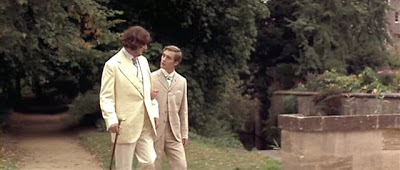
Wilde is the biopic telling the infamous story of Oscar Wilde, one of Ireland’s and the Victorian era’s greatest playwright and poet. Above that he represented the rise in the appreciation for all things aesthetic, fashion and style as well as being one of the wittiest historical figures that I can think of. His life wasn’t all plaudits though, and he courted controversy to the full.

The film begins with Wilde returning from America, marrying Constance Wilde and having two boys, Cyril and Vyvyan. Then it begins, not wanting to over-state anything, his rise and fall. Taking the theatre world by storm, Wilde’s plays illuminate the west end and he becomes the toast of the town. With an invigorated zeal for socialising, Wilde acquaints himself with all the lavishness his success affords him.

This ignites a spark within Wilde, especially after becoming familiar with Robbie Ross. After their meeting Wilde’s ‘outs’ himself amongst the homosexual community, and in doing so becomes the person he may’ve always known he was. Then the shift moves from his work to his personal life. An intense affair rises between Wilde and Lord Alfred Douglas, nicknamed Bosie. Bosie is drawn to the artful and wise Wilde, while Wilde is drawn to the youthful pretty Bosie.

Their relationship has its ups and downs, mainly due to Bosie’s impetuousness, but ultimately has its dramatic anchor in the film as in Wilde’s life by being the scandal that brought shame upon Wilde’s family and indeed his professional reputation. Bosie’s father, the Mad Marquess of Queensberry, files a lawsuit against Wilde and his lewd illegal behaviour.

The ensuing court case, is widely publicised and the witch hunt that surrounds it sees the steadfast Wilde prosecuted for his actions and sentenced to four years hard labour after refusing to take exile. Then we witness Wilde’s decline, removed of his style in gaol. Even on his release when he takes refuge in Europe his healthy withers and Wilde dies resolute but very much alone in Paris, 1900.

As a fan of Wilde’s work, I feel this film does tremendous justice to the man, played with sheer perfection by Stephen Fry. Fry said of the role that it was the one he was born to play, and he is in no way over stating that fact. And the filmmakers have done a wonderful job of adding to the creation by giving Fry just the right appearance as a young-twenty-something but also as the broken-aged-man Wilde becomes during his incarceration. And special mention should go to Jude law who, aside from looking good in the role, acts as a great folly to Wilde, being that they are at different stages of their lives.

The only criticism of the film is that those who aren’t familiar with Wilde may struggle to be enraptured by the drama of the film which never really peaks. I think that to be slightly mis-guided as Wilde himself fully understood what was going on, there was no outrage from him, though he did stand resolutely and argued his case to spite all that, though sadly without success. What stands is the memory of such outrageous persecution from the justice system and society to persecute someone, when today that wouldn’t even enter the consciousness.

WILDE, 1997

Submit your Screenplay to the Festival TODAY

1997 Movie Review: WAG THE DOG, 1997 – Starring: Robert DeNiro, Dustin Hoffman

Submit your Screenplay to the Festival TODAY

WAG THE DOG MOVIE POSTER
WAG THE DOG, 1997
Movie Reviews

Directed by Barry Levinson
Starring: Dustin Hoffman; Robert De Niro; Anne Heche
Review by Tom Coatsworth

SYNOPSIS:

When the US President gets caught with his pants down, days before the election, his spin-doctors create a fictitious war to divert attention.

Nominated for 2 Oscars: Best actor in a leading role: Dustin Hoffman;

Best Screenplay: David Mamet; Hilary Henkin

REVIEW:

Political satire in feature filmmaking is exceptionally rare. It’s a poor-boy genre that is shunned by producers, who prefer to make money. And so it’s a thrill to see top notch talent driving a witty political script all the way to the bank. On a fifteen million dollar budget ‘Wag The Dog’ grossed sixty-four million box-office worldwide — nothing to sneer at.

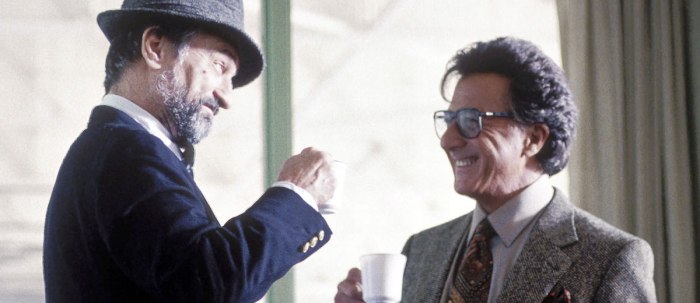
The story begins with scandal: the President has been accused by a Firefly Girl of sexual fondling. It’s only days before the election. He has a commanding lead in the polls but the story spells disaster. The President is in China. One of his chief advisors, Winifred Ames (Anne Heche), brings in ‘Mr. Fixit’ – Conrad Brean (De Niro) to handle the crisis. It seems an impossible task.

But lying helps: the President is sick and cannot leave China for at least a day – this buys time. Brean and Ames fly to California where they enlist Hollywood producer, Stanley Motss (Hoffman), to produce their war. (The Motss character was based on movie producer Robert Evans. Hoffman does a pitch-perfect job emulating Evans and was nominated for an Oscar. Evans, a former actor, insisted: “I was wonderful in that part”).

Brean wants a war – not a real war, but a pageant – he wants a song, a story line; he wants patriotic fervor to rise up and quell the Firefly Girl story. He pulls Albania out of the air. “What did they ever do for us? What do we know about them? They seem sort of shifty”. (Motss chimes in: they have ‘the bomb’ – a suitcase bomb – Albanian terrorists with a suitcase bomb in Canada.) Motss calls in his go-to team – John (Willie Nelson), a Nashville songwriter; the Fad King (Denis Leary) and Liz Butsky (Andrea Martin). They brainstorm the night away and by morning they have a song and a strategy.

They create film footage of the “War”. On a Hollywood Soundstage an actress (Kirsten Dunst) is hired to play a refugee fleeing a war torn village. She runs in front of a blue screen while a burning village complete with sirens and crying villagers is supplied digitally. Five hours later it is on the evening news. The Firefly story is buried. “It’s a pageant”, says Brean.

On route to Nashville Brean and Ames are detained by the CIA. There is no war and no bomb and someone has to answer for it. Brean spins the CIA agent (William H. Macy) like a top: if there were peace — you would be out of a job. Mr. CIA appears completely bamboozled and lets them go. However no sooner are they in Nashville they get word the war is over! The CIA has informed the Presidents rival and hence the public that hostilities with Albania have ended and all is right with the world! “This is nothing!” shouts Motss, “I’m producing this war, it’s not over till I say its over – we need an act 2”. Motss and the Fad King quickly spin Act2.

A soldier with a name like shoe has been caught behind enemy lines and is being held by the terrorists — a war hero. This plays perfectly with an ‘old shoe’ song they have dreamed up. The Army searches its ranks for a soldier by that name — William Schumann (Woody Harrelson). The campaign begins anew. The cry goes up: “bring back ‘Old Shoe’”. The new song is planted in the Library of Congress – 1930. Motss and Brean throw old shoes tied together over telephone lines and in tops of trees; catchy idea. The media loves it. (I remember when the movie appeared because so did the shoes – on telephone lines all over town.) School children start letter writing – the Firefly story is buried once again – they are almost home.

And then they meet Schumann – a dangerous psychotic who’s spent fifteen years in a military prison for raping a nun. (Part of the charm of the script is that as easily as the spin-doctors churn out lies and as easily as the public buys them the professional branches of the government – the Army, the CIA — are never really taken in and never quite go along with the charade.)

Harrelson is hilarious as the psycho soldier. I was particularly impressed with De Niro who displays some serious light, comedy chops. His attempts at broad comedy — at playing course, dumb, silly people — have never worked. Here he is at home. Hoffman is clicking as the slick Hollywood mogul; and Anne Heche fills some tall high heels, poised as she is between these two legends.

The script is deliciously funny and a subject of controversy – David Mamet, one of America’s finest, brashest playwrights, wrote the working script. It was nominated for an Oscar. But the original script, based on a book by Larry Beinhart, was written by Hilary Henkin. Barry Levinson has claimed that Mamet wrote his draft without reading the book or Henkin’s draft – but the case went to court and both Mamet and Henkin are now credited with screenwriting: they should get together more often, it’s brilliant.

‘Wag’ was released a month before the Clinton intern scandal, and so it was prescient. What’s more some believe the movie served to hamstring President Clinton’s actions: critics tied the timing of a missile attack on an enemy camp with a Presidential desire to ‘change the subject’. Whether it was true or not ‘Wag’ had spun ‘spin’ out of the box and there was no going back: the public had wised up. Since the days of Aristophanes that’s as good as it gets: ‘Wag The Dog’ is political satire at its finest. Enjoy.

wag the dog