1977 Movie Review: STAR WARS, 1977

STAR WARS, 1977
Movie Review
Directed by George Lucas
Starring: Mark Hamill, Carrie Fisher, Harrison Ford
Review by Andrew Kosarko

SYNOPSIS:

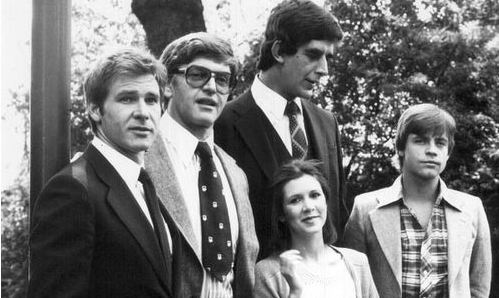
As the adventure begins, Luke Skywalker (Mark Hamill), an impulsive but goodhearted young man who lives on the dusty planet of Tatooine with his aunt and uncle, longs for the exciting life of a Rebel soldier. The Rebels, led by the headstrong Princess Leia (Carrie Fisher), are fighting against the evil Empire, which has set about destroying planets inhabited by innocent citizens with the Death Star, a fearsome planetlike craft commanded by Grand Moff Tarkin (Peter Cushing) and the eternally frightful Darth Vader (David Prowse, with the voice of James Earl Jones). When Luke’s aunt and uncle are murdered by the Empire’s imperial stormtroopers and he mysteriously finds a distress message from Princess Leia in one of his androids, R2-D2 (Kenny Baker), he must set out to find Obi-Wan Kenobi (Alec Guinness), a mysterious old hermit with incredible powers. On his journey, Luke is aided by the roguish, sarcastic mercenary Han Solo (Harrison Ford) and his towering furry sidekick Chewbacca (Peter Mayhew) as they run into a host of perilous situations while trying to rescue the princess–and the entire galaxy.

REVIEW:

A long time ago, in a Hollywood far, far away…..George Lucas was an innovative film maker. Well, I’m a little shocked. I can’t believe this film series has been reviewed yet. So I’m doing it before anyone else beats me to the punch. I also think it’s kind of interesting seeing as I’m one of the few people to “review the first Star Wars Film” after the prequels have come out. So lets get into it, shall we?

The Story: The perfect depiction of “the heroes’ journey.” Anyone who has an interest in storytelling should study this film along with the ideals of the Heroes’ Journey. The structure is perfect. There’s never a boring moment, the story is always pushing forward and revealing more and more about our characters. Those characters are also, near perfect with defining attributes that you would never question their purpose of involvement. Luke Skywalker is at the start of his journey under the guidance of Obi-wan Kenobi. Accompanied by our outside eyes and ears, the druids of C3PO and R2D2, they join forced with the rugged pirate Han Solo and his furry side kick, Chewbacca. Not only does Lucas have excellent stories to tell, but he tells it in a masterful of ways. Chewbacca never speaks a word of English, nor has subtitles and yet we understand everything he’s saying by others’ retorts. Same with R2D2. Obi-wan is wise and mysterious, teaching without teaching. Han Solo, well, one of my favorite words in my reviews is “badass.” And there is no other word that can describe him. And last but not least, we have our strong heroin who is just as tough, if not stronger, than her farm boy brother. The real strength in this film is the story. Luke progresses from farm boy, to new adventurer to growing hero, to a savior of the rebellion. And of course, no one can forget the greatest villain of all time, Darth Vader. It just doesn’t get more evil and sinister than him.

Acting: In the documentary, “Empire of Dreams” which I would suggest to anyone after they’ve seen the Original Trilogy, Carrie Fisher speaks of George Lucas’ dialogue; “You can write this stuff but you can’t speak it.” Which is why the acting is so extraordinary in this film. It’s the same dialogue in the new prequels, but notice how it’s not hard to listen to when Luke or Leia speak it, opposed to Hayden Christianson.

Mark Hamill / Luke Skywalker – Now, Star Wars, in a sense, is “before my time.” I know absolutely nothing of Mark Hamill’s early work. All I know is he did a Christmas episode with the muppets and later went on to portray the voice of the Joker on Batman the animated series. Nevertheless, Hamill is the perfect casting for the young farm boy with a heart of gold and the naïve courage to march into a detention center.

Carrie Fisher / Princess Leia Organa – Now I wasn’t around during the feminist era, but I’m sure this was a product or lightning rod of it. Fisher plays the role strong and intelligent. She’s a damsel in distress, but she fights back instead of waiting for the hero to come save her. She is the personification of the Rebellion.

Harrison Ford / Han Solo – I know this role has lead to so many other things for Ford, but I don’t think he’s had a better role. Blade Runner comes close, but still. Han Solo is his defining role. He’s smart, charming, clever, bold, head strong and selfish. I can’t think of a more enjoyable role to play without being a bad guy.

Alec Guinness / Obi Wan Kenobi – The man delivers every line like it’s Shakespeare, and it was just what was needed seeing as these films are the closest we’ve gotten since Billy-Bob Shakespeare put his pen down. Guinness is strikes us as honorable, wise and trustworthy from the second he shows up. Although, to this day I still wonder how he made that weird ass whistling noise to scare off the sand people.

Directing: “Faster and more intense” was Lucas’ main direction to his cast. Which I wish he could have resurrected that phrase when directing the slow prequels. He’s at his best here with the limitations that he had to deal with. This was hard, dirty, gritty rough hands work. Which is one of the strengths of the film. It’s realism in it’s production design and even in the visual and special effects. Lucas did the best he could with what he had.

Cinematography: Old school 70’s cinematography. While there isn’t any really ground breaking shots or techniques in the realistic shots, it’s still well covered.

Production Design: Very strong. It’s futuristic, er, well, in this case, historic. Well, it’s far more advanced than what we ever, at the time of it’s release, thought possible. Or even dreamed. Yet it has a slightly gritty look to it. Not a Bladerunner look per say, but still, not sterile either. It really helps establish the world(s) that we’re playing in as believable.

Editing: For the most part it’s sufficient for what it does. I still don’t know how the shot of the storm trooper bumping his head on the door when they bust in and find C3PO and R2D2 was left in, but ok, whatever. Where I do have to give it some credit is covering the lightsaber duel between Vader and Kenobi. Guinness being his age and only instructed in proper swordsman ship was limited in what he could do (Check out some of the special features and the footage from it all). The edit makes it look like he still has some fight in him.

STAR WARS IMAGESScore: One of the truly remarkable aspects of the entire film. It lifts the material from the scale of amazing to epic. John Williams hit two big scores (no pun intended) in this era with both Star Wars and Jaws. He establishes himself as one who doesn’t resort to gimmicks and remains with the classical approach to music writing, while keeping in tune with the emotional context of the story.

Special Effects: Now this is what’s groundbreaking. There’s a great collaboration between the production team and the visual effects team. The ships combined with the green screens and compilations of layers create some of the most realistic and invigorating elements in the film. The shots and editing can’t really be complimented, seeing as most of them are ripped off from old stock footage of dog fights.

In closing: The beginning of great film making starts here, and ends in the same place. George Lucas both created the most amazing aspects of the film world and then bastardized them by abusing them too much. Letting them spew out into other films and basically demolishing the “aww factor” in movies. The work done in this film was earned and hard done. Lately the cinema business has become lazy and cheaper with the same mind set. Sadly, it takes all the fun out of the movies. Regardless of it’s lasting effects in movies, this film still stands the test of time. It’s engaging, entertaining, interesting and fun. And it’s got a little bit, ok, a LOT of moral lesson whipped into it. But it’s neither preachy nor too subtle. Star Wars is the movie of our century. It still effects film making today, and will remain to for many years to come.
star wars

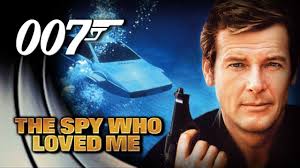
1977 Movie Review: THE SPY WHO LOVED ME, 1977

The Spy Who Loved Me, MOVIE POSTERTHE SPY WHO LOVED ME, 1977
James Bond Movie Review

Directed by Lewis Gilbert
Starring: Roger Moore, Barbara Bach, Curt Jurgens, Richard Kiel and Bernard Lee
Review by Jesse Ryder Hughes

SYNOPSIS:

Seven foot tall, steel toothed nemesis Jaws chases Bond around while Bond and Russian Agent triple X try to stop megalomaniac Stromberg, who is obsessed with life at sea, from starting a global war. All the while Triple X is bent on revenge of the murder of her lover who Bond had killed on a previous mission.

REVIEW:

The reason I think The Spy Who Loved Me was so successful was that they found a balance with Bond that they were aiming to get back since Goldfinger. Stromberg is a classic Bond megalomaniac and Jaws a menacing unstoppable nemesis to Bond. Moore feels more balanced even with playing Bond with a great sense of humor and seriousness.

Although it is over the top the film lends itself well to the world where Bond lives. Another great Bond car appears, the Lotus Esprit, that one ups the Aston Martin by turning into a submarine.

The relationship Bond has with his leading lady, Russian agent Triple X Anya Amasova, played by Barbara Bach is an interesting change. She is a rival to bond in all respects. License to kill, has her own gadgets and openly and willingly will betray bond to bring what information she needs to the KGB. It is the first time Bond is pitted with a female that is portrayed as an equal, or even better, to him. There are more to come, a new string of Bond girls where they are less objects to Bond which is a great thing and test to the times changing.

Part of the fun in this film is the on going battle between bond and Jaws, who becomes a classic Bond bad guy. How can Bond destroy an impossible enemy? He can’t in this film, so he battles Jaws out of his way constantly throughout the movie to get to his main objectives. When the audience sees Jaws there is a sense of dread for Bond every time, because we never know when he is coming next, but he is always in the back of our minds that he will be there soon to try and kill Bond.

The Spy Who Loved Me is considered by most the best Roger Moore film. It is grandiose, flashy and action packed. Carly Simon’s theme Nobody Does it Better is also a great song, but the questions about Bond using his license to kill without disregard to whom he is killing make the film deeper than some of the previous films. The fact that Bond takes away Amasova’s lover is very powerful and she is forced to forgive him, because of the nature of their work. The one flaw in this film is that she sleeps with Bond anyway, which doesn’t seem all that realistic, but Bond always gets the girl no matter what he has done.

THE SPY WHO LOVED ME.jpg

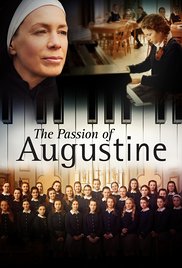
Film Review: LA PASSION D’AUGUSTINE (The Passion of Augustine) (Canada 2015) ***1/2

LA PASSION D’AUGUSTINE.jpgIn a small convent school in rural Quebec, Mother Augustine provides a musical education to young women no matter their socio-economic background. However, with the looming changes brought by Vatican II and Quebec’s Quiet Revolution, the school’s future is at peril.

Director: Léa Pool
Writers: Marie Vien (scenario), Léa Pool (scenario)
Stars: Céline Bonnier, Lysandre Ménard, Valérie Blais

Review by Gilbert Seah

 A small but talented music school is at risk of being closed for good due to financial difficulties. The school must win a music contest in order to survive. Into the school arrives a spirited but sometimes troublesome new girl. It does not take a genius to guess that this girl will save the school from financial ruin.

If this sounds like the typical predictable commercial film plot, one must note that this is a film written and directed by Léa Pool.

Léa Pool was born in Genève, Switzerland though a majority of her films are made in Quebec. Her films are mostly serious and many deal with human emotions. She has made over 20 films her most famous works being SET ME FREE (my favourite and her best) in 1999, LOST AND DELIRIOUS (2001) and ANNE TRISTER (1986).
The setting is in a convent school in beautiful rural Quebec in the 1960s . Mother Augustine (Celine Bonnier), a Roman Catholic nun who teaches music is fighting to preserve her school against the backdrop of the social changes wrought by Vatican II and Quebec’s Quiet Revolution. When her talented but rebellious niece joins the convent, and when the government threatens to shut down the school in favour of public education, her world is suddenly turned upside down. She and her fellow nuns are forced to confront the waves of modernity, and Mother Augustine herself must search her soul for a new calling. In the words of Mother Augustine: “The convent is to close down short of a miracle. We have not said our last word. We are going to fight for our convictions, our girls and music, for everything we think is right. But most of all, because I love the convent.”

Pool’s story of an important school that stands firm on the grounds Mother Augustine’s faith in music and Christianity is perhaps reflective on Pool’s making of important non-commercial films. Her films like the school face difficulty in modern times, when audiences flock to see Hollywood blockbusters. And together, they must resist and show that quality matters. Still LA PASSION D’AUGUSTINE is an important film, unconventional in its outlook and plot but still a rewarding a watch as any Hollywood blockbuster.

Despite the sombre nature of Pool’s piece, she inserts occasional bouts of refreshing humour such as the scene of two nuns laughing and skating one the ice outside the school.

A scene in the film that deserves mention is the modern performance of song with guitar at a Catholic church in attendance by the nuns and pupils. The camera pans the faces of the spectators as they express different emotions, some of approval, some of glee, some of horror at the modernization and others of disproval. It is a great scene, reminiscent and obviously re-used from the variety of children’s faces as they watch a Punch and Judy Show in Francois Truffaut’s magnificent LES QUATRES CENT COUPS (400 BLOWS).

Pool’s film is not just as beautiful as the Bach, Beethoven and Chopin pieces performed on the piano but just a moving and alas, inspiring!

THE PASSION OF AUGUSTINE garnered two Canadian Screen Awards at the 4th Canadian Screen Awards in 2016, for Best Actress (Céline Bonnier) and Best Original Score (François Dompierre). For the 18th Quebec Cinema Awards (formerly known as the Prix Jutra), the film won 6, including Best Picture, Best Director and Best Actress, Céline Bonnier.

THE PASSION OF AUGUSTINE is released VOD Nationwide on Tuesday, August 15 on all major platforms including: iTunes, Google Play, Amazon, Microsoft, Vudu, Comcast, Charter, Cox, Vimeo, and various other cable operators.. In French with English sub-titles.

Trailer: https://www.youtube.com/watch?v=egvqwdSPATs


Also, Free logline submissions. The Writing Festival network averages over 95,000 unique visitors a day.
Great way to get your story out: http://www.wildsound.ca/logline.html

Deadlines to Submit your Screenplay, Novel, Story, or Poem to the festival:http://www.wildsound.ca

Watch recent Writing Festival Videos. At least 15 winning videos a month:http://www.wildsoundfestival.com

Film Review: THE TRIP TO SPAIN (UK 2017) ***

THE TRIP TO SPAIN.jpgSteve Coogan and Rob Brydon embark on a six-part episodic road trip through Spain, sampling the restaurants, eateries, and sights along the way.
Director: Michael Winterbottom
Stars: Steve Coogan, Rob Brydon, Marta Barrio

Review by Gilbert Seah
 

More of the same. The third entry of the food critics trips after THE TRIP TO ITALY and THE TRIP (that one set in the U.K.) provides fans of the trilogy what is expected from director Michael Winterbottom and actors Steve Coogan and Rob Brydon. Besides delicious mouth-watering gourmet delights with landscapes and stunning scenery on display, audiences will be treated with the usual comedic banter between the two actors complete with their impressions that they are famous for. Winterbottom (his best works being JUDE and COCK AND BULL STORY) takes it easy for the light comedy. Coogan looks much fitter and slimmer than his first THE TRIP film, his working out and jogging clearly noticeable.
Coogan and Brydon play themselves in the three TRIP movies.

One difference is that the two travel by luxury ferry to Spain. Steve gets sea-sick on the trip while Rob always ends up doing better.

As food food on display in this film, there is much less emphasis on food compared to the other two films. As for impressions, their famous Michael Caine and James Bond impressions are again present for good cheer, to make sure fans are not disappointed. There is a bonus of them doing Mick Jagger doing Bond impressions.

Something new in this trip is the first rendering of a song by Coogan with a bit of commentary from Brydon. The Oscar Winning song “The Windmills of Your Mind” is crooned by Coogan followed by the trivia question asked of the original singer of the song. (Answer is Noel Harrison, son of Rex Harrison).

After the culinary trip to Italy has ended, director Winterbottom turns on his serious tone, as he did in his other two films. Rob returns to his family of wife and two children, playing around with them like a godfather does. Steve on the other hand, discovers the girlfriend that he has suddenly fallen in love with, pregnant with baby from someone else. The seriousness is totally out of sync with the rest of the film. Steve landing stranded in the desert with an even odd development after is even weirder. The film would have been better enign with the ending of their trip to Spain.

THE TRIP TO SPAIN is interesting enough to keep those who liked the first two films satisfied. New converts would be difficult.

What next? The most obvious is a TRIP TO FRANCE. But fans may grow tired by then. Too much more of the same.

Trailer: https://www.youtube.com/watch?v=fTvy8ab1NSo


Also, Free logline submissions. The Writing Festival network averages over 95,000 unique visitors a day.
Great way to get your story out: http://www.wildsound.ca/logline.html

Deadlines to Submit your Screenplay, Novel, Story, or Poem to the festival:http://www.wildsound.ca

Watch recent Writing Festival Videos. At least 15 winning videos a month:http://www.wildsoundfestival.com

TIFF Cinematheque Presents: INDEPENDENT WOMEN: Films of Ida Lupino


ida lupino.jpg

Also, Free logline submissions. The Writing Festival network averages over 95,000 unique visitors a day.
Great way to get your story out: http://www.wildsound.ca/logline.html

Deadlines to Submit your Screenplay, Novel, Story, or Poem to the festival:http://www.wildsound.ca

Watch recent Writing Festival Videos. At least 15 winning videos a month:http://www.wildsoundfestival.com

Film Review: THE DARK TOWER (USA 2017) ***

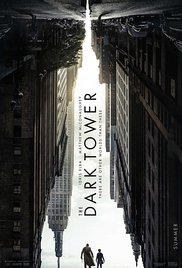
the dark tower.jpgThe last Gunslinger, Roland Deschain, has been locked in an eternal battle with Walter O’Dim, also known as the Man in Black, determined to prevent him from toppling the Dark Tower, which holds the universe together. With the fate of the worlds at stake, good and evil will collide in the ultimate battle as only Roland can defend the Tower from the Man in Black.

Director: Nikolaj Arcel
Writers: Akiva Goldsman (screenplay), Jeff Pinkner (screenplay)
Stars: Idris Elba, Matthew McConaughey, Tom Taylor

Review by Gilbert Seah

 The film’s story from ‘imdb’ goes this way: The last Gunslinger, Roland Deschain, has been locked in an eternal battle with Walter O’Dim, also known as the Man in Black, determined to prevent him from toppling the Dark Tower, which holds the universe together. With the fate of the worlds at stake, good and evil will collide in the ultimate battle as only Roland can defend the Tower from the Man in Black.

The film has been reported to have gone through $6 million in reshoots and production troubles. Though based on 8 volumes of a series by author Stephen king, the story sounds absolutely terrible. But surprisingly the film is not all that bad.

The main difference is the introduction of Jake Chambers (Tom Taylor), an 11-year-old adventure seeker who discovers clues about another dimension called Mid-World. The story now become more credible, because the audience can identify with a human being or a boy at that. No one believes him, least of all his mother and her new husband who have arranged for him to attend a psychological retreat. His dreams on being chased by ‘skin’ people’ are realized when the skin people (recognized by him) show up at his home to take him to the retreat, This results in an exciting chase on the rooftops. Upon following the mystery, he is spirited away to Mid-World where he encounters a Gunslinger, Roland Deschain (Idris Elba), who is on a quest to reach the “Dark Tower” that resides in End-World and reach the nexus point between time and space that he hopes will save all existence from extinction. But with various monsters and a vicious sorcerer named Walter o’Dim (Matthew McConaughey), the Man in Black hot on their trail, the unlikely duo find that their quest may be difficult to complete.

The film deserves to be commended for its continuity. When Jake throws his shoe through the portal as a test, his shoe is shown after he enters it. He is also shown in need for water and food after entering the new land.

McConaughey makes a creepy and evil enough villain without having to overdo it. While Elba seems wooden in his role, it is sort of expected for a gunslinger not to emit any emotions. Taylor as the kid is an excellent find (though his British accent is detectable in some parts), putting the much needed human feeling into the film.

The film is noticeable violent down to details like chards of glass pulled out from a hand and realities like the death of close ones. The special effects are primarily used for the action sequences though the film’s most interesting parts are the parts on earth involving Jake in school and at home.

The film successfully combines several genres like horror, sci-fi, western and fantasy.

The ultimate question is how well the film does at the box-office as THE DARK TOWER is expected to be one of many films to come. At a production cost of $60 million, which is modest in comparison to futuristic films, THE DARK TOWER should at least make a decent profit.

Trailer: https://www.youtube.com/watch?v=GjwfqXTebIY

Also, Free logline submissions. The Writing Festival network averages over 95,000 unique visitors a day.
Great way to get your story out: http://www.wildsound.ca/logline.html

Deadlines to Submit your Screenplay, Novel, Story, or Poem to the festival:http://www.wildsound.ca

Watch recent Writing Festival Videos. At least 15 winning videos a month:http://www.wildsoundfestival.com

Film Review: DETROIT (USA 2017) ****

detroit.jpgAmidst the chaos of the Detroit Rebellion, with the city under curfew and as the Michigan National Guard patrolled the streets, three young African American men were murdered at the Algiers Motel.

Director: Kathryn Bigelow
Writer: Mark Boal
Stars: John Boyega, Anthony Mackie, Algee Smith

Kathryn Bigelow also known as that rare female action director has never failed to impress. Her breakout movie NEAR DARK was a genre bending vampire western only because she could not get funds to make a western which was the reason vampires were brought in. She beat her ex-husband James Cameron for the Oscar for Best Picture THE HURT LOCKER over AVATAR and many of her box-office flops (BLUE STEEL, STRANGE DAYS) have been hailed as minor classics. Now, audiences will see Bigelow, a white female make an angry pro- black riot movie.

DETROIT is a period police crime drama based on the Algiers Motel incident during Detroit’s 1967 12th Street Riot. The film was released to commemorate the 50th anniversary of the event. The film begins with a brief history of riots as depicted by drawings before settling on the raiding of an after hours booze can, where the Blacks were arrested and hustled into police vans in the open. Director Bigelow convinces that these angry incidents are sufficient to incite the riots that lasted quite the few days including the incident at the Algiers Motel.

The film benefits from very strong performances, the best of these from 24-year old white British actor Will Poulter. Poulter who has proven his acting mettle in films like SON OF RAMBOW, THE REVENANT and THE MAZE RUNNER is outstanding as the racist angry cop that is guaranteed to anger audiences. John Boyega as the security guard is equally effective and Anthony Mackie is convincing as the soldier caught in the crossfire.

The end credits are quick to inform that the incidents depicted in the film are concocted and are of course, not fully true. But what an angry story writer Mark Boal has given his audiences. And masterfully executed by Bigelow, as if an African American directed the entire project.

Though good a movie as DETROIT is, some African Americans will complain that this film was made by a white or that the two lead actors John Boyega and Will Poulter are British. The same went with the straight rendering of the gay story PHILADELPHIA with a straight director and straight actors. Audiences should be just glad that these stories that need be told are told, no matter who tells them. But Smith’s character of Larry who refuses to sing in his group, believing that he should provide music for white folk to dance is not totally convincing. One flaw that does stand out is the cardboard (both black and white characters), either all bad or all good.

Still , Bigelow achieves her aim in creating one angry and absorbing movie, out of incidents based on true events. She must be commended for eliciting great performances from all her cast including the relative unknowns (particularly the two white girls beaten up at the Motel) s well as the effective creation of the60’s era complete with music by James Newton Howard.

DETROIT is the third successful collaboration between Bigelow and Mark Boal who also wrote and produced the film, after THE HURT LOCKER and ZERO DARK THIRTY. More to come from these two, hopefully.

Trailer: https://www.youtube.com/watch?v=KVCk0YVm3ao

Also, Free logline submissions. The Writing Festival network averages over 95,000 unique visitors a day.
Great way to get your story out: http://www.wildsound.ca/logline.html

Deadlines to Submit your Screenplay, Novel, Story, or Poem to the festival:http://www.wildsound.ca

Watch recent Writing Festival Videos. At least 15 winning videos a month:http://www.wildsoundfestival.com

1977 Movie Review: A SPECIAL DAY, 1977

  MOVIE POSTERA SPECIAL DAY, 1977 
Movie Reviews

Directed by: Ettore Scola

Starring: Sophia Loren, Marcello Mastrioanni, John Vernon,

SYNOPSIS:

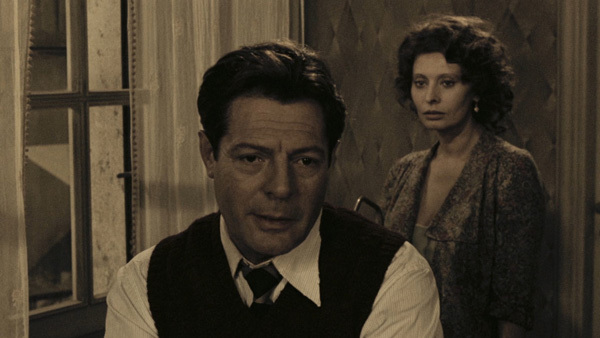
It’s a very special day in 1939—the day Hitler first visits Mussolini in Rome. The event has been marked by a massive Fascist party rally and parade, drawing everyone in the city. An entire tenement block leaves for the parade, except housewife Antonietta and unemployed radio announcer Gabriele. A chance meeting causes the pair to return to each other’s company over and over during the day and in the space of a few short hours, they have formed a very close and ultimately redemptive bond. REVIEW:

Archival footage shows the arrival of Hitler and his highest-ranking Nazi cohorts by train and Mussolini’s Fascist army meeting and greeting them in Rome. A radio announcer gives full details of the historic event while giant swastikas float in the breeze, the streets choked with spectators. The announcer says that the Fascist forces are there in preparation for the next day, when an even bigger event will take place.

Daylight dawns over a tenement block in central Rome. The date is May 8, 1939—the day after the one the archival footage presented and the day of a huge Fascist party rally and parade. Pauletta (Françoise Berd), the caretaker of the block of flats, unveils a huge Nazi flag next to the Italian flag. In one of the flats, long-suffering mother and housewife Antonietta (Sophia Loren) goes from room to room, waking up all six of her children as well as her husband, Emanuele (John Vernon). It is nearly six, and if any of them are late for the rally, she doesn’t want them to complain to her. A flurry of activity results as the children, from little boy Vittorio to Antonietta’s surly and spoiled daughters Maria Luisa (Alessandra Mussolini) and Romana (Patricia Bazzo). Antonietta angrily discovers dirty pictures in the bed of Fabio (Maurizio Del Paoloantonio), but when she scolds him, he says that his father gave them to him.

Emanuele is a fervent Party member and exhorts his children to their patriotic duty as they have breakfast. Emanuele clearly has no respect for Antonietta, calling her lazy even though she has clearly gotten up hours before dawn to prepare the rest of the family. As the family make a mass exodus, in patriotic costume and their best clothes, streaming out into the courtyard with all the other families, Emanuele wonders that Antonietta doesn’t go to the rally. She says she has too much work to do. At last, the entire tenement empties, and only Antonietta and the caretaker are left in the silent building.

Or so she thinks. Going about her chores as if in a dream, Antonietta is flung into action when the family mynah bird flies out the window and across the courtyard to the flat opposite. Antonietta tries to signal to the man in the flat (Marcello Mastroianni), but he isn’t paying attention. Inside the flat, we see he has stacks of papers surrounding him as well as a gun. The impression is made that he is about to shoot himself. Antonietta arrives and asks for his help to rescue the bird. He helps her to rescue the bird and is relieved at the interruption. The loudspeaker radio announcer detailing every detail of the rally can be heard through every moment of the next few hours. Antonietta wants to make a quick getaway back to the safety of her flat, but the man introduces himself as Gabriele. Antonietta notices his copy of The Three Musketeers, which she accidentally confuses with The Four Musketeers, an extremely popular Italian radio serial of the time. Gabriele asks her to take the book with her, but she declines and leaves.

Gabriele receives a phone call from “Marco,” who it soon becomes clear is his absent lover. They argue and hint at a future that looks very bleak. Gabriele goes soon after to Antonietta’s flat and gives her the book anyway. He asks her for a cup of coffee, and she begins the long laborious process of hand grinding he beans. She takes the opportunity to try to tidy up and at the same time improve her appearance (she is dressed in an old housedress and dressing gown). They are interrupted by the arrival of Pauletta, who mean-spiritedly warns Antonietta against Gabriele. Gabriele decides he should probably leave, but Antonietta convinces him to stay for his coffee. She finds out that he is a radio announcer who was recently fired. He looks at the albums dedicated to Mussolini that she has put together, and he is both impressed and saddened by her devotion to “Il Duce.” She notes that she has six children and if she has a seventh the family will be eligible for the Large Family subsidy; as a bachelor, Gabriele has to pay a Celibacy Tax.

Pauletta interferes once again, intimating that Gabriele is not to be trusted because he is an antifascist. She also says Antonietta’s washing on the roof is dry. Antonietta says that he is in the flat fixing a light. Gabriele fixes the light but is rebuffed by Antonietta. She goes up to the roof to get her washing, while Gabriele follows her, ostensibly to avoid meeting Pauletta on his way back to his flat. Up on the roof, Gabriele surprises Antonietta by wrapping her up in a sheet, allowing her to laugh for the first time all day. Then she grows angry, saying that “all you men are the same,” and implies that Gabriele has only been after her to have a casual affair. Gabriele admits to her that the reason he was fired from the radio station was because of “degenerate behavior.” Antonietta gradually realizes that he means he has been ostracized for being gay—or “queer,” as he calls it. Gabriele is hurt by Antonietta’s attitude since has just bared his soul to her, and grows angry, attacking her and pretending to assault her. He chases her down the stairs and shouts for the entire complex to hear. Will the two remain friends on this special day? Or will scandal and unhappiness result when Emanuele and the children return?

A Special Day (Una giornata particolare in Italian) was nominated for two Oscars and two Palme D’Ors. It was a joint production with Canadian production company Canafox, and several of the actors, including the superb John Vernon, were Canadian. Set in one location and following the Aristotelian conceits of drama, it takes place in 24 hours. Its backdrop story is a dramatic and ominous one—Mussolini and Hitler and the takeover of Fascism—but its main story is a quiet and relatively uneventful one. Still, it is a powerful drama beautifully filmed by Scola and acted by the two leads.

Sophia Loren seems to have gone to extraordinary lengths to dull down her incredible good looks to exude Antonietta’s unhappiness. Trapped in a marriage to a cheating husband she doesn’t respect, her days filled endlessly with dreary chores, self-admittedly a woman of little education, she seems to go about in a perpetual cloud of exhaustion and tedium. We get this information, and the sense that her devotion to the Party and to radio are there because she has nothing else, mostly from the way Loren performs rather than the script. Mastroianni also beautifully underplays the erudition, the repression, and the extreme kindness at the heart of Gabriele’s character. For once in her life, Antonietta has found a man who doesn’t act like a man—that is, he cleans up after himself, he cooks, and he treats her as a human being rather than a housewife-robot. The two are trapped in different ways, and for that reason they create a unique bond that is touching to watch develop.

TOP 100 SEXTOP 100 SEX SCENES of all-time
WATCH the revised 2011 list!
 TOP 100 NAKED MOVIE SCENES
WATCH the all! Best in cinema history!
TOP 100 TV SEX SCENESTOP 100 TV SEX SCENES
WATCH the best in television history!


Dem-3 Photo. Helene Jeanbrau © 1996 cine-tamaris.tif

1977 Movie Review: SORCERER, 1977

SORCERER, 1977
Classic Movie Review
Directed by William Friedkin
Starring Roy Scheider, Bruno Cremer, Francisco Rabal, Amidou
Review by Tony Taylor

SYNOPSIS:

Four men, whose past actions have condemned them to a life of living hell in a Latin American country, are hired to transport a deadly and unstable supply of nitroglycerin 218 miles through treacherous jungle.

REVIEW:

William “Billy” Friedkin could do no wrong. In 1971, THE FRENCH CONNECTION made Friedkin the youngest man to ever receive the Academy Award for Best director. By 1974, Friedkin’s THE EXORCIST was on its way to becoming the highest grossing film ever. So, the night THE EXORCIST opened in Paris, Friedkin wanted to meet French Filmmakers particularly Henri-Georges Clouzot whose films had an inspired the young Friedkin to become a filmmaker. After dinner, Clouzot asked Friedkin about what his next project would be. Friedkin replied that he wanted to remake Clouzot’s WAGES OF FEAR. Clouzot was astounded that Friedkin would want to waste his time with what he considered “tired shit”. Friedkin insisted that Clouzot give him his blessing. Flattered, the French director relented. As Friedkin was leaving, he promised Clouzot that his version would not be as good as the original. Three years later, Friedkin’s remake, SORCERER, would premiere and become a resounding flop. Friedkin’s career would never be the same and his film would be readily forgotten in that summer of STAR WARS.

Putting history aside, a reevaluation of SORCERER shows a relentless and epic movie done by a filmmaker at the height of his power. Starting slowly at first and culminating to a tense and horrific journey through the jungle, Friedkin’s movie plunges the viewer into a bleak and desolate environment whose every sound, color, smell, and emotion radiate from the screen to reflect the plight of Friedkin’s characters and their situation.

SORCERER’s characters are not without sin. Vera Cruz. A man(Rabal)enters the apartment of another man and murders him in cold blood. Jerusalem. Three students destroy a public building with a bomb and all those around it. They are tracked down by the Israeli Police, two are killed and one (Amidou) escapes. France. A wealthy businessman (Cremer) steals money from his family bank (in which he is an officer) to cover losses in the stock market. He begs his brother-in-law to intercede with his father on his behalf, but when that request is denied, his brother-in-law commits suicide and the businessman flees the country. New Jersey. A gang of thieves robs a local parish wounding a priest whose brother is the local don. As they escape with the money, there is an argument in the car and it collides with a tractor trailer. One of the thieves (Scheider) manages to crawl away as the police arrive. But the police aren’t the problem. The don has ordered a hit on the man vowing revenge at any cost. The man, along with the three other characters, finds himself in Latin America and his own personal hell. The only chance of escape is the offer from an oil company to transport unstable nitroglycerin through the jungle in two trucks. The explosives are to be used in attempt to cap a geyser of fire that is the result of sabotage at the main drilling rig.

From this point, SORCERER becomes more of an experience than a film. I believe that it is Friedkin’s documentary background that enables all of his films to transport the viewer into an emotional state both repulsive and enticing at the same time. I challenge any viewer to sit through the scene where two trucks cross a dilapidated bridge and not be moved by the intensity of such an experience especially since all of this was done in a time before CGI effects could trick the mind and astound the eye

SORCERER is not an easy journey for its characters or the viewer. These are desperate men whose only redeemable quality is the fact that the viewer understands that the character’s lives could end at any moment with the slightest jostle of what they carry across the jungle. With the anticipation of such a horrible incident, the viewer will find it hard to turn away even though they may bear no strong attraction to such men.

With such an ambiguous title (“Sorcerer” is the name of one of the trucks transporting the nitro), a not-so-headlining cast, and a subject matter especially grim, it could be understood why Friedkin’s SORCERER never found its audience especially in the shadow of STAR WARS. However, I highly recommend this movie. SORCERER is truly a cinematic experience that builds with every continuing minute demonstrating an uncompromising vision from its director. Like all pieces of fine art, SORCERER will continue to confound, exasperate, excite, and challenge its viewer in the years to come.

TOP 100 MOVIESTOP 100 MOVIE PAGES
WATCH and SEE the best of film!
SEXY PHOTOSSEXY PHOTOS TOP 100
Sexiest people on the planet!
TOP 100 SEXTOP 100 SEX PAGES
WATCH and SEE the best of sex pages online
NAKED SCENESWATCH the TOP 100 NUDE SCENES of all-time
SEE the best of naked film!


SORCERER

1977 Movie Review: SLAP SHOT, 1977

SLAP SHOTSLAP SHOT, 1977
Movie Review

Directed by George Roy Hill
Starring: Paul Newman, Strother Martin, Michael Ontkean, Lindsay Crouse
Review by Megan Powers

SYNOPSIS:

The Charlestown Chief’s hockey team is about to be folded due to tough financial times. Player-Coach Reggie Dunlop (Paul Newman) is determined to keep his team afloat even if he has to lie and scheme to make it happen.

REVIEW:

There was no fanfare for Slap Shot during it initial release in 1977. Many critics were put off by its coarse language and locker room humor. But over the years the film has grown in stature. Slap Shot is considered one of the best sports films of the past 50 years, according to sports author Dan Jenkins. Hockey New rated Slap Shot as the Best Hockey film ever made. The critical reevaluation continues to be positive and the film has earned cult status from Entertainment Weekly in their list of the Top 50 Cult Films. In 1998 Maxim magazine named Slap Shot the “Best Guy Movie of All Time.” It’s ironic that a woman, Nancy Dowd wrote this Best Guy Movie of All Time.

Nancy Dowd based the Slap Shot story on the experiences her brother Ned Dowd had while playing minor league hockey for the Johnstown Jets in the 70’s. Violence was a huge selling point for the minor league. Ned told his sister that the team was going to be sold. She asked who owned the club and he didn’t know. Dowd moved to the area to be inspired and wrote Slap Shot. This accounts for the authenticity of the films language and situations. I love the fact that this profanity-laden outrageous comedy was written by a woman. Her characters are vivid and hilariously real. As funny as the film is, there is a very real economic dread throughout. The mill that employs most of the town is shutting down, which puts the hockey team in danger of folding.

The unknown owner of the team plans to fold the operation. This prompts the coach and fellow player Reggie Dunlop (Paul Newman) to plant news stories that Florida is interested in starting a hockey team. This ruse helps keep the team’s morale up and results in winning games. Florida wanting a hockey team was a great joke when this film came out. The thought was ridiculous or was until 1992 when the Tampa Bay Lightning’s hockey team debuted and went on to win the Stanley Cup in 2004.

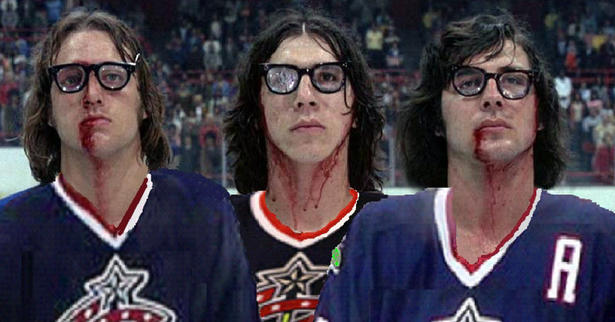
Dunlop continues to try and find out who the teams owner is, so he can talk them out of folding the team. Meanwhile, the General Manager Joe McGrath (Strother Martin) adds the Hanson Brothers, three violent goons to the team. Dunlop protests and doesn’t let the brothers play. When Dunlop eventually lets the Hanson’s play, they are an instant hit with the fans. The Hanson’s are the ultimate violent goons, creating mayhem on the ice. They check players into the boards, slamming players onto the ice and even slapping the opposing players on the bench with their hockey sticks. The Chiefs gain more fans and win more games by being outrageously violent on the ice. During the warm up before the game, the Hanson’s start a brawl. Next we see the Hansons and the rest of the Chiefs bloodied and bruised listening to the National Anthem. A referee skates over to yell at Steve Hanson about not pulling any funny stuff. The Brother tell the ref, “I’m trying to listen to the f**king song.” The ref looks chagrinned. This sequence is so funny in its absurdity.

Dunlop finally blackmails McGrath into telling him who the owner is. The owner is a well off widow living in the suburbs with her children. She thanks Dunlop for making the team winners and that she could easily sell them, but she prefers to fold the team and use them as a tax write off. Dunlop pleads with her to think of the people on the team, but she won’t change her mind. He insults her before he leaves and returns to the team and tells them the truth during their final game. There is no buyer for the team. He asks the team to play old-time hockey and play the game clean. They all agree and they hear the line up for the game. The Chiefs are facing the toughest, most legendary underhanded players. They are outmatched in brutality when they play clean and they are losing the game.

During the first period, McGrath flips out, telling the team that there are NHL scouts in the audience. Next we see the Chiefs back to a slugfest on the ice. Ned Braden (Michael Ontkean) is benched because he won’t fight. Braden is an excellent player without resorting to fighting. Braden skates out to center ice and does a striptease. An opposing player demands the referee to make Braden stop stripping yelling, “That’s disgusting.” The ref doesn’t and the player sucker-punches the ref. The game is forfeit to the Chiefs who win the championship. Braden skates around the rink in his jockstrap.

Slap Shot is another 70’s film that is gritty and realistic. The locations are perfect in depicting a community having financial difficulties. The situations and characters are funny because they are believable. Dowd’s dialogue is entertainingly blue and yet totally natural coming out of the characters. Somehow she’s made the coarse language seem perfectly normal in this world of sports, which I’m sure it is, but so many times in films, bad language seems to be there for no real reason. The characters use of foul language is false and is uninspired. Dowd’s characters would talk this way, so it is fitting. It has been said that f**k is said 176 times in the film. I would love to know who counted them all.

Paul Newman is excellent as the aging morally slippery Coach, who thinks he’s seen it all. Newman had said this was one of his favorite films to make. He is clearly enjoying himself and does his own skating. He is charming and a rascal. George Roy Hill directed Newman for the third time in this film. They worked together on Butch Cassidy and the Sundance Kid (1969) and The Sting (1973). The cinematography by Victor J Kemper shows us exciting action scenes on the ice. All the actors are wonderful especially the real life hockey players and non professional actors playing the Hanson Brothers: Jeff Carlson, Steve Carlson and David Hanson leave an indelible mark as the id’s gone wild brothers. Yvon Barrette is great as the Chief’s put-upon goalie, Denis Lemieux. Jennifer Warren, Lindsay Crouse and Michael Ontkean all contribute to the wonderful cast.

I keep going back and watching Slap Shot over and over again and I rediscover it each time. The scenes that make me laugh out loud are too numerous to cite. I enjoy the normalcy of some of the set ups. A local hang out where the players are engrossed in a soap opera on TV, while they have a drink is amusing or when the players are watching a woman exercising on TV with rapt lascivious attention as they pass the time before a game. This film is a pitch perfect comedy and great sports movie. Discover this underrated rough gem for yourself.

There really is so much to recommend ‘Gilda’. There is a reason that it has been used (The Shawshank Redemption anyone?) over and over again, gets referred to over and over again and has a substantial fan following even now. It is a fabulous movie in so many ways. Few movies even now can boast the great plot, great characters, superb acting, and intelligent directing.

SCREENPLAY CONTESTSUBMIT your SCREENPLAY
Voted #1 screenplay contest in the world!
NEW MOVIE REVIEWSNEW MOVIE REVIEWS
Read Today’s POSTED REVIEWS
MOVIE KILLSEE 1000s of PICTURES
Best of photos, images and pics
MOVIE YEARMOVIES YEAR BY YEAR
Pages from 1900 to present

SLAP SHOT