Movie Review: 65.5 WOMEN (Norway, Experimental)

Played at the July 2017 Experimental Short Film Festival

65.5 WOMEN, 6min, Norway, Experimental
Directed by Liv Mari Mortensen

To understand a recent failure, a young man writes a statistic of all the women he ever slept with. As he tries to simplify all of his affairs into simple characteristics the memories start to take over, leaving him to face the only one he truly wanted.

CLICK HERE – and see full info and more pics of the film!

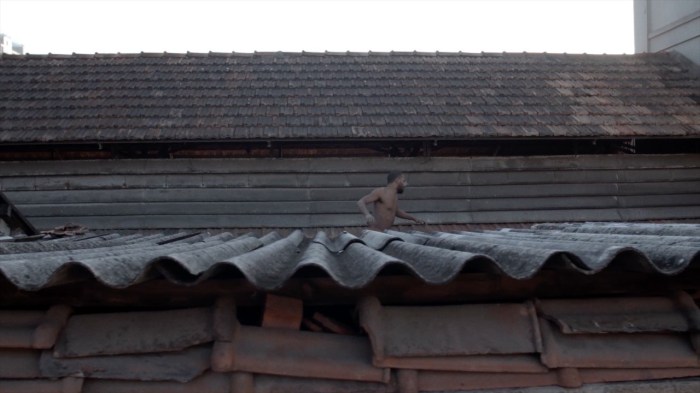
Dramatic, collaborative and unbarred, 65.5 WOMEN is the story of one man recounting his sexual exploits to the woman he might bed next. But his descriptions of his conquests are not told from his voice- but from the women he speaks of. Subtle and often humorous, 65.5 WOMEN has an unmistakable charm in it, and an interesting dissection of genre and sexual politics.

Our narrator is never seen, in fact, other than his opening lines and closing lines he is rarely even heard. The focus, instead, is on the statistically way he recounts his sexual partners- the actual lines said by those very women while they break the fourth wall in a nonchalant and unassuming way. It is open for dense discussion as to who has the power in this piece- our male hero, the woman the hero is speaking to, or the women he is recounting.

Perhaps the depth in this piece comes from its subversion of gender power. The man, who is recounting his conquests with an almost unemotional air, has his very voice removed. The piece follows the women, and the descriptive factors that define them (“This one had a drug problem…this one had red hair.”) are said instead by the women who own the descriptors. The woman take agency, by using their own voices, and owning their descriptions.

A piece worthy of discussion on an academic level, but no less enjoyable to anyone simply looking for an introspective short film, 65.5 WOMEN is a deep and intellectual piece that packs an emotional punch.

Watch the Audience FEEDBACK Video:

65_5_women_movie_poster

Movie Review: ICARO (Brazil, Experimental)

Played at the July 2017 Experimental Short Film Festival

ICARO, 11min, Brazil, Experimental
Directed by Carla Jay Shah Laroche

Based on the Greek tragedy, Icaro is a Brazilian modern adaptation of the iconic struggle; a man who seeks liberation from an environment in which he feels caged and powerless. Where myths tell us that our fate is determined by a greater force than our own, Icaro is a poetic film which illustrates how our fate is also determined by choice. Icaro must reach his own decisions on how his profession as an elevator operator will ultimately affect him, a profession which is still widely in use in Brazil. The film touches multiple aspects of Brazil’s complex society.

CLICK HERE – and see full info and more pics of the film!

An experimental Brazilian short following one man’s journey into the sky, ICARO is a reimagined work of art inspired by the tales of Icarus, who flew to close to the sun. ICARO, our hero, is a highly intelligent man working as a lift operator, when he is transported into a world where he has no socially structured limits.

We may be looking through his day dream or his minds’ eye, but our hero is transported to an empty warehouse where his story, dream, struggle, his breaking free of social stagnation is able to be expressed through dance.

His is covered in paint (or possibly wax) and is able to act out his dreams of reaching far beyond the shackles of the modern world.

Ircaro is exquisitely shot, beautifully performed and exceptionally well composed. Balanced and perfectly cast, this is a work of experimental art that will have any film-goer looking to watch again. Well done, Carla Jay Shah Laroche, very well done.

Watch the Audience FEEDBACK Video:

icaro_3

Movie Review: HOPE (Iceland, Experimental)

Played at the July 2017 Experimental Short Film Festival

HOPE, 4min, Iceland, Experimental
Directed by Knutur Haukstein Olafsson

The apocalypse is coming. A lonely and bitter nun seeks for help to let go of her past and finally be free. The lights go out. The lights are turned on. And suddenly there is a change.

CLICK HERE – and see full info and more pics of the film!

 HOPE is a four minute Icelandic experimental, heavy with religious symbology and musicality. It boasts an apocalyptic setting with a young nun faced with the prospect of eating a live head on a plate.

On a purely experience-only basis, this film is ripe with colors, dramatic imagery and memorably catchy music. Symbolically it is full of elaborate layers to be peeled back one by one.

Our young religious hero bitterly seeks some sort of solace for the end of the world and finds it in a singing head presented to her, yet the work ends with her defrocking and leaving the church in a bright red dress. She may be embodying the death and renewal of religion, or the passage of childhood to adulthood, or a bloody and metaphorical look at the ending of a romantic tryst.

We may never know, or the goal may be for us to form our own opinions. You’ll have to watch HOPE to find out.

Watch Audience FEEDBACK Video:

hope_2

Movie Review: BODY WITHOUT ORGANS (Experimental, USA)

Played at the July 2017 Experimental Short Film Festival

BODY WITHOUT ORGANS, 2min, USA, Experimental
Directed by Mark Franz

Explores the mystical singularity of the body in terms of its separate functioning parts. Philosophers Gilles Deleuze and Felix Guattari use this term to refer to the “cosmic egg” of life.

CLICK HERE – and see full info and more pics of the film!

This two minute experimental hailing from the USA is a study is abstraction, art and simplicity. Set against a neutral background, animated images of body parts, from organs to nervous systems, is built together- assembled almost, to an abstract beat. Surrealist and highly experimental, this piece does not tell you it’s intent, but asks you to project your own emotion on it.

BODY WITHOUT ORGANS will remind us that we are so much more than the sum of our parts, while still showing us that those parts alone, are incredibly complex, intricate and marvelous. A special nod must be given to the detailed design put into the concept and animation. A strong piece, with even stronger style.

Watch Audience FEEDBACK Video:


Film Review: THE NUT JOB 2: NUTTY NY NATURE (USA 2017) ***

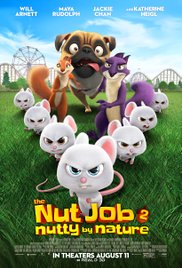
the_nut_job_2.jpgFollowing the events of the first film, Surly and his friends must stop Oakton City’s mayor from destroying their home to make way for a dysfunctional amusement park.

Director: Cal Brunker
Writers: Bob Barlen, Cal Brunker
Stars: Will Arnett, Katherine Heigl, Maya Rudolph

Review by Gilbert Seah 

The sequel to THE NUT JOB delivers much more of the same with the coloured squirrels and other rodent park animals, led by Sury and his rat sidekick Buddy, voiced by mostly the same actors.

Surly (Will Arnett) and the park animals must band together to prevent Oakton City’s crooked mayor (Bobby Moynihan) from bulldozing Liberty Park and replacing it with a dangerous amusement park. Surly even gets help from the territorial street mouse gang leader Mr. Feng (Jackie Chan) into thwarting the mayor’s plot.
The sequel introduces three new and welcome characters that provide most of the film’s freshness and humour. These are Bobby Moynihan as the Mayor of Oakton City, Isabela Moner as Heather, the mayor’s spoiled daughter and Jackie Chan as Mr. Feng. Credit should also definitely go to the animators of these three creatures.

When Mr. Feng, the white mouse first appears in the film, speaking with a strong Chinese impression, the immediate thought that will come to mind is racism. Society has progressed a far way since Mickey Rooney could get away doing really awful and unacceptable Japanese impressions with fake teeth in Blake Edwards’ BREAKFAST AT TIFFANY’S. But the credits list Jackie Chan as the voice behind Mr. Feng, and Chan does speak that way with a strong Hong Kong accent. The animators are also smart enough to make sure all he mice characters including Mr. Feng have really round and no slanted eyes.

THE NUT JOB films are the lower breed of animated films after films like SHREK, MADAGASCAR, HAPPY FEET, KUNG FU PANDA, HOW TO SAVE YOUR DRAGON, MEATBALLS. The NUT JOB films are have nothing really new to offer. Despite a few relatively new ideas (such as the mice and Mr. Fend who refuse to be cute – a sort of direct attack at cutest animated characters), parents will find the whole enterprise a chore to watch while children will undoubtedly be entertained.
Though the film is listed as an American production, there is a lot of Asian input (especially in the animation) as mentioned in the closing credits. Not only that but two asian companies are credited as with producing credits at the start of the film.

THE NUTJOB films are modest productions. The first cost only $42 million to make and went on to gross $120 million thus green lighting a sequel. The original director, a Canadian Peter Lepeniotis who based the first film on characters he created in his short was supposed to co-write the sequel but his name is missing from the list. Number 2 is co-written by Cal Brunker
Bob Barlen andScott Bindley.

The closing credits in the first THE NUT JOB film featuring an animated version of South Korean rapper Psi performing “Gangam Style” dancing with the park rodents were so irresistible that almost the entire audience stayed to the end. This was indeed a difficult act to follow and the rap sequence the closing credits of NUT JOB 2 unfortunately emptied the theatre in no time, thus allowing almost everyone to miss a last sequence of animation that appears once the closing credits rolled over.

Trailer: https://www.youtube.com/watch?v=4Lpw2gJt9Us

Also, Free logline submissions. The Writing Festival network averages over 95,000 unique visitors a day.
Great way to get your story out: http://www.wildsound.ca/logline.html

Deadlines to Submit your Screenplay, Novel, Story, or Poem to the festival:http://www.wildsound.ca

Watch recent Writing Festival Videos. At least 15 winning videos a month:http://www.wildsoundfestival.com

Film Review: AN INCONVENIENT SEQUEL: TRUTH TO POWER (USA 2017) ***

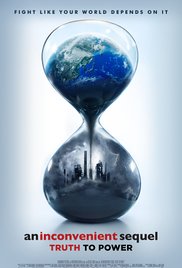
AN INCONVENIENT SEQUEL TRUTH TO POWER.jpgA decade after An Inconvenient Truth (2006) brought climate change into the heart of popular culture comes the follow-up that shows just how close we are to a real energy revolution.

Directors: Bonni Cohen, Jon Shenk
Stars: Al Gore, George W. Bush, John Kerry

Review by Gilbert Seah
 

AN INCONVENIENT SEQUEL: TRUTH TO POWER is the sequel to the 2006 Academy Award Winner for Best Documentary AN INCONVENIENT TRUTH starring Al Gore where the former Vice-President of the United States championed the fight on global warming. In that film, the effects of global warming were convincingly portrayed on screen, rallying uncountable numbers of followers to fight against global warming. After more than 10 years, many of that film’s predictions (the best example used being the flooding of the World Trade Centre grounds), laughed upon by skeptics have come to pass. This sequel is timely and premiered at Sundance early this year.

The film follows the efforts made to tackle climate change and Al Gore’s attempts to persuade governmental leaders to invest in renewable energy, culminating in the signing of the Paris Climate Agreement in 2016.

The film begins lightly with references to the 2006 film and with Al Gore in lighter mode shown joking and laughing. His joke about a lady (not recognizing him) telling him that if dyed his hair black, he would look like Al Gore is funny enough, enabling the film to transition slowly to a more serious nature. Gore is also shown, in the film’s best moments giving his climate speeches, while getting fully worked up in the process.

Gore is undoubtedly presented in the film as the conquering hero, besides a champion for the climate change movement. Well, better a hero for a crucial course that no hero at all.

While the film traces Gore’s attendance at the Paris talks in 2016, it narrows the events to his victory at convincing India to cooperate. At the same time, the film shows how each country contributes to the reduction of global warming and where the problems lie. The film’s high is the revelation of how much Chile has done in the construction of solar powered plants. Another high is how Geogetown, Texas through its comical mayor has also championed itself towards 100% renewal energy. He emphasizes the saying that we should leave the world a better place in terms of renewal energy.

The ultimate question asked is whether AN INCONVENIENT SEQUEL is better than the original INCONVENIENT TRUTH. The truth is that it is difficult for anyone who has seen the 2006 film to remember, especially after 11 years have passed. A fellow critic colleague mentioned that SEQUEL is the better film, being more focused, also claiming that he has just re-watched the original for comparison. For myself, I remember being more moved by the first film, and understandably so, for the more disturbing images of the effects of global warming shown. In SEQUEL, though many images are still shown, most of these are the catastrophes like the flooding and drought scenes, but the melting ice and the depletion of ice created the greater impact.

Still in SEQUEL, directors Cohen and Shenk have re-edited the film following President Donald Trump’s withdrawal from the Paris Agreement, to expand Trump’s role as antagonist before the film hits theatres. All the better to incite the workers for climate change to have a common enemy, and an easy target at that.
The film ends, predictably though necessarily, with how everyone can contribute to the cause, with the website they can log on to.

Trailer: https://www.youtube.com/watch?v=huX1bmfdkyA
 

Also, Free logline submissions. The Writing Festival network averages over 95,000 unique visitors a day.
Great way to get your story out: http://www.wildsound.ca/logline.html

Deadlines to Submit your Screenplay, Novel, Story, or Poem to the festival:http://www.wildsound.ca

Watch recent Writing Festival Videos. At least 15 winning videos a month:http://www.wildsoundfestival.com

Film Review: LANDLINE (USA 2017) ***

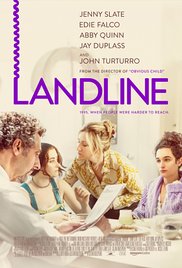
landline.jpgIn 1995, a teenager living with her sister and parents in Manhattan discovers that her father is having an affair.

Director: Gillian Robespierre
Writers: Elisabeth Holm (story by), Gillian Robespierre (story by)
Stars: Jenny Slate, Jay Duplass, Abby Quinn

Review by Gilbert Seah

 
Director Gillian Robespierre and actress Jenny Slate team up once again after their mildly successful film, OBVIOUS CHILD. Their new film LANDLINE opens to a couple having sex in the woods. There is no full nudity, just trousers and skirts down or up as the case may be. It is a comical scene as the orgasm is interrupted by what she calls a woodchuck’s peter pater. Most people can relate to this scene, as most people would have had sex in the outdoors at least once in their lifetime and the scene would be a familiar if not an amusing one.

LANDLINE is a female point of view relationship romantic comedy/drama involving three females of the Jacobs family – the mother Pat (Edie Falco), and the two daughters, Dana (Jenny Slate) and the younger, Ali (Abby Quinn). The main plot involves the sisters finding out, by accident that their father, Alan (John Turturro) is having an affair. They decide to find out who his mistress is but they debate on whether they should inform their mother.

A simple premise of a father’s secret infidelity in a slightly dysfunctional household is not enough material to keep an audience interested throughout an entire movie. So, the scriptwriters (the majority of whom are female, as is obvious from the film) have inserted other subplots or distractions. Two are the relationships of the two daughters. Another is the use of drugs, heroin by the youngest daughter. And another involves the film’s setting in the 1990’s. The setting means no use of cell phones as they were not invented yet, hence the film title of LANDLINE. Robespierre also has the excuse to put in plenty of 90’s period music which include lots of really popular songs like “Higher Love” by Steve Winwood and My favourite song “Two of Hearts” by Stacey Q.

The film tries too hard at times making it look too smart for its own good.

Many of these involve Dana and her boyfriend, Ben (Jay Duplass). The bath tub scene looks too manipulative and false, only there to create an artificial ‘cool’ segment. Their corny dialogue in the scene does not help either. Working better is the relationship between the younger sister Ali and her drug using boyfriend. Their banter and relationship appear more natural and comes across as not only more spontaneous but credible.

Of all the performances, Edie Falco (the mother) is the most winning. John Turturro does well as the hapless asshole who cheats and then expects to be forgiven for his errors by his smart talk. This confrontation between Alan and Pat forms the film’ s best part with the audience clearly on the side of the female’s.

Despite the film’s flaws, it succeeds on the performances of its cast. The humour is slight but the drama is real. The sibling interactions work. The feeling is that the dysfunctional family onscreen could be yours.

Trailer: https://www.youtube.com/watch?v=llmki0lioMs


Also, Free logline submissions. The Writing Festival network averages over 95,000 unique visitors a day.
Great way to get your story out: http://www.wildsound.ca/logline.html

Deadlines to Submit your Screenplay, Novel, Story, or Poem to the festival:http://www.wildsound.ca

Watch recent Writing Festival Videos. At least 15 winning videos a month:http://www.wildsoundfestival.com

1977 Movie Review: EXORCIST II THE HERETIC, 1977

  MOVIE POSTEREXORCIST II THE HERETIC, 1977 
Movie Reviews

Director: John Boorman

Stars: Richard Burton, Linda Blair, Louise Fletcher

Review by Mark Engberg

SYNOPSIS:

A girl once possessed by a demon finds that it still lurks within her. Meanwhile, a priest investigates the death of the girl’s exorcist.

MOVIE REVIEW:

During our podcast discussion regarding the best horror films of all time, WILDsound founder Matthew Toffolo asked me a brilliant question: what defines a horror movie?

Cheating an answer out of Wikipedia, I said that a horror movie tries to evoke a negative reaction from the audience by playing on their primal fears and anxieties. So, here is a follow-up question: what makes a bad horror movie?

Is it bad acting? Like any other genre, bad acting in a horror feature can certainly damage its integrity. But it seems unfair to blame a movie’s appeal based solely on the acting abilities, or lack thereof, of its principle stars. Besides, if you were going to condemn a horror movie for its unbelievable acting, the list of bad ones would be endless.

Is it bad because of its unbelievability? That hardly seems the case. A Nightmare on Elm Street and Child’s Play are among some of the most beloved and successful horror films released in the past twenty-five years. And you would be hard pressed to explain that the premise for either franchise is in any way plausible.

Or does it only appear bad based on its low budget? I can’t go with that one either. Henry: The Portrait of a Serial Killer and The Blair Witch Project are two of my favorite horror films of all time. The production team behind Henry spent about $110 grand on its budget, while The Blair Witch spent about half of that amount.

It can be inferred that a bad horror film fails to elicit a reaction from the audience by playing on their own emotions. In other words, it is boring.

And if Exorcist II: The Heretic were merely a boring picture, I could still look past its narrative shortcomings and acknowledge that sequels rarely live up to their predecessors. But Boorman’s take on the story is an incomprehensible mish-mash of locust swarms and doppelgangers. The story loses so much focus in its final act, I thought I was possessed by a demon spirit myself because all I wanted to do was vomit green bile all over the place.

Richard Burton and Linda Blair seem to be playing a game as to who can do the worst acting throughout the picture. Burton constantly undercuts his Father Lamont with sad, motionless expressions that convey nothing. Blair might as well be doing a spot for an Informercial reenactment.

She herself blames the flawed story structure on the fact that it went through too many rewrites due to creative differences between Boorman and screenwriter William Goodhart. Eventually, Goodhart was replaced by Rospo Pallenberg, who rewrote the script with Boorman. Even though I never read Goodhart’s original script, I feel bad for the playwright, who must have endured a lifetime of harsh criticism for something he did not write.

The production crew had its own set of problems. Burton, allegedly, started drinking again. Boorman contracted a respiratory fungal infection, which offset production for a costly month. Blair refused to wear the demon make-up this time, which meant that her demon scenes had to be performed by a double. The animal wranglers had trouble with the grasshoppers they needed for the ridiculous locust scenes. The City of Washington DC denied the crew permission to film at the famous staircase in Georgetown.

The entire filmed seemed doomed from its inception. Even one of the producers, Richard Lederer, admits in Bob McCabe’s book The Exorcist: Out of the Shadows that the sequel was conceived as a low-budget rehash of the original, using deleted scenes from the original to give audiences something new.

When the film opened, it was laughed off the screen by crowds who were probably initially intimidated when the lights first dimmed. In fact, Boorman yanked the film out of theaters and attempted numerous re-cuts and alternate endings to no avail. When there is so much wrong with your picture, there is only so much you can do.

The plot is a dull concept regarding Burton’s Father Lamont and his assignment to investigate the death of Father Merrin (once again played by the great Max von Sydow). When Lamont visits the tormented yet oblivious Regan MacNeil at a NYC psychiatric institute, the plot quickly sinks into absurdity. They experience synchronized hypnosis together using a pair of wires and headbands when Lamont discovers an unquiet spirit still residing within Regan.

The rest of the movie mostly consists of terrible looking sets of African tribes that were filmed at the Warner Bros’ backlot. Lamont has delusions and unintentionally hilarious visions of James Earl Jones in a locust costume. But the most troubling aspect comes at the end, when Father Lamont confronts the evil Pazuzu spirit dwelling within Regan’s body . . . even though she is standing behind him. I don’t understand why there were two Regans in the final act. More importantly, I didn’t care. I just wanted it to end.

For those looking for some of the old metaphysical and supernatural nerve of the original, be advised to skip this entry and check out The Exorcist III: Legion instead. That movie was written and directed by William Peter Blatty, the author of the original novel. It goes without saying that he is thankful for having nothing to do with this absurd chapter. Wisely, he chose to ignore its subject matter in his own feature.

ACTORJohn Boorman
Best of the ARTIST
ACTORLinda Blair
Best of the ARTIST
ACTORRichard Burton
Best of the ARTIST
ACTORLouise Fletcher
Best of the ARTIST
ACTORMax von Sydow
Best of the ARTIST
ACTORKitty Winn
Best of the ARTIST
ACTORPaul Henreid
Best of the ARTIST
ACTORJames Earl Jones
Best of the ARTIST
ACTORNed Beatty
Best of the ARTIST

exorcist 2.jpg

1977 Movie Review: TENTACLES, 1977

TENTACLES, 1977 
Movie Reviews

Director: Ovidio G. Assonitis

Stars: John Huston, Shelley Winters and Bo Hopkins 

SYNOPSIS:

Several people disappear from and at the sea. Their bodies are found gnawed to the skeleton, even the marrow is missing…

CRITICS REVIEWS:

It’s pretty rancid, although it’s the perfect party picture to screen in the background as your guests get suitably soused.

June 16, 2015 | Rating: 1.5/4 | Full Review…

A Jaw’s rip-off.

May 8, 2010 | Rating: C | Full Review…

Indesculpável.

December 18, 2007 | Rating: 1/5

John Huston and Shelley Winters in a clunky monster movie? Even the Octopus is up in arms.

August 1, 2005 | Rating: 0/5

TENTACLES

1977 Movie Review: STROSZEK, 1977


STROSZEK,   MOVIE POSTERSTROSZEK, 1977
Movie Reviews

Directed by Werner Herzog
Starring: Bruno S., Eva Mattes, Clemens Scheitz, Wilhelm von Homburg, Burkhard Driest, Clayton Szalpinski
Review by Jordan Young

SYNOPSIS:

In Berlin, an alcoholic man, recently released from prison, joins his elderly friend and a prostitute in a determined dream to leave Germany and seek a better life in Wisconsin.

REVIEW:

Herzog continues to blow minds of the viewer’s of 1977’s Stroszek. This film depicts three pariah’s in their native Berlin, and their overseas quest to find happiness in Plainfield, Wisconsin. The pariah’s include a prostitute (Eva), a ex-con alcoholic (the titular character Bruno Stroszek) and an old, reclusive, brittle Scheitz.

Roger Ebert wrote that this film is “one of the oddest films evermade.” This is because of it’s seemingly non sequitur segments,jarring examples of music, and it’s drastic setting changes. Not to mention that this is almost cinema en plein air, meaning this entire film is comprised of found people and places that add dramatically to the overall feel of the movie.

Bruno himself was a street musician, found by Herzog, Bruno was also a diagnosed schizophrenic… which apparently added to his troubled character due to his magnificent performance. I found myself however, sympathizing with the character of Eva much more in the beginning. She goes through some pretty miserable times, but then seems to adjust rather well to American life.

Bruno and his pack of friends quickly realize that the American dream, is just that… a dream. This reality arrives to them at the exact same time that the banker starts pestering them about their mortgage payments. This banker again was found by Herzog, but his character is just miserly enough, to make any viewer want to punch him in the face.

As Scott McCloud theorizes in Understanding Comics, no non sequitur is actually in fact a non sequitur. The fun part is about these scenes in Stroszek is, any meaning that you can create from these scenes, is the correct answer… it’s what you take from it. Therein lies, the genius of Herzog, the readers (or viewers) create their meaning. DON’T BELIEVE ANY CRITIC ABOUT THE CHICKEN SCENE! Let the chicken mean what you want it to mean. (You will know what I’m talking about.)

See this movie for Bruno’s magnificent performance, as he takes you off the beaten path of the typical character you have to love, and sets you up for his endearing depiction of a man trying to earnestly find happiness.

Very touching view of the struggles that we all go through. My belief is that Herzog tried to depict how utterly confounding life can be at any given point and time. Except where a mainstream director shows a tough life through a montage and a stereotypical song, Herzog shows a side of America we wish we could distance ourselves from. Keep in mind viewer, this is German Art House film. It will be a challenging, but extremely rewarding experience.

stroszek.jpg