Film Review: GIRLS OF THE SUN (Les Filled du Soleil) (France 2018)

Girls of the Sun Poster
Trailer

A Kurdish female battalion prepares to take back their town from extremists.

Director:

Eva Husson

Writers:

Jacques Akchoti (collaboration), Eva Husson (screenplay)

GIRLS OF THE SUN is director Eva Husson’s (BANG BANG A MODERN LOVE STORY) second feature, inspired by an actual Yazidi female combat battalion that took weapons in a fight against ISIS.  

The story follows ]an impassioned war correspondent, Mathilde (Emmanuelle Bercot), into the Daesh battleground of northwestern Iraqi Kurdistan, where she is embedded with a unit of female peshmerga fighters.  Led by Bahar (Golshifteh Farahani), the unit is made up of women formerly held captive — many as sex slaves (which the film emphasizes a few times)— by Daesh following the massacre of their husbands and the kidnapping of their children. Seamlessly weaving between the harrowing pasts that brought them together and their perilous present, Husson highlights the shared suffering that strengthens their bond and their will to fight to get their village, and their families, back.

GIRLS OF THE SUN is too obvious in its attempt to propagate the importance of feminine issues.  The theme of a woman reporter aided by women fighters escaping the brutal ISIS fighters should be enough of a theme to state that women are just as important as men and can do their job just as well if not better.has a child.  The child has to be a daughter.  When a General insists that enough men have been lost in the war, the female leader says corrects him to say that women have also lost their lives.  All them men are shown as either bumbling idiots, sex abusers and ugly brutes.  The females, however, are sympathetic and most of them are really good-looking.  It is all too easy to make the enemy so vulnerable and the women too strong.  The women also break out into song of Women, Life and Liberty. 

The French reporter can speak Kurdish.  The Kurdish leader can speak French.  Yet another case of making the story too convenient fo its own good. 

The fact that French reporter could have retuned home but instead stayed behind makes no sense, especially since she has a daughter back home. She ha already lost an eye (for audience sympathy) due to a war injury.  Has that not taught he a lesson yet?  She an even joke that losing one eye makes it easier to sleep and she volunteers for guard duty.  Really?

One can only feel sorry that this well intentioned female film with a solid plot idea has not achieved its goal.  To Husson’s credit, she had done enormous research for her film.  She  the encompassed work of filmmaker and journalist Xavier Muntz, who she met in October 2015 while he was documenting the Kurdish resistance to the jihadi insurgency.  Husson ultimately conducted roughly thirty hours of interviews with Muntz as part of her research to make the film. Muntz has a cameo playing himself in the movie.  I hate  to say this, but perhaps a male director would have done a better unbiased job.  

Trailer: https://www.youtube.com/watch?v=FKxCXMIG3Xg

Film Review: HER SMELL (USA 2018) ***

Her Smell Poster
Trailer

A self-destructive punk rocker struggles with sobriety while trying to recapture the creative inspiration that led her band to success.

Director:

Alex Ross Perry

Directed by Alex Ross Perry, who also produced the film with its star Elisabeth Moss, HER SMELL the film could also be re-titled HER STINK as this is a warts and all account (mainly warts, actually) of the lead singer, Beck (played by Moss) of a fictitious female punk group called ‘Something She’ – whatever the name means.  HER SMELL is the name of the club Something She is performing during the film’s opening act.

The members of ‘Something New” are Beck herself, and two others, Marielle (Agyness Deyn) and Ali (Gayle Rankin), who Beck constantly abuses and bullies until they finally freak out and give up on her.  Later, they sign of another 3-girl punk rock band.

If Beck does even show up for her band’s show, she will abuse verbally and occasionally physically all those around-her.  These also include her record label owner, Howard (Eric Stolz), her young daughter, a  toddler who she screams she is playing rocket with, tossing her into the air and at one point even falling to the ground and almost dropping her.  

Her husband or ex-husband, Danny (Dan Stevens) shows up with the daughter but clearly there is no chance of a re-conciliation due to Beck’s awful behaviour.  

Her band members are no angels either – snorting coke or screaming foul language.

The punk songs heard on screen are not half bad, and are originally written.

The film runs long at over 120 minutes, and director Perry seems to have given his star Moss Carte Blanche to do whatever she wants to do.  Moss delivers an uninhibited performance if it not electrifying is definitely unforgettable.  It is an Oscar worthy performance, though one would think the members of the Academy would want to give the award for a role so demented.  Moss is brave enough to show her ugly side.  Moss can be beautiful as at the end of the film or just plain ugly when she is nasty.  The camera reveals Moss ugly side – her sweaty palid skin full of zits and pimples.

The film’s plot is simple.  It shows the self destructiveness of Beck in Something She.  She finally gets the act together and achieves redemption which is largely due to the love of her daughter.  But the film has one main glaring flaw – the turning point.  For someone to make such a radical change from evil to super good, there must be a drastic event to cause the one hundred eighty degree change in behaviour.  This is missing.  One can also not understand the reason Beck’s boyfriend or mother (Virginia Madsen) continues to stay at her.

This is not the first movie about a self-destructive recording star – Bradley Cooper’s A STAR IS BORN, BOHEMIAN RHAPSODY and VOX LUX with Natalie Portman portraying an almost identical character being recent examples.  The question is whether anyone would want to pay good money to watch another caustic journey of a self-destructive female punk.  But I must admit that I was moved.

Trailer: https://www.imdb.com/title/tt7942742/videoplayer/vi1934735897?ref_=tt_ov_vi

Film Review: HELLMINGTON (Canada 2017) ***

Hellmington Poster
A detective investigates her father’s dying words; the name of a girl who has been missing for 9 years.

HELLMINGTON is a suspense thriller written and directed by Justin Hewitt-Drakulic and Alex Lee Williams.  HELLMINGTON is the name of the school where the trouble in the story begins.

The film opens wth a burning house, an image that is revisited several times in the film – likely for the reason that it is the most expensive set-piece and also for the reason that it has something important to do with the mystery shrouded in the story.  There is also an image of a little girl in a photograph.  As the film progresses, more and more incidents are built into the story.  There is a cult with the cult’s symbol (a rather silly looking asymmetric one) that keeps appearing, the disappearance of a teen girl, the various suspects, the prison guards and the main protagonist, Sam who returns to her home town to re-open old wounds.

The basic plot involves a detective, Samantha Woodhouse (Nicola Correia-Drakulicinvestigates her father’s dying words; the name of a girl who has been missing for 9 years.  Sam is called to the town and informed of the father’s death by her uncle (Micahel Ironside, the only recognizable name in the cast), who is the brother of her father, both of whom worked as prison guards.  The uncle appears to be a dirty old man from his actions, with Sam insisting she stays at a motel instead of his house.  The motel’s receptionist is hilarious, injecting thinly humour in this mostly serious film.  The girl missing has disappeared after what looks like a prom party in which the last person seen with her was her date.  Sam questions the date, who is seen suddenly running away, freaking out.  The film has many well staged build-ups.  Besides the one just mentioned, there is the one with Sam in a motel room when the occult sign suddenly appears on the wall, among others.  Suspense is enhanced by the soundtrack within with thumping (on walls) or the loud sound of the heart beating.

Apparently there is more than meets the eye, as Sam turns up somehow connected with the girl’s disappearance.

All the incidents are eventually neatly tied together in a well constructed mystery thriller that occasionally feels like a horror film.  The film is shot in North Bay, Ontario where there are plentiful shot of the wood and country.

Trailer: https://www.youtube.com/watch?v=aRY2BYysN38

Film Review: FAUSTO (Canada/Mexico 2018)

Fausto Poster
On the Oaxacan coast of Mexico, rumblings of previous times are never far from the surface. Tales of shapeshifting, telepathy and dealings with the Devil are embedded in the colonization …See full summary »

Director:

Andrea Bussmann

There are two types of filmgoers.  The minority group are the ones that are more open to different types of films that include experimental films.  A few years back I was at the Tate Modern in London with my friend, British director Simon Rumley (one of the 26 directors of THE ABC’S OF DEATH PART 2; THE LIVING AND THE DEAD and the upcoming ONCE UPON A TIME IN LONDON) and we approached an experimental film playing on exhibit.  We left after 5 minutes.  To my surprise, I thought the experimental film would at least hold the interest of a film director for at least 5 minutes.  FAUSTO belongs to the section of Wavelengths, a section at the Toronto Film Festival where one can be sure to be able to get tickets.  Films in the Wavelength section usually play to empty auditoriums.

Shot on Mexico’s Oaxacan coast, Andrea Bussmann’s (co-director of TALES OF TWO WHO DREAMT) hybrid ethnography is a direct, rigorous, and largely theoretical adaptation of Goethe’s Faust that wholeheartedly adopts that text’s anti-empiricist ideals: it is a portrait of a place and its inhabitants (deceased or otherwise) caught in limbo between what is and what was.  In hushed narration, local myths commingle with the Faust narrative, while the images, shot digitally and transferred to 16mm, open onto a pre-colonial world where land and capital were not so synonymous.

(The above paragraph is the film’s TIFF description.)

The film is basically story telling, as told by the film’s randomly chosen characters the voices imposed on images, many taken of the Oaxacan coast.  The images are impressive but by no means astounding.  Quite a few of these images are shot at night and the shadows often cloud the clarity.  A few of the stories are interesting – the hidden woods that hide the girl that escapes her marauders at the beginning of creation; the search of the missing shadow of a French journalist by questioning a blind zookeeper; the computers with the black screen in the areas of the black sand that could be due to the iron in the sand and others.  Director Gassmann makes no attempt at linking these stories nor even linking some of the images with the voiceover.  The film’s pace is incredibly slow with the running time of 70 minutes feeling like a hefty 3 hours.

FAUSTO is occasionally pretty look at though it makes little sense most of the time.  See this only if you are able to enjoy experimental films or films with little narrative.  For myself, I just have so much patience.  For critics who love this film, I dare you to recommend the film to your friends.

FAUSTO opens at the Bell Lightbox Friday April 12th.  The film’s director Andrea Bussmann will be present for an introduction and post-screening Q&A at the Friday, April 12, 6:25pm screening.

Trailer: https://www.youtube.com/watch?v=bV6rb012EGI

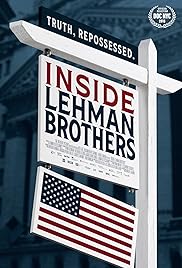
Hot Docs 2019 Review: INSIDE LEHMAN BROTHERS (Canada/France 2018) ***1/2

Inside Lehman Brothers Poster
Messy mortgages taken out by Lehman Brothers caused a real estate crisis in America ten years ago. This led to a global financial crisis. Ten years later, the French journalist Jennifer …See full summary »

INSIDE LEHMAN BROTHER is a documentary about finance.  Those involved in the world of stocks and finance will find this doc timely, insightful and interesting but how about the other group of people not dealing with the financial world.  

Director Deschamps, a French journalist (who co-wrote the script) attempts to bring interest to this group of people as well so that the film will have a larger target audience.  The doc begins with what appears to be an ordinary woman caught in extraordinary circumstances.  She is in a big residence in a large wooded area and says: “I would scream but no one would ever listen.”   

Deschamps clearly has got her audience’s curiosity piqued.   As mortgage brokers for Lehman’s subsidiary BNC, Linda Weekes and her Californian colleagues were at the forefront of the subprime crisis.  The whistle blower is Matthew Lee then headquartered in New York, who was the first leader to have refused to validate the accounts tainted by fraudulent transactions.  Former CEO Richard (Dick) Fuld Jr. is the chief villain on display, an an evil villain at that. 

 There are appearances of President Trump (another villain) and ex-President Obama (the hero) in the film.  If Deschamps’s aim is to infuriate the audience at the injustice, she has done a great job.  The details are explained, making up the bulk the movie.

Trailer: https://www.youtube.com/watch?v=O_2k-OXzgXY

Film Review: THE INVISIBLES (Die Unsichtbaren)(Germany 2017) ***

The Invisibles Poster
Trailer

While Joseph Goebbels infamously declared Berlin “free of Jews” in 1943, 1,700 managed to survive in the Nazi capital through the end of WWII. The Invisibles traces the stories of four young people who learned to hide in plain sight.

Director:

Claus Räfle

Writers:

Claus Räfle (screenplay), Alejandra López (screenplay)

1943.  Four Jewish youths have to hide their identities in Berlin in order to survive the Third Reich.  A true story- as the film continues to remind the audience.

Films from Germany on the injustice of the Nazis have shed new insight.  Audiences learnt that many Germans living today are unaware of the holocaust and the horror the Nazis have committed on the Jew in the concentration camps.  (Sorry, I can’t remember the title of this German movie, but the film traces the exploits of a German proving that the Holocaust exists.)  Audiences also learnt that Germans also committed horrors on their own German people as in the recent Academy Award German nominee for Best Foreign Film – Florian Henckel von Donnersmarck‘s NEVER LOOK AWAY.

While Jospeh Goebbels infamously declared Berlin “free of Jews” in 1943, some 1,700 (out of 6000, as the audience is later informed at the end credits) survived in Nazism’s capital until liberation.  Director Räfle’s gripping docudrama traces the stories of four real-life survivors who learned that sometimes the best place to hide is in plain sight.  While moving between cinemas, cafés and safe houses they dodged Gestapo and a dense network of spies and informants, knowing that certain death was just one mistake away.  Yet their prudence was at odds with their youthful inclination towards recklessness, sometimes prompting them to join the resistance, forge passports, or pose as Aryan war widows.

The four youths are Hanni (Alice Dwyr), Cioama (Max Mauff) , Eugen (Aaron Altaras) and Ruth (Ruby O. Fee).  These are four German Jews coming from different social classes as well as different neighbourhoods.  The film takes its time on each, showing their relationship and difficult separation from their parents and loved ones.  The problem with this, is that the trials each undergo are identical and it makes the narrative repetitive.

For each character, a few solid suspense set-ups are worthy of mention.  One involves a Jewish informer, Stella (Laila Maria Witt) who recognizes Ellen Lewinsky (Victoria Schulz) while she and a friend go to the cinema dressed as war widows.  Stella informs so that she gets special privileges from the Gestapo that her parents do not get deported.  But they do, regardless.  Another suspenseful scene has Jews hiding in a room when a German appears going from room to to room in that house looking for lodging for Germans displaced from bombings.

One plus of the film is the interspersing of the enactments with interviews of the four main characters now much older, which are the survivors in real live.  This tactic adds to the film’s authenticity.  The film is also interspersed with archive 1940’s film footage.

Despite the film’s flaws, THE INVISIBLES is a worthy and insightful account of not only the triumph of the human spirit in surviving but also the inherent good in the few Germans who risk everything in helping the Jews.  Just as the proverb goes ‘Necessity is the mother of invention’, desperation forces the desperate to survive against all odds.

Trailer: https://www.imdb.com/title/tt5586052/videoplayer/vi2626534169?ref_=tt_pv_vi_aiv_1

Film Review: SUNSET (Napszallta)(Hungary 2018) ***1/2

Sunset Poster
Trailer

A young girl grows up to become a strong and fearless woman in Budapest before World War I.

Director:

László Nemes

Writers:

László NemesClara Royer (co-writer) | 1 more credit »

SUNSET, Hungary’s Academy Award entry for the Best Foreign Language Film 2019 is a lavishly mounted production with great attention to detail in dialogue as well as production sets, wardrobe, hair and yes, hats.  One problem of the hair is that Leiter has the perfect curls throughout the film.  The story protagonist is the daughter of the original owners of a established well-successful hat shop in Budapest.  When the film opens, Irisz Leiter (Juli Jakab) arrives at the hat shop seeking employment as a milliner, but is turned down.

Director and co-writer of the script Names already won an Oscar for Best Foreign Film in 2016 for his Jewish concentration camp drama, SON OF SAUL.  Watching SUNSET immediately brings to mind the similarities of both films despite its different settings.  What is most notable is Nemes’ fondest of keeping the camera at neck level of his main character and the story unfolds as if seen from the character’s point of view.  In SUNSET, the camera also reveals, while at neck level, Leiter’s collar of her period dress as well as her hair and of course, stunning hat.  Every line of dialogue appears to be carefully written with subtle innuendoes often found in many of them.  This technique does get tiresome after a while.  Clues to the story and Leiter’s history are also revealed in the dialogue.  Example: when Leiter tells a stranger who inquires the reason of her sadness, she says: “I just got turned down from a job at the hat company.”  “That is not the only hat company in town,” is his reply to which she retorts: “But it is the only one with my name on it.”  The film’s best line: “the horrors of the world (at the brink of the first world war) hides behind these infinitely pretty things (referring to the hats).

The story is set in thriving Budapest in the early 1920s.  It is before the first world war when the Austro-Hungarian was the centre of Europe.  Besides the wealth on display in Budapest, poverty still exists.  When Leiter returns to her boarding house after being rejected from her job, she is told she is returning to dust and bed bugs.

The story is about Leiter leaving the orphanage and finding out the secrets of her family.  Leiter was put in the orphanage at the age of 2 after her parents’ death.  She does not remember anything.  She learns of a  brother, who had committed crime and now presumed gone into hiding.  Her re-appearance at the hat shop generates fears and memories of her brother’s evil deed.  But Leiter is determined to learn the truth surrounding her brother and keeps inquiring despite very bad vibes from those she asks.

The twist in the story occurs around the half way mark in the two-hour over film.

For what the film is worth, the period atmosphere and setting are extremely well done.  The narrative fails to satisfy in what would have resulted in an outstanding film.

Trailer: https://www.imdb.com/title/tt5855772/videoplayer/vi1684650521?ref_=tt_pv_vi_aiv_2

Hot Docs 2019 Reviews: THE DAUGHTER TREE (Canada 2019) ****

The Daughter Tree Poster
Trailer

THE DAUGHTER TREE is a cinematic character-driven feature documentary with unprecedented access that explores the aftermath of a cultural preference for baby boys sweeping through interior … See full summary »

Director:

Rama Rau

Indians are stubborn to have a boy.  They abort the girls.  Changing the natural order results in unbalances in the human ecology of things.  There are insufficient girls to be married off and many males end up singles, unable to find a wife.  Brides are often sold to willing males.  

The insightful doc THE DAUGHTER TREE, filmed in India is an entertaining  and absorbing examination of the problem.  This is a totally new Canadian documentary written, produced and directed by Rama Rau, an epic documentary film, six years in the making, about the disappearance of women in India resulting in all-male populations in some villages.  If there is a feminist themed movie, this is the one as it deals with the subject from the roots.  

Females are just as important if not more important than  their male counterparts.  The film explores the aftermath of a cultural preference for baby boys sweeping through interior India, through the eyes of a fearless Warrior midwife called Neelam who counsels and advocates for baby girls, while a lone man in the Village of Men – so called because no girl has been born here the past three decades – goes on a quest to find a wife.  

The film is also beautifully shot by D.P. Nagaraj Diwakar.  India never looks so stunning, especially not in a documentary.

Trailer: https://vimeo.com/244731236

Film Review: BLUE NOTE RECORDS: BEYOND BLUE NOTES (Switzerland/USA 2018) ***

Blue Note Records: Beyond the Notes Poster
A revelatory, thrilling and emotional journey behind the scenes of Blue Note Records, the pioneering label that gave voice to some of the finest jazz artists of the 20th and 21st centuries.

Director:

Sophie Huber

Writer:

Sophie Huber

The second documentary after her critically acclaimed HARRY DEAN STANTON: PARTLY FICTION, BLUE NOTE RECORDS: BEYOND BLUE NOTES is about the record label company called Blue Note Records and the artists mainly jazz musicians that played on the label.

The founders are apparently still alive and they are seen in archive footage together with their artists they signed on.  

The question is what is so special about Blue Note Records.  Director Hubert is clear to let her audience know.  For one, it is a label that the owners sign jazz musicians on because they love their music.  Making money is only the secondary reason.  An example is the commitment one of the owners had for jazz (or alternative) pianist Thelonious Monk.  It took a while before people liked and got familiar with his music and the owner believed in the man and his music.  Other artists that made Blue Notes Records their home include Miles Davis, John Coltrane, Bud Powell and Art Blakey, as well as present-day luminaries like Robert Glasper, Ambrose Akinmusire and Norah Jones.

The founders are just as interesting as their company.  The company was founded in New York in 1939 by German Jewish refugees Alfred Lion and Francis Wolf who fled the Germans.  If, the history of Blue Note Records goes beyond the landmark recordings, encompassing the pursuit of musical freedom, the conflict between art and commerce and the idea of music as a transformative and revolutionary force.

The film also includes an impressive cast of interviewees: Ambrose Akinmusire, Michael Cuscuna, Lou Donaldson, Robert Glasper, Robert Glasper, Derrick Hodge, Norah Jones, Keith Lewis, Lionel Loueke, Terrace Martin, Ali Shaheed Muhammad, Kendrick Scott, Wayne Shorter, Marcus Strickland, Rudy Van Gelder, Don Was.

The film’s best moments are, s expected the artists performing.   This is rare footage where the audience gets to see and hear the best jazz performances as delivered by history’s best artists.  Who can ask for anything more?  Even non jazz lovers will be converted.|

Trailer: https://www.google.com/url?q=https://vimeo.com/263839824&source=gmail&ust=1553306177251000&usg=AFQjCNFoRfi3pfUvD2O6BDNDQXdA5g2xIQ

Film Review: THROUGH BLACK SPRUCE (Canada 2018) ***

Through Black Spruce Poster
Trailer

The disappearance of a young Cree woman in Toronto traumatizes her Northern Ontario family, and sends her twin sister on a journey south to find her.

Director:

Don McKellar

THROUGH BLACK SPRUCE has one scene where a character walks through wooded black spruce.  There is something subtle about the scene though one can not be 100% clear what the meaning of it all is.  The same thing can be said overall of Canadian actor/director Don McKellar’s (LAST NIGHT) mesh of missing persons mystery and indigenous people statement.  The film is an ambitious and diligent work but the two genres fit uncomfortably in a somewhat drab thriller, not for want of trying.

There are two things going for McKellar’s movie.  The first is the beautiful and stunning Ontario landscape of James Bay.  The shots of the lakes, forests and vegetation are typical of the beast scenery Ontario, Canada has to offer.  The second is the impressive performances of the film’s indigenous cast.  Veteran Graham Greene returns as well as the Toronto Film Critic’s Association’s darling (they recently honoured her), Tantoo Cardinal as well as Brandon Oakes.  New is Tanaya Beatty in the title role of Cree woman Annie Bird.

The film is bookended by the violent beating of Annie’s Uncle, Uncle Will (Oakes) of a golf club by the local drug dealer.  The golf club is one of the most awful weapons used in film – the last time it was used was when Randy Quiard took out Sandy Dennis, the school councillor in PARENTS.  The story of what happens in between is the movie.

Suzanne, Annie’s sister has gone missing after chasing her modelling career in Toronto.  The subplot emphasizes Canada’s major problem of missing indigenous women.  Annie stays in Toronto hunting for clues for her missing sister.  She learns of her sister’s drug habits including some shady dealings with ex-drug dealer boyfriend Gus.  In the mean time, she has a mild romantic fling with her sister’s last photographer, the fast-rising Jesse (Kiowa Gordon) before thing with the sister started falling apart.

In the mean time, Uncle Will takes off on his plane despite not having a void pilot’s license for a decade up north into hunting territory for reason revealed at the end of the film.  These segments are interspersed with Annie’s mis-adventures in Toronto.  The two segments do not flow well, and the dramatic effects of each are lost when the segments change.  Thankfully, all makes sense at he film’s climax when all is explained.

Despite the film’s flaws, credit must be given to McKellar for mounting such an ambitious indigenous film.  The hunting scenes especially the ones with the grizzly bear and the moose’s carcass bring authenticity into the story.

The Toronto famed scenes are also well done.  McKellar seems fond of Toronto’s Queen Street where streetcars frequent (as observed by an overturned streetcar in LAST NIGHT).  The club scene with the throbbing vibes whee Annie gets totally stoned look chic and trendy.

Not a total miss and not without its intrinsic pleasures, THROUGH BLACK SPRUCE is an entertaining mystery while shedding a little isight on the troubles of the indigenous people of Canada.

Trailer: https://www.imdb.com/title/tt7400118/videoplayer/vi2304227865?ref_=tt_ov_vi