Film Review: TOWER (USA 2016) ****

tower_.jpgTOWER (USA 2016) ****
Directed by Keith Maitland

Starring: Violett Beane, Louie Arnette, Blair Jackson

Review by Gilbert Seah

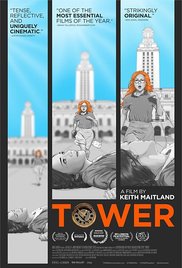
TOWER is an animated mixed archive footage reaction of one of the most chilling incidents in American history. On August 1st, 1966, a sniper rode the elevator to the top floor of the University of Texas Tower and opened fire, holding the campus hostage for 96 minutes. When the gunshots were finally silenced, the toll included 16 dead, three dozen wounded, and a shaken nation left trying to understand.

This is the first of America’s mass shootings. The film explores this untold history through the first-person stories of seven specific characters: two students who were shot that day, the two police officers who ended the siege, two civilians who inserted themselves into the story to provide aid to victims and police, and the radio reporter who broadcast live from the scene for more than an hour and a half, and whose broadcast was picked up nationally, bringing the events in Austin to listeners around the nation.

Once the film goes into first person, the audience is immediately immersed in the current situation looking at it from the person’s objective. Being animated, distractions are a minimum. The exact reactions and emotions, as realized by the animator can be most effectively conveyed. The identity of the shooter is clearly omitted, thus creating a more mysterious, chilling feel.

The film’s listenable soundtrack of hit tunes of the 60’s most effectively creates the feel of the 1966 film’s setting, aided by the arrival footage of vintage cars and people walking in 60’s garb. Maitland also uses the classic “Claire de Lune” (clearly his favourite music piece) during the siege and closing credits of the film,

One can also consider the film to be short stories of the different victims. The first victim is 18-year old Claire Wilson. She is first shot and she is revisited as she recounts her story – a sad one. Claire says: “All of a sudden I felt like I’d stepped on a live wire, like I’d been electrocuted.” Her boyfriend Tom reaches down to help her and he is struck down as well. For over an hour of the siege, Claire remains exposed to the shooter, conscious and steadily losing blood. Claire knows that her boyfriend has been killed and that she’s lost her baby too. “After some time, a really lovely young woman with red hair ran up to me and said, “Please, let me help you.” I told her to get down so she wouldn’t attract attention, and she lay down next to me. She stayed with me for at least an hour. It was a beautiful, selfless act.”

Some stories are more effective than others. Claire’s is the most touching. Halfway through Maitalnd’s film, a shiver would surely be sent down ones spin as one admires the heroes who sacrifice being shot while aiding the wounded victims. The film is also intersperses with the talking heads of actors of the real heroes, now aged since 1966, but their presence makes a marked impact to the story.

Maitland’s approach to documenting the tower shooting incident is no doubt novel and one may question why not enactment by real actors. A valid question, no doubt but this approach has produced a successful account, just as a live re-enactment might have achieved the same purpose. It helps tremendously that Maitland has worked close to the material, obtaining all the facts – from interviews of the surviving victims and then animating the action.

Trailer: https://vimeo.com/153727380


SUBMIT your TV PILOT or TV SPEC Script
Voted #1 TV Contest in North America.
FILM CONTESTSUBMIT your SHORT Film
Get it showcased at the FEEDBACK Festival
writing CONTEST1st CHAPTER or FULL NOVEL CONTEST
Get full feedback! Winners get their novel made into a video!
SCREENPLAY CONTESTSUBMIT your FEATURE Script
FULL FEEDBACK on all entries. Get your script performed

Movie Review: WAR OF SPACE (2016)

  MOVIE POSTERWAR OF SPACE, 5min., USA/Kenya, Documentary
Directed by Matt Mays

As human and elephant populations increase across the Serengeti ecosystem, the Maasai Mara region of Kenya is struggling with room for both to exist peacefully. Conflict is daily and sometimes deadly. A group of dedicated rangers is working to find a way to end the war of space.

Shown at the September 2016 DOCUMENTARY FEEDBACK Film Festival

Movie Review by Kierston Drier

A stunningly beautiful short, War on Space, by Matt Mays, tells the story of on-going conflict between the human and elephant populations of the Maasai Mara region of Kenya. Poignant musical composure and spectular footage of the Kenyan Landscape are not the only strengths of this piece; this film is an investigation of human ingenuity and hope.

Human-elephant relations have been a long troubling issue in the Maasai Mara region- with human growth crowding out the roaming lands for herding elephants. Elephants attacks have claimed human lives and the ever shrinking room for elephant movement have lead to attacks on elephants as well. Yet War on Space investigates the solutions to these problems with human advancements in technology. In an effort to find harmony with humans and wildlife, new legions of troops now assist in peacefully navigating elephants away from human habitats via GPS devices and drone usage, sparing countless elephants lives. To help instruct the future generations, local schools teach the importance of protecting the elephant population.

This film shows a beautiful type of hope. A future where humans live in peace with the world we are a part of. It shows the transformative power of education and technology. It brings light to an issue many North American audiences have never known about. It is gorgeously produced and exceptionally well executed as a piece of cinema. Most importantly for our cinema lovers- it it successful in it’s attempts to create a visually beautiful spectacle while also weaving a compelling and meaningful message. A wonderful documentary about humans and our impact on this amazing, awe-inspiring world.

Watch the Audience FEEDBACK Video of the short film:

Movie Review: THE CHAMPION (2016)

  MOVIE POSTERTHE CHAMPION, 17min, USA, Documentary
Directed by Patrick McGowan

A former Iraqi boxing champion, Estaifan Shilaita overcomes tremendous hardships as he builds a special bond with his family and taxi cab customers in Chicago.

Shown at the September 2016 DOCUMENTARY FEEDBACK Film Festival

Movie Review by Kierston Drier

The Champion, a powerful short film hailing from the USA, directed by Patrick McGowan, is the story of Estaifan Shilaita, former Iraqi boxing champion turned taxi driver. The story follows Estaifan in his pursuit for a better life for himself in Chicago. Full of stunning re-enactments, brilliant cinematography, powerful composition and above all, breath taking humanity in its’, The Champion is all at once heartbreaking and humorous, compelling and inspiring.

Estaifan may seem on the outside like any other metropolitan taxi driver- friendly, smiling, overtly chatty. But under his ever-calm and ever beaming face is a story of rich history and deep roots. Achieving great fame in his youth in Iraq as a light weight boxer, Estaifan fled to find a better life for himself. He fell in love in Greece and took his new wife to Chicago under refugee status, where they began raising their four children under the American dream.

This film boasts excellent production value, rivaling any highly acclaimed feature. But it is not the visual beauty of the film that makes it sing- it is the honesty, the heart and humanity of Estaifan’s life. His resilience and happiness in the face of conflict is nothing less than a testament to human triumph. As a film, The Champion, glosses over the political and economic tensions that propelled our hero’s to flee Iraq. It glosses over the struggles a young refugee family must have faced in a new country. The film only briefly touches on the pain of loss that Estaifan and his wife feel, at having spent nearly forty years in the USA without ever being able to access their family in Iraq. It glosses over all of these things so that is can focus on joy. For Estaifan’s life is so utterly full of his own encapsulating joy it is tangible. The audience cannot help but be uplifted by it. And it makes this film spectacular.

Watch the Audience FEEDBACK Video of the short film:

Film Review: MISS HOKUSAI (Japan 2014-2015) ***
miss_hokusai_poster.jpgMISS HOKUSAI (Japan 2014-2015) ***

Directed by Keiichi Hara

Starring: Yutaka Matsushige, Anne Watanabe, Erica Lindbeck

Review by Gilbert Seah

The Japanese animated feature MISS HOKUSAI is set in 1814 in Edo,where peasants, samurai, merchants, nobles, artists, and courtesans live together in apparent harmony. It is also just the time that marked the end of the samurai era when Edo was renamed Tokyo – an important period for the Japanese, that unfolds here for the education of the westerners.
The artist is the film’s subject.

Accomplished artist Tetsuzo spends his days creating astounding works, from a giant Dharma portrayed on a 180-metre-wide sheet of paper to a pair of sparrows painted on a single grain of rice. Short-tempered and with no interest for saké or money, he (Hokusai) would charge a fortune for any job he is unwilling to undertake. But it is his daughter, O-Ei who is sane and completes the work her father leaves unfinished.

As all of Edo flocks to see the work of the revered painter Hokusai, the artist’s daughter O-Ei toils inside his studio, creating masterful portraits and erotic sketches that — sold under her father’s name — are coveted by aristocrats and journeyman printmakers alike. Shy and reserved in public, in the studio O-Ei is brash and uninhibited, but despite this fiercely independent spirit she struggles under the domineering influence of her father and is ridiculed for lacking the life experience that she is attempting to portray in her art. This film is her story (the young woman behind one of history’s most famous artists) and it shows her coming-of-age in a precarious and difficult situation.

Based on the manga Sarusuberi by Hinako Sugiura, MISS HOKUSAI is carefully crafted animation, similar to the type Ghibli Studio produces. The animation is impressive especially during the fire and water (very difficult to animate) scenes but the film lacks dramatic drive. The characters often appear just coasting around, like the objects of a painting. The fact that a lot of mythical elements are introduced does not help the film’s credibility either.

The film was first screened during the Real Asian film festival in Toronto in 2015 and is finally getting a screening run at the TIFF Bell Lighbox. There are two versions – I saw it in the original subtitled version. The other is the inferior dubbed version.

Trailer: https://www.youtube.com/watch?v=3nj1rwo_d-s

SUBMIT your TV PILOT or TV SPEC Script
Voted #1 TV Contest in North America.
FILM CONTESTSUBMIT your SHORT Film
Get it showcased at the FEEDBACK Festival
writing CONTEST1st CHAPTER or FULL NOVEL CONTEST
Get full feedback! Winners get their novel made into a video!
SCREENPLAY CONTESTSUBMIT your FEATURE Script
FULL FEEDBACK on all entries. Get your script performed

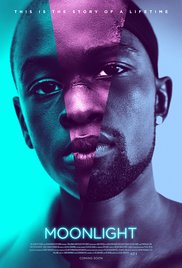
Film Review: MOONLIGHT (USA 2016) ***

moonlight_poster.jpg


MOONLIGHT (USA 2016) ***
Directed by Barry Jenkins

Starring: Mahershala Ali, Shariff Earp, Duan’Sandy’ Sanderson

Review by Gilbert Seah

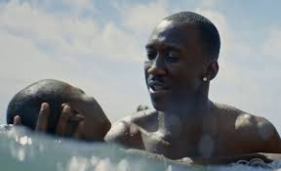
MOONLIGHT is one of the most talked about African American films screened at the Toronto International Film Festival. It has garnered rave reviews based on its raw content and originality. And indeed, this film deserves all accolades.

MOONLIGHT is Barry Jenkins’ second feature after MEDICINE FOR MELANCHOLY.

It is s very strange feature, low-budget, very originally told (in three parts; each part titled by each of the three names the protagonist is given) of the life of Little or Chiron or Black from childhood to adulthood. His real name is Chiron, but is called Little in school due to his small stature. Little is ‘adopted’ by a local thug and his girlfriend when he is not living with his drug addicted mother.

Bullied and beaten up frequently because of his small stature and curly hair (he looks very much like a girl), Little cannot take it anymore and is arrested after he finally breaks a chair over his bully right in the middle of a class. The scene deserves quiet cheers.

Little grows up, surprisingly into a big muscled guy and meets back with his school buddy who gave him the nickname of Black. He obviously had the thug of his childhood as his mentor. Kevin and Black have a gay sex encounter which Black can never forget.

Jenkins’ film feels like it is all over the place though it is obvious he is leading his audience somewhere. One good thing about Jenkins film is that you never know where he is leading the audience. Though slow moving at times, Jenkins film is never boring and a compelling watch for start to end when the audience finally figures out the purpose of MOONLIGHT.

Trailer: https://www.youtube.com/watch?v=5fYFIj16YC0

Free logline submissions. The Writing Festival network averages over 95,000 unique visitors a day.

SUBMIT your TV PILOT or TV SPEC Script
Voted #1 TV Contest in North America.
FILM CONTESTSUBMIT your SHORT Film
Get it showcased at the FEEDBACK Festival
writing CONTEST1st CHAPTER or FULL NOVEL CONTEST
Get full feedback! Winners get their novel made into a video!
SCREENPLAY CONTESTSUBMIT your FEATURE Script
FULL FEEDBACK on all entries. Get your script performed

Film Review: THE ACCOUNTANT (USA 2016) ***

the_accountant_poster.jpgTHE ACCOUNTANT (USA 2016) ***
Directed by Gavin O’Connor

Starring: Ben Affleck, Anna Kendrick, J.K. Simmons, Jon Bernthal, John Lithgow, Jeffrey Tambor

Review by Gilbert Seah

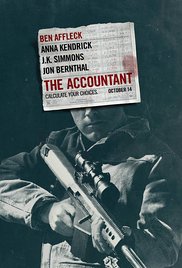
Directed by Gavin O’Connor (WARRIOR, PRIDE AND GLORY) and written by Bill Dubuque, THE ACCOUNTANT is a action thriller that strives to be stylishly different. For one, it centres on an accountant, one that cooks the books for dangerous drug cartel members. He is hunted down by Revenue Federal agents. Is THE ACCOUNTANT a good or bad guy? How can he be made into an exciting action hero? How can he be made into a more than special human being? All these factors are infused into Dubuque’s script, which often appears to be trying too hard, resulting in a film more confusing and complex than need be.

As the film stars Ben Affleck who plays a human fighting machine, the film feels like a BATMAN with numbers.

Christian Wolff (Ben Affleck) is a mathematics savant (autistic) with more affinity for numbers than people. His childhood is traced, in flashback till the present. As a child, Christian’s military father believes that difference is perceived as a threat to most people. To protect his son, he forces Christian to better himself in martial-arts.

Grown up, Christian is a top-notch accountant who uses a small-town CPA office in a strip-mall as a cover. He makes his living as a forensic accountant for dangerous criminal organizations. With a Treasury Revenue Agent, Ray King (Oscar winner J.K. Simmons from WHIPLASH ) hot on his heels, Christian takes on a state-of-the-art robotics company as a legitimate client. As Wolff gets closer to the truth about a discrepancy that involves millions of dollars, the body count starts to rise. With the help of a new Revenue recruit, Median (Cynthia Addai-Robinson) who Ray blackmails into helping, Wolff’s identity is revealed. The showdown finally takes place in the mansion of the company owner (John Lithgow) who turns out to be the villain of the piece.

Besides Dubuque’s clumsy script, the film contains too many unintentional funny moments. The result is the promo audience laughing at too many parts during the climax. Median’s character could also be eliminated from the script for a leaner film, without much effect.
Affleck delivers an almost perfect low-key performance as the stoic accountant, whose body movements are basically stationary unless absolutely necessary as in the action scenes. Of the remainder of the cast, Jeffrey Tambor shines as Wolff’s cellmate, who was also involved with the drug cartels. Thankfully, the audience is spared the torture scenes, though a few hints (like the sight of a blow torch and damaged face) are enough to make anyone shudder.

Near the end, the film suddenly decides that it has to provide some message on autism. This results in one of the film’s most awkward segments with the music tuned to ‘melancholy’. For a film supposedly positive towards autism, the film contains some really disturbing scenes involving strobe lights and loud sounds.

Despite all its faults, THE ACCOUNTANT is a well-mounted film, with very exciting actions segments aided by crisp editing that conveys the accountant’s martial-arts training. THE ACCOUNTANT at least, attempts to put in some originality into the well-worn action genre.

Trailer: https://www.youtube.com/watch?v=DBfsgcswlYQ


SUBMIT your TV PILOT or TV SPEC Script
Voted #1 TV Contest in North America.
FILM CONTESTSUBMIT your SHORT Film
Get it showcased at the FEEDBACK Festival
writing CONTEST1st CHAPTER or FULL NOVEL CONTEST
Get full feedback! Winners get their novel made into a video!
SCREENPLAY CONTESTSUBMIT your FEATURE Script
FULL FEEDBACK on all entries. Get your script performed

Film Review: ART BASTARD (2016)

art_bastard_poster.jpgART BASTARD (USA 2015) ***
Directed by Victor Kanefsky

Starring: Robert Cenedella

Review by Gilbert Seah

“Art from day one for me was the special part of life – the part of life that was above the gutter.” – Robert Cenedella. In a madcap art world obsessed with money, fame and hype, how does an artist driven by justice, defiance and his own singular style thrive? Cenedella was the contemporary of Andy Warhol, but in reality was anti-Warhol.

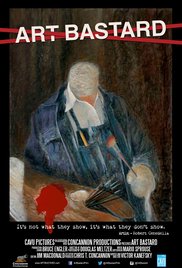
When ART BASTARD begins, the camera takes the audience through a tour around the NYC Transit where a few of the subject’s paintings are seen. The artist, obviously the ART BASTARD referred to in the film title is a little known artist known as Bob Cenedella.

So who is this Cenedella? Fortunately Cenedella is still alive. Director Kanefsky allows Cenedella maximum screen time to introduce both himself and his works. His family members are interviewed too along with art experts in order to put Cenedella’s work into perspective.
Foremost, Cenedella’s paintings are introduced. The main characteristic of his paintings is the inclusion of many, many faces crammed into a scene. The year in which the paintings were drawn and a good detailed shot is provided.

Examples of these include:

Fun city 1979
The Fight 1964
Give to Cenedella 1977

The film contains a few diversions. One is an examination of contemporary art and what it means. Several art experts give their view in the context of Cenedella’s paintings. A discussion also follows on what art rises and what art fails. The individuals are pawns who can hardly make a difference. Cenedella also discusses family life. He is clearly upset about his father and the film contains quite a few scenes with him and his son. Cenedella claims it is not hard to become a good father.

Cenedella’s character is also revealed on screen. He is shown to be an artistic person. He loves Beethoven and made quite a bit of money in his youth selling Ludwig pins. He does not like Elvis. His joy as a teen are his weekly visits to the New York Metropolitan.

The film’s best scenes are those that show Cenedella actually painting and teaching it. “Holding a bush is one of the greatest disciplines in the world”, says Cenedella convincingly.

As a fair bit of the film’s running time is devoted to Cenedella’s family, some insight is added into his paintings. When Cenedella was young and his mother very drunk one night, she told him that his father is not his real father. He therefore felt like an outsider within his family. Similarly, he despised the art scene feeling like an outsider too and hence the film title ART BASTARD. Cenedella finally meets his biological father finding him to be a bit weird with a huge sense of humour. His painting in 1964 entitled ‘The Fight’ shows his father and stepfather battling each other in a boxing ring. Another one, called ‘The Third Movement’ one of his series of ‘orchestra paintings’ shows all the characters fighting each other. His paintings often are inherently funny, satirical and often contains a deeper meaning.

One can hardly complain about ART BASTARD as a documentary. Director educates his audience with interviews, archive footage of films and photos while explaining quite a few of the paintings. The film though serious in most parts, contains a bit of humour,primarily because Cenedella had a good sense of humour.

ART BASTARD is an interesting, entertaining enough documentary in which everything one wanted to know about the artist is dished out.

Trailer: https://www.youtube.com/watch?v=eXhy5prz83k


TV CONTESTSUBMIT your TV PILOT or TV SPEC Script
Voted #1 TV Contest in North America.
FILM CONTESTSUBMIT your SHORT Film
Get it showcased at the FEEDBACK Festival
writing CONTEST1st CHAPTER or FULL NOVEL CONTEST
Get full feedback! Winners get their novel made into a video!
SCREENPLAY CONTESTSUBMIT your FEATURE Script
FULL FEEDBACK on all entries. Get your script performed

Movie Review: LOVE HAPPY, 1949

CLICK and WATCH MOVIES ONLINE!LOVE HAPPY MOVIE POSTER
LOVE HAPPY, 1949
Movie Reviews

Directed by David Miller
Starring: The Marx Brothers, Marilyn Monroe
Review by Steve Painter

SYNOPSIS:

The Marx Brothers help young Broadway hopefuls while thwarting diamond thieves.

REVIEW:

The final Marx Brothers movie was Love Happy (1949). At least it was the final movie for the three Marx Brothers to appear together. In 1957 they all appeared in separate segments of The Story of Mankind. Actually, for a good part of Love Happy, only Harpo and Chico appear. Groucho is nowhere to be seen, which really takes away from this movie.

In order to pay off more of Chico’s gambling debts the Marx Brothers were forced to make this last movie. For the rest of his life, Chico’s gambling debts would have to be paid off by either Groucho or Harpo or Zeppo, who became rich as an agent after leaving the Marx Brothers act. Although money was the main reason why the Marx Brothers decided to make another movie, getting funding was not so easy. In fact, there was so much trouble getting funding that the end had to be changed to accommodate some product placement advertising from the firms that were paying for the movie.

If you are a fan of Harpo Marx then this movie should appeal greatly to you. Harpo wrote the story and is the main character. In a familiar routine, Harpo begins the movie by stealing something. This time it is food. He ends up stealing a can of sardines that contains priceless diamonds. Being the great guy Harpo is; he was not stealing the food for himself, but for a group of struggling theatre performers.

The theatre company is in such dire straits that the show’s backer is threatening to close the group’s play before it can be taken to the stage. He wants to reposes some of the scenery used for the play, but is foiled in his attempt by Faustino the Great, a mind reader who is looking for a job. Of course Faustino is played by Chico and because Chico is able to foil the plot, the grateful director allows him to remain as part of the crew.

With Harpo stealing the diamonds a $1,000 reward is put out for his capture. Harpo is captured and taken to the apartment where they bad guys attempt to interrogate him. Although it seems like an obvious comedic situation to use with Harpo, this is the first time that he is put in a situation where people try and make him talk. Typically it is Chico who tries to get Harpo to talk, and he knows that Harpo doesn’t talk, but here the bad guys have no idea Harpo can’t talk so there is some good comedy in them trying to use interrogation techniques while trying to make Harpo speak. Of course they can’t. They get too tired and when they leave, Harpo telephones Chico, who is able to understand him when he communicates through a bike horn.

Apparently the can of sardines that contain the diamonds was left outside of the theatre for a cat to eat. Harpo finds the sardine can when he arrives back at the theatre. Amazed at what he has found, Harpo pockets the diamonds.

The bad guys have tried to get the diamonds back themselves, but have failed. So they decide to enlist the help of a private detective, this is where we are formally introduced to Groucho. The movie actually starts with Groucho saying that he has been trying to find these diamonds for many years and the story we are about to see is how he was able to finally get them. This is all very nice, but the scene in which the bad guys threaten to kill Groucho in an hour if he does not get the diamonds back before them is notable for the first appearance of a future screen legend – Marilyn Monroe.

In a walk-on role, Marilyn Monroe was cast as a client that comes to see Groucho’s character just after the bad guys arrive. Groucho is so thankful that someone has opened his door to let him out that he runs and leaves, but when he sees that Marilyn Monroe is the girl who opens the door he immediately comes back in where the bad guys are and tries to seduce the young screen legend.

The introduction of Marilyn Monroe and Harpo’s interrogation scenes are basically all that are worth mentioning in the movie. The rest is Groucho and the bad guys chasing Harpo around the roof tops of New York while billboards and lighted advertisements, put up by the movie’s financers, clutter the screen.

Today, Love Happy is billed as a teaming of Marilyn Monroe and the Marx Brothers in order to get people to watch the movie. Don’t be fooled though. Neither one is at the top of their powers. The Marx Brothers were doing this for money and Marilyn Monroe did not know how to use what she was given yet. Perhaps in another time or place this team would have worked out well. The possibilities sure could have been endless, but so could’ve the teaming up of Lucille Ball with the Marx Brothers in Room Service and that was also a dud.

The bottom line is, don’t watch Love Happy unless you are a huge fan of Harpo.

TV CONTESTSUBMIT your TV PILOT or TV SPEC Script
Voted #1 TV Contest in North America.
FILM CONTESTSUBMIT your SHORT Film
Get it showcased at the FEEDBACK Festival
writing CONTEST1st CHAPTER or FULL NOVEL CONTEST
Get full feedback! Winners get their novel made into a video!
SCREENPLAY CONTESTSUBMIT your FEATURE Script
FULL FEEDBACK on all entries. Get your script performed

Movie Review: A NIGHT IN CASABLANCA, 1946

CLICK and WATCH MOVIES ONLINE!A NIGHT IN CASABLANCA MOVIE POSTER
A NIGHT IN CASABLANCA
Movie Reviews

Directed by Archie Mayo
Starring: The Marx Brothers
Review by Steve Painter

SYNOPSIS:

The Marx Brothers are employed at a hotel in postwar Casablanca, where a ring of Nazis is trying to recover a cache of stolen treasure.

REVIEW:

Chico Marx was known for two things off-screen. First, he was known as a ladies man. His name was originally Chicko because he liked the chicks, but a promoter left out the k one night and the name became Chico. Chico was also an avid gambler. Sometimes this gambling addiction helped the Marx Brothers. He played cards with Irving Thalberg all the time. This friendship led to the Marx Brothers leaving Paramount for MGM and fame and fortune there under Thalberg. Then there was the bad side of Chico’s gambling – the debt. Chico was so far in debt by 1942 that the Marx Brothers had to come out of retirement to make a movie – A Night in Casablanca (1942).

Groucho plays the manager of a hotel in Casablanca, which is a similar occupation to being a saloon keeper. Warner Brothers reportedly investigated how far the Marx Brothers were going to go in the parody of their hit Casablanca, released in 1942. Legend has it that Warner Brothers would not let the Marx Brothers use the word Casablanca in their movie title, as it might confuse people with the Humphrey Bogart and Ingrid Bergman movie. Groucho supposedly responded that his group and several others before had used the word Brothers in their title before Warner Brothers came out. Whatever the truth to any of this, nothing stopped A Night in Casablanca from being made.The story takes place after World War II. Just to stick it to Warner Brothers, two previous hotel managers have been murdered before Groucho takes over. The reference is to the two German couriers who were murdered at the beginning of Casablanca. Just like in Warners’ picture this one has a Nazi as the bad guy. This time the Nazi, played by Marx veteran villain Sig Ruman, wants to take over the hotel so he can find some objects that the Nazis had stolen and hidden there.

Harpo has some nice bits in the movie. He plays the Nazi’s valet and accidently vacuums the man’s toupee so he cannot go out in public for fear of people noticing the scar on his head. Harpo probably has the best gag of the movie as well. He is introduced leaning against a building. A cop walks by and asks Harpo what he’s doing. Of course when he receives no reply he is forced to ask if Harpo thinks he is holding up the building. Harpo shakes his head yes, which causes the cop to come over and grab him for being a wise guy. As soon as Harpo leaves the building, it collapses in on itself.

Chico plays the owner of a cab company, which is kind of ironic considering his financial situation and the fact that most of the characters he played were down on their luck. But Chico isn’t exactly breaking the bank with all the money he is collecting; most people just don’t want to ride around on camels.There is an interesting dinner table scene in which Chico and Harpo try to get some money for their friend Pierre, who happens to know that there is some Nazi hidden treasure in the hotel as he was forced by the Nazis to fly items there. Chico and Harpo end up taking reservations for an already fully booked dining room. They are able to find tables and chairs and then move them onto the dance floor that is already crowded with people. They charge those who wish to get in a ton of money and pocket it and then sit them in the middle of the dance floor.

Other than this scene and Harpo’s introduction there really is nothing else worth going into detail about. Harpo has to tell Chico about a plot to kill Groucho through using charades, just like he did in A Day at the Races. There is also a scene at the end where the Brothers are unpacking the Nazi’s luggage and putting it into his closet as he makes a decision to leave Casablanca with the stolen merchandise. Too bad for him though, he accidently packs the Marx Brothers in his luggage trunks. The three are able to ambush him on an airport runway, inside his getaway plane. The only bad thing is no one knows how to fly a plane and Harpo has to take over. The plane crashes into the police station where the Brothers are able to expose the Nazi as a thief.

And with that the Marx Brothers should have gone into the sunset. A Night in Casablanca is not a great movie, but it is better than some of the later efforts by the Marx Brothers. It would have been a serviceable conclusion to a career that spanned more than four decades. But it was not the final movie made by the Marx Brothers. Chico’s gambling debts would cause one more, really unwatchable movie to be made before the three Marx Brothers called it a career together.

TV CONTESTSUBMIT your TV PILOT or TV SPEC Script
Voted #1 TV Contest in North America.
FILM CONTESTSUBMIT your SHORT Film
Get it showcased at the FEEDBACK Festival
writing CONTEST1st CHAPTER or FULL NOVEL CONTEST
Get full feedback! Winners get their novel made into a video!
SCREENPLAY CONTESTSUBMIT your FEATURE Script
FULL FEEDBACK on all entries. Get your script performed

Movie Review: THE BIG STORE, 1941

CLICK and WATCH MOVIES ONLINE!THE BIG STORE MOVIE POSTER
THE BIG STORE, 1941
Movie Reviews

Directed by Charles Reisner
Starring: The Marx Brothers
Review by Steve Painter

SYNOPSIS:

A detective is hired to protect the life of a singer, who has recently inherited a department store, from the store’s crooked manager.

REVIEW:

By 1941 the Marx Brothers had run their course. Their best work was behind them. Chico, the oldest, was 54 years old by that time. Groucho, the youngest of the brothers who were still performing, was 51 years old. After The Big Store (1941) was completed, the Marx Brothers decided it was time to retire. Their MGM contract was up and their many years of performing on the stage and screen had left them tired. Luckily this was not their last movie, because they deserved to go out better than what The Big Store turned out to be.

If a name is any judge of a movie then The Big Store certainly does not seem too original. It is not. There is only one good scene in the whole movie, and it is mostly funny today because of a similar line that Groucho would utter on his TV show.

Anyways, the story is about an heir who wants to sell his share in a department store so he can donate the money to a music conservatory. You see this man, Tommy Rogers, prefers to be a singer than the owner of his father’s store. The store’s manager, the evil Mr. Grover, has been stealing from Tommy’s father for a long time and does not want to see someone else take over the store. Tommy has a deal in place to sell the store, but something happens to him.

Grover hires a man to beat Tommy over the head when he enters an elevator. This makes Tommy’s aunt, Martha, who owns the other half of the store, a little afraid. Margaret Dumont makes her final appearance in a Marx Brothers movie here as Martha. Martha is engaged to Grover, so he has no worries about where her loyalties will lie if the police get involved once the store is sold and people find out he has been stealing.

Things change though when Martha hires a private detective, played by Groucho. Groucho, as he always does, tries to marry Margaret Dumont’s character. So now Grover has two people he has to try and get rid of. Chico is a friend of Tommy’s, which is how he fits into this. Ironically Chico’s character happens to be the brother of Harpo’s character, Wacky. Wacky is Groucho’s assistant.

We are introduced to Groucho and Harpo at the same time in this movie. It is rare that those two ever got a scene together. Unfortunately, this is not quite what it should have been. It is widely thought that Groucho and Harpo were the two funniest of the brothers. If the two funniest Marx Brothers are alone in a scene together then it should be dynamite, right? Not here. Instead, Harpo struggles to make coffee as Groucho talks on the phone about accepting the job to be Tommy’s bodyguard.

From here the story doesn’t really matter. It is a Marx Brothers movie so we know that in the end everything will turn out as they should. Grover is going to jail and Tommy will be able to sell his store and donate the money to all the needy kids at the conservatory.

The writers do deserve some credit with the setting. Letting the Marx Brothers loose in a big department store certainly has the potential for great comedy. It just is not present enough however. The best scene occurs when Groucho and his brothers try to catch some sleep on beds that are for sell.

A woman comes in and asks Groucho, who is lying on the bed, how much the bed costs. Groucho replies, “$8,000.” The woman says this can’t be, she can go and buy the same bed at another store for $25. Groucho says, “Yes, but not one with me in it.” And with that, we have the beginning of another classic Marx scene.

A man and wife with 12 children walk into the room. Groucho asks the man if he has any other hobbies. This line is great, but it has taken on even more meaning since Groucho’s TV show You Bet Your Life was on. Television lore says that during one episode a woman said she had 11 children. This amazed Groucho. The woman said, “I love my husband.” Groucho supposedly replied, “I love a good cigar too, but I take it out every once in a while.”

Getting back to the movie, after the scene with the beds that is compounded by customers, lost children and Chico, Harpo and Groucho causing chaos, there is s lull until the credits come up and the movie is over. The grand finale is a lengthy chase through the store that was supposed to recreate the finale in Go West, the previous Marx Brothers offering. Instead, it looks like cheap routines the Marx Brothers borrowed from Charlie Chaplin and the Keystone Cops. Or just Mack Sennett-like jokes to be more accurate.

What makes the Marx Brothers so great is their uniqueness. There never was a comedy team like them and there probably never will be. They have their own brand of comedy and when writers and studios force them into something that does not match their comedic skills the result is a disappointment. That happened in Room Service and in At the Circus and again here in The Big Store.

TV CONTESTSUBMIT your TV PILOT or TV SPEC Script
Voted #1 TV Contest in North America.
FILM CONTESTSUBMIT your SHORT Film
Get it showcased at the FEEDBACK Festival
writing CONTEST1st CHAPTER or FULL NOVEL CONTEST
Get full feedback! Winners get their novel made into a video!
SCREENPLAY CONTESTSUBMIT your FEATURE Script
FULL FEEDBACK on all entries. Get your script performed