Film Review: THE GRIZZLIES (Canada 2018) ***1/2

The Grizzlies Poster
Clip

In a small Arctic town struggling with the highest suicide rate in North America, a group of Inuit students’ lives are transformed when they are introduced to the sport of lacrosse.

The film opens with the stunning wintry landscape of the Arctic North.  A good-looking indigenous teen is seen with his dog.  He shoos the dog away and points the barrel the rifle that he is carrying at the base of his mouth.  The shots fired.  The words on the screen then informs the audience that in 2004, Nunavut has the highest suicide rate in North America.  The film itself contains three youth suicides.

Director Miranda de Pencier proves in this beginning sequence she knows how to engage her audience.  The result is an engaging film based on a true story that serves as a feel-good night out at the movies.

THE GRIZZLIES (the name of the school’s lacrosse team) is an inspirational drama about a group of Inuit students in the Arctic where, in 2004, suicide rates were the highest in North America.  The main protagonist is rookie teacher Russ Sheppard (Ben Schnetzer).  He is shown naive as hell, arriving in the small Nunavut town of Kugluktuk, totally culturally unaware of the Inuit ways.  The students are also suspicious of him.  Russ does not give up.  But, upon embracing the sport of lacrosse, the teens evoke change in the teacher, themselves and the community.  The film feels like  TO SIR WITH LOVE with the lacrosse sport set in the Arctic instead of the United Kingdom.

The story includes problems faced in general by indigenous youth.  The drinking, drug taking and physical abuse are all topics that are included in the story.

  The film is true to its indigenous roots.  Over 600 kids from the Arctic auditioned for roles, including two 2019 CSA nominees (lead actor Paul Nutarariaq and supporting actress Anna Lambe) and up-and-comer Emerald MacDonald, all of whom play students.  The actors have experienced many of the same challenges as their characters, bringing a level of authenticity and sensitivity to the screen.   A good point to admire is the fact that one third of the film’s crew is Inuit. 

Tantoo Cardinal plays Janice the beleaguered school principal, with all the malice she can hold.  “The students might not show up in class as they might have other priorities.  We try to accommodate them as far as we can”  “I will whip them into shape,” says the new teacher to which her reply is: “You don’t have to talk up to me, just do your job.  The other local non actors also do a fine job especially the young actress playing a student, Miranda.

The film features original music by Indigenous hip hop artists, including 2019 CSA winners Dan General (DJ Shub), Thomas Lambe (666God), Adam Tanuyak (Hyper-T) for their song “Trials”.

Though critics might sneer at the film trying so hard at pushing the right buttons to be a feel-good movie, THE GRIZZLIES works well as a feel good film.  Unsurprisingly, it picked up audience awards at Calgary 2018 and Palm Springs 2019.  De Pencier also won the 2018 DGC award for directorial achievement of a feature.

 Trailer: https://www.youtube.com/watch?v=wmBgjy8H_ew

Film Review: RAFIKI (Kenya 2018) ***

Rafiki Poster
Trailer

“Good Kenyan girls become good Kenyan wives,” but Kena and Ziki long for something more. When love blossoms between them, the two girls will be forced to choose between happiness and safety.

Director:

Wanuri Kahiu

From the opening shots and song played during the opening credits, the audience can tell what will be following will be a very rhythmic film.  The spritely song and the colourful images (drops of water, skateboarding in the street, the animated colours) are all flashing as if in synchronization to the beats of the soundtrack.

RAFIKI offers lessons to learn about Kenya.  Not many North Americans are familiar with the customs, food, language, clothes, music, dance and life in general in Kenya.  On display is a totally foreign way of life though certain similarities like jealousies, romance and enmities exist.

Kena (Samantha Mugatsia) helps her father John Mwaura (Jimmy Garthu) run a small convenience store in Nairobi as he campaigns for a local election.  Kena lives with her mother, who is not on speaking terms with John.  Kena starts flirting with Ziki (Sheila Munyiva), a neighbourhood girl with colourful braided hair, who also happens to be the daughter of Peter Okemi (Dennis Musyoka), John’s political rival.  Kena and Ziki have a number of romantic dates, and quickly become very close, but there are tensions about displaying their affection in public because homosexuality is illegal in Kenya. 

This Kenyan film also also celebrates feminism.  The two girls make a pact never to be like the typical Kenyan women – a housewife bearing kids.

The film tackles quite the few issues including coming-out, same sex relationship, romance, and family drama.

There is one scene where Kena’s father tells her that she is going to lose his political seat because she is dating the oppositions’s daughter.  The argument does not make sense as the same could be said for the opposition having the same problems with his daughter.

Homosexuality is still not accepted in Kenya as is clear from the film.  The girls get beaten up by the villagers when they are discovered.  Kena’s mother believes that Kena is possessed by demons and she should be cured.  The father is a little more sympathetic.  There is also a male gay character in the film – and he is often made fun of and degraded in public by everyone.

The gay romance works.  Director Kahiu has got the audience connected with the plight of the two girls.  There are no same sex sex scenes except for kissing, which is just as well as graphic nude scenes would not have done anything different for the story.

The tacked on Hollywood happy ending goes against the flow of the otherwise sombre film.  But audiences should not complain as everyone wishes the best for these two girls for what they have endured.

What stands out and is most memorable about RAKIFI is the film’s rhythm that exists from the opening credits right to the film’s end, creating a smooth flow seldom noticed in other features.  

RAFIKI which premiered this year in the Un Certain Regard section in Cannes (the first film from Kenya to be screened at Cannes) will be playing at the TIFF Bell Lightbox for a special special engagement. Without the Bell Lightbox, small foreign films will never get a chance for distribution.

Trailer: https://www.youtube.com/watch?v=7M_-ucSaFpU

Film Review: GIRLS OF THE SUN (Les Filled du Soleil) (France 2018)

Girls of the Sun Poster
Trailer

A Kurdish female battalion prepares to take back their town from extremists.

Director:

Eva Husson

Writers:

Jacques Akchoti (collaboration), Eva Husson (screenplay)

GIRLS OF THE SUN is director Eva Husson’s (BANG BANG A MODERN LOVE STORY) second feature, inspired by an actual Yazidi female combat battalion that took weapons in a fight against ISIS.  

The story follows ]an impassioned war correspondent, Mathilde (Emmanuelle Bercot), into the Daesh battleground of northwestern Iraqi Kurdistan, where she is embedded with a unit of female peshmerga fighters.  Led by Bahar (Golshifteh Farahani), the unit is made up of women formerly held captive — many as sex slaves (which the film emphasizes a few times)— by Daesh following the massacre of their husbands and the kidnapping of their children. Seamlessly weaving between the harrowing pasts that brought them together and their perilous present, Husson highlights the shared suffering that strengthens their bond and their will to fight to get their village, and their families, back.

GIRLS OF THE SUN is too obvious in its attempt to propagate the importance of feminine issues.  The theme of a woman reporter aided by women fighters escaping the brutal ISIS fighters should be enough of a theme to state that women are just as important as men and can do their job just as well if not better.has a child.  The child has to be a daughter.  When a General insists that enough men have been lost in the war, the female leader says corrects him to say that women have also lost their lives.  All them men are shown as either bumbling idiots, sex abusers and ugly brutes.  The females, however, are sympathetic and most of them are really good-looking.  It is all too easy to make the enemy so vulnerable and the women too strong.  The women also break out into song of Women, Life and Liberty. 

The French reporter can speak Kurdish.  The Kurdish leader can speak French.  Yet another case of making the story too convenient fo its own good. 

The fact that French reporter could have retuned home but instead stayed behind makes no sense, especially since she has a daughter back home. She ha already lost an eye (for audience sympathy) due to a war injury.  Has that not taught he a lesson yet?  She an even joke that losing one eye makes it easier to sleep and she volunteers for guard duty.  Really?

One can only feel sorry that this well intentioned female film with a solid plot idea has not achieved its goal.  To Husson’s credit, she had done enormous research for her film.  She  the encompassed work of filmmaker and journalist Xavier Muntz, who she met in October 2015 while he was documenting the Kurdish resistance to the jihadi insurgency.  Husson ultimately conducted roughly thirty hours of interviews with Muntz as part of her research to make the film. Muntz has a cameo playing himself in the movie.  I hate  to say this, but perhaps a male director would have done a better unbiased job.  

Trailer: https://www.youtube.com/watch?v=FKxCXMIG3Xg

Film Review: HER SMELL (USA 2018) ***

Her Smell Poster
Trailer

A self-destructive punk rocker struggles with sobriety while trying to recapture the creative inspiration that led her band to success.

Director:

Alex Ross Perry

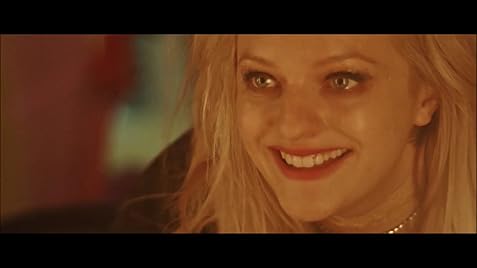
Directed by Alex Ross Perry, who also produced the film with its star Elisabeth Moss, HER SMELL the film could also be re-titled HER STINK as this is a warts and all account (mainly warts, actually) of the lead singer, Beck (played by Moss) of a fictitious female punk group called ‘Something She’ – whatever the name means.  HER SMELL is the name of the club Something She is performing during the film’s opening act.

The members of ‘Something New” are Beck herself, and two others, Marielle (Agyness Deyn) and Ali (Gayle Rankin), who Beck constantly abuses and bullies until they finally freak out and give up on her.  Later, they sign of another 3-girl punk rock band.

If Beck does even show up for her band’s show, she will abuse verbally and occasionally physically all those around-her.  These also include her record label owner, Howard (Eric Stolz), her young daughter, a  toddler who she screams she is playing rocket with, tossing her into the air and at one point even falling to the ground and almost dropping her.  

Her husband or ex-husband, Danny (Dan Stevens) shows up with the daughter but clearly there is no chance of a re-conciliation due to Beck’s awful behaviour.  

Her band members are no angels either – snorting coke or screaming foul language.

The punk songs heard on screen are not half bad, and are originally written.

The film runs long at over 120 minutes, and director Perry seems to have given his star Moss Carte Blanche to do whatever she wants to do.  Moss delivers an uninhibited performance if it not electrifying is definitely unforgettable.  It is an Oscar worthy performance, though one would think the members of the Academy would want to give the award for a role so demented.  Moss is brave enough to show her ugly side.  Moss can be beautiful as at the end of the film or just plain ugly when she is nasty.  The camera reveals Moss ugly side – her sweaty palid skin full of zits and pimples.

The film’s plot is simple.  It shows the self destructiveness of Beck in Something She.  She finally gets the act together and achieves redemption which is largely due to the love of her daughter.  But the film has one main glaring flaw – the turning point.  For someone to make such a radical change from evil to super good, there must be a drastic event to cause the one hundred eighty degree change in behaviour.  This is missing.  One can also not understand the reason Beck’s boyfriend or mother (Virginia Madsen) continues to stay at her.

This is not the first movie about a self-destructive recording star – Bradley Cooper’s A STAR IS BORN, BOHEMIAN RHAPSODY and VOX LUX with Natalie Portman portraying an almost identical character being recent examples.  The question is whether anyone would want to pay good money to watch another caustic journey of a self-destructive female punk.  But I must admit that I was moved.

Trailer: https://www.imdb.com/title/tt7942742/videoplayer/vi1934735897?ref_=tt_ov_vi

Film Review: HELLMINGTON (Canada 2017) ***

Hellmington Poster
A detective investigates her father’s dying words; the name of a girl who has been missing for 9 years.

HELLMINGTON is a suspense thriller written and directed by Justin Hewitt-Drakulic and Alex Lee Williams.  HELLMINGTON is the name of the school where the trouble in the story begins.

The film opens wth a burning house, an image that is revisited several times in the film – likely for the reason that it is the most expensive set-piece and also for the reason that it has something important to do with the mystery shrouded in the story.  There is also an image of a little girl in a photograph.  As the film progresses, more and more incidents are built into the story.  There is a cult with the cult’s symbol (a rather silly looking asymmetric one) that keeps appearing, the disappearance of a teen girl, the various suspects, the prison guards and the main protagonist, Sam who returns to her home town to re-open old wounds.

The basic plot involves a detective, Samantha Woodhouse (Nicola Correia-Drakulicinvestigates her father’s dying words; the name of a girl who has been missing for 9 years.  Sam is called to the town and informed of the father’s death by her uncle (Micahel Ironside, the only recognizable name in the cast), who is the brother of her father, both of whom worked as prison guards.  The uncle appears to be a dirty old man from his actions, with Sam insisting she stays at a motel instead of his house.  The motel’s receptionist is hilarious, injecting thinly humour in this mostly serious film.  The girl missing has disappeared after what looks like a prom party in which the last person seen with her was her date.  Sam questions the date, who is seen suddenly running away, freaking out.  The film has many well staged build-ups.  Besides the one just mentioned, there is the one with Sam in a motel room when the occult sign suddenly appears on the wall, among others.  Suspense is enhanced by the soundtrack within with thumping (on walls) or the loud sound of the heart beating.

Apparently there is more than meets the eye, as Sam turns up somehow connected with the girl’s disappearance.

All the incidents are eventually neatly tied together in a well constructed mystery thriller that occasionally feels like a horror film.  The film is shot in North Bay, Ontario where there are plentiful shot of the wood and country.

Trailer: https://www.youtube.com/watch?v=aRY2BYysN38

Film Review: FAUSTO (Canada/Mexico 2018)

Fausto Poster
On the Oaxacan coast of Mexico, rumblings of previous times are never far from the surface. Tales of shapeshifting, telepathy and dealings with the Devil are embedded in the colonization …See full summary »

Director:

Andrea Bussmann

There are two types of filmgoers.  The minority group are the ones that are more open to different types of films that include experimental films.  A few years back I was at the Tate Modern in London with my friend, British director Simon Rumley (one of the 26 directors of THE ABC’S OF DEATH PART 2; THE LIVING AND THE DEAD and the upcoming ONCE UPON A TIME IN LONDON) and we approached an experimental film playing on exhibit.  We left after 5 minutes.  To my surprise, I thought the experimental film would at least hold the interest of a film director for at least 5 minutes.  FAUSTO belongs to the section of Wavelengths, a section at the Toronto Film Festival where one can be sure to be able to get tickets.  Films in the Wavelength section usually play to empty auditoriums.

Shot on Mexico’s Oaxacan coast, Andrea Bussmann’s (co-director of TALES OF TWO WHO DREAMT) hybrid ethnography is a direct, rigorous, and largely theoretical adaptation of Goethe’s Faust that wholeheartedly adopts that text’s anti-empiricist ideals: it is a portrait of a place and its inhabitants (deceased or otherwise) caught in limbo between what is and what was.  In hushed narration, local myths commingle with the Faust narrative, while the images, shot digitally and transferred to 16mm, open onto a pre-colonial world where land and capital were not so synonymous.

(The above paragraph is the film’s TIFF description.)

The film is basically story telling, as told by the film’s randomly chosen characters the voices imposed on images, many taken of the Oaxacan coast.  The images are impressive but by no means astounding.  Quite a few of these images are shot at night and the shadows often cloud the clarity.  A few of the stories are interesting – the hidden woods that hide the girl that escapes her marauders at the beginning of creation; the search of the missing shadow of a French journalist by questioning a blind zookeeper; the computers with the black screen in the areas of the black sand that could be due to the iron in the sand and others.  Director Gassmann makes no attempt at linking these stories nor even linking some of the images with the voiceover.  The film’s pace is incredibly slow with the running time of 70 minutes feeling like a hefty 3 hours.

FAUSTO is occasionally pretty look at though it makes little sense most of the time.  See this only if you are able to enjoy experimental films or films with little narrative.  For myself, I just have so much patience.  For critics who love this film, I dare you to recommend the film to your friends.

FAUSTO opens at the Bell Lightbox Friday April 12th.  The film’s director Andrea Bussmann will be present for an introduction and post-screening Q&A at the Friday, April 12, 6:25pm screening.

Trailer: https://www.youtube.com/watch?v=bV6rb012EGI

Hot Docs 2019 Review: INSIDE LEHMAN BROTHERS (Canada/France 2018) ***1/2

Inside Lehman Brothers Poster
Messy mortgages taken out by Lehman Brothers caused a real estate crisis in America ten years ago. This led to a global financial crisis. Ten years later, the French journalist Jennifer …See full summary »

INSIDE LEHMAN BROTHER is a documentary about finance.  Those involved in the world of stocks and finance will find this doc timely, insightful and interesting but how about the other group of people not dealing with the financial world.  

Director Deschamps, a French journalist (who co-wrote the script) attempts to bring interest to this group of people as well so that the film will have a larger target audience.  The doc begins with what appears to be an ordinary woman caught in extraordinary circumstances.  She is in a big residence in a large wooded area and says: “I would scream but no one would ever listen.”   

Deschamps clearly has got her audience’s curiosity piqued.   As mortgage brokers for Lehman’s subsidiary BNC, Linda Weekes and her Californian colleagues were at the forefront of the subprime crisis.  The whistle blower is Matthew Lee then headquartered in New York, who was the first leader to have refused to validate the accounts tainted by fraudulent transactions.  Former CEO Richard (Dick) Fuld Jr. is the chief villain on display, an an evil villain at that. 

 There are appearances of President Trump (another villain) and ex-President Obama (the hero) in the film.  If Deschamps’s aim is to infuriate the audience at the injustice, she has done a great job.  The details are explained, making up the bulk the movie.

Trailer: https://www.youtube.com/watch?v=O_2k-OXzgXY

Film Review: THE INVISIBLES (Die Unsichtbaren)(Germany 2017) ***

The Invisibles Poster
Trailer

While Joseph Goebbels infamously declared Berlin “free of Jews” in 1943, 1,700 managed to survive in the Nazi capital through the end of WWII. The Invisibles traces the stories of four young people who learned to hide in plain sight.

Director:

Claus Räfle

Writers:

Claus Räfle (screenplay), Alejandra López (screenplay)

1943.  Four Jewish youths have to hide their identities in Berlin in order to survive the Third Reich.  A true story- as the film continues to remind the audience.

Films from Germany on the injustice of the Nazis have shed new insight.  Audiences learnt that many Germans living today are unaware of the holocaust and the horror the Nazis have committed on the Jew in the concentration camps.  (Sorry, I can’t remember the title of this German movie, but the film traces the exploits of a German proving that the Holocaust exists.)  Audiences also learnt that Germans also committed horrors on their own German people as in the recent Academy Award German nominee for Best Foreign Film – Florian Henckel von Donnersmarck‘s NEVER LOOK AWAY.

While Jospeh Goebbels infamously declared Berlin “free of Jews” in 1943, some 1,700 (out of 6000, as the audience is later informed at the end credits) survived in Nazism’s capital until liberation.  Director Räfle’s gripping docudrama traces the stories of four real-life survivors who learned that sometimes the best place to hide is in plain sight.  While moving between cinemas, cafés and safe houses they dodged Gestapo and a dense network of spies and informants, knowing that certain death was just one mistake away.  Yet their prudence was at odds with their youthful inclination towards recklessness, sometimes prompting them to join the resistance, forge passports, or pose as Aryan war widows.

The four youths are Hanni (Alice Dwyr), Cioama (Max Mauff) , Eugen (Aaron Altaras) and Ruth (Ruby O. Fee).  These are four German Jews coming from different social classes as well as different neighbourhoods.  The film takes its time on each, showing their relationship and difficult separation from their parents and loved ones.  The problem with this, is that the trials each undergo are identical and it makes the narrative repetitive.

For each character, a few solid suspense set-ups are worthy of mention.  One involves a Jewish informer, Stella (Laila Maria Witt) who recognizes Ellen Lewinsky (Victoria Schulz) while she and a friend go to the cinema dressed as war widows.  Stella informs so that she gets special privileges from the Gestapo that her parents do not get deported.  But they do, regardless.  Another suspenseful scene has Jews hiding in a room when a German appears going from room to to room in that house looking for lodging for Germans displaced from bombings.

One plus of the film is the interspersing of the enactments with interviews of the four main characters now much older, which are the survivors in real live.  This tactic adds to the film’s authenticity.  The film is also interspersed with archive 1940’s film footage.

Despite the film’s flaws, THE INVISIBLES is a worthy and insightful account of not only the triumph of the human spirit in surviving but also the inherent good in the few Germans who risk everything in helping the Jews.  Just as the proverb goes ‘Necessity is the mother of invention’, desperation forces the desperate to survive against all odds.

Trailer: https://www.imdb.com/title/tt5586052/videoplayer/vi2626534169?ref_=tt_pv_vi_aiv_1

Film Review: SUNSET (Napszallta)(Hungary 2018) ***1/2

Sunset Poster
Trailer

A young girl grows up to become a strong and fearless woman in Budapest before World War I.

Director:

László Nemes

Writers:

László NemesClara Royer (co-writer) | 1 more credit »

SUNSET, Hungary’s Academy Award entry for the Best Foreign Language Film 2019 is a lavishly mounted production with great attention to detail in dialogue as well as production sets, wardrobe, hair and yes, hats.  One problem of the hair is that Leiter has the perfect curls throughout the film.  The story protagonist is the daughter of the original owners of a established well-successful hat shop in Budapest.  When the film opens, Irisz Leiter (Juli Jakab) arrives at the hat shop seeking employment as a milliner, but is turned down.

Director and co-writer of the script Names already won an Oscar for Best Foreign Film in 2016 for his Jewish concentration camp drama, SON OF SAUL.  Watching SUNSET immediately brings to mind the similarities of both films despite its different settings.  What is most notable is Nemes’ fondest of keeping the camera at neck level of his main character and the story unfolds as if seen from the character’s point of view.  In SUNSET, the camera also reveals, while at neck level, Leiter’s collar of her period dress as well as her hair and of course, stunning hat.  Every line of dialogue appears to be carefully written with subtle innuendoes often found in many of them.  This technique does get tiresome after a while.  Clues to the story and Leiter’s history are also revealed in the dialogue.  Example: when Leiter tells a stranger who inquires the reason of her sadness, she says: “I just got turned down from a job at the hat company.”  “That is not the only hat company in town,” is his reply to which she retorts: “But it is the only one with my name on it.”  The film’s best line: “the horrors of the world (at the brink of the first world war) hides behind these infinitely pretty things (referring to the hats).

The story is set in thriving Budapest in the early 1920s.  It is before the first world war when the Austro-Hungarian was the centre of Europe.  Besides the wealth on display in Budapest, poverty still exists.  When Leiter returns to her boarding house after being rejected from her job, she is told she is returning to dust and bed bugs.

The story is about Leiter leaving the orphanage and finding out the secrets of her family.  Leiter was put in the orphanage at the age of 2 after her parents’ death.  She does not remember anything.  She learns of a  brother, who had committed crime and now presumed gone into hiding.  Her re-appearance at the hat shop generates fears and memories of her brother’s evil deed.  But Leiter is determined to learn the truth surrounding her brother and keeps inquiring despite very bad vibes from those she asks.

The twist in the story occurs around the half way mark in the two-hour over film.

For what the film is worth, the period atmosphere and setting are extremely well done.  The narrative fails to satisfy in what would have resulted in an outstanding film.

Trailer: https://www.imdb.com/title/tt5855772/videoplayer/vi1684650521?ref_=tt_pv_vi_aiv_2

Hot Docs 2019 Reviews: THE DAUGHTER TREE (Canada 2019) ****

The Daughter Tree Poster
Trailer

THE DAUGHTER TREE is a cinematic character-driven feature documentary with unprecedented access that explores the aftermath of a cultural preference for baby boys sweeping through interior … See full summary »

Director:

Rama Rau

Indians are stubborn to have a boy.  They abort the girls.  Changing the natural order results in unbalances in the human ecology of things.  There are insufficient girls to be married off and many males end up singles, unable to find a wife.  Brides are often sold to willing males.  

The insightful doc THE DAUGHTER TREE, filmed in India is an entertaining  and absorbing examination of the problem.  This is a totally new Canadian documentary written, produced and directed by Rama Rau, an epic documentary film, six years in the making, about the disappearance of women in India resulting in all-male populations in some villages.  If there is a feminist themed movie, this is the one as it deals with the subject from the roots.  

Females are just as important if not more important than  their male counterparts.  The film explores the aftermath of a cultural preference for baby boys sweeping through interior India, through the eyes of a fearless Warrior midwife called Neelam who counsels and advocates for baby girls, while a lone man in the Village of Men – so called because no girl has been born here the past three decades – goes on a quest to find a wife.  

The film is also beautifully shot by D.P. Nagaraj Diwakar.  India never looks so stunning, especially not in a documentary.

Trailer: https://vimeo.com/244731236