Film Review: SUBURBICON (USA 2017) ***

Submit your Screenplay to the Festival TODAY

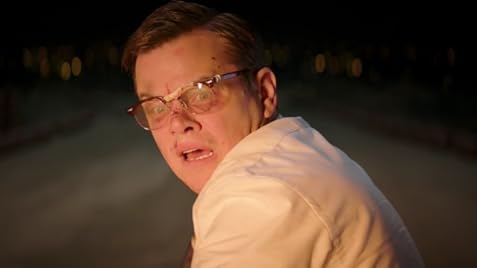
Suburbicon Poster
Trailer

A home invasion rattles a quiet family town.

Director:

George Clooney

Writers:

Joel CoenEthan Coen 


Written by the Academy Award wining Coen Brothers, Grant Heslov and George Clooney himself, this odd piece of satire on the American dream turning into an uncontrollable monster nightmare has its wicked charm but unfortunately fails.  But better an ambitious failure than a simple minded film with no faults – I always say.

The film is set in the fictitious community of SUBURBICON – of perfectly manicured lawns and white picket fences (as in similar films, FAR FROM HEAVEN, PARENTS), one can tell something is amiss or going to go terribly wrong.  In PARENTS, the boy discovers that his parents barbecue human flesh and in FAR FROM HEAVEN, the husband comes out of the closet.  In SUBURBICON, the father of the family, Gardner Lodge (Matt Damon) hires two killers to do away with his wife in a home invasion scenario so that he can be with her sister, Maggie (both roles played with Julianne Moore with blonde and brunette hair).  They plan to go to Aruba with the collected insurance money.  But things get complicated, particularly with the interference of an enterprising insurance investigator (Oscar Isaac) who ends up being poisoned by Margaret.  Their son, Nicky (Noah Jupe) is totally aware of everything that is going on, as he is always snooping or eavesdropping.  Father has no qualms  with doing away with the meddling son, just as the cannibalistic dad would gladly eat his son in PARENTS.  (The film feels very similar to PARENTS at some points.)  A lot of fun in the movie is observing how Nicky discovers what is going on and tries to save his own life.

SUBURBICON’s humour and writing has the distinct Coen Brothers touch, especially in the way events suddenly occur out of the blue and how violence can also suddenly come into the picture (reference: the Coen’ ARIZONA).  But the humour can be so sly and at times so dead-pan, that the humour can be missed.  Also, the film unfolds at a dead slow snail’s pace.  One would definitely fault the film’s direction and editing, though Clooney has directed a few outstanding films in the past.

The art direction of the 50’s idle housing estate is nothing short of perfect.  As the camera pulls back, one can see how all the houses and streets are interconnected.

The film also intercuts into the main story a side-plot of the first coloured family that moves into SUBURBIA.  From initial surprise to full outrage, the neighbourhood finally riots right outside the coloured family’s house.  Ironically the two boys, the coloured boy and Nicky become the best of friends, playing throw and catch baseball, the typical American sport.  The two kids show how adults should behave.

Despite the film that illustrates Murphy’s Law that if anything that can go wrong will and at the worst possible time, the film does end beautifully on an optimistic note, which almost saves the film. One plus of the movie is French composer Alexandre Desplat’s score that includes some suspense music as heard in a typical Hitchcock film.

SUBURBICON premiered at the Toronto International Film Festival to mixed reviews.  Still, it is an interesting failure, and by no means a dull piece despite its slow pacing.

Trailer: https://www.youtube.com/watch?v=cBezc1S1BAQ

Submit your Screenplay to the Festival TODAY

Film Review: WONDERSTRUCK (USA 2017

Submit your Screenplay to the Festival TODAY

Wonderstruck Poster
Trailer

The story of a young boy in the Midwest is told simultaneously with a tale about a young girl in New York from fifty years ago as they both seek the same mysterious connection.

Director:

Todd Haynes

Writers:

Brian Selznick (based on the book by), Brian Selznick (screenplay by)

Runaway kids escaping to a strange, new town in search of a parent.  This subject has always been a favourite for films and plays, the most notable being the recent Tony Award winning THE CURIOUS INCIDENT OF THE DOG IN THE NIGHT-TIME, in which a boy travels to London to find his father.  IN WONDERSTRUCK, a young deaf autistic boy leaves home after his librarian mother is killed in a car accident.  All he has is a little clue of a museum.  He takes off with some cash obtained from his Aunt Jennie (Michelle Williams), gets his wallet snatched but eventually finds out the truth about his father, who he initially knew nothing about.

WONDERSTRUCK appears like a a typical story but director Haynes (CAROL, POISON and his best movie SAFE FROM HEAVEN) decides to do it different.  The openly gay director has always dealt with isolated loner characters who has to come to terms with some truth.  In WONDERSTRUCK, because the subject is deaf, Haynes blacks out all words, so that the film feels like a silent movie with just background music.  The film is alternatively shot in colour and black and white for the flashbacks (in the year 1927).  It seems a good tactic but it does not all work.  For one, the film ends up very difficult to follow.  With no dialogue, one has to figure out who is whom, how the subjects are related and basically what is going on with the plot.  It does not help that the film intercuts two stories set fifty years apart, switching frequently between them.  Each tells the story of a child’s quest.  In 1927, Rose (Millicent Simmonds) runs away from her father’s New Jersey home to find her idol, the actress Lillian Mayhew (Julianne Moore). In 1977, recently orphaned Ben (Oakes Fegley) runs away from his Minnesota home in search of his father.  Moore plays two roles – the older Rose as well as Lillian Mayhew which confuses matters even more.

The reason the film is called WONDERSTRUCK is revealed towards the end of the film.  The film’s sets are amazing, special mention to be made of the New York City model though details are not really shown.

Director Haynes leaves the audience much in the dark for the first half of the film.  Though one might, upon considerable thought put all the jigsaw pieces together, it is a very frustrating process.  Director Haynes, gives the full explanation during the last third of the film, what then is the purpose?  Is it to illustrate to the audience the inconveniences of being deaf?

The cast largely of unknowns (excepting Moore, Michelle Williams in a token role and Tom Noonan) including Fegley do an ok job, noting exceptional.

Though credit should be given to Haynes for his non-conforming storytelling techniques, it does not really work.  It comes together at the end, as if Haynes gave up and decided that it is safer to tell it all the usual way.

Trailer: https://www.youtube.com/watch?v=n207k52C3DM


Submit your Screenplay to the Festival TODAY

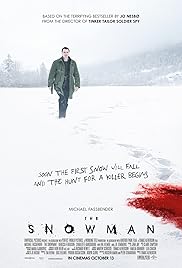
Film Review: THE SNOWMAN (USA 2017) **

Submit your Screenplay to the Festival TODAY

The Snowman Poster
Trailer

Detective Harry Hole investigates the disappearance of a woman whose pink scarf is found wrapped around an ominous-looking snowman.

Director:

Tomas Alfredson

Writers:

Peter Straughan (screenplay by), Hossein Amini (screenplay by)


Submit your Screenplay to the Festival TODAY

Film Review: TAKE EVERY WAVE: THE LIFE OF LAIRD HAMILTON (USA 2017) ***

Submit your Screenplay to the Festival TODAY

Take Every Wave: The Life of Laird Hamilton Poster
Trailer

This is the remarkable story of an American icon who changed the sport of big wave surfing forever. Transcending the surf genre, this in-depth portrait of a hard-charging athlete explores.

Director:

Rory Kennedy


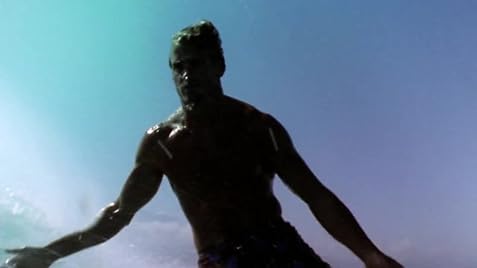
The film opens with breathtaking cinematography that puts the audience right inside the surging waters, a real high even when watching the waves on screen before introducing the main star and film subject – big wave surfer Laird Hamilton.

After 5 minutes of surf footage, director Rory Kennedy (LAST DAYS IN VIETNAM, GHOSTS OF ABU DHABI), delves into the life of Laird Hamilton.  Director Kennedy, born into the Presidential Kennedy family knows what it is like to be singled out and looked upon by the world.

Kennedy’s film uses archival footage, home movies, contemporary scenes, and interviews with his step-father, Bob Hamilton who introduced Laird to the sport, his wife (former volleyball star and model Gabrielle Reece) and his surfing buddies (even those with whom he’s fallen out) and former editors of Surfer Magazine. 

Told in chronological order, the film traces Laird’s early beginnings as a boy raised by his single surfer mother left pregnant by another surfer dude.  When meeting Bob for the first time on the beach, he is shown how to body surf before his mother meets up and ends up marrying Bob.   In his interview on camera, the now middle-aged Laird recounts his rebellious days in school, throwing desks out the classroom window and yelling obscenities while getting the occasional whopping for his stepfather Bob.  As the story goes, Laird finds solace in the ocean.

It is fortunate that Laird’s life is interesting as there is more of his life on show than of surfing footage.  As Laird never competes, there is not competition that needs to be won that often forms the climax of sport documentaries.  So Kennedy relies on a different technique to climax her film – Laird riding the biggest wave EVER.

Hawaii where Laird grew up as a boy is revealed for all its racial prejudice – reverse white prejudice that is.  The was one of the few whites in the class and whites always get beaten up and singed out.

There are tons of good looking blond surfing hunks in this movie.  But the good looks slowly fade just as youth does.  Both Bob and Laird Hamilton are gorgeous hunks in the early twenties.  This led to Laird, who dropped out of school, to get into the modelling business – a part of his life just barely touched upon in the film.

Director Kennedy sidetracks his film just as Laird sidetracks his life on big wave surfing.  Laird is also revealed as an inventor, first of the foil board (a surf board that rides above the water, amazing as it looks due to Physics), then of the board strap, that enables surfers to do summersaults while being attached to their boards.

The film also brings into the picture, the invention of both the jet ski and the windsurf.  Laird and his gang tackled the new sport of windsurfing (I myself tried it too, – and it is not easy), but gradually went back to big wave surfing.

TAKE EVERY WAVE is a documentary that ends up as interesting as Laird the man.  The best scenes are the ones with the biggest waves.  Director Kennedy has done his research and TAKE EVRY MAN is as exhaustive as any filmmaker can get on Laird.

Trailer: https://www.youtube.com/watch?v=vaGCdymhA40

Submit your Screenplay to the Festival TODAY

Film Review: POOR AGNES (Canada 2016) ***

Submit your Screenplay to the Festival TODAY

Poor Agnes Poster
A serial killer and her next victim form an unexpected relationship.

Director:

Navin Ramaswaran


The synopsis of POOR AGNES on imdb goes “A serial killer and her next victim form an unexpected relationship”.  That description of the movie would be enough to scare away many an audience but writer James Gordon Ross and director Navin Ramaswaran have concocted quite the movie.

The film opens with a few incidents involving Agnes (Lora Burke).  She is shown suffocating a victim by placing a plastic bag over his head.  The audience sees her pawning the victim’s gold watch and silk tie.  When the pawnbroker uses the ‘f’ word at her, she retorts by throwing him an insult.  He reduces the price of the gold watch from $200 to $150 which she takes, as she is broke and has no choice.  The segments tell a lot about Agnes and the route the film is taking.

Credit should be given to director Ramaswaran for the feat of having his audience root for as unlikeable a character as a non-repentant  serial killer.  He achieves this (feat) by several means which are interesting to note:

all the characters around her are either seedier or nastier than her, not only her victims

she is all by herself and one usually respects an independent woman

she is funny and she cracks the best jokes

she is smart

she knows what she wants and does it

she is neither annoying nor irritating in any of her conduct

This might be the reason the film is called POOR AGNES (instead of say NASTY AGNES) which makes the audience want to root even more for someone needing sympathy.

The first half of the film establishes Agnes’ personality while introducing her love/sex relationship with Mike (Robert Notman).   Mike is the private detective hired to find out more about a missing person a year ago that Agnes did away with.  After Mike hits on her, she kidnaps him but lets him go free in an odd love relationship.

One might imagine the film going out of steam after the first half.  But the film’s pacing is good and new events keep the audience interested throughout the entire film.  Agnes draws the reluctant and unsuspecting Mike into her evil deeds.  She kidnaps a previous trick, Chris (Will Conlon) and forces Mike to do away with him.

Credit goes to Toronto actress Lora Burke for an excellent performance as the serial killer/madwoman.  Robert Notman is also convincing as her reluctant partner.  Everything else in the other departments from music, to sound to sets to cinematography are to be commended.

POOR AGNES doe not slag in any way.  Despite the rather outrageous plot, the story and characters are kept believable.  Humour (especially black) is also injected particularly in the segment where Agnes attends a tortured victims support group.

Director Ramaswaran and writer James Gordon Ross make an excellent team.  The film won the Best Canadian Film Prize at the 2017 Fantasia Film Festival.

Trailer: https://www.youtube.com/watch?v=0boeomU9anM

Submit your Screenplay to the Festival TODAY

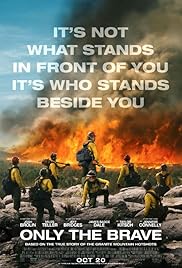
Film Review: ONLY THE BRAVE (USA 2017) ***1/2

Submit your Screenplay to the Festival TODAY

Only the Brave Poster
Trailer

Based on the true story of the Granite Mountain Hotshots, a group of elite firefighters risk everything to protect a town from a historic wildfire.

Director:

Joseph Kosinski

Writers:

Sean Flynn (based on the GQ article “No Exit” by), Ken Nolan


Warning: This review contains spoilers.  Spoilers are highlighted in italics

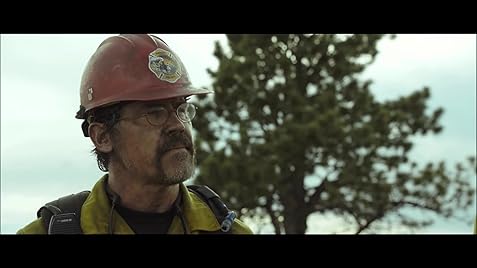
ONLY THE BRAVE, based on true events is a tough American biographical action disaster drama that tells the true story of the Granite Mountain Hotshots.  The Hotshots are an elite crew of firefights that have first rights in the front lines to stopping fires (in decision and execution).  A local Arizona firefighting team finally gain qualification as hotshots under the leadership of Eric Marsh (Josh Brolin).

ONLY THE BRAVE is a disaster film not unlike THE TOWERING INFERNO.  It is one of the better firefighting films compared to past successes like John Wayne’s THE HELLFIGHTERS and Ron Howard’s BACKDRAFT.   A well balanced script by Ken Nolan (the excellent BLACKHAWK DOWN) and Eric Warren Singer (AMERICAN HUSTLE) ties in the human drama to the action.  As the ad goes: “It’s not what stands in front of you; It’s who stands beside you.”

There are a few human dramas on display.  They seems superfluous at the start but the actors and script hammer at the material till it finally grows on you.  The main one involves the chief Eric Marsh and the sacrifice his marriage to his wife, Amanda (Jennifer Connelly) has taken.  She sees him only 10% of the time and she wants a change in their lives.  The other deals with hot shot youngster, an ex-addict, Brendan (Miles Teller) who joins the firefighters in order to support his daughter that has resulted from an unexpected pregnancy.    Brendan is given a chance by Eric who calls him ‘donut’.  The confrontation scene between Eric and Amanda strikes fireworks.

ONLY THE BRAVE marks the other kind of action hero film – the ones (like the recent PATRIOT’S DAY) that involve real life heroes in real life events.  These are the kind of heroes America needs these days, in times of terrorist attacks in a world gone crazy.   ONLY THE BRAVE celebrates true heroes and real people in an excellent executed film.  The fire scenes are authentic, as director Kosinski has said in an interview that he had gone for authenticity.

Great performances all around, particularly from Brolin and Jeff Bridges.  Miles Teller delivers another winning performance as a bad-ass character – annoying in the beginning, but capturing the heart of the audience by the end.

For such a serious topic, the script inserts a few metaphors (like the burning bear – a terrifying yet beautiful sight) and some needed honour.  The best and funniest line is the advice given by Duane Steinbrink (the Bridges character) to Eric: “You must know what you can live with and what you can die without.”  Even Duane does not know what it really means!

The climax of the film involves the Granite Mountain Hotshots (as they then call themselves) fighting the out-of-control Yarnell Hill Fire in the June of 2013.  Those who know the history will recall the sacrifice these firefighters made in order to control the fire and save lives.  Kosinski’s film ends up a tearjerker, so make sure you bring lots of Kleenex.  But these are tears well shed.  ONLY THE BRAVE is a worthy tribute, and as the words emphasize during the losing credits dedicated to the Granite Mountain Hotshots.

Trailer: https://www.youtube.com/watch?v=EE_GY6zccqc

Submit your Screenplay to the Festival TODAY

Film Review: HUMAN FLOW (Germany 2017) ***

Submit your Screenplay to the Festival TODAY

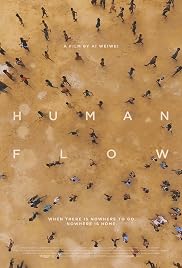
Human Flow Poster
Trailer

Human Flow is director and artist, Ai Weiwei’s detailed and heartbreaking exploration into the global refugee crisis.

Director:

Ai Weiwei


Chinese artist Ai WeiWei’s ambitious film about refugees around the world has his clear impression stamp.  Ai was himself a political dissident in his own country, jailed for his openly anti-government and artistic displays (as observed in the documentary about himself – Alison Klayman’s AI WEI WEI – NEVER SORRY).

The film begins with the arrival of a boat full of refugees – a scene that is repeated at the end of the film, but then explained in greater and horrific detail.  HUMAN FLOW traces the plight of refugees, the most current being the Syrians, Afghanis and Iraqis as they escape war for a better life in any country they can find open to them.

HUMAN FLOW is unfortunately very long, close to two and a half hours and occasionally all over the place.  One particular example that stands out is the segment that comes out of the blue, of a tiger that is evacuated back to freedom in Africa.  (The tiger happened to escape through a tunnel just like a refugee.)

Ai’s artistry can be observed in many parts of his film.  The overhead shots of one of many makeshift refugee camps such as the back of trucks and the ending segment of colours are reminiscent of his art in his documentary, AI WEIWEI – NEVER SORRY.  His use of deafening silence is noticeable in the scene of a refugee boat sailing across the ocean as well as the devastating burning of the oil fields.  Ai is also fond of quoting poets of different nationalities as the refugees are (of different nationalities).

HUMAN FLOW could do with a tighter narrative with a head and conclusion.  Ai does also touch the topic of returning refugees.  He opens ones eyes to the problem of internal displacement – when refugees return home after too long a period and find that things have changed too much against them.  They no longer own their lands or know the people they once knew.

Refugees suffer a lot during their travels, often contacting diseases and undergoing sub-human living conditions.  Ai does not show these sufferings visually but they are described in voiceover or by the people interviewed verbally.  They are just as horrifying.  The people in the packed boats arrive, with diarrhoea, and scurvy (lack of Vitamin C).  Among them are children, babies and expecting women.

On the film’s more positive side, Ai includes interviews of people that work to help the refugees.  The Princess of Jordan talks candidly of human beings needing to do their part.  HUMAN FLOW also shows how certain countries like Germany and Sweden have done their part while others have not.

I remember a few months back when a friend asked my advice if he should take a refugee Syrian family to his home for a few months.  His wife was unsure of the kindness but I advised him against it as to be fair to his wife and not put his family at possible risk.  After seeing HUMAN FLOW, I regretted my advice.  Though Ai’s film is by no means perfect, it accomplishes its aim to make a difference.  If one cannot sacrifice a little for a suffering fellow human being, then, what are we?

Trailer: https://www.youtube.com/watch?v=DVZGyTdk_BY

Submit your Screenplay to the Festival TODAY

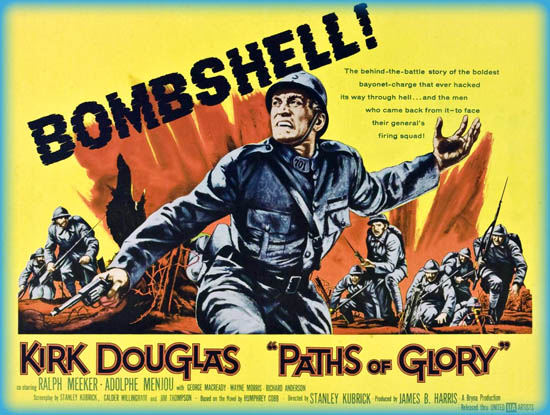
1957 Movie Review: PATHS OF GLORY, 1957

Submit your Screenplay to the Festival TODAY

PATHS OF GLORY, 1957
Movie Reviews

Directed by Stanley Kubrick

Starring: Kirk Douglas, Ralph Meeker, Adolphe Menjou, Richard Anderson, Joe Turkel, Wayne Morris, George Macready, Timothy Carey

What the critics say: 

More than 20 years after Mr. Cobb’s novel was first published, Mr. Kubrick reminded us that human folly is rarely checked for long. A half-century on, he is still right.

March 26, 2013 | Full Review…
——-

Kirk Douglas gives one of his finest performances as the intelligent and courageous Col. Dax.

March 26, 2013 | Full Review…
 Top Critic
——-

The sardonic rhetoric may be laid on a little heavily at times, but the movie is blunt and scornfully brilliant.

March 26, 2013 | Full Review…
 Top Critic
——-

While the subject is well handled and enacted in a series of outstanding characterizations, it seems dated and makes for grim screen fare.

May 8, 2007 | Full Review…
 Top Critic
——-

This masterpiece still packs a wallop, though nothing in it is as simple as it may first appear; audiences are still arguing about the final sequence, which has been characterized as everything from a sentimental cop-out to the ultimate cynical twist.

May 8, 2007 | Full Review…
 Top Critic
——-

The final scene, in which Kubrick presents close-ups of soldiers watching a captured German girl being forced to sing for their pleasure is nothing short of masterful.

June 24, 2006 | Full Review…
 Top Critic
——-

paths of glory

Submit your Screenplay to the Festival TODAY

1957 Movie Review: PAL JOEY, 1957

Submit your Screenplay to the Festival TODAY

PAL JOEY,   MOVIE POSTERPAL JOEY, 1957
Movie Reviews

Directed by George Sidney
Starring: Frank Sinatra, Rita Hayworth, Kim Novak, Barbara Nichols, Bobby Sherwood, Hank Henry, Elizabeth Patterson
Review by Virginia De Witt

SYNOPSIS:

San Francisco nightclub singer, Joey Evans, is broke and finds himself working at a dive called The Barbary Coast where he meets and falls for dancer, Linda English. Joey’s dream is to be his own boss and after he meets wealthy socialite, Vera Simpson, he pursues her, and his desire to open his own night club, Chez Joey. Vera agrees to become his partner, both financial and romantic, but she quickly becomes jealous of Linda’s presence at the new club. Joey finds himself torn between the two women who can shape his future and has to decide which woman will help him fulfill his dream.


REVIEW:

Frank Sinatra rarely found musical roles on screen that matched his range as both a singer and an actor. With the exception of “The Joker Is Wild”, (1957) in which Sinatra plays singer/comedian Joe E. Lewis, and which is really more of a straight dramatic role than a studio musical, ‘Pal Joey” is the closest Sinatra came on screen to exploring the kind of life and character he knew so well. Far more typical were the early musicals he did with Gene Kelly, for instance, “Anchors Aweigh” (1945) or “Take Me Out To the Ballgame” (1949). These, along with his other early musicals, are enjoyably lighthearted and were meant to capitalize on Sinatra’s status as the American Idol of his day. These films were aimed straight at the heart of the swooning bobby soxers in the balcony and presented Sinatra in the most harmless possible light, most often as a guileless, love struck innocent. Joey Evans is, of course, anything but. He is an amoral hustler who takes nothing and no one seriously, except his own ambition. The character has been softened and sentimentalized for the screen adaptation, but Sinatra understands this man in his bones and conveys a great deal about Joey’s true nature through his delivery of both dialogue and song.

The film is an adaptation of a successful Broadway musical of the same name from 1940 which gave Gene Kelly his break out hit on stage. The original play had a book by John O’Hara and was adapted from short stories he had written for The New Yorker in the 1930s. Original music and lyrics were by Richard Rodgers and Lorenz Hart. The play waited nearly 20 years to be adapted to the screen because of its frankness in depicting sexual situations which were unacceptable according to the Hollywood

production code of the time, despite its having an even more successful stage revival in 1952. The play was considered a landmark musical in its day for bringing psychological depth to its characterizations, and a dramatic reality to its situations, rather than simply using stock romantic situations as excuses for performers to sing and dance to the popular numbers of the moment.

To this end, the success of “Pal Joey”, was aided greatly by the music and lyrics of Rodgers and Hart in providing songs that were not only witty and beautiful, but managed to complete the character’s thoughts and express their desires. Many of these songs are now standards in the American songbook – “If They Asked Me I Could Write a Book”, “The Lady Is A Tramp”, “My Funny Valentine”, “Bewitched, Bothered and Bewildered” – amongst them. Sinatra is in his element delivering these songs, all of which benefit from Nelson Riddle’s now canonic arrangements. Especially memorable is his rendition of “The Lady Is A Tramp”, sung as a slap in the face to the haughty Vera Simpson (Rita Hayworth). After hours and alone in a run down night club, Sinatra performs his magic trick of seeming to be both defiant and vulnerable at once.

Sinatra is joined by two of the great female stars of the era. Rita Hayworth, who was actually younger than Sinatra, while playing the middle aged Vera, is in great form here. Hayworth was an accomplished dancer who was a veteran of movie musicals, and while she doesn’t have any formal dance numbers in “Pal Joey”, she handles the quasi-burlesque number “Zip” with great style and skill. Vera is a former stripper who worked the same clubs as Joey. They understand each other and so do Sinatra and Hayworth. The relationship builds believably as these two befriend and yet use each other relentlessly, until the logic of it is betrayed by the requisite Hollywood ending.

Sinatra, is not so fortunate with his other leading lady, Kim Novak as Linda English. Due to Novak’s inability to be expressive either physically, even though she plays a dancer, or emotionally, there isn’t much for Sinatra to work off of with her. His presence and talent are so strong, however, that he glides over the spaces created by her vacant stare and manages to create the sense of a rapport with Linda.

George Sidney’s direction is straightforward and unobtrusive, if not especially imaginative. He allows the performers to have their moment in their musical numbers. Sidney frames Sinatra particularly well in his stage performances. The director understands that, in the end, “Pal Joey” is a showcase for this great singer and allows him plenty of space to move.

PAL JOEY

Submit your Screenplay to the Festival TODAY

1957 Movie Review: THE PAJAMA GAME, 1957

Submit your Screenplay to the Festival TODAY

THE PAJAMA GAME POSTERTHE PAJAMA GAME, 1957
Movie Reviews

Directed by: George Abbott, Stanley Donen

Starring: Doris Day, John Raitt, Carol Haney, Eddie Foy Jr.
Review by Jayvibha Vaidya

SYNOPSIS:

When the employees at the Sleeptite Pajama Company demand a seven and half cents increase, the new factory superintendant must deal with a looming strike. To make matters even more complicated, he’s in love with the feisty employee representative who sets the strike in motion. As tensions increase, the lovers stay on opposite sides of the wage war, putting their relationship and jobs in jeopardy.

NOMINATED FOR 4 OSCARS – Art Direction, Cinematography, Costume and Writing

 REVIEW: 

“It’s nothing personal. You’re the superintendant and I’m the Grievance Committee.”

When newly hired superintendant Sid Sorokin (John Raitt) is slammed with an employee complaint in his first week, he has to deal with Katherine “Babe” Williams (Doris Day), the head of the Grievance Committee. He scoffs, she throws the rule book at him and an office romance is born. Coming from its Broadway success, The Pajama Game was released on film in 1957 starring stage actor John Raitt and Hollywood sweetheart, Doris Day.

As employees at the Sleeptite Pajama Factory prepare for a strike, Babe and Sid begin to fall for each other. Passionate about her job, Babe calls for the sewing line to cease production and subsequently gets fired – by her new boyfriend. “You stick to your side and I’ll stick to mine!” she exclaims, effectively breaking up with him. As Sid scrambles to find a solution to his job and relationship problems, he’s forced to learn about compromise and loyalty – through song and dance, of course. All ends well as both sides get what they want; calling for a company pajama party to celebrate their victories.

Fluffy and light, the musical never gets too serious about labor relation issues, opting instead to highlight running gags like a jealous boyfriend or the romance between Sid and Babe. The songs are fun and cheery but not entirely memorable. The more enjoyable numbers are ensemble pieces, utilizing a large number of the cast. “Racing with the Clock” shows the employees simultaneously performing the same act faster and faster. The camera and choreography work well together, moving through the lines of sewing machines and yards of cloth. “I’ll Never Be Jealous Again” is a funny little number with a jealous boyfriend, Heinsie (Eddie Foy Jr.) promising his friend Mabel (Reta Shaw) that he won’t doubt his girlfriend and secretary Gladys ever again. Reprising their roles from Broadway, both performers have an easy, comfortable way with this song, making it enjoyable to watch.

There are two musical highlights that make the film. The first occurs at the annual company picnic as the company gathers for a day of fun (“Once-A-Year-Day”). Choreographer Bob Fosse, on one of his first films, showcases his burgeoning talent with a large-scale number. Set in a huge park, several dancers swing, flip, climb and race through green grass, up trees and over hills dressed in colourful outfits. The use of space and planes with complicated blocking makes it one of the visually spectacular songs in the film. And it’s the moment when Sid and Babe finally fall in love.

The second musical highlight is “Steam Heat,” a number where Fosse’s signature moves are clearly displayed. Gladys (Carol Haney), flanked by two dancers, are dressed in black and white. Small controlled movements give way to a dramatic slide across the stage. Top hats become part of the dance as they’re flipped, thrown and caught in time to the catchy music. Carol Haney is light on her feet and quick with her movements. Sound effects, fresh choreography and energy make this a thoroughly entertaining musical number. Even though it doesn’t serve a purpose to the plot, the song is one of the truly memorable moments in the film.

Many of the songs appear almost back-to-back and can be exhausting for a viewer searching for a story. A simple story with a predictable ending, the film chooses to focus on the charm of the leading actors, Doris Day and John Raitt. Both actors bring great performances and energy to the film, but lack a strong chemistry. All the performers do a fine job with most of them reprising their roles from Broadway. Some moments however, are just truly bizarre: a knife-throwing Heinsie chases his girlfriend Gladys through the warehouse, only to be scolded by the president and dragged away by the formerly terrified Gladys. Some of the dialogue is clunky and odd, but the film keeps the energy moving along to the next song.

The Pajama Game is a fun, colourful musical featuring a few catchy songs, fantastic choreography and cinematography. Thin on plot and high on songs, the musical is an entertaining ride combining skilled performers, humour, romance and workplace complications into an enjoyable Hollywood musical.


Submit your Screenplay to the Festival TODAY