Film Review: BAD GRANDMAS (Canada 2016)

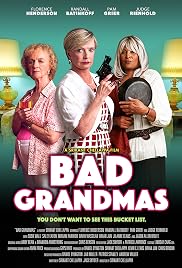
Bad Grandmas Poster
Four grandmothers accidentally kill a con man. When his partner shows up, things go south quickly.

Director:

Srikant Chellappa

Stars:

Pam GrierJudge ReinholdFlorence Henderson

It has barely been two weeks since two films about old ladies hits the screen.  There was THE BEST OF THEIR LIVES and now BAD GRANDMAS, a Canadian feature where one granny accidentally kills her friend’s bad son-in-law resulting in all other cronies trying to hide the body and cover up the deed.

The film’s first scene shows an American flag out front of a building of an insurance company in this IndieCan production.  Obviously, the film is set in the States (Southern U.S.A. to be more accurate) to expand the film’s marketing base.  All the grandmas in the film thus speak with a southern drawl.

The film contains typical scenes of the elderly ladies doing jumping jacks and smoking up, trying to look cool, things that have been done in films on old farts before.

Four grandmothers spend their twilight years in peace playing card games and baking cakes.  Their world is turned upside down when one of ladies (Bobbi played by Susie Wall) son-in-law Jim (David Wassilak) cons the lady.  In the process of trying to fix the problem, Mimi (chief protagonist, ringleader and brains played by Florence Henderson) accidentally kills him. Things go from bad to worse but the ladies are smarter than they seem.  The premise does not sound original and this plot of accidental killing has been done more than once in other films, for example in the best film dealing with accidentally killing, Robert Carlisle’s THE LEGEND OF BARNEY THOMSON, where a barber’s accidental killing leads to another to another.  BUT BAD GRANDMAS is hardly funny, despite many opportunities for comedy.  The film is a clear textbook example where timing is essential in comedy.

The addition of the character of the investigating Detective Randall Mclemore (Randall Batinkoff) is puzzling.  His character is a smug rather good-looking man who charms the daughters of the grandmothers.  He does not add much humour either but not for want of trying.

There is also one bug flaw in the script.  If the ladies have in their possession  the CCTV video of the villain kidnapping Bobbi, why don’t thy just go to the police in the first place?

The film is performed by a cast of mostly little heard actors except for veterans Pam Grier and Judge Reinhold,who do nothing to lift this piece out of the doldrums.

The film contains countless attempts at humour but none too successfully.   The only laugh out loud joke for me is the one when one of the grandmas remarks after seeing a dead body: “This makes me more nervous than a long tail cat in a room full of rocking chairs.”  But this is not because the joke itself is funny but because it has ben ions when I used to repeat that line.  The film improves during the second half, story-wise.

BAD GRANDMAS attempts to cash in on the successful comedy BAD MOMS by adding the murder angle.  Better skip this one and wait for BAD MOMS AT CHRISTMAS or BIG DADDY 2 where the 2 grandpas (played by Mel Gibson and John Lithgow) are added to the story.

Trailer: http://indiecanent.com/movies/bad-grandmas/

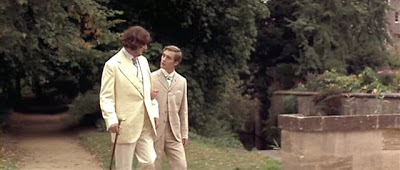
1997 Movie Review: WILDE, 1997 – Starring: Stephen Fry, Jude Law

Submit your Screenplay to the Festival TODAY

WILDEWILDE, 1997
Movie Reviews

Directed by Brian Gilbert

Cast: Stephen Fry, Jude Law, Vanessa Redgrave, Michael Sheen, Tom Wilkinson, Gemma Jones, Jennifer Ehle, Judy Parfit
Review by Stefan Leverton

SYNOPSIS:

The story of Oscar Wilde, genius, poet, playwright and the First Modern Man. The self-realisation of his homosexuality caused Wilde enormous torment as he juggled marriage, fatherhood and responsibility with his obsessive love for Lord Alfred Douglas, nicknamed Bosie. After legal action instigated by Bosie’s father, the mad Marquess of Queensberry, Wilde refused to flee the country and was sentenced to two years at hard labour by the courts of an intolerant Victorian society.

CLICK HERE and watch TV SHOWS FOR FREE!

Take a look at what’s new today!

REVIEW:

Wilde is the biopic telling the infamous story of Oscar Wilde, one of Ireland’s and the Victorian era’s greatest playwright and poet. Above that he represented the rise in the appreciation for all things aesthetic, fashion and style as well as being one of the wittiest historical figures that I can think of. His life wasn’t all plaudits though, and he courted controversy to the full.

The film begins with Wilde returning from America, marrying Constance Wilde and having two boys, Cyril and Vyvyan. Then it begins, not wanting to over-state anything, his rise and fall. Taking the theatre world by storm, Wilde’s plays illuminate the west end and he becomes the toast of the town. With an invigorated zeal for socialising, Wilde acquaints himself with all the lavishness his success affords him.

This ignites a spark within Wilde, especially after becoming familiar with Robbie Ross. After their meeting Wilde’s ‘outs’ himself amongst the homosexual community, and in doing so becomes the person he may’ve always known he was. Then the shift moves from his work to his personal life. An intense affair rises between Wilde and Lord Alfred Douglas, nicknamed Bosie. Bosie is drawn to the artful and wise Wilde, while Wilde is drawn to the youthful pretty Bosie.

Their relationship has its ups and downs, mainly due to Bosie’s impetuousness, but ultimately has its dramatic anchor in the film as in Wilde’s life by being the scandal that brought shame upon Wilde’s family and indeed his professional reputation. Bosie’s father, the Mad Marquess of Queensberry, files a lawsuit against Wilde and his lewd illegal behaviour.

The ensuing court case, is widely publicised and the witch hunt that surrounds it sees the steadfast Wilde prosecuted for his actions and sentenced to four years hard labour after refusing to take exile. Then we witness Wilde’s decline, removed of his style in gaol. Even on his release when he takes refuge in Europe his healthy withers and Wilde dies resolute but very much alone in Paris, 1900.

As a fan of Wilde’s work, I feel this film does tremendous justice to the man, played with sheer perfection by Stephen Fry. Fry said of the role that it was the one he was born to play, and he is in no way over stating that fact. And the filmmakers have done a wonderful job of adding to the creation by giving Fry just the right appearance as a young-twenty-something but also as the broken-aged-man Wilde becomes during his incarceration. And special mention should go to Jude law who, aside from looking good in the role, acts as a great folly to Wilde, being that they are at different stages of their lives.

The only criticism of the film is that those who aren’t familiar with Wilde may struggle to be enraptured by the drama of the film which never really peaks. I think that to be slightly mis-guided as Wilde himself fully understood what was going on, there was no outrage from him, though he did stand resolutely and argued his case to spite all that, though sadly without success. What stands is the memory of such outrageous persecution from the justice system and society to persecute someone, when today that wouldn’t even enter the consciousness.

WILDE, 1997

Submit your Screenplay to the Festival TODAY

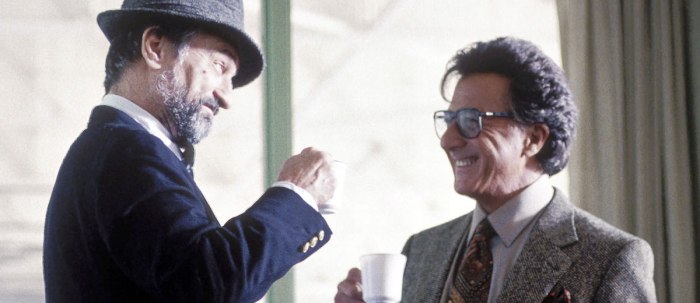
1997 Movie Review: WAG THE DOG, 1997 – Starring: Robert DeNiro, Dustin Hoffman

Submit your Screenplay to the Festival TODAY

WAG THE DOG MOVIE POSTER
WAG THE DOG, 1997
Movie Reviews

Directed by Barry Levinson
Starring: Dustin Hoffman; Robert De Niro; Anne Heche
Review by Tom Coatsworth

SYNOPSIS:

When the US President gets caught with his pants down, days before the election, his spin-doctors create a fictitious war to divert attention.

Nominated for 2 Oscars: Best actor in a leading role: Dustin Hoffman;

Best Screenplay: David Mamet; Hilary Henkin

REVIEW:

Political satire in feature filmmaking is exceptionally rare. It’s a poor-boy genre that is shunned by producers, who prefer to make money. And so it’s a thrill to see top notch talent driving a witty political script all the way to the bank. On a fifteen million dollar budget ‘Wag The Dog’ grossed sixty-four million box-office worldwide — nothing to sneer at.

The story begins with scandal: the President has been accused by a Firefly Girl of sexual fondling. It’s only days before the election. He has a commanding lead in the polls but the story spells disaster. The President is in China. One of his chief advisors, Winifred Ames (Anne Heche), brings in ‘Mr. Fixit’ – Conrad Brean (De Niro) to handle the crisis. It seems an impossible task.

But lying helps: the President is sick and cannot leave China for at least a day – this buys time. Brean and Ames fly to California where they enlist Hollywood producer, Stanley Motss (Hoffman), to produce their war. (The Motss character was based on movie producer Robert Evans. Hoffman does a pitch-perfect job emulating Evans and was nominated for an Oscar. Evans, a former actor, insisted: “I was wonderful in that part”).

Brean wants a war – not a real war, but a pageant – he wants a song, a story line; he wants patriotic fervor to rise up and quell the Firefly Girl story. He pulls Albania out of the air. “What did they ever do for us? What do we know about them? They seem sort of shifty”. (Motss chimes in: they have ‘the bomb’ – a suitcase bomb – Albanian terrorists with a suitcase bomb in Canada.) Motss calls in his go-to team – John (Willie Nelson), a Nashville songwriter; the Fad King (Denis Leary) and Liz Butsky (Andrea Martin). They brainstorm the night away and by morning they have a song and a strategy.

They create film footage of the “War”. On a Hollywood Soundstage an actress (Kirsten Dunst) is hired to play a refugee fleeing a war torn village. She runs in front of a blue screen while a burning village complete with sirens and crying villagers is supplied digitally. Five hours later it is on the evening news. The Firefly story is buried. “It’s a pageant”, says Brean.

On route to Nashville Brean and Ames are detained by the CIA. There is no war and no bomb and someone has to answer for it. Brean spins the CIA agent (William H. Macy) like a top: if there were peace — you would be out of a job. Mr. CIA appears completely bamboozled and lets them go. However no sooner are they in Nashville they get word the war is over! The CIA has informed the Presidents rival and hence the public that hostilities with Albania have ended and all is right with the world! “This is nothing!” shouts Motss, “I’m producing this war, it’s not over till I say its over – we need an act 2”. Motss and the Fad King quickly spin Act2.

A soldier with a name like shoe has been caught behind enemy lines and is being held by the terrorists — a war hero. This plays perfectly with an ‘old shoe’ song they have dreamed up. The Army searches its ranks for a soldier by that name — William Schumann (Woody Harrelson). The campaign begins anew. The cry goes up: “bring back ‘Old Shoe’”. The new song is planted in the Library of Congress – 1930. Motss and Brean throw old shoes tied together over telephone lines and in tops of trees; catchy idea. The media loves it. (I remember when the movie appeared because so did the shoes – on telephone lines all over town.) School children start letter writing – the Firefly story is buried once again – they are almost home.

And then they meet Schumann – a dangerous psychotic who’s spent fifteen years in a military prison for raping a nun. (Part of the charm of the script is that as easily as the spin-doctors churn out lies and as easily as the public buys them the professional branches of the government – the Army, the CIA — are never really taken in and never quite go along with the charade.)

Harrelson is hilarious as the psycho soldier. I was particularly impressed with De Niro who displays some serious light, comedy chops. His attempts at broad comedy — at playing course, dumb, silly people — have never worked. Here he is at home. Hoffman is clicking as the slick Hollywood mogul; and Anne Heche fills some tall high heels, poised as she is between these two legends.

The script is deliciously funny and a subject of controversy – David Mamet, one of America’s finest, brashest playwrights, wrote the working script. It was nominated for an Oscar. But the original script, based on a book by Larry Beinhart, was written by Hilary Henkin. Barry Levinson has claimed that Mamet wrote his draft without reading the book or Henkin’s draft – but the case went to court and both Mamet and Henkin are now credited with screenwriting: they should get together more often, it’s brilliant.

‘Wag’ was released a month before the Clinton intern scandal, and so it was prescient. What’s more some believe the movie served to hamstring President Clinton’s actions: critics tied the timing of a missile attack on an enemy camp with a Presidential desire to ‘change the subject’. Whether it was true or not ‘Wag’ had spun ‘spin’ out of the box and there was no going back: the public had wised up. Since the days of Aristophanes that’s as good as it gets: ‘Wag The Dog’ is political satire at its finest. Enjoy.

wag the dog

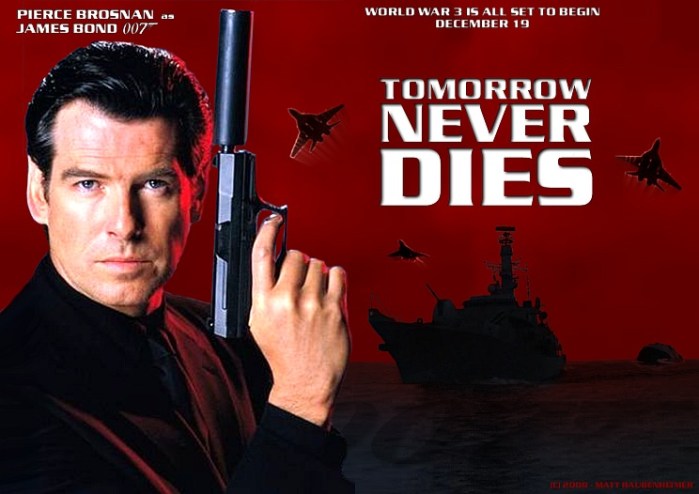
1997 Movie Review: TOMORROW NEVER DIES, 1997

Submit your Screenplay to the Festival TODAY

TOMORROW NEVER DIES MOVIEGOLDENEYE, 1997
Movie Reviews

Directed by Roger Spottiswoode

Starring Pierce Brosnan, Jonathan Pryce, Michelle Yeoh, Teri Hatcher,Joe Don Baker and Judi Dench.
Review by Jesse Ryder Hughes

SYNOPSIS:

Elliot Carver is a corrupt media baron out to start a war between the United Kingdom and China. China will not let Carver have exclusive media rights in their country. He uses a GPS system to send a British naval ship off course into the South China Sea where his stealth ship sinks the vessel and steals the missiles. He then blows up a Chinese fighter plane sent to investigate making it seem like the plane and the ship attacked each other. Bond is sent in to investigate Carver after Carver leaked the information before anyone else knew about it. The Chinese send in their own spy Wai Lin (Michelle Yeoh) to investigate as well. Bond and Lin team up to stop Carver from firing the British missiles at Beijing and starting a war between their countries, which is already starting to begin.

CLICK HERE and watch TV SHOWS FOR FREE!

Take a look at what’s new today!

REVIEW:

Tomorrow never dies is the most action packed Bond film in the series. It sets up the plot quickly and then it is one action set piece after the other. It is well done for the most part. The plot isn’t as complex as Goldeneye with a forced relationship between Elliot Carver’s wife Paris and Bond. The emotion feels forced within the writing as compared to Goldeneye. Other than that it is a fun ride. Michelle Yeoh is great as a Chinese agent with great martial arts, as always from her. The focus on the power of media is interesting and relevant. Carver uses it to his advantage dreaming of a world by his standards. He proves himself to be a powerful dictator and using the media to deliver his message and shape his world. It is interesting to think of the media and how it could be used for the ultimate good in mankind and the ultimate evil.

There are some great stunts involving Bond driving his car from the backseat using a remote control and being chased by a helicopter handcuffed to Wai Lin on a motorcycle. It is good to see a good evil henchman as well. (Stamper, who is scary and is obsessed with taking Bond down). Its good to know that henchmen are still fun and useful in the future.

Tomorrow Never dies may not be as sophisticated as Goldeneye in terms of an all round great Bond film, but it still does the trick and ups the ante with intricate action scenes. It is also in no way cheesy and I didn’t find myself feeling like anything was that far fetched for what it was. I always pop in Tomorrow Never Dies because it is just a fun action movie. By no means great, but a lot of fun. Michelle Yeoh has my vote for toughest Bond girl, doing all her own stunts and helping the action scenes seem more realistic.


TOMORROW NEVER DIES, 1997

Submit your Screenplay to the Festival TODAY

1997 Movie Review: TO DIE FOR TANO, 1997

Submit your Screenplay to the Festival TODAY

TO DIE FOR TANO MOVIETO DIE FOR TANO, 1997
Movie Reviews

Director: Roberta Torre

Cast: Ciccio Guarino, Enzo Paglino, Mimma De Rosalia
Review by Jordan Young

SYNOPSIS:

In this murder-mystery parody, Tano (based on the real lifemobster Tano Guarrasi.) is killed and in this Unsolved Mystery meets musical style, we are told of the events that lead up to, and follow his death.

CLICK HERE and watch TV SHOWS FOR FREE!

Take a look at what’s new today!

REVIEW:

Tano Da Morire is a lot of fun, it feels like it is the Italianequivalent of Tarantino’s and Rodriguez’s grindhouse double feature,with all the satire and absurdity of all the “Naked Gun” movies.

The video quality really threw me off, (it was shot in the early nineties which makes sense) but the filmmaker knew that this was a joke, which makes it bearable. It caught me on several occasions laughing out loud, not merely snickering.

This is completely tongue-in-cheek and the most light-hearted look at the mafia I have ever seen. This film transcends conventional genre as well. It is stylistically similar to the Unsolved Mysteries TV show, with the exception of ludicrous musical numbers laced through out the interviews.

There seems to be one unifying theme during transitional scenes. A very smarmy traditional sounding Italian dance mixed with thestereotypically southern twangy instrument (the mouth harp, or it’s unpolitically correct synonym the Jew’s Harp.) Which is used here as a joke by itself. This might have been done to indicate that they were all showcased as “townies” (with all of the negative implications of that term) in the film.

In previous reviews I have written, I have praised the amateur actors that have been used in the films of De Sica, and Herzog, and this film has the same aspects. It appears like this was just shot a village and everyone involved in this film was a native. (This is very similar to Troll 2, which has equally hilarious results.) However, this is nowhere similar to the tone of the two aforementioned directors. It is in fact directly contrasting the tragic aspects and making them hilarious.


TO DIE FOR TANO, 1997

Submit your Screenplay to the Festival TODAY

1997 Movie Review: TITANIC, 1997

Submit your Screenplay to the Festival TODAY

TITANIC, 1997
Movie Review

Directed by James Cameron
Starring: Kate Winslet, Leonardo DiCaprio, Billy Zane, Kathy Bates
Review by Andrew Rowe

SYNOPSIS:

Fictional romantic tale of a rich girl and poor boy who meet on the ill-fated voyage of the ‘unsinkable’ ship.

REVIEW:

He spends twenty minutes setting up the story before we are even introduced to the main characters. Atop of that he spends another hour and twenty minutes before introducing us to that big white block of ice that changed Hollywood forever. This is James Cameron’s film. He wrote it, co-edited it, and directed it. He made the film exactly the way he wanted to, and I would not have it any other way.

Cameron uses every single one of the film’s 194 minutes to tell his story. Every shot is there for a reason, and as long as its running time is, there is no point that boredom creeps in. Cameron uses a great storytelling device, which consists of the film opening and closing in a modern setting. Brock Lovett is a treasure hunter looking for the “Heart of the Ocean” in the wreck of the RMS Titanic. Rose DeWitt Bukater, a survivor of the Titanic sees Lovett on television. She contacts him and is sent with her daughter to his boat. There is a drawing of Rose that was found in a safe on the wreck, it’s a nude portrait of Rose wearing the “Heart of the Ocean”. Rose then begins telling her story of her time on the Titanic.

We’re then transported to 1912; Cameron puts his massive budget to good use with beautiful crane shots that mix dazzling special effects with brilliant art design. One shot in particular is when young Rose, played by Kate Winslet exits her car. The camera cranes down over her large brimmed purple hat to reveal the beautiful actress. It’s just one of the many moments Cameron uses filmmaking magic to bring his story to vivid visual life. He makes it well known that this is a film of epic proportions, and we are in for a treat.

Leonardo DiCaprio’s Jack Dawson is introduced as a penniless artist who travels the globe with the clothes on his back. As compared to Rose who is a first-class socialite, Jack won his ticket on the Titanic through a poker game. The two find themselves meeting at the stern of the boat, where Rose is about to commit suicide. Jack talks her down, and their romance begins.

Jack tries to show Rose how to hawk a “loogie” like boys do, and although this scene may seem unnecessary; it’s just a pit stop on the road to their destination of love. Over the course of an hour and twenty minutes we’ve seen Jack and Rose fall in love, and it feels real. Cameron took his time, but because of his patience and gentle pacing, we’ve fallen just as in love with them as they are with eacthother. Teenagers and adult filmgoers alike cannot deny the chemistry between these two; their love is one for the ages.

When the boat does strike the iceberg it’s not an immediate threat, it’s a casual impending doom. Water slowly fills the lower class section of the boat. The women and children in first class begin loading onto lifeboats, knowing they’re leaving behind people that will never see land again. The sense of panic and intensity builds and builds. Cameron has a great ensemble cast he’s been developing the whole film and has a purposeful fate for each of them. When the boat breaks in half and begins sinking it is the greatest car crash you can’t look away from that has ever been caught on film. With little music, Cameron lets the screams of the passengers falling to their death haunt you. Bodies bounce off propellers and other pieces of the boat, women and children wait in their beds as water surrounds them, thousands of lives are ending before our eyes. The images are horrific, and you’ve never been so happy cuddled up on your warm couch.

You could nit pick at some of the script and its dialogue, just as you can the lyrics in best pop songs of our time. That is essentially what Titanic is, an amazingly crafted film that appeals to everyone, because it has something for everyone. It’s bubblegum pop in film form, a romantic tragedy, a disaster film, and the fact that the event is a part of history allows it to resonate even more. It’s such an experience that even after its initial impact, still delivers what it did a decade ago, popcorn chomping bliss on the greatest scale.


titanic

1997 Movie Review: SUICIDE KINGS, 1997

Submit your Screenplay to the Festival TODAY


SUICIDE KINGS, 1997
Movie Reviews

Directed by Peter O’Fallon
Starring: Christopher Walken, Denis Leary, Jay Mohr, Henry Thomas, Sean Patrick Flanery
Review by Melissa Mendelson 

SYNOPSIS:

A group of youngsters kidnap a respected Mafia figure.


REVIEW:The cards are dealt. Aces are high, and Jokers are wild. Play your hand. Check your opponents. The game continues, and you’re on a roll. But moments later, you’re about to take a fall, and you have to make it through the game with only the cards that you hold. And the wheel of fate spins, and where it stops nobody knows. And you play, hoping your bluff isn’t called, but the game has reached its end.

You think you know life, but never doubt its poker face. The best of friends may have the worst intentions, and your worst enemy may turn into your savior. And if you fold all the time, you may become a puppet on a string, but if you bluff too many times, well, a spade will be called a spade. And Life continues to deal out the cards that you now hold in your hand, and nothing is what it seems. So, do you fold once more, or do you bluff, hoping nobody will see through your façade? And will you be ready for the next turn of events?

What are Suicide Kings? Are they men united, tin soldiers ready to fight for what they believe in? Are they pawns in the hands of another, paper dolls walking a thin wire? Do they know the company that they keep, and do they play their game? And if they must sacrifice to save a life, does that make them a Suicide King?

The game begins, and the enemy captured sets the plan into action. The stakes are high, and the dice is rolled. And a web of lies and betrayal hangs overhead, and the tension is digging in deep. And the life to save is the fuel marching those forward into a deadly, intricate plot, and life deals out another hand. And fate waits its turn to play.

In the movie, Suicide Kings, a close knit of friends risks all in a high stakes game to save a life. Drifting across a razor’s edge, they focus on their plan and the players, and their plot begins to unfold. And everything seems to go smoothly, but despite the cards that they hold in their hand, their captive may have a few aces up his own sleeve. And he is ready to raise the bar and push them to their limits, and their bluffs will be called. And when the dust settles, all bets are off.

The story of love is never-ending, and a love like Romeo and Juliet’s echoes deep within this dark tale. Would you risk all to be with the one you love? Would you lay your life on the line to save theirs? Loyalties are put to the test, confrontations fierce, and the bonds of friendship will be played against the games of the heart. But in the end, does love win, or will it destroy?

Suicide Kings is a rich cinematic treasure reflecting movies such as The Game, Usual Suspects, Unknown, and L.A. Confidential. Suspense and drama intensify the storyline, and the intensity continues to rise straight toward an ending that you will never see coming. A blend of talent and charisma from dedicated actors ignites the characters to life. The bonds of friendship are put to the ultimate test, and the act of betrayal is delivered as sharp as razor’s edge. And from the beginning to the end, we are held captive, taking a walk “on the dark side of the moon,” and watching as the cards fall. And Aces are high, Jokers dance, and Suicide Kings are wild.This film won Best Director and Best Cinematography, and was nominated for five other categories. The screenwriter was nominated, and rightly so. Taken from a short story that first appeared in the Saturday Evening Post in 1933 by Maurice Walsh, Green Rushes, Frank Nugent was able to weave a story rich in subtext and conflict.

The collector’s edition of the DVD includes an interview with Maureen O’Hara where she reminisces about filming The Quiet Man, and is well worth watching.


Film Review: LOVING VINCENT (Poland /UK 2017) ***

Submit your Screenplay to the Festival TODAY

Loving Vincent Poster
Trailer

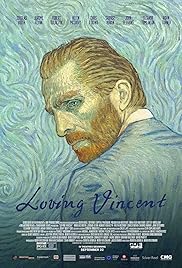
The world’s first fully oil painted feature film, brings the artwork of Vincent van Gogh to life in an exploration of the complicated life and controversial death of one of history’s most celebrated artists.

A Polish English co-production, the film features Polish animators with voices from actors largely from the United Kingdom.  LOVING VINCENT boasts to be the first hand painted animated feature.  It examines the mysterious facts surrounding the death of the famous Dutch painter Vincent Van Gogh.

It took more than 100 animators and them to be re-trained in animation for the film.  It shows.  The film is beautifully ‘painted’ in the style of the Master himself.  Each frame could very much be something Van Gogh himself might have painted.  The segments in the farm fields and the colours used are reminiscent of Van Gogh’s most famous paintings.

Audiences should be familiar with the particularities of Van Gogh’s life.  Among these facts are his suicide, his stay at a mental asylum, his cutting off of his ear in Arles and his relationship with his brother Theo.  LOVING VINCENT reveals more of the facts and details with some doubt given on the reasons behind Van Gogh’s death.  But many will not know that he wrapped the severed ear as a present to given to a whore or that Theo paid for most of Vincent’s art materials and lived poorly as a result.

All the incidents surrounding Van Gogh’s death are revealed through the excuse of the delivery of one last letter Vincent apparently wrote to his brother Theo.  This letter was undelivered by the postman Joseph Roulin (Chis O’Dowd), so he commission his son Armand (Douglas Booth), a hard drinker and scrapper to do the job  He reluctantly does.  When he discovers that Theo is also dead, he finds the good doctor who was Van Gogh’s good friend and mentor to give the letter to.  He then finds out the truth behind Van Gogh’s death.

Directors Dorota Kobiela and Hugh Welchman play their film like an investigational whodunit.  One segment has Armand explained that Van Gogh could not have shot himself in the stomach due to the impossibility of the gun’s angle.  Why too would Vincent ask for art supplies the next day from his brother if he was to commit suicide?  Doubts are also put about on Van Gogh’s flirting with whores and also at one point possible homosexuality at a possible gay encounter with the teen village idiot.

The film could do with a bit of humour even though the subject matter is serious.  I cannot recall a single bout of humour in the film.  The film also does not justify Armand’s motivation into wanting to know the truth of Vn Gogh’s death.  He does say at one point in he film: “I want to do more for the artist,” but why he feels that way is never dealt with.

But not all of the artist’s bad points are highlighted in a film that is affectionally called LOVING VINCENT, though moments that highlight the artists work are rare.  Van Gogh’s dream of showing the world that a nobody like him could have the world remember him forever is inspirational.  The film’s romanticizing of his death as a short cut to heaven instead of the slower route of a  normal death is cute. 

The coloured hand painted animation is well worth the price of the admission ticket of LOVING VINCENT, despite the events of its intriguing premise unfolding stoically. 

Trailer: https://www.youtube.com/watch?v=47h6pQ6StCk

LUCKY (USA 2017)  ***1/2

Directed John Carroll Lynch

Harry Dean Stanton plays the character of LUCKY of the film title in a film that audiences recognize could be the real Harry Dean Stanton.  LUCKY is the nickname the ex-navy man earned after being designated the cook in the Navy while others were sent to fight and die during the War.  Lucky is 90, bitter, alone (but not lonely as he has a routine of chores to do each day), cynical, sickness free, and smokes a lot.

The audience sees Lucky doing the same things daily – visiting the grocery store with the Mexican cashier to get his cigarettes; having some drinks at the bar; having coffee at his dual diner; and watching his favourite quiz show – but with different reactions.  The soundtrack replays the tune of “Old River Valley’ on a harmonica.

The film contains a lot of musings like what realism (as explained by Lucky as real for one person but not necessarily in another occurs to another) is or even the friendship between man an animal as the latter discussion (it is apparently essential to the soul) starts.  Lucky’s friend, Howard (David Lynch) at the bar walk in to sadly announce the loss of President Roosevelt, his pet tortoise. (Lucky does not believe this….. not the statement but the existence of a soul.)  Though the latter statement seems inconsequential dialogue in the script, it is important in the way Lucky looks at life if he does not believe in the existence of a soul.

The film is directed by actor John Carroll base on the script by Logan Sparks and Drago Sumonja.  The film pays more attention to the character than to plotting.  The film is also wonderfully acted by Stanton.  Director David Lynch delivers a surprisingly moving speech defending his case of leaving his inheritance to his tortoise that has apparently escaped as does James Darren how a nothing person like him transformed to one who now has everything.

LUCKY the film can be best described as a cynical coming-of age movie of a 90-year old man who has almost given up on life.  It is quite an idea for a film which is likely the story got made.  It is a film about an old fart that is not the typical Hollywood old fart film like the fantasies of old people reminiscing on their youth or having sex one more time.  Lucky confesses in one scene that he can hardly get it up any more.  Here, Lucky says in the film’s most intimate scene where he reveals his deep secret to his friend, Loretta (Yvonne Huff): “I’m scared.”  It all happens when he falls down out of feeling faint, though doctor (Ed Begley Jr.) tells him that nothing major is wrong with him.

Harry Dean Stanton passed away this year (2017).  LUCKY is a worthy swan song of an actor that has surprised audiences many a time with his wide range of performances.

Trailer: https://www.youtube.com/watch?v=YurR6xZeBCk

Film Review: PROFESSOR MARSTEN AND THE WONDER WOMEN (USA 2017) ***

Submit your Screenplay to the Festival TODAY

Professor Marston and the Wonder Women Poster
Trailer

The story of psychologist William Moulton Marston, the polyamorous relationship between his wife and his mistress, the creation of his beloved comic book character Wonder Woman, and the controversy the comic generated.

Director:

Angela Robinson

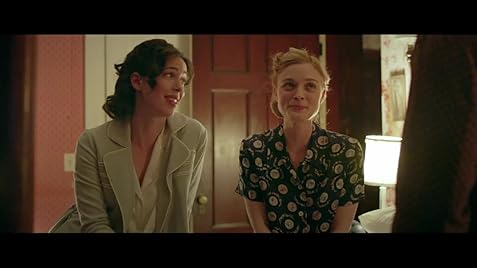
PROFESSOR MARSTEN AND THE WONDER WOMEN examines the relationship of Dr. William Moulton Marston (Luke Evans), the creator of WONDER WOMAN with his wife, Elizabeth (Rebecca Hall) and the second girl, Olive Byrne (Bella Heathcote) in their menage a trios.  A man with two women living together with S&M sex including bondage and spanking, set in the 40’s does not an easy film make.  Credit therefore goes to Robinson for incorporating an uncomfortable subject into a movie for general audiences.  In fact, the film goes to accredit bigamy.  Those that do not agree are said in the film to be simple.  The film will definitely infuriate many. The film does not always work, as do awkward projects.  

The film begins with the rejection of the violence and sex depicted in the Wonder Woman comics.  While appearing at the Board on Enquiry, Dr, Marsten explains his case, while the film flashes back to his marriage and sexual arrangements with Olive under the guise of psychology apprenticeship.   Complications arise when Olive’s two boys come into the picture and when a neighbour enters the house unexpectedly and catches the three in a  sexual bondage act.

For a film promoting the acceptance of S&M and bondage, it is surprising that there are no graphic sex scenes nor even nudity.  Yet the film comes across as disturbing one.  It shows that no graphic scenes are needed to take the sexual content to an different psychological frontier.  By means of intercutting of scenes with the Wonder Woman comic book showing tied up prisoners, whipping and spanking, director Robinson cleverly makes her point.

But if one examines the situation on another level, there is nothing really objectionable.  Many men have mistresses.  The only difference in this case is that the wife is also in love with the mistress.  It also makes the sex affair more congenial for everyone if the three decide to stay together.  Everything works well till society objects.  The same thing happened in the past for gay couples.  They were rejected and ostracized from society with their acts deemed evil.  Now that society has condoned same sex marriages, gays living together are cool.  Robinson recognizes the fact and emphasizes it in one key scene where Marsten screams that it is only society that has to accept them.   As to sexual fetishes, everybody has them, in one form or another.

Robinson is also quick to point out that the film is set in 1928 (though Wonder Woman was created in 1941), at the start and that there is a new psychology that is in the making.  At one point, Professor Marsten says to Olive: “How do you expect to learn about life if you refuse to live it?”   Some psychology is also thrown into the film for good measure, like Marsten’s explanation of the 4 categories of dominance, compliance, inducement and submission.  This enhances the credibility of the characters and the plot of the film.

After viewing PROFESSOR MARSTEN AND THE WONDER WOMEN, one will never look at the WONDER WOMAN comics again in the same light.
Trailer: https://www.youtube.com/watch?v=r991pr4Fohk

Film Review: SCHOOL LIFE (Ireland/Spain 2016) *** 1/2

Submit your Screenplay to the Festival TODAY

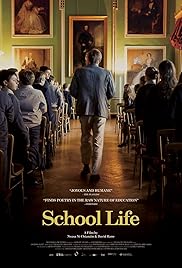
School Life Poster
Trailer

2:24 | Trailer
Long careers are drawing to a close for John and Amanda, who teach Latin, English, and guitar at a stately home-turned-school, where they are legends with a mantra: “Reading. ‘Rithmetic. Rock ‘n’ roll!” But leaving is the hardest lesson.

Writers:

Etienne Essery (script and story consultant), Neasa Ní Chianáin


Premiering at Sundance and Hot Docs in Toronto, SCHOOL LIFE begins its theatrical run and is one film sure to captivate audiences for its charm and magic.  Almost everyone has fond memories of their primary school and their teachers who are very impressionable.  The film takes the audience around the classes to reveal the studies, the hobbies as well as they extra-curricular activities.  Watching the children read End Blyton’s Famous Five novels will certainly make one wish for to re-live these wonderful times.

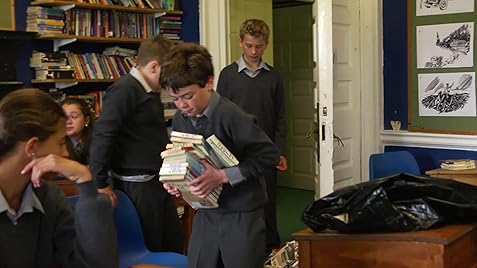
SCHOOL LIFE begins with an excellent introduction of two old teachers, a husband and wife as they talk and prepare for their new term.  They teach in the only primary-age boarding school in Kells, Ireland.  Headfort, a school not unlike Hogwarts with its 18th century buildings, secret doors and magical woodlands, has been home to John and Amanda Leyden for 46 years and a backdrop to their extraordinary careers.  For John, rock music is just another subject alongside Maths, English, Scripture and Latin, all of which are taught in a collaborative and often hilarious fashion.  For Amanda the key to connecting with children is the book, and she uses all means to engage the minds of her young charges with literature.

The film charmingly demonstrates what it means to educate.  It is not merely the dissemination of information but the care and concern given to the kids.  This is especially true for a boarding school whee the children are left behind for the first time not to see their parents for a few weeks.  For nearly half a century John and Amanda have shaped thousands of minds but as the film opens, it is finally time for them to start making preparations for their retirement.  “What are we gong to do when we have nowhere to go?” questions the husband.  The two are still healthy though they smoke quite a bit.

The film’s best segment has a teacher discussing with the class the controversial issue of same sex marriage.  The reactions from the primary school students are innocent, revealing and sometimes surprising.  “It is not right,” says one. “God made a man and a woman not two men, to which the teacher replies, “How do you know God exists?”   Other keen observations from the film include the teachers’ speed at rebuttal and the delicate concern each one has over their pupils.

The film ends with the pupils finishing the school year and leaving the school with their parents.  It is a touching moment when goodbyes are said.  The audience also feels sad to have to depart with the film’s characters who have been made so endearing by the filmmakers.

The film flows so smoothly it feels as if the doc is scripted.  Well conceived from start to finish, moving, sad, funny and inspirational, SCHOOL LIFE turns out to be marvellous entertainment.

Trailer: http://www.imdb.com/title/tt5475022/videoplayer/vi974108953?ref_=vi_nxt_ap