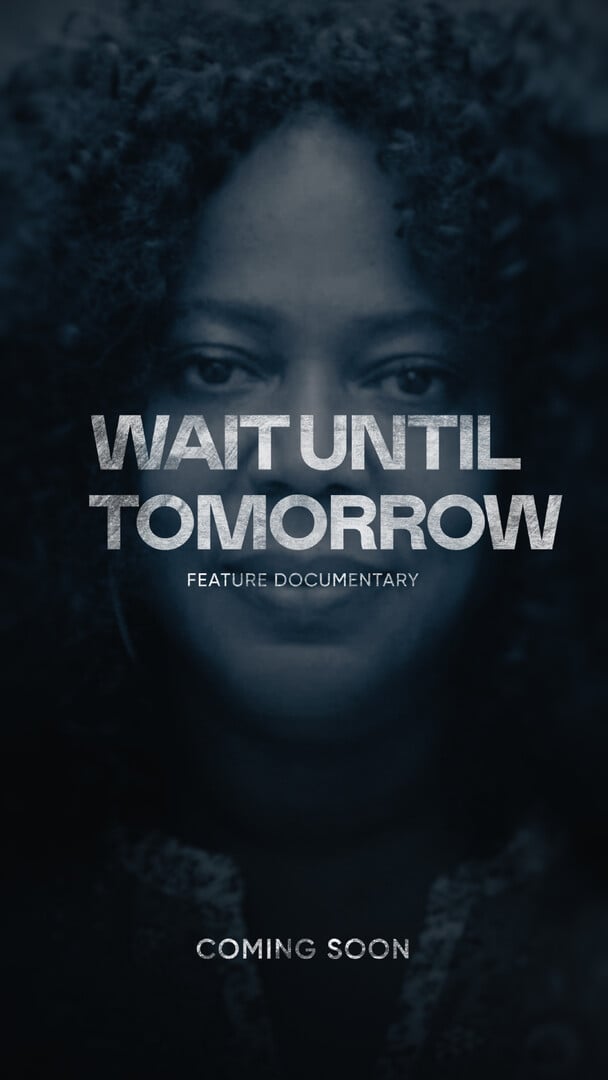
Watch Today’s FREE Festival: DOC Feature Film Winner (Wait Until Tomorrow)

Watch the festival at 8PM EST FOR FREE by signing up for the FREE 3-DAY trial using the link, or go to http://www.wildsound.ca

Watch today’s Festival: https://www.wildsound.ca/events/doc-feature-film-winner-wait-until-tomorrow

Wait Until Tomorrow, 70min., USA
Directed by Osato Dixon
This documentary follows the journeys of Black families over two years, showcasing their struggles, survival, and pursuit of success across diverse economic paths. It examines five distinct themes that shape Black economic mobility, intercut with expert interviews from McKinsey’s Black Economic Mobility Institute. Through intimate family stories, it explores the challenges and triumphs of Black life, offering an in-depth look at the factors influencing economic mobility and the fight for a better future.

https://www.instagram.com/osatodixon/

https://www.wildsound.ca/videos/audience-feedback-wait-until-tomorrow

Interview with Filmmaker Rowan Kelley (THE HAND OF DARKNESS)

The Hand of Darkness, 8min., USA
Directed by Rowan Kelley
In 1978, Astoria, Oregon, newcomer Alice Mitchell becomes the target of an otherworldly entity hell-bent on consuming her soul to regain its former power.

https://www.instagram.com/rowanrkelley

Get to know the filmmaker:

1. What motivated you to make this film?

The Hand of Darkness was a project my team and I made as part of our academic coursework. I dropped another project of mine in order to make this one instead because I really wanted to create something that felt like a throwback to the 70s and 80s films I love. I wanted to make a short that seemed like it could be the opening of a Stephen King novel, something that felt like IT mixed with The Goonies, Lord of the Rings, and Coraline.

2. From the idea to the finished product, how long did it take for you to make this film?

If I remember correctly, we shot the film in three days over a weekend, with a few weeks of development and pre-production beforehand, all in Los Angeles. Post-production took a bit longer, closer to five or six weeks. We were also attending full-time classes throughout the process, so the deadlines were tight for what we were trying to accomplish.

3. How would you describe your film in two words!?

Great question! I would say, “Supernatural Kidnapping.”

4. What was the biggest obstacle you faced in completing this film?

Oh gosh, so many! Ha. For as simple as the short was, it turned out to be much more complicated than it looks. The first thing that comes to mind is that the film was supposed to take place in Astoria, Oregon, but we could only shoot in suburban and metro Los Angeles. Normally that would be a project killer, but I love these kinds of challenges. I still wanted it all: the exteriors, the iconic Astoria locations, and a house that looked like it belonged there, big and Gothic with character. I also needed a large, imposing attic for the ending scene.

The final result is actually a trick of three different houses stitched together to look like one, plus some VFX work using real stock footage of Astoria I shot on a quick weekend trip to Oregon with a buddy. A bit of color grading also went a long way.

5. What were your initial reactions when watching the audience talk about your film in the feedback video?

I was thrilled that the short resonated with people. When I make a film, I primarily keep one audience member in mind: me. Ha! But I am also just a regular moviegoer, and I hope that once the film goes out, it finds the right audience who connects with it.

I love to genre-bash and mix the familiar with the new until it creates something strange and fresh that excites me or that I have never quite seen before. It is not for everyone, but I am a genre nerd at heart. If the film entertains even a single person, or makes someone’s day a little brighter, that is enough for me. To everyone who took time to watch, I give a very large THANK YOU.

6. When did you realize that you wanted to make films?

I have always been drawn to cinematic experiences and storytelling as a kid. I distinctly remember the first time I realized I wanted to make films was walking out of the theater after seeing The Hobbit: An Unexpected Journey. I remember thinking Peter Jackson had the coolest job in the world, and all I knew was that I wanted to do exactly what he did and build worlds for people to enjoy.

7. What film have you seen the most in your life?

Without a doubt, The Lord of the Rings trilogy. I consider all three films one singular experience, and I have seen them more times than I can count.

8. What other elements of the festival experience can we and other festivals implement to satisfy you and help you further your filmmaking career?

That is a great question. I suppose there is only so much festivals can do, but honestly, just having the opportunity to screen a film in front of an audience is gold. The chance to interact with other like-minded filmmakers is also huge. Any sort of press or interviews help greatly too.

9. You submitted to the festival via FilmFreeway. How has your experience been working on the festival platform site?

I love FilmFreeway. They make it extremely easy to apply to festivals and showcase projects.

10. What is your favorite meal?

Probably a good ribeye steak or fettuccine alfredo!!!

11. What is next for you? A new film?

I am currently in the middle of festival runs for both The Hand of Darkness and my most recent project, A Darker Place: Cases from the DCA. It is a 26-minute epic horror TV episode, a 90s science fiction, multi-dimensional monster-hunt story centered around a group of soldiers from a covert government organization called the DCA (Department of Creature Affairs).

Alongside those, I am writing and beginning early development on what I hope will be my first feature film: The Dark Labyrinth. It is an epic dark fantasy adventure I plan to make as a stop-motion animation. It is a story I absolutely love and cannot wait to share one day. The best way I can describe it is Lord of the Rings meets Pan’s Labyrinth, Legend (1985), and Silent Hill.
Interview with Filmmaker Ben Harl (MARA)

MARA, 18min., USA
Directed by Ben Harl
After years spent recovering from a botched exorcism, Jake prepares to reintegrate into society. However, the mounting pressures of everyday existence trigger a harrowing regression back into madness.

Get to know the filmmaker:

What motivated you to make this film?
I know that stories about exorcisms and possession have been done many times in the past, but I’ve always wondered what happens to people who have survived a possession and exorcism. Often, once the exorcism is complete the story ends. I wanted an opportunity to visit a possession/exorcism survivor years later, to see what it did to their psychosis.

From the idea to the finished product, how long did it take for you to make this film?
The whole process took about a year to complete. We spent a lot of time on pre-production making sure that we crafted a very particular look and feel. And we did the same in post-production, being very selective with the look, feel and sound of the film. The actual principal photography was shot over a three day period.

How would you describe your film in two words!?
Psychological Horror!

What was the biggest obstacle you faced in completing this film?
Trying to strike a balance between the actual horrors of possession and the psychological aspects of potential dissociative personality disorder. It was a very fine line to walk without diving too deep into either side. We really wanted to leave the audience wondering if the character was actually possessed, or if they were a victim of psychosis.

What were your initial reactions when watching the audience talking about your film in the feedback video?
Very happy! It’s always validating when the audience picks up on the subtlety you’re trying to convey! I feel like they really understood what we were trying to achieve!

When did you realize that you wanted to make films?
I’ve been a writer and storyteller my whole life. But it was about 8 years ago that I realized I could move my stories from page to screen. Being able to use visual mediums to tell those stories has really given me another layer of creativity!

What film have you seen the most in your life?
I’m a huge fan of all horror films. I grew up watching horror films with my mother. It’s almost impossible to gauge which one of these I’ve watched the most!

What other elements of the festival experience can we and other festivals implement to satisfy you and help you further your filmmaking career?
I can’t think of anything else you can do to improve! The level of care and communication you offer the filmmakers is top notch!

You submitted to the festival via FilmFreeway. How has your experiences been working on the festival platform site?
FilmFreeway is terrific! They do a great job of promoting and assisting in the process!

What is your favorite meal?
There’s nothing better than a nicely cooked ribeye steak!

What is next for you? A new film?
We’re currently working on a feature film that will hopefully begin principal photography early next year! It’s an extremely fast paced horror film that I’m very much looking forward to. In the meantime, I’m working on a book of short stories, as well as a novel!

Interview with Filmmaker Cyril Emmanuel Ferment (THE OTHER)

THE OTHER, 3min., France
Directed by Cyril Emmanuel Ferment
At 3:15 a.m., Lise is awakened by a strange noise. Dan has disappeared from the marital bed, and a disturbing clue lies on the sheet. Armed with her lantern and her courage, Lise goes to look for Dan in the apartment…

Get to know the filmmaker:

1. What motivated you to make this film?

My friend and director PASCAL SID (Derrière les murs (with Laetitia Casta), Luc Besson’s Playground, etc.) sent me a message one fine morning, telling me that he had just bought a BLACKMAGIC 6K. He asked me if I had a short film in my archives that we could test in low light. I had written this project a long time ago. I said GO!

2. From the idea to the finished product, how long did it take you to make this film?

Three weeks.

3. How would you describe your film in two words?

Unexpected, chilling.

Translated with DeepL.com (free version)

4. What was the biggest obstacle you encountered in completing this film?

Finding the apartment. I would also like to point out that Pascal Sid managed to light the entire film with six LED lamps for the interior lighting of the closets. Quite a feat!

5. What were your initial reactions when you saw the audience talking about your film in the feedback video?

I felt immense pride and joy that the critics understood the meaning, proof that the work had been well done. The second thing was enjoying giving pleasure.

Translated with DeepL.com (free version)

6. When did you realize you wanted to make films?

I’ve been a screenwriter for 13 years. My latest film as a screenwriter is KALI, directed by Julien Seri and co-written with Pascal Sid. We stayed at number 1 in France on AMAZON PRIME for 6 weeks and in the TOP 10 worldwide for several weeks. My first short film was in 2014. This is my fourth, in fact, since I started in 2012. But writing has taken up all my time, so I’m now thinking of devoting more and more of my time to directing, without giving up my job as a screenwriter, of course.

7. What film have you seen the most in your life?

Martin Scorsese’s Goodfellas.

8. What other elements of the festival experience can we implement with other festivals to satisfy you and help you advance your film career?

My imagination is limitless, as is my pen.

Translated with DeepL.com (free version)

9. You participated in the festival via FilmFreeway. How was your experience working on the festival platform’s website?

The FilmFreeway platform is exceptional, and I mean that. It’s simple, effective, and above all, it opens us up to the whole world. For example, THE OTHER just won the award for best micro short in Bangkok, so it’s hard to do better than FilmFreeway.

10. What is your favorite meal?

Breakfast, then off to the gym.

11. What’s next for you? A new film?

I’m currently working on a short film, a 25-minute drama that will be shot in early 2026, in January. I’m also thinking about a feature-length version of THE OTHER. I’ve also just finished writing PASCAL SID’s next feature film, LAMBDA, a powerful and entertaining story.

Interview with Filmmaker Ross Langill (BREACH)

BREACH, 3min., Canada
Directed by Ross Langill
A pregnant woman defends her house from two intruders

https://www.instagram.com/perspectivefilms1990/

Get to know the filmmaker:

1. What motivated you to make this film?

I wanted to try and make a film about a strong female character. I have lots of strong women in my life and wanted to showcase them somehow.

2. From the idea to the finished product, how long did it take for you to make this film?

From concept to screen, I think was about 6 months.

3. How would you describe your film in two words!?

Pregnant Thriller

4. What was the biggest obstacle you faced in completing this film?

Getting everyone to the location. We shot on Bowen Island, a small island close to Vancouver. Just trying to make sure everyone got the right ferry, had rides. The transport logistics of it all.

5. What were your initial reactions when watching the audience talking about your film in the feedback video?

It was awesome. It was kind of surreal to hear people giving that level of praise for a 3.5 minute short! Just stoked overall!

6. When did you realize that you wanted to make films?

Probably in grade 5. I always loved the assigments to make your own stories. And movies have always been apart of my life with my mom, dad, brothers, and friends.

7. What film have you seen the most in your life?

Honestly, probably Dumb & Dumber. Perfect comedy in my mind. Perfect escape to just laugh and enjoy yourself!

8. What other elements of the festival experience can we and other festivals implement to satisfy you and help you further your filmmaking career?

Honestly, think this festival has helped more than most. Getting the audience feedback, an interview, posting our films. I think a lot of festivsls could learn from you and help filmmakers progress!

9. You submitted to the festival via FilmFreeway. How has your experiences been working on the festival platform site?

Easy. Everything us right there. You can search for what you want. And submit to the festival that’s right for your film!

10. What is your favorite meal?

Chicken wings and s cold pint!

11. What is next for you? A new film?

Looking to submit to some grabts for another short film!

Interview with Filmmaker Timothy Benjamin Slessor (FLESH WISH)

FLESH WISH, 4min., UK
Directed by Timothy Benjamin Slessor
An experimental horror inspired by H.P. Lovecraft, David Cronenberg and Clive Barker, this music video / short details in an abstract way the summoning of demons through a ritual performed behind the locked doors of a 1970s terraced house. Images are a combination of 8mm cinefilm, analog stills and materal initially generated with the use of a variety of AI platforms before they were brought into After Effects were they were everything was heavily manipulated, with many layers of texture, noise and grain added, lighting added or altered, images distorted and blended together and so on. The actual editing was arduous, often frame-by-frame (everything was done by hand) with images further distorted and manipulated with a variety of blending modes. It was a one-man job and that one man was very, very tired by the end of it! (please note that the encode on the FilmFreeway screener is not very good, a sharper version can be seen on the Vimeo link used as the project website below)

Get to know the filmmaker:

1. What motivated you to make this film?

Several factors! Firstly, I wanted to make something visual to accompany the release of my album. Secondly, I wanted to experiment with a lot of different ideas and techniques, but importantly have a finished piece of work to show for it, not just a bunch of tests. Thirdly I wanted to see how I could kind of corrupt and pervert generative ai platforms and work them into my editing and animation / vfx practise and finally I wanted to make something that would surprise and confound my friends and colleagues!

2. From the idea to the finished product, how long did it take for you to make this film?

It was about three to four months of laborious work, mostly in after effects and premiere. I had to create all of the images and heavily distort and rework them and the editing was done frame-by-frame. About 6 months after it was finished I considered going back and tweaking some things but one look at the edit sequence was enough to convince me to leave well alone!

3. How would you describe your film in two words!?

Quite fleshy.

4. What was the biggest obstacle you faced in completing this film?

The hardest thing was just getting it finished! It was so hard to create enough interesting images and scenes, especially given the extremely fast cut-rate. I kept trimming the track down (ultimately from around 5 mins to about 3’45 I think) just so I could get it done (I had to keep pushing the release of the album back too as a result).

5. What were your initial reactions when watching the audience talking about your film in the feedback video?

Just joy! Joy to hear strangers commenting, joy that they’d engaged with the piece and had interesting things to say about it and joy that they liked it!

6. When did you realize that you wanted to make films?

I think when I gave up on becoming an astronaut, around the age of 6.

7. What film have you seen the most in your life?

Robocop. If I put it on now I can recite every line along with the film.

8. What other elements of the festival experience can we and other festivals implement to satisfy you and help you further your filmmaking career?

I’m not sure, some sort of networking element? I exist and work in a bubble so it would be nice to engage with others.

9. You submitted to the festival via FilmFreeway. How has your experiences been working on the festival platform site?

Not bad, although the endless spam requests and dubious discounts becomes a bit wearying.

10. What is your favorite meal?

My wife is Japanese and I’m going to go with her okonomiyaki.

11. What is next for you? A new film?

I’m not sure, I started working on another experimental piece called Spores but I couldn’t get it to work the way I hoped. I have a couple of short narrative scripts I’ve written too but I desperately need an energetic and ambitious producer! Any takers please get in touch…

Interview with Filmmaker Clare McKay (LIVING AN AMERICAN DREAM)

LIVING AN AMERICAN DREAM, 45min., USA
Directed by Clare McKay
Two Haitian brothers, along with family and friends, discuss their experiences growing up adopted in a ranching lifestyle and how rodeo plays a part. A story of faith, passion, drive and following your dreams no matter where you’re from or plan to go.

https://www.instagram.com/livinganamericandreamdoc/

Get to know the filmmaker:

What motivated you to make this film?
This film was actually never meant to be but I’m a storyteller at heart. I started with the simple idea of creating short sizzle reels for my brothers who were avid bronc riders at the time and slowly but surely the story was born out of traveling around with them and capturing footage. I began to think how I could add more “meat” to what I was collecting and Living an American Dream was born.

2. From the idea to the finished product, how long did it take for you to make this film?

Living an American Dream took 6 years to create.

3. How would you describe your film in two words!?

First child

4. What was the biggest obstacle you faced in completing this film?

The biggest obstacle was finding an editor or production company that understood my voice and vision without attempting to change the narrative. While I ultimately maintained creative control, the lack of collaboration made the process an “uphill battle” that I would not want to repeat.

5. What were your initial reactions when watching the audience talking about your film in the feedback video?

Shock and pride. I will admit that although I am a proud and confident woman. I am an artist and nothing we do is ever perfect or deserving of praise because it’s almost never “finished” the way we might envision in its entirety. So, I was certainly shocked to hear the positive feedback but in the end I felt immense pride and validation that I was being heard and seen. The audience who watched the film understood the deeper nuances that many miss and I felt so much pride in that. I worked 6 years on this project and so much of it was about piecing together a true and honest story, but there are subtleties within it that I worked hard to put there and in truth they aren’t all that subtle. I’m beyond pleased with the reactions I received.

6. When did you realize that you wanted to make films?

I knew I wanted to be in the film world before I was 10 years old. I remember sitting on the floor in my family’s living room and we were watching a film, I don’t remember which one but I just knew that that is what I wanted to do. Spielberg is the director I look up to the most, however. His ability to weave storytelling into a 3 hour masterpiece with lighting, sound, and cinematography is mesmerizing and something I aspire to.

7. What film have you seen the most in your life?

I couldn’t tell you. I have watched thousands of feature films, short films, documentaries and more. Some I have watched once or twice, other maybe three or four times but I don’t believe there’s one singular film that I return to repeatedly.

8. What other elements of the festival experience can we and other festivals implement to satisfy you and help you further your filmmaking career?

A meet and greet with the filmmakers would be a wonderful networking opportunity and for those of us who may be newer or mid-career a chance to experience that kind of atmosphere. It would also be fun to be in a room with like minded creatives and have a chance to talk about the films we’ve created, what we plan to create, who inspires us etc. Perhaps having a keynote speaker, someone within the film world, to come and give a talk about the business or the creative side. Something to inspire us all.

9. You submitted to the festival via FilmFreeway. How has your experiences been working on the festival platform site?

I enjoy FilmFreeway because it’s user-friendly and uncomplicated. In a world of apps and websites all trying to stand out I think a solid site simply needs to do whatever job it was designed to do with the least amount of stress on the visitor.

10. What is your favorite meal?

One where I’m surrounded by family and friends, where we’re all laughing and truly enjoying each other’s company. We could be eating stale bread and drinking water and that is all I would need, the love.

11. What is next for you? A new film?

Yes. I am currently in post-production on the newest short documentary and writing two other films. The first is a feature length narrative and the second is bouncing between a short docu-series or another feature length documentary.

Interview with Filmmaker Yixin Sun (BORN)

BORN, 3min., Australia
Directed by Yixin Sun
This 2D experimental animation depicts a planet with reproductive functions, exploring the transformations associated with pregnancy and childbirth. By portraying these changes on both a psychological and physical level, the animation aims to highlight the impact of reproductive trauma and advocate for greater societal awareness and compassionate care.

https://yixinsun.cargo.site/born

https://www.instagram.com/xsuens_/

Get to know the filmmaker:

1. What motivated you to make this film?

At first, I only wanted to create a simple experimental animation about body horror. But as I went deeper into my research, I realized that using body metaphors to express themes of reproductive fear could be a powerful idea. That realization encouraged me to explore how experimental animation could use body parts as metaphoric visual elements. It became not just an experiment in form, but also a way of confronting and expressing anxieties around reproduction, trauma, and the fragile relationship between the body and the mind.

2. From the idea to the finished product, how long did it take for you to make this film?

It took me around three months in total. I spent about two weeks developing the concept, but the majority of my time was consumed by creating the animatic. Ironically, I left too little time for the final production and refinement of the animation itself.

3. How would you describe your film in two words!?

Fear and unease.

4. What was the biggest obstacle you faced in completing this film?

One of the biggest obstacles was my limited experience with animation drawing techniques. This made it difficult to give certain visual elements—like the interaction between organs and the umbilical cord—the elasticity and tension that animation usually requires. Another challenge was the lack of a structured storyboard. Instead of planning in advance, I let my ideas develop spontaneously during the drawing and animating process. While this allowed for creative freedom, it also caused the project to stall at certain points, and I had to push myself to move forward.

5. What were your initial reactions when watching the audience talking about your film in the feedback video?

I was genuinely surprised and moved by how quickly the audience connected with the emotions and tension in the film. For me, that was already a success. What I didn’t expect was that some viewers were able to interpret the film on a deeper level, relating the reproductive imagery not only to bodily and psychological harm, but also to broader ideas about nature, life, and death. Their interpretations expanded the meaning of the work beyond what I had initially imagined.

6. When did you realize that you wanted to make films?

It was around the end of my undergraduate studies. At that time, I had a deep passion for motion design, but I also grew up loving cinema. I suddenly thought, why not combine these two passions? Animation felt like the perfect medium for me to develop my own form of storytelling.

7. What film have you seen the most in your life?

The Lord of the Rings trilogy.

8. What other elements of the festival experience can we and other festivals implement to satisfy you and help you further your filmmaking career?

One of the most valuable things for me as a filmmaker is hearing how audiences respond to the work. I think festivals could provide more opportunities for structured audience feedback. Having access to diverse perspectives helps me understand how the film is being interpreted, what emotions it stirs, and where I could grow as a storyteller.

9. You submitted to the festival via FilmFreeway. How has your experiences been working on the festival platform site?

I appreciate how user-friendly the platform is—it made the whole process of submitting and tracking the film very easy.

10. What is your favorite meal?

I don’t really have a particular favorite. I’m not very sensitive about food.

11. What is next for you? A new film?

I’m hoping to continue building a career in visual storytelling. I’d love to contribute to new film projects, maybe as part of a larger creative team. As for making my own new film, I don’t have plans yet, but I see this film as just the beginning.

Interview with Writer & Producer Rani Sitaram (GREYTOWN GIRL)

Greytown Girl, 96min., South Africa
Directed by Darrell James Roodt
The true story of a small-town girl, born with physical limitations, abandoned as a baby, bravely builds her life and creates a love story that crosses continents through the romance of letter writing. An empowering and cinematic story of love and resilience.

https://www.greytowngirlthemovie.com/
https://www.facebook.com/greytowngirl/

Get to know Writer & Producer Rani Sitaram:

  1. What motivated you to make this film?

This is a true story of a small-town South African girl, born with physical limitations, and as a baby she was left at an under-resourced orphanage for black and Indian children , no challenge stopped her though, she bravely goes on to build her life, learns to read and write from magazines, even finds a pen-pal all the way across the oceans and creates a love story that crosses continents through the romance of letter writing.

When I heard Meena tell her story with such honesty and strength, it impacted me on the level of my Soul so I made her a Promise many years ago that I would make her film. I always keep my promises.

2.From the idea to the finished product, how long did it take for you to make this film?

In total from idea to finished product including delays from COVID it took me 8 years.

3. How would you describe your film in two words!?

In two words, the film is simply a “Promise Kept”

4. What was the biggest obstacle you faced in completing this film?
My biggest obstacle to the start of Production was COVID. The world stopped and systems changed. Funding was delayed and we lost precious talent along the way. Time was a resource that I had to watch slip away.

5. What were your initial reactions when watching the audience talking about your film in the feedback video?

It was certainly a heartwarming experience. I also felt so grateful that even though the world of the story was different and unique with many little cultural nuances, the film still had Universal appeal. The esteemed assessors seemed to have had a visceral experience from watching the film. All felt the different layers at the level of their Soul. Listening to the feedback it’s clear that audiences had a whole and fulfilled entertainment experience. They seemed to have gained something, learnt something, rose with the characters against a regime, lost something, cried happy and sad tears and most importantly fell in love. I felt that the film achieved what it needed to achieve. I am humbled and thankful for the feedback.

6. When did you realize that you wanted to make films?

I think I was born writing. My talent was probably nurtured over many a lifetime, so It’s almost channelled through me rather than from me. During the long enduring apartheid regime into which I was born, Black, Indian and Coloured communities could not engage in several careers from which we were banned. Filmmaking was one of them. As a young person, I never imagined I would make films. At the dawn of our democracy, I realised I had a passion for business as well. I completed a masters Business Strategy in the Netherlands and I evolved into making films in fiction and non-fiction genres. My career as a filmmaker began much later in my adulthood. I then realised that I could do both the business of film as a Producer and be in my creative space as a Writer. Today I have manifested my dream.

7. What film have you seen the most in your life?

I enjoyed Mira Nair’s Monsoon Wedding so much that I’ve watched it several times over and was equally rivetted by Christopher Nolan’s Interstellar and watched it many times.

8. What other elements of the festival experience can we and other festivals implement to satisfy you and help you further your filmmaking career?
The feedback provided by the Female Film Festival is so critical to the advancement and possible sale of a film product. Feedback becomes an added asset to the package. I thank you for this.
I would love for there to be more networking interaction with relevant role players like sales agents and distributors in global territories. Even if this networking is online.
This will close the gap in the marketing process of submitting to festivals.
Another benefit would be if the Festivals themselves had access to more financial resources and funding in order to offer winning submissions grants or funds for their next product.

9. You submitted to the festival via FilmFreeway. How has your experiences been working on the festival platform site?

It’s a helpful site creating access to independent filmmakers on a global scale. It was user friendly and I liked the fact that FilmFreeway goes through a process of verifying and accrediting festivals that filmmakers submit to.

10. What is your favorite meal?

In South Africa we have a diversity of people, beautiful coastlines and exquisite cuisine. Our cuisine is a fusion of the indigenous and the incomers. When the Indians were brought to work the sugar cane fields of KwaZulu Natal we also brought our spices. My absolute favourite meal is a spicy, exotic, rich crab curry and roti.

11. What is next for you? A new film?

I’m so excited about my next film. It’s equally immersive as Greytown Girl, but this time I’ll take you on a journey into magical realism and the supernatural. I have a diverse slate of content that I am currently writing and producing. I can’t wait to submit again next year.

Interview with Akiko Matsumoto (MENOPAUSE MENOPAWS)

Menopause Menopaws, 14min., USA
Directed by Akiko Matsumoto
This short comedic film about menopause uses humor as a powerful tool to break down walls and spark honest conversations. While menopause can be overwhelming—hot flashes, mood swings, sleep issues—it also has moments of unexpected hilarity. By leaning into the comedy, the film shines a light on the realities of this transition, helping women feel seen, less alone, and hopefully sharing a few well-earned laughs along the way.

https://www.instagram.com/akiko_nyc_la_jp

Get to know the filmmaker:

1. What motivated you to make this film?

My age. I’m a woman in my 50s, and I noticed that many women of my age don’t openly admit about them going through menopause. Also, I had the music first, I orchestrated using my laptop, and the ideas for the film grew from that.

2. From the idea to the finished product, how long did it take for you to make this film?

About a month.

3. How would you describe your film in two words!?

” ” this is a tough question “like it or Not” ?

4. What was the biggest obstacle you faced in completing this film?

The limitations of being a solo cellphone filmmaking. ( I am the main character and the only cameraman)

5. What were your initial reactions when watching the audience talking about your film in the feedback video?

“Finally, a festival where people watched my film until the end.” Thank you! Thank you and Thank you!! I had submitted to festivals focused on women, but some rejected ( that is ok) or even disqualified my work. One female film festival even said, “Comedy is not a feminist film.”

6. When did you realize that you wanted to make films?

Thanks to handy tools like smartphones, I realized I could use advanced yet affordable technology to create art.

7. What film have you seen the most in your life?

The Sound of Music and Amadeus.
I am a musician and a professional piano technician.

8. What other elements of the festival experience can we and other festivals implement to satisfy you and help you further your filmmaking career?

Festivals with open-minded audiences are wonderful. Constructive criticism from judges is also valuable, because we learn from it.

9. You submitted to the festival via FilmFreeway. How has your experiences been working on the festival platform site?

Excellent! Very impressive.

10. What is your favorite meal?

Rice.

11. What is next for you? A new film?

I won’t stop creating. When I find music that fits my narrative ideas, I will make another film. I encourage anyone (even kids) to do the same. I studied multimodal education and hold a doctoral degree, and my cognitive science experiments are still ongoing.