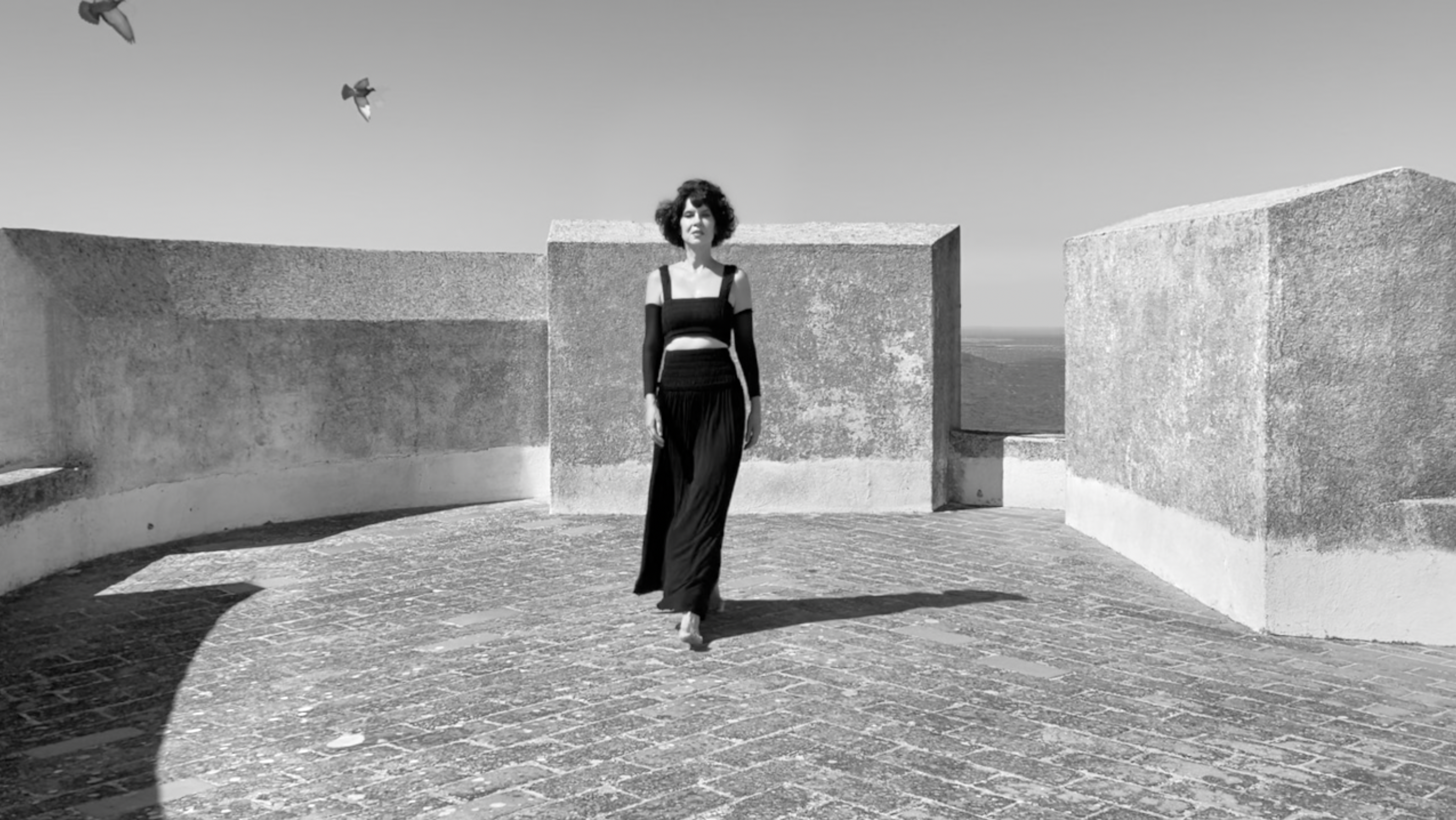
Threshold centers on an unnamed woman confined to a castle rooftop in southern Portugal. Filmed in black and white with a texture that feels unearthed, the work moves fluidly between temporal registers—past bleeding into present, the real colliding with the imagined, danger shading into performance. The protagonist becomes a modern Scheherazade, wielding seduction and cunning as survival tools. The viewer inhabits the position of both witness and accomplice, drawn into complicity by the act of watching. What unfolds is a choreography of emotional volatility and calculated gesture, each movement advancing a psychological duel that seeks catharsis through exposure and release.
Review by Julie C. Sheppard:
Threshold is a visually stimulating short that presents a female protagonist enslaved in a lonely castle. Shot in stark black and white, it has an ancient feel. The rather crumbling structure gives the central figure a constricted place to pace, as if a rat in a cage. Cinematography and, in turn, bold editing are at times truly dizzying, as things turn upside down, slow down to a snail’s pace, and images suddenly disappear.
Other captivating moments include the use of clever image duplication and seeing the massive, terrifying knife seemingly fly up in the air, with the use of camera reversal. Spine-chilling orchestral motifs, including a rumbling, sombre cello add to the sense of isolation and desperation in the piece.
The intense, disconcerting expressions on the face of the talented main character gives us reason to believe that she is indeed on the precipice of making a dire decision to dramatically relieve herself of her captivity.
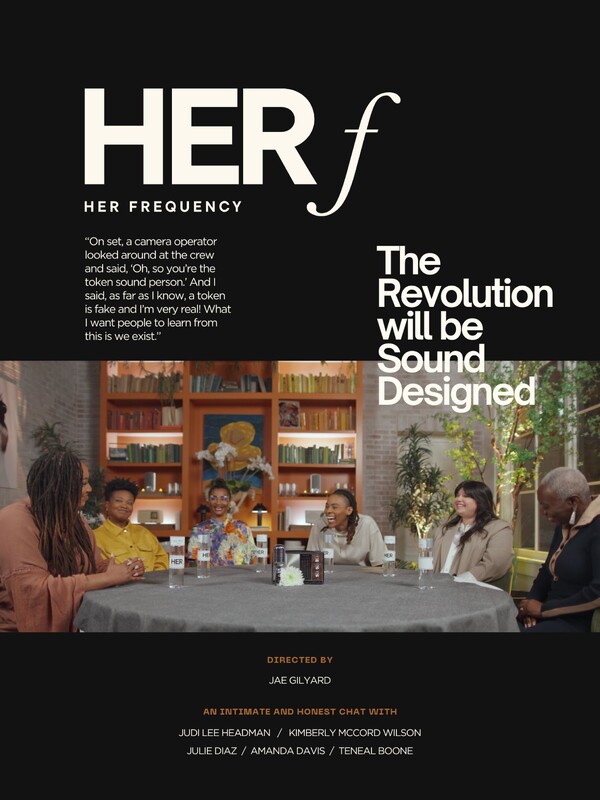
With stories that span from childhood inspirations to professional triumphs, HER Frequency is an intimate documentary that follows a deep and sometimes hilarious conversation between Black women and women of color about their authentic experiences and artistry in Sound.
I don’t think I’ve ever started a review this way but I am blown away by how amazing this film is. Music is the heartbeat of the world. It heals, it teaches, it provides a friend when you need one most and it adds a dynamic to motion pictures that generate emotion. Imagine what Back to the Future would be without a score? No thanks.
Her Frequency takes a table full of industry powerhouses in sound and has inspiring conversations with them. The questions asked by Osha McCall were deep and insightful.
Listening to the advice and experience from Amanda Davis, Kimberly Wilson McCord, Teneal Boone (who also produced this film), Julie Diaz and Judi Lee Headman was very empowering. Sound design, mixing, engineering and editing is different depending on if it’s a live concert, a film score or a studio album and I loved how they spoke about all of it. One of my favorite things while listening to a song is to be able to catch something that sits far back in the mix. It’s like you just found a winning lotto ticket! I love how they touched on this and hearing how cool it is for them when someone says “Hey I heard this in the mix”.
Jae Gilyard directed this and did such a great job! Also some incredible cinematography from Nina Miller plus the camera work was beautifully done. This film is a must watch for anyone in the industry. Even if you aren’t, it will inspire you to follow your dreams.
A drama set in the heart of a Southern Baptist congregation, where personal conflicts, church politics, and family legacies intertwine as they fight for the survival of The Church.
Get to know the writer:
1. What is your screenplay about?
Trinity West is drama set in the heart of a Southern Baptist congregation, where personal conflicts, church politics, and family legacies intertwine as they fight for the survival of The Church.
2. What genres does your screenplay fall under?
Television Drama
3. Why should this screenplay be produced
These are great characters and storylines about a large part of society that has few mainstream options.
4. How would you describe this script in two words?
Compelling Shocking
5. What movie have you seen the most times in your life?
Braveheart, Gladiator, National Lampoons, Star Wars and anything Marvel related. I really love well-crafted films.
6. How long have you been working on this screenplay?
I’ve been working on Trinity West for about a year and a half.
7. How many stories have you written? I have written countless stories. However, I have only been writing screenplays for 18-months.
8. What motivated you to write this screenplay?
I feel that this large segment of the population is under-represented in the mainstream TV viewing space. The story surrounds The Church but it is very accessible to everyone.
9. What obstacles did you face to finish this screenplay?
I did a lot of research with the religious community and officials. The revelations about the church, community and society as a whole walk a fine line. There are certain angles and stories in Trinity West that haven’t been touched broached by mainstream dramas.
10. Apart from writing, what else are you passionate about?
Comedy and Basketball. People that know me would say politics, but that’s just a result of observation.
11. What influenced you to enter the festival? What were your feelings on the initial feedback you received?
I wanted to see if my work could stand on its own. I had no idea that Trinity West would be an award winner. I was pretty shocked when I received the news. The feedback on Trinity West has been great and very positive.
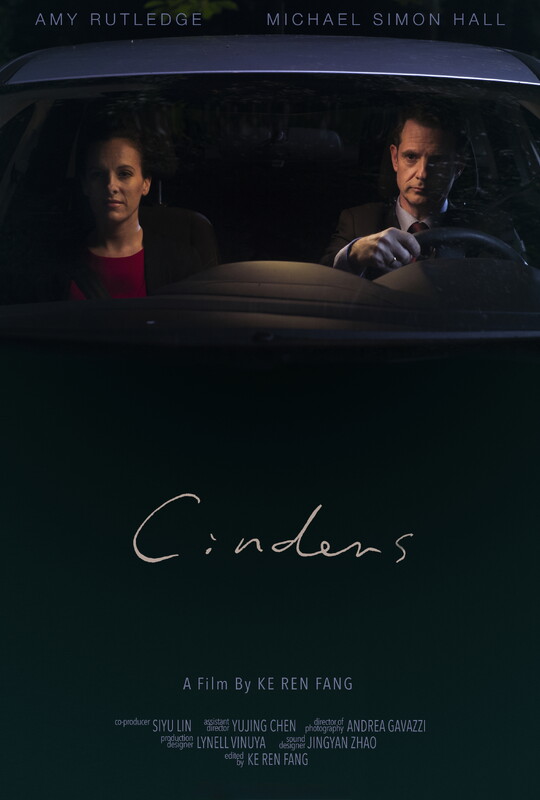
Cinders, 11min., USA Directed by Renfang Ke Interior decorator Alice and college professor George have been married for fourteen years. They raise a son and a daughter together, and they are happily married in others’ eyes. One night, Alice waits at home for George to get back from work. What she gets is not only her husband, but also the news that he is going to leave them for an affair. The trivia of marriage life has used up all their passion; love burns into cinders in just a blink. And George is not sure about what is to come.
Get to know the filmmaker:
1. What motivated you to make this film?
Stemming from one of my early relationships, and from observing my parents and others, I was fascinated by how people who begin as lovers can end up “torturing” each other over the smallest matters. I wanted to explore that dynamic. Luckily, I figured it out.
2. From the idea to the finished product, how long did it take for you to make this film?
A few years. I walked away from it at one point, and felt that it was time to wrap it up.
3. How would you describe your film in two words!?
Visceral. Quiet.
4. What was the biggest obstacle you faced in completing this film?
Taking it too seriously and not allowing the story to explore its own options. I held on too tightly to my initial intention. Ironically, that was the theme of the film: nothing healthy or beautiful can grow with too much control. I learnt to let go, let alone realize that the piece would eventually have its own journey as it interacts with the audience.
5. What were your initial reactions when watching the audience talking about your film in the feedback video?
It was very interesting. It felt as if the film had taken on a life of its own and was no longer associated much with me.
6. When did you realize that you wanted to make films?
In college, when I realized that I had something to express that I didn’t know how to put into words.
7. What film have you seen the most in your life?
Maybe The Lion King.
8. What other elements of the festival experience can we and other festivals implement to satisfy you and help you further your filmmaking career?
Nothing Special.
9. You submitted to the festival via FilmFreeway. How has your experience been working on the festival platform site?
Very good.
10. What is your favorite meal?
I love fish and hot pot!
11. What is next for you? A new film?
I am currently working on a photography project documenting the Asian Gay Community in the city.
Don’t Trust the Dead, 19min., USA Directed by Peter VanOosting Consumed with grief over the death of his forbidden love, Frank seeks the help of a medium. As fate envelops him, he reaches deeper into the world of the dead, despite a dire warning.
Get to know the filmmaker:
1. What motivated you to make this film?
I wanted to take the elements of a noir film and add a ghost to it. It was an opportunity for me to work in my two favorite genres at once
2. From the idea to the finished product, how long did it take for you to make this film?
It took about a year and a half, from the start of the script to the final edit of the film
3. How would you describe your film in two words!?
Spooky noir
4. What was the biggest obstacle you faced in completing this film?
Scheduling with volunteer actors and collaborators
5. What were your initial reactions when watching the audience talking about your film in the feedback video?
Of course, it is always nerve-wracking hearing people discuss your film, but it was also a thrill to hear how audience members reacted to the story and what elements worked for them. Each of the commentors were generous and kind with their feedback, which is greatly appreciated!
6. When did you realize that you wanted to make films?
My brother and I have been making films together since we were kids. Ever since I can remember, I’ve been fascinated with the magic and art of movie making.
7. What film have you seen the most in your life?
Probably The Empire Strikes Back (or maybe Jaws)
8. What other elements of the festival experience can we and other festivals implement to satisfy you and help you further your filmmaking career?
Honestly, I’ve been very impressed with this festival! Definitely one of my favorite experiences. Please continue with the feedback, because it is very welcome.
9. You submitted to the festival via FilmFreeway. How has your experiences been working on the festival platform site?
I find FilmFreeway to be easy to use and an essential service for filmmakers who are navigating the festival scene.
10. What is your favorite meal?
I should have a more creative answer, but I can’t lie – it’s pizza
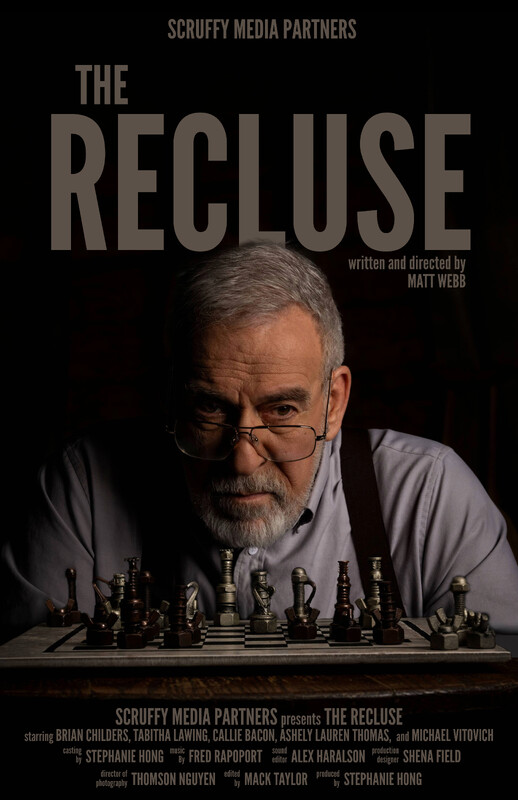
The Recluse, 13min., USA Directed by Matt Webb In early 2025 a breach at the Oak Ridge National Laboratory puts residents of Oak Ridge and surrounding counties at risk. During a mandatory curfew imposed by local officials, a man reluctantly allows strangers who show up at his doorstep to spend the night waiting inside, and it quickly becomes evident that things are not as they seem.
I wanted to create a film that drew on some of my favorite just creepy or unsettling films and television: Signs, The Twilight Zone, The X-Files, Stranger Things, and others, while exploring the dynamics of an eclectic group of personalities forced to interact during a mandatory lock-down. No surprise that part of the genesis of this film was the feelings of isolation and uncertainty that most of us felt during the first year of the COVID lockdowns.
2. From the idea to the finished product, how long did it take for you to make this film?
The idea happened a few years ago – post COVID lockdowns, but the script sat for a few years while I finished some other projects and established a great relationship with my Director of Photography – Thomson Nguyen. After we began pre-production in earnest, the film took about 6 or 7 months to fully come together and finally premiere at Film Fest Knox in my hometown of Knoxville, Tennessee.
4. What was the biggest obstacle you faced in completing this film?
Being mindful of cast and crew time. We wanted to keep the shoot to 3 10-hour days, and the script was just at 15 pages. Time management was challenging.
5. What were your initial reactions when watching the audience talking about your film in the feedback video?
It was really rewarding to hear that some of the intentional moments in the film resonated and that there was audience payback.
6. When did you realize that you wanted to make films?
It’s been since about 2022. I am 50 years old and films are not my career, just something I love and want to excel at.
7. What film have you seen the most in your life?
Probably National Treasure, Signs, Moneyball and Shawshank Redemption. Definitely an eclectic mix.
8. What other elements of the festival experience can we and other festivals implement to satisfy you and help you further your filmmaking career?
I think networking is really key, especially meeting mentor and colleagues at different stages of their film journey. Giving us the opportunity to connect is huge.
9. You submitted to the festival via FilmFreeway. How has your experiences been working on the festival platform site?
MELODIES OF THE ABYSS 2026, 29min., Australia Directed by Sam Iwata aka Liu Logline: A rock star bound by a devil’s pact drifts toward oblivion, haunted by forever regrets. Across the veil, a fallen angel mourns lost grace. Each seeks redemption—and in that search, confronts what they truly are, and what they might yet become.
1. What motivated you to make this film? Melodies of the Abyss was born from a need to explore the fragile boundary between identity and oblivion. I was inspired by Kurt Cobain’s final days — not to retell them literally, but to reimagine them as a psychological and metaphysical descent. I wanted to confront regret, fractured love, and the haunting presence of inner demons. My motivation was to create a film that doesn’t dictate answers, but invites the audience into a symbolic labyrinth where silence speaks louder than words.
2. From the idea to the finished product, how long did it take for you to make this film? It took me more than two years of writing, refining, shooting, and post-production — but more than that, it was two years of living with the film’s ghosts. Every stage demanded patience and persistence, and the time allowed the performances and symbolism to mature into something layered and true.
3. How would you describe your film in two words!? Hauntingly intimate
4. What was the biggest obstacle you faced in completing this film? Budget. Independent filmmaking is always a negotiation between vision and resources. Yet in a way, the limitation became part of the film’s DNA — forcing us to strip away excess and focus on precise decision-making.
5. What were your initial reactions when watching the audience talking about your film in the feedback video? I was deeply moved. Hearing strangers articulate the emotions and symbols I had planted felt like a mirror — proof that the film had reached beyond me. I was impressed by how closely they paid attention to details, even the ones quietly hidden. It reminded me why cinema matters: it’s not about control, but about resonance.
6. When did you realize that you wanted to make films? I realized I wanted to make films instead of TV commercials when my father passed away a decade ago. All the memories we shared in cinema came rushing back like thunder. From that moment, I slowly shifted my focus away from the highly profitable but ultimately hollow pursuit of advertising toward something I believe can change the world — films that carry emotional truth and leave behind echoes.
7. What film have you seen the most in your life? Character-driven films with unexpected twists upon twists always stay with me because they reveal the complexity of human nature while constantly surprising the audience. But if I have to name one, it would be Memento.
8. What other elements of the festival experience can we and other festivals implement to satisfy you and help you further your filmmaking career? Festivals are already a sanctuary for independent voices. What would elevate the experience further is deeper dialogue — curated panels where filmmakers and audiences dissect the craft, the symbolism, and the risks behind each film. Opportunities for mentorship and collaboration across borders would also help us grow beyond the screen.
9. You submitted to the festival via FilmFreeway. How has your experiences been working on the festival platform site? FilmFreeway has been a reliable bridge between filmmakers and festivals. Its simplicity makes the submission process less intimidating, and its reach allows independent films like mine to find audiences across the world.
10. What is your favorite meal? A simple bowl of ramen. It’s humble, layered, and comforting — much like cinema itself. Every ingredient matters, and together they create something greater than the sum of its parts.
11. What is next for you? A new film? I have three feature-length scripts waiting for me to revisit — two thrillers and one sports drama. Each explores identity, tension, and transformation in different ways. My next step is to bring one of these stories to life with the same emotional truth and symbolic depth that shaped Melodies of the Abyss.
Emily suffers from extreme anxiety. Her younger sister, Meredith, is the only one who can calm her but when Meredith dies unexpectedly, Emily’s anxiety takes a dark turn exposing terrifying secrets from her family’s past and creating a sinister way of dealing with her fears.
Get to know the writer:
1. What is your screenplay about?
After witnessing a gruesome family death, a single mother and her twin daughters are haunted by terrifying events—where past trauma, buried family secrets, and a thirst for vengeance begin to blur the line between mental illness and a supernatural nightmare.
2. What genres does your screenplay fall under?
Horror
3. Why should this screenplay be produced?
My film, Anxiety, is a tightly written, low-budget project that delivers high emotional impact with an unexpectedly terrifying edge. It’s a story that resonates on multiple levels, can be produced efficiently, and leaves audiences with a powerful, lingering experience.
4. How would you describe this script in two words?
Beautifully Distrubing
5. What movie have you seen the most times in your life?
Parenthood or The Princess Bride
6. How long have you been working on this screenplay?
2 Years
7. How many stories have you written?
10
8. What motivated you to write this screenplay?
A film producer asked me to write it for him.
9. What obstacles did you face to finish this screenplay?
After finishing the script, the producer who asked me to write it got hired to produce a children’s show so he was unable to produce a horror film. It then sat for a year before I picked it up again and began reworking it.
10. Apart from writing, what else are you passionate about?
Personal growth. I’ve worked in personal growth for over 10 years and am now co-teaching a course at UVA’s business school on making intentional life decisons that create joy and purpose while minimizing regret.
11. What influenced you to enter the festival? What were your feelings on the initial feedback you received?
It looked like a great festival that helps writers get their work seen.
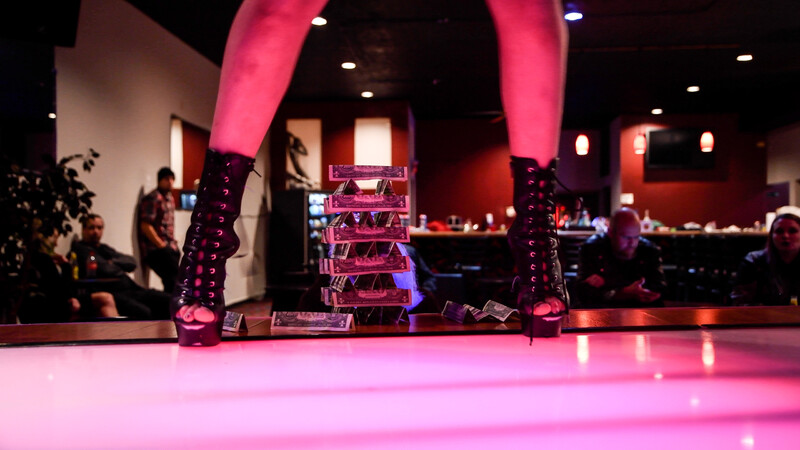
BEAUTIFUL DISASTERS, 14min., USA Directed by Trisha Lynn Furhman Of all people exotic dancers understand money can’t buy happiness. So where does it come from? This question sets Robin on a personal journey that takes her deep inside her desires and across the country; encountering hurricanes and personal loss of people she thought were just clients and coworkers. These events cause her to accept some hard truths not only about herself, but also about her industry.
Get to know the filmmaker:
1. What motivated you to make this film?
This story needed to be told to help remove the stigma from exotic dancing. Not everyone who dances is doing it as a side hustle to prostitution or to scam men out of thousands of dollars. We are performers in every sense of the word; we are here to entertain people in our magical world where problems and inhibitions are left at the door. Strippers are perfectly capable sales professionals who capitalize on gender roles while exploiting society’s natural appetite for the female body and attention. Because of our job we are comfortable with nakedness and naturally shy away from honesty for the safety of ourselves and our families. This is out of the norm and incredibly intriguing to the outsiders, therefore my goal was to bring in outsiders and help them understand exotic dancers because I feel that if we all just took the time to listen to one another we would be able to grow closer and stronger.
2. From the idea to the finished product, how long did it take for you to make this film?
I started pre-production in May of 2020 and finished post-production June of 2025; 5 years and 1 month.
3. How would you describe your film in two words!?
Unhinged….Raw
4. What was the biggest obstacle you faced in completing this film?
I might be my biggest obstacle. Being a post production crew of 1 there was no one to be accountable to, no one was waiting on me to finish my part so they could do theirs. No investors asking for an update or pressuring me to provide a return on their investment. There was just me and the commitment I made to myself that everyday I’d do something to progress my film forward, one step everyday toward my goal.
5. What were your initial reactions when watching the audience talking about your film in the feedback video?
I felt seen. As a first time filmmaker I have gotten a lot of feedback, most of it came from people who aren’t my target audience. Getting feedback from my target audience has been so encouraging and valuable.
6. When did you realize that you wanted to make films?
When I was 9 years old playing Barbies. Each Barbie had a backstory that I would have to tell my friends about when they came over to play. Someone said, “It’s like a movie!” and the seed was planted.
7. What film have you seen the most in your life?
Shawshank Redemption, I love it so much!
8. What other elements of the festival experience can we and other festivals implement to satisfy you and help you further your filmmaking career?
The Female Film Festival has so many helpful and useful elements it’s hard to find something that it’s lacking. If I had to nitpick (and I am) I’d say keeping submitters up to date. Maybe an estimated date that we should expect to hear something by and if that date is pushed back send an email with some explanation instead of just a notice stating the date has been pushed back. I’ve heard a lot of people voice this concern, feeling forgotten about or left out of the loop.
9. You submitted to the festival via FilmFreeway. How has your experiences been working on the festival platform site?
FilmFreeway is a Godsend, I love how easy it is to find festivals and submit to them. To have vetted festivals all in one place along with filters and a rating system is so incredibly helpful and such a time saver.
10. What is your favorite meal?
Pastries! A cupcake and my homemade spinach smoothie I get all the nutrients I need along with sweet yummy goodness to satisfy my soul.
11. What is next for you? A new film?
Beautiful Disasters is a proof of concept, I’m going to continue to market the idea into the hands of interested parties who want to see t
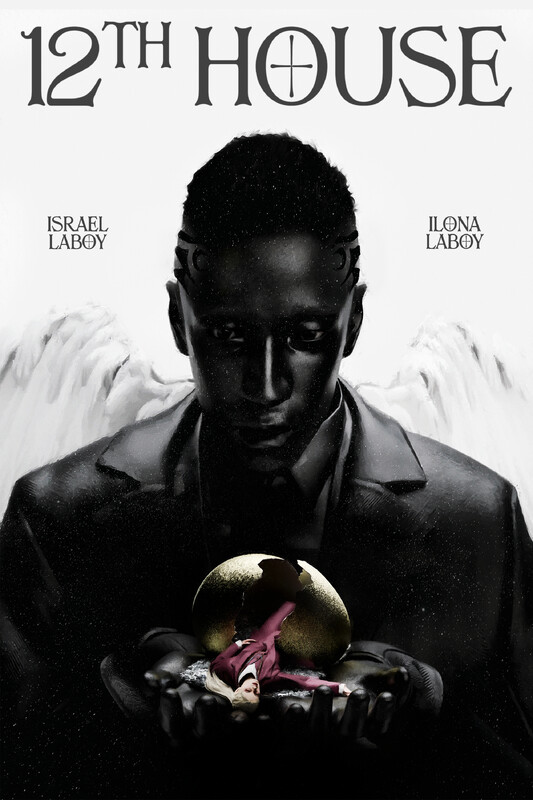
12th House, 13min., USA Directed by Ilona Laboy 12th House is a surreal meditation on grief, identity, and spiritual transformation. After losing her husband, a woman descends into a liminal dreamworld where memory fragments and archetypes guide her inward. Haunted by illusion and tethered to love, she confronts her shadow through symbolic rituals of self-loss and rebirth. Blending myth, psychology, and visual poetry, 12th House explores the sacred undoing required to become whole—and the alchemy of carrying love beyond death.
Initially, my late husband and I shared a dream of creating films together, to build a life doing what we love. After losing him, this project became my way of keeping that dream alive. Israel has been my motivation throughout this entire process. Finishing this film was a way to carry him forward, to honor his legacy, and to keep him present in everything I do.
2. From the idea to the finished product, how long did it take for you to make this film?
The new storyline and the entire post-production process took a little over four months. It was an intense, concentrated period of rebuilding, editing, and reshaping the film into what it is now.
3. How would you describe your film in two words!?
Dream Shattering
4. What was the biggest obstacle you faced in completing this film?
Losing my husband and having to finish without him. It was the heaviest emotional challenge of my life, trying to create through grief, while the person this film was meant to be made with was no longer here.
5. What were your initial reactions when watching the audience talking about your film in the feedback video?
It was powerful to watch real audience reactions. Their responses were exactly what I hoped for, the speechlessness, the impact, the inability to categorize what they’d just seen. I wanted the film to feel immersive and unsettling in a way that lingers. Hearing people say it stayed with them and sparked conversation meant everything to me.
6. When did you realize that you wanted to make films?
I think I always knew on some subconscious level. Growing up, I would enter creative contests and cast myself in every role simply because I had no one else, so I learned to create everything myself. Later, films like Requiem for a Dream shattered me in a way that made me think, “I want to make people feel something this deeply.” I was also obsessed with transformations, the characters, the voices, which made me realize how much I loved performance and creative direction. All of that eventually merged into filmmaking.
7. What film have you seen the most in your life?
It’s hard to pick one, because I revisit films for different moods and reasons. But I’d probably say King of New York. I can watch Christopher Walken as Frank White endlessly, he’s great. I also really loved rewatching Suspiria (2018) many times.
8. What other elements of the festival experience can we and other festivals implement to satisfy you and help you further your filmmaking career?
I’m a filmmaker who built everything from scratch with my late husband, with a skeleton team and no industry safety net. What festivals can do to support artists like us is to give us continuity beyond the screening. Industry matchmaking to connect emerging filmmakers with distributors, curators, galleries, or labs that actually showcase experimental cinema. Opportunities for continued artistic development, like residencies, grants, or partnerships with VFX houses, post studios, or cinematography labs.
9. You submitted to the festival via FilmFreeway. How has your experiences been working on the festival platform site?
Very smooth and organized. FilmFreeway has been a great platform for submitting my work.
I’m currently developing the feature-length version of 12th House. There’s so much unreleased footage to shape into a larger narrative. I also have a list of projects that Israel and I planned to make together, and once the feature is complete, it would mean everything to bring those to life.


 Festival Reviews