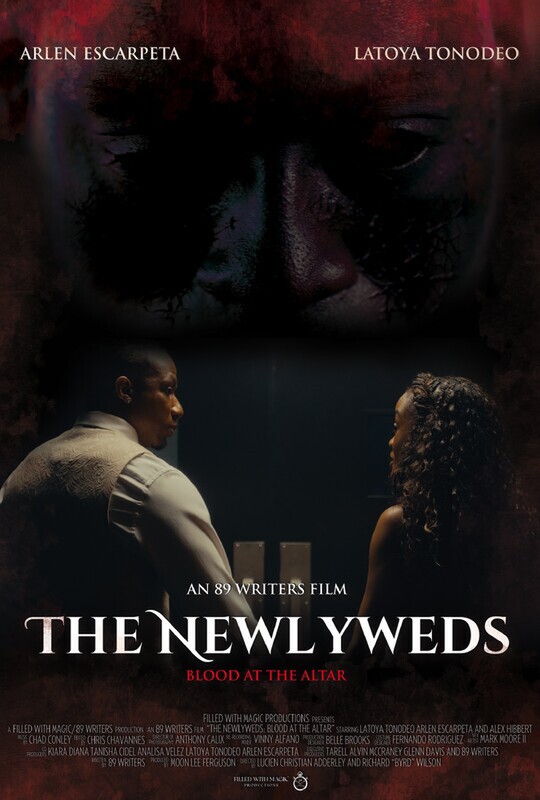
The Newlyweds: Blood At the Altar, 15min., USA Directed by Lucien Christian Adderley, Richard “Byrd” Wilson Tia and Akil are good people loved by their friends and family. However, no one believes they should wed because they love hard. They’ve had a dysfunctional, up-and-down relationship since college. They’re crazy about each other, and their friends have seen the chaos that can bring when things aren’t going well. Their love is either SPARKS flying or things BURNING, no in-between. On their big day, we quickly learn that their wedding guests have doubts about their marital future. Despite the looming uncertainty among family and friends, the couple proudly pledges their LIVES to each other. As the devoted couple exchanges vows, things get wild when a catering staff member barges into the kitchen with sick but strange symptoms. After the ceremony, the NEWLYWEDS prepare to make their grand entrance in the ballroom as husband and wife, but instead of applauding guests, they are faced with grueling ZOMBIES.
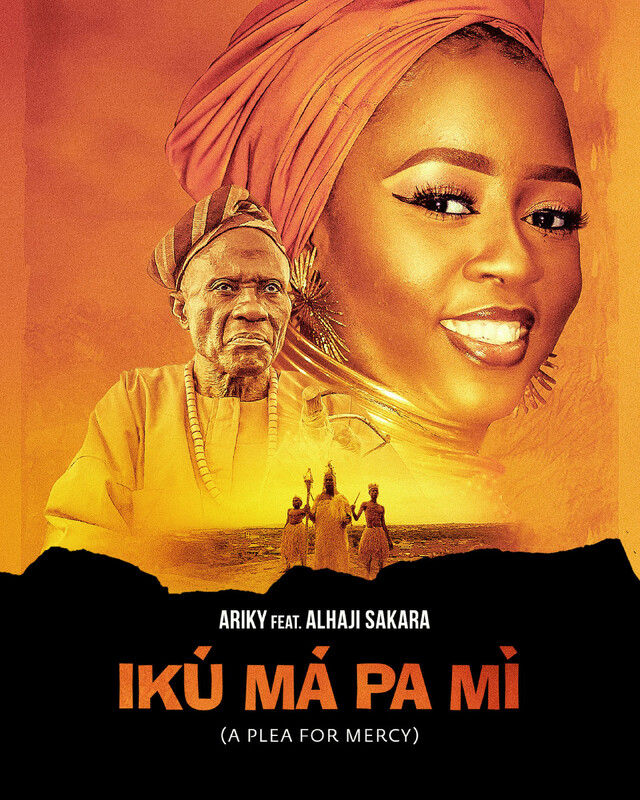
Iku Ma Pa Mi (Death Don’t Kill Me), 9min., Nigeria, Musical Directed by Akintunde Oluwaseyi Smith Iku Ma Pa Mi is a modern take on a Yoruba death elegy in which the supplicant hails the mothers and spirits that control death and pleads for their mercy so that they live a long and fulfilling life before the eventuality of death. Performed by Ariky, it is the soundtrack to upcoming movie Ifihan Ika (Manifestation of Wickedness.)
1. What motivated you to make this film? Ans: We were shooting a short film ‘The Crying Edema’ and we had Ariky record some vocals ahead so we could sort of have a certain consciousness of the soundtrack as we shot. When we heard her vocals we were inspired to shoot a music video at the same locations where the movie was shot, it seemed like a perfect opportunity we didn’t want to miss.
2. From the idea to the finished product, how long did it take for you to make this film? Ans: About 6 months
3. How would you describe your film in two words!? Deep, Intriguing
4. What was the biggest obstacle you faced in completing this film? Ans: Hauling our equipment to the hill tops
5. What were your initial reactions when watching the audience talking about your film in the feedback video? Ans: Excitement, Gratitude and Encouraged
6. When did you realize that you wanted to make films? I saw Ferris Beullers day off as a kid and I thought, this is what I wanted to do,
7. What film have you seen the most in your life? There Will be Blood
8. What other elements of the festival experience can we and other festivals implement to satisfy you and help you further your filmmaking career? Ans: Festivals like yours are already doing so much we are grateful for
9. You submitted to the festival via FilmFreeway. How has your experiences been working on the festival platform site? Ans: Very Satisfying
10. What is your favorite meal? Ans: Jollof Rice
11. What is next for you? A new film? Yes, always conceiving and trying to improve
SPARKS, 2min,. France, Dance Directed by David Ravel Alone on a vast stage, a dancer moves through a space sculpted by light. He observes, senses, letting the sensations guide his body. An instinctive dance emerges, visceral, almost organic. Each movement becomes an exploration, a silent quest in resonance with the luminous pulses enveloping him.
Get to know the filmmaker:
1. What motivated you to make this film?
I wanted to make a film about the energy of Krump and work in an original location with lights and flashs.
2. From the idea to the finished product, how long did it take for you to make this film?
It all happened very quickly. We had the location at our disposal. We had worked on a few gestures with the dancer, but we improvised almost everything directly on the set. The shoot lasted one night.
3. How would you describe your film in two words!?
inside struggle
4. What was the biggest obstacle you faced in completing this film?
Time
5. What were your initial reactions when watching the audience talking about your film in the feedback video?
It’s always very special, very emotional.
6. When did you realize that you wanted to make films?
When I realized I loved having a camera in my hands to capture faces
7. What film have you seen the most in your life?
SOLARIS / Steven Soderbergh.
8. You submitted to the festival via FilmFreeway. How has your experiences been working on the festival platform site?
Very good experience.
9. What is your favorite meal?
Pasta al Ragù
10. What is next for you? A new film?
Always filming, always meeting people, always falling in love with a work of art.
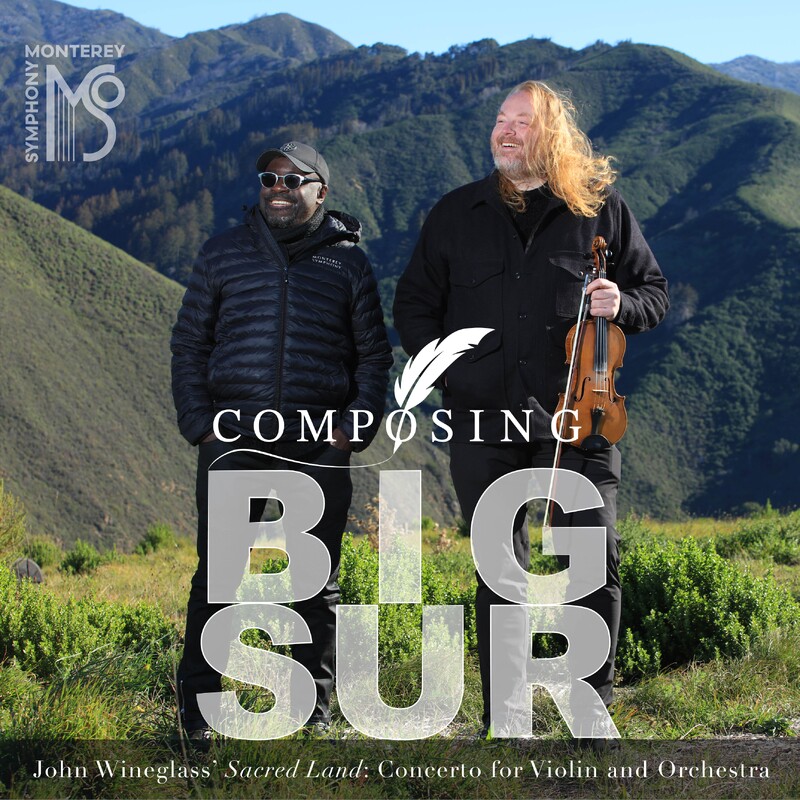
Composing Big Sur: John Wineglass’ Concerto for Violin and Orchestra, 35min., USA, Musical Directed by Douglas Mueller Composer in Residence John Wineglass’ creative process of his most recent Monterey Symphony commission, Sacred Land: Concerto for Violin and Orchestra.
Get to know the filmmaker:
1. What motivated you to make this film? I watch a lot of live classical music and a certain amount of multi-cam concert videos and I’ve always wanted to make something that felt authentic but unlike other I’d seen.
2. From the idea to the finished product, how long did it take for you to make this film? When we interviewed composer John Wineglass and violinist Edwin Huizinga it was more than a year before the concert. And at that interview, they had been already working for a few months. The concert footage we shot over four days.
3. How would you describe your film in two words!? Kinetic and beautiful
4. What was the biggest obstacle you faced in completing this film? I had never had the ‘luxury’ of so much coverage- I think we shot three different performances with four cameras each. So with the rich music, you’d build and pear back a lot of options based on the flow.
5. What were your initial reactions when watching the audience talking about your film in the feedback video? Watching the feedback video was surprisingly awesome. So much time is spent on the work of making a film, I love being able to hear about it.
6. When did you realize that you wanted to make films? I was a senior in high school and my best friend said he wanted to and we both found a way that film spoke to us.
7. What film have you seen the most in your life? Maybe ‘2001?’
8. What other elements of the festival experience can we and other festivals implement to satisfy you and help you further your filmmaking career? This is already a high bar and I’m not exactly sure as you already do a great job.
9. You submitted to the festival via FilmFreeway. How has your experiences been working on the festival platform site? Always been a good experience.
10. What is your favorite meal? Deep dish pizza or some California sushi rolls
11. What is next for you? A new film? I’m working on a cinema verite documentary I shot over ten years ago about the historic renovation of one of California’s oldest buildings. I’m a big fan of Frederick Wiseman, so it’s exciting.
UNTIL DEATH DO US PART, 15min., USA Directed by Joseph Kandov A wife’s dark secret unravels late one night, binding her husband to an intense conversation that may take a turn for the worst.
Get to know the filmmaker:
1. What motivated you to make this film?
I thought of the opening scene first. It sort of came to me, and I thought it was a killer opening for a story, but I wasn’t sure what I’d use it for at that moment, be it a feature or short film, an episode of a series, ect. I just knew I had an awesome opening that could be used for something, so I wrote it down and put it away until I figured out what to do with it. Over time, as I went back to it and thought about where the opening could go, how it could be used, ect. I had more ideas come to me such as the ending. And after I had the opening and ending figured out, I knew it could be something special, and decided that a short film format for the story would best for the time being, with the potential to become a feature length should the story garner significant interest from audiences. From there, I slowly but surely fleshed out the remainder of the story that would connect the opening and closing scenes.
2. From the idea to the finished product, how long did it take for you to make this film?
From concept to finished product, it took several years.
3. How would you describe your film in two words!?
Thought-provoking and haunting!
4. What was the biggest obstacle you faced in completing this film?
The biggest obstacle for me were budgetary restrictions
5. What were your initial reactions when watching the audience talking about your film in the feedback video?
My reaction was quite a surreal and moving experience. To see people react so positively, give such great commentary on aspects of the storytelling (much of which I fully intended with the film, so I was ecstatic to see that it came across successfully!), give their own perspective on the themes, depth, and substance, which were all quite fascinating, and ultimately give unanimously fantastic ratings, was such an exciting joy and something I truly appreciated. Honestly, I didn’t know what to expect from people when I came up with this story, and how they’d react to it, as it’s quite a dark, intense story with a subject matter that very few would find uplifting lol. So I was a bit nervous when thinking of the feedback I might get. But to see people truly enjoy it for what it is as much as they did, and find it powerful and thought-provoking, despite its darkness, was more than I could’ve hoped for and I’m extremely humbled and grateful for the feedback.
6. When did you realize that you wanted to make films?
I realized my love and passion for filmmaking during my high school years, and thus, seriously decided to pursue it professionally upon finishing high school and choosing to attend Digital Film Academy afterward to learn the art of filmmaking.
7. What film have you seen the most in your life?
Hmmm, it’s quite tough to pin down what film I’ve “actually” watched the most, but I’d say the top most viewed content that I can recall is the Lord of the Rings trilogy, The Dark Knight, and Bad Boys 2. For pure entertainment value, I think I “low-key” watched Bad Boys 2 a bit more than the rest lol.
8. What other elements of the festival experience can we and other festivals implement to satisfy you and help you further your filmmaking career?
The festival circuit experience has been quite an interesting one, as I’ve never really taken part in it as much with my previous projects. With most of my previous work, the producers I’ve worked with were the ones that were more active in the festival process and pushing our projects through, ect. But because I was my own main producer this time around, you could say this is really my first time dealing with festivals directly. Wildsound has been fantastic with its communication, credibility, and results, so those things are very much to your credit! But I’d say that some elements that could certainly improve for many festivals, are first of all, legitimacy. Letting filmmakers know exactly how official the festival is with multiple links and avenues of credibility, videos and testimonials from festival events, attendees, sponsors, ect. Because I’ve found many festivals I’ve come across that lack these factors, and it makes filmmakers like myself who do their due diligence slightly suspicious of whether it’s a legit festival worth submitting to and not just one masquerading as such to make money. Second is transparency, which ties into the legitimacy factor. A lot of festivals aren’t so clear about the behind the scenes aspect, such as people running the event, who the judges are, the selection process, the types of content they’re looking for, ect. Either they don’t have much information on the actual people running the show, or choose to keep those things hidden, and I think filmmakers have a right to have access to all that information, so they can determine if the festival is operated by efficient, credible people and that their project will be in good hands. If a festival intentionally preys on naive filmmakers, then these are all red flags they give off, but if they are a good festival with nothing to hide, then they need to make a bit more effort to have easily accessible aspects of verification for all submitter curiosities. The last thing, and this is something Wildsound has done wonderfully which is again, to your credit, would probably be a better social and networking aspect that a lot of festivals can try to muster to make it more worthwhile for submitters. Things like mixers, chat groups (which Wildsound offered to my most pleasant surprise!) and general events or ways for filmmakers to come in contact with each other and make connections, other than the “show up to the festival to network” deal. Sometimes, filmmakers can’t attend for whatever reason, and if a festival doesn’t have other roads of networking, then they basically missed the only shot they had to connect with other creatives that attended. But if the festival made an effort to have ways of connecting and networking other than just having to physically attend, then filmmakers/creatives would see it as a more attractive opportunity to submit. So those three things are what I’d say could be improved for a lot of festivals I found. This is the example here, that Wildsound was pleasantly refreshing in these aspects, and it made me want to choose to submit to the festival.
9. You submitted to the festival via FilmFreeway. How has your experiences been working on the festival platform site?
This ties a bit into my previous answer I think. Filmfreeway is incredibly convenient as a crossroads for submitters to festivals. But some of the issues I mentioned remain. I don’t know how much the site can do to address them really, but as far as convenience goes, it’s been a great tool for a first timer! The communication and ease of use are all great, and there are a few things about the site that are quite fun such as the congratulatory notes they send you when your film has been selected. All in all, using the site has been a good and user-friendly experience so far.
10. What is your favorite meal?
I don’t have a favorite, but I certainly gravitate toward Sushi and Italian cuisines.
11. What is next for you? A new film?
Yes. I’m currently writing the script for my next film, which will be a feature. Other than that, I have a series I’m developing, and ideas for more films and even a few documentaries. A potential for a feature length version of Until Death Do Us Part is also a possibility down the road 😉
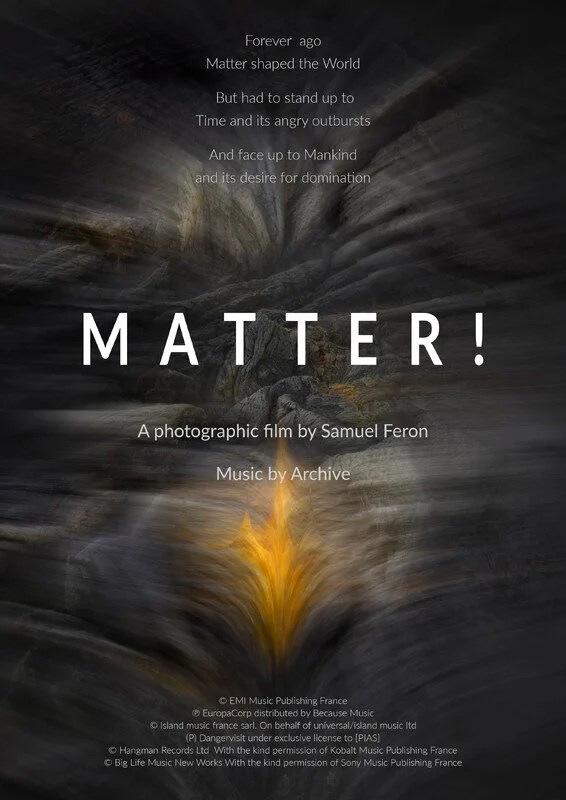
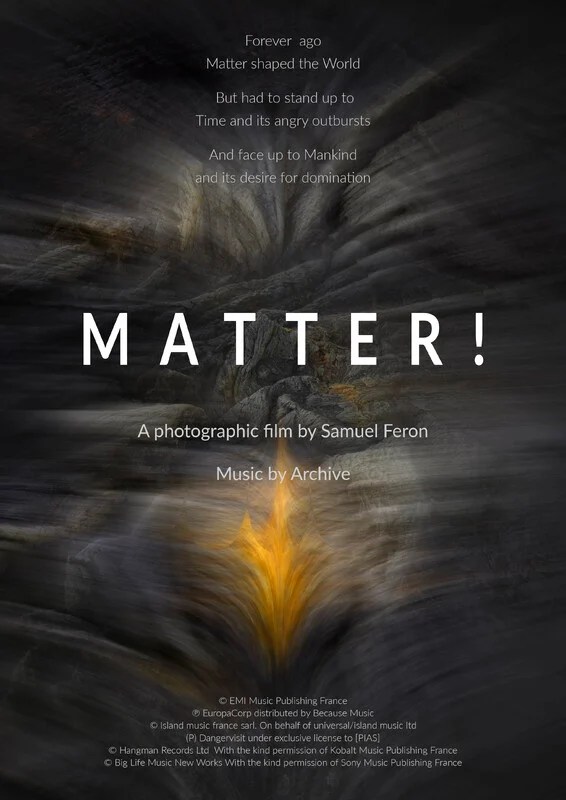
MATTER!, 26min, France Directed by Samuel Feron It tells of the disappearance of Nothingness, the appearance of Matter and its confrontation with Man and with time. it is punctuated by a textual narrative and accompanied by Archive music.
I’ve been photographing the world for over 20 years. I’ve amassed tens of thousands of photographs. One day, I thought it would be exciting to give the photographs a dimension they’ve never had before: a dynamic flow, in which they could blend, flow together, and overlap. A kind of ballet, where the viewer would be immersed, even if unwillingly, drawn into a visual, poetic, and musical story.
From the idea to the finished product, how long did it take you to make this film?
Well, it all depends on when you start! The oldest photographs in this film date back to 2005, so that’s 20 years ago. However, the idea for the film came to me much later, two years ago. It took me a year of work to make it happen: imagining and writing a story, selecting the photographs, researching the music, and – this is what took most of the time – working on the sequences again and again, in order to ensure the balance between the necessarily static dimension (by definition) of a photograph and the objective of going beyond this static framework to bring movement.
What was the biggest obstacle you faced while making this film?
Making a film from photographs is a real challenge: initially, there’s no dialogue, no actors, no movement. The visual, and therefore the photographs, occupy a central place. But that’s not enough to make a film. You have to invent a story, create it from these images, without the help of people who carry it, develop it, and convey it. So I imagined a character based on an entity, both real and mystical, all-powerful yet malleable and vulnerable, and gave it the attributes of anger and fear.
There was a second major difficulty: like any photographer, I tend to consider that a photograph is sufficient in itself and that the viewer must be able to look at it without time limit. However, the film breaks this personal contemplative space to impose its own reading rhythm. And this is precisely where the problem lies: how, in a film, to give time for photographic contemplation, which moreover depends on each individual, while ensuring that the viewer accepts being interrupted in his reverie or meditation. To do this, it is necessary to impose a rhythm that will be accepted by the viewer, and this rhythm is that of the music, which is why it is so important. I am aware that there are images that are perhaps too quickly caught up in the music, but that was a bit of a price to pay for carrying out this project.
The characters in the film possess a completely extraordinary singularity. What can you say about that?
My photographs speak of nature and the world, and therefore of Matter, which constitutes the main entity. Speaking of it and its birth meant evoking Nothingness, which, paradoxically, was initially anything but nothing, except when it decided… to disappear!
Then, Time appears, and we understand that there will be conflict between these two colossal, all-powerful, and fundamentally antagonistic entities. At first glance, the battle seems unequal because Matter is under assault from Time and can barely exert any control over it; yet, Matter cannot disappear because otherwise, Time would have nothing to exert its control over and would therefore no longer exist.
The other character is Man, not as an individual, but as a species, dominating and invasive. What happens when he considers himself superior to the Matter from which he is descended? How does Matter react? As a demiurge, has it given birth to an out-of-control creature? This is the whole point of Scene 4.
We are intrigued by the epilogue, and in particular the very last image. What message, what meaning does it conceal?
I wouldn’t want to reveal the final part of the film… Let’s just say that at a certain stage in the evolution of Matter, the question of its ultimate future and its place in the world arises. A new character is invoked, appearing in the background, who takes on the role of a spiritual dimension, proposing paths that can be understood as a break with the density and hyper-presence of Matter, an attempt and an invitation to explore the beyond, in a completely unknown direction.
What role does music play in the film? Why did you choose the English band Archive?
Music is essential in a photographic film: the images must follow one another according to a precise rhythm, in keeping with the story. But also and above all, the musical universe, its harmonies, its melodies must correspond to the photographic universe of the film. Archive stood out for its musical creativity, its ability to imagine unique melodies accompanied by exceptional instrumentation, and its rich and powerful atmosphere. I chose pieces that corresponded to the themes and scenes of the film: dramatic and explosive, melancholic and contemplative, mystical and dreamlike.
Your favorite dish?
Scallops with black Périgord truffle. In it, I find the ocean and the power of the Earth.
What is your next project, your next film?
I think that photographic film brings a specificity, an originality, a different perspective, and has its place in the experimental film category; it seems important to me to develop this new trend. I’m thinking about a new theme, a new story, combining different photographs and different music. I’d also like to create partnerships with musicians because I believe that photography and music, when skillfully combined, bring the viewer a heightened sense of emotion.
Cinematography is the art of manipulating light and shadow, and capturing it as a moving image.
CINEMATOGRAPHY – SHOTS AND CAMERA ANGLES
QUESTIONS TO ASK: -What is the best viewpoint for filming this position of the event? -How much area should be included in this shot?
SCENE defines the place or setting where the action is laid SHOT defines a continuous view filmed by one camera without interruption
SEQUENCE A series of scenes or shots complete in itself.
TYPES OF CAMERA ANGLES OBJECTIVE – The audience point of view SUBJECTIVE – The camera acts as the viewers eyes-movement POINT OF VIEW – What the character is seeing
CAMERA ANGLES – Are the most important factor in producing illusion of scenic depth. Which angle the object is photographed.
FIVE BASIC ANGLES
EYE LEVEL SHOTS – Provide frames or reference. Audiences sees the event as if in the scene. Most scenes in movies are photographed from eye level. 5 to 6 feet off the ground. Capturing the clearest view of an object. -Treating your characters as equals. Discourages viewers at judging them and permits audience to make up their own minds.
BIRDS EYE VIEW – Photographing a scene from DIRECTLY OVERHEAD. Hovers from above like all powerful gods. Idea of fate.
HIGH ANGLED SHOTS – Camera is tilted downward. Movement is slowed down. A person seems harmless and insignificant photographed from above. – The higher the angle, the more it tends to imply fatality
-Heightens the importance of a subject. Scenes depicting heroism
OBLIQUE ANGLE – Lateral tilt of the camera. As though the object is about to fall to one side. POINT OF VIEW SHOTS. -Suggests tensions, transitions, impending movement IMAGE THAT SLANTS TO THE RIGHT – Acting forceful IMAGE THAT SLANTS TO THE LEFT – Weak, static
ASK YOURSELF -How much should be included in this shot? -Where should the camera be positioned to view this particular part of the action? A shot should be held no longer than required to make its point.
Approach each sequence with a fresh attitude and strive to treat the action in an individual matter.
A definite change in camera angles will assure a smoother flow of images.
“And later I thought, I can’t think how anyone can become a director without learning the craft of cinematography.” – Nicolas Roeg
SIX BASIC SHOTS
1) Extreme Long Shot – Taken at a great distance. Almost always an exterior shot and shows much of the locale. Establishing shots usually 2) Long Shot – The distance between the audience and the stage in the live theater 3) Full Shot – Barely including the whole body 4) Medium Shot – Knees to waste up. Useful for exposition scenes, carrying movement and for dialogue 5) Close-Up – Concentrates on a relatively small object. HUMAN FACE 6) Extreme Close-Up – Might just show eyes or mouth
CLOSEUPS -Are among the most powerful storytelling devices available to the filmmaker -Allows removal of tedious or repetitious action -Can be used to provide a time lapse -Bring that dramatic punch
FRAMES -Area near the top of the frame can suggest ideas dealing with power, authority and aspiration -Left and right edges of the frame can suggest insignificance
DOMINANT CONTRAST – Area that immediately attracts our attention because of a conspicuous and compelling contrast
SUBSIDARY CONTRAST – Structured image so that specific images are followed in sequence. Whatever character or object that is most dramatically important will assume dominance.
The HUMAN EYE scans pictures from left to right
HORIZONTAL LINES – Move from left to right VERTICAL LINES – Move from top to bottom DIAGONAL OR OBLIQUE LINES tend to sweep upward TERRITORIAL SPACE – movie images must tell a story in time. A story that involves human beings and their problems. THREE VISUAL PLACES – MIDGROUND, FOREGROUND, BACKGROUND
SPACE is one of the principal mediums of communication in film
Dominant characters are almost always given more space to occupy than others are.
You can define, adjust and redefine human relationships by exploiting spatial conventions
ACTOR CAN BE PHOTOGRAPHED IN FIVE BASIC POSITIONS 1) Full Front – Facing the camera 2) Quarter turn 3) PROFILE – looking off frame, left to right 4) Three quarter turn 5) Back to Camera
FULL FRONT – Most intimate, vulnerabilities exposed-Audience agrees to become their chosen confidante.
QUARTER TURN – Involves a high degree of intimacy but with less emotional involvements
PROFILE – More remote. -Character lost in their own thoughts.
THREE QUARTER TURN – More anonymous. Rejecting audiences
BACK TO CAMERA – Characters alienation from the world. Sense of concealment, mystery.
TIGHTLY FRAMED SHOTS – Confined
LOOSLY FRAMED SHOTS – Freedom
PROXEMIC PATTERNS – Climax, noise level and the degree of light all tend to alter the space between individuals
1) INTIMATE – Eighteen inches away. Distance of LOVE, COMFORT, TENDERNESS between individuals
2) PERSONAL – Eighteen inches to about four feet away. Reserved for friends and acquaintances
3) SOCIAL – Four feet to about twelve feet away. Business and casual social gatherings
4) PUBLIC – Twelve to about twenty feet away.
ANALYSIS OF ANY GIVEN SHOT – TWELVE ELEMENTS
1) SHOT AND CAMERA PROXEMICS -What type of shot is it? How far away from the action is the camera?
2) ANGLE -Are we looking up or down on the subject, or is the camera neutral?
3) LENS and/or FILTER -How do these distort or comment on the photographed materials?
4) LIGHTING STYLE -High or low key lighting? High contrast? Some combination of these?
5) DOMINANT -Where is our eye attracted first?
6) SUBSIDIARIES -Where does our eye travel after taking in the dominant?
7) COMPOSITION -How is the two-dimensional space segmented and organized? What is the underlying design?
8) FORM -Open or closed? Does the image suggest a window that arbitrarily isolates a fragment of the scene? How are the visual elements carefully arranged and held in balance?
9) FRAMING -Tight or loose? Do the characters have room to move around in, or can they move freely?
10) DEPTH -On how many planes is the image composed? What do we see in the background?
11) STAGING PROBLEMS -Which way do the characters look from the camera?
12) CHARACTER PROXEMICS -How much space is there between the characters?
MOVEMENT IS NOT SIMPLY A MATTER OF WHAT HAPPENS, BUT HOW THINGS HAPPEN.
The OBSERVER has to be the CAMERA and it needs to know where it s going.
THE VALUE OF A SHOT ALWAYS DEPENDS ON A NARRATIVE.
” You make the movie through the cinematography – it sounds quite a simple idea, but it was like a huge revelation to me.” – Nicolas Roeg
THE PRINCIPLES OF PERSPECTIVE
-Finding the right points of the sequence and getting to tell the best narrative story
AESTHETIC DISTANCE – Phrase used to describe the degree to which a work or art manipulates the viewer
FIRST PERSON POINT OF VIEW – Sees events through the eyes of the character
THIRD PERSON POINT OF VIEW – Presents action as seen by an ideal observer
OMNISCIENT POINT OF VIEW – Having to know what the character is thinking. Requires a type of narration, voice-over or graphics
PAN SHOT, Used to: -Include space greater than can be viewed through a fixed frame -Follow action as it moves -Connect two or more points of interest graphically -Connect of imply a logical connection between two or more subjects
“Cinematography is infinite in its possibilities… much more so than music or language. – Conrad Hall
CRANE SHOT -Inherently majestic and holds our interest regardless of the subject because of the sheer physical pleasure of the move -Permits us to feel the dimensions of the world by penetrating space, further endorsing its reality through the illusion of depth -Eats up time on the set -Careful planning and preparation is vital
TRACKING SHOT -Used to follow a subject or explore space -A dolly moves towards a subjects face can be used to emphasize a character’s moment of realization. A dolly always tends to isolate the subject as well
TRIPOD SHOTS -Usually is used only in stable and relatively predictable shooting situations -Makes very controlled transitions from subject to subject possible -Makes very controlled image transitions possible -Makes stable close-ups possible at the telephoto end of the zoom lens -Conveys the cool, assured view
HANDHELD SHOTS -Can react to events, much as we do in life -Implies a spontaneous event driven quest -Conveys a subjective, even vulnerable point of view
****
TORONTO, ON – SEPTEMBER 14: General view of the atmosphere around town during the 2011 Toronto International Film Festival on September 14, 2011 in Toronto, Canada. (Photo by Sarjoun Faour Photography/Getty Images)
Political narrative is a term used in the humanities and political sciences to describe the way in which storytelling can shape fact and effect understandings of reality.
Submit your THRILLER/SUSPENSE Short Story to the Festival here and we will automatically have it performed by a professional actor and turned into a promotional video for yourself.
This festival has a guaranteed 4-tier set up for each accepted script. (No matter what, all screenplays submitted receive FULL FEEDBACK on their work.) 1) Full Feedback on your script 2) Actors performance video reading of your script 3) Blog interview promotion. 4) Podcast interview on the Film Festival ITunes show
This festival has a guaranteed 4-tier set up for each accepted script. (No matter what, all screenplays submitted receive FULL FEEDBACK on their work.) 1) Full Feedback on your script 2) Actors performance video reading of your script 3) Blog interview promotion. 4) Podcast interview on the Film Festival ITunes show
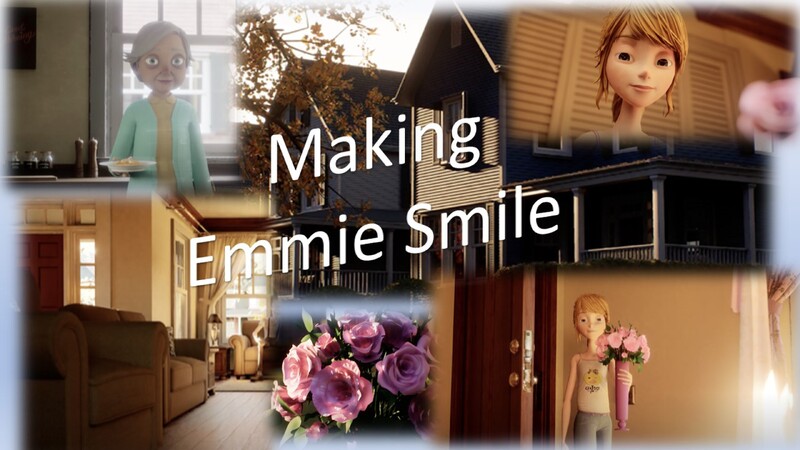
Making Emmie Smile, 5min., USA Directed by Abby Vo, John Vo, Ken Yoffe, Ellen Weisberg In “Making Emmie Smile,” family members attempt to make the child happy by offering her different material things, only to succeed in getting the child to smile by offering personal attention. The basic them of “Making Emmie Smile” is the importance of fulfilling your child’s emotional needs.
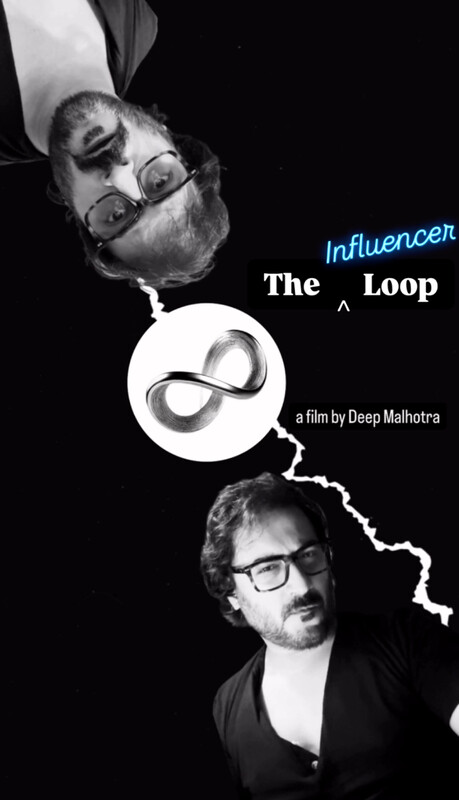
The Influencer Loop, 3min., India Directed by Deep Malhotra It takes two to build a loop and sometimes makes it difficult to predict which part you are holding. When a motivational speaker creating content for his online audience gets a scam call, it makes him go behind where he never expected to be. In today’s time, it becomes tough to differentiate between real and artificial. Any ring can change your situation, so before you ignore or respond to that ring, ensure you are prepared for the consequences. You can get stuck with the decisions you make or ignore in this matrix of life.
Asa, his cat and the Library of Dreams, 16min., UK Directed by Craig McNulty Asa, a bored librarian who trained to curate rare books complains about his dead-end job. Later he returns home and in the morning finds his cat has died. He places his dead cat into his bag intending to bury him and steps in to the elevator which descends to an underworld library of dreams where he is invited to curate the collection. It is a mobile library. He might never return. He briefly returns to the ‘real world’ to bury his cat, and meet his girlfriend. He has to decide if he will accept the job.
MATTER!, 26min, France Directed by Samuel Feron It tells of the disappearance of Nothingness, the appearance of Matter and its confrontation with Man and with time. it is punctuated by a textual narrative and accompanied by Archive music.
Spider-Man: A Day in the Neighborhood, 3min,. USA Directed by Michael Fernandez Peter Parker deals with yet another work-life squall courtesy of his famous Parker luck. While it seems he can’t ever catch a break, he’ll never stop trying, even if that means swinging from a toilet.
A biography is a written account of a person’s life that tells the story of their experiences, accomplishments, and challenges. The word “biography” comes from the medieval Greek words bios, meaning “life”, and graphia, meaning “writing”.
3 options to submit: 1st chapter. full novel. performance reading.
This festival has a guaranteed 4-tier set up for each accepted script. (No matter what, all screenplays submitted receive FULL FEEDBACK on their work.) 1) Full Feedback on your script 2) Actors performance video reading of your script 3) Blog interview promotion. 4) Podcast interview on the Film Festival ITunes show
Submit your DEATH short story to the festival and we will automatically have it performed by a professional actor and turned into a promotional video for yourself.
A death story is a narrative that describes how a loved one died, and may also include other parts of their life story. Death stories can be a way to uncover significant life events and are part of a person’s larger life story.







 Festival Reviews