Movie Review: #UNITED WE WIN. Directed by Henrik Friis

  MOVIE POSTER#UNITED WE WIN, UK

Played at the May 2016 FEEDBACK Film Festival


MOVIE REVIEW:

Half dangerous, hald brave and wholly compelling, #UnitedWeWin, directed by Henrik Fiirs, is a documentary turned passionate love letter about the issues surrounding war-torn Iraq. Fiirs and a handful of other early twenty-somethings’ set out to the country with limited assistance from Global Security, to make a film about the middle eastern conflict, after a traumatic video witnessed by the director propelled him to act. The forty minute partial gorilla shooting endeavor is an interesting approach to cinematic filmmaking.


#UnitedWeWin has much to be commended on. The director, Fiirs, is a natural born leader, with charisma, charm and a clear thirst to make a social and political difference in the world around him. There is daring, drive and determination in his work, and it is no small feat to arrange a film crew and create a film, halfway around the world, not accounting for age, cost and resources.


However, there is a fine line between bravery and foolishness and Fiirs’ piece is not without heavy scrutiny. The film undeniably lacks focus and direction. Bold, emotive, larger-than-life statements litter the piece, such as “what is happening here is evil” and “we all know this isn’t right”. And yet, the social, political, religious and economic issues fueling the Middle-Eastern conflicts are never discussed. As such, the filmmaker glosses over the reason the fuel the film in the first place. The film has the feeling of a director looking for the answer, when he has no idea what the question is.


As a result, the goal of the film appears far too abstract and the stakes far too outrageously dangerous to be bought by the audience as a form of consciously planned, well thought-out activism. The film has no clear vision, no clear villains, no clear answers, no focused purpose and, most terrifying to the audience, no sense that the filmmaker and the team really understand how much danger they have put themselves in while making it.


Moving towards the film’s natural style creates some other notes for discussion. The continuity of the piece is rather shady, with whole days of the trip cut out and unaccounted for, and a series of unanswered cliff hangers. There is one scene that focuses on the team touching down in the Middle East and the transportation they arranged to pick them up from the airport is not there. The next major scene shows the team three days later, with no explanation of how the previous situation rectified itself. One section of the film, shot in a refugee camp, was very stylistically shot and edited- a choice that was not consistent with the rest of the film. The team clearly had the skills and the means to produce a film, but they did not produce a film with clear meaning.


Fiirs is a young, idealistic filmmaker, producing a heartfelt piece that displays empathy to the struggles of a population he clearly cares deeply for. On that note, he must be commended. He has a strong moral code, strong ideals and passionate desire to tell a story. But his cinematic journey did not hold up a mirror to the crisis in the Middle East, as much as it did hold up a mirror to young filmmakers’ everywhere, asking them to thoroughly understand that questions they are asking, before they risk their lives in finding the answers.


by Kierston Drier
Founder of The Bathroom Stall Project
Consultant at TheKayWorks.com
Freelance Film and Television
www.thekayworks.com

Watch the Audience FEEDBACK Video:

Movie Review: 1Minute Nature. Directed by Stefanie Visjager & Katinka Baehr

  MOVIE POSTER1Minute Nature

Played at the May 2016 FEEDBACK Film Festival

MOVIE REVIEW:

In a world where words paint wonderful pictures, 1 Minute Nature follows three children as they individually recount memories from the world around them. Animated based on the story each child narrates, 1 Minute Nature is a creative reimagining of the natural world told through the eyes of a child. Both immersive and engaging, and wonderfully whimsical, each story contains cartoon animations elements moving within a real life background.

Each story narrated story recounts a child’s single isolated memory of an interaction with the world around them, but the visual spectacle is meant to shape both the children, and the viewers’ perceptions of the natural world and they way they interact with it. With the animated moving cartoon images overlaid against a stationary real-life background, there is a charming element of fantasy to the piece that is both engaging and delightful. Our three stories capture the tales of first encounters of underwater exploration, favorite animals and even school-age romance, each one weaving a wonderful portrait of childhood experiences with beautiful images.

Short, entertaining, charming and occasionally laughably honest, these three stories offer a break from the everyday world and invite us into a world of color, creativity, imagination and wonder.

by Kierston Drier
Founder of The Bathroom Stall Project
Consultant at TheKayWorks.com
Freelance Film and Television
www.thekayworks.com

Watch the Audience FEEDBACK Video:

Movie Review: LIKE A STAR. Directed by Daniele Bonarini

  MOVIE POSTERLIKE A STAR, 10min, Italy, Documentary/Comedy

Played at the May 2016 FEEDBACK Film Festival

Read interview with the director

MOVIE REVIEW:

Like A Star, directed by Daniele Bonarini, follows a special needs actor on his journey from Italy to Texas to receive an award for his recent role in a film. A classic fish-out-of-water story of a European exploring the exociticism of the deep southern United States, this tale is as heartwarming as it is humorous.


Within the span of a modest 10 minutes, Like A Star follows a our Hero on a journey that is very much one in a lifetime. From the plane take off in Italy, to landing in Texas, to the discoveries of Cowboy boots, 10-gallon hats, American steaks, Famous sites and culminating with his Award ceremony.. Our hero takes on the world with a sense of childlike wonderment blended with the bravery of an adult jumping into a pool for the first time.


Deeply moving with it’s tale, Like A Star’s beauty is that is breaks down the boundaries of otherness that often surround people of special needs from the rest of the world. It tells a story about a human being with the very human wish that bridges together people of all kinds- the wish to be recognized.


by Kierston Drier
Founder of The Bathroom Stall Project
Consultant at TheKayWorks.com
Freelance Film and Television
www.thekayworks.com

Watch the Audience FEEDBACK Video:

Movie Review: EVERYBODY FALLS DOWN. Directed by Chris Hale

festival posterEVERYBODY FALLS DOWN

Played at the May 2016 FEEDBACK Film Festival

Read Interview with the Director

MOVIE REVIEW:

Directed by Chris Hale, Everybody Falls Down steps into “ a day in the life” of Syrian Refugees living in a fenced in compound outside of Kurdistan after the mass displacement of Syrians due to social and political unrest in Syria. Shot in 2015 the piece is highly current and resonant with the issues populating north american as well as global media today. What is the fate of the displaced Syrian people? Everybody Falls Down is a deeply emotive tapestry evoking empathy, solidarity and hope for the Syrian refugees. The documentary follows the lives of families, couples and children, showing their working lives and living conditions. The film focuses on how the people manage to keep their culture, hope and joy in a facility stripped of any luxuries. At the same time film explores what many of the Syrians left have had to leave behind, their homes, livelihoods and in many cases their other family members. Heart Wrenching in some places, and joyous in others, Hale’s Work is successful at providing a glimpse into a world many of us cannot fathom, and the layers of the struggle and hope that transform displaced families into communities.

Everybody Falls Down is not omitted of scrutiny in its approach. Covering snippets of the lives of several people, and various families, Hale’s piece is highly condensed for 15 minutes. It can be argued that is is not able to provide a well rounded view of the lives of it’s subjects. Not without criticism, Hale’s piece shows only one side of the struggles of Syrian displacement. It has a clear angle for the refugee community, but does not touch on the many social, political or economic issues that displaced the population in the first place. It only briefly glosses over the politics and economic issues faced by the countries that house refugees currently. As a result, only a partial story is ever told. Everybody Falls Down is a piece worth seeing, if for no other reason than that it shows a side of life many of us have the good fortunate to never have to know. It is clear labour of love with a message that the displace people of Syria want to go home, as Hale explains, “I …try and show at least some of the people who deserve better.”

by Kierston Drier
Founder of The Bathroom Stall Project
Consultant at TheKayWorks.com
Freelance Film and Television
www.thekayworks.com

Watch the Audience FEEDBACK Video:

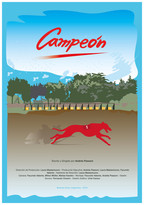
Movie Review: CHAMPION. Directed by Andrés Passoni

champion_movie_posterCHAMPION was the winner of best film at May 2016 FEEDBACK Short Documentary Film Festival.

Directed by Andrés Passoni

Genres: Documentary | Short

Read Interview with the Director

MOVIE REVIEW:

Astonishingly beautiful and stunningly shot, Champion follows the world of competitive Racing Dogs in Argentina. Shot with a focus on the animals (not their owners) the film utilizes silence, space and spectacular imagery, downplaying the natural noise and eliminating all scripted dialogue. A powerful stylistic choice that pulls the viewer’s focus to the real story of the racers. Instead of the money or bets of the people owning dogs, we focus on the dogs themselves.

One may imagine that Passoni’s film is an exercise in Voyeurism, as it emphasis lies in the spectacle of the race without any blatant insight into the mind of the racer. Conversely, it can be said that Champion does the exact opposite – showing the mind of the racing dog by focusing on the event as a dog might see it- a flurry of color, the garble of indistinguishable human noise and a pulsating energy of a run waiting to happen. Andreas Passoni defines the luminous visual aspects with respect to a lifelong appreciation for the aesthetics, “All my life I felt attracted by image and sound.”

As a filmmaker, Passoni’s Instincts for the visual spectacle of cinema are seamless and lush, both riveting and gorgeous. In regards to a short that can propel the audience into emotion via image alone- Passoni is ahead of the pack.

by Kierston Drier
Founder of The Bathroom Stall Project
Consultant at TheKayWorks.com
Freelance Film and Television
www.thekayworks.com

Watch the Audience FEEDBACK Video:

Movie Review: DARK HORSE (UK 2014) ***1/2

Deadlines to Submit your Screenplay, Novel, Story, or Poem to the festival: http://www.wildsound.ca

darkhorse.jpgDARK HORSE (UK 2014) ***1/2
Directed by Louise Osmond

Review by Gilbert Seah

If one is to check imdb the internet film database, there has been no less than 4 films since 1992 that have the identical title of DARK HORSE. But this 2014 documentary by Louise Osmond is the only one that is actually about a horse – and a dark horse, not destined to win any race. DARK HORSE is the inspirational true story of a Welsh group of friends from a working men’s club who decide to take on the elite ‘sport of kings’ and breed themselves a racehorse. And one that went on to win Britain’s Grand National, enriching a lot of lives.

Director Osmond plays it safe for her documentary. The doc traces the beginning to end of the life of Dream Alliance (the horse’s name) with various highlights of him winning many races. There is also an obstacle portion near the end when Dream Alliance runs into trouble with a serious accident. “It is the end”, everyone thinks but miraculously, thanks to stem cell surgery, the horse emerges recovered and ready to race again. Will he continue to win?

The film is made up mostly of interviews by the owners of Dream Alliance oddly called the syndicate, made up of a good number of common Welsh folk. The rest is made up of archive footage of races. One wonders about the footage of the surgery of the horse undergoing stem cell surgery as it seems that it is something just put together like a re-enactment. But one can forgive Osmond for trying.

Osmond proves to be an expert at pushing all the right buttons. She primes the audiences at the very start of the film to get their hearts pumping. The narrative voiceover goes: the greatest race in the world; we were there; can be something, given the chance. She goes on to show, comically how it all got started, in a pub. It is hard not to root for common decent folk like this tight Welsh mining community coming up with a tenner a week to breed a race horse. It is wonderful to see a pub full of beer drinkers watching the television, cheering for their favourite horse at a race.

Osmond’s sense of humour works though odd at times. The funniest is her revelation of a subjects’s teeth (the subject shown at various points in the film with only two front teeth) at the end of the film.

DARK HORSE has been wowing audiences wherever it has been played. It has won the British Independent Film Award for Best Documentary and the Audience Award at Sundance for World Cinema Documentary. Everyone loves an underdog story, or in this case an underhorse story and the best thing about all this is that the story is a true life fairy tale come true.


Also, Free logline submissions. The Writing Festival network averages over 95,000 unique visitors a day.
Great way to get your story out: http://www.wildsound.ca/logline.html

Deadlines to Submit your Screenplay, Novel, Story, or Poem to the festival:http://www.wildsound.ca

Watch recent Writing Festival Videos. At least 15 winning videos a month:http://www.wildsoundfestival.com

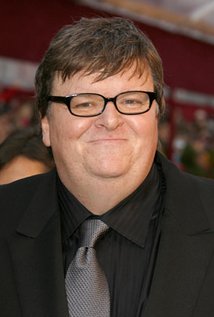
Happy Birthday: Michael Moore

michaelmoore.jpgHappy Birthday director Michael Moore

Born: Michael Francis Moore
April 23, 1954 in Flint, Michigan, USA

Best of Michael Moore quotes:

On being an altar boy, carrying the incense censer: This had all my favorite activities rolled into one: fire, smoke and emitting a strange odor.

We have got to get more documentaries in the theaters. Distribution in this country sucks.

It’s not envy, it’s war, it’s a class war that’s been perpetrated by the rich on to everyone else. The class war is one they started. The mistake they made to deal with the racial part of this is, um, their boots have been on the necks of people of color since we began. This is a nation founded on genocide and built on the backs of slaves, so alright, we started with a racial problem.

On Bowling for Columbine (2002) in 2013: I never thought I would have to, a decade later, stand here and say that that film of mine did no good. That, to me, is personally heartbreaking. Every word in it stands true to this day, which is the saddest thing.

I really didn’t realize that librarians were, you know, such a dangerous group. They are subversive. You think they are just sitting there at the desk, all quiet and everything. They’re like plotting the revolution, man. I wouldn’t mess with them. You know they’ve had their budgets cut. And libraries are just the ass end of everything, right?

I have, when I’m on Bill’s [Maher] show, told him that there are far more examples historically of the death and destruction that Christians have brought to planet. From the Crusades to the Inquisition to the wiping out of Native Americans to the Holocaust.

Laughter is a way, first of all, to alleviate the pain of what you know to be the truth. And if you’re trying to be truth-tellers as filmmakers, then for God’s sake, what is wrong with giving the audience a spoonful of sugar to help the medicine go down? It’s hard enough for people to have to think about these issues and grapple with them, and there’s absolutely nothing wrong with letting them laugh, because laughter is cathartic.

I don’t want people leaving the theatre depressed after my movies. I want them angry. Depressed is a passive emotion. Anger is active. Anger will mean that maybe five percent, ten percent of that audience will get up and say’ ‘I gotta do something. I’m going to tell others about this’ ..Or, in the case of Quentin Tarantino, who was the president of the jury at Cannes when the jury gave ‘Fahrenheit 9/11’ the Palme d’Or , said to me afterwards, ‘I’ve got to tell you what your film really did for me. I’ve never voted in my life, in fact Ive never even registered to vote, but the first thing I’m going to do when I get back to L.A. is register to vote’.

The first rule of documentaries is: Don’t make a documentary – make a movie! You’ve chose this art form – the cinema, this incredible, wonderful art form – to tell your story. You didn’t have to do that. If you want to make a political speech, you can join a party – you can hold a rally. If you want to give a sermon, you can go to the seminary, you can be a preacher. If you want to give a lecture, you can be a teacher. But you’ve not chosen any of those professions. You have chosen to be filmmakers and to use the form of Cinema. So make a movie!

Movie Review: HIP HOP-OPERATION. Directed by Bryn Evans

Deadlines to Submit your Screenplay, Novel, Story, or Poem to the festival: http://www.wildsound.ca

hip-hop-operation.jpgHIP HOP-OPERATION (New Zealand 2014) ***
Directed by Bryn Evans

Review by Gilbet Seah

The feel-good crowd pleasing documentary from New Zealand is so-called HP HOP-OPERATION because the film’s subject, a troupe that competes in a hip hop dance championship in Las Vegas is made up of seniors, the oldest of whom is 93, many too who have undergone a hip operation.

The dance troupe is the brainchild of flash mob choreographer Billie Jordan. She ably manages the group. Credit goes to her for everything from her planning, choreography, cheerfulness right down to her financial management and chaperoning of the seniors down to Las Vegas. Her motivation occurred during her experience of an earthquake while in Christchurch. She chose to cherish life. Jordan and the seniors are from an island in New Zealand called Waiheke Island. The film includes some footage from the film that shows the island and its surrounding and like everything in New Zealand – the scenes are stunning and pretty.

HIP HOP-OPERATION is an ok documentary that is clearly running out of material within the first 30 minutes. Director Evans fills in the gap be selecting a few of the participants and have them talk about their younger days. One assumes that he has chosen carefully the half dozen or so from the 80.

The film includes limited footage of other hip hop artists performing in Las Vegas. The reason is obvious. They will overshadow Hip Hop-operation. The seniors are not that good – they are so-so but if one factors the age into the equation, the group is phenomenal. The best thing abut the performance is the support of the spectators. The camera spends an equal amount of time on the reaction of the spectators, especially the astonished look on the faces when they experience aged seniors on stage doing hip hop. Hip Hop-operation rocks – that is the unanimous reaction of the spectators.

Does Evans film also rock? Not really. As mentioned, the material is limited and there is little research that needs to be done of the subject. It is a simple film simply executed. But no critic, myself include wants to be a sourpuss in taking down a film which has so much heart. And this fluff does have more than its share of delightful, feel good moments.

The participants also give themselves hip hop names. The participants or the cast includes the following with their age in brackets:
Kara “Bang Bang” Nelson (94, with cane)
Maynie “Quicksilver” Thompson (95)
Terri “2-cents” Wool-Moore Goodwin (94)
Eileen “Diva mystic” Evans (84)
Rosemary “Missy Ro-Yo” McKenzie (74)
Billie ‘Billie J Buzz” Jordan (44)

The film is also supported by local New Zealand hip hop artists such as Dziah and Krash who also entered in the Las Vegas championships .

The film has understandably won many audience popularity awards in the festivals that it has been showcased. The film also won the Best New Zealand documentary Award.


Also, Free logline submissions. The Writing Festival network averages over 95,000 unique visitors a day.
Great way to get your story out: http://www.wildsound.ca/logline.html

Deadlines to Submit your Screenplay, Novel, Story, or Poem to the festival:http://www.wildsound.ca

Watch recent Writing Festival Videos. At least 15 winning videos a month: http://www.wildsoundfestival.com

Short Film Movie Review: LIKE IN THE MOVIES (5min, Italy, Documentary)

LIKE IN THE MOVIES played to rave reviews at the WILDsound FEEDBACK Film Festival in January 2016.

  MOVIE POSTER

LIKE IN THE MOVIES, 5min, Italy, Documentary

Directed by Francesco Faralli

Following his cinephile passion, Daniele Bonarini (from the Association “Il Cenacolo Francescano”), realizes digital feature films shot with the enthusiastic support of friends and volunteers using disabled persons as actors.

Movie Review by Amanda Lomonaco:

This is the second of Francesco Faralli’s films that I’ve seen, and the second with Tiziano Barbini’s participation, and I can’t help but smile every time. There is something truly wonderful in the work that Faralli does by making films with the disabled. He creates true masterpieces, and, in pretending, provides us with a deep look into who these people really are.

There is a split second where you’re watching Faralli’s films where I noticed myself laughing at a disabled person, a concept that I had always imagined appauling. Nevertheless, it’s impossible to not laugh while watching Faralli’s work. Him and his actors create wonderfully heartwarming stories that demonstrate just what the disabled are truly capable of, and I can truly say it’s a hell of a lot more than I can do.

Tiziano Barbini is one Faralli’s most popular leading men, and together the pair have won several awards in film festivals world wide. Tiziano, at least in Faralli’s films, is a very positive, loving, and emotional person, who seems to experience every detail of the world with the intensity most of us reserve for more extreme achievements. He truly exemplifies the concept of living life to the fullest, and appreciating every moment, smiling at the smallest of details, and pointing out beauty everywhere he goes.

Perhaps it’s just because I’m a sentimental ball of mush, but I could watch Faralli’s films a million times and never get bored of them. Tiziano stole my heart in the very first of his documentaries that I watched, and without ever even meeting him, I know he’ll always be able to bring a smile to my face. I don’t know if everyone would enjoy this film as much as I did. The audience at Wild Sound certainly seemed to give it a very positive reception. In any case I urge you to look in to some of Faralli’s work. What he is doing both for the independent film industry and for the disabled community in Italy is amazing, and it deserves more attention from all of us.

Watch the Audience FEEDBACK Video of the short film

Short Film Movie Review: OH MY OH AGAMI (4min, Egypt, Documentary/Poetry)

OH MY OH AGAMI played to rave reviews  at the WILDsound FEEDBACK Film Festival in January 2016. 

OH MY OH AGAMI, 4min, Egypt, Documentary/Poetry
Directed by Hani R. Eskander

A visual poem depicting a life of an Agami resident who reminisces his childhood amidst the ongoing destruction and illegal construction.

Movie Review by Amanda Lomonaco:

I’m often skeptical of poetic cinema, in the same way that I’m often skeptical of overly “artsy” cinema. Although I have found many that I have enjoyed and appreciated, I’m all too aware that these films can often go one of two ways. Oh My Oh Agami is definitely one of the winners.

Despite not being able to understand what was being said in the film without the assistance of the subtitles, I could certainly appreciate the lovely intonations and rhyming sounds I was able to pick up. One of the great advantages of poetic cinema is that it opens up the meanings and rythmns of poetry in different languages, in a way that the written form cannot. It opens access to a whole world of literature that would otherwise be completely locked to those who do not speak the language.

What’s more Oh My Oh Agami opens up a world and concept that are almost completely foreign to North Americans, and others in the developed world. To most of us, the concept of illegal building seems almost impossible. How could anyone ever build an entire building without the city or government legally allowing them to do it? It’s difficult for us to grasp how some countries and governments can have so few resources that they are not able to enforce the law in any way, or where they are so easily bribed for want of accountability.

Hani R Eskander’s film immerses us in Egyptian culture through everything from its imagery, to its phonetic beauty, to its harsh realities. He both satiates and entices our wanderlust by bringing us into his world, and teaching us more about his day to day life. Through his poetic words and imagery, Eskander captures the true meaning of the concept of “show don’t tell,” playing into his audience’s curiosity.

Oh My Oh Agami is truly a beautiful film, and a powerful statement against illegal building in Egypt. If nothing else it’s worth a watch purely for the eye-opening experience it provides. This film is for the philanthropist, the traveller, and the environmentalist in all of us. It is a truly gorgeously made short film that deserves our attention, even if only for four short minutes.

Watch the AUDIENCE FEEDBACK Festival of the Short Film: