Movie Review: OUR LAST TANGO (UN TANGO MAS) (Argentina/Germany 2015) ***

Deadlines to Submit your Screenplay, Novel, Story, or Poem to the festival:http://www.wildsound.ca
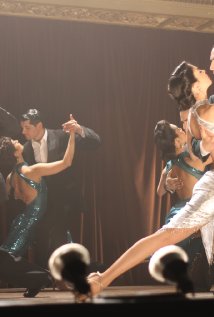
our_last_tango_posterOUR LAST TANGO (UN TANGO MAS) (Argentina/Germany 2015) ***
Directed by German Kral

Review by Gilbert Seah

This documentary tells the story of love between the two most famous dancers in tango’s history – María Nieves Rego (aged 81) and Juan Carlos Copes (aged 84).

When the film begins, a closeup of Maria has her say that if she was given the chance to do it all again, she would not change a thing – for tango. The only thing is to do it without Juan. The camera moves back to show Maria and Juan standing very close, face to face. They begin to tango. This is a powerful start. Why did Maria make that statement about Juan. Did she bare that much hatred fro him? Or did she love him too much that she cannot handle it? The doc goes on to reveal the reason.

The film would naturally have a slow feel with two aged subjects. Director Kral (who got his film experience working as assistant to Wim Wenders) tries to counteract this by animating his film as much as possible. This is most evident in one scene where Maria’s two interviewers more than act out their surprise at Maria’s answers to their questions.

OUR LAST TANGO is less a film about the tango than about the relationship between Marian and Juan. And it is not a love but more a hate relationship. It becomes a bit tedious, with each complaining about the other, from start to finish of the film. Director Kral offers two sides of the story, so that the audience takes no sides. Often each would complain about the other at great length. Maria loves Juan too much but not unconditionally. Her pride is terribly broken she Juan bears a child with another woman. On the other hand, one can sympathize with Juan when he says he cannot stand Maria. It is not easy to live with someone whom one cannot stand despite the fact that that someone loves you.

The film has quite a lot of tango dances but not many shown in great detail or to great length. Rather many different types are shown during the different stages of their lives. The duo exported their dance to Broadway with ‘Tango Argentino’.

One wishes that there be more archive footage of Maria and Juan dancing together. Young dancers perform too many re-enactments so the film has too much of a made-up feel.
There is little said in the film of how the two became so famous and how rich or successful they became. Their dances on display in the film reveal very little of their talent as well.

OUR LAST TANGO is also a film about ageing, though not much is said of the subject. But one can see on the faces of both Juan and Maria – their past glories and regrets. Maria is also suffering from some nerve problem, evident in her old age. She cannot stop shaking her head.

It is difficult to imagine OUR LAST TANGO being interesting to those with little to do with dance, for the love/hate relationship of the couple is also not something that audiences will flock to.

Also, Free logline submissions. The Writing Festival network averages over 95,000 unique visitors a day.
Great way to get your story out: http://www.wildsound.ca/logline.html

Deadlines to Submit your Screenplay, Novel, Story, or Poem to the festival:http://www.wildsound.ca

Watch recent Writing Festival Videos. At least 15 winning videos a month:http://www.wildsoundfestival.com
Movie Review: 3 1/2 MINUTES, 10 BULLETS (USA 2015) ***1/2

Deadlines to Submit your Screenplay, Novel, Story, or Poem to the festival: http://www.wildsound.ca

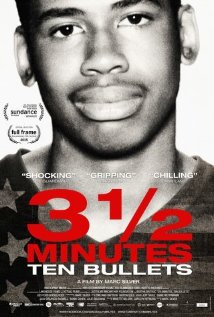
3_minutes_ten_bullets_poster3 1/2 MINUTES, 10 BULLETS (USA 2015) ***1/2
Directed by Marc Silver

Review by Gilbert Seah

An altercation begins over loud rap music at a gas station parking lot. 3 1/2 minutes and 10 bullets later, a black teen, Jordan Davis is shot dead by a white man in a car. The totally absorbing documentary is a courtroom drama, made even more real because what transpired is not only true but relevant in the perception of homicide and race in America.

The facts of the case: In 2012, a middle-aged white man, Michael Dunn, was arrested after fatally shooting a young black man, Jordan Davis, outside a gas station in Jacksonsville, Florida with his gun in the glove compartment of his car. It was a case of loud music. While Dunn’s fiancé went into the station for wine, loud music from a car with 4 black youths caused Dunn to ask them to turn the ‘rap crap’ down. The altercation escalated to the shooting of Jordan while the youths’ car pulled away.

The jury of 12 is to determine the verdict of the 5 counts of murder. What is so different about this doc is that director Silver puts the audience in the position of the jury. All the facts are presented in disturbing detail. The audience hears both sides of arguments of the two attorneys, examines the faces of both Dunn, the accused and the parents of the victim, and each the enactments. As the jury enters closed doors to make the decision, the audience is also forced to come up with his or her decision on the case. It is a very good tactic that works well to keep the audience focused on the facts and absorbed in the film at the same time.

The interviewees include Lucia McBath and Ron Davis, Jordan’s parents. The court proceedings focus often on the reactions of accused Michael Dunn, often in closeups, as if the man can be in scrutiny by the audience. The mother is often shown in tears while the father peaks fondly of his son, like his last time holding the boy in his arms in the hospital. As for Dunn, the camera allow him to tell his side of the story, how he loves his fiancé and how he feels he is the victim who should not deserve life imprisonment. In his own words, he just wants to go home to make love to his wife and then sleep. Director Silver makes his story a very personal and emotional one. On the other side, the audience also sees how good each lawyer is, each able to manipulate the evidence and testimonies to the side’s favour.

The attorneys make it clear that the case be treated as a nonracial crime, and one that resulted in antisocial behaviour and loud music. But this turns out to be another very high profile trial, very similar to the Trayvon Martin killing, in which a young black man in Florida was killed by a white community-watch volunteer. The demonstrations outside the court indicate the people want to know if the shooting young black men is something white people can get away with. It is clear thy do not want the truth, they want a guilty verdict regardless. But for Canadians and other non residents in the States, the case is more about guns – whether the right to bear arms in the States is still worth the mindless deaths of so many.

From the testimonies, it is clear that someone is lying. Dunn could be lying that he saw a weapon and acted in self define. or the youth could have discarded the weapon before the cops arrived. But self defense or not, Jordan did not deserve to die.

Silver’s documentary is both timely in its subject matter and absorbing in its execution. These are two good reason to put this doc on your must-see 2016 list.

Also, Free logline submissions. The Writing Festival network averages over 95,000 unique visitors a day.
Great way to get your story out: http://www.wildsound.ca/logline.html

Deadlines to Submit your Screenplay, Novel, Story, or Poem to the festival: http://www.wildsound.ca

Watch recent Writing Festival Videos. At least 15 winning videos a month: http://www.wildsoundfestival.com